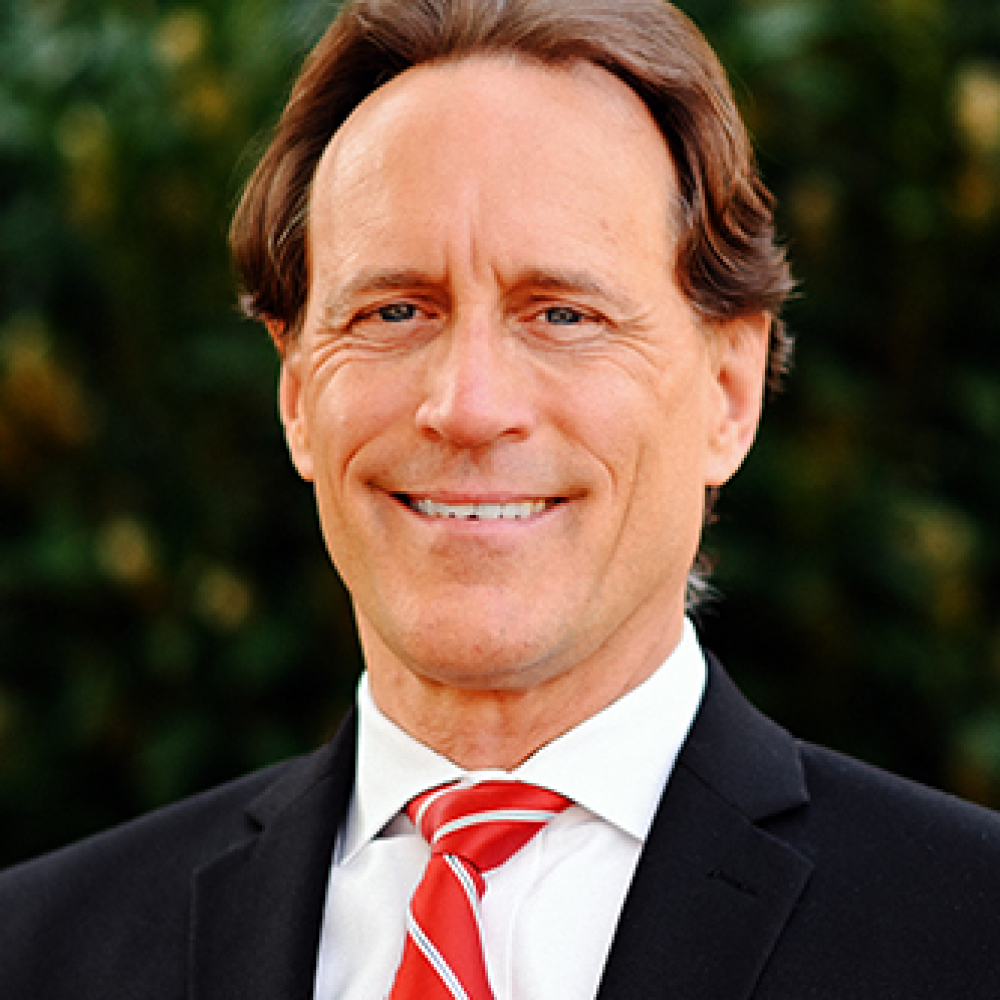
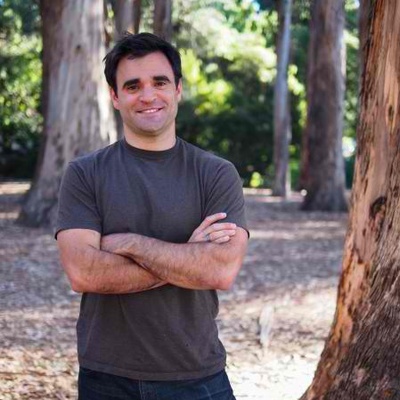
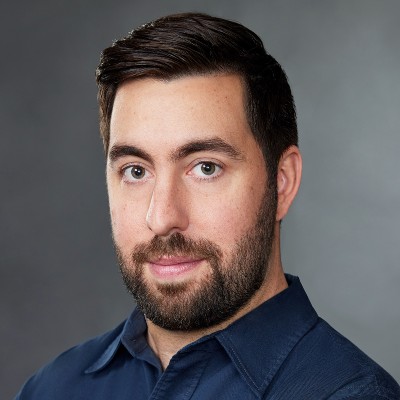
Jeffrey Schall is a Full Professor of Biology and Program Director of the Visual Neurophysiology Centre at York University. He holds the Canada Research Chair in Translating Neuroscience. His research focuses on neural mechanisms underlying behavior, integrating neurophysiological and computational approaches across multiple scales. Schall is a core member of the Centre for Vision Research and the Canada First Research Excellence Fund Connected Minds initiative. Education: PhD in Anatomy (University of Utah School of Medicine, 1986), postdoctoral training at MIT. Awards include the Troland Research Award, Sloan Foundation Fellowship, and AAAS Fellowship. He served as Vision Science Society President in 2019. Research interests include visual attention, executive control, error monitoring, and translational neuroscience applications in law. His work bridges basic science with applied studies in clinical populations like schizophrenia patients. Collaborative projects involve EEG/MEG analysis, cortical microcircuitry modeling, and neuromodulation techniques. Teaching: YU_NRSC 2100 Systems, Behavioral, and Cognitive Neuroscience. Active in interdisciplinary initiatives linking neuroscience with legal systems through scholarship and policy engagement.
Dr. Birgit Frauscher is the Lincoln Financial Group Distinguished Professor in Neurobiology at Duke University School of Medicine, where she serves as Professor of Neurology and holds a secondary appointment in the Department of Biomedical Engineering at the Duke Pratt School of Engineering. She is currently the Director of the Duke Comprehensive Epilepsy Center and leads the Analytical Neurophysiology (ANPHY) Lab. Her clinical and research work focuses on epilepsy and sleep medicine, utilizing both invasive and non-invasive electrical recordings to study brain activity in humans. Dr. Frauscher completed her medical training, neurology residency, and subspecialty training in electroencephalography, epilepsy, and sleep medicine at the Medical University of Innsbruck in Austria. After completing her clinical training in 2008, she earned her habilitation degree in 2011. She further specialized in intracranial EEG and signal analysis during a visiting professorship at the Montreal Neurological Institute and Hospital, McGill University (2013-2015), where she later served as an Attending Epileptologist and Group Leader of Epilepsy. Her research interests focus on developing novel seizure-independent EEG markers for the epileptogenic zone, investigating sleep-epilepsy interactions, and using intracranial EEG to study brain physiology during wakefulness and sleep. Her work aims to improve epilepsy diagnosis, prognosis, and treatment outcomes by better localizing the epileptic focus. Dr. Frauscher's recent publications demonstrate her continued leadership in epilepsy research, with over 170 peer-reviewed papers and an H-index of 62. Dr. Frauscher has received several prestigious awards including the Clinician-Scientist awards of the FRSQ (2018-2023), the Michael Prize of the International League against Epilepsy (2019), and the Ernst Niedermeyer Prize from the Austrian Epilepsy Society (2015). Her scholarly work has significantly advanced clinical knowledge in epilepsy and sleep medicine, establishing her as a leading figure in the field. As Director of the Duke Comprehensive Epilepsy Center and head of the ANPHY lab, Dr. Frauscher oversees a research program dedicated to advancing neuroscience through innovative approaches to studying brain activity. Her lab employs quantifiable tools to investigate neurophysiological and pathological processes related to epilepsy and sleep, with the ultimate goal of improving patient outcomes through better understanding of brain function.
Dr. Hillel Adesnik is a Professor in the Department of Neuroscience at the University of California, Berkeley, and a leading researcher in the neural basis of sensory perception. His lab focuses on cortical microcircuits, optogenetics, and neural coding, with emphasis on visual processing and memory formation. Key Research Areas: Cortical Microcircuits Optogenetic Tools Gamma Band Rhythms Neural Coding Mechanisms Dr. Adesnik has pioneered high-speed optical methods like 3D-MAP and 3D-SHOT to manipulate neural activity. His work spans cortical dynamics, synaptic plasticity, and cortical layer interactions, with applications in understanding learning algorithms and sensory inference. Selected Trends from Publications: Recent preprints and papers highlight advancements in cortical VIP neuron function, channelrhodopsin structures, and inter-areal computations. His team utilizes two-photon holography, cryo-EM, and computational modeling to decode perception-related neural codes. Scientific Awards: NIH Director's New Innovator Award (2013) Dr. Adesnik's lab collaborates with institutions like NIH and develops tools for awake animal studies. Funding includes grants from the Beckman Young Investigator Program and NIH.
Anne-Marie Oswald is an Associate Professor in the Department of Neurobiology within the Biological Sciences Division at the University of Chicago. Her research profile indicates active engagement in neuroscience research with a particular focus on cortical circuits, neural coding, and sensory processing systems. She maintains an active research program with publications spanning from 2011 to the present. Dr. Oswald's research interests span multiple areas of neuroscience, with particular emphasis on cortical circuit function, neural coding mechanisms, and sensory processing. Her work investigates how inhibitory interneurons shape cortical dynamics, how neural assemblies form during learning, and how sensory information is processed across different brain regions. Notably, she has also contributed to discussions on diversity in science through her publication "Curating more diverse scientific conferences" in Nature Reviews Neuroscience (2020). Her research employs a combination of electrophysiological, computational, and behavioral approaches to understand neural circuit function. Analysis of her publication record reveals a strong focus on cortical circuit mechanisms, particularly in the olfactory system. Her work demonstrates expertise in understanding how different interneuron subtypes (particularly parvalbumin and somatostatin-positive cells) regulate cortical dynamics, assembly formation, and sensory processing. Over time, her research has evolved from examining basic circuit mechanisms to investigating how these circuits support complex cognitive functions like odor discrimination and associative learning. The consistent presence of computational and systems neuroscience approaches throughout her publication history indicates a rigorous quantitative approach to understanding neural function. Dr. Oswald appears to be actively mentoring students and postdoctoral researchers, as evidenced by her consistent publication record with multiple collaborators. While specific grant information isn't provided in the available data, her sustained publication output suggests successful funding of her research program. Her work bridges cellular and systems neuroscience, contributing to our understanding of how microcircuit properties shape sensory processing and behavior.
Karim Oweiss is a Pre-eminent Professor at the University of Florida, with joint appointments in the Department of Biomedical Engineering (Herbert Wertheim College of Engineering), Electrical and Computer Engineering, and Neuroscience (McKnight Brain Institute). He holds a Ph.D. in Electrical Engineering and Computer Science from the University of Michigan (2002). His research focuses on neural mechanisms of sensorimotor integration and the development of clinically viable brain-machine interfaces (BMIs) to restore damaged neurological function. His work spans computational neuroscience, neural decoding, optogenetics, and advanced neurotechnology, with a strong emphasis on closed-loop systems and neural plasticity. 2025 : Chemogenetic stimulation of phrenic motor output and diaphragm activity 2024 : Chemogenetic phrenic motoneuron activation enables increased tidal volume 2023 : Compressive sensing of functional connectivity maps from patterned optogenetic stimulation Oweiss has received the NSF Excellence in Neural Engineering Award (2001) and is a Senior Member of the IEEE. He has published extensively on topics including neural decoding, compressive sensing, and multiscale neural interfacing. As editor of Statistical Signal Processing for Neuroscience and Neurotechnology (2010), he has contributed significantly to the field's methodological foundations. His lab develops tools like NeuroQuest for large-scale neural data analysis and implantable neuroprocessors for wireless BMI applications.
Eilif B. MULLER is a Professor in the Department of Neurosciences at Université de Montréal, Principal Investigator of the Architectures of Biological Learning Lab (ABL-Lab) at CHU Sainte-Justine Research Center, and Associate Faculty at Mila (Quebec AI Institute). His work bridges neuroscience and artificial intelligence, focusing on understanding how sensory perception is learned in the neocortex through biophysical simulations and deep learning models. He holds affiliations with IVADO (Institute for Data Valorization) and contributes to strategic initiatives like the UNIQUE Québec Center. His research integrates empirical neurophysiology with computational models, exploring dendritic processing and synaptic plasticity to inform both biological understanding and AI advancements. Teaches NSC-6044 and NSC-6045 (Neuroscience Colloquia) at Université de Montréal. Leads projects on neocortical learning mechanisms and their implications for neurodevelopmental disorders. Recipient of grants from CRSNG (Natural Sciences and Engineering Research Council), FRSQ (Health Research Fund), and institutional funding. Publications span topics in computational neuroscience, neural network modeling, and interdisciplinary AI-neuroscience research. Collaborates extensively across institutions to advance large-scale brain simulations and data-driven models.
Michael Wallace serves as an Assistant Professor at Boston University, leading research at the intersection of basal ganglia circuitry, motivated behavior, and synaptic transmission mechanisms. His work addresses fundamental questions about neural control of goal-directed actions and their disruption in neurological disorders. Education: Ph.D. in Neurobiology from the University of North Carolina at Chapel Hill Dr. Wallace's research program centers on genetically defined circuits within the basal ganglia, investigating how these structures guide motivated behaviors and motor control. His laboratory employs a sophisticated multidisciplinary toolkit including in vivo electrophysiology, optogenetics, molecular genetics, computational modeling, and behavioral assays. Key research themes encompass neurotransmitter cotransmission (particularly GABA/glutamate interactions), synaptic vesicle dynamics, and circuit-level pathophysiology in conditions ranging from Parkinson's disease to addiction. The lab's long-term mission targets therapeutic interventions through mechanistic understanding of neural circuit dysfunction. Analysis of his publication record reveals consistent focus on multitransmitter neurons and basal ganglia microcircuitry since 2011, with increasing emphasis on entopeduncular nucleus function and neurotransmitter co-packaging mechanisms. His work demonstrates methodological evolution from anatomical and transcriptional profiling toward real-time circuit interrogation using optogenetic and electrophysiological approaches. The Wallace Lab operates as a dynamic neuroscience research hub, integrating expertise across molecular, cellular, and systems levels. Current investigations leverage cutting-edge techniques to dissect how specific basal ganglia pathways process motivational signals and motor commands, with particular attention to disease-relevant perturbations. This systems neuroscience approach bridges fundamental circuit mechanisms with translational applications for neurological and psychiatric disorders.
Mario Dipoppa is an Assistant Professor in the Department of Neurobiology at the University of California, Los Angeles. His research focuses on computational neuroscience, cortical adaptation, and neural circuit dynamics. Position: Assistant Professor, Neurobiology Email: mdipoppa@g.ucla.edu Research Interests: Mario's work explores how neural populations in the visual cortex adapt to sensory input, with a particular emphasis on the interplay between neural oscillations, synchrony, and cognitive functions like working memory. His recent studies investigate optimal coding strategies in visual adaptation, contextual modulation mechanisms, and the role of transcriptomic diversity in cortical interneuron function. Publications Trends: His research spans computational modeling of cortical networks, visual neuroscience, and neurogenetic analyses of brain circuits. Early work (2013-2016) focused on working memory mechanisms and neural oscillations, while recent studies (2022-2025) emphasize visual cortex adaptation, population coding, and cross-species circuit comparisons.
Richard Kempter is a Full Professor at the Humboldt-Universität zu Berlin, where he leads the Theoretical Neuroscience research group within the Institute for Theoretical Biology, Department of Biology. His research focuses on the neural basis of learning and memory through computational and mathematical modeling of synapses, neurons, and neural networks. He is affiliated with several major research centers including the Bernstein Center for Computational Neuroscience, the Einstein Center for Neurosciences Berlin, and the CRC 1315 Memory Consolidation. Professor Kempter's research interests span theoretical and computational neuroscience with a particular focus on the neural mechanisms underlying learning and memory. His work employs biophysical modeling and mathematical analysis to study synaptic short- and long-term plasticity, the dynamics of single neurons, and the interaction of neurons in recurrently coupled networks. A key aspect of his research investigates how neural systems maintain a balance between learning susceptibility and stability against pathological activity patterns, with model systems including the hippocampus and early auditory system. His research group has made significant contributions to understanding hippocampal sharp wave-ripple events, phase precession in spatial navigation, auditory processing in barn owls, and memory consolidation mechanisms. The group's work combines theoretical approaches with computer simulations to unravel the computational principles of neural circuits, showing particular interest in how neural tissue remains susceptible to learning while maintaining robust stability against pathological activity patterns. Scholarship of the State of Bavaria (03/1994-12/1995) Emmy Noether Fellowship Part I (09/1999-08/2001), funded by the Deutsche Forschungsgemeinschaft Emmy Noether Fellowship Part II (01/2003-09/2008) Guest Professor , HU Berlin, Department of Biology (10/2008-03/2010) Professor Kempter has advised numerous PhD and Master's students throughout his career, with many continuing in neuroscience research. His group maintains strong connections with experimental laboratories to bridge computational models with empirical findings, particularly in hippocampal function and auditory processing. The Theoretical Neuroscience Lab participates in collaborative projects investigating memory consolidation and neural coding principles, contributing significantly to our understanding of how neural circuits implement computational principles underlying learning and memory.
Joshua Trachtenberg is a Professor in the Department of Neurobiology at the School of Medicine, University of California Los Angeles (UCLA) . His research focuses on understanding how early sensory experiences shape synaptic and network connectivity in cortical circuits, particularly in the visual system. Key Research Areas: Mechanisms of experience-dependent cortical plasticity Role of vision in neural circuit development Molecular pathways in autism-related models Inhibitory interneuron dynamics Long-term in vivo imaging of dendritic spines Recent Publications highlight studies on dendritic spine clustering, critical period plasticity, and retinal cell type evolution, with methodologies spanning multi-photon imaging and single-cell transcriptomics. Funding Highlights: NIH R01EY027407 (Disinhibition & Visual Plasticity) NIH R01EY023871 (Inhibitory Circuit Regulation) NIH R01MH082935 (PTEN-Associated Autism Models) Labs & Collaborations include work with the Silva, Golshani, and Geschwind groups, focusing on synaptic stability, cortical dysfunction, and autism-related protein studies.
Rui Ponte Costa is an Associate Professor at the University of Oxford's Department of Physiology, Anatomy & Genetics (DPAG). He leads the Neural & Machine Learning group, focusing on computational models of learning in the brain by integrating AI principles. His research emphasizes cortical circuits, neuromodulation, and subcortical regions to understand credit assignment mechanisms. He holds a PhD in Computational Neuroscience and Machine Learning from the University of Edinburgh and has held postdoctoral positions at the University of Oxford, University of Bern, and McGill University. His group's work bridges theoretical and experimental neuroscience, collaborating with institutions like MILA and Google DeepMind. Education: Bachelor's in Computer Science, University of Coimbra (Portugal) PhD in Computational Neuroscience, University of Edinburgh (UK) Research Interests: Neural mechanisms of learning and plasticity Machine learning inspired by biological systems Cerebro-cerebellar interactions Neuromodulatory systems' role in reinforcement learning Collaborators include Christopher Summerfield, Timothy Behrens, and Yarin Gal. His lab's work has been published in Nature Communications , Cell Reports , and top machine learning venues. He co-organizes the Oxford NeuroTheory Forum and has pioneered models explaining cortical dynamics in task acquisition and consolidation. Advising and Grants: No specific grants listed, but active in collaborative research networks. Advising focuses on PhD students in computational neuroscience and AI. Labs/Teams: Neural & Machine Learning Group at DPAG, part of Oxford's broader neuroscience and AI ecosystem.
Prof. Dr. Moritz Helias is a University Professor and leads the Theory of Multi-Scale Neuronal Networks group at the Institute for Advanced Simulation (IAS-6), Computational and Systems Neuroscience, Forschungszentrum Jülich. His research bridges biological and artificial neural networks, focusing on dynamics, information processing, and the physics of AI. The group is part of a larger interdisciplinary institute that integrates theory, simulation, and data analysis to understand the brain. Institution: Forschungszentrum Jülich School: Institute for Advanced Simulation Department: IAS-6, Computational and Systems Neuroscience Position: Professor and Group Leader Email: m.helias@fz-juelich.de His research interests lie at the intersection of statistical physics and neuroscience. He investigates how structure shapes dynamics in both biological and artificial networks, aiming to uncover general principles of information processing. Using methods from statistical physics, his work enables a unified framework for understanding collective phenomena, learning, and generalization. Key areas include spiking neural networks, renormalized field theory, and the theoretical foundations of AI. The recent publications reflect a strong trend toward multi-scale modeling of neural systems, integrating statistical physics with neuroscience. Topics include spiking network dynamics, mean-field theory, renormalization, and applications of machine learning in physics. The work spans biological realism and artificial intelligence, with implications for neuromorphic computing and brain-inspired AI architectures. While no scientific awards are listed in the provided texts, his group actively contributes to open science through tools like NEST and theoretical frameworks that influence both neuroscience and AI. Prof. Helias supervises a research group focused on theoretical and computational approaches, contributing to collaborative projects involving large-scale simulations and data analysis. His team works closely with experimentalists and theorists to validate models and advance understanding of brain function. The group is also involved in developing simulation technologies and theoretical tools that support reproducible neuroscience. The Theory of Multi-Scale Neuronal Networks group is embedded within a vibrant research environment at IAS-6, collaborating with teams in statistical neuroscience, computational neurophysics, and future simulation architectures. This fosters a loop between data, theory, and simulation, enabling cutting-edge research on brain function and artificial intelligence.
Vikaas Sohal, MD, PhD is a Professor in the Department of Psychiatry at the University of California, San Francisco (UCSF) School of Medicine and a member of the UCSF Weill Institute for Neurosciences. He directs a neuroscience laboratory investigating the brain circuits underlying fundamental aspects of cognition and emotion, with particular focus on gamma oscillations in normal cognition and schizophrenia, as well as how rhythmic brain activity encodes emotional states. Dr. Sohal is also a board-certified psychiatrist who supervises residents in the Early Psychosis (PATH) clinic. Dr. Sohal earned his A.B. and S.M. in Applied Mathematics from Harvard University in 1997, followed by an M.A.St. in Mathematics from the University of Cambridge in 1998. He completed his M.D./Ph.D. in Neuroscience at Stanford University in 2005, where he also completed his residency in adult psychiatry. During his residency, he conducted postdoctoral research with Dr. Karl Deisseroth, performing some of the first experiments using optogenetics to study information processing in brain circuits. Dr. Sohal's research has focused on neural circuit mechanisms underlying cognitive and emotional processes, with particular emphasis on gamma oscillations, prefrontal-hippocampal interactions, and the role of specific interneuron subtypes in information processing. His laboratory has made significant contributions to understanding how parvalbumin interneurons generate gamma oscillations that organize prefrontal networks to promote behavioral adaptation. His recent work has explored the circuit basis of emotional states, pain-related aversion, and neuropsychiatric disorders. His publication record shows a consistent trajectory of high-impact research, with recent publications spanning topics from psilocybin effects to thalamocortical organoids for neuropsychiatric disorder modeling. His work demonstrates a progression from fundamental circuit mechanisms to translational applications for psychiatric disorders, particularly focusing on schizophrenia and emotional processing abnormalities. Dr. Sohal has secured continuous NIH funding as Principal Investigator since 2009, including multiple R01 grants, an R56, DP2, R00, and K99 awards, demonstrating sustained research productivity and significance. His research program represents a sophisticated integration of molecular, cellular, circuit, and behavioral approaches to understand and potentially treat neuropsychiatric disorders.
Dr Jennifer Sun is a Lecturer at the UCL Institute of Ophthalmology, leading the Visual Plasticity Lab. Her research investigates how visual cortex integrates sensory and modulatory inputs to regulate neuroplasticity, with applications in vision recovery from aging, injury, and neurological disorders. PhD: University of Southern California (Circuit Computation, Sensory Cortical Development) Postdoc: University of California, San Francisco (Molecular Techniques, Electrophysiology, 2-Photon Imaging) Research interests focus on neuroplasticity mechanisms in visual systems using genetic, physiological, and computational approaches. Key areas include local circuit dynamics, brain region crosstalk, neuron-glial interactions, and translating findings into therapies via collaborations with clinicians at Moorfields Eye Hospital. Teaching roles include supervising PhD students (LiDo, Optical Biology, UCL-Birkbeck MRC DTP) and Master's students (MRes Brain Science, MSc Neuroscience). She organizes UCL's Visual Neuroscience (NEUR0017) and Systems and Circuit Neuroscience (ANAT0020) modules, plus Cold Spring Harbor's international Neural Data Science summer course. Labs/teams: Visual Plasticity Lab (UCL Institute of Ophthalmology), collaborating with Sainsbury Wellcome Centre, UCL bioengineers, and Moorfields Eye Hospital clinicians to explore health-disease plasticity differences.
Nick Audette is an Assistant Professor in the Department of Psychological Sciences at the University of Connecticut (UConn). He leads the Audette Lab, established in January 2025 at the Storrs campus, where his team investigates how the brain integrates sensory input with environmental context and experience to enable perception. His research employs large-scale neural recordings in mice during acoustically enriched behaviors. Dr. Audette earned his Ph.D. in 2018 from Carnegie Mellon University. His primary research areas include: Flexible sensory processing in thalamocortical circuits Neural mechanisms of learning and memory consolidation Movement-based predictions in auditory cortex Stimulus-specific prediction error encoding His recent publications (2014-2025) demonstrate a consistent focus on predictive processing mechanisms in sensory systems. Key trends include: Thalamocortical plasticity during sensory learning Movement-related neural predictions in auditory cortex Stimulus-specific error detection neurons Translaminar circuit organization High-throughput analysis of neural plasticity Methodologically, his work combines electrophysiology, behavioral paradigms, and advanced imaging techniques. Dr. Audette currently advises two undergraduate researchers, Claudia and Ava, on a project developing high-throughput behavioral assays linking lever-press movements to auditory predictions in mice. The lab has secured space in UConn's Bousfield Psychology Building and plans electrophysiological investigations of sensory prediction encoding.