Di Bu is an Associate Professor in the Department of Applied Finance at Macquarie University, leading the Macquarie University FinTech and Banking Research Centre. He holds a PhD in Finance from the University of Queensland (2015). His research focuses on FinTech innovations, climate finance, household finance, and behavioral finance, with an emphasis on embedding sustainability into financial systems. He has secured over AUD 4 million in research funding through ARC Linkage and Discovery projects, focusing on AI-driven credit assessments, Open Banking, ESG analytics, and climate resilience. Education PhD in Finance, University of Queensland (2015) Research Interests Di's work explores belief formation in financial decisions, sustainable lending practices, and climate adaptation tools. He pioneers projects such as AI credit scoring systems, behavioral interventions for sustainable investing, and digital platforms for climate resilience. His interdisciplinary approach bridges industry, government, and academia to address financial and environmental challenges. Projects & Funding AUD 4M+ in grants including two ARC Linkage and one ARC Discovery projects Current initiatives: Greenwashing detection, ESG rating divergence analysis, and climate-resilient finance platforms Labs/Teams Director of the FinTech & Banking Research Centre and affiliated with Data Horizons Research Centre and Frontier AI Research Centre at Macquarie University.
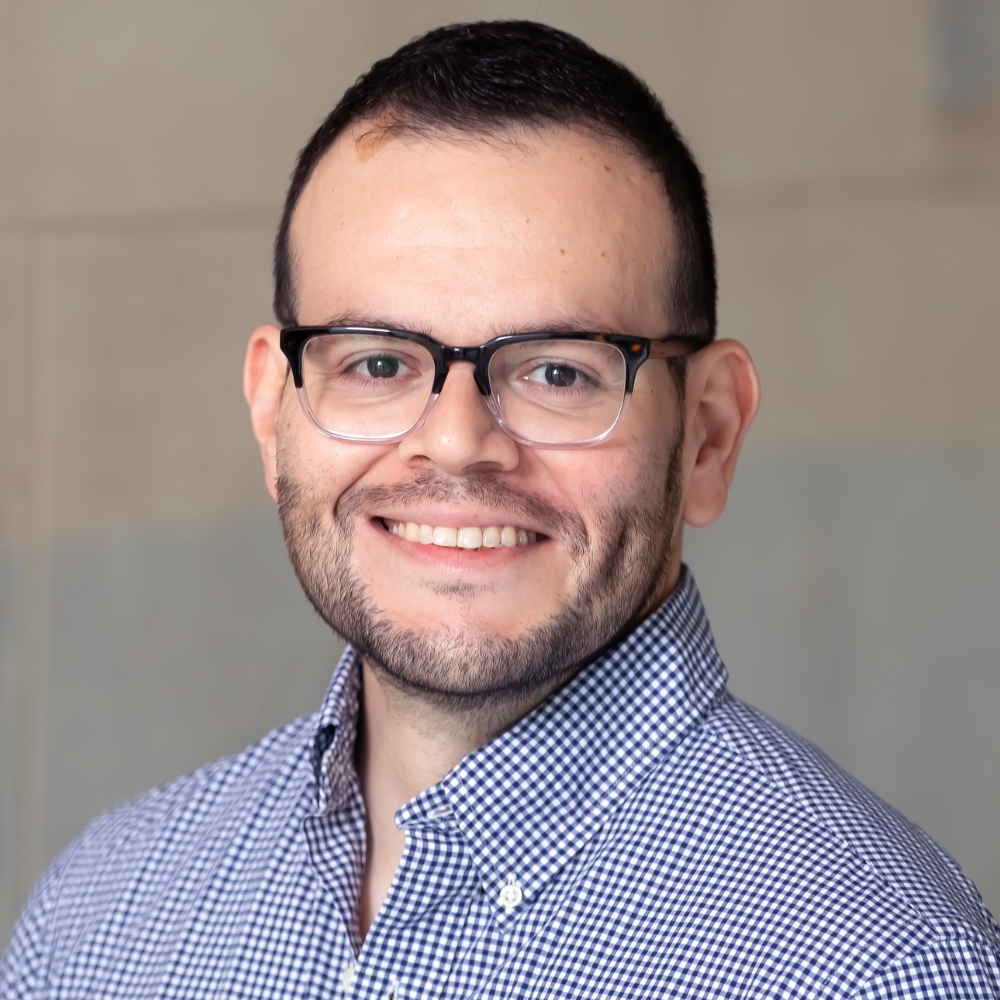
Sergio Carrera serves as Senior Research Fellow and Head of the Justice and Home Affairs Unit at the Centre for European Policy Studies (CEPS), a prominent Brussels-based think tank. Additionally, he holds the position of Adjunct Professor at the Paris School of International Affairs (PSIA) in SciencesPo, France, where he contributes to academic teaching and research in international affairs. Dr. Carrera's academic background includes a Ph.D. on immigration and citizenship from Maastricht University (The Netherlands), an LL.M. in European, Comparative and International Law from the University of Maastricht, and a Law Degree from Universidad de Salamanca in Spain. His extensive educational foundation in European and international law underpins his expertise in EU justice and home affairs policy. His primary research interests focus on EU justice and home affairs (JHA) law and the Area of Freedom, Security and Justice policy, with particular emphasis on migration, asylum, citizenship, and Schengen policies. Dr. Carrera's expertise also extends to EU criminal justice law and police cooperation, examining their impacts on data protection, privacy, and the rights of the defense. His work consistently addresses the intersection between security measures and fundamental rights within the European context. Dr. Carrera has produced an extensive body of scholarly work, with over 190 published publications according to the available information. His recent research has particularly focused on EU-US data transfers, rule of law challenges in the context of migration management, global asylum governance, and the evolving landscape of EU security policy. His publications demonstrate a consistent concern with ensuring that security and migration policies uphold fundamental rights and the rule of law. Among his notable contributions are policy analyses on the European Green Deal's implications for climate policy, assessments of the EU's response to the Ukraine crisis, and examinations of the impact of the Trump administration on EU security policy. His research often bridges academic analysis with practical policy recommendations for EU institutions. Dr. Carrera leads and participates in numerous research projects addressing critical issues in EU policy. Current initiatives include "Reclaiming our past, rebuilding our future: new approaches to fighting antigypsyism" (2024-2026) and the "Study on Mapping Civil Dialogue Practices in the EU Institutions" (2024-2025). Previous significant projects include "Global Asylum Governance and European Union's Role" (ASILE, 2019-2023), "Pan-European Response to the ImpactS of COVID-19" (PERISCOPE, 2020-2023), and "IT tools and methods for managing migration FLOWS" (ITFLOWS, 2020-2023). His work has been commissioned by various EU institutions, including the European Parliament's Policy Department for Citizens' Rights and Constitutional Affairs, demonstrating the policy relevance and impact of his research. Dr. Carrera's expertise is frequently sought for task forces addressing timely issues such as EU-US data transfers, digital justice, and cross-border cooperation in criminal matters.
Andy Lamey is an Associate Teaching Professor in the Department of Philosophy at the University of California, San Diego (UCSD). He holds a PhD in Philosophy from the University of Western Australia (2011). His research focuses on applied ethics, political philosophy, and animal ethics, with notable works addressing topics like refugee rights, freeganism, and the ethics of food consumption. Lamey is the author of Duty and the Beast (2019) and Frontier Justice (2011), and co-creator of Justice: The Game , an educational role-immersion game for teaching political philosophy. His teaching includes courses on ethics, political philosophy, and free expression. Recent courses at UCSD include Phil 28 (Ethics & Society II) on free speech and Phil 172 (Topics in Political Philosophy) analyzing Robert Nozick’s Anarchy, State, and Utopia . Lamey’s work bridges philosophical theory with contemporary issues, including immigration policy, animal rights, and literature. Key contributions include analyses of refugee rights, critiques of jurisdictional arguments for immigration control, and explorations of animal ethics through figures like Temple Grandin. He has published over 25 peer-reviewed articles and book chapters, and his writings engage with thinkers like Plato, G.A. Cohen, and J.M. Coetzee.
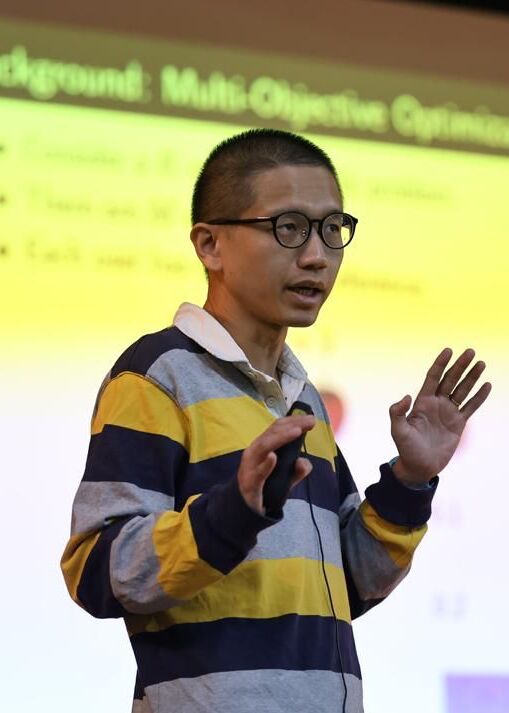
Professor Vincent Y. F. Tan holds dual appointments in the Department of Mathematics and the Department of Electrical and Computer Engineering (ECE) at the National University of Singapore (NUS). He is also affiliated with the Institute of Operations Research and Analytics (IORA) and the Institute of Data Science (IDS). His research focuses on Online Decision Making, Multi-Armed Bandits, Reinforcement Learning, Information Theory, and Statistical Signal Processing. Notably, he has been actively publishing in top-tier conferences like NeurIPS, ICML, and IEEE journals, with recent works exploring topics such as low-rank adaptation, off-policy evaluation, and queueing control. Professor Tan has advised numerous PhD students, including Fengzhuo Zhang, Yujun Shi, and Junwen Yang. He has received recognition for his teaching, including a 4.7/5.0 rating for EE5137 Stochastic Processes. His work has led to impactful publications, such as the best paper award at the ICML 2025 workshop on World Models and an oral presentation at ICLR 2025. He currently serves as a Senior Area Chair for NeurIPS 2025 and an Area Editor for the IEEE Transactions on Information Theory. His research group focuses on advancing theoretical and applied aspects of machine learning, with projects funded by grants in areas like distributed optimization and adversarial robustness. He collaborates widely, including with institutions like IIT Delhi and HKUST Guangzhou. Open positions are available for motivated postdocs and students in his research areas.
Dr. Arnout Geeraert is Assistant Professor at Utrecht University’s Utrecht School of Governance, specializing in the intersection of Law, Economics, and Governance . His research focuses on public-private interactions in global governance, particularly the European Union’s role as an international actor in sport-related policy domains. Active in Sport and Society research group Developed benchmarking tools: Sports Governance Observer , National Sports Governance Observer , and National Anti-Doping Governance Observer Geeraert’s work has been published in leading journals such as Journal of European Public Policy , Public Administration , and European Sport Management Quarterly . His book The EU in International Sports Governance (Palgrave, 2016) and co-edited Good Governance in Sport (Routledge, 2022) are key contributions to the field. He serves as president of the Integrity Commission of the Belgian Football Association and has held advisory roles for the UNESCO MINEPS VI Working Group , IPACS Task Force , Flemish Government Committee , and EU Expert Group . His expertise centers on enhancing compliance with good governance principles in sport federations, addressing corruption risks, and analyzing EU interventions in FIFA/UEFA. Recent publications explore topics like collaborative governance , Flemish nationalism through sport , and EU sectoral diplomacy , reflecting his multidisciplinary approach to sport policy and institutional analysis.
Magnus Linnarsson is a Professor of History at Stockholm University's Department of History, specializing in political history with a focus on early modern and modern Sweden. His research examines institutional change, public-private service organization, and the evolution of the welfare city. He leads undergraduate programs and supervises students at all levels. PhD in History (2010), Lund University Associate Professor (2017), Stockholm University His research spans four centuries of political conflicts over public services, state formation, and urban development. Key works include analyses of Sweden's postal, customs, and welfare systems, comparing hierarchical and contractual state organization models. Recent publications (2024) in Nordic Welfare Cities explore urban citizenship and inclusive welfare systems since 1850, challenging national narratives by emphasizing local governance. Earlier studies (2022–2018) dissected regime shifts, mercantile-state relations, and publicness concepts in tramway and telecom debates. Current projects include: Skiftande regimer (2021–2025): State formation and administrative reform (Vetenskapsrådet-funded) Olika vägar till välfärdsstaden (2021–2025): Nordic urban welfare debates (Riksbankens jubileumsfond-funded) He advocates for interdisciplinary analysis of political economy, institutional loyalty, and spatial dynamics, connecting historical debates to modern policy challenges.
Marco Letta is a Tenure-Track Assistant Professor at the Department of Social and Economic Sciences , Sapienza University of Rome. His research focuses on economic development , regional economics , policy evaluation , and applied econometrics , with a strong emphasis on climate change impacts, food security, and machine learning applications in economic policy. University: Sapienza University of Rome Department: Department of Social and Economic Sciences Email: marco.letta@uniroma1.it His recent work explores the climate migration nexus , household resilience , and policy targeting , often leveraging machine learning and empirical econometric methods . Publications span topics such as local inequalities during the COVID-19 crisis , temperature shocks in rural Tanzania , and machine learning applications in state aid regulation . Notable trends in his research include: Integration of machine learning with traditional econometric techniques Focus on climate resilience and migration patterns Analysis of policy impacts in developing economies Investigation of local mortality estimates during global crises Development of cross-country empirical frameworks Current projects include assessing agrifood system vulnerabilities and refining counterfactual policy evaluation methodologies.
Martin Nesvig is a Professor at the University of Miami in the Department of History, College of Arts and Sciences. He serves as Director of Undergraduate Studies and Co-Faculty Lead for Mexico and Mesoamerica in the University of Miami’s Interdisciplinary Programs (UMIA). His research focuses on colonial Latin America, particularly religious hybridism, inquisitorial systems, and decentralized power structures in Michoacán. University of Miami, College of Arts and Sciences Department of History Director of Undergraduate Studies Mexico and Mesoamerica Co-Faculty Lead Nesvig's scholarship interrogates the complexities of religious syncretism, bureaucratic conflict, and cultural negotiation in colonial Mexico. His work challenges traditional narratives of 'spiritual conquest' by highlighting the mutual adaptation between Spanish and indigenous communities, emphasizing the role of hallucinogenic rituals, vernacular scripture, and micro-imperial governance in shaping colonial religious practices. His 2010 Charles A. Ryskamp Research Fellowship supported his project on frontier religion in Michoacán, analyzing how Spanish clergy and laity adopted indigenous practices. His publications span topics from peyote use in Catholic rituals to the political implications of prohibited books and the dynamics of postcontact cultural liminality. Notable Works: Promiscuous Power: An Unorthodox History of New Spain , Peyote, Ever Virgin: A Case of Religious Hybridism in Mexico Awards: Charles A. Ryskamp Research Fellowship Nesvig’s research reveals a colonial state perpetuated through bureaucratic litigation rather than violence, with his irreverent historiographical style challenging academic conventions. His students and colleagues engage with his critical perspectives on power, religion, and cultural identity in early modern Latin America.
Ting Zhang is an Associate Professor and Associate Department Chair in the Department of History at the University of Maryland. She specializes in cultural and legal history of late imperial China, with a focus on print culture, legal knowledge dissemination, and information networks in the Qing Dynasty. Her research challenges traditional narratives about Chinese legal insularity, emphasizing the role of commercial publishing in shaping legal consciousness. Education: B.A. and M.A. from Peking University Ph.D. from Johns Hopkins University Research Interests: Early Modern History, East Asia, History of Information, Legal History, Print Culture, Qing Dynasty Studies. Her current project explores public notices and information networks in Qing China, examining state-society dynamics and legal authority. Awards & Fellowships: Henry Luce Foundation/ACLS China Studies Fellowship John W. Kluge Center at the Library of Congress Fellowship Chiang Ching-kuo Foundation Fellowship China Scholarship Council Grant Teaching & Engagement: Taught at Peking University, Johns Hopkins, University of Delaware, and UC San Diego. Active in promoting cross-cultural historical scholarship and digital archiving. Labs/Teams: Collaborates with global networks in book history and legal studies, leveraging digital tools for historical analysis.
Paul D. Halliday is the Julian Bishko Professor of History and Professor of Law at the University of Virginia, jointly appointed in the Department of History within the College of Arts and Sciences and the Law School . He is a leading scholar in legal history, with a focus on British, imperial, and global legal developments from 1500 to 1850. BA, Wesleyan University, 1983 MA, University of Chicago, 1988 PhD, University of Chicago, 1993 His research centers on the history of legal institutions, particularly habeas corpus, judicial authority, and the role of law in empire. Halliday challenges traditional narratives by emphasizing how judicial power evolved from royal prerogative rather than as a check on monarchy. His work bridges legal doctrine, archival practice, and material culture, with current projects exploring the sensory and spatial dimensions of law, including courthouse architecture and archival procedures. His publications reveal a consistent engagement with themes of liberty, authority, and legal continuity across time and space. Notably, his book Habeas Corpus: From England to Empire (2010) has had a profound impact, influencing the U.S. Supreme Court in Boumediene v. Bush (2008), and reshaping scholarly understanding of habeas corpus as a tool of imperial governance. His recent work extends into South Asian and Caribbean legal histories, emphasizing global legal interconnectedness. Inner Temple Book Prize (2011) for Habeas Corpus: From England to Empire Sutherland Prize, American Society for Legal History (2009) for co-authored Virginia Law Review article At UVA, Halliday teaches courses such as History of English Law , Law’s Empire , and Global Legal History . He advises graduate students in legal history and is a core member of GLH@UVA (Global Legal History at the University of Virginia), an interdisciplinary community that includes faculty and students from history and law. This group fosters collaborative research, professional development, and regular discussions on works in progress, contributing to a vibrant intellectual environment.
Madawi Al-Rasheed is Visiting Professor at the London School of Economics (LSE) Middle East Centre, where she conducts research on political and religious change in Saudi Arabia, particularly following the 2011 Arab uprisings. She previously held the position of Professor of Anthropology of Religion at King’s College London (1994–2013), was a Research Fellow at the Open Society Foundation, and a Prize Research Fellow at Nuffield College, Oxford. She has also taught at Goldsmiths College and the University of Oxford. Her research focuses on Saudi political development, gender policies, religious reform, and civil society. She is widely published, with major works including Muted Modernists (2015), Salman’s Legacy (2018), and A History of Saudi Arabia . Her research has been supported by fellowships from the Open Society Foundation and other institutions. Al-Rasheed is a frequent contributor to international media, including BBC, CNN, CCTV, and Al-Hura, and has published op-eds in The Guardian , Foreign Policy , Al-Monitor , and Foreign Affairs . She has given seminars at Harvard University, the University of Denver, and Casa Arabe in Madrid. Saudi Arabia GCC states Anthropology Gender Islamic Politics Political Reform Her recent publications reflect a consistent focus on authoritarian resilience, religious reinterpretation, and social change in Saudi Arabia, particularly under Mohammed bin Salman. Themes include state-led modernization, repression of dissent, gender reforms, and the manipulation of nationalist discourse. Fellow of the British Academy (2020) She has advised governments and international organizations and continues to be an influential public intellectual on Gulf affairs. Although she does not appear to supervise formal students at LSE, her extensive publications and public engagement reflect significant academic mentorship and influence. She is not part of a formal lab or research team but leads independent and collaborative research initiatives.
Dr. Sergio Ascencio is a Lecturer in the Department of Government at the University of Essex. He holds a PhD from the University of Rochester (2018). His academic career includes roles as Assistant Professor at the University of New Mexico (2019–2021) and Postdoctoral Associate at NYU Abu Dhabi (2018–2019). His research focuses on comparative politics, electoral systems, and political behavior, with a regional emphasis on Mexico and South Asia. Key themes include primary elections, vote buying, political dynasties, and party strategies. His work employs experimental methods and institutional analysis to explore questions of governance and democratic accountability. Recent publications (2021–2024) examine nomination rules, primary adoption, and voter dynamics across multiple countries. His 2019 study on partisan poll watchers and electoral manipulation highlights expertise in electoral integrity. Earlier work (2015, 2009) addresses issue salience modeling and delegation mechanisms in Mexican state legislatures. Contact: Email at sergio.ascencio@essex.ac.uk or via Zoom during academic support hours (Tuesdays 2–4 PM).
Scott Gehlbach is the Elise and Jack Lipsey Professor of Political Science and Public Policy at the University of Chicago, affiliated with the Harris School of Public Policy, the Department of Political Science, and the College. He specializes in authoritarian and post-authoritarian regimes, with a focus on Russia and Ukraine. His research examines institutional dynamics, political reform, and historical political economy, drawing on formal models and empirical analysis of historical events. Gehlbach holds a PhD from the University of California-Berkeley (2003) and previously taught at the University of Wisconsin-Madison. He currently directs the joint Political Economy PhD Program between the Harris School and Political Science Department. Research interests include the interplay between reform and rebellion in autocracies, the impact of political connections on economic outcomes, and the historical experiences of late Imperial Russia and post-Soviet transitions. His work bridges formal political theory with empirical case studies, emphasizing institutional design and comparative analysis. Gehlbach has led initiatives such as the Ph.D. Program in Political Economy and organized conferences like the Summer Workshop in the Economic History of Eurasia. Professional service includes roles as president of the Society for Institutional and Organizational Economics, associate editor of the Quarterly Journal of Political Science, and co-editor of the Broadstreet Blog. His research has been published in leading journals such as the American Journal of Political Science and the American Political Science Review, with notable books like *Formal Models of Domestic Politics* and *Reform and Rebellion in Weak States*.
Graeme Robertson is a Professor of Political Science at the University of North Carolina at Chapel Hill and Director of the Center for Slavic, Eurasian and East European Studies. His research focuses on authoritarian politics, protest dynamics, and regime stability in post-communist states, with particular emphasis on Russia and Ukraine. He earned his academic qualifications in political science, though specific details of his education are not explicitly stated in the provided texts. Robertson has authored influential books including Putin v. The People (Yale UP, 2019), Revolution and Reform in Ukraine (PONARS Eurasia), and The Politics of Protest in Hybrid Regimes (Cambridge UP). His work has appeared in top journals like the American Political Science Review and Proceedings of the National Academy of Sciences . Robertson’s research themes include the interplay between authoritarian regimes and public opinion, the role of identity in political mobilization, and the impact of external pressures on autocratic governance. His recent projects analyze Russia’s war in Ukraine, protest behaviors in hybrid regimes, and psychological underpinnings of support for authoritarian policies. As Associate Editor for Comparative Politics at the American Journal of Political Science , he contributes to advancing methodological rigor in the field. His interdisciplinary approach combines experimental methods, survey analysis, and comparative case studies to dissect complex political phenomena. Robertson leads the Center for Slavic, Eurasian and East European Studies, fostering academic exchange and research on Eastern Europe. His work frequently engages with policy-relevant issues, including authoritarian governance, conflict resolution, and democratic backsliding.
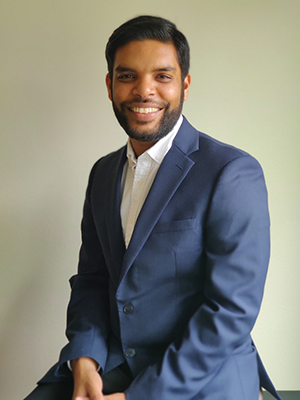
Jeyavijayan 'JV' Rajendran is an Associate Professor in the Department of Electrical and Computer Engineering at Texas A&M University, part of the College of Engineering. He is an ASCEND Fellow and leads the Secure and Trustworthy Hardware (SETH) Lab. His research focuses on hardware security, computer security, and novel applications of AI in secure hardware design. Education: PhD in Electrical Engineering (NYU 2015), MS in Computer Engineering (NYU Tandon 2010), BE in Electronics and Communication Engineering (Anna University 2008). Research Interests: Hardware Security, Computer Security, Logic Locking, Hardware IP Protection, and Reinforcement Learning for Security. He explores AI-driven approaches to detect vulnerabilities, protect intellectual property, and enhance secure hardware design through fuzzing, obfuscation, and formal verification. Notable Awards: 2022 Office of Naval Research Young Investigator Award, 2021 IEEE CEDA Ernest Kuh Early Career Award, 2017 NSF CAREER Award. Lab and Teams: The SETH Lab focuses on trustworthy hardware design, developing techniques to secure integrated circuits against reverse engineering and IP theft. Current projects include LLM-based hardware code generation, formal approaches for hardware fuzzing, and AI-driven vulnerability detection.