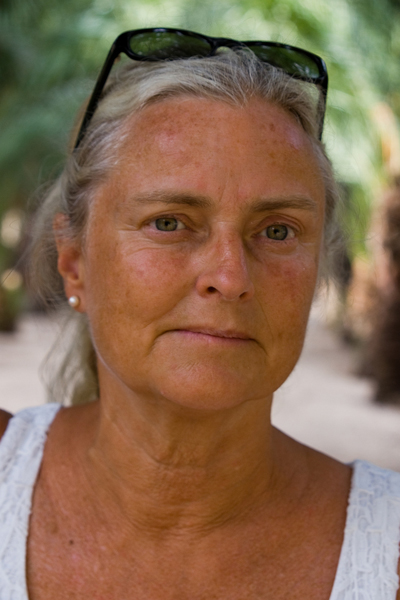
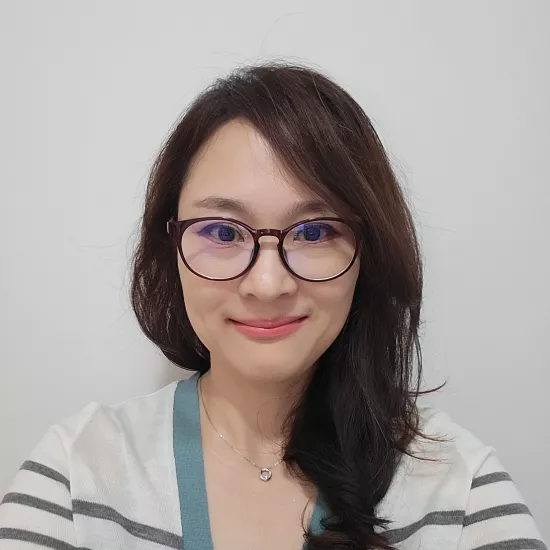
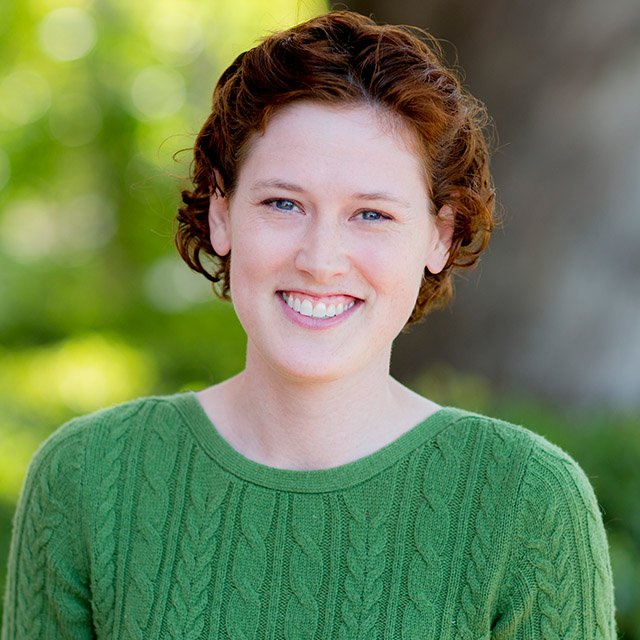
Carita Paradis is a Professor Emerita at Lund University's Centre for Languages and Literature, specializing in English Linguistics. She holds a PhD from Lund University (1997) and has held leadership roles including Chair of the Swedish Research Council's Linguistics panel (2010–2015). She coordinates the Language, Cognition and Discourse@Lund (LCD@L) research group, focusing on discourse meaning, language acquisition, and sociocultural variation. Her research spans cognitive linguistics, discourse analysis, semantics, and sensory language. She has authored/co-authored over 100 refereed publications, 5 books, and edited 10 journal volumes. Awards include membership in Academia Europaea (2016) and leadership roles in Scandinavian linguistic associations. She has supervised 14 PhD students and 8 postdocs, taught at all academic levels, and participated in numerous national/international research projects. Her editorial roles include serving on Cognitive Semantics, Languages, and Human Cognitive Processing series.
Richard Futrell is an Associate Professor at the University of California, Irvine (UCI), affiliated with the Department of Language Science. He leads the Language Processing Group, focusing on computational models of human and machine language processing. His work bridges information theory, Bayesian cognitive modeling, and natural language processing (NLP) interpretability. University of California, Irvine Department of Language Science Language Processing Group leader His research examines how linguistic structures emerge from cognitive and communicative pressures. Key areas include dependency locality, surprisal theory in sentence processing, and efficiency-driven language evolution. He investigates how memory constraints, predictability, and information density shape syntactic and morphological patterns across languages. Recent publications analyze code-switching efficiency, syntactic priming, ERP component modeling, and agent-based language contact simulations. His work frequently employs Bayesian modeling, neural network analysis, and cross-linguistic corpora to uncover universal principles in language processing. ACL Best Paper Award (2024) Best Paper Award for Computational Modeling of Language (2023) Marr Prize for Best Student Paper (2017) He has developed datasets like SPACER for error repair analysis and contributed to phonotactic learning frameworks. His collaborations span cognitive scientists, computational linguists, and neuroscientists, advancing understanding of language production, comprehension, and structural optimization.
Jan Buts is an Associate Professor at the Sustainable Health Unit within the Faculty of Medicine at the University of Oslo, specializing in the intersection of translation theory, medical humanities, and corpus linguistics with a focus on sustainable health and development discourses. His academic background includes: Linguistics and Literature studies at KU Leuven (Belgium) PhD in Translation and Intercultural Studies from the University of Manchester (UK) Postdoctoral research at Trinity College Dublin (Ireland) Assistant Professor position at Boğaziçi University (Turkey) Buts' research centers on corpus-assisted discourse analysis applied to translation theory, medical humanities, and sustainable development. He actively develops the Sustainability and Health Corpus to analyze how language shapes public health narratives, gender discourses in development aid, and conceptual frameworks around sustainability. His work bridges linguistic analysis with critical perspectives on social justice and health equity. Analysis of his recent publications reveals a strong trajectory toward integrating corpus linguistics with medical humanities and sustainable development goals. Key trends include examining gendered vulnerabilities in policy discourse, translation's role in knowledge dissemination for sustainability, and digital media's impact on health communication – all characterized by methodological innovation in corpus construction and conceptual analysis. His scientific recognition includes: Runner-up for the Martha Cheung Award (2023) Buts serves on the executive council of IATIS (International Association for Translation and Intercultural Studies) and leads multiple research initiatives including the SHE Corpus project. His grant activities focus on interdisciplinary collaborations between translation studies and medical humanities, particularly through projects like KNOWIT (Knowledge in Translation) and MEDRA (Medicalisation of Democratic Rights in Abortion debates). He directs the Sustainable Health Unit, fostering cross-disciplinary teams that combine linguists, medical researchers, and public health experts to advance data-driven critical analysis of health and sustainability discourses through innovative corpus methodologies.
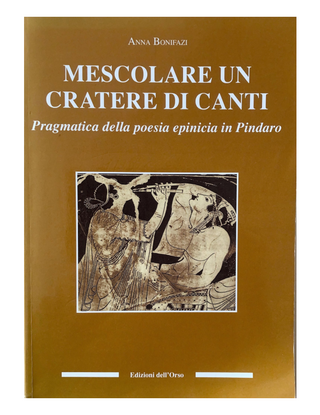
Prof. Anna Bonifazi holds a Professorship in Discourse Studies at the Department of Linguistics, University of Cologne. Her research spans Discourse Analysis, Pragmatics, Cognitive Linguistics, and Multimodal Communication with a focus on Ancient Greek Linguistics and Oral Epic traditions. She investigates phenomena like anaphoric cohesion in long texts, multimodal storytelling in film and oral traditions, and ancient Greek particles' discursive functions. Her work explores how multimodal elements (e.g., visual, musical, gestural) interact in communication, particularly analyzing films (e.g., mystery genres), ancient texts (e.g., Homeric epics), and South Slavic oral narratives. She examines cross-modal iconicity, viewpoint blending, and the cognitive underpinnings of discourse structures. Recent publications address topics like anaphoric strategies in crime stories and syntactic patterns in ancient Greek conversational frameworks. Prof. Bonifazi's research often bridges classical philology and modern cognitive theories, emphasizing embodied cognition and the interplay between language and other semiotic systems. She collaborates internationally on projects involving gesture analysis in storytelling and ancient papyrological studies. Her interdisciplinary work integrates linguistics with musicology, film studies, and cognitive science. Administratively, she oversees the Discourse Studies research group at Cologne and mentors assistants like Dr. Sandra Debreslioska and Madeleine Frings. Her lab focuses on multimodal discourse analysis using experimental and corpus-based methods.
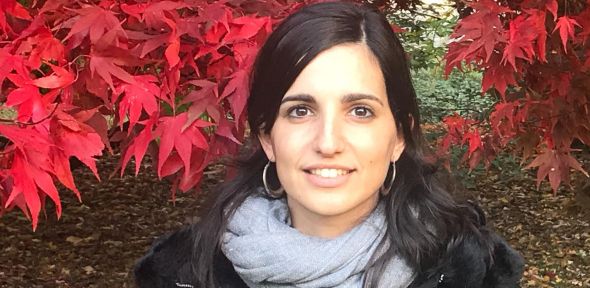
Dr Ares Llop Naya serves as an Affiliated Catalan Lecturer in the Department of Spanish and Portuguese within the Faculty of Modern and Medieval Languages and Linguistics at the University of Cambridge, while holding the Batista i Roca Fellowship at Fitzwilliam College. Her academic profile bridges theoretical linguistics with practical language pedagogy, focusing on Romance language structures and their educational applications. Her research centers on microsyntactic variation in Romance languages, particularly examining negation systems and syntactic phenomena in Catalan and Pyrenean varieties through both diachronic and synchronic lenses. She actively integrates theoretical insights into language teaching methodology, specializing in Catalan and Spanish pedagogy for both native and foreign language contexts. This dual focus manifests in her publications spanning syntactic theory, dialectology, and innovative language teaching approaches that address contemporary classroom challenges. Analysis of her publication trajectory reveals consistent thematic concentration on Romance microvariation, with recent work expanding into pedagogical applications. Her scholarship demonstrates methodological diversity—combining linguistic atlas data, corpus analysis, and classroom research—while maintaining core focus on Catalan syntax and its implications for language acquisition theory. The Pyrenean linguistic corridor remains a persistent geographical anchor across her diachronic and synchronic investigations. Dr Llop Naya's scholarly contributions have been recognized through prestigious awards: Joan Solà International Prize in Catalan Philology for her monograph on Romance negation systems Her teaching portfolio encompasses advanced courses in Romance linguistics, historical syntax, and sociolinguistics, with particular emphasis on translating theoretical frameworks into practical classroom resources. While specific grant funding details aren't publicly documented, her work consistently addresses real-world language education challenges through collaborative projects like the Microvariació.cat initiative. She contributes to the Microvariació.cat project—a digital repository documenting syntactic variation across Catalan dialects—which serves as both research infrastructure and pedagogical resource. This initiative exemplifies her commitment to creating practical applications from theoretical linguistic research while preserving endangered dialectal features of the Romance continuum.
Anna Theakston is a Professor of Developmental Psychology at the University of Manchester where she holds the position of Head of Division for the Division of Psychology Communication and Human Neuroscience. She is also Co-director of the ESRC International Centre for Language and Communicative Development (LuCiD), a major research initiative focused on language development in children. Dr. Theakston completed her undergraduate degree in Psychology at the University of Nottingham and earned her PhD through research at the University of Manchester on early language development in children aged 2-3 years. She subsequently coordinated the Manchester-based Max Planck Child Study Centre before being appointed to her current professorship. Her research focuses on children's early language and communicative development during preschool and early school years, situated within a usage-based framework that emphasizes child-environment interactions and caregiver input. Her work spans multiple areas including early gestural communication, caregiver-child interactions, grammatical construction acquisition, grammatical error origins, inflectional morphology, and syntax-semantics-pragmatics interfaces in complex language development. She frequently conducts crosslinguistic comparisons and employs diverse methodologies from corpus analysis to behavioral experiments, often collaborating with computational modelers. Analysis of her recent publications reveals strong emphasis on children's comprehension and production of complex sentence structures, particularly adverbial and complement clauses, with investigations into how information structure, iconicity, and pragmatic factors influence language development. Her work increasingly examines applications in real-world contexts including schools, nurseries, and cultural institutions, with growing attention to supporting deaf children's communication development and multilingual education. Co-Director, ESRC International Centre for Language and Communicative Development (LuCiD) Active researcher with 111 research outputs including articles, datasets, and book chapters Recipient of research funding from ESRC and Max Planck Institute Professor Theakston supervises numerous PhD students investigating various aspects of language development, with recent projects examining tag questions, cultural institutions' role in language learning for minority populations, science interventions for deaf children, and Modern Foreign Language teaching in multilingual classrooms. Her research has practical impact through tools like the Teacher Toolkit for Teaching Primary MFL in Multilingual Key Stage 2 Classrooms and initiatives supporting deaf children's social communication skills. She maintains active collaborations with researchers across multiple disciplines and institutions, as evidenced by her extensive co-authorship network. Her work contributes to UN Sustainable Development Goals related to quality education and reduced inequalities.
Professor Tony McEnery is a Distinguished Professor of English Language and Linguistics at Lancaster University, where he has held various senior roles, including Dean of the Faculty of Arts and Social Sciences (2008–2014) and Head of the Department of Linguistics and English Language (2000–2005). His research focuses on corpus linguistics, applied linguistics, and sociolinguistics, with notable contributions to corpus-based analyses of historical medical discourse, media representation of Islam, and swearing in English. He has led major research projects, including the ESRC Centre for Corpus Approaches to Social Science (CASS) and the Trinity Lancaster Corpus. McEnery has secured over £10 million in research funding and holds visiting professorships at institutions worldwide, including Zhejiang University of Media and Communications and Shanghai International Studies University. He is a Fellow of the Academy of Social Sciences, Trinity College London, and the Royal Society for the Arts. Education: No explicit details provided, but his career trajectory implies advanced degrees in linguistics. Research Interests: Corpus linguistics applications in theoretical and applied linguistics, historical language analysis, and language as a socially situated phenomenon. McEnery’s work extends to interdisciplinary collaborations, including projects with the Environment Agency and the Home Office. His teaching includes summer schools in corpus linguistics and a Futurelearn MOOC, reaching tens of thousands globally. He advises on research funding for international bodies like the Irish Research Council and the Qatar National Research Foundation. Grants and Awards: Queen’s Anniversary Prize (2015), Changjiang Chair (2021), and multiple fellowships. Current grants include the Lancaster-Northern Arizona corpus and the Trinity Lancaster Corpus projects. Advising and Labs: Supervises postgraduate students in linguistics and collaborates with teams like the ESRC CASS Centre and UCREL (University Centre for Computer Corpus Research on Language).
Dr. Anna Rogos-Hebda is an Assistant Professor at the Faculty of English, Adam Mickiewicz University in Poznań, Poland. She is actively involved in research and teaching in the fields of cognitive and historical linguistics, with a strong emphasis on diachronic semantics, emotion terminology, and corpus-based analysis. Faculty of English, Adam Mickiewicz University Researcher in Cognitive and Historical Linguistics Active contributor to international academic conferences Her research interests center on the language of emotions , conceptual metaphor theory , and the diachronic development of abstract categories in English and Polish. She employs corpus linguistics and cognitive semantics to investigate semantic change, particularly in Middle and Late Modern English. Her work explores how emotions such as hope, belief, and hate are linguistically encoded and evolve over time. The recent articles reflect a consistent focus on diachronic cognitive linguistics , with themes including semantic change in emotion terms , conceptualization of social categories (e.g., beggars, refugees, immigrants), and political and ideological discourse . Her methodology is predominantly corpus-based, often involving quantitative and multivariate analysis of lexical usage across time and cultures. She has not been awarded any formal scientific prizes or fellowships mentioned in the text. Dr. Rogos-Hebda has served as an assistant editor for Studia Anglica Posnaniensia (2001–2010) and has been actively involved in organizing academic events such as the History of English Language in Poznań (HEL-P) and Figurative Thought and Language (FTL) conferences. She has received research support through scholarships from the University of Helsinki and Otto Friedrich Universität, Bamberg, as well as a conference grant from the Foundation for Polish Science. She is a member of several professional organizations, including Societas Linguistica Europea (SLE), Polish Association for the Study of English (PASE), International Society for the Linguistics of English (ISLE), and The Philological Society (TPS). She regularly presents her work at major international conferences and contributes to collaborative research projects, particularly with scholars like Małgorzata Fabiszak and Karolina Krawczak-Glynn.
Professor Claire Hardaker is a leading scholar in Forensic Linguistics at Lancaster University's School of Social Sciences. Her research focuses on aggression, deception, and manipulation in computer-mediated communication (CMC) for evidential and intelligence purposes. Research interests include: Corpus linguistics methodologies Online trolling and impoliteness Vaccine discourse analysis Forensic applications of linguistic analysis Current projects include: "Forensic linguistics, Cybersecurity and Technology Research: Operations Suite" (2023-2026) "Questioning Vaccination Discourse (Quo VaDis)" (2021-2024) Contact: c.hardaker@lancaster.ac.uk
Shunichi Ishihara is a Professor at the School of Culture, History & Language, The Australian National University, where he leads research in forensic linguistics and computational linguistics. His work focuses on forensic text and voice comparison, authorship attribution, and Japanese linguistic studies. He holds qualifications including a PhD (ANU), MSc (Macquarie), MA (ANU), and BEd (Shizuoka). Research Interests: Forensic Voice/Text Comparison Computational Linguistics Intonational Modelling Japanese Language Processing Stylometric Analysis Research Trends: Recent work emphasizes likelihood ratio-based systems for authorship verification, fusion of acoustic and text features for forensic analysis, and applications of deep learning in text evidence evaluation. His studies often explore cross-lingual comparisons (e.g., Japanese, English, Vietnamese) and system validation methodologies. Grants & Projects: "Likelihood project on author recognition" (2024-2026) "Big Australian Speech Corpus" (2010-2015) Multiple forensic voice/text comparison initiatives Labs & Teams: Director of the Speech and Language Lab, collaborating on speech corpus development and forensic linguistic systems.
Laurence Anthony is a Professor at Waseda University's School of Creative Science and Engineering, specifically affiliated with the Center for English Language Education in Science and Engineering (CELESE). He has held this position since 2009, having previously served as an Associate Professor at the same institution from 2004-2009. His academic journey began with a BSc from The University of Manchester (1991), followed by an MA (1997) and PhD (2002) from The University of Birmingham. Anthony's research centers on corpus linguistics, educational technology, and natural language processing applications in foreign language teaching. He is renowned for developing AntConc, a widely used freeware corpus analysis toolkit, along with numerous other educational software tools including AntWordProfiler, FireAnt, and ProtAnt. His work bridges linguistic theory with practical classroom applications, particularly in data-driven learning approaches for English as a Foreign Language contexts. His publication record is extensive with over 50 papers, 12,115 Google Scholar citations, and an h-index of 45. His recent work increasingly explores the intersection of corpus linguistics and artificial intelligence, examining how language models can enhance language teaching and analysis. Anthony's research has evolved from foundational corpus tool development to sophisticated applications in vocabulary profiling, writing analysis, and AI-assisted language learning. Among his notable recognitions are the Waseda University 6th e-Teaching Award (2018), the National Prize of the Japan Association of English Corpus Studies (2012), and the L'Oreal Art and Science of Color Gold Prize (2005). He serves on multiple editorial boards including for Studies in Corpus Linguistics, Journal of Asia TEFL, and Corpus Linguistics Research Journal. Anthony actively contributes to the academic community through numerous presentations at international conferences, recent ones including talks on AI integration with corpus methods at Corpus Linguistics 2025 and the LSP-Num Conference. His professional activities demonstrate ongoing engagement with both theoretical developments and practical applications in language education technology.
Chelo Vargas Sierra is a Professor at the University of Alicante, affiliated with the Department of English Philology within the Faculty of Philosophy and Letters I (Philology). As a founding member and director since 2021 of the Interuniversity Institute of Applied Modern Languages (IULMA), she leads innovative research in terminology and translation technologies. Her academic background includes a PhD in Translation and Interpreting, a Master's in Audiovisual Translation (University of Cádiz), and a Master's in Terminology (Universitat Pompeu Fabra). PhD in Translation and Interpreting (University of Alicante) Máster en Traducción Audiovisual (University of Cádiz) Máster en Terminología (Institut Universitàri de Llingüística Aplicada) Her research focuses on terminology applied to translation, specialized languages (English-Spanish), corpus linguistics, and gender-sensitive terminology. She directs the DIGITENDER project (TED2021-130040B-C21) for digitizing multilingual terminological resources. She has participated in over 90 international conferences and chaired events like enTRetextos 2021 and AESLA 2016. Recent publications highlight trends in metaphor analysis in medical discourse, gender-sensitive terminology, and cross-linguistic sentiment studies in financial journalism. She chairs the Technical Standardisation Committee 191 for Terminology and has delivered 50+ international seminars for institutions like the European Union. Doctorate Extraordinary Award She serves on editorial boards of journals like Ibérica and Sendebar , contributes to translation technology training, and collaborates in international academic programs. Her work combines theoretical research with practical applications in translation technologies and terminological standardization.
Ji-young Shin serves as an Assistant Professor in the Teaching Stream within Education Studies at the University of Toronto Mississauga's Department of Language Studies. Her position integrates teaching, research, and practical application in language education with emphasis on assessment innovation and technology integration. Her academic credentials include: PhD in English / Second Language Studies & ESL from Purdue University, USA MS in Educational Psychology & Research Methodology from Purdue University, USA MA in Teaching English to Speakers of Other Languages (TESOL) from Hankuk University of Foreign Studies, South Korea BA in English Education (Japanese minor) from Hankuk University of Foreign Studies, South Korea Shin's research program focuses on language assessment, corpus linguistics, and technology-mediated pedagogy. She employs mixed methods with quantitative emphasis, utilizing corpus-informed computational analysis and latent-trait modeling complemented by qualitative discourse analysis. Her work addresses critical gaps in second language acquisition, educational measurement, and digital learning environments, particularly regarding AI applications and test validation across diverse language contexts. Her publication trajectory from 2017-2025 demonstrates consistent innovation in language assessment methodologies and technology integration. Key themes include AI-powered chatbots for L2 Korean instruction, online vocabulary testing for Spanish, and corpus-based writing pedagogy. Her work shows increasing focus on artificial intelligence applications and cross-linguistic validation studies, reflecting evolving priorities in language education research. Shin has secured competitive research funding including: Global Classrooms Grant (2025–2026) for VR-enhanced intercultural competence Black, Indigenous, and/or Racialized Scholar Grant (2025–2026) for cross-border AI language learning IRCC Engage3 Project (2022–2024) as Co-PI on VR/AI educational advancement Advancement Fund Plus (2022) for generative AI in teacher education British Council Award (2019) for technology-mediated assessment development She teaches advanced courses including 'The Future of Ed Tech: Active Learning Classrooms and Artificial Intelligence' (EDS285) and supervises community-based experiential learning (EDS388). Her grant portfolio indicates active supervision of research assistants and collaboration with international teams focused on AI implementation and assessment validation. Current projects explore generative AI for language learning across diverse contexts and virtual reality applications in teacher education. While specific laboratory infrastructure isn't documented, her collaborative publications with researchers across Korea, Spain, and the United States suggest participation in international research networks focused on language assessment technology and corpus applications.
Stephanie Smith Matthews is a Full-Time Associate Professor of Old Testament at Point Loma Nazarene University (PLNU). She holds a PhD in Hebrew Bible and Ancient Israel from Vanderbilt University, an M.T.S. in Biblical Studies from University of Notre Dame, and dual B.A. degrees in Biblical Studies & Spanish from Olivet Nazarene University. Specializes in Hebrew Bible, Gender Studies, and Theological Ethics Focuses on reproductive health narratives, prophetic imagination, and justice themes Active in Society of Biblical Literature and Wesleyan Theological Society Her research connects ancient texts with modern bioethical concerns through interdisciplinary approaches. Publications span topics from maternal pain in Genesis to Wesleyan theological applications. 2024 presentations on ancient pain narratives and AuDHD preaching 2020-2024 grants and fellowships support her theological scholarship Notable contributions include co-edited textbooks and critical analyses of gender dynamics in biblical contexts.
Assoc. Prof. Dr. Ali Şükrü Özbay currently serves as an Associate Professor at Karadeniz Technical University's Faculty of Arts, Department of English Language and Literature. He earned his PhD and MA in Applied Linguistics from Karadeniz Technical University and holds a BA in English Language and Literature from Ankara University. Education : PhD (2015) and MA (2004) from Karadeniz Technical University; BA (1996) from Ankara University Dr. Özbay's research focuses on Corpus Linguistics , Learner Corpora , Academic Writing , Translation Studies , and Language Pedagogy . His work investigates lexical bundles, support verb constructions, and pragmatic markers through computational corpus analysis. Recent publications analyze four-word recurrent expressions in educational technology contexts, collocational priming in Turkish EFL learners' mental lexicon, and semantic prosody of intensifiers in academic corpora. He supervises theses on data-driven learning applications and corpus-based teaching materials. Dr. Özbay has held managerial roles including Deputy Head of Department (2019–present) and Assistant Coordinator for Erasmus+ programs (2017–2021). He actively participates in international conferences and has published in journals like Turkish Studies , Australian Journal of Applied Linguistics , and Hacettepe Eğitim Dergisi .