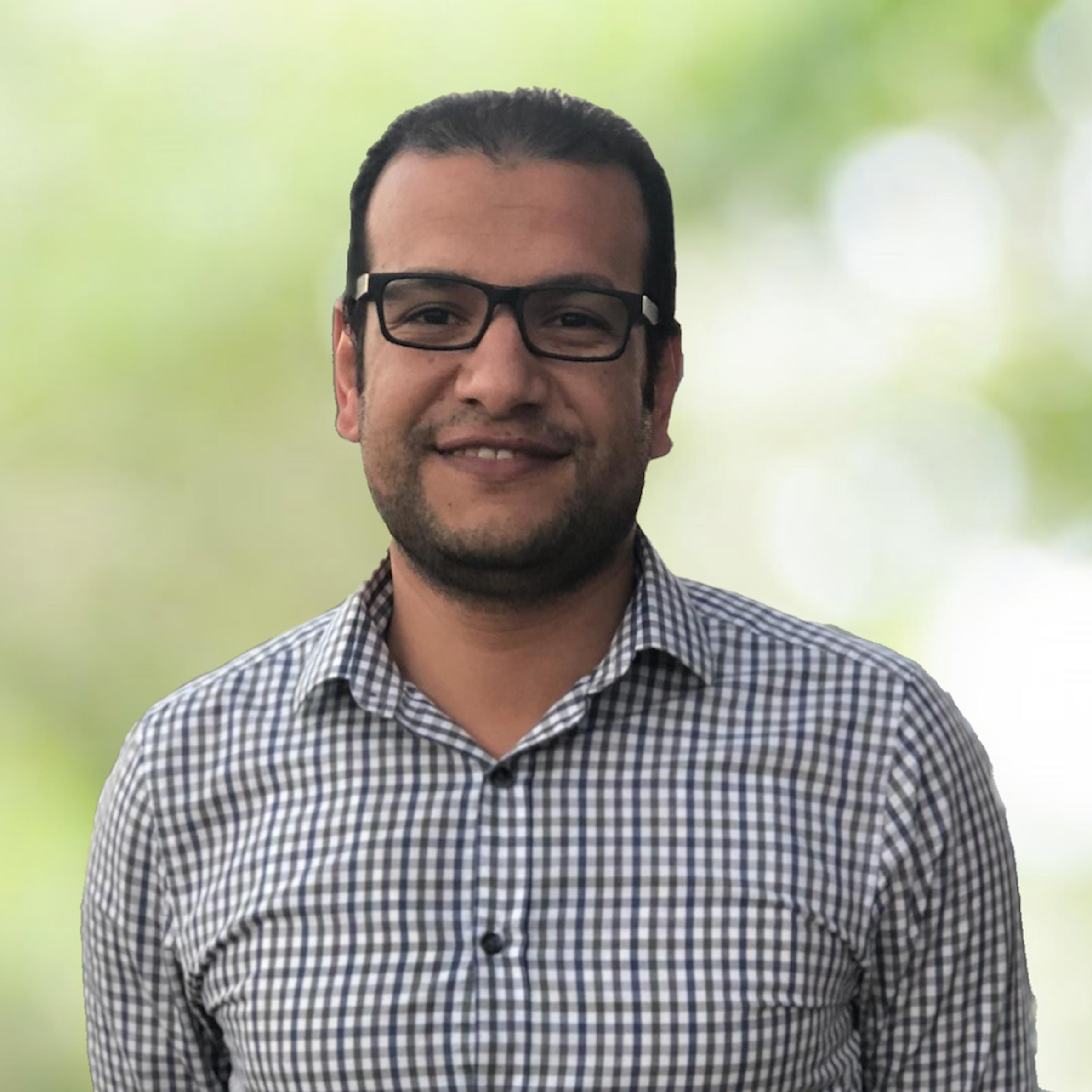
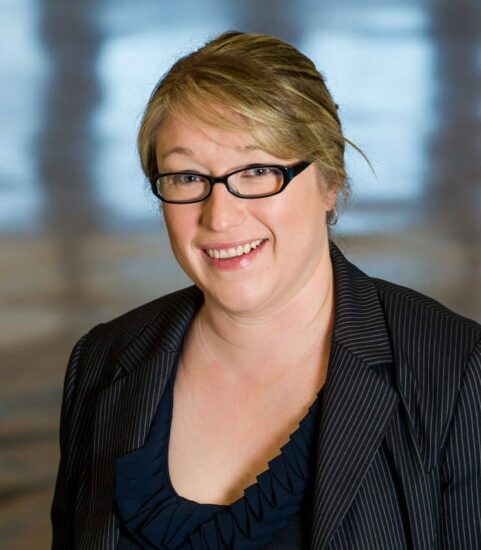
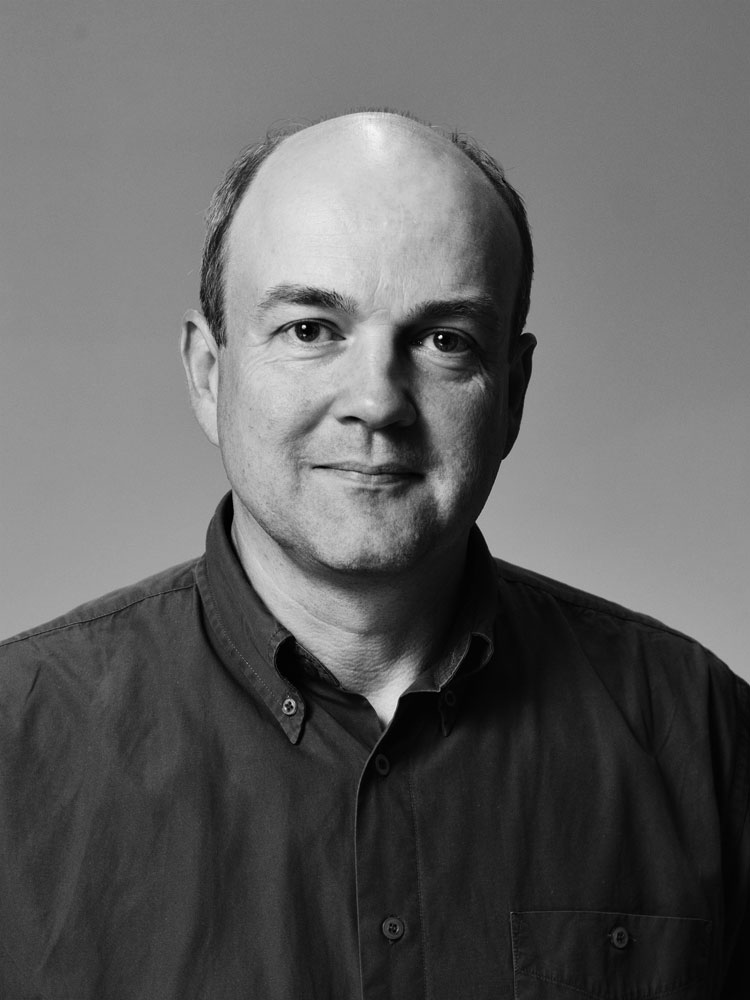
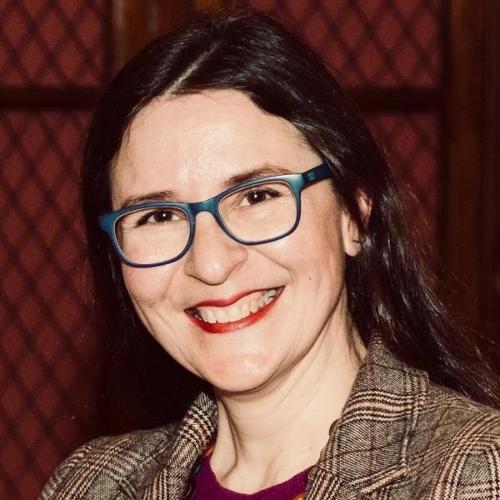
Elsayed Issa is an Assistant Professor in the School of Languages and Cultures at Purdue University. Specializing in Computational Linguistics and Arabic, his interdisciplinary research bridges Natural Language Processing (NLP) with Second Language Acquisition (SLA), focusing on conversational AI and speech technology for under-resourced languages. Ph.D. in Linguistics from the University of Arizona (2023) Research integrates NLP, conversational AI, and SLA methodologies Develops tools for computer-assisted pronunciation training (CAPT) Focuses on Arabic dialectology and large language models (LLMs) His work employs Transformer architectures and end-to-end machine learning to enhance language learning systems. Recent projects include ArabiBot development and dialect identification models. He specializes in speech-to-text systems , prosody modeling , and emotional speech analysis for Arabic language learning applications.
Professor Emma Moore is a leading sociolinguist at the School of English, University of Sheffield . Specializing in the social dimensions of language, her work integrates methodologies from anthropology and sociology to investigate how linguistic variation constructs identity and social affiliations. Research focus: Sociolinguistic style, dialect contact, youth language, identity negotiation, and community-based fieldwork Key projects: Adolescence and grammar (1999-), Isles of Scilly dialect (2008-), language and inequality (2014-), language perception software (2016-) Educational background : PhD in Sociolinguistics, University of Manchester Stanford University (USA) during PhD research Research trends across her 2021-2025 publications reveal interdisciplinary exploration of: Socio-syntactic variation Clinical linguistics (2025 MDS-UPDRS studies) Digital discourse post-pandemic Indexicality and cognitive representations Dialect contact in insular communities Educational policy implications Scientific recognition : British Academy Mid-Career Fellow (2019-2020) Elected Fellow, Royal Anthropological Institute (2014) AHRC/BA funded research projects (1999-2015) Research group leadership : Mentored 9 PhD students (2004-2024) and supervised 3 undergraduate SURE projects, including analyses of: Gender in rap performance Language style and workplace inequality Oral history digitization Professional contributions : Editorial Board: Language in Society (2015-), Gender and Language (2011-2017) External Examiner: Lancaster University MA in English Language (2013-2017) Collaborative software development for dialect perception testing
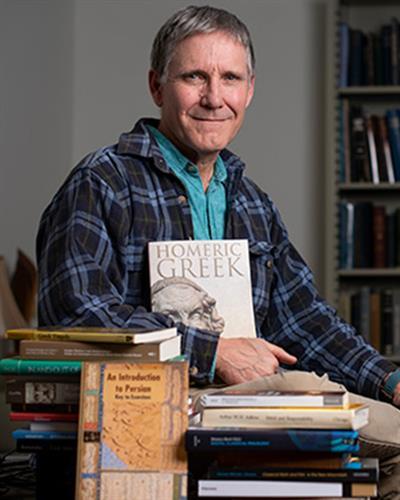
Gregory Crane is Professor of Classical Studies and Computer Science at Tufts University, where he holds the Winnick Family Chair in Technology and Entrepreneurship and serves as Chair of the Classical Studies Department. He also maintains a professorship in the School of Engineering's Computer Science department. Previously, he was Alexander von Humboldt Professor of Digital Humanities at Leipzig University in Germany from 2013-2019. PhD in Classical Philology, Harvard University (1985) BA in Classics, Harvard University (1979) Crane's research bridges traditional classical scholarship with digital technology. His work in classical studies focuses on ancient Greek authors, particularly Thucydides, with two major books published on the subject. Simultaneously, he has been a pioneer in digital humanities, beginning work on digital tools for classics as a graduate student in 1982. He is the Editor-in-Chief of the Perseus Project, which he has directed since 1985, developing morphological analysis systems and overseeing the project's evolution through multiple generations of digital library technology. His recent publications demonstrate a strong trend toward integrating artificial intelligence with classical language studies, developing next-generation digital libraries, and exploring new methods for engaging with classical texts in the digital age. Crane's work increasingly focuses on making ancient languages more accessible through technology, with research spanning digital philology, language learning tools, and corpus-based approaches to historical languages. Winnick Family Chair in Technology and Entrepreneurship Alexander von Humboldt Professor of Digital Humanities Crane has secured substantial research funding from major organizations including the National Endowment for the Humanities, the Andrew W. Mellon Foundation, the National Science Foundation, and Google. His current and recent projects include "Reinventing the study of ancient languages" and "Beyond Translation -- new possibilities for reading in a digital age." He has advised numerous students through senior honors theses and directed dissertation research in Classical Studies at Tufts University. Crane leads the Perseus Digital Library research program, which has evolved through multiple generations of technology to become a leading resource for classical studies. His work has established critical infrastructure for digital classics, including named entity identification systems and morphological analysis tools that have shaped the field of digital humanities.
Dr. Susana Castro-Kemp is an Associate Professor in Psychology and Human Development at University College London's Institute of Education (IOE), where she serves as Director of the Centre for Inclusive Education (CIE) since September 2023. Previously, she was a Reader in Education at the University of Roehampton for eight years. Her work focuses on inclusive education policy and practice globally, with particular expertise in special educational needs and disabilities (SEND), early childhood intervention, and mental health in schools. The IOE has been ranked number one in the world for Education for several consecutive years, providing an ideal environment for her impactful research. Dr. Castro-Kemp holds a PhD in Psychology jointly awarded in 2012 by the University of Porto (Portugal) and the University of North Carolina at Chapel Hill (USA). Her doctoral research was fully funded by the Foundation for Science and Technology/European Commission and the Global Education and Development Studies scholarships. She is a Chartered Psychologist with the British Psychological Society, a Senior Fellow of Advance HE, and a Recognised Research Supervisor by the UK Council for Graduate Education. Dr. Castro-Kemp's research centers on policy regulating education, health, and welfare services for children, particularly those with support needs. She examines inclusive education practices from users' perspectives, policy models leading to effective inclusive pedagogy, and country-level policy impacts on outcomes for children with special educational needs. Her work moves away from diagnostic labels toward engagement and civic participation as educational outcomes. She also investigates inclusion and early intervention in low- and middle-income countries, mental health in schools, and quality of early childhood education. Her recent publications reveal several key trends in inclusive education research. There's growing emphasis on understanding educational experiences through the voices of children and families rather than diagnostic labels. Much of her work examines the implementation gap between inclusive education policy and classroom practice. She has conducted significant research on how children with special educational needs experienced the pandemic, revealing both challenges and unexpected "silver linings" for some groups. Her corpus analysis of Ofsted reports shows narrow focus in early childhood education inspections, while her work on SEND policy increasingly takes an international comparative approach. Dr. Castro-Kemp has received recognition for her impactful work, including: Best Digital Humanities Project for Community Engagement Prize (2023) from the National Institute of Humanities and Social Sciences of South Africa for her project "Optimising collaborations and reducing inequalities of Early Childhood Intervention in post-Covid-19 South Africa" Dr. Castro-Kemp has secured approximately £1.3 million in research funding from various sources including ESRC, British Academy/Leverhulme Trust, European Commission, and private sponsors. Her current major project is 'ScopeSEND' (2024-2026), funded by the Nuffield Foundation (£250,000), examining international SEND policies. She has led numerous projects including "Transdisciplinary provision for children with disabilities in the Global South" (£3,500), "Optimising collaborations in South Africa" (£47,200), and "Froebel meets Ofsted" (£19,185). As a supervisor, she mentors MA/MSc and PhD students in education policy, early childhood, and inclusive education, having been nominated for student choice awards for excellent feedback and outstanding research supervision. As Director of the UCL Centre for Inclusive Education since 2023, Dr. Castro-Kemp leads a team focused on advancing knowledge exchange and research in inclusion and special needs. The Centre works with schools, educators, parents, and early years settings to translate research into practice. Her international collaborations include work with the World Health Organization as a technical advisor on the use of the International Classification of Functioning, Disability and Health (ICF) system in educational contexts. She also serves on the SEN Policy Research Forum and has provided oral evidence to the House of Commons Education Select Committee.
Christiane Fellbaum serves as Lecturer with Rank of Professor in Princeton University's Program in Linguistics and Department of Computer Science, where she has been a senior research scholar since returning in 1987 after postdoctoral work at the University of Paris. Her foundational contributions to computational linguistics include co-developing WordNet and co-founding the Global WordNet Association. Her educational background features: Ph.D. in Linguistics, Princeton University (1980) Postdoctoral Fellowship, University of Paris Fellbaum's research integrates theoretical linguistics with computational applications, specializing in lexical semantics, corpus analysis, and semantic network construction. Her work bridges computational linguistics and lexicography through projects like WordNet and Medical WordNet, with recent emphasis on multilingual resources, bias analysis in embeddings, and African language technology development. She examines semantic phenomena including idioms, verb alternations, and emotion scales through both corpus linguistics and formal ontological frameworks. Analysis of her publication trajectory reveals sustained innovation in lexical resource development since the 2000s, evolving from foundational WordNet studies to contemporary work on large language model adaptation and social bias mitigation. Current research demonstrates increasing interdisciplinary collaboration across NLP, cognitive science, and social justice applications. Her scientific recognition includes: Wolfgang Paul Prize from the German Humboldt Foundation (2001) Antonio Zampolli Prize (2006) Fellbaum has secured continuous research funding from the U.S. National Science Foundation, European Union Seventh Framework, Frank Moss Foundation, and Tim Gill Foundation. She actively mentors junior researchers through Princeton's Independent Work seminars and hosts the North American Computational Linguistics Olympiad (NACLO), while leading major international collaborations including the KYOTO and SIERA European projects. As director of the WordNet project and permanent fellow at the Berlin-Brandenburg Academy of Sciences, she maintains leadership in global lexical resource initiatives through the Princeton Language and Intelligence initiative and Natural and Artificial Minds research group.
Sam Pizelo is an Assistant Professor of Game Studies at the Institute for Communication, Culture, Information & Technology (ICCIT), University of Toronto. His research investigates the role of games as modeling technologies in the development of computing, artificial intelligence, and neoliberal capitalism. He is actively engaged in both scholarly and creative practices, integrating media art, data science, and game design into his academic work. Research Interests: Sam's work spans game studies, digital humanities, media theory, and critical computing. He explores how games function as epistemic tools that shape knowledge production, particularly in technoscientific domains. His research connects historical analysis with contemporary digital methods to examine the cultural and philosophical implications of games. The recent publications reflect a strong focus on the historical and systemic roles of games in shaping modern computing and thought. Themes include the modeling revolution, systems thinking, and the deep cultural roots of game logic. His work bridges humanities scholarship with computational practice. Scientific Contributions: Co-creator of Project Quintessence , a corpus exploration framework combining machine learning and dynamic visualizations for archival research. Founding member of the Degrowth Game Design Project (DeGDP) , a multi-campus initiative exploring games for post-growth futures. Sam Pizelo is an active researcher and media practitioner without listed advisees or awards in the provided text. He maintains academic affiliations with the University of Toronto and previously held a visiting position at NYU.
Joakim Nivre is a Professor at Uppsala University's Department of Linguistics and Philology. He is a leading researcher in computational linguistics, with a focus on dependency parsing, Universal Dependencies (UD) framework development, and multilingual NLP applications. His recent work explores LLMs in climate change discourse analysis, pharmacovigilance explainability, and historical text processing. Key research areas: Dependency parsing theory, Universal Dependencies standardization, LLM evaluation Collaborations: SweSAT-1.0 benchmark development, ClimateEval project, PARSEME integration His 2025-2023 publications demonstrate expertise in explainable AI for healthcare, synthetic data generation for idioms, and multilingual benchmark design. Notably, he co-developed SweSAT-1.0 to evaluate Swedish LLMs and contributed to typology-informed UD revisions. Despite extensive work in NLP, no scientific awards are mentioned in available texts.
Gabrielle Hodge is a Senior Lecturer in Sign Language Linguistics at the University of Edinburgh's School of Philosophy, Psychology and Language Sciences. A deaf researcher, she specializes in sociolinguistics related to deaf communities, sign languages, and multimodal communication. Her work incorporates corpus linguistics, applied linguistics, and semiotics methodologies. Education: PhD in Linguistics (Macquarie University, 2014), BA (Hons) in Linguistics (La Trobe University, 2008). Teaching includes undergraduate and postgraduate courses in sign language linguistics and sociolinguistics. She chairs the University BSL Plan Implementation Group (2024-2030) and actively supervises PhD and MSc students in deaf community research. Research focuses on accessibility, sign language corpus methods, and inclusive language theory. Notable projects include the Accessibility & Inclusion Toolkit for deaf Australians and Signing to Know & Survive , exploring deaf communication resilience. She develops training for educators and interpreters, emphasizing direct access without relay systems. Key contributions include advancing corpus-driven sign language research, analyzing deaf professionals' trust in interpreters, and creating climate change resilience resources in Auslan. Her work challenges traditional linguistic frameworks to better incorporate deaf perspectives and embodied communication practices.
Giuseppe Rizzo is a Full Professor at the Department of Maternal and Child Health and Urological Sciences, Sapienza University of Rome. His academic career focuses on Maternal Fetal Medicine, with expertise in ultrasound applications, fetal growth restriction, preeclampsia, and congenital anomalies. Research Interests : Delivery optimization, prematurity prediction, ultrasound diagnostics, and placental anomalies. Recent Publications : Over 15 high-impact studies in 2024-2025 on topics like umbilical cord abnormalities, cerebroplacental ratios, and gestational diabetes complications. Clinical Expertise : Prenatal counseling, Doppler ultrasound, and labor management protocols. Collaborations : Active in multicenter trials across Italy and Europe, with a focus on fetal neurosonology and high-fidelity obstetric simulation.
Jessica Brannon-Wranosky is a Professor in the Department of History within the College of Humanities, Social Sciences and Arts at East Texas A&M University. She specializes in women, gender and sexuality history and digital humanities applications, and currently serves as Project Director for the Handbook of Texas Women, a statewide public education initiative of the Texas State Historical Association. Her educational background includes: Ph.D. in History from the University of North Texas M.S. in History from Texas A&M University-Corpus Christi B.S. in Political Science from Texas A&M University-Corpus Christi Dr. Brannon-Wranosky's research centers on 19th-20th century U.S. women's history with regional focus on Texas and the South, examining suffrage movements, gender dynamics, and digital historical methodologies. Her work bridges academic scholarship with public engagement through digital platforms and educational outreach. Her publication portfolio reveals consistent thematic focus on Texan women's historical agency, with recent works emphasizing digital curation of primary sources and intersectional analysis of suffrage activism. The Handbook of Texas Women project exemplifies her commitment to transforming archival materials into accessible public resources. Her scholarly contributions have been recognized with: John H. Jenkins Award (Texas State Historical Association, 2015) Best Article Award (Texas Oral History Association, 2016) Liz Carpenter Award (2016) for co-edited volume Texas Women/American Women As lead investigator for the Handbook of Texas Women project, she directs a multidisciplinary team developing digital infrastructure for statewide historical content, collaborating with museums and educational institutions to produce exhibits like the Bob Bullock Texas History Museum's 2019-2020 suffrage exhibition.
Kostas Daniilidis is the Ruth Yalom Stone Professor at the University of Pennsylvania in the School of Engineering and Applied Science , specifically the Department of Computer and Information Science . He is also affiliated with the GRASP Laboratory and Archimedes, Athena Research Center, Greece . Education : PhD in Computer Science (1992) from the University of Karlsruhe with Hans-Hellmut Nagel Diploma in Electrical Engineering (1986) from the National Technical University of Athens Research Interests : Kostas Daniilidis is a leading researcher in Computer Vision and Robotics , with significant contributions to event-based vision , equivariant learning , 3D human pose estimation , and hand-eye calibration . His work spans neural rendering , dynamic scene modeling , and low-latency sensing systems . Article Trends : Daniilidis’s recent publications focus on event cameras for low-light and high-speed applications, Gaussian splatting for real-time 3D reconstruction, and equivariant neural architectures for robust motion estimation. His work bridges deep learning with geometric vision , emphasizing human mesh recovery and multi-agent coordination . Scientific Awards : Best Conference Paper Award at ICRA 2017 IEEE Fellow (2012) Teaching : He has taught courses such as CIS580: Machine Perception and CIS121: Data Structures , alongside advanced topics in robotics and computer vision. Lab & Collaborations : As director of the GRASP Laboratory (2008–2013), he fostered interdisciplinary research in robotics, and currently collaborates with institutions like the Athena Research Center in Greece.
Jennifer Edmond is Associate Professor of Digital Humanities and co-director of the Trinity Center for Digital Humanities at Trinity College Dublin, where she also directs the MPhil in Digital Humanities and Culture. She holds a PhD in Germanic Languages and Literatures from Yale University and specializes in applying advanced methods and infrastructures for arts and humanities research. Her research focuses on Digital Humanities, Research Infrastructures, Open Science, Cultural Heritage, and Knowledge Technologies. She has developed significant expertise in European research policy, having coordinated the €6.5m CENDARI FP7 project and participated in numerous EU initiatives including PARTHENOS, Europeana Cloud, and the Computational Literary Studies Infrastructure (CLS Infra). Dr. Edmond maintains an active publication record exploring digital scholarly editing, privacy in literary texts, open science practices, and cultural heritage narratives. Her recent work demonstrates a strong focus on the intersection of technology and democracy, digital ethics, and innovative methodologies for humanities research. Awards and Honors: Named one of Ireland's five 'Champions of EU Research' (2012) She served as President of DARIAH-EU's Board of Directors (2018-2022) and represented the organization on the European Commission's Open Science Policy Platform. Dr. Edmond has contributed to strategic developments at national and institutional levels, while actively promoting public outreach through various media formats and art installations.
Martin Volk is a Full Professor of Computational Linguistics at the University of Zurich, with a dual affiliation to the Department of Informatics since 2019. He holds a PhD from the University of Koblenz and has held academic positions at institutions including Stockholm University (part-time from 2008-2011), Zurich University of Applied Sciences, and the University of Georgia. His research focuses on grammar engineering, machine translation evaluation, multilingual text analysis, and cross-language information retrieval. Education : Born in Cochem, Germany Studied Computer Science and Computational Linguistics at EWH University, Koblenz Master's in Artificial Intelligence at the University of Georgia (Fulbright Scholar) PhD in Computational Linguistics from the University of Koblenz Research Interests : His work emphasizes data-driven NLP methods, including corpus-based approaches, parsing technologies, and the application of machine learning to historical and multilingual texts. Key focuses include: Machine translation systems and evaluation frameworks Grammar testing environments (e.g., GTU) OCR and digitization of historical documents (e.g., Gothic script) Development of parallel corpora for linguistic research Projects : SMULTRON: Multilingual parallel treebank project Bullinger Digital: Historical document digitization initiative Text+Berg: Digital Humanities project for alpine textual heritage EU-funded MuchMore (cross-language medical IR) Grants & Collaborations : Recipient of grants from the Swiss National Science Foundation, EU projects, and industry partnerships (e.g., Siemens, Xerox). His work integrates academic and industrial perspectives in NLP tool development. Labs & Teams : Leads research teams in the Institute of Computational Linguistics at UZH, focusing on projects like the Zurich Parallel Corpus Collection and MODERN (modeling discourse for MT).
Erik Velldal is a Professor in the Language Technology Group (LTG) at the Section for Machine Learning , Department of Informatics, University of Oslo . With over 25 years of experience in machine learning and natural language processing (NLP), he leads the SANT project focused on sentiment analysis and contributes to major research initiatives including MediaFutures , NorwAI , and Integreat (Norwegian Center for AI Research). His work bridges linguistic theory and computational methods, emphasizing semantic modeling and uncertainty detection. Research interests include sentiment analysis , language modeling , event extraction , and machine learning applications to NLP. Recent publications address cross-domain sentiment classification , generative event analysis , and multilingual model adaptation . He co-developed the Norwegian Review Corpus (NoReC) and Norwegian Anaphora Resolution Corpus (NARC) , foundational resources for Norwegian NLP. His projects often involve collaboration with international institutions, reflected in publications at venues like ACL, COLING, and EMNLP. Current efforts focus on entity-level sentiment analysis , diagnostic datasets for Norwegian , and evaluating compositional generalization in language models. No public record of scientific awards or part-time appointments exists.
Dr. Selja Seppälä is a Lecturer in Business Analytics within the Department of Business Information Systems at Cork University Business School, University College Cork. She specializes in Natural Language Processing, applied ontology, terminology, and corpus studies with applications across multiple domains including linguistics, legal informatics, biomedical informatics, and education. Her research focuses on developing AI technologies that combine Large Language Models and other NLP techniques with curated ontologies to enhance data quality, transparency and trustworthiness in information systems. Dr. Seppälä currently leads the AI-LIEN project, which uses AI-powered technologies for learning analytics, and collaborates on projects investigating the impact of AI on organizations and legislative review. Natural Language Processing (NLP) Applied Ontology and Terminology Corpus Studies AI Technologies for Information Systems Large Language Models integration Legal Informatics applications Dr. Seppälä's scholarly contributions include 43 publications in international outlets and 27 open-source research artifacts. Her work has secured approximately €500,000 through competitive research grants, demonstrating significant impact in her field. Marie Skłodowska-Curie Career-FIT Fellow (2019-2022) Dr. Seppälä serves on the editorial board of Applied Ontology (IOS Press) and as Communication Co-officer and Substitute Auditor for the International Association for Ontology and its Applications (IAOA). She actively contributes to academic service as a reviewer for journals including the European Journal of Information Systems and Terminology, and regularly participates in program committees for international conferences focused on computational linguistics, natural language processing, applied ontology, and financial technology applications. At UCC, she contributes through the development of the CUBS Canvas Template and membership in the CUBS Digital Learning & Teaching Committee.