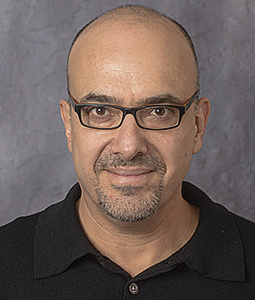
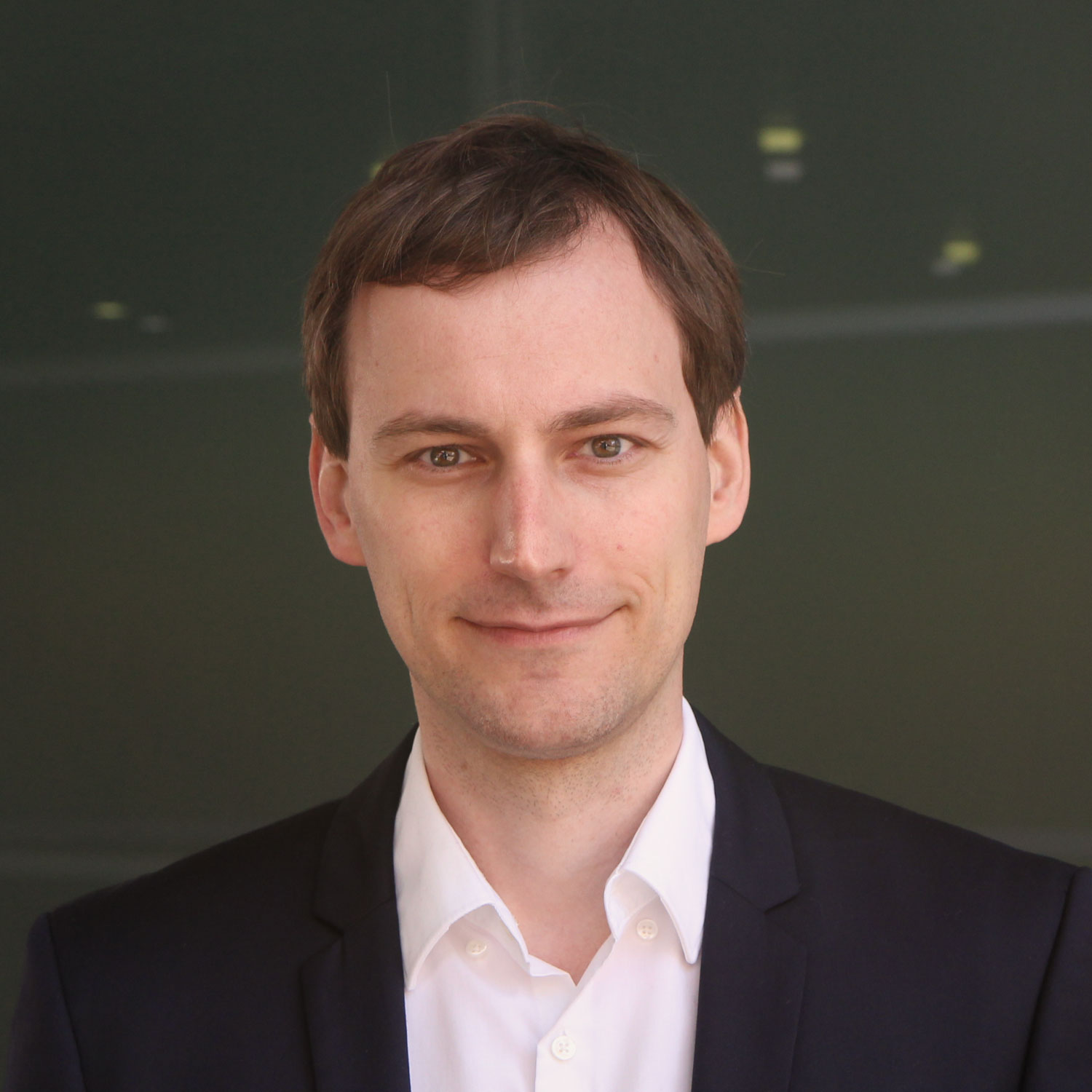
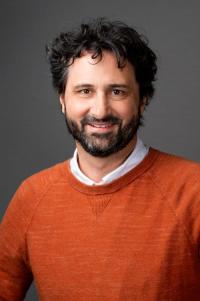
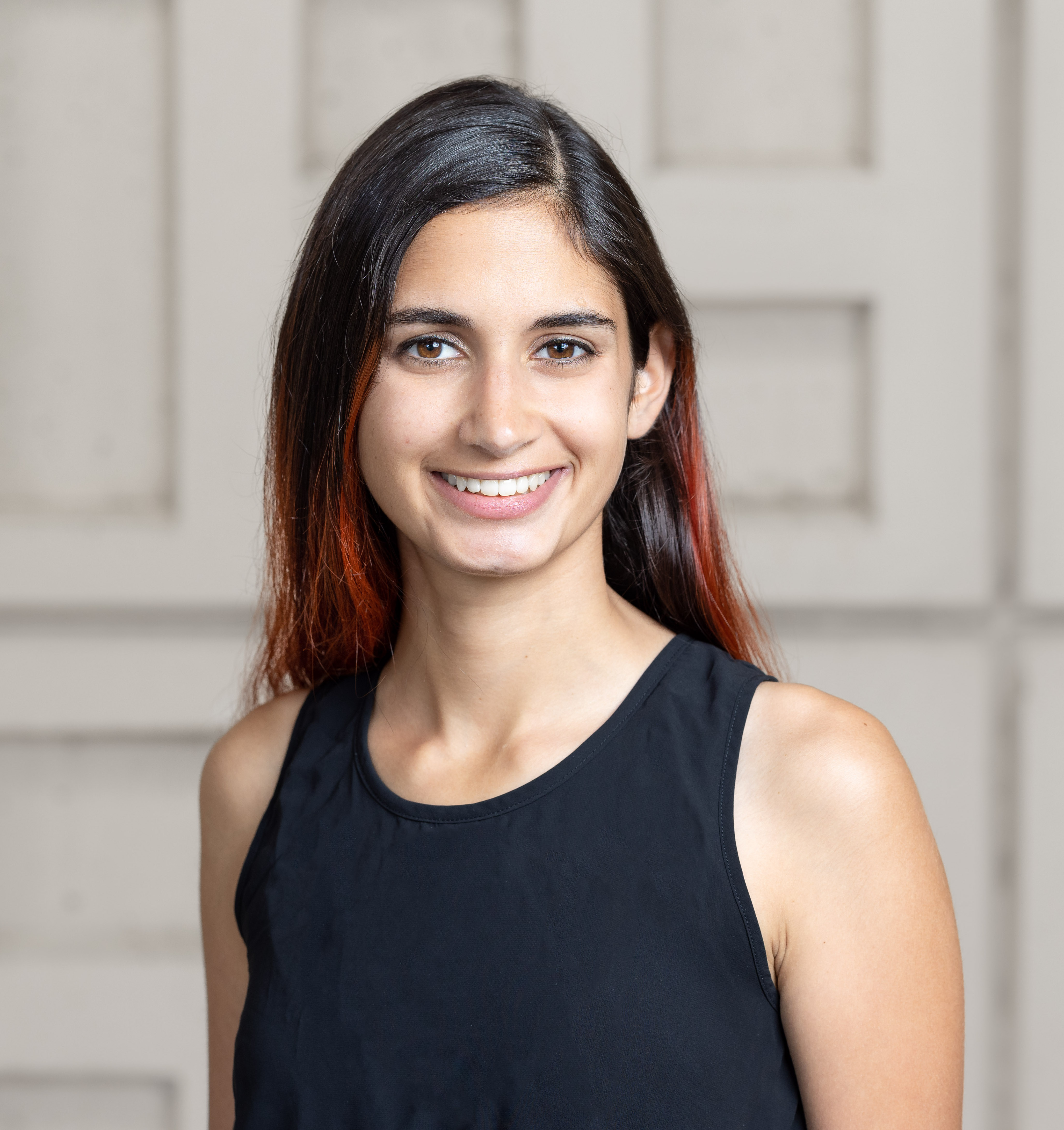
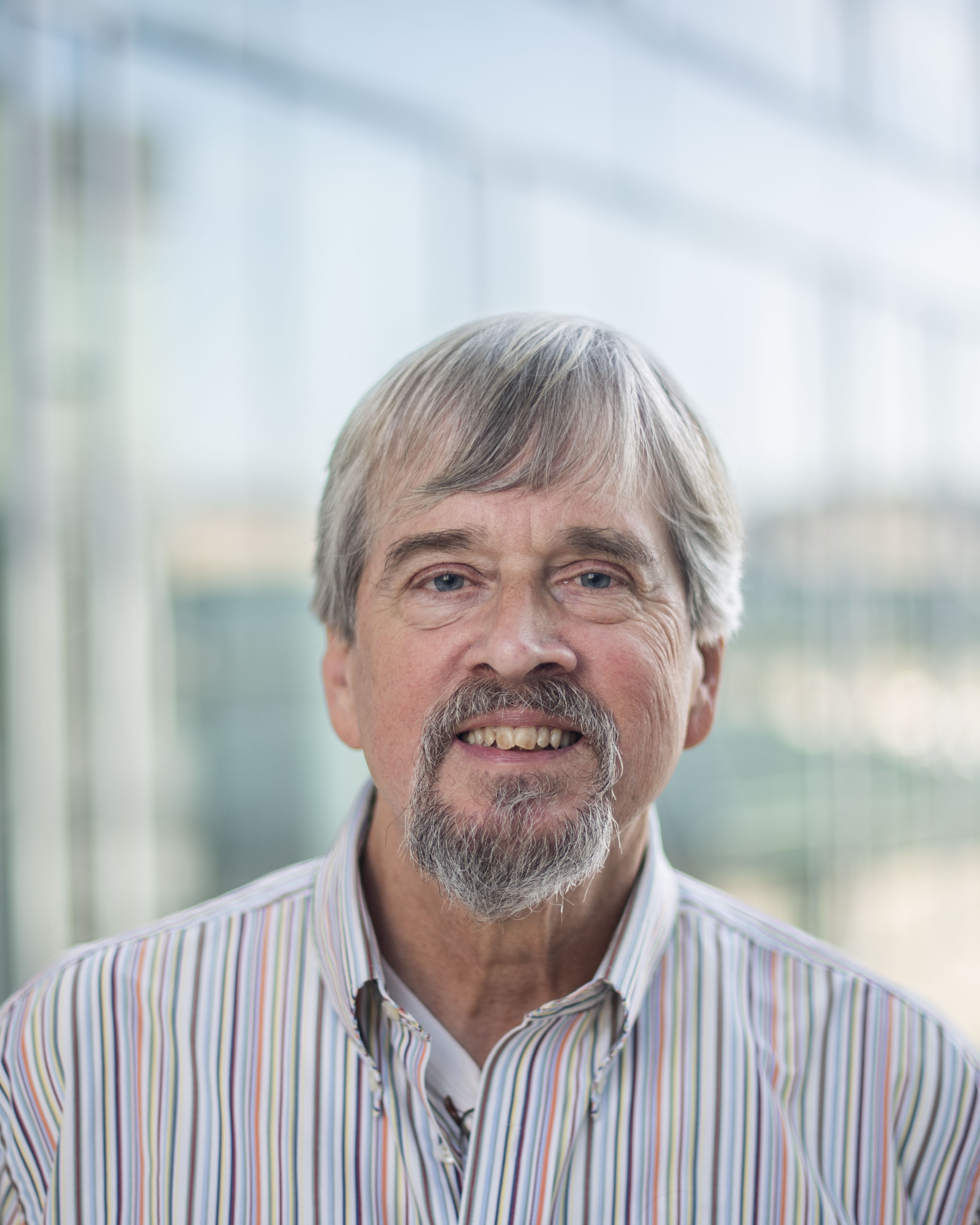
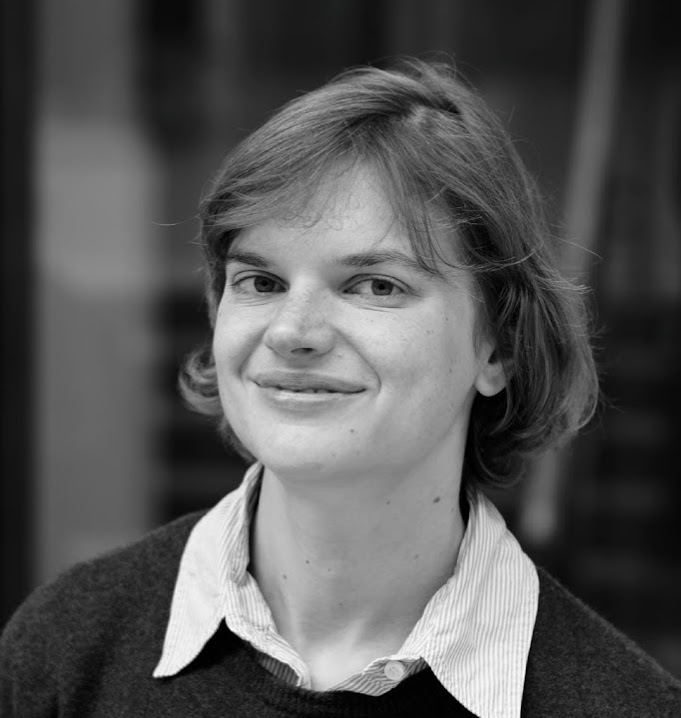
Vincent Ng is a Professor of Computer Science at UT Dallas' Erik Jonsson School. His research focuses on Natural Language Processing, Software Engineering, and AI. He obtained his PhD from Cornell University (2004) and BS from Carnegie Mellon University (1997). His research explores NLP techniques applied to software engineering challenges, including automated bug reporting and code analysis. Recent publications show strong emphasis on legal AI, educational technology, and multimodal systems. Major awards include: ICSE'24 ACM SIGSOFT Distinguished Paper Award (2024) AAAI-20 Blue Sky Idea Award (2020) ECS Outstanding Faculty Teaching Award (2019) He advises doctoral students including Jing Lu and Oscar Chaparro, and leads projects supported by NSF grants. Affiliated with the Center for Machine Learning and Language Processing.
Amit Almor is Associate Professor in Psychology and Director of the Experimental Psychology Program at the University of South Carolina. His research examines language processing using neuroimaging, with focus on discourse reference, aging, and dementia. Key investigations include neural mechanisms of pronoun/anaphor processing, spatial language cognition, and conversational interference effects. Clinical work explores linguistic markers in Alzheimer's and Huntington's disease. Funded by NSF and NIH grants including 'The neural basis of processing discourse reference'. Teaches graduate seminars in Cognitive Neuroscience, Psycholinguistics, and Bayesian Modeling. Recipient of multiple teaching commendations.
Joost Schilperoord is an Assistant Professor in the Department of Communication and Cognition at Tilburg University. His research examines multimodal communication, visual narrative grammar, and cognitive processes in interpreting sequential images. Dr. Schilperoord develops theoretical frameworks for understanding visual languages and their structural parallels with linguistic syntax. His work combines corpus analysis, psycholinguistic experiments, and neurocognitive methods to study how meaning is constructed across verbal and visual modalities. Current projects investigate anaphoric dependencies in comics and cross-cultural patterns in visual narrative comprehension.
Karsten Donnay is an Assistant Professor of Political Behavior and Digital Media at the University of Zurich's Department of Political Science, affiliated with the Digital Society Initiative. Previously, he held positions at the University of Konstanz and ETH Zurich. He earned his PhD in Computational Social Science from ETH Zurich and conducted postdoctoral research at the Graduate Institute Geneva and the University of Maryland. His research focuses on digital democracy, examining how digital technologies reshape political behavior, communication, and democratic processes. Key areas include media bias, hate speech mitigation, and the impact of digitalization on political participation. He leads projects like 'Improving Public Discourse' (funded by the Swiss National Science Foundation) and 'StopHateSpeech,' and co-developed software tools for data analysis and visualization. Teaching responsibilities include courses on digital democracy, conflict in the digital age, and digital transformation. He collaborates across disciplines, serving on the executive board of the University of Zurich's Population Research Center and contributing to initiatives like the DigiVox survey panel on digitalization's societal impacts.
Stuart M. Shieber is the James O. Welch, Jr. and Virginia B. Welch Professor of Computer Science at Harvard University's School of Engineering and Applied Sciences (SEAS), with affiliations in Linguistics and Philosophy. He specializes in computational linguistics, exploring intersections of computer science, linguistics, and artificial intelligence. His research spans natural language processing, formal grammar, machine translation, and interdisciplinary areas like automated graphic design, privacy mechanisms, and computational biology. Education: AB summa cum laude in Applied Mathematics (Harvard College, 1981); PhD in Computer Science (Stanford University, 1989) Research Interests: Synchronous grammars, psycholinguistic modeling, privacy-preserving auctions, and open-access publishing policies. Awards: Presidential Young Investigator Award (1991), multiple fellowships, and honorary chairs like Harvard College Professorship (2001). Courses: CS51 (Abstraction and Design), CS187 (Computational Linguistics), and Empirical and Mathematical Reasoning courses. Grants & Roles: Founder of the Center for Research on Computation and Society, director of Harvard's Office for Scholarly Communication, and co-founder of Cartesian Products Inc. and Microtome Publishing. His work on synchronous tree-adjoining grammars and the philosophical underpinnings of the Turing Test has been seminal. Recent publications address neural language models, causal syntax analysis, and conversational AI.
Andrew Kehler is a Professor in the Department of Linguistics at the University of California, San Diego (UCSD). He directs the Computational Linguistics Lab, focusing on interdisciplinary research in pragmatics, discourse interpretation, and computational linguistics. His work bridges theoretical linguistics, psycholinguistics, and computational models. Kehler has advised multiple graduate students, including current student Penny Pan and recent graduate Joshua Wampler. His research spans topics like ellipsis, pronoun interpretation, Bayesian models of discourse, and the Question Under Discussion (QUD) framework. He has taught courses such as 'Making and Breaking Codes' and 'Pragmatics,' and holds editorial roles in journals like PLOS ONE and Frontiers in Language Sciences. Kehler earned his Ph.D. in Computer Science from Harvard University and has held positions at SRI International and Xerox PARC. His lab, located in AP&M 2442, actively explores discourse coherence, referential processes, and language processing mechanisms. Education: Ph.D. in Computer Science, Harvard University (1995) S.M. in Computer Science, Harvard University (1994) B.S.E. in Computer Science and Engineering, University of Pennsylvania (1988) Research Interests: Kehler’s work centers on discourse coherence, anaphora resolution, and the interplay between syntax, semantics, and pragmatics. He develops computational models of pronoun interpretation and ellipsis, emphasizing Bayesian approaches and experimental validation. His recent studies explore how large language models (LLMs) handle pragmatic enrichments like elicitures, and how discourse context influences linguistic processing. Key themes include coherence-driven explanations, QUD-based licensing of ellipsis, and cross-linguistic studies of pronoun systems. Recent Contributions: Recent articles address sluicing with nominal antecedents, Bayesian approaches to German pronouns, and conversational elicitures. His work often combines formal theory with psycholinguistic experiments, bridging computational and empirical methods. Kehler’s lab collaborates across disciplines to advance understanding of discourse structure and language processing mechanisms. Service and Leadership: He served as Chair of UCSD’s Linguistics Department (2009–2014) and Director of Graduate Studies (2016–2018). He actively participates in conference organization (e.g., ACL, SemDial) and editorial boards, promoting discourse and computational linguistics research. His contributions include over 100 publications and invited talks at institutions worldwide. Labs/Teams: As lab director, Kehler oversees interdisciplinary projects integrating theoretical and computational linguistics. His team investigates discourse models, coreference resolution, and pragmatic inference, with applications in NLP and cognitive science.
Eric W. Campbell is an Associate Professor and Department Co-chair in the Department of Linguistics at the University of California, Santa Barbara (UCSB). His research focuses on typological, functional, and community-based approaches to phonology, morphology, syntax, and historical linguistics, with a specialization in Otomanguean languages of Mexico and California, particularly Chatino, Zapotec, and Mixtec. He holds a Ph.D. in Linguistics from the University of Texas at Austin (2014). Education: 2014 Ph.D. in Linguistics, University of Texas at Austin Research Interests: Campbell’s work emphasizes diachronic and typological perspectives in linguistic theory, fieldwork with endangered languages, and community collaboration. He leads projects such as MILPA (Mexican Indigenous Language Promotion and Advocacy) and JSILO (Justicia Social de Intérpretes de Lenguas Originaria), focusing on language documentation, revitalization, and social justice. His recent studies explore tone systems, inflectional classes, and the intersection of language and culture in Mesoamerica. Teaching & Grants: Campbell teaches courses in field methods, historical linguistics, and syntax. He has received grants for community-centered documentation projects, including work with the Mixtec diaspora in California and workshops for Otomanguean speakers in Mexico. His efforts bridge academic linguistics with community needs, emphasizing ethical collaboration and technology-driven preservation. Labs/Teams: Collaborates with the Chatino Language Documentation Project, the PDLMA (Project for the Documentation of the Languages of Mesoamerica), and interdisciplinary teams in UCSB’s Linguistics Department. His research often involves native speaker partnerships, such as with Tranquilino Cavero Ramírez and the Zenzontepec Chatino community.
Professor Martina Gračanin Yüksek is affiliated with the Department of Foreign Language Education at the Middle East Technical University (METU) in Ankara, Turkey. Her academic journey includes a Ph.D. in Linguistics from MIT (2007) , an M.A. from Syracuse University (2002) , and a B.A. from Zagreb University (1998) in English and Italian Languages and Literature. She is an expert in theoretical syntax, with a focus on multidominance, agreement, and linearization phenomena in languages such as Turkish and Slavic varieties. Research Interests Theoretical Syntax Agreement Multidominance Linearization Slavic Languages Publications highlight her work on coordinated wh-questions, multidominant structures, and anaphora in Turkish and Slavic languages. Recent articles explore the binarity constraint in merge operations, agreement attraction in Turkish possessors, and the psycholinguistic processing of anaphors among heritage speakers.
Anjalie Field is an Assistant Professor in the Computer Science Department at the Whiting School of Engineering, Johns Hopkins University. She is also affiliated with the Center for Language and Speech Processing (CLSP), focusing on the intersection of ethics, social science, and natural language processing. Her research examines: Developing language models to address societal challenges like discrimination and propaganda Critical evaluation of AI pipelines Applications of NLP in high-stakes domains (child welfare, police accountability) Interdisciplinary collaborations across social sciences, astronomy, and public policy Notable scientific achievements include the 2022 Wikimedia Foundation Research Award of the Year . Her publications demonstrate expertise in bias detection, ethical AI, and computational social science methods.
Tuğba Pamay Arslan is a Lecturer at Istanbul Technical University , affiliated with the Artificial Intelligence and Data Engineering Department under the College of Computer and Informatics. Her academic journey includes: PhD in Computer Engineering (2022) MSc in Computer Engineering with thesis (2015) BSc in Computer Engineering (2012) Her research focuses on Artificial Intelligence , Machine Learning , and Natural Language Processing , particularly: Coreference resolution in Turkish Neural network applications in linguistics Morphological data analysis Turkish sign language digitization Treebank annotation and development Multilingual computational models Key trends in her publications (2007-2025) include: Advancing Turkish language processing infrastructure Developing neural solutions for anaphora resolution Creating machine-readable sign language resources Improving computational linguistics frameworks Enhancing multiword expression analysis
Robert Frederking is an Associate Dean for PhD Programs and Chair of the Master of Language Technologies program at Carnegie Mellon University's Language Technologies Institute (LTI), part of the School of Computer Science (SCS). With over three decades at CMU, he holds a PhD in Computer Science , specializing in machine translation and computational linguistics . Education : PhD in Computer Science, Carnegie Mellon University Research Interests : Advancing machine translation for low-resource languages Developing speech-to-speech translation systems (Tongues, NineOneOne projects) Building named entity recognition tools for defense applications Creating translingual information retrieval frameworks Designing multilingual processing architectures Scientific Awards : Allen Newell Award for Research Excellence Leadership & Grants : Principal Investigator for NSF KDI Universal Access project Co-PI for NSF/EU Muchmore project Organizer of JGC60 Celebration Representative to NSF-funded LEAP Alliance Labs & Teams : Founding member of CMU's Language Technologies Institute Contributor to evolution of Center for Machine Translation into LTI Key member of Dolphin Communication Project Participant in AMTA leadership (2004-2008)
Phil Blunsom is a Professor of Computer Science at the University of Oxford and a Senior Research Fellow at St Hugh's College. His research focuses on the intersection of machine learning and computational linguistics, particularly using deep learning for natural language analysis, understanding, and generation. He has led the Natural Language research group at DeepMind London from 2014 to 2021. University of Oxford St Hugh's College DeepMind London (2014-2021) Blunsom's research explores algorithms for grounding natural language in AI systems, emphasizing compositional semantics, syntax, and multilingual distributed representations. His work spans neural machine translation, semantic parsing, and explainable AI, with a focus on adversarial learning and verification of explanatory methods. Selected publications highlight trends in NLP, robotics, and wireless signal analysis. Key themes include neural inertial tracking, multilingual models, and coreference resolution. Awards include the BEST PAPER at EWSN'13 and the best application paper at ICML 2014. Scientific contributions include: 2020 : Advancing adversarial generation of NLP explanations 2019 : MotionTransformer for domain transfer in robotics 2014 : Multilingual compositional distributional semantics 2013 : NLOS signal mitigation techniques Blunsom has advised numerous students in NLP and ML, including Satwik Bhattamishra, Jan Botha, and Yishu Miao. His research has received recognition for technical innovation in grammar induction, translation models, and lexicon modeling.
Frank Keller is a Professor in the School of Informatics at the University of Edinburgh, affiliated with EdinburghNLP, the Natural Language Processing Group. His research spans natural language processing, cognitive science, and computational narrative, with dual foci on language-vision integration and narrative modeling. Professor Keller's primary research encompasses natural language processing and cognitive science, specifically investigating language and vision tasks such as image description, visual grounding, video summarization, and visual story telling. His secondary focus involves computational narrative modeling, where he develops frameworks for analyzing characters, plot turning points, and suspense in long-form texts including movie scripts and books—addressing challenges in LLM comprehension of extended narratives. Recent publications (2023-2025) reveal strong trends in multimodal narrative generation, particularly visual story creation with grounded characters and movie script summarization. His work bridges cognitive modeling with practical NLP applications, exploring human reading mechanisms through neural attention models and advancing procedural video understanding through implicit argument prediction. Scientific Awards: EMNLP Best Paper Award (2002) Nominated for ACL Best Short Paper Award (2019) Professor Keller actively supervises eight current PhD students including Anil Batra and Gautier Dagan, and has mentored 26 alumni now at institutions like MIT, Google DeepMind, and Copenhagen University. His research receives substantial funding through the UKRI Centre for Doctoral Training in Designing Responsible NLP, supporting next-generation NLP researchers. As a core member of EdinburghNLP, he leads interdisciplinary teams collaborating with the Pioneer Center for AI and Copenhagen University. Current projects integrate cognitive science with multimodal learning, focusing on narrative structure analysis, visual grounding, and human-AI interaction systems for complex tasks like trailer creation and scientific poster summarization.
Prof. Zdeněk Žabokrtský is a Professor at the Institute of Formal and Applied Linguistics (ÚFAL) within the Faculty of Mathematics and Physics at Charles University in Prague. He serves as the head of the PhD study program in Computational Linguistics and teaches several courses including Language Data Resources, Variability of Languages in Time and Space, Natural Language Processing, and Introduction to Language Technologies. His office is located in room S 409 on the 4th floor in the Lesser Town area of Prague. Prof. Žabokrtský's research spans multiple areas of Natural Language Processing and Computational Linguistics. His primary interests include building multilingual morphological resources, developing NLP applications that utilize parallel corpora, studying dependency syntax and valency frameworks, coreference resolution, theoretical studies on formal representations of natural languages, and applying Machine Learning techniques to linguistic problems. His work bridges theoretical linguistics with practical applications in language technology. Analysis of Prof. Žabokrtský's recent publications reveals a strong focus on morphological analysis, coreference resolution across multiple languages, and cross-lingual NLP. His research spans diverse languages including Czech, Turkish, Russian, and various Indic languages. He has made significant contributions to morphological resources, word-formation networks, and multilingual coreference systems, often creating and utilizing linguistic resources while developing novel computational approaches to linguistic phenomena. As an academic leader, Prof. Žabokrtský has supervised numerous PhD students and contributed to major research projects at the Institute of Formal and Applied Linguistics. His work has been supported by various grants that have enabled the development of important linguistic resources and NLP tools. He has been instrumental in establishing the PhD study program in Computational Linguistics at Charles University. Prof. Žabokrtský is a key member of the Institute of Formal and Applied Linguistics research teams, contributing to projects focused on developing language technologies, creating linguistic resources, and advancing theoretical understanding of natural language processing. His work is closely integrated with the Prague Dependency Treebank project and other major linguistic resources developed at Charles University.
Milan Straka is a professor at the Institute of Formal and Applied Linguistics (ÚFAL) within the Faculty of Mathematics and Physics at Charles University, Prague. His research focuses on machine learning, artificial neural networks, deep learning, and structured prediction with applications to natural language processing (NLP) tasks including POS tagging, dependency parsing, named entity recognition, and optical music recognition. University: Charles University School: Faculty of Mathematics and Physics Department: Institute of Formal and Applied Linguistics Straka has developed several NLP tools like UDPipe and NameTag, contributing to multilingual coreference resolution, Czech grammar error correction, and historical language processing pipelines. His recent work involves contextualized embeddings, semantic parsing, and large-scale dataset creation for Czech NLP tasks. He collaborates on European Language Grid initiatives and has participated in multiple shared tasks (CRAC, MRP, W-NUT). His publications span topics from algorithm design (functional data structures) to modern transformer-based language models (RoBERTa) with emphasis on Czech language resources.