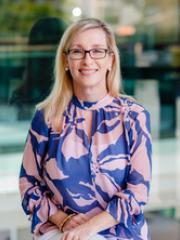
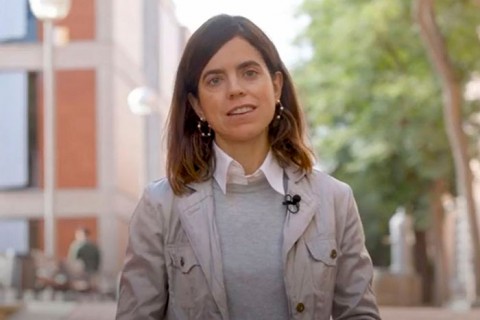
Dr Brooke-Mai Whelan is a Senior Lecturer in Speech Pathology at the University of Queensland’s School of Health and Rehabilitation Sciences. Her research focuses on motor speech disorder rehabilitation, brain mechanisms underlying speech recovery, and telerehabilitation applications. She holds a Bachelor (Honours) and PhD from UQ. Her work spans dysarthria treatment protocols, neuroimaging of speech recovery, and core outcome set development for stroke-related speech disorders. She leads projects like the Save Our Speech (SoS) study on ALS biomarkers and has secured grants from institutions like the Motor Neurone Disease Research Institute of Australia. Dr Whelan supervises PhD students in areas such as voice actor vocal demands and concussion impacts in athletes. She collaborates with the Centre for Motor Neuron Disease Research and has published over 50 works on speech pathology and neurological disorders. Her expertise includes clinical trials, rehabilitation technology, and interdisciplinary care models.
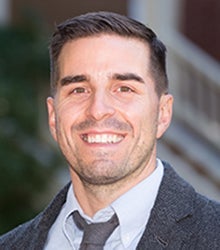
Joseph Nese serves as a Research Associate Professor in the Department of Education Policy and Leadership at the University of Oregon's College of Education, focusing on data-driven educational interventions and assessment systems to improve student outcomes through evidence-based decision-making. His academic credentials include: Ph.D. in School Psychology, University of Maryland, College Park (2009) M.A. in School Psychology, University of Maryland, College Park (2006) B.A. in Psychology (minor in English), University of California, Santa Barbara (2002) Nese's research integrates psychometrics, statistics, and computer science to bridge assessment and intervention. He pioneered the Computerized Oral Reading Evaluation (CORE) system and the Inclusive Skill-building Learning Approach (ISLA) as alternatives to exclusionary discipline, emphasizing practical tools for educators. Recent work leverages R programming for open science and reproducible research in educational data science. His 60+ publications demonstrate an evolution from foundational assessment validity studies toward AI-enhanced oral reading fluency measurement (using speech recognition and deep learning) and equity-focused discipline interventions, reflecting growing interdisciplinary collaboration across reading education, behavioral science, and computer engineering. Award recognition includes: Institute of Education Sciences Postdoctoral Research Fellowship Nese has secured $3 million in federal funding as PI/Co-PI for projects including CORE (R305A140203) and ISLA (R305A180006). He actively mentors graduate students in research design, statistical analysis, and scholarly publication through hands-on project involvement. His work operates through integrated collaborations with experts in reading instruction, special education, psychometrics, and behavioral outcomes, primarily centered at the University of Oregon's Behavioral Research and Teaching unit.
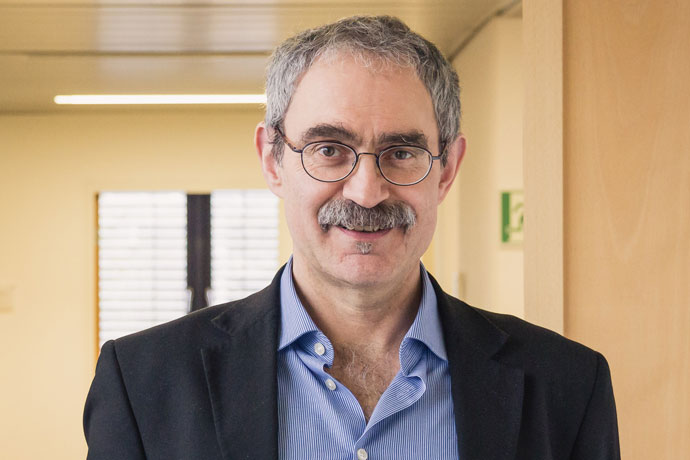
Nikolaos Laskaris serves as Assistant Professor at the University of West Attica's Department of Industrial Design and Production Engineering, specializing in Electronics with Applications in Art and Environment through Non-Destructive Testing and Systems Diagnosis Methodologies. His academic foundation includes: Bachelor's in Electronics (Industrial Electronics specialization) from Technological Educational Institute of Lamia Doctoral/postdoctoral research in non-destructive analysis techniques for cultural heritage and environmental applications Dr. Laskaris pioneers Archaeometry and Cultural Heritage Science , revolutionizing obsidian hydration dating to redefine Aegean navigation timelines. His research integrates Electronics and Materials Science for pigment identification in Byzantine icons, 3D heritage digitization, and micro/nano-electronics fabrication. Recent expansion into Robotics for environmental monitoring and Health Technology for aphasia rehabilitation demonstrates exceptional interdisciplinary range. Publication trends reveal strategic diversification: while maintaining core expertise in cultural heritage diagnostics (evident in 2024 sarcophagus and sigillia studies), he now leads cutting-edge work in unmanned vehicle systems (2025 defense/environmental applications), human-robot interfaces (2025 speech recognition), and neurorehabilitation technologies (2024 aphasia studies). His research portfolio includes: Characterization of CdTe/CdZnTe defect structures Non-destructive analysis of Thessalian ecclesiastical metalwork Development of modified XRF/Raman techniques Sediment pollution studies in Gulf of Elefsina He serves as NSF USA reviewer (2019-2020) and journals reviewer for Elsevier/Springer/MDPI. Dr. Laskaris directs the Non-Destructive Testing and Systems Diagnosis Methodologies laboratory, driving innovation in heritage preservation through advanced electronics and robotics integration.
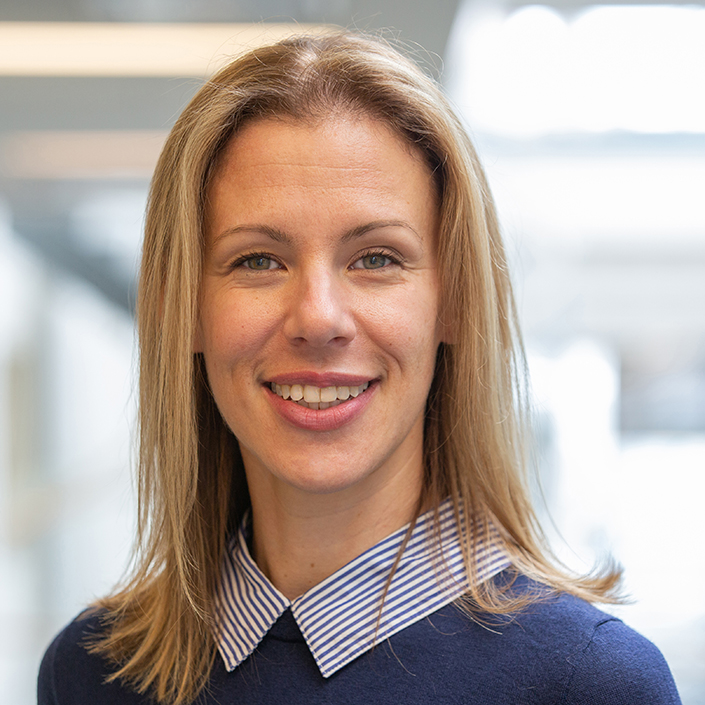
Barış Safa GÜRLER serves as a full-time Lecturer at the Department of Computer Technologies, Mucur Vocational School, Ahi Evran University, Turkey, since 2009, teaching undergraduate courses in web development, mobile programming, and computer technologies. His academic background includes: Bachelor of Science in Electronics and Computer Education, Gazi University (2004-2008) Master of Science in Electronics and Computer Education (Thesis), Gazi University (2009-2014) Bachelor's Degree in Computer Engineering, Gazi University (2020-2021) His research spans Computer Software, Artificial Intelligence, and Data Mining, with emphasis on practical software engineering applications and educational technology development. His sole publication focuses on constructing speech databases for Turkish language recognition systems, reflecting niche contributions to localized natural language processing. He has supervised institutional projects since 2023 and consistently taught core vocational courses including Web-Based Coding, Mobile Programming, and Internet Programming across multiple academic years.
Prof. Dr. Josef van Genabith serves as a Professor at the German Research Center for Artificial Intelligence (DFKI) in Saarbrücken, leading the Multilinguality and Language Technology research department. His work bridges theoretical and applied aspects of language technology with direct societal impact. His research spans Natural Language Processing (core focus), Machine Translation , and Cross-lingual Processing , with expanding interests in Sign Language Processing and AI for Education . He develops systems addressing real-world language barriers while emphasizing ethical AI frameworks through projects like TRAILS (Trustworthy and Inclusive Machines). Recent publications reveal three convergent trends: (1) rigorous evaluation of LLMs across linguistic boundaries in fact verification, (2) educational technology innovations for online learning accessibility, and (3) multimodal approaches to sign language data processing using social media sources. These reflect his commitment to inclusive language technology applicable across diverse communication modalities. He directs major initiatives including EUC PT (EU Council Presidency Translator), DEEPLEE (Deep Learning for End-to-End Language Technology Applications), and QT21 (Quality Translation 21), all targeting the elimination of language barriers in European digital infrastructure. His lab maintains active collaborations with EU institutions and industry partners focused on deployable language solutions.
Raili Hilden is a Professor in language didactics (foreign languages) at the University of Helsinki's Faculty of Educational Sciences, Department of Education. Her core activities include research, teaching, and societal impact, with a focus on language assessment, particularly automated assessment of speaking in high-stakes contexts. She leads projects like 'AASIS' (Automatic assessment of spoken interaction in second language) and 'DigiTala', exploring digital tools for language assessment and teacher education. Hilden chairs the Language Section of the Finnish Matriculation Examination Board, influencing national assessment policies. Her research emphasizes teachers' assessment literacy and the integration of technology in education. She supervises doctoral and master’s students in language teaching and learning, and her work bridges academic research with practical educational reforms. Key research interests include language assessment feedback mechanisms, automated speech recognition, and the impact of assessment on teaching practices. She collaborates with Scandinavian institutions and contributes to international conferences like EALTA. Her awards include the FIPLV International Award 2005 and the Kulturfonden för Sverige och Finland - Språkpriset 2004. Hilden also serves on national committees, such as the Finnish National Board of Education's language curriculum evaluations, ensuring equitable language education policies. Recent articles highlight advancements in automated speaking assessment, including mobile applications with generative AI feedback and cross-linguistic comparisons of L2 proficiency. She advocates for gender-neutral assessment design and explores the role of visual elements in listening comprehension tests. Her work addresses both technical innovations and pedagogical implications, shaping the future of language education and assessment globally.
Emily Mower Provost is a Professor and Senior Associate Chair in the Department of Computer Science and Engineering at the University of Michigan, with a courtesy appointment in Psychiatry. She holds a Ph.D. in Electrical Engineering from the University of Southern California (2010). Her work focuses on human-centered speech and video processing, particularly in emotion recognition, mental health modeling, and assistive technology. Notable contributions include advancing speech-based machine learning for mental health monitoring and developing datasets like UMEME and UMSSED. Her research integrates speech and multimodal data to address challenges in mental health, such as bipolar disorder symptom tracking and suicide risk assessment. She has pioneered methods for emotion recognition in natural speech, emphasizing the mismatch between emotional expression and perception. Key awards include the NSF CAREER Award (2017) and Toyota Faculty Scholar Award (2020). Key Projects: PRIORI emotion dataset linking mood to emotion detection, assistive technology for Huntington's disease speech monitoring, and speech-based tools for Alzheimer's early detection. Grants: NSF grants for emotion classifier development and mental health tracking. Labs/Teams: Core contributor to the Heinz C. Prechter Longitudinal Study of Bipolar Disorder, advancing digital phenotyping for mental health. Active in organizing workshops for female researchers in speech science and technology.
Hao Tang is a Lecturer in Speech Technology at the School of Informatics, University of Edinburgh, affiliated with the Institute for Language, Cognition and Computation (ILCC) and the Centre for Speech Technology Research (CSTR). He contributes to cutting-edge research in speech and language processing, with a focus on speech representations and self-supervised learning. PhD, Toyota Technological Institute at Chicago (2017–2020), advised by Karen Livescu Postdoctoral Associate, MIT Spoken Language Systems Group (2020–) Master’s, National Taiwan University, advised by Lin-Shan Lee Hao Tang’s research centers on speech representations, particularly discrete and geometric properties in self-supervised models. He investigates how speech systems encode speaker and phonetic information, and how these representations can be improved for tasks like phone segmentation, acoustic word embedding, and text-to-speech. He also works on text summarization, especially opinion and attributable summarization. His work bridges machine learning, cognitive modeling, and practical speech applications. His recent publications span top venues including Interspeech, ICASSP, ACL, NeurIPS, and IEEE/ACM Transactions. Key themes include self-supervised learning, disentangled representations, predictive coding, and efficient speech modeling. He has co-authored papers on discrete speech units, orthogonality in representations, and context modeling in neural speech systems. Best Student Paper Award, Interspeech 2020 Computational Modeling Prize for Perception & Action, CogSci 2024 Speech and Language Processing Student Paper Award, ICASSP 2016 Best Student Paper of Speech and Language Processing, ICASSP 2016 Best Paper Nominee, ASRU 2015 Hao Tang actively supervises PhD and Master’s students, many of whom have published at leading conferences and gone on to positions at Cohere, Apple, Sesame, and top PhD programs. He serves as Associate Member of IEEE SLTC, Meta Reviewer for ICASSP, Area Chair for ACL ARR, Action Editor for TACL, and Area Chair for ICLR and NeurIPS. He teaches core courses such as Machine Learning (INFR10086) and Automatic Speech Recognition (INFR11033) . Hao Tang leads a research group within ILCC and CSTR, collaborating with researchers like Sharon Goldwater, Jim Glass, and Karen Livescu. His team focuses on developing interpretable, efficient, and scalable models for speech and language understanding.
Prof. Dr. Thomas Mandl is a faculty member at the Institute for Information Science & Language Technology, within the Department of Linguistics and Information Sciences at the University of Hildesheim, Germany. He holds the academic rank of Professor and has been a long-standing researcher and educator at the university since 1998. He has held visiting and adjunct professorships at institutions in Korea, India, and Brazil, reflecting his international academic presence. His research interests are centered on information retrieval, information foraging, text and data mining, image and video retrieval, and the application of artificial intelligence in analyzing social media content. Key areas include the detection of misinformation, fake news, and hate speech, particularly through participation in initiatives like the CheckThat! Lab at CLEF. He leads and contributes to interdisciplinary projects such as PortApp (automatic recognition of early modern portraits), KISS-PRO, and DILRA, focusing on digital humanities, AI, and information behavior during crises like the pandemic. His recent publications in 2023 cover foundational topics in information science, specifically text mining, data mining, and image/video retrieval, indicating a focus on core information science methodologies enhanced by AI. These works suggest a strong orientation toward both theoretical and applied aspects of information access and analysis. Adjunct Professor, Dhirubhai Ambani Institute of Information and Communication Technology (DAIICT), Gandhinagar, India (2019) Visiting Professor, Universidade Federal de Minas Gerais (UFMG), Belo Horizonte, Brazil (2019, 2022) Visiting Professor, Paichai University, Daejeon, South Korea (2017) Prof. Mandl supervises doctoral candidates, with recent successful defenses by Noushin Fadaei, Lea Wöbbekind, and Theresa Kruse. He is actively involved in research funding through projects supported by the BMBF and Erasmus+, and contributes to public discourse on AI through media appearances, such as interviews with DEUTSCHLANDFUNK and the UHiversum Talks podcast. He also organizes academic events like the ASIRF Autumn School at Schloss Dagstuhl and the DHOW workshop on harmful online content. He is engaged in developing educational materials, including online games to teach youth about hate speech, and promotes international collaboration in information literacy and media competence through initiatives like IPILM. His work bridges technical research in AI and information systems with societal and educational applications.
Bruno Jacob serves as a Researcher at LIUM (Laboratoire d'Informatique de l'Université du Maine) within Le Mans University, France. His primary affiliation centers on speech technology research, with documented activity from 1994 to 2005 through 18 publications in major international venues. The LIUM laboratory provides his institutional base for advancing speech recognition methodologies. His research program focuses on overcoming fundamental challenges in speech processing through three interconnected thrusts: (1) enhancing large-vocabulary recognition via contextual transcription rules and phonological integration, (2) developing robust speaker verification systems for telephony applications, and (3) pioneering multimodal approaches that fuse acoustic and articulatory information using master-slave HMM architectures. This work consistently bridges theoretical modeling with practical implementation, as evidenced by open-source system development like Sirocco. Analysis of his 15 most recent publications reveals an evolutionary trajectory from foundational HMM research (1994-1996) toward increasingly sophisticated contextual and multimodal systems (1997-2005). Key thematic developments include the transition from isolated word recognition to continuous speech systems, integration of visual speech cues, and specialized applications in password-based verification. The publication pattern shows concentrated productivity peaking in the late 1990s with sustained contributions through 2005. Bruno Jacob maintains active research infrastructure through LIUM laboratory resources and has participated in externally funded initiatives like the PICASSO project for telephone speaker verification. His collaborative framework involves consistent partnerships with core French research units while leveraging European project structures for broader networking. The laboratory environment supports his focus on speech technology innovation through computational resources and academic partnerships. His research group operates within LIUM's computer science infrastructure at Le Mans University, specializing in speech processing toolchains. The laboratory context enables both theoretical algorithm development and practical system implementation, with historical emphasis on open-source frameworks. Current activities likely build upon his documented work in multimodal recognition and contextual rule integration, maintaining relevance to evolving speech technology challenges.
Naomi Feldman is a Professor at the University of Maryland with dual affiliations in the Department of Linguistics and the University of Maryland Institute for Advanced Computer Studies (UMIACS) . She is also affiliated with the Department of Computer Science , the Program in Neuroscience and Cognitive Science , and the Computational Linguistics and Information Processing (CLIP) Lab . Her research focuses on computational psycholinguistics , applying methods from statistics, machine learning, and automatic speech recognition to model cognitive processes underlying speech perception, phonetic learning, and language acquisition . Key areas include understanding how humans learn language structure in complex environments and developing computational strategies to assist language learners and clinicians. Research combines infant phonetic learning with neural network modeling Investigates cross-linguistic speech recognition and selective attention mechanisms Explores language discrimination , developmental language disorders , and computational models of aphasia Her recent publications (2022-2025) cover topics such as reward-based language learning, rhythm analysis in speech, self-supervised speech representations, and argument role sensitivity in language models. These works have received recognition like the Computational Modeling Prize in Perception & Action and Best Paper Award Honorable Mention . Naomi actively advises students across three graduate programs: Linguistics , Neuroscience and Cognitive Science (NACS) , and Computer Science . Her research team includes postdocs, PhD candidates, and undergraduate collaborators. She has received grants including an NIH Pilot Grant to assist children with specific language impairment. She is a core member of the university's interdisciplinary Language Science community and participates in projects crossing multiple departments. Her lab maintains open-source code repositories for research reproducibility.
Shigehiko Schamoni is a Lecturer and Compute Lab Manager at Heidelberg University's Institute of Computer Engineering (ZITI), where he oversees scientific computing infrastructure and teaches computer science courses. He is completing his PhD under Prof. Stefan Riezler in the Statistical NLP group. His dual roles bridge technical management and academic instruction, with teaching responsibilities spanning undergraduate and graduate courses since 2011. Research Focus: Schamoni's work intersects clinical AI and natural language processing, with emphasis on: Machine learning for medical applications (sepsis prediction, clinical validity) Speech translation and automatic speech recognition Cross-lingual information retrieval Data augmentation techniques Multimodal machine learning His 15 most recent publications (2016-2024) demonstrate strong thematic clustering: 47% focus on medical AI (primarily sepsis prediction and clinical data validation), while 53% address NLP challenges (speech translation, ASR, and multimodal systems). This bifurcation reflects consistent collaboration with medical researchers alongside core NLP innovation. Teaching Experience includes instruction across 10+ courses since 2011, such as: Graduate courses: "Tools – Werkzeuge für effizientes wissenschaftliches Arbeiten" (2023-2024) Undergraduate courses: "Einführung in die Nutzung computerlinguistischer Ressourcen" (2021-2022) Programming courses: "Advanced Programming" and "Parallel Programming Paradigms" (2012-2015) He maintains affiliations with both the ZITI infrastructure team and Statistical NLP research group.
Michael John Decker is an Assistant Professor at Bowling Green State University specializing in software engineering research and education. He teaches courses including Software Architecture & Design, CS Capstone, and Advanced Software Engineering from his office in Hayes 242, with research deeply integrated into source code analysis and software evolution infrastructure development. His educational background includes a Ph.D. from Kent State University (2017) and a Master's degree from The University of Akron (2012), both in Computer Science. Decker's research centers on software engineering with emphasis on source code analysis, program comprehension, and software maintenance/evolution. He actively develops the srcML infrastructure for syntactic representation of source code and explores natural language processing applications for identifier analysis and documentation generation. His work bridges empirical studies of developer practices with tool development to enhance code understandability and maintenance efficiency. Analysis of his recent publications reveals consistent focus on syntactic differencing techniques, identifier semantics, and automated documentation systems. The research combines empirical validation with practical tooling, demonstrating strong trends in leveraging domain knowledge for code change comprehension and natural language integration in software artifacts. His scientific recognition includes: Most Influential Paper Award at SCAM'21 (2021) for 'Lightweight Transformation and Fact Extraction with the srcML Toolkit' Best Challenge Entry Award at DysDoc3 for 'Automatically Redocumenting Source Code' $750K NSF Grant for Syntactic Differencing Infrastructure development Decker actively secures research funding including the significant NSF grant and serves in leadership roles at major conferences (ICPC'23 Tool Track Co-Chair, ICPC'23 Session Chair). While specific student advisees aren't listed, his research involves extensive collaboration through labs and conference committees. He is a core researcher in the Software DeveloMent Laboratory (SDML) advancing srcML infrastructure and the Source Code Analysis and Natural Language Lab (SCANL) focusing on NLP applications for source code. Current projects include syntactic differencing enhancements and identifier analysis systems for improved software evolution support.
Marta Ruiz Costa-Jussà is a Professor at the Faculty of Informatics of Barcelona (FIB), part of the Universitat Politècnica de Catalunya · BarcelonaTech (UPC). She is affiliated with the Department of Computer Science and holds additional teaching roles at the Escola Tècnica Superior d'Enginyeria de Telecomunicació de Barcelona (ETSETB). She is also the academic co-director of the postgraduate program Artificial Intelligence with Deep Learning at UPC School. Her research is conducted through key UPC research groups: Intelligent Data Science and Artificial Intelligence (IDEAI), the Center for Technologies and Applications of Language and Speech (TALP), and the Speech Processing Group (VEU). Her research focuses on advancing machine translation through deep learning, particularly in multilingual and low-resource settings. She investigates neural machine translation (NMT) systems that use intermediate mathematical representations (interlingua) to improve efficiency and inclusivity across majority and minority languages. A significant emphasis of her work is on ethical AI, aiming to detect and mitigate biases in translation systems. She is also pioneering research in automatic speech translation, a domain not yet fully mastered by major tech companies. Her recent publications reflect a strong trajectory in neural machine translation, multilingual representation learning, speech-to-speech translation, and ethical considerations in AI. The research trends show a consistent focus on inclusivity, efficiency, and robustness in language technologies, with applications spanning text, voice, and cross-lingual understanding. Scientific Awards: ERC Starting Grant (€1.5 million) for the LUNAR project Google Faculty Research Award (2019) Google Faculty Research Award (2020) She has secured significant research funding, notably the ERC Starting Grant, which supports her vision for lifelong universal language representation. Her advising likely includes graduate students in AI and NLP, though specific names are not listed. She has collaborated internationally with institutions such as LIMSI-CNRS (France), University of São Paulo (Brazil), Infocomm Research Institute (Singapore), National Polytechnic Institute of Mexico, and the University of Edinburgh (UK). She is a core member of several research teams: the IDEAI research center, TALP, and the VEU group. These labs focus on cutting-edge AI, data science, language technologies, and speech processing, providing a rich interdisciplinary environment for her work on inclusive and ethical machine translation systems.
George P. Kafentzis is a Lecturer in the Computer Science Department at the University of Crete, where he teaches Physics for Engineers (CS-112), Digital Signal Processing (CS-370), and Signals and Systems (CS-215). He is a core member of the Speech Signal Processing Lab within the Multimedia Informatics Labs, focusing on advanced signal processing methodologies. His educational background includes a Ph.D. in Signal Processing and Telecommunications from MATISSE Doctoral School (University of Rennes 1) and a Ph.D. in Computer Science and Engineering from the University of Crete (2014), a Master of Science in Computer Science (2010), and a Bachelor's degree in Computer Science (2008), all from the University of Crete. Research interests span speech, audio, and biosignal processing with emphasis on sinusoidal modeling, emotion recognition from speech, deep learning applications, pathological speech analysis, and music signal processing. His work bridges theoretical signal processing with clinical and engineering applications, particularly in non-invasive vocal fold pathology detection through glottal analysis. Recent publications demonstrate a strategic pivot toward cough sound analysis for respiratory diagnostics using AI, while maintaining core expertise in adaptive sinusoidal models for speech transformations. Publication trends reveal an evolution from fundamental speech modeling (2010-2016) toward applied health informatics (2021-present), with increasing focus on real-world diagnostic systems leveraging cough acoustics. Over 50% of recent work integrates deep learning with traditional signal processing for medical applications, particularly in low-resource settings. Graduate student Scholarship - Institute of Computer Science, FO.R.T.H. (2008-2010) Undergraduate Scholarship - Institute of Computer Science, FO.R.T.H. (2007-2008) As an active industry collaborator, Kafentzis has served as Signal Processing Engineer at Hyfe AI (2022-2025) and contractor for VoiceSignals and Toshiba Research Europe. His teaching portfolio includes a widely adopted textbook Continuous and Discrete Time Signal Processing (2019), which integrates MATLAB implementations with theoretical foundations. Current research leverages his signal processing expertise in cough monitoring systems validated through multicenter clinical trials. He leads projects in the Speech Signal Processing Lab including Novel Deep Learning Architectures for Automatic Speech Recognition and Speech Emotion Recognition and Visualization Techniques, with recent work extending to Greek-language pathological speech analysis and respiratory health monitoring systems.