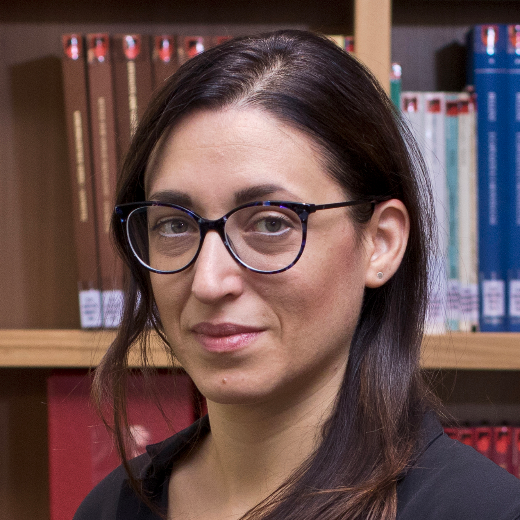
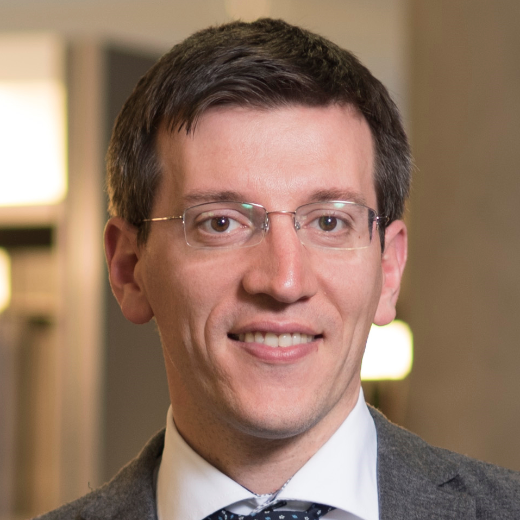
Armando Rungi is a Professor of Economics at IMT School for Advanced Studies in Lucca, Italy. He teaches econometrics, international economics, and macroeconomics to PhD students. In addition to his academic role, he serves as a research fellow at the Observatory on Foreign Firms in Italy and has consulted for the European Commission, OECD, and UNCTAD on international trade and investment issues. His research focuses on international economics, industrial organization, applied econometrics, and statistical learning. Recent work emphasizes the organization of multinational enterprises, global value chains, labor markets, cyber-resilience of supply chains, and the integration of econometric and machine learning tools for policy evaluation and predictive analysis. His recent publications explore topics such as the impact of trade agreements, multinational enterprises' strategies, and the application of machine learning in predicting firm behaviors and evaluating economic policies. A common theme is the analysis of supply chain resilience, corporate ownership structures, and the effects of globalization on firms' competitiveness and productivity. No scientific awards are mentioned in the provided information. No advisees or grant details are listed in the text. His professional activities include consulting roles and research collaborations. He is affiliated with the Observatory on Foreign Firms in Italy, which evaluates the impact of multinational companies and strategies to attract foreign investment in Italy.
Sandra Paterlini is a Full Professor in the Department of Economics and Management at the University of Trento, Italy. She holds academic roles including Co-Chair of the ERCIM Working Group on Optimization Heuristics and Vice-Chair of the IEEE Task Force on Portfolio Optimization. Her career includes visiting positions at institutions such as the University of Minnesota and Ludwig-Maximilians-Universität München. She earned a PhD in Computational Methods for Financial and Economic Decisions from the University of Bergamo, an MSc in Financial Mathematics from the University of Warwick, and a Laurea in Economics from the University of Modena and Reggio E. Her research focuses on quantitative finance, risk management, portfolio optimization, and network analysis, with applications to ESG, systemic risk, and financial stability. Key research contributions include methodologies for sparse graphical modeling, systemic risk analysis, and ESG scoring frameworks. She has received multiple awards for research excellence and serves on editorial boards of journals like Computational Statistics & Data Analysis and Frontiers in Applied Mathematics and Statistics . Her work bridges academia and policy, with contributions to the European Central Bank’s Financial Stability Directorate and involvement in global conferences on computational finance and econometrics.
Roberto Ghiselli Ricci is a Full Professor at Ca' Foscari University of Venice, affiliated with the Department of Environmental Sciences, Informatics and Statistics. His academic career includes extensive teaching and research in mathematical statistics and probability, with a focus on copula theory, aggregation functions, and econometric applications. He currently teaches courses such as Calculus, Linear Algebra, and Mathematics for Environmental Sciences. His research explores advanced topics in probability theory, including copula properties, fixed-point theorems, and axiomatic characterizations of mobility measures. Recent publications highlight contributions to fuzzy set theory, optimization penalties, and financial securities modeling. His work bridges mathematical rigor with practical applications in economics and environmental policy analysis. Publications trends emphasize interdisciplinary approaches, with notable contributions to Fuzzy Sets and Systems , International Journal of Game Theory , and Social Choice and Welfare . He actively participates in academic activities through courses, research collaborations, and advisory roles within his department.
Maria Giuseppina Bruno is an Associate Professor in the Department of Methods and Models for Economy, Territory, and Finance (MEMOTEF) at Sapienza University of Rome's Faculty of Economics. She has been serving in this capacity since December 29, 2003, specializing in the scientific disciplinary sector STAT-04/A (Mathematical Methods of Economics and Actuarial and Financial Sciences). Her institutional email is Giuseppina.Bruno@uniroma1.it and she maintains office hours at room 149 on the first floor, wing B of the MEMOTEF Department. Her academic background includes a PhD in 'Mathematics for Financial Market Analysis' from the University of Brescia (1995), where she defended her thesis 'Memory functions as a tool for evaluating American options,' and a first-class honors degree in Economics and Commerce from LUISS University of Rome (1990) with thesis 'Valuation of convertible bonds. An interpretation using physics models.' Professor Bruno's research spans financial and actuarial mathematics, quantitative methods for economics and finance, derivative instrument valuation, risk management models, stochastic processes, and computational methods. Her work demonstrates strong interdisciplinary connections between mathematics, finance, insurance, and even physics through her interest in econophysics and applications of physical models to financial problems. Her recent publications show a consistent focus on innovative insurance products, risk modeling, and financial engineering. From Tailor-made CDOs (2024) to Pay-as-you-drive insurance models (2023) and specialized insurance products like ALEA and MICROTAKAFUL (2021), her research addresses contemporary challenges in risk transfer mechanisms and insurance market dynamics. Her work on long-term care annuities (2020) and option pricing with stochastic volatility (2019) demonstrates expertise in both theoretical and practical aspects of financial mathematics. As a respected academic, she serves as Managing Editor of Annali MEMOTEF and referees for prestigious journals including Insurance: Mathematics and Economics. She has been actively involved in professional organizations including AMASES, AAI, and Istituto Italiano degli Attuari. Professor Bruno currently teaches Actuarial Mathematics for Private Insurance (Master's Degree in Finance and Insurance) and Basic Mathematics course (Bachelor's Degree in Economics and Finance). She has extensive experience in curriculum development, serving as reference teacher for the Master's Degree Course FINASS and as tutor for the Bachelor's Degree in Economics and Finance. Her institutional service includes membership on various committees related to quality assurance, publications, and doctoral programs. Her professional activities extend beyond academia, with participation in Bank of Italy examination boards (2016, 2019, 2023) and previous teaching roles for financial professionals at INPDAP and Banca di Roma. Her technical expertise includes programming in C++, VBA, and Python, which supports her computational research in financial mathematics.
Cristiano Varin is a Full Professor in Statistics at the Ca' Foscari University of Venice , affiliated with the Department of Environmental Sciences, Computer Science and Statistics (DAIS). He works at the Scientific Campus in via Torino and maintains the DAIS website for research and teaching updates. His research focuses on: Composite likelihood inference - A key methodological contributor with seminal papers in Biometrika and Statistica Sinica Copula regression - With practical implementations in R software Meta-analysis - Including improved likelihood inference techniques Spatial statistics - With applications to environmental data Paired comparison modeling - Applied to sports analytics and behavioral studies Recent publications demonstrate expertise in crossed random effects models (2025), ridge regression for paired comparisons (2024), and thermal comfort range analysis (2023). Scientific recognition includes: Royal Statistical Society Read Paper (2015) on journal citation modeling Gumbel Lecture (2006) by German Statistical Society Ca' Foscari Teaching Award (2020) He has collaborated with institutions including: Swiss National Science Foundation Natural Sciences and Engineering Research Council of Canada Norwegian Council of Research
Daniela Marella is a Professor at the Department of Social and Economic Sciences, Sapienza University of Rome. She teaches Statistics and holds office hours on Tuesdays from 10:00 AM to 12:00 PM. Her email address is daniela.marella@uniroma1.it . Teaching: Statistics (Sociology, Economics, Development Studies) Research: Statistical matching, Bayesian networks, survey sampling, uncertainty quantification Publications: 15+ articles on non-probability sampling, measurement error, and interrater agreement Her research focuses on statistical matching methodologies, Bayesian network applications in survey data, and handling selection bias in non-probability samples. She explores measurement error modeling, empirical likelihood approaches, and resampling techniques for complex survey designs. Recent publications emphasize uncertainty analysis in statistical matching, graphical models for data integration, and Bayesian structural learning. Key areas include non-ignorable sampling, ordinal categorical data agreement, and pseudo-population resampling frameworks.
Vincenzina Vitale serves as a Tenure-Track Assistant Professor of Statistics within the Department of Social and Economic Sciences at Sapienza University of Rome. Her academic profile centers on advanced statistical methodologies with applications spanning economics, public policy, and sustainability initiatives. She teaches core courses including Statistics and Data Science for Sustainability and Statistical Methods and Models for Economics and Public Policy, maintaining regular office hours on Tuesdays from 12:30 to 14:30 by email appointment. Her research program focuses on multivariate analysis, specializing in innovative fuzzy clustering techniques for complex data structures such as time series, spatial data, and mixed data types. She extensively employs probabilistic graphical models, particularly Bayesian networks, for data integration and modeling challenges. This work bridges theoretical statistics with practical applications in electoral analysis, financial volatility, sports analytics, and public health domains including COVID-19 pandemic response. Analysis of her 15 most recent publications reveals a dominant trend toward developing spatially-aware and robust fuzzy clustering algorithms. These methods increasingly incorporate regularization techniques, entropy principles, and copula models to handle interval-valued data, count data, and tail dependencies. Key application areas include regional competitiveness measurement (NUTS2/NUTS3 frameworks), electoral studies, sports performance analytics, and pandemic modeling, demonstrating consistent contributions to top-tier statistical journals. No scientific awards or fellowships were documented in the available materials. While her publication record indicates significant research productivity, specific details regarding graduate student advising, research grants, or collaborative projects were not explicitly mentioned in the provided texts. Similarly, information about laboratory facilities or dedicated research teams remains undocumented in the current sources.
Rodolfo Metulini is a Researcher (RTD-B) in Statistics for Experimental and Technological Research (SECS-S/02) at the Department of Economics, University of Bergamo. He serves as Principal Investigator for the PRIN/PNRR project 'SIGNUM: Study of mobile phone signals for evaluating mobility-environment interconnections in Lombardy'. His career includes postdoctoral positions at the University of Brescia, Scuola Superiore Sant'Anna Pisa, and IMT Lucca. PhD in Statistical Methodology for Scientific Research (2013), University of Bologna Former Researcher at University of Salerno (RTD-A) Metulini's research spans three primary domains: travel flow analysis using gravity models and spatial interaction approaches for international trade studies; sports analytics focusing on player movement dynamics and marginal utility in football/basketball; and urban mobility modeling through mobile phone data with complex seasonality time series models. His methodological innovations combine matrix completion techniques with functional data clustering for environmental-socioeconomic applications. Recent research trends demonstrate cross-sectoral expertise in applying statistical learning to diverse domains: 1) environmental risk assessment using mobile network data for flood exposure forecasting; 2) urban policy analysis through counterfactual modeling of traffic restrictions; and 3) economic modeling for CO2 emissions prediction. His technical approach integrates dynamic harmonic regression with VARX models for mobility forecasting. As thesis advisor for Computer/Mechanical Engineering students, Metulini promotes data-driven approaches in mobility and sports domains. His publications in journals like Annals of Operations Research and Optimization Letters showcase interdisciplinary methodology combining statistical theory with practical applications in environmental risk management and sports performance analysis.
Carla Nardelli is an Associate Professor in the Department of Economic Sciences at the University of Bergamo. Her research focuses on mathematical methods of economics, actuarial sciences, and financial risk management, particularly in portfolio optimization and stochastic modeling. Academic Rank: Associate Professor Department: Economic Sciences Email: carla.nardelli@unibg.it Her research spans portfolio theory, risk analysis, and mathematical economics, with a specialization in quantitative finance. She has explored topics like possibilistic mean-variance models, simulated copulas for risk management, and fractional calculus applications in financial laws. Recent publications address comparative studies of portfolio selection methods, risk modeling, and advanced mathematical approaches to economic and financial stability. Her work integrates theoretical and applied frameworks to analyze financial systems and optimize investment strategies.
Francesca Marta Lilja Di Lascio is an Associate Professor of Statistics at the Faculty of Economics and Management, Free University of Bozen-Bolzano. Her research focuses on copula-based statistical methods for complex data analysis, including dependence modeling, clustering algorithms, and applications in environmental science, energy economics, and medical statistics. She obtained her PhD in Statistical Methodology for Scientific Research from the University of Bologna (2008) and holds a National Scientific Qualification for Full Professor (2023-2034). Her academic roles include Vice-director of the Bachelor in Economics and Social Sciences, Coordinator of the BEMPS working paper series, and member of the Quality Committee. She has organized over 20 international conferences and workshops on statistical methods and data science, including the 2022 Workshop on Statistical Learning and Econometrics. Research interests span copula-based clustering, spatial-temporal modeling, and imputation techniques for missing data. She has secured grants totaling over €3.5M, including the €2M 'Agritech National Research Center' (PNRR funded) and the €182k 'Techno-economic methodologies for sustainable energy scenarios' project. She develops statistical software packages like CoClust (copula-based clustering) and PanelTM (dynamic threshold models). Teaching includes graduate courses on multivariate statistical methods and PhD-level quantitative research methods. She has published 40+ peer-reviewed articles in journals like Risk Analysis , Computational Statistics & Data Analysis , and Environmental and Ecological Statistics . Key Awards: Full Professor Qualification (2023), Associate Professor Qualification (2017) Recent Projects: EXTReme Events in Mountain Environments (€120k), Detecting Effects of Experimental Therapies (€82k) Professional Memberships: Italian Statistical Society (SIS), International Biometric Society (IBS), International Statistical Institute (ISI)
Sabrina Giordano is Associate Professor of Statistics at the University of Calabria , where she teaches Statistics and Data Science courses in both Italian and English. She holds a PhD in Methodological Statistics from the University of Milano-Bicocca and has held visiting positions at RWTH Aachen University, University of Florida, and University of Plymouth. Her research focuses on Statistical modeling of categorical and ordinal data Latent variable models and copula functions Longitudinal analysis and hidden Markov chains Applications in finance, health, and environmental statistics Her methodological contributions are implemented in the hmmm R-package and supported by grants like the PRIN2022 project "SMILE: Statistical Modelling and Inference to Live the Environment". She serves as Associate Editor for Biometrical Journal and Statistical Methods & Applications Director of the Post-Graduate Master in Artificial Intelligence & Data Science Local coordinator for the COST Fin-AI research group Her recent collaborative work explores Dynamic response styles in longitudinal data Fairness-aware classification algorithms Copula-based dependence structures Applications to financial vulnerability and risk perception
Nina Deliu is a Tenure-track Assistant Professor in Statistics at Sapienza University of Rome's MEMOTEF Department, with joint appointments as a Visiting Faculty Researcher at Google and Visiting Researcher at the MRC-Biostatistics Unit, University of Cambridge. She holds editorial roles at Trials journal and YoungStatS, and maintains active collaborations with institutions including the University of Toronto, National University of Singapore, ISTAT, NADO Italia, and FAO. Education: PhD in Methodological Statistics, Sapienza University of Rome (2021) MSc in Statistics and Decisions, Sapienza University of Rome (2017) MSc in Mathématiques, Informatique, Décision et Organisation, Université Paris Dauphine (2016) Research spans Bayesian inference, reinforcement learning, multi-armed bandits, adaptive experimental design, copula models, and uncertainty quantification, with applications in healthcare, education, and public health. Her work bridges theoretical statistics with real-world challenges in biostatistics, mobile health interventions, and digital education platforms. Publications focus on adaptive experimentation frameworks, response-adaptive clinical trials, reinforcement learning in healthcare, and copula-based statistical methods. Recent work emphasizes finite-sample error control, zero-inflated count data modeling, and multivariate dependency analysis. Awards: XPRIZE $1M Digital Learning Challenge (2023) for the Adaptive Experimentation Accelerator project Research Projects: The role of self-reported health outcomes in cancer risk prediction using UK Biobank data Contextual Multi-armed Bandits for Developing Personalized Mobile Health Interventions Leads collaborations through the IAI Lab (University of Toronto) and coordinates interdisciplinary teams for projects in statistical methodology, health interventions, and official statistics innovation.
Angela Candela is an Associate Professor of Engineering at the University of Palermo, specializing in Hydraulic Engineering within the Department of Civil, Environmental and Materials Engineering (DICAM). She holds regular office hours on Mondays and Thursdays from 11:00 to 13:00 at the DICAM Hydraulic Section on the 2nd floor. Her academic journey began with honors in Civil Engineering with a focus on Hydraulics from the University of Palermo in 1998, followed by a PhD in Hydraulic Engineering from a consortium program involving the Universities of Naples, Palermo, and Rome "La Sapienza" in 2002, where she was a visiting scientist at the University of Lancaster in 2000-2001 collaborating with Professor Keith Beven's research group. Dr. Candela's research primarily focuses on hydrological modeling and flood risk management , with specific interests in: Assessment and mitigation of hydraulic risk Mapping of hydraulic risk Analysis of model uncertainty Study of hydrological response in natural basins Frequency analysis of flood discharges Surface water quality assessment Her work combines theoretical modeling with practical applications to address water management challenges, particularly in Mediterranean environments, resulting in approximately 60 national and international scientific publications. Analysis of Dr. Candela's recent publication trends reveals a strong evolution from theoretical hydrological modeling toward practical urban flood management solutions. Her research increasingly incorporates advanced statistical methods like copula-based bivariate analysis, with growing emphasis on sustainable urban drainage solutions, microplastic pollution detection, cost-benefit analysis of flood mitigation measures, and integration of climate change considerations into hydrological modeling - particularly relevant to the Sicilian context. Dr. Candela has directed and participated in numerous significant research initiatives: Scientific Director of Research Project funded by Research Fund (FFR) 2012/13 "Definition of flood scenarios through innovative methodologies for hydrometric monitoring" Participant in COST Action ES0901 - EUROPEAN PROCEDURES FOR FLOOD FREQUENCY ESTIMATION (FLOODFREQ) – 2009-2013 Participant in regional projects "HYDROENERGY" and "SESAMO Integrated information system" – 2011-2013 Participant in MIUR-funded project "MITO - Multimedia Information for Territorial Objects" – 2013-2015 She has supervised numerous undergraduate, graduate, and doctoral theses while teaching the Land Hydraulic Protection course, serving as a reviewer for several ISI journals in hydrology and land management fields. Dr. Candela maintains an active research profile with continued publication output through 2024, demonstrating sustained engagement with evolving challenges in water resources management and flood risk assessment in Mediterranean environments.
Francesco Ravazzolo is a Full Professor of Econometrics at the Faculty of Economics and Management, Free University of Bozen-Bolzano, and Head of the Department of Data Science and Analytics at BI Norwegian Business School. He holds a Ph.D. from Tinbergen Institute (2007). His research focuses on commodity markets, energy economics, financial econometrics, and macroeconometrics, with over 40 publications in leading journals such as the Journal of Applied Econometrics and Annals of Applied Statistics. He serves on the editorial boards of the International Journal of Forecasting, Journal of Applied Econometrics, and others. His work addresses policy-relevant issues like energy price forecasting, macroeconomic volatility, and cryptocurrency modeling. He co-founded AIAQUA and COMMODIA, spin-offs from the Free University of Bozen-Bolzano. Key research interests include Bayesian econometric methods, nowcasting techniques, and the application of advanced statistical models to energy and financial markets. His recent work examines gas price caps, smart energy systems, and pandemic impacts on businesses. He has collaborated with institutions like the Reserve Bank of Australia on core inflation measures and co-developed the DeCo toolbox for density forecast combination.
Roberto Fontana is a Full Professor at the Department of Mathematical Sciences (DISMA) of the Polytechnic University of Turin. He is a member of the Interdepartmental Centre R3C (Responsible Risk Resilience Centre) and actively involved in the College of Management and Production Engineering and the Planning and Design Board. His research focuses on algebraic statistics, experimental design, industrial statistics, and multivariate statistics, with an emphasis on statistical analysis of physical and computer experiments. Fontana holds leadership roles in academic societies, including being an Effective Member of ERCIM (European Research Consortium for Informatics and Mathematics), ENBIS (European Network for Business and Industrial Statistics), and SIS (Italian Statistical Society). He serves as an Associate Editor for the Journal of Applied Statistics since 2017. His teaching spans multiple levels, including PhD courses on statistical modeling and machine learning, as well as undergraduate and graduate courses in statistics across disciplines like Management Engineering and Territorial Planning. He leads the ELBA project (2019–2022), establishing training centers for Intelligent Big Data analysis. Fontana’s recent publications emphasize advancements in contingency tables, Bernoulli distributions, and the integration of design of experiments with machine learning. He currently supervises PhD student Davide Ronco in the Mathematical Sciences program. His work bridges theoretical statistics with industrial applications, emphasizing robust experimental design and computational methods. Fontana actively collaborates on interdisciplinary projects, including environmental and material science applications.