Matthew Gaunt is the 1702 Yusuf Hamied Professor of Chemistry at the University of Cambridge , specializing in C–H activation , visible-light photocatalysis , and bioconjugation . He leads a research group in Lab 177 , focusing on alkylamine synthesis and chemical biology applications. Gaunt's group has 23 members, including 14 PhD students and 6 postdocs. His research spans catalytic reactivity for organic synthesis, with a focus on metal-catalyzed C–H activation , photoredox strategies , and high-throughput experimentation for rapid reaction development. Key innovations include stereoselective methods for β-lactam synthesis and methionine-targeted protein modification . Scientific Awards & Fellowships: GlaxoWellcome Postdoctoral Fellowship Ramsay Memorial Fellow His group contributes to the SynTech Centre for Doctoral Training , integrating automation and data science into chemical synthesis education. Current students include Joseph Phelps, Marcus Grocott, James Robinson, and Tobias Kraus under his direct supervision.
Xiaoqing Pan is a Professor and Henry Samueli Endowed Chair in Engineering at the University of California, Irvine, with dual appointments in the Department of Materials Science and Engineering and the Department of Physics and Astronomy. He serves as Director of the Irvine Materials Research Institute (IMRI) and the Center for Complex and Active Materials (NSF MRSEC). A renowned electron microscopy expert, Pan has developed advanced transmission electron microscopy (TEM) techniques for atomic-scale material characterization. Ph.D., Universität des Saarlandes, Germany (1991) His research focuses on atomic-scale structure-property relationships in oxide heterostructures, ferroelectrics, nanocatalysts, and 2D functional materials. Pan leads development of novel 4D-STEM and momentum-resolved vibrational electron microscopy methods to study single-atom catalysts and complex oxides. With over 400 high-impact publications in Nature , Science , and Nature Materials , his work has been recognized by major fellowships and awards from the American Ceramic Society, American Physical Society, and National Science Foundation. Pan's recent work includes: Atomic-scale analysis of grain boundary phonon anisotropy Advances in FeSe/SrTiO 3 interface electron-phonon coupling Plastic waste upcycling through carbon intermediate interception Control of metal-support interactions in photocatalysts Strain engineering in high-entropy oxide films His laboratory at UCI represents the forefront of materials characterization technology development.
Associate Professor Judy Hart is a materials scientist at the School of Materials Science & Engineering, UNSW Sydney , specializing in the development of semiconducting materials for renewable energy applications. Her work integrates computational (DFT) and experimental approaches to understand composition-property relationships in systems like solid solutions , heterostructures , and doped materials for photocatalysis and solar cells . She leads projects funded by ARC Discovery and Linkage grants , including work on photo-electro-catalysis systems and stabilizing ceramic materials . Education: PhD in Materials Engineering (Monash University, 2007), BEng (Materials) (Monash, 2002) Professional Experience: Senior Lecturer (UNSW, 2017–), Lecturer (UNSW, 2013–2017), University of Bristol (2007–2012) Research Interests Her research focuses on designing materials for renewable energy , particularly photoelectrochemical water splitting and organic oxidation reactions . Key areas include Density Functional Theory (DFT) , defect engineering , band gap tuning , and nanostructured materials . She investigates ferroelectric polarization effects , metal oxide heterostructures , and stability of battery components , with applications in hydrogen production , CO2 conversion , and advanced battery materials . Scientific Awards Ramsay Memorial Fellowship (University of Bristol, 2007–2009) Teaching Contributions She is co-author of the 1st Australian & New Zealand edition of "Materials Science and Engineering: An Introduction" , and teaches courses on computational materials science , corrosion-resistant surfaces , mechanical behavior of metals , and materials design .
Caner Ünlü is an Associate Professor in the Department of Chemistry at Istanbul Technical University with 39 publications and 10 active research projects through 2025. His work focuses on quantum dot synthesis, photophysical characterization, and applications in environmental sensing and renewable energy systems. Research interests center on carbon dots, chalcogenide quantum dots, and their interactions with biological systems. Key areas include tunable emission design, photosynthetic enhancement for algae biomass production, eco-friendly ATP sensing, and micropollutant removal. His methodology integrates experimental synthesis with computational modeling and machine learning for nanomaterial optimization. Recent publications (2024-2025) demonstrate strong thematic coherence in quantum dot engineering for specific functionalities: dopant-driven metal ion sensing, defect state manipulation in chalcogenides, and spectral modulation of photosynthetic complexes. This work bridges nanomaterials science with biotechnology and environmental engineering. Scientific awards: None mentioned in source material. Ünlü has supervised 14 research students and secured multiple grants including TÜBİTAK funding for quantum dot applications in solar cells and environmental remediation. Current projects involve quantum dot integration with metal-organic frameworks and development of fuel-marking nanomaterials. While specific lab names are unreported, his collaborative projects indicate active participation in interdisciplinary teams advancing quantum dot technology for energy and environmental solutions.
Plamen Atanassov is a Chancellor’s Professor in the Department of Chemical and Biomolecular Engineering with a joint appointment in Materials Science and Engineering at the Samueli School of Engineering, University of California, Irvine . His work focuses on developing advanced electrocatalysts for energy conversion and storage systems. Department: Chemical and Biomolecular Engineering, Materials Science and Engineering Academic Rank: Professor (Chancellor’s Professor honorific) Research Themes: Electrocatalysis, Bio-electrocatalysis, Fuel Cells, Energy Harvesting Research Interests: Prof. Atanassov specializes in non-platinum and platinum-based electrocatalysts for fuel cells, bio-inspired energy systems , and carbon dioxide valorization technologies . His group has pioneered: Atomically dispersed metal-nitrogen-carbon catalysts Novel synthesis methods for durable electrocatalysts Machine learning-guided fuel cell optimization Electrochemical ammonia and urea production Hydrogen evolution reaction with non-precious metals Scientific Contributions: With over 380 peer-reviewed papers (101 h-index), 50 issued US patents , and 35+ PhD students advised , his work bridges fundamental electrochemistry and industrial-scale energy solutions. Recent publications emphasize catalyst durability under realistic conditions, CO2 reduction, and sustainable manufacturing practices.
Roy Johnsen is a Professor in the Department of Mechanical and Industrial Engineering at the Norwegian University of Science and Technology (NTNU), specializing in corrosion and surface technology. With a Dr.ing. degree from NTH (1984), he has extensive industry experience from Statoil Research Centre (1985-1991) and CorrOcean (1991-2004), where he expanded the company globally. His current research focuses on hydrogen embrittlement, corrosion protection, and integrity management in offshore systems, with collaborations across Europe, Asia, and the Americas.
Trond Vidar Hansen is a Professor at the Department of Pharmacy, University of Oslo , and leads the LIPCHEM research group . He collaborates with institutions including the University of Bergen and Vestlandets Innovasjonsselskap through the VITADEL project, which recently received NOK 5,000,000 in verification support from the Research Council of Norway. His research focuses on the synthesis and biological evaluation of specialized pro-resolving lipid mediators derived from omega-3 fatty acids, with applications in inflammation resolution, neuroinflammation, and drug development. University : University of Oslo Department : Department of Pharmacy Research Group : LIPCHEM Collaborations : University of Bergen, Vestlandets Innovasjonsselskap Research Interests : H Hansen's work centers on the organic synthesis of bioactive lipid derivatives, particularly pro-resolving mediators from omega-3 polyunsaturated fatty acids. His team investigates their roles in inflammatory disease models , neuroinflammation , and PPAR receptor activation , aiming to develop therapeutic agents for conditions like chronic pain, diabetes, and neurodegenerative disorders. The research integrates stereoselective chemistry , biochemical profiling , and pharmacological evaluation to validate these mediators' clinical potential. Recent Awards : 2025: NOK 2,000,000 verification support from Research Council of Norway 2025: Co-leader of NOK 5,000,000 VITADEL project Publications : His articles (2015–2024) reveal a focus on stereoselective synthesis of resolvins, protectins, and maresins, with applications in anti-inflammatory and neuroprotective therapies . Key subfields include omega-3 metabolite profiling , PPAR agonist design , and biosynthetic pathway elucidation , often utilizing human cell models and mouse disease models . Collaborative projects emphasize commercialization of academic research and translational medicine .
Professor Paolo Fornasiero is a Full Professor of Inorganic Chemistry at the University of Trieste, Department of Chemical and Pharmaceutical Sciences, where he has worked since 1998. He serves as Deputy Director of the department since 2021 and Scientific Responsible of the CNR Research Unit associated with the Institute of Chemistry of OrganoMetallic Compounds (ICCOM) since 2008. His career spans EU projects, bilateral collaborations with China, India, and Argentina, and leadership roles in journals like ACS Catalysis (Executive Editor since 2021). Full Professor (2016–present) Associate Professor (2006–2016) Assistant Professor (1998–2006) Post-Doc, University of Reading (1996–1997) His research focuses on multi-functional metal-oxide nanosystems for energy and environmental catalysis, including green hydrogen production , CO2 valorization , and methane emission control . He pioneered core-shell catalysts and single-atom systems for stability and selectivity. His work extends to solid oxide fuel cells and photocatalytic water depollution . Recent publications highlight trends in photothermal catalysis , single-atom catalysts , and CO2 electroreduction . His 280+ papers (3 in Science , 2 in Nature Communications ) reflect expertise across Environmental Catalysis , Nanomaterials , and Green Energy . 2022 Malatesta Medal 2021 European Academy of Sciences member 2017 Edoardo Kramer Award 2016 Heinz Heinemann Award 2013 Chiusoli Gold Medal He oversees PhD/postdoc advising and participates in global capacity-building via UNIDO and World Academy of Sciences . His lab collaborates with institutions like KAUST , Czech Academy of Sciences , and Dalian Institute of Chemical Physics .
Rajamani Gounder is the R. Norris and Eleanor Shreve Professor of Chemical Engineering at Purdue University's Davidson School of Chemical Engineering. He leads the Gounder Research Group, focusing on heterogeneous catalysis, zeolite synthesis, and catalytic materials for energy and environmental applications. His work includes developing structure-function relationships in zeolites for reactions like NOx reduction, hydrocarbon conversion, and biomass processing. Education: B.S., University of Wisconsin (2006); Ph.D., UC Berkeley (2011); Postdoctoral Fellow, Caltech (2011-2013). Research Interests: The group studies catalyst design for renewable energy, petroleum processing, and pollution control. Key areas include zeolite-based catalysts for NOx abatement, propene oligomerization, and methane oxidation. They emphasize synthesizing materials with controlled active site environments to optimize reactivity and selectivity. Publications: Recent studies explore copper ion mobility in Cu-CHA zeolites, propene oligomerization in MFI voids, and NH3 oxidation kinetics. These highlight advancements in catalytic mechanisms and material design. Awards: Recognitions include the Royal Society of Chemistry Fellowship (2023), ISCRE Rutherford Aris Award (2023), and multiple teaching awards (e.g., R. Norris Shreve Award). His work has been funded by DOE, NSF, and industry partnerships. Advising & Grants: Supervises a team of ~30 students (PhD, master's, undergrad) and collaborates with the Purdue Catalysis Center. His research is supported by grants from agencies like DOE and NSF. Labs/Teams: The Gounder Group operates in Forney Hall, part of Purdue's chemical engineering facilities. They engage with CISTAR (Catalysis Center for Energy Innovation) and other interdisciplinary networks.
Ambarish Kulkarni is an Assistant Professor in the Department of Chemical Engineering at the University of California, Davis. His research focuses on multi-scale molecular modeling, data science for materials discovery, catalysis, and separations. He combines quantum chemistry methods (e.g., wave function theory, density functional theory) with classical simulations and machine learning to design novel materials for applications in catalysis, energy storage, and environmental remediation. Specific areas of interest include methane activation, CO 2 capture, and heterogeneous electrocatalysis. His work bridges theory and experiment, collaborating with experimental groups to validate computational findings. Notable projects include: Developing catalysts with atomically dispersed metals for enhanced reactivity Designing zeolite materials for selective chemical transformations Creating machine learning workflows to accelerate material discovery Recent research highlights the role of water in CO 2 adsorption mechanisms, the dynamic behavior of confined nanoparticles, and redox-cycling phenomena in zeolite-embedded catalysts. His computational tools like the Multiscale Atomic Zeolite Simulation Environment (MAZE) enable detailed analysis of complex material behaviors. No scientific awards are explicitly listed in the provided information. His advising activities and grants are not detailed in the current data, but his extensive publication record indicates active research collaboration and funding support.
Unni Olsbye is a Professor in the Department of Chemistry at the University of Oslo, Faculty of Mathematics and Natural Sciences. Her research focuses on catalytic processes in micro- and nanoporous materials, with particular emphasis on structure-composition-function correlations in catalytic reactions and mechanistic studies of product formation. She is affiliated with several research groups including the Catalysis Section, SMN (Center for Materials Science and Nanotechnology), ProfMOF A/S, and iCSI (industrial Catalysis, Science and Technology). Professor Olsbye's research interests center on heterogeneous catalysis, particularly examining how the chemical composition of catalytic sites, their immediate environment, and steric factors influence reaction rates and selectivity in porous materials. Her work spans zeolites, zeotypes, and metal-organic frameworks (MOFs) for applications in CO 2 conversion, methane activation, methanol-to-hydrocarbons processes, and light alkane dehydrogenation. She investigates confinement effects in micro- and nanoporous materials, with processes studied including C-H activation, C-O activation, methane partial oxidation to methanol and syngas, methyl halide conversion, and ethene oxychlorination. Analysis of her recent publications reveals a strong focus on energy-related catalysis for sustainability, particularly CO 2 conversion to fuels and chemicals, methane activation to methanol, and olefin production. Her work frequently employs copper-based catalysts in zeolites and MOFs, with increasing attention to bio-inspired catalytic systems. The research combines experimental approaches with advanced characterization techniques to understand reaction mechanisms at the molecular level. Professor Olsbye leads or participates in several significant research projects including BIZEOLCAT (bifunctional catalysts for alkane activation), CCU-NET (Nordic mobility network), CO 2 LO (CO 2 hydrogenation, TRL1-3), COZMOS (CO 2 hydrogenation, TRL3-5), CUBE (C-H activation, ERC Synergy), and ProfMOF (MOF scale-up and testing). These projects address critical challenges in catalysis for sustainable energy and chemical production. Her laboratory work focuses on advanced characterization of catalytic materials, particularly using in situ and operando techniques to monitor reactions as they occur. The research group collaborates extensively with experts in organic and inorganic synthesis, advanced spectroscopy, and theoretical calculations to develop a comprehensive understanding of catalytic processes in confined environments.
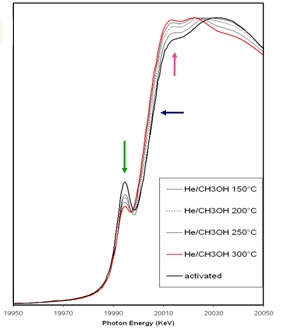
Sylvain Cristol is a Professor at the University of Lille within the Heterogeneous Catalysis department and the Modeling and Spectroscopy (MODSPEC) group. He teaches quantum chemistry, chemical bonding, statistical physics , and X-ray absorption spectroscopy at the university’s European Master’s program. PhD in Molecular and Organic Chemistry (1997-2000, Université de Provence) Postdoctoral work at Davy-Faraday Research Lab, Royal Institution of Great Britain (2000-2002) His research focuses on modeling hydrodesulfurization and hydrodeoxygenation catalysts for biomass valorization, supported by ANR-PNRB project ECOHDOC (with Caen, Poitiers, and TOTAL). He pioneered operando X-ray absorption spectroscopy for characterizing supported oxides (Mo/Re on alumina/anatase) via the ANR SAXO project (Paris VI, Grenoble, SOLEIL). Collaborative work with Francesco Mauri (Paris VI) advanced NMR parameter modeling in solids. Publications span DFT studies , XANES spectroscopy , and solid-state NMR applied to catalysis. Scientific awards include the UCCS Thesis Prize (highest honors) for his work on dibenzothiophene reactivity on molybdenum sulfide.
Professor Jun Huang is a faculty member in the School of Chemical and Biomolecular Engineering at the University of Sydney, where he holds the rank of Professor and is Director of the Laboratory for Catalysis Engineering. He is also a Domain Leader for Materials at the nanoscale at Sydney Nano Institute and a member of several interdisciplinary institutes, including the China Studies Centre and Sydney Institute of Agriculture. His research focuses on catalysis engineering, with an emphasis on developing sustainable processes for renewable fuels, pollutant treatment, and greenhouse gas mitigation. Huang has held prestigious awards such as the Australia Research Council Future Fellowship (2022) and the Sydney Accelerator Fellowship (2018). Education: Huang earned his PhD from the University of Stuttgart (2008) and completed postdoctoral research at Georgia Institute of Technology and ETH Zurich. He joined the University of Sydney in 2010 as a Lecturer, advancing to Senior Lecturer, Associate Professor, and Professor. Research Interests: Huang's work centers on catalyst design for green chemical processes, including biomass conversion to biofuels, wastewater treatment, and CO2 utilization. He emphasizes sustainable manufacturing and environmental impact reduction through innovative catalytic systems. Current Projects: These include catalytic transformation of hydrocarbons/CO2/biomass, nano-catalysts for renewable energy, and advanced NMR spectroscopy for catalysis analysis. Collaborative projects involve anti-cancer therapies and drug pharmacology studies. Awards: Over 15 awards, including the 2021 ACS Sustainable Chemistry & Engineering Lectureship and 2017 Vice-Chancellor’s Research Excellence Award. Teaching: Huang instructs courses such as CHNG2801 (Conservation Processes), CHNG3802 (Industrial Systems), and advanced chemical engineering topics. He supervises PhD/Master students in catalysis and sustainable engineering. Labs/Teams: Leads the Catalysis Engineering Lab and collaborates with Sydney Nano Institute on nanomaterials research.
Benjamin E. R. Snyder is an Assistant Professor of Chemistry at the University of Illinois within the Department of Chemistry in the College of Liberal Arts & Sciences. He holds a B.S. in Chemistry and B.A. in Mathematics from the University of Rochester (2012), a Ph.D. from Stanford University (2018), and completed a postdoctoral fellowship at UC Berkeley (2019–2022). Research Focus: Inorganic, physical, and materials chemistry , emphasizing porous materials like zeolites and metal-organic frameworks for catalysis, CO₂ conversion, and toxic ion remediation. Key Techniques: Advanced spectroscopies (UV-vis-NIR, FT-IR, Raman, EPR), materials synthesis, and density functional theory calculations. Notable Awards: Arnold O. Beckman Postdoctoral Fellowship (2019–2022), NSF Graduate Research Fellowship (2014–2016), and 2024 ACS PRF grant. Advising & Labs: The Snyder Group includes postdoctoral researchers, graduate students, and undergraduates working on cutting-edge projects. Recent news highlights include student accolades (e.g., Sayantani’s PPG-MRL Award) and group expansions. Labs/Teams: Active in the Snyder Group , fostering interdisciplinary collaboration and emphasizing work-life balance.
Peter A. Dowben is a Professor in the Department of Physics and Astronomy at the University of Nebraska–Lincoln , with a research focus spanning Condensed Matter Physics , Materials Science , and Spintronics . His work emphasizes surface physics , electronic structure , and magnetoelectric coupling , particularly in transition metal compounds , ferroelectric polymers , and graphene-based systems . Key research trends in his recent publications include voltage-controlled spin states for memory applications, magnetoelectric transistors , and interfacial effects in nanoscale materials . His collaborations extend across institutions like the Air Force Institute of Technology and the Institute of Physical Optics, with experimental techniques such as X-ray absorption spectroscopy and photoemission . While no specific awards are documented in the provided texts, his extensive publication record and interdisciplinary work on molecular spintronics , surface segregation , and band structure engineering highlight his contributions to fundamental material science and applied physics . He has advised teams in studies involving spin crossover complexes , self-assembled monolayers , and magnetoelectric heterostructures .