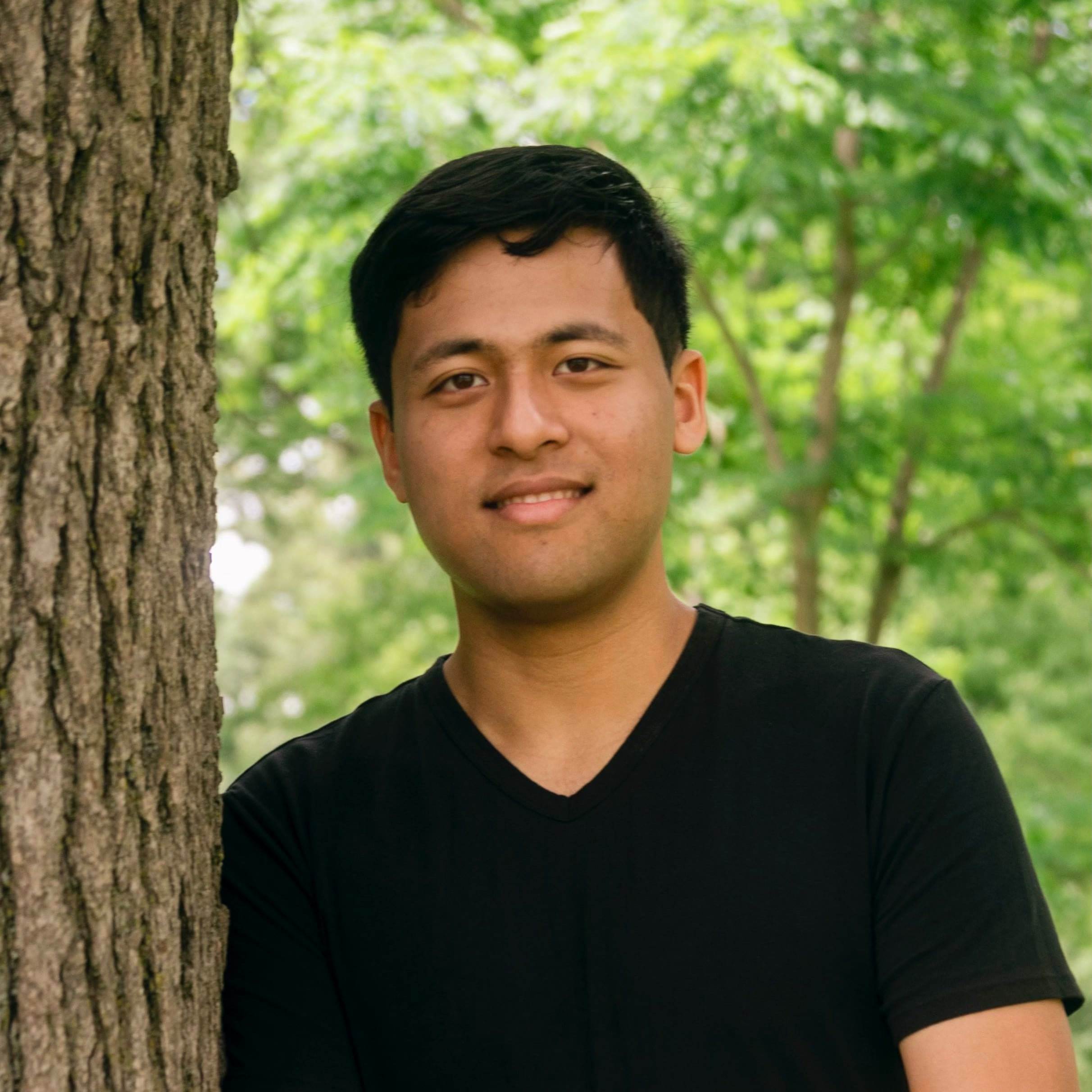
Yang P. Liu is an Assistant Professor in the Computer Science Department at Carnegie Mellon University. Previously, he was a Postdoctoral Member at the Institute for Advanced Study and earned his PhD from Stanford University under the supervision of Aaron Sidford. His research focuses on theoretical computer science and mathematics, emphasizing graph algorithms, optimization, high-dimensional geometry, and additive combinatorics. He has received notable awards including the A.W. Tucker Prize and Google PhD Fellowship, alongside multiple best paper recognitions at major conferences like FOCS, STOC, and ITCS. Education: PhD in Computer Science from Stanford University (2023); BS from MIT (2018). Research Interests: Graph Algorithms Optimization (especially convex and high-dimensional) Algorithmic Techniques in Additive Combinatorics Geometric and Structural Aspects of Computation Teaching: Currently instructing CS 15-759: A Principled Approach to Optimization (Spring 2025), covering topics like gradient descent, interior-point methods, and sparsification techniques. Course emphasizes rigorous mathematical foundations. Awards: Recognized for contributions to optimization theory and algorithmic complexity. His work bridges discrete mathematics and continuous optimization paradigms.
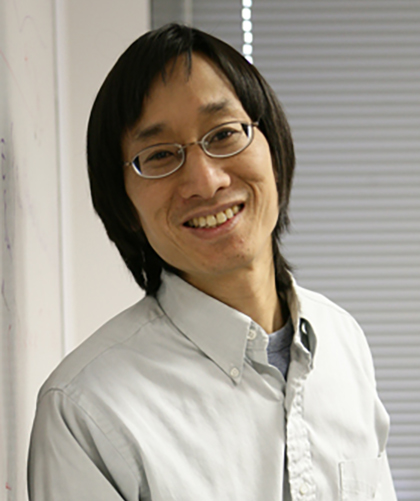
A. Kevin Tang is a Professor of Electrical and Computer Engineering (ECE) at Cornell University, affiliated with the School of ECE. His research focuses on computer networks, control systems, optimization, and information theory. He teaches advanced courses such as ECE 5800 (Control and Optimization of Information Networks) and ECE 6960 (Interplay between Economics and Systems). His work bridges theoretical foundations and practical network applications, including network coding, distributed control, and protocol design. Recent contributions address privacy-preserving data sharing, network routing stability, and optimization techniques for heterogeneous systems. Tang’s publications span top venues like NeurIPS, ICML, NSDI, and IEEE Transactions. His research group explores cutting-edge topics in networked systems, with applications to distributed storage, software-defined networking, and multipath communication protocols. He advises on interdisciplinary projects combining control theory, optimization, and networking. His lab collaborates closely with industry partners to translate theoretical insights into real-world network solutions.
Annie Raymond is an Assistant Professor in the Department of Mathematics and Statistics at the University of Massachusetts (UMass). She earned her PhD from Technische Universität Berlin under Martin Grötschel and previously held postdoctoral positions at the Mathematical Sciences Research Institute (MSRI) and the University of Washington. Her research spans combinatorial optimization, extremal graph theory, applied algebraic geometry, and polyhedral combinatorics. PhD, Mathematics, Technische Universität Berlin Bachelor of Science, Mathematics and Music, Massachusetts Institute of Technology (MIT) Her research focuses on the theoretical and applied aspects of combinatorial optimization, including integer and semidefinite programming, extremal graph theory, and algebraic methods in combinatorics. She investigates problems such as graph profiles, Turán-type problems, and the union-closed sets conjecture using tools from polyhedral combinatorics and sums of squares. Her work often bridges discrete mathematics with optimization and real algebraic geometry. Her recent publications demonstrate a strong trend in applying algebraic and geometric techniques—particularly tropical geometry and sums of squares—to extremal combinatorial problems. She frequently collaborates with leading researchers in the field, including Greg Blekherman, Rekha Thomas, and Mohit Singh, and publishes in high-impact journals such as Advances in Mathematics and SIAM Journal on Discrete Mathematics . 2017: Gamelin Endowed Postdoctoral Fellow, MSRI She has advised several undergraduate researchers, particularly in projects related to integer programming and combinatorial optimization. She has also been involved in educational initiatives, including teaching mathematical modeling courses at UMass and offering college-level mathematics courses in correctional facilities such as San Quentin State Prison and Monroe Correctional Complex through programs like the Prison University Project and University Beyond Bars. She is also the founder of _forall , an outreach initiative highlighting women and people of color in mathematics. She is actively engaged in promoting diversity and accessibility in mathematics through both her teaching and public outreach efforts.
Yuhe Tian is an Assistant Professor in the Department of Chemical and Biomedical Engineering at West Virginia University (WVU), holding the Stuart and Karen Goodman Faculty Fellowship. She leads the INnovation-driven Sustainable SYSTems (INSSYST) group, focusing on systems engineering tools for process innovation, energy efficiency, and sustainable systems. Her research integrates mechanistic/hybrid modeling, optimization algorithms, and multi-scale approaches for modular process intensification and decarbonization. Education: Ph.D., Chemical Engineering, Texas A&M University (2021); B.E., Chemical Engineering, Tsinghua University (2016). She teaches undergraduate and graduate courses including CHE355 (Process Simulation) and CHE593C (Advanced Process Systems Engineering). Her team collaborates with the AIChE RAPID Institute on process intensification education and software development. Research interests include modular process intensification synthesis, fault-prognostic control, energy systems decarbonization, and machine learning in data-scarce regimes. Key contributions include the SYNOPSIS framework for operable system synthesis and publications in Computers & Chemical Engineering , AIChE Journal , and Chemical Engineering Science . She advises multiple PhD and MS students and has openings for researchers. Awards: Stuart and Karen Goodman Faculty Fellow. Grants and collaborations involve energy systems, process safety, and AI-driven optimization. Her work bridges theoretical advancements with industrial applications in chemical and energy sectors.
Michael Fu is the Smith Chair of Management Science at the Robert H. Smith School of Business, University of Maryland, with joint appointments in the Institute for Systems Research and the Department of Electrical and Computer Engineering. He holds a Professor rank and specializes in simulation optimization, stochastic processes, and financial engineering. His research bridges theoretical advancements and practical applications in supply chain management, healthcare systems, and artificial intelligence. His academic accolades include INFORMS College on Simulation's Outstanding Publication Award (1998, 2019), IEEE Fellow (2007), and INFORMS Simulation Society's Distinguished Service Award (2018). He has held editorial roles at journals such as Management Science and Operations Research , and served as Program Director at the National Science Foundation (2010–2012, 2015). Research Focus: Simulation optimization, stochastic control, and Monte Carlo methods applied to healthcare, finance, and manufacturing. Key Contributions: Co-author of seminal works like Conditional Monte Carlo and Simulation-Based Algorithms for Markov Decision Processes . Recent Trends: Integrating AI techniques (e.g., Monte Carlo Tree Search) with classical stochastic optimization frameworks. Fu's interdisciplinary work spans multiple domains, including kidney transplantation logistics, financial risk modeling, and pandemic response strategies (e.g., real-time COVID-19 decision support systems). He has advised numerous research initiatives funded by NSF, SEMATECH, and Air Force Office of Scientific Research, emphasizing practical applications of stochastic methods.
Dimosthenis Peftitsis is a Professor at the Department of Electric Power Engineering , Faculty of Information Technology and Electrical Engineering , Norwegian University of Science and Technology (NTNU). He obtained a Diploma in Electrical and Computer Engineering from Democritus University of Thrace (2008) and a PhD from KTH Royal Institute of Technology (2013). Current research interests: WBG (SiC/GaN) converters, adaptive gate drivers, DC-breaker designs, power supplies for particle accelerators, semiconductor reliability. Key projects: MoReSiC, CoNeCt, ASiCC, ORBES, CERN collaborations, ReliPE. His work spans power electronics for renewable energy, EV charging, and high-voltage systems. Publications focus on SiC MOSFETs, dynamic characterization, and converter reliability. He serves as Associate Editor for IEEE Transactions on Power Electronics and chairs IEEE societies. Scientific Awards : IEEE Senior Member, IEEE PELS Regional Distinguished Lecturer, NTNU Outstanding Academic Fellows Programme. Students : 9 PhD advisees, including Ole-Christian Spro (2020), Andreas Giannakis (2022), Gard Lyng Rødal (pending).
Samuel Fiorini is an Associate Professor in the Department of Mathematics at the Free University of Brussels (Université libre de Bruxelles). His office is located in the Algebra and Combinatorics building (CP 216) at Boulevard du Triomphe, B-1050 Brussels, Belgium. He has been actively contributing to theoretical computer science and discrete mathematics research for over two decades. Professor Fiorini's research focuses on polyhedral combinatorics, extended formulations, combinatorial optimization, approximation algorithms, and structural graph theory. His work bridges theoretical computer science and discrete mathematics, with significant contributions to understanding the limitations of linear programming approaches for combinatorial optimization problems. His research has demonstrated fundamental limits on how well certain NP-hard problems can be approximated using linear programming techniques. An analysis of his recent publications reveals a strong focus on polyhedral combinatorics and extended formulations, with particular emphasis on understanding the expressive power and limitations of linear and semidefinite programming for combinatorial optimization problems. His work often explores the connection between communication complexity and extended formulations, revealing deep theoretical insights about the inherent complexity of representing combinatorial polytopes. His notable scientific achievements include receiving the Best Paper Award at STOC 2012 for his groundbreaking work "Linear vs. Semidefinite Extended Formulations: Exponential Separation and Strong Lower Bounds," which demonstrated an exponential separation between the power of linear and semidefinite extended formulations for combinatorial optimization problems. Professor Fiorini has supervised numerous PhD students and hosted many postdoctoral researchers. His current and former PhD students include Carole Muller, Matthew Drescher, Marco Macchia, Selim Rexhep, Eglantine Camby, and Céline Engelbeen. Among his postdoctoral researchers are notable scholars such as Manuel Aprile, Krystal Guo, Tony Huynh, and Hans Raj Tiwary. He has also served on program committees for major conferences including APPROX 2019, IPCO 2017, WAOA 2016, and STACS 2016. His research group works on fundamental problems in combinatorial optimization, with connections to theoretical computer science and discrete geometry. He leads an ERC-funded project focusing on extended formulations and their applications to combinatorial optimization problems.
Nicholas Jenkins is an Associate Professor of English at Stanford University, specializing in 20th-century literature, particularly poetry, and digital humanities. He directs the Creative Writing Program and the Princeton University Press translation series Facing Pages . His interdisciplinary work bridges literary scholarship with technological innovation through projects like Kindred Britain , a digital genealogical database tracing 30,000 British individuals. Education : D.Phil. and M.A. from Oxford University (1997), B.A. from Oxford (1984) Professional Roles : Co-Chair of the W.H. Auden Society (since 1986) Literary Executor for Lincoln Kirstein Faculty Director, Program in Writing and Rhetoric (2010-2014) Director of the CS+X Initiative (2013-2014) His research explores modernist literature, cultural history, and digital humanities, with particular focus on W.H. Auden's genealogy and transnational influences. His editorial work includes the Lincoln Kirstein Reader and Auden Studies series. Scientific Awards : Warren-Brooks Award (2024) Harkness Fellow (1986-1988) Two Stanford Humanities Center Fellowships ACLS Junior Fellow (2000-2001) Eleanor Loring Ritch Fellowship (2014-) As a board member of Stanford's Center for Interdisciplinary Digital Research and CESTA, Jenkins advances digital humanities methodologies. His teaching includes courses on Paradise Lost and Poetry and Poetics , while mentoring doctoral advisee Armen Davoudian.
Dr. Sander Borst is a postdoctoral researcher in the Algorithms and Complexity group at the Max Planck Institute for Informatics in Saarbrücken, Germany. Previously, he completed his Ph.D. in the Networks & Optimization group at the Centrum Wiskunde & Informatica (CWI) in Amsterdam, advised by Daniel Dadush. He holds bachelor’s degrees in Mathematics and Computer Science and a master’s degree in Mathematics from Delft University of Technology . Current Role: Postdoctoral Researcher at Max Planck Institute for Informatics. Education: B.Sc. and M.Sc. in Mathematics and Computer Science from Delft University of Technology. Sander's research focuses on the design and analysis of online algorithms , particularly in online network design , hypergraph matching , and graph exploration . His work bridges theoretical computer science with practical applications in optimization and algorithmic randomness. Recent projects include developing algorithms for explorable heap selection , constraint propagation in MIP solvers, and analyzing integrality gaps in integer programming under random data assumptions. The trends in his publications (2020–2025) span online optimization , randomized algorithms , hypergraph theory , and integer programming . Key venues include SODA, IPCO, ITCS, and Algorithmica, with recurring themes in network design , combinatorial optimization , and theoretical guarantees for algorithmic solutions. His technical expertise extends to software development and programming languages , ensuring practical implementation of theoretical models. He has collaborated with researchers such as Daniel Dadush, Neil Olver, and Ambros Gleixner.
Jose Israel Rodriguez is an Assistant Professor in the Department of Mathematics at the University of Wisconsin-Madison, with secondary affiliations at the Institute for Foundations of Data Science and the Department of Electrical & Computer Engineering. He began his tenure-track position at UW Madison in Fall 2020 after serving as an NSF Postdoc with Jon Hauenstein and a Provost's Postdoctoral Scholar at the University of Chicago with Lek-Heng Lim. PhD in Mathematics from University of California, Berkeley (supervised by Bernd Sturmfels) Bachelor's degree from University of Texas at Austin (McNair Scholar) Dr. Rodriguez's research focuses on applied algebraic geometry, particularly in algebraic statistics, optimization, and engineering applications. His work bridges theoretical mathematics with practical problems in statistics, robotics, and data science. He is known for developing methods to compute Euclidean distance degrees and maximum likelihood degrees, and for applying multidegrees to solve polynomial systems in economics and kinematics. His recent publications reveal a strong focus on singularity theory applications, numerical algebraic geometry methods, and interdisciplinary collaborations. The research shows increasing emphasis on practical applications in robotics, computer vision, and systems biology, while maintaining strong theoretical foundations in algebraic geometry. Sloan Fellowship (2023) Nellie McKay Fellowship Chancellor's Fellowship (UC Berkeley) McNair Scholar (UT Austin) Dr. Rodriguez actively mentors students and postdocs, currently advising six PhD students with several recent graduates. He co-organizes the Applied Algebra Seminar at UW Madison and is a key organizer for the SIAM Activity Group in Algebraic Geometry. His research group receives funding from multiple sources to support graduate students and undergraduate researchers. He is also co-organizing a semester-long program at the IMSI institute in Chicago titled 'Algebraic Statistics and Our Changing World: New Methods for New Challenges' for Fall 2023. He maintains strong connections with the Max Planck Institute for Mathematics in the Sciences in Leipzig, having participated in their summer school on 'Randomness and Learning in Non-Linear Algebra.' His research group includes postdocs, PhD students, and numerous undergraduate researchers working on various aspects of nonlinear algebra and its applications.
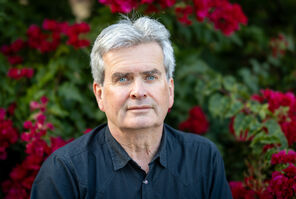
Tobias Ried is a tenure-track Assistant Professor in the School of Mathematics at Georgia Institute of Technology, where he conducts research at the intersection of partial differential equations, mathematical physics, and statistical mechanics. Prior to joining Georgia Tech, he served as a group leader in Felix Otto's research group at the Max Planck Institute for Mathematics in the Sciences in Leipzig, Germany. His work is supported by NSF grant DMS-2453121 and focuses on fundamental problems in kinetic theory, optimal transport, and micromagnetics. Ried's research interests span a wide range of mathematical topics with strong connections to physical applications. His primary focus lies in partial differential equations and their applications to problems in statistical mechanics and mathematical physics. He has made significant contributions to the theory of kinetic equations including the Boltzmann and Kac models, optimal transport theory with applications to economics and machine learning, and micromagnetics with relevance to materials science. His work often combines analytical techniques from calculus of variations with insights from probability theory and functional analysis. Analysis of Ried's publication record reveals a strong trend toward interdisciplinary mathematical research that bridges theoretical mathematics with concrete physical applications. His early work focused on kinetic theory and nonlinear wave phenomena, particularly examining smoothing properties of solutions to Boltzmann-type equations. More recently, his research has expanded into optimal transport theory, where he has investigated regularity properties of transport maps and Wasserstein barycenters, and micromagnetics, where he has established precise scaling laws for domain branching phenomena. This evolution demonstrates a consistent focus on variational methods applied to complex physical systems. Ried has established productive collaborations with prominent researchers in mathematical physics including Dirk Hundertmark, Felix Otto, and Michael Loss. His work has appeared in top-tier mathematics journals such as Communications in Mathematical Physics, Inventiones Mathematicae, and Archive for Rational Mechanics and Analysis. While specific awards are not documented in the available information, his research has generated significant scholarly impact with his publications cited over 60 times according to zbMATH Open. Ried maintains an active research program supported by NSF funding, with recent work exploring singular stochastic partial differential equations, variational problems related to spectral inequalities, and the mathematical foundations of micromagnetic phenomena. His research group at Georgia Tech likely focuses on advancing the theoretical understanding of complex systems through rigorous mathematical analysis, though specific details about students and postdoctoral researchers are not provided in the available documentation.
Markus Holzbach is a Professor of Visualization and Materialization at the Offenbach University of Art and Design (HfG Offenbach), where he has been a faculty member since 2009. He leads the Institute for Materials Design (IMD) and has held significant leadership roles, including Dean and Vice Dean of the Design Department. His academic affiliations extend internationally through visiting professorships at Politecnico di Milano, MIT, RWTH Aachen, and the Berlage Institute. His research centers on material innovation , parametric design , and bio-materialization , exploring the dialogue between materials and their environments. Holzbach’s work emphasizes interdisciplinary experimentation, digital fabrication, and sustainable design practices. Projects like the Angel’s Trumpet and ECHOLOT Pavilion exemplify his integration of nature-inspired forms with interactive technologies. The 15 most recent projects reflect a consistent focus on computational design , material transfer , and sustainable architecture . Themes include responsive environments, modular systems, and the reinterpretation of natural forms through digital tools. His work spans product design, pavilions, housing, and industrial structures, often involving CNC fabrication and algorithmic modeling. Notable scientific awards include the Red Dot Design Award , BEST of SHOW ’16 at ISE 2016 , and the Music Super NAMM Award 2016 for the CURV 500® speaker. He has served on design juries such as the materialPREIS 2018 and Werk.Klasse. Markus Holzbach advises students and leads research teams at the IMD, fostering innovation in material design. His projects often receive institutional or corporate sponsorship, such as Palmengarten Frankfurt and Sonosfera. He has not received mention of formal grants, but his work is supported through collaborative and applied research funding. He directs the Institute for Materials Design (IMD) , a hub for experimental material research, student projects, and public exhibitions. The IMD has showcased work at events like the Triennale di Milano and Passagen Köln, emphasizing hands-on, interdisciplinary exploration of materiality.
Sebastian Pokutta is the David M. McKenney Family Associate Professor at Georgia Tech's Stewart School of Industrial & Systems Engineering. He serves as director of the Interactive Optimization and Learning Lab and associate director of Georgia Tech's Center for Machine Learning. His research spans Artificial Intelligence , Optimization , and Machine Learning with applications in quantum computing, social science modeling, and sustainability. Mathematics M.Sc. and PhD from University of Duisburg-Essen (2003-2005) Postdoc at MIT Operations Research Center Former roles at IBM ILOG, TU Darmstadt, MIT, and University of Erlangen-Nürnberg Recent research focuses on Frank-Wolfe algorithms for optimization, quantum entanglement thresholds , and human-AI co-creativity . His work has been published in Transactions on Mathematical Software , Mathematics of Operations Research , and ICML proceedings . Scientific awards include: 2025 Science Prize from the Association for Pediatric Orthopedics (VKO) 2025 Land-Doing MIP Computational Competition winner He co-leads the Cluster of Excellence MATH+ and directs research at the Interactive Optimization and Learning Lab, focusing on real-world deployments like biomass estimation from satellite data and mathematical discovery with AI . His recent blog posts discuss federated learning robustness and Frank-Wolfe.jl algorithmic improvements.
Thomas Rothvoss is a Professor at the University of Washington with joint appointments in the Department of Mathematics and the Paul G. Allen School of Computer Science and Engineering. He completed his PhD in Mathematics at EPFL in 2009 under Friedrich Eisenbrand, followed by postdoctoral positions at EPFL (2010) and MIT (2011-2013). He is part of the UW CS theory group and the Optimization group. His research focuses on: Theoretical computer science with emphasis on approximation algorithms and discrete optimization Discrepancy theory and high-dimensional convex geometry Lattice algorithms and integer programming Scheduling algorithms and combinatorial optimization His publications demonstrate a consistent focus on developing novel algorithms with improved theoretical guarantees, particularly in lattice-based optimization, discrepancy theory, and scheduling. Recent work has made significant advances in integer programming complexity and online discrepancy minimization. Awards and Honors Gödel Prize (2023) FOCS Best Paper Prize (2023, 2014) IPCO Best Paper Prize (2023) Delbert Ray Fulkerson Prize (2018) SODA Best Paper Prize (2014, 2020) David and Lucile Packard Foundation Fellowship (2016) Alfred P. Sloan Research Fellowship (2015) Research Funding and Advising Current research is supported by NSF SMALL (2023-2026) and previously by NSF CAREER (2017-2022). He currently advises PhD students Rainie Heck and Mathews Boban, and has graduated 7 PhD students including Victor Reis (2023) and Sally Dong (2024). His research group focuses on theoretical aspects of optimization and algorithm design.
Stefanie Jegelka is an Associate Professor (on leave) at MIT's Department of Electrical Engineering and Computer Science, and a Humboldt Professor at Technical University of Munich (TU Munich). She is a member of CSAIL (Computer Science and Artificial Intelligence Laboratory), IDSS (Institute for Data, Systems, and Society), and Machine Learning at MIT. Her research spans algorithmic machine learning with focus on modeling, optimization algorithms, theory, and applications. Dr. Jegelka completed her PhD at the Max Planck Institutes in Tuebingen and ETH Zurich, followed by a postdoc at UC Berkeley's AMPlab and computer vision group. Her academic journey reflects a strong foundation in both theoretical and applied aspects of machine learning. Her research focuses on exploiting mathematical structure for discrete and combinatorial machine learning problems, robustness, and scaling machine learning algorithms. Key areas include submodular optimization, graph neural networks, invariant and equivariant learning, and representation theory in machine learning. Her work bridges theoretical foundations with practical applications across various domains, with particular emphasis on how mathematical structure can enhance algorithmic performance. Dr. Jegelka's recent publications demonstrate significant contributions to understanding the theoretical properties of graph neural networks, developing methods for invariant learning, and advancing representation learning techniques. Her work consistently shows strong connections between mathematical structure and machine learning performance, with applications spanning natural language processing, computer vision, and scientific domains. Sloan Research Fellowship NSF CAREER Award DARPA Young Faculty Award Dr. Jegelka has advised numerous graduate students and postdocs, many of whom have gone on to successful careers in academia and industry. Her research has been supported by prestigious grants from NSF, DARPA, ONR, and industry partners including Google, Two Sigma, and Adobe. She serves as Program Chair for ICML 2022 and has held numerous editorial and organizational roles in the machine learning community. She leads a research group investigating fundamental questions in machine learning, particularly how mathematical structure can be leveraged to develop more efficient, robust, and scalable learning algorithms. Her group collaborates across disciplines, connecting theoretical machine learning with applications in science and engineering, and has produced influential work on submodularity, graph representation learning, and invariant learning methods.