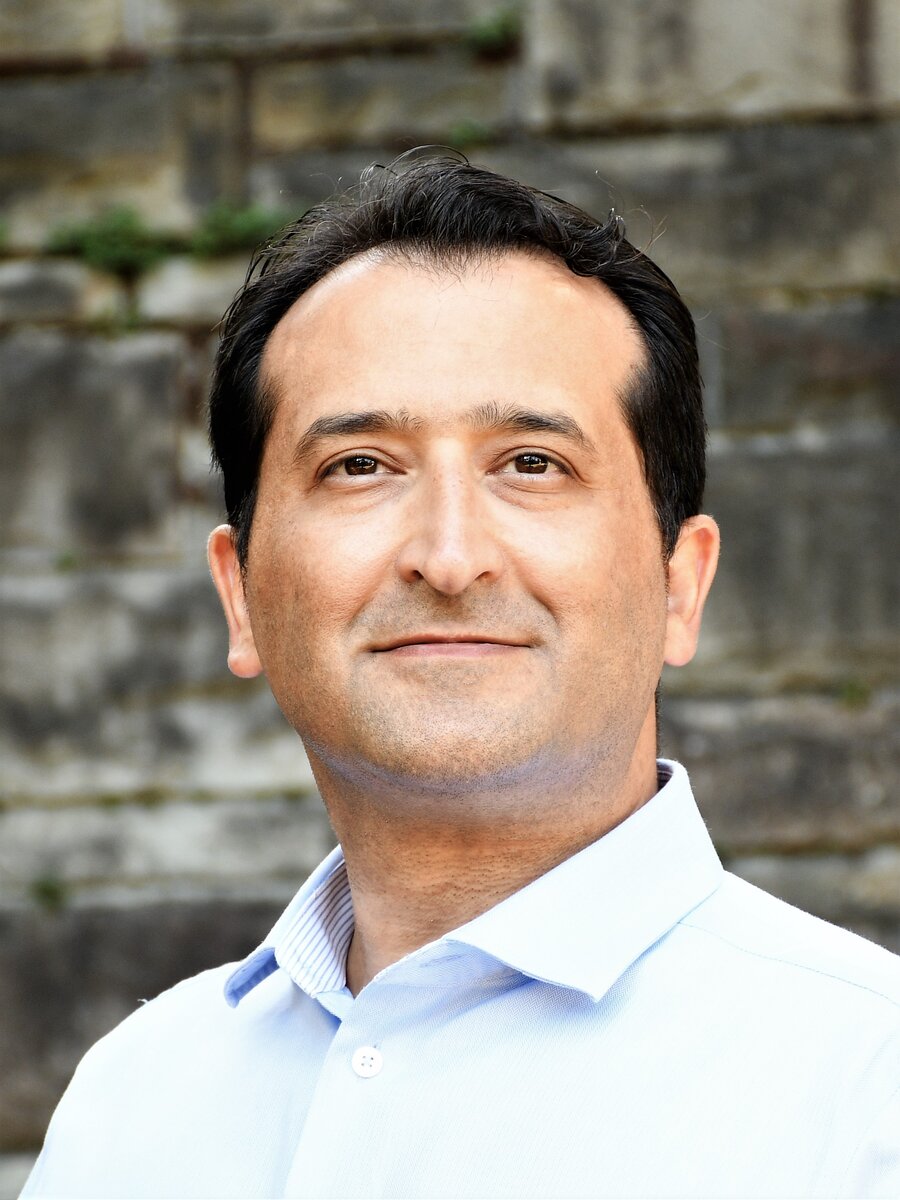
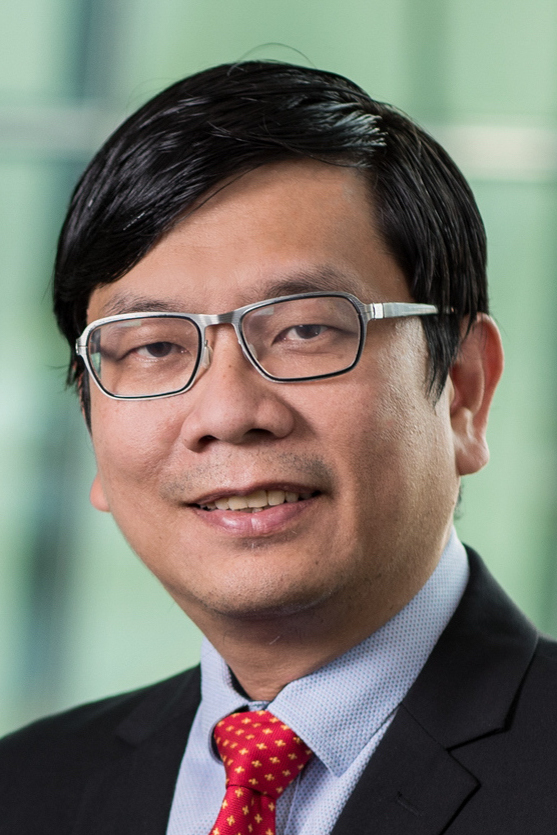
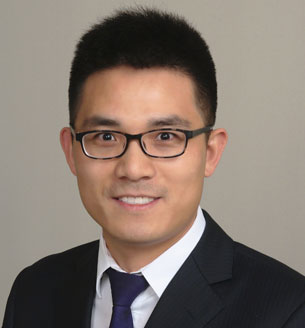
Shunsuke Horii is an Associate Professor at the Center for Data Science, Waseda University. His research spans information theory, coding theory, statistical learning theory, and data science applications. He actively collaborates with industry through initiatives like the Waseda Data Science Consortium. Education: Ph.D. in Science and Engineering from Waseda University (2009), Master's from Waseda University Graduate School of Science and Engineering (2004). Research Focus: Addresses causal effect estimation in data science using Bayesian decision theory, sparse modeling, and optimization techniques like ADMM and variational inference. Develops efficient algorithms for multiuser communication, matrix completion, and privacy-preserving distributed computing. Teaching: Instructs courses on statistics literacy, data science, and programming with Python/R across multiple academic quarters. Grants: Leads projects funded by Japan Society for the Promotion of Science, including causal inference frameworks, product recommendation systems, and business analytics. Publications: 21 papers with 61 Scopus citations, focusing on LP decoding, Bayesian hierarchical models, and statistical causal analysis.
Simone Pirrera is a Research Fellow at the Department of Control and Computer Science (DAUIN) and an External Lecturer/Teaching Assistant at the Department of Electronics and Telecommunications (DET), both at Politecnico di Torino. He contributes to teaching in the Mechatronic Engineering Master's program through roles in the 'Laboratory of robust identification and control' since 2022. Research Focus: System identification, control theory, convex optimization, and data-driven methods for dynamical systems. Research Groups: Member of SIC - System Identification & Control (DAUIN). Publications: 2025 doctoral thesis (Politecnico di Torino) and multiple conference/journal contributions since 2021. Email: simone.pirrera@polito.it His recent work explores optimization methods for dynamical systems learning, Tustin discretization techniques for MIMO systems, and feedback-based constrained optimization frameworks. Publications span high-impact venues like IEEE CDC, ECC, and IEEE ACCESS. Scientific awards or formal honors are not explicitly mentioned in the available materials. Teaching responsibilities include collaborative instruction in robust control systems for Mechatronic Engineering undergraduates and graduates.
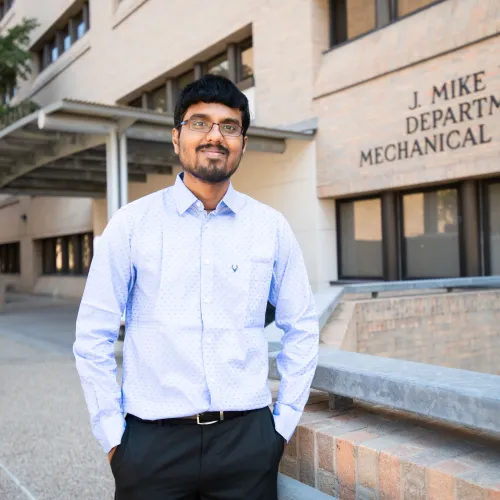
Raghu Bollapragada is an Assistant Professor in the Operations Research and Industrial Engineering program within the Mechanical Engineering department at The University of Texas at Austin. He is affiliated with the Machine Learning Laboratory, the Oden Institute for Computational Engineering and Sciences, and the Center for Dynamics and Controls of Material (an NSF MRSEC), focusing on algorithmic solutions for large-scale optimization challenges in machine learning and computational physics. His educational background includes: PhD in Industrial Engineering and Management Sciences, Northwestern University MS in Industrial Engineering and Management Sciences, Northwestern University Visiting Researcher at INRIA, Paris during graduate studies Bollapragada's research centers on nonlinear optimization, with expertise in constrained, stochastic, and distributed optimization frameworks. He develops algorithms that leverage modern computational infrastructure to solve complex problems in logistics, control systems, and machine learning, emphasizing scalability and hardware-aware efficiency. His work bridges theoretical convergence guarantees with practical implementation. Recent publications reveal dominant trends in decentralized optimization (gradient tracking, network pruning) and stochastic methods (adaptive sampling, finite-difference estimation), with strong connections to machine learning applications. Key themes include communication-computation tradeoffs, non-convex optimization, and second-order acceleration techniques across 10+ high-impact publications (2024-2025). His scientific awards include: IEMS Nemhauser Dissertation Award for best dissertation IEMS Arthur P. Hurter Award for outstanding academic excellence McCormick terminal year fellowship Walter P. Murphy Fellowship Bollapragada mentors PhD students (including Cem Karamanli, recent thesis defense) and undergraduate researchers (Marissa Llamas, STARS Conference presenter), with research funded by NSF grant DMS-2324643, Argonne National Laboratory, and Lawrence Livermore National Laboratory. His SANDOPT and ZOAdaQN GitHub repositories provide open-source implementations of novel optimization algorithms. He leads the Optimization, Inversion, Machine Learning, and Uncertainty for Complex Systems research group within UT Austin's Machine Learning Laboratory ecosystem, collaborating with the Center for Scientific Machine Learning on cross-disciplinary projects.
Paul Edlefsen, PhD is a Principal Staff Scientist leading the Edlefsen Group within the Biostatistics, Bioinformatics and Epidemiology Program of the Vaccine and Infectious Disease Division at Fred Hutchinson Cancer Research Center. His interdisciplinary work bridges statistics, computer science, and molecular biology to advance infectious disease vaccine research through innovative statistical and computational methods. Dr. Edlefsen's educational background includes: PhD in Statistics from Harvard University (2009) AM in Statistics from Harvard University (2005) BA in Computer Science from Wesleyan University (2000) Dr. Edlefsen specializes in developing statistical frameworks for bioinformatics applications, particularly in genome sequence analysis. His research spans HIV vaccine trials, pathogen comparative genome analysis, HIV-1 evolution modeling, and immune correlates analysis across multiple diseases including HIV, TB, malaria, dengue, zika, and COVID-19. The Edlefsen Group contributes throughout the research process from study design to reproducible data analysis, with emphasis on overcoming communication barriers across scientific disciplines. Dr. Edlefsen offers workshops on statistics, sieve analysis, and profile HMMs, seeking students with strong computational and statistical skills. His multidisciplinary team includes biostatisticians, skilled programmers proficient in Python/R/Perl/Java/C++, and biologists with cross-disciplinary data science expertise. The group serves as statistical core for major networks including United World Arbovirus Research Network (UWARN) and Cascade IMPAc-TB network, maintaining commitment to reproducible research through custom software development.
Zak Mhammedi is a Postdoctoral Associate at the Massachusetts Institute of Technology working with Sasha Rakhlin on theoretical problems in machine learning. His research spans Reinforcement Learning, Control Theory, and Optimization with strong theoretical foundations. His educational background includes: PhD in Computer Science, 2021, Australian National University MPhil in Computer Science, 2016-2017, The University of Melbourne Mhammedi's research focuses on bridging theoretical guarantees with practical algorithms, particularly in online learning, projection-free optimization, and reinforcement learning. His work often addresses fundamental limitations in statistical learning while developing computationally efficient methods. He has made significant contributions to understanding risk-monotonicity, developing parameter-free online learning algorithms, and creating efficient exploration strategies for reinforcement learning. His publication record shows a consistent trajectory in theoretical machine learning, with numerous papers in top-tier venues including NeurIPS, ICML, and COLT. His work demonstrates expertise across multiple subfields including PAC-Bayesian theory, online convex optimization, and control theory applications to machine learning. His scientific achievements include: Oral Presentation at NeurIPS 2021 (awarded to approximately 1% of submissions) Spotlight Presentation at NeurIPS 2020 Spotlight Presentation at NeurIPS 2018 (awarded to approximately 3% of submissions) Mhammedi actively contributes to the academic community through program committee service for COLT 2021 and 2022, and as a reviewer for major conferences including COLT, NeurIPS, and ICML across multiple years. His technical expertise spans adaptive methods, computational efficiency, constrained optimization, and theoretical aspects of deep learning and reinforcement learning.
Professor Yu Gang serves as Professor of Management Practice of Innovation and Entrepreneurship at Cheung Kong Graduate School of Business (CKGSB), where he bridges academic theory with real-world business applications. He concurrently holds the position of Executive Chairman at New Peak Group (111.com.cn), demonstrating his dual commitment to academia and industry leadership in China's e-commerce sector. His academic foundation includes: Bachelor of Science from Wuhan University Master of Science from Cornell University PhD from the Wharton School of the University of Pennsylvania Professor Yu's research centers on operations management and supply chain optimization , with specialized focus on e-commerce logistics, healthcare systems, and internet-driven business models. His work consistently applies advanced mathematical frameworks to solve complex resource allocation problems across aviation, telecommunications, and retail sectors, emphasizing practical implementation in dynamic markets. His publication history reveals a sustained trajectory from theoretical optimization models in the 1990s toward applied solutions for digital commerce and healthcare logistics in the 2000s. The research demonstrates evolving expertise from airline crew scheduling to e-commerce supply chains, reflecting China's technological transformation. His distinguished recognition includes: 2002 Franz Edelman Management Science Achievement Award (INFORMS) 2002 IIE Transaction Award for Best Application Paper 2003 Outstanding IIE Publication Award 2012 Martin K. Starr Excellence Award (POMS) Professor Yu's industry experience as Vice President at Amazon and Dell directly informs his academic perspective, though specific grant details remain undisclosed. His leadership in founding CALEB Technologies and co-creating Yihaodian provides unparalleled case studies for entrepreneurship education at CKGSB. While current lab affiliations aren't specified, his past directorship of UT Austin's Center for Management of Operations and Logistics indicates his capacity for leading interdisciplinary research teams focused on operational excellence.
Egor Dmitrievich Kosov is an Associate Professor at the Faculty of Computer Science of the National Research University Higher School of Economics (HSE), where he has been working since 2016. He also serves as a Senior Research Fellow at the International Laboratory of Stochastic Algorithms and Multidimensional Data Analysis within HSE's Institute of Artificial Intelligence and Digital Sciences. Additionally, he holds positions as Senior Researcher at the Steklov Mathematical Institute's Department of Function Theory and Junior Researcher at the Laboratory of Multidimensional Approximation and Applications. Dr. Kosov earned his Candidate of Physical and Mathematical Sciences degree from Lomonosov Moscow State University in 2018, where he also completed postgraduate studies specializing in Mathematics and Mechanics with a qualification as Researcher. His research focuses on measure theory , particularly Gaussian measures , measures on infinite-dimensional spaces , logarithmically concave measures , and measurable polynomials . Kosov's work bridges theoretical mathematics with applications in stochastic analysis, exploring the regularity properties of distributions and developing discretization techniques for functional norms. His research has significant implications for understanding complex probabilistic structures in high-dimensional spaces. Analysis of Kosov's recent publications reveals a strong focus on polynomial mappings of random variables, particularly Gaussian and log-concave distributions. A significant portion of his research addresses discretization problems—developing methods to approximate continuous mathematical structures through discrete sampling. His publications demonstrate growing recognition in the mathematical community, with appearances in prestigious journals across multiple subfields of mathematical analysis. Letter of gratitude from the First Vice-Rector of HSE (March 2023) Letter of Gratitude from the Faculty of Computer Science at HSE (September 2019) Bonus for publication in List A journals (2023-2024) Multiple bonuses for international peer-reviewed publications (2019-2023) Best Teacher award (2018) Moscow Mathematical Society award (2021) At HSE, Kosov teaches Mathematical Analysis, Probability Theory, and Functional Analysis to undergraduate students in the Applied Mathematics and Computer Science program across both the Faculty of Computer Science and the Faculty of Economic Sciences. His teaching spans multiple academic years (2020-2023), demonstrating his commitment to education alongside research. Dr. Kosov is actively involved in research teams including the International Laboratory of Stochastic Algorithms and Multidimensional Data Analysis at HSE and the Laboratory of Multidimensional Approximation and Applications. His work connects with the broader mathematical community through collaborations with researchers such as V.I. Bogachev, V.N. Temlyakov, and others, contributing to Russia's strong tradition in mathematical analysis and probability theory.
Egor Leonidovich Gladin serves as both Associate Professor in the Department of Big Data and Information Retrieval and Senior Research Fellow at the Laboratory of Theoretical Foundations of Artificial Intelligence Models within the Faculty of Computer Science at the National Research University Higher School of Economics (HSE). He began his formal appointment at HSE in 2025, though he has been affiliated with the university as a Research Intern since 2022. His educational background includes a PhD from Humboldt University of Berlin (2024), a Master's degree in Applied Mathematics and Physics from Moscow Institute of Physics and Technology (2021), and a Bachelor's degree in the same field from the same institution (2019). Gladin is proficient in Russian, English, and German, facilitating his international research collaborations. Gladin's research focuses on convex optimization and stochastic optimization methods, with significant contributions to probability theory and mathematical statistics. His work addresses fundamental challenges in optimization theory, particularly for problems with dimensional constraints, developing algorithms with provable convergence properties. His publications span theoretical foundations of optimization algorithms with applications to artificial intelligence and machine learning, demonstrating expertise in minimax problems, Markov decision processes, and convex minimization with inexact oracles. Among his scientific achievements is a bonus for publication in a journal from List A (2025-2026), recognizing the quality and impact of his research. His scholarly work has appeared in prestigious venues including the Journal of Optimization Theory and Applications, Proceedings of Machine Learning Research, and NeurIPS. As an educator, Gladin teaches Mathematical Statistics 1 and 2 for undergraduate students in the Applied Mathematics and Computer Science program, and Modern Algorithmical Optimization for both undergraduate and graduate students. His teaching emphasizes theoretical foundations while connecting concepts to practical applications in data science and artificial intelligence. He is supervised by Naumov A.A. and Puchkin N.A. at HSE and maintains active collaborations with prominent researchers including Gasnikov A. and Dvurechensky P. in the optimization and machine learning communities.
Dr. Guang Deng serves as an Adjunct Associate Professor in the College of Engineering at La Trobe University, where he has maintained academic appointments since 1994. His technical expertise bridges communications engineering, signal processing, and advanced image analysis with practical applications in medical devices and computer vision systems. Academic Background: BSc from Sun Yat-Sen University MEng from Chinese Academy of Sciences PhD from La Trobe University Dr. Deng's research program centers on generalized linear image processing and statistical signal processing , with significant contributions to lossless image compression algorithms and noise reduction techniques specifically engineered for cochlear implant devices. His methodology combines theoretical mathematical frameworks with practical hardware implementation constraints, particularly evident in his recent work on fixed-point acceleration methods for resource-limited systems. His publication trajectory reveals consistent innovation in image filtering techniques, evolving from foundational work on discrete Laplacian operators to contemporary deep learning applications in marine imaging. Key thematic developments include the progression from traditional signal processing to hybrid approaches incorporating machine learning, with growing emphasis on real-world constraints like embedded system limitations and illumination variability in agricultural imaging. Funded Research Initiatives: Virtual Speech Pathologist (National ICT Australia, 2013-2016) ARC Centre of Excellence in Electromaterial Sciences (Australian Research Council, 2009-2013) Dr. Deng maintains active research collaborations across engineering and life sciences domains, particularly evident in his cross-disciplinary work on plant phenotyping systems and medical device signal processing. His current research demonstrates increasing focus on edge computing applications and biometric security systems alongside his longstanding image processing expertise.
Justino Miguel Rodrigues is a Contracted Researcher at the Institute of Systems and Computer Engineering, Technology and Science (INESC TEC) and an invited PhD professor at the Faculty of Engineering, University of Porto. He serves as head of the SmartGrids and Electric Vehicles Laboratory (SGEVL) at INESC TEC and holds the position of Area Manager within the Power and Energy Systems Centre. Born in Penafiel, Portugal on September 9, 1985, Dr. Rodrigues earned his Master's degree in Electrical and Computer Engineering in 2010 and his Ph.D. in Sustainable Energy Systems in 2022, both at the Faculty of Engineering, University of Porto. His doctoral thesis, "Advanced Control Functionalities for Smart-Transformers Integrating Hybrid MicroGrids," received the prestigious REN prize in 2023 for the best doctoral thesis in the energy sector covering years 2022-2023. His research focuses on critical power system challenges including: Smart electric power grid technologies and control systems Integration of renewable distributed energy resources Electric vehicle infrastructure and grid integration Advanced control methodologies for power distribution networks Hybrid AC/DC distribution systems Dr. Rodrigues' publication record demonstrates expertise in smart transformer applications, grid stability mechanisms, and optimization techniques for modern power systems. His work consistently addresses practical challenges in integrating renewable energy while maintaining grid reliability, with particular emphasis on fault management, frequency regulation, and load restoration strategies. His notable scientific recognition includes: REN prize in 2023 for the best doctoral thesis in the energy sector (covering years 2022-2023) Dr. Rodrigues leads INESC TEC's participation in the H2020 European Project POCITYF and has contributed to significant research initiatives including the PV_Azores_DM project studying photovoltaic integration on São Miguel Island. As head of the SmartGrids and Electric Vehicles Laboratory, he directs research activities focused on advancing power system technologies for the energy transition.
Gholamreza Alirezaei is a Senior Lecturer and Principal Research Scientist at RWTH Aachen University's Faculty of Electrical Engineering and Information Technology, where he holds a position at the Chair for Communications Engineering. He also regularly teaches courses at the Technical University of Munich (TUM). With extensive experience in both theoretical and practical problem-solving, Dr. Alirezaei specializes in Applied Mathematics, Communications Engineering, and Information Processing. Dr. Alirezaei's research spans multiple cutting-edge domains including Data Science, Machine Learning, and Artificial Intelligence; Molecular Communications, Bio-Inspired Systems, and Massive Sensor Systems; Information Theory and Signal Processing; and Detection, Estimation and Classification Theory. His work combines theoretical rigor with practical applications, particularly in extreme environments and sensor networks. His research has gained significant recognition, with numerous awards and publications in top-tier venues. His scientific contributions have been honored with prestigious awards including the Vodafone Young-Researcher Prize, ITG-Literature Prize, and Friedrich-Wilhelm-Prize. He has also received multiple best paper awards for his conference presentations on topics ranging from wireless power systems to sensor networks and communication theory. Dr. Alirezaei has secured substantial research funding through various projects with DFG, BMBF, and EU funding programs. His leadership extends to organizing international conferences and workshops, including the IEEE International Conference on Wireless for Space and Extreme Environments (WiSEE) and workshops on Massive Intelligent Sensor Systems (MISS).
Adrian S. Lewis is the Samuel B. Eckert Professor of Engineering at Cornell University's School of Operations Research and Information Engineering. His research focuses on nonsmooth optimization, variational analysis, and semi-algebraic geometry, with applications in control systems and applied modeling. He holds a B.A., M.A., and Ph.D. from Cambridge University. Education: B.A. (Mathematics), Cambridge University (1983); M.A. and Ph.D. (Engineering), Cambridge University (1987). Research interests include optimization algorithms, eigenvalue problems, and the intersection of classical mathematics with computational methods. He has authored 100+ publications and serves as Co-Editor of Mathematical Programming . Notable awards: 1995 Aisenstadt Prize, 2003 Lagrange Prize, 2005 SIAM Outstanding Paper Prize. Editorial roles: Mathematical Programming, SIAM Journals, and others. Teaching spans linear optimization, nonlinear optimization theory, and convex analysis at both undergraduate and PhD levels.
Melvyn Sim is a Professor and Provost’s Chair in the Department of Analytics & Operations at the NUS Business School, National University of Singapore. He holds affiliations with the Institute of Operations Research and Analytics (IORA), NUS Risk Management Institute, and Singapore-MIT Alliance. His research focuses on decision-making and optimization under uncertainty, with applications in healthcare, finance, supply chain, and engineered systems. He is a prominent figure in robust optimization and has received multiple accolades including the NUS Outstanding Young Researcher Award (2009) and INFORMS JFIG Best Paper Competition (2007). Dr. Sim earned his PhD in Operations Research from MIT (2004), S.M. in Computational Engineering from Singapore-MIT Alliance (2000), and degrees in Electrical Engineering from NUS (1995-1996). He has held academic roles including Deputy Head of the Department of Decision Sciences (2009–2011) and Dean’s Chair (2009–2012). His editorial roles include associate editorships for Operations Research , Management Science , and Mathematical Programming Computations . His research interests emphasize robust optimization frameworks addressing ambiguity in decision models, with practical applications such as healthcare resource allocation and supply chain resilience. He has pioneered methodologies like RSOME (Robust Stochastic Optimization Made Easy), enabling tractable robust decision-making models. Awards : Multiple NUS Researcher Awards, Nicholson and JFIG paper competitions, and Singapore-MIT Alliance Fellowships. Grants & Labs : Leads IORA, advancing operations research and analytics for national priorities like the Smart Nation initiative.
Zhenbo Wang is an Associate Professor in the Department of Mechanical, Aerospace, and Biomedical Engineering at the University of Tennessee, Knoxville, within the Tickle College of Engineering. Promoted from Assistant Professor (2018-2024) to Associate Professor in August 2024, his work bridges theoretical optimization and real-world aerospace/transportation applications. His educational journey includes: PhD in Aerospace Engineering from Purdue University (2018) ME from Beihang University (2013) BE from Nanjing University of Aeronautics and Astronautics (2010) Wang's research centers on convex optimization and machine learning for vehicular systems , with emphases on space vehicles, urban air mobility, and connected transportation. His lab develops computationally efficient methods enabling real-time trajectory planning under complex constraints. Recent work integrates deep reinforcement learning for autonomous vehicle coordination in dense airspace, addressing safety and energy-efficiency challenges in next-generation air transportation systems. Analysis of his 15 most recent publications (2024-2025) reveals dominant themes: urban air mobility optimization (60% of articles), convex programming applications (45%), and human-AI collaboration (25%). Key trends include energy-aware routing algorithms, spatiotemporal infrastructure planning, and high-fidelity modeling for eVTOL operations, reflecting industry shifts toward sustainable advanced air mobility. Major recognitions include: NSF CAREER Award (2023) for foundational optimization research Professional Promise in Research Award (2024) Hoffman Research Excellence Award (2023) Purdue University teaching honors (2017-2018) As Associate Editor for IEEE Transactions on Aerospace and Electronic Systems and Senior AIAA Member, Wang mentors graduate students in the Autonomous Systems Laboratory while securing significant grants including his NSF CAREER project. His professional service spans editorial roles for 10+ journals and committee leadership in atmospheric flight mechanics. The Autonomous Systems Laboratory (ASL) drives innovation in real-time control systems through collaborations with Oak Ridge National Laboratory and industry partners. Current projects focus on drone pollination systems, connected vehicle corridors, and hypersonic vehicle optimization, with strong emphasis on transitioning theoretical advances to operational systems.
Prof. George Karystinos is a Professor at the Technical University of Crete (TUC), School of Electrical and Computer Engineering (ECE), where he leads the Telecommunications Laboratory. His academic journey includes a Ph.D. in Electrical Engineering from SUNY Buffalo (2003) and a Diploma in Computer Engineering from the University of Patras (1997). He previously held a faculty position at Wright State University before joining TUC in 2005. His research focuses on communication theory, coding, adaptive signal processing, wireless systems, and neural networks. Key interests include spreading code design, interference suppression, adaptive antenna arrays, and noncoherent detection techniques. His work has led to advancements in power line communication, MIMO systems, and low-complexity decoding algorithms. Prof. Karystinos has received prestigious awards, including the 2003 IEEE Transactions on Neural Networks Outstanding Paper Award and the 2001 IEEE International Conference on Telecommunications Best Paper Award. He is an active member of IEEE societies in Communications, Signal Processing, and Information Theory. He teaches core courses such as Signals and Systems , Information Theory and Coding , and Probability and Random Processes . His laboratory emphasizes practical applications of theoretical concepts, with recent projects on smart photovoltaic systems and cascaded H-bridge converter control. His research spans 20+ years, yielding over 80 publications in top journals/conferences. Current efforts address challenges in IoT communication, noncoherent detection for RFID, and energy-efficient signal processing. He collaborates internationally on projects funded by Greek and EU research programs.