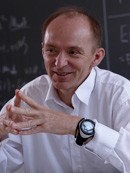
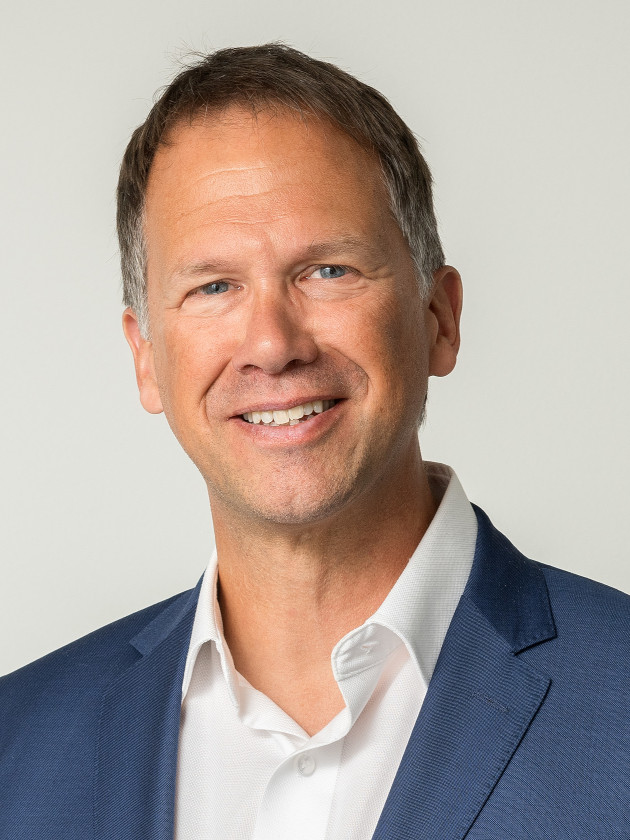
Dr. Thomas Allard is a Lecturer at the Department of Information Technology and Electrical Engineering at ETH Zürich. His research focuses on metric entropy, functional analysis, and their applications to machine learning, signal processing, and operator theory. His recent work bridges mathematical foundations with practical domains such as information theory and computational methods. Key research topics include entropy of compact operators, metric entropy in Banach spaces, and causal linear systems analysis. His contributions span theoretical advancements and algorithmic techniques, with applications ranging from Sobolev spaces to machine learning theory. No scientific awards or grants are explicitly mentioned in the provided data. He has not listed advisees, though his research areas suggest potential supervision in mathematical information science and related fields. His office is located at ETF E 118, ETH Zürich, with contact details available via email.
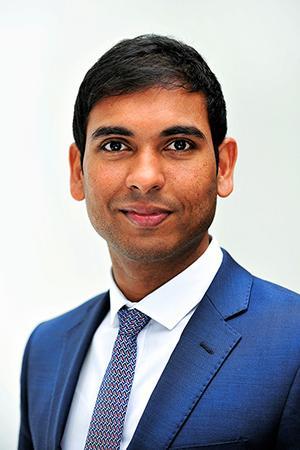
Dr. Ya-Ping Hsieh is a Lecturer at the Department of Computer Science at ETH Zürich, affiliated with the Institute for Machine Learning. His research focuses on advanced optimization techniques, stochastic processes, and their applications in machine learning. Key areas include non-convex optimization, diffusion models, and optimal transport theory. His work often addresses convergence properties of algorithms and their theoretical guarantees in complex systems. Dr. Hsieh's recent publications explore topics such as entropy-maximizing exploration via diffusion models, Riemannian stochastic optimization frameworks, and the dynamics of min-max algorithms. His contributions bridge theoretical foundations and practical implementations, emphasizing rigorous mathematical analysis. No scientific awards or grants are explicitly listed in the provided materials. He is part of the Institute for Machine Learning at ETH Zürich, contributing to both academic and applied research in computational methods.
Yijiang Huang is a Researcher affiliated with the Department of Computer-Aided Robotics at ETH Zürich. His work focuses on advancing computational robotics, with a particular emphasis on structural design optimization, robotic assembly processes, and algorithmic fabrication methods. He holds a position within the Professorship for Computational Robotics and contributes to cutting-edge research in multi-robot systems, topology optimization, and sustainable construction techniques. His research integrates robotics with structural engineering to enhance automation in manufacturing and construction. Key areas include non-repetitive robotic assembly, cooperative multi-arm systems, and the development of frameworks for high-performance design optimization. Huang has published extensively on topics such as task and motion planning (TAMP), deflation methods for non-convex optimization, and bespoke interlocking connections for timber structures. His articles highlight innovations like the CantiBox project, which explores robotic assembly of interweaving timber elements, and protocols linking algorithmic design with construction intent. These contributions aim to bridge gaps between computational methods and real-world applications, emphasizing efficiency, sustainability, and precision in robotic fabrication systems.
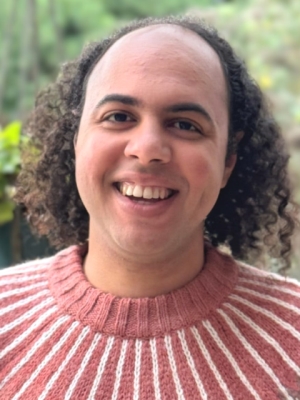
Hansjörg Gisler is affiliated with the Department of Integrated Systems at ETH Zürich, contributing to the Professorship for Digital Integrated Circuits and Systems. His research focuses on interdisciplinary applications of machine learning, control systems, and medical informatics. Key areas include 3D object detection using advanced neural networks, optimization algorithms for convex-concave problems, and IoT-driven medical diagnostic systems. He has collaborated extensively with researchers on projects involving deep learning frameworks for adverse condition detection, semantic segmentation, and adaptive control systems. Publications span topics like parameter-separable optimization methods, proximal Lagrangian techniques, and weakly-supervised learning for 3D point cloud processing. His work bridges theoretical advancements in optimization with practical applications in healthcare monitoring and autonomous systems. Gisler's contributions to real-time sleep apnea diagnosis and muscle fatigue detection systems highlight his commitment to biomedical engineering innovations. Collaborations with institutions like ETH Zürich's Institute for Integrated Systems underscore his role in fostering cross-disciplinary research.
Dr. Erwin Riegler is a Lecturer at the Department of Information Technology and Electrical Engineering (D-ITET) at ETH Zurich. His research focuses on information theory, signal processing, and their applications in communication systems, with particular expertise in analog compression, matrix completion, and uncertainty principles. He has contributed to theoretical frameworks for rate-distortion analysis, lossless compression techniques, and the design of efficient algorithms for MIMO systems. Key research areas include: Information-theoretic limits of data compression Signal processing in analog systems Algorithmic approaches for sparse signal recovery Optimization techniques in MIMO communication channels Recent work emphasizes interdisciplinary applications, such as neural networks for measure theory and probabilistic methods for signal separation. No scientific awards are explicitly mentioned in the provided texts. His academic contributions span over 30 peer-reviewed articles since 2001, covering topics from string theory to modern communication systems.
Dr. Evren Mert Turan is a Lecturer at ETH Zürich's Department of Energy and Process Systems Technology. His academic background includes a Bachelor's and Master's in Chemical Engineering from the University of Cape Town, followed by a PhD in Process Systems Engineering at the Norwegian University of Science and Technology. His research focuses on integrating machine learning and optimization techniques to address decision-making challenges under uncertainty in energy systems and process engineering. Evren's expertise spans model predictive control, real-time optimization, and data-driven approaches for complex systems. He has contributed to advancements in semi-infinite programming, feedback control policies, and steady-state detection algorithms. His work emphasizes practical applications in sustainable energy systems and industrial process optimization. Key research trends include the development of neural network-based control strategies, convex optimization methods for reduced computational complexity, and experimental validation of novel algorithms. His publications highlight interdisciplinary approaches blending machine learning with traditional engineering methodologies. Evren currently teaches the course 'Introduction to Modeling and Optimization of Sustainable Energy Systems' and actively engages in collaborative research at ETH Zürich. His contributions to scientific machine learning aim to enhance robustness and reliability in dynamic systems analysis.
Prof. Christoph Studer is a Full Professor of Integrated Information Processing at ETH Zurich's Department of Information Technology and Electrical Engineering. He leads the Integrated Systems Laboratory and directs SwissChips. His research focuses on wireless communication, machine learning, signal processing, and hardware-efficient algorithms, with applications in B5G systems, sensing-communication integration, and low-power signal processing. He holds a Ph.D. and M.S. from ETH Zurich (2009 and 2006) and has held academic positions at Cornell University before returning to ETH in 2020. Notable honors include the NSF CAREER Award (2017), ETH Medal for Doctoral Dissertation (2011), and multiple teaching awards. Education: M.S. and Ph.D. in Information Technology and Electrical Engineering, ETH Zurich (2006, 2009) Visiting Researcher, Stanford University (2005) Research Interests: Develops algorithms and hardware for high-throughput, low-power wireless systems. Key areas include: B5G multi-antenna systems and simultaneous sensing-communication (SISCO) Analog-to-feature (A2F) conversion for low-power signal classification Hardware-software co-design for efficient microchip integration Publications: Focus on channel charting, jammer mitigation, and deep learning for communication. Recent work includes CSI2Vec, jammer-resilient synchronization, and distributed MIMO systems. Awards: US NSF CAREER Award (2017) Michael Tien Teaching Award (2016) ETH Medal for Doctoral Thesis (2011) Labs/Teams: Leads the Integrated Systems Laboratory at ETH and directs SwissChips, a national initiative for integrated circuit development.
Marco Zaffalon is Professor and Scientific Director at IDSIA (Istituto Dalle Molle di Studi sull'Intelligenza Artificiale), affiliated with the Università della Svizzera italiana's Faculty of Informatics. He leads a 30-member research group on probabilistic machine learning and has published over 150 papers. Education: M.Sc. in Computer Science (Università degli Studi di Milano) Ph.D. in Applied Mathematics (Università degli Studi di Milano) Research spans probabilistic machine learning, causal AI, imprecise probabilities, and quantum computation. His work develops theoretical foundations for uncertainty reasoning and applies them to AI systems. Recent publications focus on causal inference with LLMs, counterfactual computation, and quantum decision models. Articles consistently explore intersections of probability theory, computational methods, and real-world applications like healthcare. Trends include advancing tractability in causal queries and bridging logical frameworks with machine learning. Administrative roles include co-founding Artificialy (as Chief Scientist) and directing IDSIA since 2019. He teaches courses in Causal AI, Uncertain Reasoning, and Probability.
Matthias Grossglauser is a Full Professor at the School of Computer and Communication Sciences at École Polytechnique Fédérale de Lausanne (EPFL), where he co-directs the Information and Network Dynamics lab. He serves on the Federal Communications Commission (ComCom), Switzerland's telecommunications regulatory authority, and previously directed EPFL's Doctoral School in Computer and Communication Sciences (2016-2019). His career includes positions at Nokia Research Center (Internet Laboratory lead), AT&T Research, and EPFL (Assistant Professor). Education Ph.D. in Computer Science from Sorbonne Universités M.Sc. in Electrical Engineering from Georgia Institute of Technology Engineering degree in Communication Systems from EPFL Research Focus Grossglauser's research integrates machine learning, stochastic networks, and discrete choice models to address challenges in artificial intelligence, network science, computational social sciences, and recommender systems. His work emphasizes both theoretical foundations and practical applications, including political forecasting, climate communication, and network dynamics. Publication Trends Recent articles demonstrate strong focus on causal inference, optimal learning algorithms, and social network analysis. Dominant themes include reinforcement learning optimization, graph-based modeling, and NLP applications in political science. Methodological innovations in matrix factorization, Bayesian modeling, and stochastic processes recur throughout. Awards & Honors Fellow of IEEE and ELLIS Cor Baayen Award (1998) CoNEXT/SIGCOMM Rising Star Award (2006) Best Paper Awards: ACM COSN (2014), IEEE INFOCOM (2001) Nokia Mobile Data Challenge Winner (2012) Academic Leadership Has advised 16+ PhD students to completion and currently supervises 4 doctoral candidates. Secured research funding for projects including dynamic recommender systems, network alignment algorithms, and computational social science tools (e.g., Predikon.ch vote prediction platform). Leads the Information and Network Dynamics lab, focusing on AI-driven network analysis.