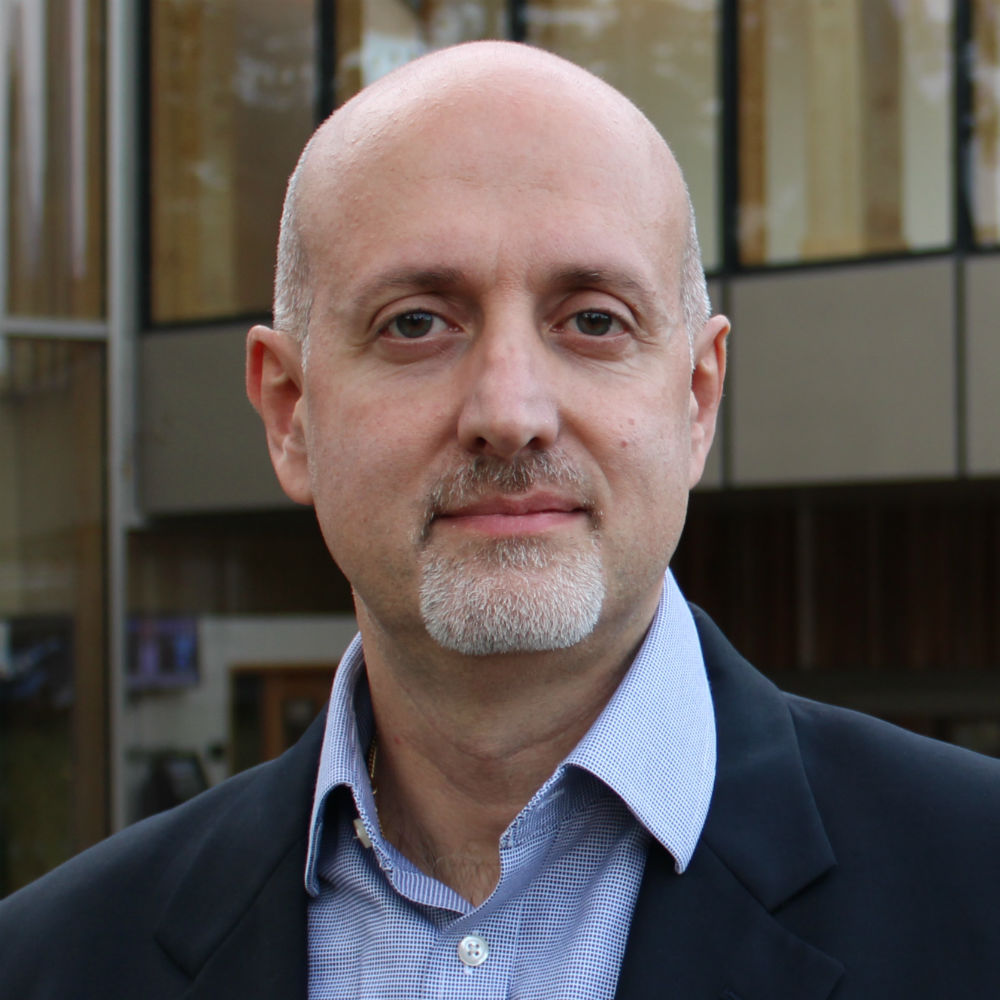
Carol Marquardt is a Professor at the Zicklin School of Business , Baruch College (CUNY), where she has taught since 1997. Her academic expertise focuses on corporate financial reporting strategy and its implications for stakeholders. PhD in Accounting, Cornell University MAcc in Accounting, University of Arizona BA in English, University of Wisconsin-Madison As a leading scholar in accounting, her research examines earnings management , non-GAAP reporting , and corporate governance issues. She has published extensively in top journals like Review of Accounting Studies and Management Science, with recent work on revenue-expense matching and performance measure choice. Her scholarly contributions have been recognized through multiple awards, including the American Accounting Association Best Paper Award (2007) and Baruch College Teaching Excellence Awards in both 2012 and 2022. She has advised numerous doctoral students and served on various university and professional committees.
Joe Gong is a Lecturer in Banking at Bayes Business School, City St George's, University of London. He holds a PhD in Finance and Econometrics from Warwick Business School (2018–2024). His research focuses on financial intermediation, regulation, and corporate finance, with notable contributions to contingent convertible bonds (CoCo bonds) and regulatory frameworks. He served as Houlden Fellow at the University of Warwick (2023–2024). Key publications include Nondilutive CoCo Bonds: A Necessary Evil? (2024) in The Review of Corporate Finance Studies. His work addresses systemic risk mitigation and banking stability through innovative financial instruments. Awards: Houlden Fellow (2023–2024). No advising or grant details are publicly disclosed. Research interests emphasize the intersection of corporate finance and regulatory policies in banking sectors.
Barry Williams is an Associate Professor in the Department of Banking and Finance at Monash University. Previously, he held roles at Bond University as a Professor of Finance and founding Co-Director of the Globalisation and Development Center. He also serves as a Visiting Research Professor at the KOF Swiss Economic Institute (ETH Zurich) and collaborates with the Australian Prudential Regulation Authority (APRA). His academic journey includes prior positions at The University of Queensland and Monash University, preceded by experience in the State Bank of Victoria's Economics Department. Education: PhD in Finance (date unspecified), MCom in Economics from the University of Melbourne (1987–1991), and BEc in Economics from La Trobe University (1985). Research focuses on banking industry dynamics, including bank performance, risk, and multinational operations. Key areas include non-interest income impacts, systemic risk, and cross-border banking efficiency. His work explores regulatory frameworks, capital buffers, and crisis management in global contexts. Notable collaborations span Asia-Pacific regions and involve studies on foreign bank efficiency and governance. Recent articles highlight bankruptcy resolution mechanisms, bank risk dynamics, and capital structure strategies. His projects include analyzing foreign bank contributions in Australia and investigating national governance effects on financial stability. Barry actively supervises PhD students and maintains affiliations with leading institutions in finance and economics. Professional contributions include advisory roles at APRA and KOF, emphasizing policy-relevant research. His interdisciplinary approach bridges theoretical frameworks with practical banking challenges, influencing both academic discourse and regulatory practices.
Craig M. Lewis is a Professor of Finance at Vanderbilt University’s Owen Graduate School of Management. He previously served as the Chief Economist of the U.S. Securities and Exchange Commission (SEC) and Director of the SEC’s Division of Economic and Risk Analysis, where he led efforts to integrate economic analysis into financial regulation, particularly with Dodd-Frank implementation. His expertise spans financial market regulation, corporate finance, asset pricing, and fraud detection through textual analysis of corporate disclosures. Education: Ph.D., Finance (University of Wisconsin, 1986); M.S., Finance (University of Wisconsin, 1982); B.S., Accounting (Ohio State University, 1978). Research interests include corporate financial policy, asset pricing, and leveraging qualitative data from corporate disclosures to identify financial irregularities. He has also explored convertible debt financing, stock market volatility forecasting, and analyst herding behavior. Professor Lewis has advised major financial institutions like the CBOE, State Street Global Advisors, and public entities such as the Federal Trade Commission. Awards: Multiple teaching accolades, including two James A. Webb Awards (1991, 2000) and Dean’s Award for Teaching Excellence (1992, 1999). His consulting and regulatory work bridges academia and industry, emphasizing practical applications of financial analysis.
Professor Franco Fiordelisi is a leading academic in Banking and Finance at the University of Essex's Essex Business School, where he directs the Financial Technology Centre EsseX (FinteX). He serves as President of the Financial Intermediation Network of European Studies (FINEST) and holds a fellowship at the Wells Fargo Advisors Center for Finance & Accounting Research. With a PhD in Economics from Bangor University, his expertise spans financial risk management, banking regulation, and fintech innovation. His research, ranked in the top 5% globally by IDEAS/RePEc, focuses on bank governance, climate finance, and regulatory frameworks. He has advised institutions like the ECB, World Bank, and Federal Reserve of New York. Prof. Fiordelisi's work has been published in top journals such as Journal of Financial and Quantitative Analysis and presented at major conferences including the NBER Summer Institute and American Finance Association meetings. He currently supervises PhD students in financial intermediation and fintech, having previously guided Merve Demirbas Ozbekler (awarded 2023). His awards include recognition for both research and teaching excellence, alongside his 2023 ranking among the world's top 350 finance scholars. Prof. Fiordelisi's professional roles include associate editorships at Journal of Financial Stability and Economic Modelling , reflecting his influence in academic publishing. His research highlights include analyzing ECB climate stress tests, post-pandemic lending models, and cooperative bank performance. He remains active in policy circles, contributing to debates on banking union structures and crisis management strategies.
Karren Khaw is an Associate Professor and Head of the Department of Finance at Monash University Malaysia's School of Business. She holds a Ph.D. from Massey University, New Zealand, funded by Malaysia's Ministry of Higher Education. Her career spans roles at the University of Waikato (China), University of Malaya, and Universiti Utara Malaysia. Doctoral Degree: Massey University, New Zealand Her research focuses on corporate finance, with emphasis on corporate risk-taking, governance, ESG/sustainable finance, and debt structures. Recent publications appear in Journal of Corporate Finance , Finance Research Letters , and Emerging Markets Review . She leads two active grants on sustainable SME growth and finance. Recent publications analyze: ESG integration in SMEs and corporate risk-taking (2025) Geopolitical risk effects on debt ratios (2024) Shariah compliance and institutional investor behavior (2023) Teaching accolades include the 2023 Purple/Blue Letters for excellence and 2024 Monash Climate-Resilient Infrastructure Symposium participation. She has supervised 4 Ph.D. and 8 Master’s students to completion. Scientific awards: 2023 Purple Letter for Teaching Excellence 2023 Blue Letter for Teaching Excellence 2023 ESSFS Extra-Large Class Award 2022 NZUWI Teaching Award 2016 Excellent Service Award She serves on the Malaysian Finance Association's Executive Committee (2023–2025) and contributes to UN Sustainable Development Goals (SDGs) through sustainability research.
Hai Zhang is a Senior Lecturer in Finance at the Strathclyde Business School, University of Strathclyde, where he joined in March 2017 as a Strathclyde Chancellor's Fellow. His research focuses on financing innovation in incomplete financial markets, particularly in alleviating severe financing constraints due to asymmetric information. Education: PhD in The Financing Innovation in Entrepreneurship and Hedge Funds, Adam Smith Business School, University of Glasgow (2013-2016), awarded February 28, 2017. Research Interests: Dr. Zhang specializes in Hedge Funds , Financial Innovation , and Real Options with applications in Asset Pricing and SME Financing . His work bridges theoretical models with practical market mechanisms to address information asymmetry in capital allocation. Recent Research Trends: His 2024-2025 publications analyze SME financing under market frictions and convertible bond dynamics, revealing critical links between capital structure decisions and debt overhang in volatile markets. These studies advance corporate finance theory while offering actionable frameworks for financial engineering. Scientific Awards: Adam Smith Business School Prize for PhD excellence 2017 (awarded February 1, 2018) Outstanding reviewer for International Review of Economics and Finance (January 2018) Advising and Grants: Dr. Zhang supervises PhD students in hedge funds innovation and FinTech, with three students completed to date. His grant portfolio includes ESRC-funded doctoral research (2013-2016) and the current £150k project "Research on investment and financing of small and medium-sized enterprises based on enterprise asset securitization" (2021-2024) as Co-investigator. Professional Engagement: He serves as regular referee for 7 finance journals including Journal of Business Venturing and Quantitative Finance, and presented at the 2024 EFMA annual conference on algorithmic trading applications.
Florian Madertoner is a Lecturer in the Department of Finance at Rotterdam School of Management (RSM), Erasmus University Rotterdam. He holds a degree in Banking and Finance and has been affiliated with RSM since 2015. His research focuses on Capital Structure Theory, Behavioral Finance, and Economic History, particularly studying convertible debt in the Netherlands from 1850 to 2000. Madertoner teaches core courses like 'Corporate Finance' and 'Economics' in undergraduate programs and supervises bachelor and master theses. He also delivers executive training on finance for non-financial professionals. He has received numerous teaching awards, including eight consecutive 'Professor of the Year Awards' from 2016–2023, the 'Best Adaptation to the Coronavirus Situation' (2020), and the 'Best Course Award' (2023–2024). His 2022 publication explores historical financial instruments in the Netherlands.
Abe de Jong is a Professor of Corporate Finance and Corporate Governance at the Rotterdam School of Management (RSM), Erasmus University. He is currently serving as a visiting professor, reflecting his continued academic engagement and leadership in finance research. His research interests span empirical corporate finance, including capital structure, dividend policy, risk management, investment and divestment decisions, and corporate governance. A distinctive aspect of his work is the historical analysis of financial systems, particularly in the Netherlands, bridging modern finance with economic and business history. His recent publications reveal a strong trend in combining rigorous empirical methods with deep historical data, exploring topics such as IPO market cycles, the origins of convertible bonds, and 18th-century plantation-backed securities. This interdisciplinary approach places him at the intersection of finance, economics, and historical research. While no specific awards are listed, his extensive publication record in top-tier journals such as The Journal of Economic History and Business History underscores his scholarly impact. He has supervised 27 students, indicating an active role in academic mentorship and training. He is involved in significant research collaborations and has contributed to public datasets, such as the one on Surinam plantation securities, enhancing data accessibility for the scholarly community. His work is widely accessed and cited, reflecting strong engagement from both academic and public audiences.
Hinrich Julius is Professor of Civil Law and Legal Dialogue with Emerging Countries at the University of Hamburg's Faculty of Law since March 2010, coordinating the EU-funded "China-EU School of Law" project. Previously, he held full professorships at Hochschule Wismar (1997-2000) and Hochschule für Angewandte Wissenschaften Hamburg (2000-2004), and served as head of GTZ's legal cooperation office in Beijing (2004-2009). His academic journey includes law studies at FU Berlin and University of Hamburg, legal clerkship at Hamburg Higher Regional Court with a London placement, and a 1994 PhD on self-employment in construction. Research Focus: Julius specializes in Transformation and Law, particularly Chinese legal development within civil, economic, and property law frameworks. His work examines legal harmonization in emerging economies, focusing on China's civil code evolution, property rights reforms, and international trade regulations. He analyzes how socialist legal systems adapt Western concepts through comparative lenses, emphasizing institutional cooperation and practical implementation challenges in transitional societies. Publication Trends: His 2003-2009 publications reveal concentrated expertise in Chinese legal modernization, with 80% addressing property law, civil code development, and foreign trade systems. Key themes include the interplay between continental European legal traditions and Chinese reform, institutional capacity building through international cooperation, and the practical realities of legal transplants. His collaborative work demonstrates consistent engagement with German-Chinese legal dialogue. Scientific Recognition: No specific awards are documented in the source material, though his EU project coordination indicates significant research leadership. Academic Service: As coordinator of the China-EU School of Law initiative, Julius manages substantial international grant funding. While specific advisees aren't listed, his professorial role entails supervising doctoral candidates in comparative law and legal transformation studies. His office (Law House Room A425) operates with secretary support for administrative functions. Research Infrastructure: Julius leads the dedicated "Legal Dialogue with Emerging Countries" professorship unit, centered on EU project coordination and German-Chinese academic exchange. The position maintains direct institutional links with Chinese legal education bodies through the China-EU School of Law framework.
Professor Jerzy Węcławski of Maria Curie-Skłodowska University's Faculty of Economics specializes in banking, family business finance, and financial market dynamics. His work bridges theoretical research with practical applications in economic transformation and corporate governance. Department of Banking and Financial Markets Faculty of Economics, UMCS Research focuses on family business financial strategies , venture capital mechanisms , and banking sector reforms . Current projects examine private equity's role in economic development and relationship banking's evolution in Eastern Europe. Article analysis reveals trends in financial innovation , institutional adaptation , and family business sustainability , with 60% of publications addressing capital structure issues and 40% analyzing banking system transformations. Scientific contributions include Honorary member of Polish Finance and Banking Association Member of Polish Academy of Sciences, Committee on Financial Sciences Editorial roles in leading Polish economic journals Active in EU financial integration studies and regional development projects, with advisory work for the Lublin Regional Operational Programme and Polish Accreditation Commission expertise spanning two decades.
Eleonora Broccardo is a Full Professor and Deputy Director at the Department of Economics and Management, University of Trento. She specializes in corporate finance, financial engineering, and credit markets. Her research focuses on securitization, access to finance for SMEs, and the intersection of corporate finance with social responsibility. Teaching: She teaches Corporate Finance and Advanced Corporate Finance , covering valuation models, investment decisions, capital structure optimization, and dividend policies. Courses target undergraduate (Administration and Law) and graduate programs (Management, Business Legislation). Research Interests: Broccardo’s expertise includes credit risk analysis, derivative instruments, and the management of commercial debts. She explores how financial tools like convertible bonds and securitization impact corporate finance strategies. Her work emphasizes practical applications, such as evaluating investment projects under debt scenarios and analyzing merger & acquisition dynamics. Awards/Grants: No specific awards or grants mentioned in the provided text. Labs/Teams: Affiliated with the Department’s research groups focusing on financial intermediaries and corporate governance.
George Chacko is an Associate Professor of Finance at Santa Clara University’s Leavey School of Business. He holds roles including former Department Chair, Director of the MS in Finance program, and Associate Dean. His academic career spans Santa Clara University since 2006 and Harvard Business School (nine years as a professor). He earned a BS in Electrical Engineering and Computer Science from MIT, an MBA from the University of Chicago, and MA/PhD in Business Economics from Harvard. His research focuses on capital markets microstructure, financial security design, and financial institutions management, including banks, insurance firms, and hedge funds. He explores liquidity dynamics, institutional interactions, and systemic risk. His work bridges academia and industry, informed by roles at State Street Bank, IFL, and Auda Alternative Investments, as well as co-founding financial services firms. Chacko’s publications emphasize liquidity measurement in markets, corporate bond analysis, and strategic asset allocation. His work on ‘latent liquidity’ and ‘price of immediacy’ has shaped understanding of market efficiency and transaction costs. He has held leadership roles in academic and commercial sectors, balancing teaching courses like Corporate Finance and Mergers & Acquisitions with executive positions in finance and investment management.
Maria Giuseppina Bruno is an Associate Professor in the Department of Methods and Models for Economy, Territory, and Finance (MEMOTEF) at Sapienza University of Rome's Faculty of Economics. She has been serving in this capacity since December 29, 2003, specializing in the scientific disciplinary sector STAT-04/A (Mathematical Methods of Economics and Actuarial and Financial Sciences). Her institutional email is Giuseppina.Bruno@uniroma1.it and she maintains office hours at room 149 on the first floor, wing B of the MEMOTEF Department. Her academic background includes a PhD in 'Mathematics for Financial Market Analysis' from the University of Brescia (1995), where she defended her thesis 'Memory functions as a tool for evaluating American options,' and a first-class honors degree in Economics and Commerce from LUISS University of Rome (1990) with thesis 'Valuation of convertible bonds. An interpretation using physics models.' Professor Bruno's research spans financial and actuarial mathematics, quantitative methods for economics and finance, derivative instrument valuation, risk management models, stochastic processes, and computational methods. Her work demonstrates strong interdisciplinary connections between mathematics, finance, insurance, and even physics through her interest in econophysics and applications of physical models to financial problems. Her recent publications show a consistent focus on innovative insurance products, risk modeling, and financial engineering. From Tailor-made CDOs (2024) to Pay-as-you-drive insurance models (2023) and specialized insurance products like ALEA and MICROTAKAFUL (2021), her research addresses contemporary challenges in risk transfer mechanisms and insurance market dynamics. Her work on long-term care annuities (2020) and option pricing with stochastic volatility (2019) demonstrates expertise in both theoretical and practical aspects of financial mathematics. As a respected academic, she serves as Managing Editor of Annali MEMOTEF and referees for prestigious journals including Insurance: Mathematics and Economics. She has been actively involved in professional organizations including AMASES, AAI, and Istituto Italiano degli Attuari. Professor Bruno currently teaches Actuarial Mathematics for Private Insurance (Master's Degree in Finance and Insurance) and Basic Mathematics course (Bachelor's Degree in Economics and Finance). She has extensive experience in curriculum development, serving as reference teacher for the Master's Degree Course FINASS and as tutor for the Bachelor's Degree in Economics and Finance. Her institutional service includes membership on various committees related to quality assurance, publications, and doctoral programs. Her professional activities extend beyond academia, with participation in Bank of Italy examination boards (2016, 2019, 2023) and previous teaching roles for financial professionals at INPDAP and Banca di Roma. Her technical expertise includes programming in C++, VBA, and Python, which supports her computational research in financial mathematics.
Jing Zeng is an Associate Professor of Finance at the University of Bonn's Department of Economics, with affiliations to the CEPR and Finance Theory Group. She specializes in corporate finance, financial intermediation, and asymmetric information. Her work addresses topics like bank lending dynamics, securitization effects, and cross-border banking regulation. Education: PhD in Finance from the London School of Economics (2014), MSc Finance and Economics (Distinction, 2009), and BA (Hons) Business Finance (1st Class, 2008). Research focuses on optimal contracting, stress testing impacts, and systemic risk mitigation. She has held visiting positions at HEC Paris and the European Central Bank (Lamfalussy Fellow). Key research contributions include analyzing regulatory stress tests' influence on bank behavior, securitization's foreclosure distortions, and cross-border banking policies. Her awards include the UniCredit Best Paper Award (2014) and Lamfalussy Fellowship (2020). She teaches graduate courses on banking regulation and corporate finance at the University of Bonn.