Cristina Dimulescu serves as a PhD Lecturer in the Department of Theoretical and Applied Linguistics within the Faculty of Letters at Transilvania University of Brasov, Romania. Her office is located in Building T, room TP7 at B-dul. Eroilor no. 25, Brașov, with contact email cristina.dimulescu@unitbv.ro. Her research centers on pragmatics, discourse analysis, and sociolinguistics, examining how language constructs social reality through implicature, inference mechanisms, and identity formation. She investigates gendered communication patterns, historical representations of women in Romanian advertising across multiple decades (1890s-1930s), and the role of casual conversation in relationship-building, employing rigorous discourse analysis frameworks. Analysis of her publication trajectory reveals a significant pivot toward applied linguistics in the digital age, with recent work focusing on mobile-assisted language learning, ESP curriculum design, and post-pandemic e-learning adoption. Her scholarship bridges theoretical pragmatics with practical educational technology applications while maintaining strong roots in historical discourse analysis of Romanian cultural artifacts. No scientific awards were documented in available sources. Information regarding student supervision, grant funding, laboratory affiliations, or research teams was not disclosed in the provided materials.
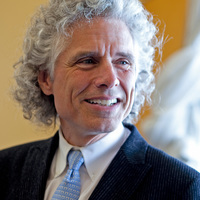
Steven Pinker is a cognitive scientist and Professor in the Department of Psychology at Harvard University. He is widely recognized for his work on language, mind, and human nature, with significant contributions to visual cognition, psycholinguistics, and the study of social behavior. His educational background, while not explicitly detailed in the provided text, has led him to become one of the most prominent cognitive scientists of our time. His academic journey has positioned him at the forefront of research bridging psychology, linguistics, and cognitive science. Cognitive Science - exploring the fundamental mechanisms of human thought and cognition Language and Mind - investigating how language reflects and shapes human thought processes Human Nature - examining evolutionary perspectives on human behavior and cognition Visual Cognition - studying imagery, attention, and shape recognition Psycholinguistics - researching syntax acquisition, morphology, and conceptual semantics Pinker's extensive publication record demonstrates consistent exploration of language as a window into human cognition. His work spans theoretical linguistics, empirical psychology, and broader philosophical questions about human nature. He has made significant contributions to understanding regular and irregular phenomena in language, the cognitive basis of grammar, and the evolutionary foundations of human thought. Pulitzer Prize finalist for "The Blank Slate" Extensive recognition for his influential books that have shaped public understanding of cognitive science Widespread academic influence across multiple disciplines including psychology, linguistics, and philosophy As an educator at Harvard University, Pinker has influenced countless students through his teaching and mentorship. His courses, such as "Language and Human Nature" and "Thinking about Taboo Subjects," reflect his commitment to exploring fundamental questions about the human mind. While specific grant information isn't provided in the text, his extensive publication record suggests significant research support throughout his career. Though specific laboratory information isn't detailed in the provided text, Pinker's research has clearly involved interdisciplinary collaboration across cognitive science, linguistics, and neuroscience, contributing to our understanding of the human mind from multiple perspectives.
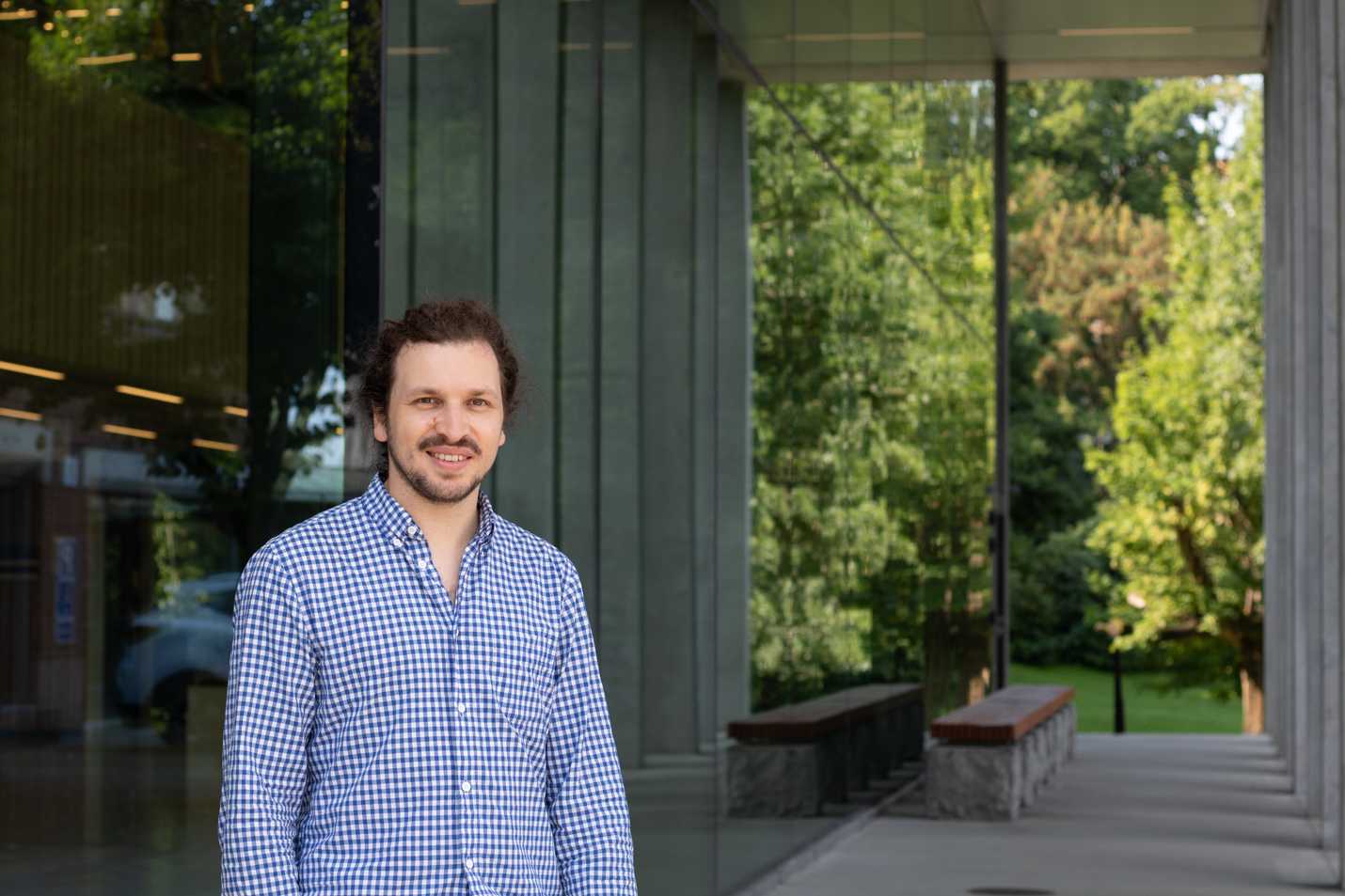
Vladislav Maraev is a Postdoctoral researcher at the Centre for Linguistic Theory and Studies in Probability (CLASP), Department of Philosophy, Linguistics and Theory of Science, University of Gothenburg, Sweden. Previously, he worked as a Postdoctoral researcher at the Department of Applied IT, Division of Cognition & Communication (2022-2023), and completed his PhD at CLASP (2017-2022). His academic journey began with a Research Assistant position at NLX Group, University of Lisbon, Portugal (2016-2017). Maraev's research centers on computational linguistics and human-AI interaction, with a specific focus on gaze and laughter coordination in socially interactive agents . He positions his work in the broad field of computational linguistics, building models that reproduce human behavior to understand cognition, with the ultimate goal of creating better AI systems. He emphasizes that dialogue is a form of joint action requiring coordination on multiple levels, from timing to meaning interpretation. His work bridges theoretical linguistics with practical applications in dialogue systems. His publication record reveals a consistent focus on multimodal communication, particularly examining how laughter functions within human-robot dialogue. Maraev's recent work explores non-humorous laughter in social robots, metaphor usage in conversation, strategies for handling confrontational dialogue, and the role of laughter in social perception of robots. His research demonstrates how computational approaches can model complex social phenomena like laughter coordination and pragmatic interpretation. Maraev is actively involved with the ACID research team at ISIR and contributes to the CLASP research center at the University of Gothenburg. His collaborative work with researchers including Christine Howes, Chiara Mazzocconi, and Ellen Breitholtz has produced numerous publications in top venues for human-computer interaction and computational linguistics. His research trajectory shows increasing sophistication in modeling the complex interplay between verbal and non-verbal communication in social interactions with AI systems.
David Barner is a Professor in the Department of Psychology at the University of California San Diego. His research focuses on language development, conceptual development, and cognitive processes in children, particularly examining how children acquire language, numerical systems, and temporal reasoning. He employs cross-cultural methodologies, studying populations in India, Japan, Latin America, China, and Eastern Europe. His work bridges developmental psychology, linguistics, and cognitive science, with notable contributions to understanding the mental timeline, numerical cognition, and the role of syntax in semantic acquisition. Barner leads the Language & Development Lab at UCSD, which investigates how children construct mental representations of time, number, and logical relationships. His research highlights the interplay between linguistic structures and cognitive development, including studies on cardinal extension, scalar implicature, and the acquisition of temporal terms like 'yesterday' and 'tomorrow.' Recent studies explore children's understanding of infinity, the role of print exposure in resolving linguistic ambiguities, and the cognitive foundations of exact equality concepts. His work often integrates experimental methods with computational modeling to explain how abstract concepts emerge from linguistic and perceptual experiences.
Benjamin Weissman is a Lecturer in the Department of Cognitive Science at Rensselaer Polytechnic Institute , where he teaches introductory and advanced courses in Cognitive Science and Linguistics. He earned his PhD in Linguistics from the University of Illinois at Urbana-Champaign and conducts research at the intersection of pragmatics, psycholinguistics, and experimental linguistics. Primary Affiliation: Department of Cognitive Science, Rensselaer Polytechnic Institute Education: PhD in Linguistics, University of Illinois at Urbana-Champaign Dr. Weissman's research explores meaning construction in conversation, with particular emphasis on: Contextual effects on lie judgments Emoji processing and integration with text Neural mechanisms of language comprehension Scalar implicatures and face negotiation Cognitive load in multimodal communication Pragmatic theory and experimental validation His recent publications demonstrate growing trends in: Neurocognitive analysis of emoji-text interactions Deception detection in digital communication Pragmatic ambiguity in social contexts Conventionalization of digital communication symbols Individual differences in language processing Scalar term interpretation mechanisms
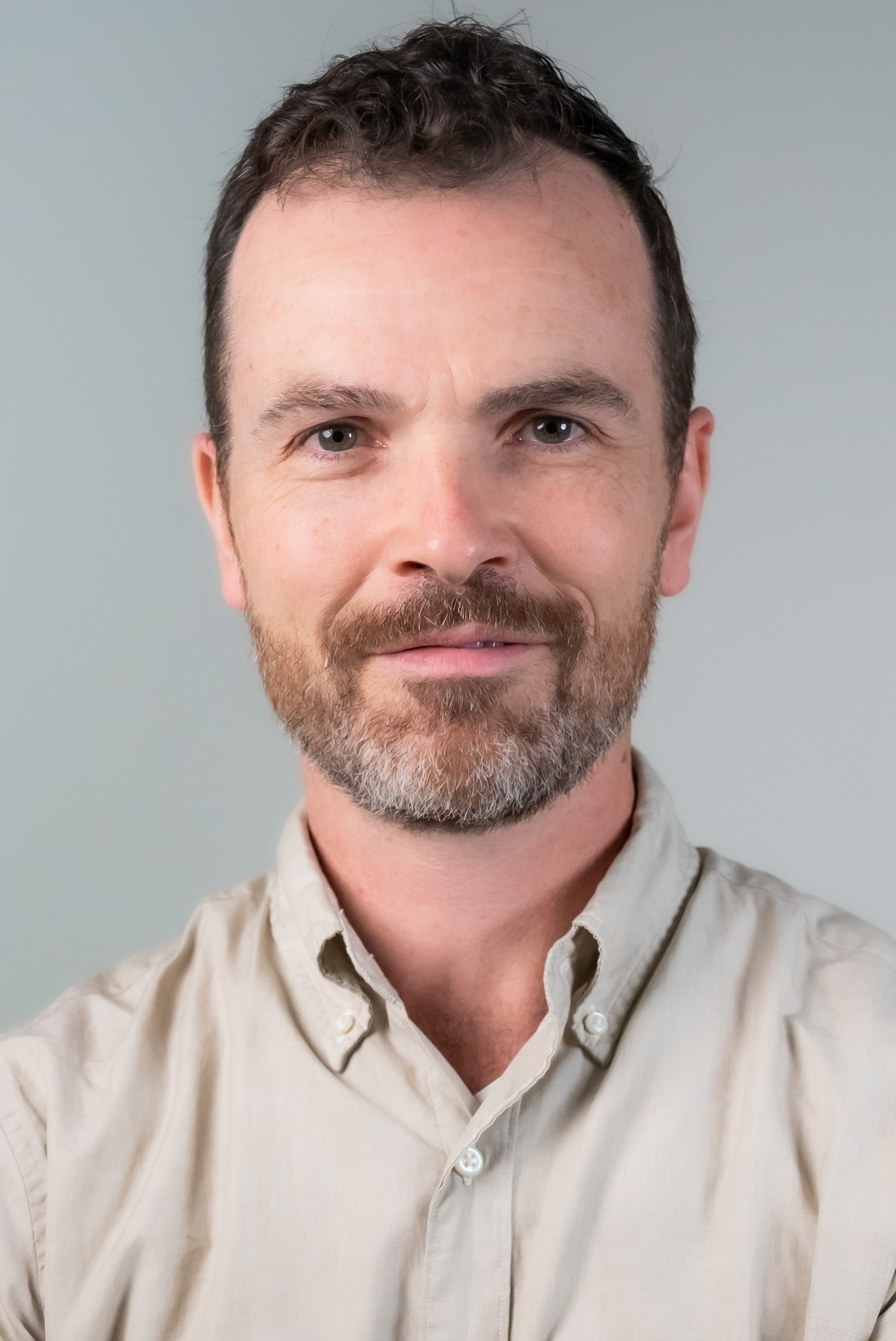
Chris Cummins is Professor of Experimental Pragmatics in the Department of Linguistics and English Language at the University of Edinburgh's School of Philosophy, Psychology and Language Sciences (PPLS). His academic career spans multiple institutions with significant contributions to experimental semantics and pragmatics research. His research interests focus on experimental semantics and pragmatics , particularly how speakers choose to use specific linguistic forms to communicate about quantity, and how hearers interpret these forms to make decisions in high-stakes contexts such as financial and medical interactions. He investigates how listeners infer additional features of situations, including speaker knowledge states and potential argumentative agendas, from linguistic utterances, and how this information influences decision-making processes. His work also explores speech act recognition and the production/comprehension of non-asserted content. Analysis of his recent publications reveals a strong trend toward interdisciplinary research combining linguistic theory with practical applications in medical communication, particularly in emergency contexts like cardiac arrest resuscitation. His work increasingly examines how numerical expressions function argumentatively in social media and medical contexts, with growing attention to cross-linguistic and developmental perspectives on pragmatic reasoning. Professor Cummins has collaborated extensively with researchers including Gareth Clegg, Hannah Rohde, Holly Branigan, and Ernisa Marzuki on medical communication projects, and with Michael Franke, Alex Lorson, and others on experimental pragmatics research. He has received support for his work through research studentships and collaborative projects. Beyond his formal academic role, Cummins actively engages with the public through the Cabaret of Dangerous Ideas at the Edinburgh Fringe (discussing topics like misleading language and slurs in 2023-2024) and Bright Club Edinburgh. He previously co-presented the New Books in Language podcast series as part of the New Books Network.
Daniele Cuneo is an Associate Professor of Instruction in the College of Liberal Arts at the University of Texas at Austin, with ongoing academic affiliations at Université Sorbonne Nouvelle in Paris and Leiden University. He earned his Ph.D. from the University of Rome 'La Sapienza' and previously served as maître de conférences (Associate Professor) in Sanskrit and Indian Civilization at Sorbonne Nouvelle, where he maintains his academic chair. His educational background includes significant scholarly work at Vienna University (Sanskrit Logic), Cambridge University (Manuscript Studies), and Leiden University (Sanskrit Lecturer), establishing his credentials across multiple prestigious European institutions. Cuneo's research centers on Sanskrit intellectual and literary cultures, with particular expertise in poetry and aesthetics ( kāvya , alaṅkāraśāstra and nāṭyaśāstra ). His interests extend to epistemology, linguistic philosophy, inter-traditional debates among Brahmins, Buddhists and Jains, and conversations between traditions and (post-)modernity. Additional research areas include the history of Indian Philosophy, classical juridical tradition ( dharmaśāstra ), tantric studies, early modern Nepal manuscript collections, and South Indian studies (particularly Tamil Nadu). His scholarly output demonstrates a consistent focus on Kashmiri intellectual history, Sanskrit poetics, and the intersection of performance theory with philosophical inquiry. Recent publications reveal increasing attention to manuscript studies, textual transmission, and cross-cultural comparisons between Eastern and Western aesthetic theories. Prix Colette Caillat by the Académie des Inscriptions et Belles-Lettres, Institut de France (for Pensare l'attore: le fonti sanscrite ) Cuneo has contributed extensively to collaborative projects including co-edited volumes on Literary Theory, Manuscript Studies, History of Sexuality, and Commentary Cultures. His current research focuses on editing, translating, and interpreting Sanskrit texts on poetics and philosophy of language from late medieval Kashmir, particularly Mukula's Abhidhāvṛttamātṛkā , Sahadeva's commentary on Vāmana's Kāvyālaṅkārasūtra , and Mammaṭa's Śabdavyāpāravicāra . He has made significant contributions to the digital cataloging of Sanskrit manuscript collections at Cambridge University Library and is actively engaged in exploring the immense manuscript collections of early modern Nepal and South India.
Andy Kehler is a Professor in the Department of Linguistics at the University of California, San Diego (UCSD), where he directs one of the Computational Linguistics Labs. His research focuses on pragmatics, discourse interpretation, and the computational modeling of linguistic phenomena. He has held academic roles including Chair of the Linguistics Department (2009–2014) and Director of Graduate Studies (2016–2018). He teaches courses such as 'Making and Breaking Codes' and 'The Language Code,' and advises graduate students in computational and theoretical linguistics. His lab explores interdisciplinary topics like discourse coherence, coreference resolution, and ellipsis, blending theoretical, computational, and psycholinguistic approaches. Editorial Roles: Academic Editor at PLOS ONE, Review Editor at Frontiers in Language Sciences, and Associate Editor at Journal of Logic and Computation. Teaching: Extensive record since 2000, including courses on pragmatics, computational linguistics, and semantics. Research Interests: Explores how discourse coherence drives linguistic interpretation, with emphasis on anaphora, ellipsis, and Bayesian models of pronoun resolution. His work bridges formal semantics, computational methods, and experimental psycholinguistics. Recent Articles: Focus on ellipsis theory, LLMs' pragmatic competence, and Bayesian models of German pronouns. These studies advance understanding of discourse structure and computational linguistics applications. Awards & Grants: Not explicitly listed, but his editorial roles and extensive publications reflect scholarly recognition. Active in securing grants for lab research and student support. Labs/Teams: Leads UCSD Computational Linguistics Lab, collaborating on projects like LLM analysis and discourse modeling. Engages with international academic networks through invited talks and visiting fellowships.
Lyn Frazier is a Professor in the Department of Linguistics at the University of Massachusetts, Amherst. Her research focuses on adult language comprehension, syntax-prosody interfaces, and syntax-semantics interactions, particularly in ellipsis processing and discourse coherence. Collaborating closely with Professor Charles Clifton, her work bridges psycholinguistics and theoretical linguistics, examining how structural and pragmatic factors influence sentence interpretation. Her research interests include: (1) Ellipsis processing mechanisms, especially cross-sentence phenomena like sluicing and fragment answers; (2) Syntax-discourse interface dynamics, including QUD-driven integration and implicature resolution; (3) Prosodic influences on parsing, such as boundary effects and focus realization; (4) Pragmatic constraints shaping syntactic recovery processes, including non-actuality implicatures and variable quantifier scoping. Recent work explores negation anticipation mechanisms, scalar implicature computation, and the role of parallelism in corrective exchanges. Her 2017 Syntax paper proposes a novel account of negation-related processing phenomena. Earlier work established foundational theories like the recycling hypothesis for flawed ellipsis antecedents and the two-stage parsing model (the 'sausage machine'). Key contributions include over 50 peer-reviewed articles in journals like Cognition , Linguistic Inquiry , and Language , as well as co-editing Explicit and Implicit Prosody in Sentence Processing (2015). Her research employs eye-tracking, corpus analysis, and experimental methodologies to explore real-time language processing challenges.
Jeff Speaks is a Professor of Philosophy at the University of Notre Dame, specializing in Philosophy of Mind, Philosophy of Language, and Metaphysics. He holds a PhD from Princeton University and has been at Notre Dame since 2006. His research focuses on semantic theory, propositional structure, and the nature of perceptual content. He has taught courses on metaphysics, philosophy of language, paradoxes, and semantics. Education: Ph.D., Princeton University (2003). His work explores topics like propositional unity, the role of propositions in semantics, and the relationship between perception and conceptual content. He has published extensively in journals such as Australasian Journal of Philosophy and Philosophical Studies . Recent publications include analyses of the schmidentity strategy, propositions as Cambridge properties, and debates about perceptual content. Though no awards are explicitly listed, his contributions to philosophical semantics and metaphysics have been widely cited. He co-teaches advanced seminars on properties and propositions and has advised multiple graduate courses in philosophy.
Michiko Kaneyasu is an associate professor of Japanese language and linguistics in the Department of Asian Languages and Cultures at the University of California, Los Angeles (UCLA). Before joining UCLA in 2023, she held positions at Old Dominion University (2017–2023) as an assistant/associate professor and the University of Colorado Boulder (2012–2017) as a Japanese language instructor. Her interdisciplinary work bridges theoretical linguistics and applied language education, focusing on Japanese discourse analysis and pedagogical innovations. Education: Ph.D. in Asian Languages and Cultures – Japanese Linguistics, University of California, Los Angeles (2012) Her research interests include register/genre variation (examining linguistic adaptation across contexts), language change (e.g., semantic shifts in Japanese social media), fixedness and idiomaticity (context-dependent formulaic uses), social actions (pragmatic inferencing in conversation), and open educational resources (OER) for East Asian languages. She emphasizes applying empirical findings to improve classroom practices for interactional competence. Scientific Awards: None explicitly mentioned. Advising and Grants: Michiko has advised students such as Minako Kuhara. No grants information is provided in the texts. She collaborates closely with peers like Shoichi Iwasaki on projects like analyzing formulaic constructions and epistemic modals. Labs/Teams: Not explicitly mentioned in the texts, though her work involves collaborative research with students and colleagues in language pedagogy and discourse analysis.
Andrew Kehler is a Professor in the Department of Linguistics at the University of California, San Diego (UCSD). He directs the Computational Linguistics Lab, focusing on interdisciplinary research in pragmatics, discourse interpretation, and computational linguistics. His work bridges theoretical linguistics, psycholinguistics, and computational models. Kehler has advised multiple graduate students, including current student Penny Pan and recent graduate Joshua Wampler. His research spans topics like ellipsis, pronoun interpretation, Bayesian models of discourse, and the Question Under Discussion (QUD) framework. He has taught courses such as 'Making and Breaking Codes' and 'Pragmatics,' and holds editorial roles in journals like PLOS ONE and Frontiers in Language Sciences. Kehler earned his Ph.D. in Computer Science from Harvard University and has held positions at SRI International and Xerox PARC. His lab, located in AP&M 2442, actively explores discourse coherence, referential processes, and language processing mechanisms. Education: Ph.D. in Computer Science, Harvard University (1995) S.M. in Computer Science, Harvard University (1994) B.S.E. in Computer Science and Engineering, University of Pennsylvania (1988) Research Interests: Kehler’s work centers on discourse coherence, anaphora resolution, and the interplay between syntax, semantics, and pragmatics. He develops computational models of pronoun interpretation and ellipsis, emphasizing Bayesian approaches and experimental validation. His recent studies explore how large language models (LLMs) handle pragmatic enrichments like elicitures, and how discourse context influences linguistic processing. Key themes include coherence-driven explanations, QUD-based licensing of ellipsis, and cross-linguistic studies of pronoun systems. Recent Contributions: Recent articles address sluicing with nominal antecedents, Bayesian approaches to German pronouns, and conversational elicitures. His work often combines formal theory with psycholinguistic experiments, bridging computational and empirical methods. Kehler’s lab collaborates across disciplines to advance understanding of discourse structure and language processing mechanisms. Service and Leadership: He served as Chair of UCSD’s Linguistics Department (2009–2014) and Director of Graduate Studies (2016–2018). He actively participates in conference organization (e.g., ACL, SemDial) and editorial boards, promoting discourse and computational linguistics research. His contributions include over 100 publications and invited talks at institutions worldwide. Labs/Teams: As lab director, Kehler oversees interdisciplinary projects integrating theoretical and computational linguistics. His team investigates discourse models, coreference resolution, and pragmatic inference, with applications in NLP and cognitive science.
Brandon Waldon is a Postdoctoral Associate at Main Campus, focusing on research at the intersection of linguistics and social cognition. His work explores how context, linguistic structure, and social cognition enable effective communication. Key research interests include modality, linguistic vagueness, referring expression production, and conversational implicature within semantic and pragmatic theory. Additionally, he applies linguistic methods to address challenges in legal textual analysis, aiding legal professionals and the public in navigating complex legal texts. Though no specific institutional affiliations or educational background are detailed here, his research bridges theoretical linguistics with practical applications in law and social cognition. No awards, grants, or advising roles are listed in the provided text.
Professor Richard Breheny is a Professor of Experimental Linguistics at University College London (UCL), where he has been since 2005. His academic background includes a PhD (1999) and MA (1993), both from UCL. His research focuses on the intersection of cognitive psychology, computational models, and linguistic theory, particularly in pragmatics, semantics, and experimental methods. He leads the Experimental Pragmatics Lab (expraglab), exploring topics like scalar implicatures, pragmatic reasoning, and the cognitive mechanisms underlying language processing. His recent work investigates how large language models (LLMs) can better mimic human language comprehension, addressing challenges in inference tasks, cognitive load, and context adaptation. He has extensively studied the role of alternatives in semantic interpretation, polarity items, and the dynamics of conversational implicatures. His research employs experimental methodologies, including eye-tracking and visual-world paradigms, to dissect real-time language processing. Notable contributions include rethinking scalar diversity, the symmetry problem in pragmatics, and the development of theories on implicature priming and context-independent conceptual features. Despite his prolific output, no scientific awards are explicitly mentioned in the provided texts. His advising record remains unlisted, though his lab’s collaborative network suggests active mentorship in experimental linguistics.
David Bell is an Associate Professor and Chair in the Department of Linguistics at Ohio University's College of Arts and Sciences. He is actively engaged in research and teaching, with a strong focus on pragmatics, discourse analysis, and the sociocultural dimensions of language. His office is located in Gordy Hall 383C, and he can be reached at belld@ohio.edu. Education: Ph.D. in Applied Linguistics, Boston University, 1994 MA in Linguistics, San Diego State University, 1989 PGCE (Post-Graduate Certificate of Education), University of Sussex, 1975 B.Sc. in Sociology, N.E. London University, 1970 David Bell's research centers on pragmatics and discourse markers , especially their use in academic and conversational contexts. He has also expanded into language and food studies , exploring how food-related discourse reflects identity, class, and cultural transfer—particularly in historical British contexts. His work often bridges linguistic theory with cultural and historical analysis, as seen in his collaborative studies on wine tasting notes, wartime Italian POW foodways, and early 20th-century advertising language. His recent publications demonstrate a shift toward interdisciplinary research combining linguistics , cultural history , and food studies . Themes include conviviality, commensality, stylistic variation in expert discourse, and the pragmatics of advertising. These works reveal a consistent interest in how language constructs social meaning across time and context. Scientific Awards: No awards listed in the provided text. As an Associate Professor and Chair, David Bell is likely involved in advising graduate students and leading departmental initiatives. While no specific grants are mentioned, his sustained publication record in top journals suggests a history of research productivity and academic leadership. He has collaborated extensively with Dr. Tony Moran on food-related linguistic projects, indicating an active research partnership. David Bell is associated with the Linguistics program at Ohio University. There is no mention of specific labs or research centers, but his role as Chair implies administrative and organizational leadership within the department.