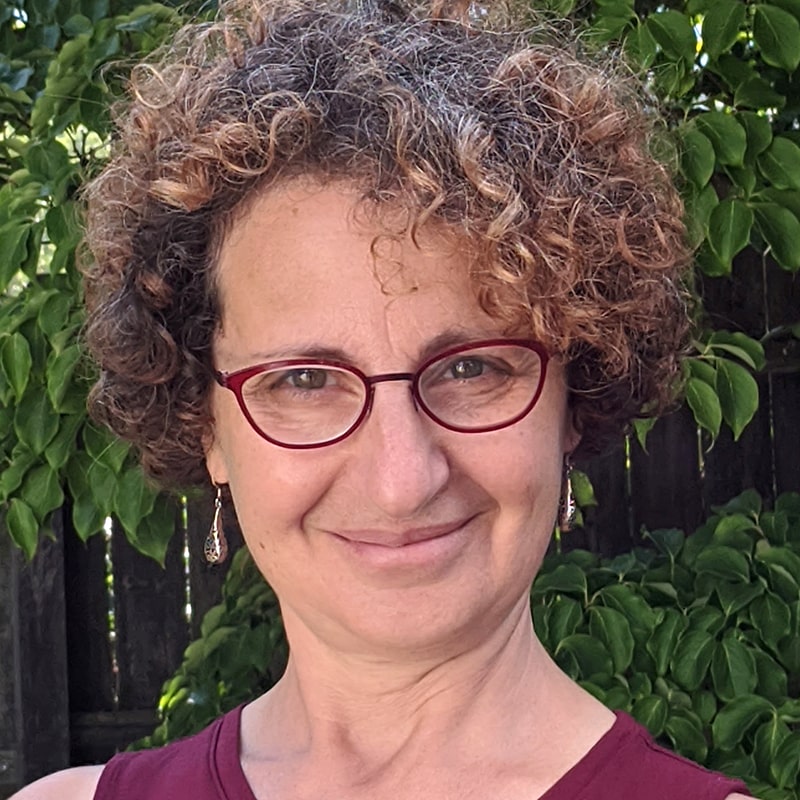
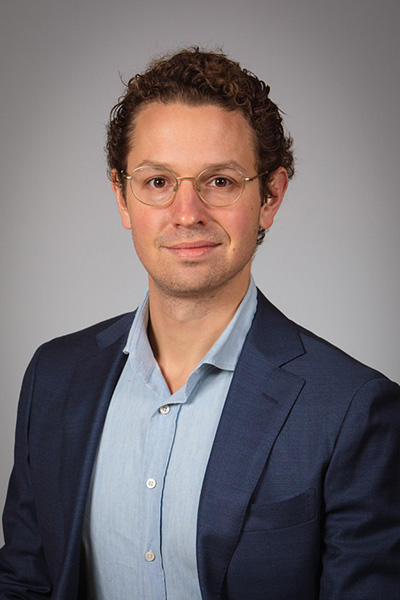
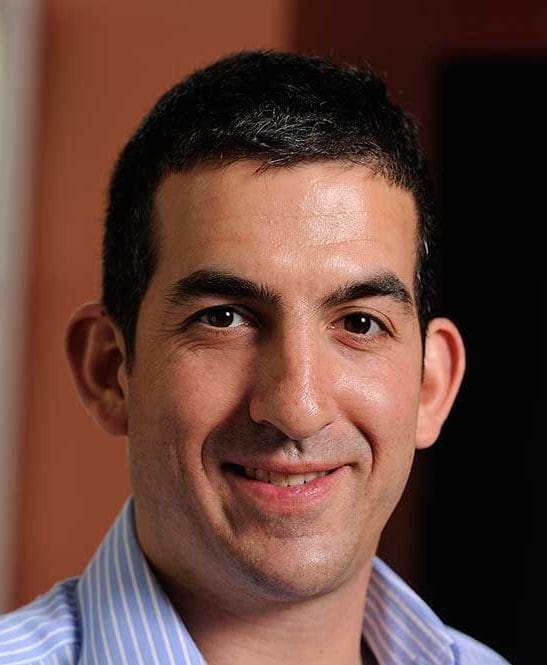
Mandy Simons is a Professor in the Department of Philosophy at Carnegie Mellon University's Dietrich College of Humanities and Social Sciences, with an adjunct appointment in the Department of Linguistics at the University of Pittsburgh. She serves as Director of CMU's Program in Linguistics, fostering interdisciplinary collaboration across philosophy, linguistics, and cognitive science. Her research centers on linguistic pragmatics and philosophy of language, with core expertise in presupposition, conversation without common ground, embedded implicature, nominal bridging, and disjunction. She has developed foundational frameworks for projective content taxonomy and conversational dynamics, significantly advancing the semantics-pragmatics interface through rigorous theoretical analysis and empirical investigation. Recent publications reveal deep engagement with computational approaches to pragmatic phenomena, including large language model analysis of presupposition judgments and cognitive mechanisms underlying bridging inferences. Her work consistently bridges theoretical linguistics with philosophical inquiry, examining how context shapes linguistic meaning across diverse discourse environments. In her leadership role directing CMU's Linguistics Program, she cultivates an intellectual hub connecting formal semantics with cognitive and computational approaches to language, hosting workshops and facilitating cross-departmental research initiatives.
Charles Lassiter is an Associate Professor in the Department of Philosophy at Gonzaga University, College of Arts and Sciences. He holds a Ph.D. from Fordham University (2013) and specializes in philosophy of mind and language, with strong interdisciplinary ties to cognitive science, ethics, and epistemology. Research Interests: His work centers on 4E cognition (embodied, embedded, enactive, extended), causal powers realism, extended mind, linguistic pragmatics, perlocutionary acts, implicit bias, and machine autonomy. He integrates Aristotelian metaphysics with empirical findings in cognitive science to develop non-representational models of mind and language. Recent Research Trends: His recent publications emphasize ontological foundations for extended cognition, particularly advocating for causal powers realism over new mechanism. He explores arational belief convergence in social epistemology, the epistemic status of beliefs from sham authorities, and the social dimensions of language use through simplexity and distributed cognition. His work on robot flirting applies Strawsonian reactive attitudes to machine autonomy. Email: lassiter@gonzaga.edu Phone: (509) 313-6761 Scientific Contributions: Co-developer of a powers-based ontology for encultured minds with Joseph Vukov. Collaborator with Aaron Kagan on the coupling-constitution fallacy and extended cognition. Pioneer in applying ecological and affordance-based models to perlocutionary speech acts. Advocate for environmental interventions to mitigate epistemic harms of implicit bias. Teaching & Service: He teaches ethics, symbolic logic, philosophy of mind, philosophy of language, and theory of knowledge. He serves as the administrator of the logic requirement for the philosophy graduate program.
Matthew Hunter is an Associate Professor in the Department of English at Texas Tech University, specializing in Early Modern Literature, particularly sixteenth and seventeenth-century drama. He teaches courses on Shakespeare, early modern drama, British literary history, and literary/social theory. His research centers on intersections between social life and aesthetic form, with core interests in: Early Modern Drama and Shakespearean Tragedy Linguistic Creativity and Stylistic Innovation Performance Theory and Social Theory Ordinary Language Philosophy Anthropological Metapragmatics Aesthetics and Literary Criticism History His publication trajectory reveals sustained focus on language, publicity, and sociability in early modern England. Key monographs include The Pursuit of Style in Early Modern Drama (2022) and the Norton Critical Edition of Doctor Faustus (2023), while his 14 most recent articles (2016-2024) demonstrate methodological range across journals like ELH , Representations , and English Literary Renaissance , consistently examining how discourse shapes social identity in theatrical contexts.
Michael Franke is a Professor in the Department of Linguistics at the University of Tübingen. His research focuses on experimental pragmatics, cognitive modeling, and evolutionary approaches to language use, reasoning, and decision-making processes. He employs probabilistic modeling techniques to investigate higher-order cognition and the relationship between empirical data, abstract theory, and mathematical modeling. His primary research interests include experimental pragmatics, cognitive and evolutionary modeling, probabilistic reasoning, Bayesian statistics, and computational linguistics. Franke's work bridges theoretical linguistics with experimental cognitive science, using both human behavioral data and computational modeling approaches. He has made significant contributions to understanding scalar implicatures, pragmatic reasoning, and the application of game theory to linguistic phenomena. Recent publications reveal a growing focus on the intersection of human cognition and language models, particularly examining how large language models handle pragmatic phenomena like scalar implicatures, quantifier interpretation, and question answering. His work increasingly integrates neural and symbolic approaches to model pragmatic reasoning processes. Professor Franke has developed several important research tools including magpie (a framework for web-based experiments), faintr (an R package for interpretation of categorical predictors in Bayesian regression), and R_eproducible_LaTeX (for writing reproducible research papers). He has also created educational resources including web-books on probabilistic pragmatics, Bayesian regression, and understanding large language models. In his teaching, Franke offers courses on logic, data analysis, and Bayesian regression. His educational materials demonstrate his commitment to making complex statistical and computational methods accessible to students in linguistics and cognitive science.
Elmar Unnsteinsson is an Assistant Professor and Ad Astra Fellow at University College Dublin's School of Philosophy. He holds a PhD from the City University of New York Graduate Center (2015). His academic roles include IRC Postdoctoral Fellow (2016–2018) and Principal Investigator at the University of Iceland (2016). His research focuses on philosophy of language, mind, metaphysics, analytic philosophy history, and cognitive science. Education: BA (University of Iceland), MA/MPhil/PhD (CUNY Graduate Center), and Professional Diploma in University Teaching (UCD). His current research explores intentionalist theories of reference, insincerity, self-deception, and fragmentational theories of mind. He has authored a book Talking About: An Intentionalist Theory of Reference (2022) and published in leading journals like Philosophy and Phenomenological Research and Mind and Language . Teaching includes coordinating modules on Philosophy of Language, Ethics, and Analytic Philosophy. He has secured grants such as the Insincerity for Fragmented Minds (2020–2025) and Ad Astra Start Up (2020–2025). His work bridges historical and contemporary philosophy, engaging with figures like Wittgenstein and Grice.
Chi-Hé Elder is an Associate Professor in Linguistics at the University of East Anglia, where she is also the Research Director and a member of the Language and Communication Studies group in the School of Media, Language and Communication Studies. Her research focuses on interactional pragmatics, misunderstandings, meaning in interaction, accountability, offence, humour, and politeness. Her recent publications explore the negotiation of misunderstandings in various contexts, the role of inference in pragmatic models, and the dynamics of offensive humour in online interactions.
Schuyler Laparle is a Lecturer at Tilburg University's Tilburg School of Humanities and Digital Sciences (TSHD), affiliated with the Department of Communication and Cognition. His research focuses on gesture studies, cognitive linguistics, metaphor analysis, and discourse analysis. He teaches courses such as Nonverbal Communication and Academic English. His research explores how gestures shape conversation coherence, metaphor use in climate communication, and semiotic complexity in multimodal interaction. Recent publications analyze gestural discourse markers, multimodal AI challenges, and frame-based gesture semantics. He has received the LOT Grotevragenprijs (2023) for collaborative work on linguistic AI questions. Laparle actively participates in academic activities, including organizing conferences like 'Communicating Climate Hope' (2024) and presenting at international forums on gesture analysis and metaphor studies. His work bridges theoretical linguistics with practical applications in discourse and multimodal communication.
Justin Bledin is an Associate Professor of Philosophy at Johns Hopkins University (JHU) with a secondary appointment in Cognitive Science. He serves as Director of Graduate Studies and is a member of the JHU Foundations of Mind Group. His research focuses on logic, formal semantics, and epistemology, with notable contributions to the philosophy of language and decision theory. Bledin holds a PhD from UC Berkeley's Group in Logic & the Methodology of Science (2013). His work bridges philosophical logic, linguistics, and cognitive science, emphasizing the informational dynamics of deductive inquiry. His research interests include formal semantics of linguistic expressions like 'as if' and counterfactuals, decision-theoretic frameworks, and logical systems inspired by Spinoza. He co-organizes the New York Philosophy of Language Workshop and has published in top journals such as Noûs , Linguistics and Philosophy , and Journal of Semantics . Bledin teaches courses ranging from formal logic to modal psychology and has engaged in interdisciplinary teaching at San Quentin State Prison through the Prison University Project. Recent work explores free choice principles in logic, epistemic modals, and attentional dynamics in discourse. His 2024 paper Free Choice With Arbitrary Variables advances formal semantics while older contributions like Modus Ponens Defended (2015) address foundational logical debates. Bledin’s scholarship reflects a commitment to rigorous interdisciplinary methods, integrating philosophical analysis with empirical and formal approaches. Teaching and mentorship are central to his role: he has designed courses on counterfactual reasoning, philosophical rationalism, and the logic of Spinoza’s Ethics . Beyond academia, Bledin is an avid runner, biker, and dabbler in the arts, reflecting a balanced engagement with intellectual and creative pursuits.
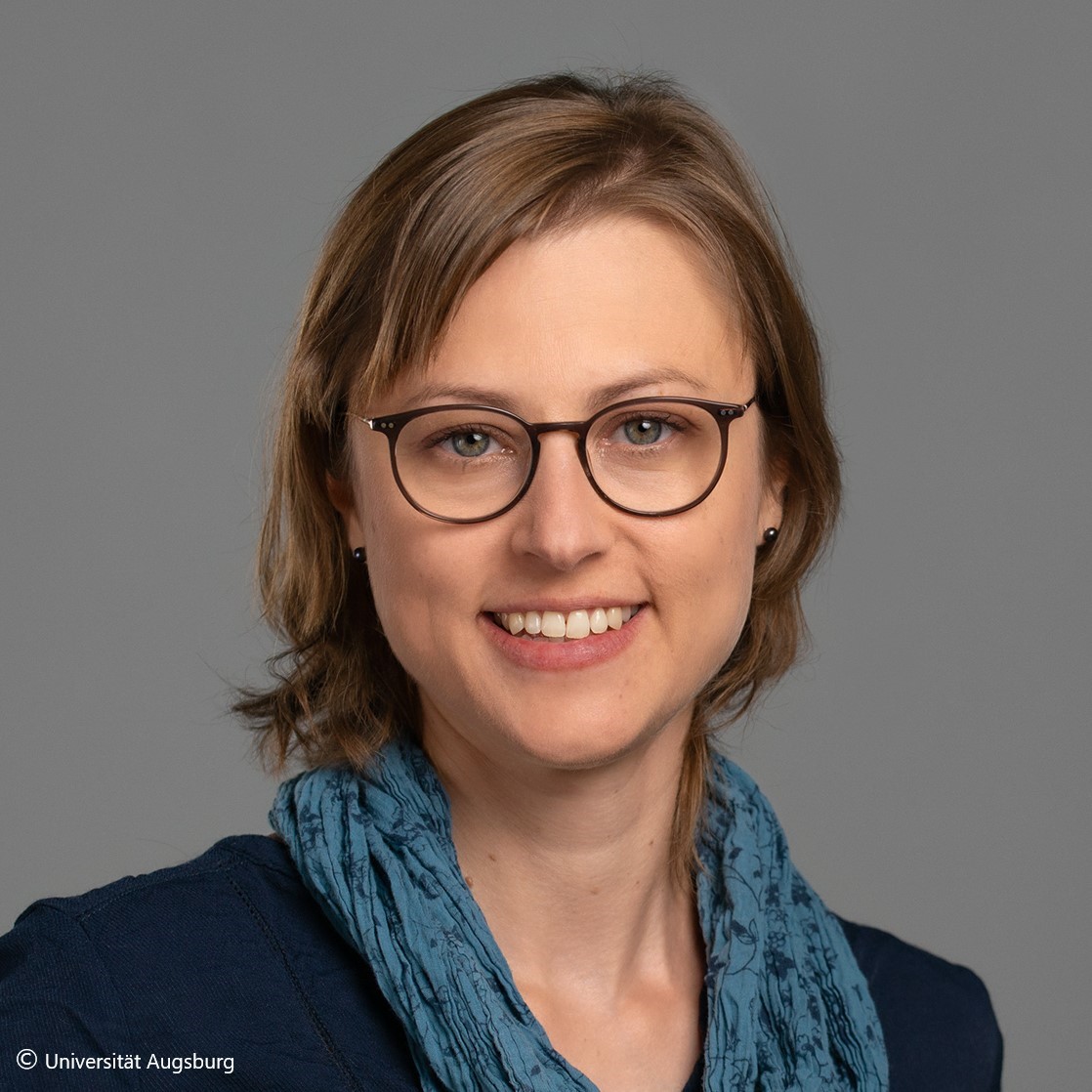
Annemarie Friedrich is a tenured University Professor for Natural Language Understanding (Computational Linguistics) at the Faculty of Applied Computer Science, University of Augsburg. She also holds membership in the Faculty of Philology and History. Previously, she worked as a Senior Expert on Natural Language Processing and Computational Linguistics at the Bosch Center for Artificial Intelligence. Currently, she serves as president of the German Society for Computational Linguistics (GSCL), the primary scientific association for NLP research in German-speaking regions, and is a member of the ACL Special Interest Group for Annotation (ACL SIGANN). University: University of Augsburg School: Faculty of Applied Computer Science Department: Institute of Computer Science Position: University Professor (tenured) for Natural Language Understanding Professor Friedrich's research focuses on computational linguistics and natural language processing with emphasis on semantics and information extraction from text. Her work spans both machine-learning oriented approaches to text mining for scientific text, syntactic and semantic parsing, and uncertainty in deep learning for NLP, as well as corpus-linguistic research on syntax-semantics interface, discourse, pragmatics, aspect, genericity, and modal verbs. She has particular expertise in annotation and corpus creation, recognizing that machine learning models depend fundamentally on underlying data quality. Her research group at Augsburg actively contributes to computational linguistics through numerous publications and datasets. Analysis of Professor Friedrich's recent publications reveals a strong focus on table question answering, patent text processing, uncertainty modeling, and multimodal scientific document understanding. Her work consistently bridges theoretical linguistics with practical NLP applications, with increasing emphasis on robust evaluation methodologies and domain-specific adaptations of language models. Notably, her research group has produced significant resources including the AnnoCTR dataset for cyber threat reports, PAP2PAT for patent generation, and FREB-TQA for evaluating table QA robustness. Professor Friedrich actively mentors multiple PhD students working on diverse topics including document-level patent processing (Valentin Knappich), temporal processing (Timo Schrader), document-level text modeling (Wei Zhou), and topic modeling for digital forensics (Jenny Maria Felser). Her collaborative approach is evident in co-supervision arrangements with researchers from institutions including Bosch Center for Artificial Intelligence, TU Dresden, and Hochschule Mittweida. She has also successfully guided previous PhD students including Sophie Henning (Uncertainty Modeling), Stefan Grünewald (Syntactic Dependencies), and Subhash Pujari Chandra (Neural Patent Classification). Her teaching responsibilities include courses such as Introduction to Natural Language Processing, Introduction to Python Programming, and specialized seminars on Natural Language Understanding for both Bachelor's and Master's students. These courses reflect her commitment to both theoretical foundations and practical implementation skills in computational linguistics.
Silvio Cruschina is a Professor of Italian at the University of Helsinki's Faculty of Arts, Department of Languages. His research focuses on syntax, information structure, and dialectology, with particular emphasis on Romance languages, especially Italian and Sicilian dialects. He leads projects such as ALIHAS (A Linguistic Investigation of Hate Speech) and ReVerSe (Residual Verb Second in Romance), exploring hate speech dynamics, syntactic phenomena, and residual language structures. Cruschina's work bridges theoretical linguistics with applied research, including studies on focus fronting, implicatures, and morphological competition in dialects. He co-edited An Investigation of Hate Speech in Italian (2024) and published extensively on topics like Sicilian quantifiers, Catalan syntax, and Italian prosody. His teaching includes courses on Italian dialects and syntax, and he actively participates in academic events as a speaker, organizer, and opponent in doctoral defenses. Key projects include analyzing non-cooperative discourse contexts and investigating historical origins of verb-second phenomena in Romance languages. His research integrates formal syntax, historical linguistics, and sociolinguistic perspectives, contributing to both theoretical frameworks and practical applications in language documentation.
Kaja Borthen is a Professor at the Department of Language and Literature at NTNU. Her research focuses on the intersection of pragmatics and semantics, particularly non-truth-conditional aspects of linguistic meaning. She investigates how pragmatic principles interact with encoded meaning to shape utterance interpretation in context, with specializations in referring expressions, implicatures, and pragmatic particles. Research Projects: NOT Project (2014-2017): Analyzed Norwegian pragmatic tags Cross-linguistic Nominal Forms Study (2007-2009) BREDT Project (2003-2006): Focused on anaphor resolution PhD Work (1999-2003): Examined Norwegian bare singulars Her recent work explores phenomena like pronominal right-dislocation in Norwegian and regional variation in pragmatic particles. She has contributed to foundational discussions on referential semantics and discourse coherence, integrating insights from relevance theory and cognitive linguistics. Teaching responsibilities include advanced courses in linguistic theory and research methodologies. Publications span journals like Glossa , Nordic Journal of Linguistics , and Journal of Pragmatics , reflecting her commitment to bridging theoretical linguistics with empirical discourse analysis.
Dr. Matthew Hunt is a Lecturer in Sociolinguistics at the University of Southampton. His research focuses on sociolinguistic perception and socio-semantics, employing experimental methods to explore how linguistic features influence social evaluations. He leads projects examining linguistic variation in domestic abuse testimony and professional football commentary. Current affiliations include membership in the Centre for Linguistics, Language Education and Acquisition Research. His work bridges semantics, pragmatics, and sociolinguistics to analyze 'meaning' across contexts. Research interests include variation perception, epistemic phrases, and taboo language interaction. He supervises PhD candidates in Applied Linguistics/ELT and is accepting new PhD applications. Key projects involve studying multicultural dialect acquisition in West London youth and gender biases in sports commentary. His interdisciplinary approach addresses language’s role in societal evaluation and identity construction.
Lukas Lewerentz is a Research Fellow at the Department of Philosophy, Justus Liebig University Giessen, and a postdoc at Heinrich Heine University Düsseldorf's Chair of Epistemology and Philosophy of Language. His work focuses on the philosophy of language, communication, and epistemology , particularly on semantics/pragmatics of definite expressions, speech acts, and contextual meaning. Doctor of Philosophy (DPhil) from University of Oxford Former studies at University of Edinburgh and Humboldt University Berlin His publications analyze pictorial truth conditions, conversational implicature types, and quantifier theories , showing interdisciplinary connections between linguistic and non-linguistic communication. He teaches logic, philosophy of lying, and natural language semantics. Contact: Institute of Philosophy, Room 232, Rathenaustrasse 10, Giessen | Phone: +49 (0)641-9915522
Claudia Giovanna Daniela Bianchi is a Full Professor at the Faculty of Philosophy of Vita-Salute San Raffaele University, specializing in Philosophy and Theory of Languages (M-FIL/05/PHIL-04/B). She holds multiple leadership roles including Vice Dean of the Faculty of Philosophy since 2022, Director of the Interfaculty Center for Gender Studies since 2022, and President of the Council of the Degree Course in Philosophy since 2016. She also directs the Master's Program in Science and Health Communication. Her educational background includes a Philosophy degree from the University of Milan and a PhD in Epistemology from École Polytechnique in Paris. Her career progression at Vita-Salute San Raffaele University includes positions as contract researcher, researcher in Theoretical Philosophy, and associate professor before becoming a full professor. Bianchi's research primarily focuses on analytic philosophy of language, pragmatics, feminist philosophy of language, and gender studies. Her work explores how language shapes social realities, with particular attention to hate speech, discursive injustice, gendered communication, and the philosophical implications of linguistic phenomena. She examines how speech acts can perpetuate social inequalities and how language influences identity formation and social categorization. Her research output demonstrates consistent focus on the intersection of language, power, and social justice. She has published extensively on topics including hate speech, discursive injustice, slurs, gendered language, and the pragmatics of communication. Her work combines theoretical philosophical analysis with empirical investigations, particularly in understanding how language shapes social cognition and reinforces or challenges social hierarchies. Award for non-fiction for 'Hate speech' (2022) 100esperte Ambito Storia e Filosofia (2021) Bianchi serves as a referee for numerous prestigious international journals including Analysis, Australasian Journal of Philosophy, Dialectica, Erkenntnis, and Mind. She is actively involved in academic societies, having served on committees for SIFA (Italian Society of Analytical Philosophy) and SFL (Society for the Philosophy of Language), and is president of SWIP Italia (Society for Women in Philosophy). She also participates in editorial boards for several philosophy journals.
Antonio Fortin is a Visiting Professor at the University of Oxford in the Linguistics, Philology, and Phonetics school. His research focuses on semantics, pragmatics, morphology , and NLP , with a strong emphasis on expressive affixes and evaluative suffixation . Supervised by Professor Martin Maiden and Dr. Ash Asudeh , his work bridges theoretical and computational linguistics. Key Research Areas : Semantics, Pragmatics, Morphology, Natural Language Processing (NLP), Data Science. Publication Trends : Recent work spans semantic compositionality , modal deverbal adjectives , and educational simulation environments . His thesis (2011) redefined expressive morphology across languages like Bantu, Sanskrit, English, and Romance , showing its anomalous yet pervasive nature. Papers such as "Evaluative Suffixes" (2022) and "Constructions, Pragmatics, and Modality" (2013) argue for pragmatic derivations over complex lexical rules. He also developed a neural network simulator (2022) for student engagement in online courses, combining computational methods with educational theory.