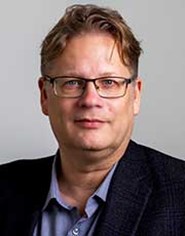
Jens Edlund is a Professor at KTH Royal Institute of Technology's Division of Speech, Music and Hearing. His research focuses on speech technology, dialogue systems, prosody, and evolutionary phonetics. He has contributed to foundational work on speech synthesis, conversational interaction, and multimodal corpora like the D64 corpus. Key projects include the MonAMI Reminder system and analysis of primate vocalizations to understand speech evolution. Edlund has collaborated extensively with global researchers, producing over 150 peer-reviewed works. His work integrates computational methods with linguistic and biological insights, emphasizing human-like dialogue systems and cross-species vocal analysis. Education: Ph.D. in Speech Technology (2011, KTH) Grants: Multiple EU and Swedish Research Council grants for speech technology and interdisciplinary studies Research labs include the KTH Speech, Music and Hearing Lab and collaborations with institutions like Max Planck Institute for Evolutionary Anthropology. Current work explores evolutionary origins of speech biomechanics and AI-driven speech synthesis evaluation.
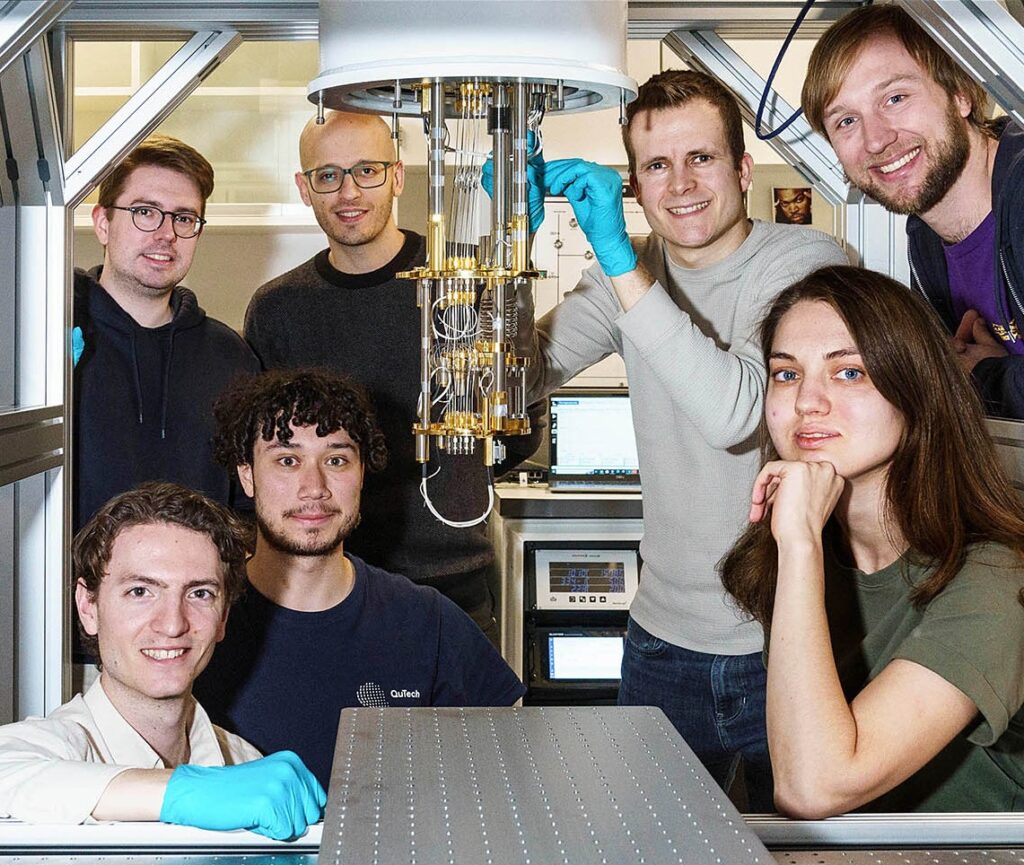
Carlos Errando Herranz serves as an Assistant Professor in the Quantum and Computer Engineering Division at Delft University of Technology's Faculty of Electrical Engineering, Mathematics and Computer Science (EEMCS) and as a Principal Investigator at QuTech. His research focuses on developing scalable quantum photonic integrated circuits using semiconductor fabrication processes compatible with existing infrastructure for quantum internet applications. He received Bachelor's and Master's degrees from Universitat Politècnica de València (2013) and a PhD in Micro and Nanosystems from KTH Royal Institute of Technology (2018), followed by postdoctoral positions at KTH and MIT as a Marie Curie fellow. His lab investigates quantum photonics, integrated photonics, and color centers with emphasis on diamond tin-vacancy systems and silicon-based quantum emitters. Recent publications demonstrate strong expertise in tuning quantum emitters via strain engineering, heterogeneous integration of spin-photon interfaces, and MEMS-enabled reconfigurable photonics. Key advancements include cavity-enhanced quantum memories, superconducting detector integration, and spectral control of solid-state emitters for quantum networks. Dr. Herranz advises seven graduate students including PhD candidates Vicky Dominguez Tubio, Arjan Mejas, Matteo Pirro, Christian Primavera, Jan Riegelmeyer, and Elena Volkova, along with Master student Bram Zijlstra. His team comprises postdocs Lin Jin and Pat Laferriere, and interns Elsa Herranz Valiente and Ernest Staffetti Cruañas. The Errando Herranz Lab operates within QuTech's Quantum Internet Division at Delft University, maintaining specialized facilities for nanofabrication and optical characterization of quantum photonic devices. Current research directions include developing CMOS-compatible quantum memories operating at telecom wavelengths and scalable architectures for quantum repeaters.
Cheuk Wai Tai is a Senior Staff Researcher at Stockholm University's Department of Environmental and Materials Chemistry since 2009. He manages the transmission electron microscopes and sample preparation equipment at the Electron Microscopy Center and serves as Section Editor for the Journal of Electronic Materials. His work focuses on quantitative structure characterization in functional materials research, particularly within nanoscience and nanotechnology contexts. Education: Ph.D. in Applied Physics, The Hong Kong Polytechnic University, 2004 M.Phil. in Applied Physics, The Hong Kong Polytechnic University, 2001 M.Sc. in Physics, The Chinese University of Hong Kong, 1998 B.Sc. (Hons) in Engineering Physics, The Hong Kong Polytechnic University, 1997 Dip. in Mechanical Engineering (Computer Aided Engineering), Institute of Vocational Education (formerly Haking Wong Technical Institute), Hong Kong, 1992 His research centers on structure-property relationships in functional materials through advanced electron microscopy techniques. Current specializations include Pair Distribution Function (ePDF) & Diffuse Scattering, Energy Materials characterization, and EM sample preparation methodology development. The group maintains strong focus on translating structural data into functional performance metrics for nanomaterials. Recent publications (2013-2019) demonstrate consistent emphasis on electron microscopy applications for energy storage materials (batteries, photocatalysts) and functional ceramics. Key trends include structural disorder analysis in piezoelectrics, development of quantitative TEM methods like SUePDF, and nanoscale characterization of electrocatalyst surface phases. His work bridges materials chemistry with advanced imaging techniques. Scientific recognition includes: Fellow of The Royal Microscopical Society (U.K.) Senior Member of IEEE Marie Curie Fellowship (2007-2009) from European Commission Sir Edward Youde Memorial Fellowship (2003/2004) from Hong Kong S.A.R. Government He teaches Solid State Chemistry (KZ7003) and leads Introduction to Analytical Electron Microscopy (KZ8009), having previously taught Advanced Transmission Electron Microscopy (KZ8010) before 2011. Major grants supporting his work include: "Quantitative structural characterisation using 3D electron-based pair distribution function" (Swedish Research Council) "A Multidimensional Toolkit for Modern Electron Microscopy" (Swedish Foundation for Strategic Research) "Mitigating Ni-rich Li-ion cathode side-reactions" (Swedish Energy Agency, Co-applicant) He leads the Cheuk-Wai Tai group within Stockholm University's chemistry department and oversees operations at the Electron Microscopy Center, where his team develops and applies advanced characterization techniques for functional materials research.
Yu Xia is a Post Doc at the Department of Chemistry, Stockholm University, Sweden. He is affiliated with the Tom Willhammar Research Group, focusing on advanced electron microscopy and diffraction techniques for structural characterization of materials. PhD (2019–2023) from a joint program between the University of Birmingham (UK) and the Southern University of Science and Technology (China). Research emphasizes fabrication of metallic nanoparticles with non-equilibrium structures and shapes using gas-phase condensation and thermal shock methods. Specializes in scanning transmission electron microscopy (STEM), in-situ heating experiments, and electron energy loss spectroscopy (EELS) for nanoparticle analysis. Current work prioritizes 4DSTEM imaging for electron beam-sensitive materials and Python-based post-processing of electron microscopy datasets. Yu Xia's research spans Materials Science , Nanotechnology , and Electrocatalysis , with applications in photocatalytic hydrogen evolution , graphene composites , and advanced electron microscopy techniques . His work often integrates computational image processing with structural characterization to optimize material properties. Publications highlight innovations in heterostructure engineering , metallic alloy catalysts , and electron beam-sensitive material imaging . No scientific awards are explicitly mentioned in the provided text. Yu Xia's technical expertise includes Python scripting for image analysis, in-situ electron microscopy , and multifunctional graphene-based materials .
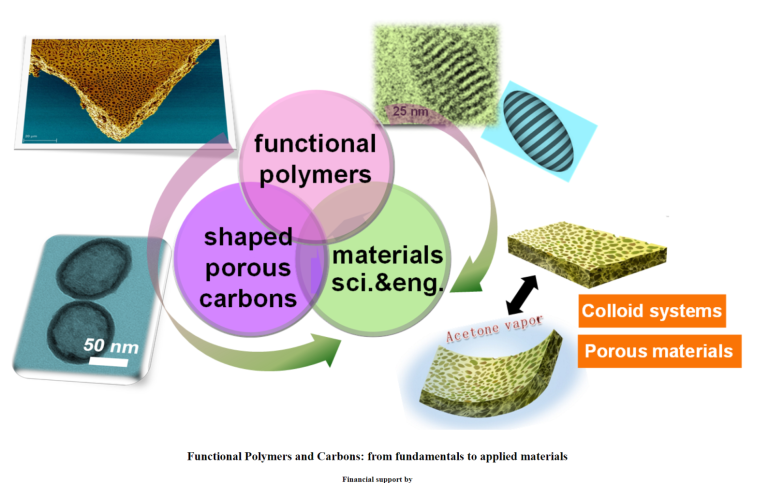
Jiayin Yuan is a Professor of Materials Chemistry at Stockholm University, Department of Chemistry. He leads the Jiayin Yuan Research Group, focusing on functional polymers and carbons for environmental and energy applications. His work emphasizes sustainable materials, including porous polymers, carbon membranes, and energy storage systems. He holds an ERC Consolidator Grant (2022) and previously an ERC Starting Grant (2014), and directs the Stockholm Material Hub. His research spans CO2 capture, catalysis, and nanomaterials for renewable energy. He has held academic positions at Clarkson University (USA) and the Max Planck Institute (Germany), with a PhD from Germany (2009). Education: Bachelor's in Chemistry, Shanghai Jiao Tong University (2002) Master's in Chemistry, Germany (2004) PhD in Chemistry, Germany (2009) Research Interests: Synthesis of functional polymers, carbon materials, and their applications in environmental sustainability and energy. Current projects include CO2 capture via porous liquids, biomass-derived fertilizers, and bijel membranes for energy storage. Grants & Awards: ERC Consolidator Grant (2022) ERC Starting Grant (2014) Wallenberg Academy Fellow (2018) Advising & Labs: Supervises multiple PhD students and postdocs. His group collaborates on advanced materials for energy and environmental challenges. The Stockholm Material Hub (stockholmmaterial.com) fosters interdisciplinary research in materials science.
Professor Klas Tybrandt leads the Soft Electronics group at Linköping University's Laboratory of Organic Electronics (LOE), focusing on stretchable materials and bioelectronics integration with the human body. He holds a Master's (2007) and PhD (2012) from LiU, followed by postdoctoral research at ETH Zurich (2013-2014). Promoted to Professor in 2024, he oversees the Wallenberg Wood Science Center (WWSC), WISE, and AFM initiatives. His work spans Stretchable batteries Neural interfaces Organic thermoelectrics and has earned awards like the ERC Consolidator Grant (2023) and Wallenberg Academy Fellow (2022). His research emphasizes sustainable materials and energy harvesting. Education: PhD in Organic Bioelectronics (LiU, 2012) ETH Zurich Postdoc (2013-2014) Research interests include soft electronics and biohybrid systems , with breakthroughs in gold nanowire electrodes and stretchable electrofluid batteries . Over 70 peer-reviewed articles and 7 patents underscore his contributions to organic electronics. Grants & Funding: ERC Consolidator Grant (€2M) Wallenberg Academy Fellowship (SEK 36M) Labs/Teams: Head of Soft Electronics group (LOE), active in WWSC and WISE consortia.
Feng Gao is a Professor of Optoelectronics at the Department of Physics, Chemistry and Biology (IFM), Linköping University, and leads the Electronic and Photonic Materials (EFM) division. He is affiliated with the Faculty of Science and Engineering (Institute of Technology) and conducts interdisciplinary research at the intersection of physics, chemistry, and materials science. His work focuses on organic semiconductors and metal halide perovskites for sustainable energy technologies. His research interests include: Organic and perovskite solar cells with high efficiency and recyclability Perovskite LEDs for next-generation lighting and displays Electrically pumped perovskite lasers Flexible and lead-free perovskite materials for X-ray detection and information storage Sustainable materials design with full lifecycle consideration His recent publications reveal a strong focus on improving device stability, reducing environmental impact, and enhancing energy conversion efficiency in optoelectronic systems. Trends in his work show a shift toward circular economy principles, green manufacturing, and multifunctional materials. His research has been published in top journals including Nature , Science , Nature Energy , and Advanced Materials . Scientific awards received: Göran Gustafsson Prize in Physics ERC Consolidator and Starting Grants Wallenberg Scholar (2024) SSF Future Research Leader (2020) Tage Erlander Prize (2020) Wallenberg Academy Fellow (2017) Lisa Meitner Grant for Israel-Swedish Collaboration Feng Gao has secured significant research funding from the European Research Council (ERC), the Knut and Alice Wallenberg Foundation (SEK 31 million for flexible X-ray technology), Swedish Research Council (VR), Swedish Energy Agency, FORMAS, Vinnova, and Marie Skłodowska-Curie Actions. He actively mentors PhD and postdoctoral researchers, including Max Karlsson and Huotian Zhang, and fosters international collaborations with institutions such as the University of Cambridge, Oxford, and Zhejiang University. His group emphasizes both scientific excellence and career development, supporting exchanges with leading global labs. He leads a dynamic research team within the Advanced Functional Materials (AFM) environment at IFM, working on groundbreaking projects such as fully recyclable solar cells, touch-sensitive LED displays, and perovskite-based random number generators for quantum communication. The group is also building new experimental infrastructure, including advanced labs for optoelectronic materials synthesis and characterization.
Carl-Mikael Zetterling is a Professor and Head of Department at Kungliga Tekniska Högskolan (KTH) in Stockholm, Sweden, affiliated with the School of Electrical Engineering and Computer Science (ICT) and the Electronics and Embedded Systems department. His research focuses on process technology and device design for high-temperature, high-power silicon carbide (SiC) electronics, expanding into SiC-based analog and integrated circuits. He has authored over 300 publications, including books on SiC process technology and plagiarism prevention. Dr. Zetterling has held leadership roles such as Vice Dean of the School of ICT (2013–2017) and teacher representative on KTH's faculty board. He has collaborated internationally at Stanford University, Kyoto University, and Kyoto Institute of Technology. His work addresses applications in extreme environments, including Venus exploration and fusion reactor monitoring, with a focus on radiation tolerance and thermal resilience. The 15 most recent publications highlight trends in wide bandgap semiconductors, gamma irradiation effects on SiC devices, and high-temperature integrated circuits. His articles span structural health monitoring with machine learning, novel SiC diode designs, and radiation-hardened electronics. Key contributions include advancements in self-aligned contacts, trench MOSFETs, and compact modeling for extreme conditions. While no formal awards are listed, his roles in technical program committees (TMS Electronic Materials Conference, IEEE SISC Conference) and editorial work demonstrate significant academic service. He teaches courses ranging from digital design to high-temperature electronics, overseeing degree projects in embedded systems, communication, and nanotechnology.
Dr. Daniel Weber is an Assistant Professor in the Department of Chemistry and Chemical Engineering at Chalmers University of Technology, specializing in Energy and Materials. His research focuses on synthesizing novel inorganic layered materials for energy storage/conversion applications, including electrocatalysts and quantum materials. He leads the Daniel Weber Research Group, which combines high-temperature and soft-chemistry synthesis techniques with advanced characterization methods like X-ray diffraction. Dr. Weber earned his PhD from the Max-Planck-Institute for Solid State Research in Stuttgart, followed by postdoctoral work at Ohio State University (USA) and a research associate position at the Karlsruhe Institute of Technology. In September 2023, he established his independent research group at Chalmers, supported by a fellowship from the Wallenberg Initiative for Materials Science for Sustainability. His research interests span layered bulk materials, 2D magnets, water oxidation catalysts, CO₂ utilization systems, and ionic conductors. Recent work emphasizes defect engineering in cathode materials and strain-tuning of magnetic properties in 2D systems. Key achievements include contributions to LiNiO₂ cathode optimization, W-doping strategies, and magnetic behavior analysis in twisted bilayer CrI₃. His publications reflect expertise in materials synthesis, electrochemistry, and quantum phenomena. Dr. Weber collaborates actively on thesis projects and industrial partnerships, offering supervision opportunities at all academic levels. His group's lab facilities include specialized equipment for operando X-ray diffraction and advanced materials characterization.
Jonny Holmström serves as Professor at Umeå University's Department of Informatics and directs the Swedish Center for Digital Innovation (SCDI), which he co-founded. He holds an additional affiliation as Professor at the Centre for Transdisciplinary AI, focusing on bridging theoretical research with practical AI applications across sectors including forestry, banking, and public services. His work appears in premier journals such as MIS Quarterly, Information Systems Journal, and Journal of Information Technology. His research centers on digital innovation, transformation, and entrepreneurship, examining how organizations navigate digital change through platform governance, AI integration, and entrepreneurial storytelling. Recent work investigates generative AI's impact on business model design, data work practices, and organizational transformation, emphasizing practical frameworks for managing digital transitions while addressing resistance and ethical considerations. Analysis of his 15 most recent publications (2024-2026) reveals a dominant focus on generative AI's organizational implications, particularly its role in reshaping platform governance, facilitating innovation through prompting, and transforming business models. Concurrent themes include digital platform evolution, data flow management in innovation networks, and citizen-centric digital government design, reflecting a consistent emphasis on practical implementation challenges in real-world contexts. Holmström leads significant research initiatives including a 28 MSEK program at Umeå University and the Kempe Foundation-funded SCDI AI Business Lab. His current project 'Using No-Code AI to Teach Machine Learning in Higher Education' (2024) aims to democratize AI education. He serves on editorial boards for CAIS, EJIS, Information and Organization, and JAIS, and heads the Swedish Center for Digital Innovation research group while participating in 'AI and society' collaborations. He founded and directs the Swedish Center for Digital Innovation (SCDI), which operates the SCDI AI Business Lab exploring practical AI applications for businesses. His work integrates with the Centre for Transdisciplinary AI to advance cross-sector AI implementation, particularly in public services and sustainable business models within the circular economy framework.
Mariana Dalarsson is an Associate Professor in Electromagnetic Theory at the Division of Electromagnetic Engineering and Fusion Science (EMF) within the School of Electrical and Computer Engineering (EECS) at KTH Royal Institute of Technology. She holds an MSc (2010), PhD (2016), and Docent (2019) from KTH, where she is recognized as the (shared) second youngest woman ever to receive a PhD degree from the institution. Her research spans electromagnetic scattering and absorption, inverse problems, electromagnetics of stratified media, double-negative metamaterials, electromagnetics in medicine, antenna theory, and mathematical physics. She has authored approximately 102 peer-reviewed publications, including 51 journal papers, with recent work focusing on gold nanoparticles for biomedical applications, waveguide theory for artificial materials, and plasmonics. Analysis of her recent publications reveals a strong focus on graded metamaterials, electromagnetic wave propagation in complex media, and biomedical applications of electromagnetic theory. Her work bridges fundamental electromagnetic theory with practical applications in medical technology, particularly in the areas of nanoparticle-based treatments and diagnostic systems. Honorary Grant ("Honnörsstipendiet") for best graduate of her program (2011) L'Oréal-Unesco For Women in Science Sweden Prize (2020) Göran Gustafsson Prize for Young Researchers at UU/KTH (2024) Teaching Assistant of the Year from Engineering Physics students (2015) Mariana is highly active in teaching, serving as course responsible and examiner for EI1222 Electromagnetic Theory, EI2405 Classical Electrodynamics, and FEI3304 Integral Equation Methods in Electromagnetics. She also co-teaches several other courses and regularly supervises multiple BSc/MSc theses annually. Her research is primarily funded through her own project grants from the Swedish Research Council, including "Waveguide theory for artificial materials and plasmonics" (2019) and "Gold nanoparticles for high-frequency deep brain stimulation" (2023).
Shareq Mohd Nazir is an Associate Professor at KTH Royal Institute of Technology, affiliated with the Division of Energy Processes in the Department of Chemical Engineering. He holds a joint appointment within the Digital Futures Faculty, a cross-disciplinary research center addressing societal challenges through digital technology innovation. Nazir earned his PhD in Energy and Process Engineering from NTNU (2018) and holds Master and Bachelor degrees in Chemical Engineering from BITS Pilani. His research focuses on decarbonization strategies including CO2 capture/utilization (CCUS), bioenergy conversion, and methane mitigation. Key methodologies involve techno-economic analysis and process modeling for industrial systems. Nazir leads projects integrating catalytic conversion, waste heat recovery, and gas switching technologies to achieve low-carbon energy systems. He teaches courses on chemical engineering systems, process design, and carbon-neutral energy systems at KTH. Recent publications emphasize multi-gas mitigation strategies, synthetic fuel production via biomass gasification, and cost-effective hydrogen production pathways. His work bridges academia and industry through collaborations with RISE Research Institutes and NTNU. Nazir’s research directly supports Sustainable Development Goals (SDGs), particularly targeting climate action (SDG13) and affordable clean energy (SDG7).
Torbjörn Thiringer is a Professor in Electrical Engineering at Chalmers University of Technology. His research focuses on electrical systems for wind turbines and electric vehicles, with particular emphasis on system-level analysis and component-level studies of electrical machines, power electronics, and battery systems. Key research areas: Wind turbine systems, Electric vehicle drives, Battery degradation, Power electronics optimization Recent work explores graphene-based thermal management, fuel cell hybrid vehicles, and direct current building distribution efficiency His publications demonstrate interdisciplinary engagement with topics spanning: Finite element analysis of motor designs Life cycle assessment of energy systems Thermal modeling of SiC inverters Wave energy converter optimization Core loss measurement techniques Hydrogen fuel cell integration Professor Thiringer's collaborations span multiple institutions and industry partners, focusing on both theoretical modeling and practical implementation of advanced energy systems.
Crispin Reverant is a Professor and Head of the Organic Energy Materials research unit at Linköping University's Department of Science and Technology (ITN), part of the Laboratory of Organic Electronics (LOE). His work focuses on organic energy materials, with applications in energy harvesting, storage, and electrochemical flow devices. Reverant earned his PhD in 2000 from the University of Mons and has held postdoctoral positions at Linköping University. He co-founded Ligna Energy AB and Cellfion AB, and serves on several scientific advisory boards. His research has been recognized with awards like the Tage Erlander Prize (2012) and the Göran Gustafsson Prize (2016). Key areas include sustainable batteries using lignin and cellulose, thermoelectric polymers, and wearable energy devices. Education: PhD in 2000 from University of Mons, Belgium; postdoctoral training at Linköping University with Prof. W.R. Salaneck. Research interests span organic electronics, thermoelectric materials, and biodegradable energy storage systems. His lab develops materials for batteries, supercapacitors, and flexible electronics. Recent projects include lignin-based redox centers and stretchable batteries. Over 200 publications highlight his contributions to energy materials science. Awards: ERC Starting Grant (2011), Tage Erlander Prize (2012), Göran Gustafsson Prize (2016). Advising and grants: Leads the Organic Energy Materials group and has secured significant EU funding, including the ERC grant. Collaborates on industry partnerships like Ligna Energy. Labs/Teams: Head of the Organic Energy Materials unit in LOE, focusing on interdisciplinary materials research for sustainable energy solutions.
Catherine Aitchison is an Assistant Professor and group leader of the Functional Pi Materials Group at Linköping University's Laboratory of Organic Electronics (LOE), affiliated with the Department of Science and Technology (ITN). Her research focuses on developing conjugated organic molecules and polymers for clean energy technologies, including solar fuels, photovoltaics, and membranes. Education: BSc and MSci in Natural Sciences (University of Cambridge, 2015-2016), PhD in Chemistry (University of Liverpool, 2020). Postdoctoral research at the University of Oxford (2020-2024) with Prof. Iain McCulloch, focusing on organic photovoltaics and photocatalysis. Research interests include structure-activity relationships in organic semiconductors, self-assembled materials, and applications in energy conversion/storage. Her group emphasizes organic chemistry's flexibility to tune material properties for real-world applications. Labs/Teams: Functional Pi Materials Group (LOE), collaborating on projects like CO₂ photoreduction and polymer heterojunctions. Active in advancing organic electronics and sustainable energy solutions.