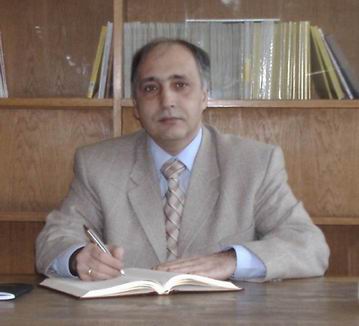
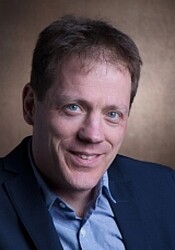
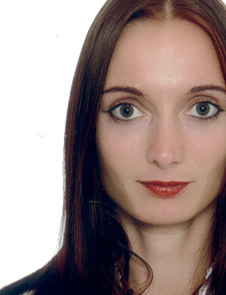
Mihaela Girtan is an Associate Professor in the Faculty of Sciences at the University of Angers, heading the Thin Films for Photovoltaic Applications research group. Her work spans thin-film technologies, solar cells, and optoelectronic devices, with expertise in physical/chemical deposition methods and nanomaterials. Education: PhD in Physics, University of Stuttgart (1995) Her research investigates charge transport in oxides, organic/perovskite solar cells, transparent conducting films, plasmonics, and fluid dynamics in CVD reactors. She develops innovative materials for energy conversion, including oxide/metal/oxide electrodes and polymer-based photovoltaics. Recent publications focus on climate-agriculture interactions, including drought risk modeling, irrigation dynamics, and crop yield sustainability. Her work integrates remote sensing, machine learning, and climate modeling to address food security challenges. Scientific Awards: Consistently ranked in top 2% of researchers worldwide since 2020 She leads international collaborations and advises PhD students in materials science. Her group maintains advanced thin-film deposition and characterization facilities at Angers Photonics Laboratory.
Simon David Goldstein is an Associate Professor at the Dianoia Institute of Philosophy within the Faculty of Theology and Philosophy. His research focuses on epistemic logic, formal epistemology, philosophy of language, and AI ethics. He explores topics such as knowledge norms, epistemic modalities, and ethical implications of AI systems. Research Interests: AI Ethics: Examining AI safety, deception, and existential risks Epistemic Logic: Investigating knowledge fragility, contextualism, and modal credence Philosophy of Language: Analyzing dynamic semantics and attitude reports Formal Epistemology: Probability and modal reasoning in epistemic contexts Recent Work Trends: Recent publications emphasize interdisciplinary approaches to AI ethics, integrating technical AI challenges with philosophical frameworks. His work on epistemic modals and contextualism bridges semantics and epistemology. Advising & Grants: No specific grants or advisees listed. Active in collaborative research with institutions like the Dianoia Institute. Labs/Teams: Affiliated with the Dianoia Institute's research groups on ethics and epistemology.
Peter Backhaus is a Professor at Waseda University's School of Education, Tokyo. He is affiliated with the Graduate School of Education and Faculty of International Research and Education, contributing to both academic and societal contexts through interdisciplinary research. Doctor of Philosophy (PhD) from Germany ResearchGate profile verified via institutional email His research focuses on Sociolinguistics, Pragmatics, Stylistics, and Linguistic Landscapes , with a strong emphasis on multilingualism in Japanese public spaces and communication dynamics in eldercare facilities. Key themes include institutional interactions, language policy, and discourse analysis. Recent publications like “Magica Spellings” (2025) and “Care Communication” (2017) highlight his expertise in language contact, policy, and healthcare discourse. His work has been cited over 3,699 times (Google Scholar), with an h-index of 13. 2018 Waseda Research Award recipient for outstanding scholarly contributions He has led research projects funded by JSPS, including studies on Japanese spam language (2013-2016) and immigrant language policies (2008-2010). His teaching portfolio at Waseda University includes courses in English linguistics, sociolinguistics, and communication studies.
Prof. Konstantin Hadjiivanov (b. 1958) is a Full Professor and Director of the Institute of General and Inorganic Chemistry at the Bulgarian Academy of Sciences. He holds a PhD (1991) and Doctor of Sciences (2000) from the same institution, where he advanced to Associate Professor (1996) and Full Professor (2002). PhD in Chemistry, 1991, Bulgarian Academy of Sciences Doctor of Sciences (Doctor Habil), 2000, Bulgarian Academy of Sciences His research focuses on surface chemistry, particularly the characterization of surface species via vibrational spectroscopy. He is a global authority in identifying nitrogen-oxo species in environmental catalysis, developing theoretical models for geminal adspecies formation, and pioneering methodologies for IR probe molecule analysis (e.g., CO/NO dual probing, isotope labeling). Hadjiivanov's work has been cited over 3900 times (H-index 31), making him the most cited scientist in the Bulgarian Academy of Sciences. He has collaborated extensively with leading groups in Germany, France, Spain, Italy, and the USA, resulting in 146 publications including 5 reviews. Scientific Awards & Recognition: Alexander von Humboldt fellowship (1998-1999) Doctor Honoris Causa, University of Caen (2007) Pythagoras award for top Bulgarian scientist in Natural Science (2008) As a research leader, he supervised 8 PhD students and coordinated EU-funded projects like the Centre of Competence (INCO 016414) and the National Centre of Excellence for New Materials (grants DO-02-82 and CVP 02/2009). He also organized international events including Symposia on Advanced Micro- and Mesoporous Materials and MetEcoMat workshops.
Rasmus Bjørk is a Professor at the Technical University of Denmark (DTU) in the Department of Energy Conversion and Storage. His research focuses on advanced materials for energy systems, particularly in magnetocaloric and elastocaloric cooling, magnetic materials, and additive manufacturing for functional devices. His work contributes to the UN Sustainable Development Goals, especially in affordable and clean energy. PhD Supervision: Active projects include energy storage using topological spin textures, magnetothermal waste heat harvesting, and bio-magnetometers. Key Research Areas: Magnetic refrigeration, energy harvesting, and freeze-casting of functional materials. Recent advancements include 3D-printed elastocaloric coolers and studies on magnetoresistive devices. His team develops novel techniques for optimizing magnetic systems and energy conversion processes. He has published over 160 articles and led projects on regenerator design, magnetic bearings, and sensor technologies. Collaborations span multiple countries and disciplines. Notable contributions include pioneering work on freeze-casting for biomaterials and the MagTense micromagnetic framework. His research bridges theoretical modeling and practical applications in sustainable energy solutions.
Jane Wang is a Professor in the Department of Food Science at the University of Arkansas , where she has served since 1999, progressing from Assistant to Full Professor. She also holds the title of Director of the Experiment Station in the Department of Food Science. Her research focuses on starch structure-functionality relationships , rice quality , and biomaterial utilization , with over 120 refereed publications and 5 patents. Education: B.S. in Agricultural Chemistry (1986) from National Taiwan University , M.S. in Food Science (1989) from the University of Minnesota , and Ph.D. in Food Science (1992) from Iowa State University . Postdoctoral research in starch chemistry at Iowa State University (1993-1994). Research Interests: Jane Wang's work explores starch chemistry, rice processing optimization, and value-added applications of agricultural byproducts. She investigates how starch modifications affect food and pharmaceutical properties, with a particular focus on parboiling, germination, and enzymatic treatments. Her research also examines the impact of environmental factors on rice starch development and quality. Scientific Awards: Outstanding Departmental Research Award (2008) Outstanding Volunteer, IFT Carbohydrate Division (2007) Outstanding Mentor, University of Arkansas (2005) Grants & Professional Service: She has secured over $3M in research funding, including USDA-NIFA grants and industry contracts with more than 50 food companies. Jane has served on numerous academic committees (Patent, Promotion & Tenure, Curriculum) and held leadership roles in professional organizations like IFT and AACC. She has also acted as associate editor for Cereal Chemistry and Carbohydrate Polymers , and reviewed for multiple journals and agencies. Labs & Teams: Dr. Wang leads the Carbohydrate Research Program at the University of Arkansas, focusing on starch structure-functionality, rice fortification, and biomaterial development. Her lab collaborates with industry partners and academic institutions to advance food science applications.
Borja Valverde Pérez is an Associate Professor in the Department of Environmental and Resource Engineering at the Technical University of Denmark (DTU). His research advances sustainable water resource recovery through biotechnology innovations. Research focuses on microalgae cultivation, microbial protein production, and bioelectrochemical systems for water treatment. Key projects explore nutrient recovery from waste streams and greenhouse gas mitigation in biological processes. Recent publications demonstrate innovative approaches to wastewater valorization, including microalgae-bacteria consortia for pollutant degradation and inorganic bioelectric systems for low-temperature denitrification. Work integrates experimental validation with life cycle assessment. He coordinates projects on industrial symbiosis and circular economy applications in water systems. Current initiatives investigate decarbonization pathways for water resource recovery facilities through energy-flexible operation.
Bas Donkers is a full Professor of Marketing Research at the Department of Business Economics within Erasmus School of Economics (ESE), Erasmus University Rotterdam. Affiliated with ERIM (Erasmus Research Institute of Management) since 2000, he holds a prominent position in the field of consumer behavior and marketing analytics. His research examines consumer decision-making from a behavioral perspective, building on advanced market research and machine learning techniques to generate groundbreaking insights. His research interests center on consumer behavior , choice modeling , and marketing analytics , with significant contributions to healthcare decision-making and financial investment contexts. Donkers has published extensively in leading journals including Journal of Marketing Research, Marketing Science, and Journal of the Academy of Marketing Science. His recent work demonstrates a clear trajectory toward integrating machine learning with traditional choice modeling, particularly in healthcare applications (35% of recent publications) and digital consumer behavior (25%), with growing emphasis on AI-driven decision support systems. ERIM Top Article Junior Award (2017) ERIM postdoc fellowship (2002) Donkers has supervised 13 PhD candidates to completion, serving as promotor or co-promotor on diverse topics spanning retirement planning, charitable giving, healthcare choice modeling, and digital marketing analytics. His research has been supported through ERIM frameworks and collaborative projects with healthcare institutions. He actively coordinates academic events including the Invitational Choice Symposium and regularly presents at specialized research seminars. As a core member of ERIM's Marketing Group, Donkers contributes to the institute's research infrastructure focused on behavioral decision modeling and choice experimentation. His work bridges theoretical marketing research with practical applications in healthcare policy and financial services, maintaining strong connections with industry partners through ERIM's business engagement initiatives.
Ksenia Dolgaleva is an Associate Professor at the University of Ottawa's School of Electrical Engineering and Computer Science, and holds a Canada Research Chair in Integrated Photonics (Tier 2). She joined the university in July 2013 as part of the Canada Excellence Research Chair team led by Professor Robert Boyd. Education: She earned a Diploma in Physics from Moscow State University (Russia) and a Ph.D. in Optics from the University of Rochester (USA, 2009). She completed a postdoctoral fellowship at the University of Toronto (2009–2013), supported by a Mitacs Elevate fellowship (2011–2012). Research Interests: Her work focuses on integrated photonics, nonlinear optics, THz technology, and advanced optical materials. Key areas include artificial photonic structures, nonlinear responses in materials like InP, GaN, and quartz, and plasmonic metamaterials for sensing and frequency conversion. Publications & Trends: Over 20 peer-reviewed articles highlight her contributions to nonlinear photonics platforms, THz spectroscopy, and material characterization. Recent work emphasizes phase-matched processes, ultra-high-Q resonances, and THz plasmonic metasurfaces. Scientific Awards: Outstanding undergraduate thesis award (Russian Physical Society, 2009) Outstanding student presentation (OSA Frontiers in Optics, 2008) Advising & Grants: Trained 8 students during her Ph.D. and postdoc. Currently building her research group to explore optics and photonics. Labs/Teams: Active in the Canada Excellence Research Chair team and collaborates on projects involving III-V semiconductors and THz technologies.
Jonas Beskow is a Professor and Head of Division at the Division of Speech, Music and Hearing at KTH Royal Institute of Technology. His research focuses on multimodal interaction, speech synthesis, robotics, and human-robot interaction. He leads the Learning style variation in nonverbal behaviour for social robots and agents project as part of Digital Futures, a cross-disciplinary research center. His work involves developing social robots like the Furhat head and advancing technologies for gesture synthesis, audio-driven motion, and adaptive intelligent systems. He holds roles as Co-PI for the Advanced Adaptive Intelligent Systems (AAIS) and Adaptive Intelligent Homes (AIH) projects. His research spans robotics, computer graphics, and clinical applications such as dementia detection through multimodal patient behavior analysis. Beskow also contributes to educational initiatives, supervising courses in computer science and engineering, including degree projects in machine learning and systems engineering. Publications highlight innovations in gesture generation, speech-driven animation, and socially-aware robotics. Collaborations with institutions like Stockholm University and RISE Research Institutes drive interdisciplinary solutions. His work bridges artificial intelligence, human-computer interaction, and assistive technologies, emphasizing ethical and societal impacts of emerging digital systems.
Ming Li is a Professor of Electrical and Computer Engineering at Duke Kunshan University's Division of Natural and Applied Science, and a Principal Research Scientist at the Digital Innovation Research Center. He holds an adjunct position as a Professor at Wuhan University's School of Computer Science. His research focuses on audio/speech processing, multimodal behavior signal analysis, and applications in autism spectrum disorder diagnosis. Li has over 200 publications and serves on editorial boards of journals like IEEE Transactions on Audio, Speech and Language Processing. Education: Ph.D. in Electrical Engineering from the University of Southern California (2013). Awards include the IBM Faculty Award (2016), ISCA 5-Year Best Paper Award (2018), and Youth Achievement Award (2020). He leads initiatives in anti-spoofing countermeasures, voice conversion, and speech synthesis. Recent Courses: Random Signals and Noise Speech Recognition Data Science Key Research Contributions: Development of datasets like KunquDB, TMCSpeech, and systems for speaker verification, deepfake detection, and autism diagnosis tools. His work bridges signal processing with clinical applications, leveraging AI for social interaction improvement in neurodiverse populations.
Dr. Andrew Logsdail is a Reader in Catalytic and Computational Chemistry at Cardiff University’s School of Chemistry, part of the Cardiff Catalysis Institute (CCI). He holds a PhD in Chemistry (University of Birmingham), an MRes in Materials and Nanochemistry, and a BSc in Natural Sciences. His research focuses on computational modeling of catalytic materials, software development (e.g., ChemShell), and heterogeneous catalysis with applications in energy and sustainability. He is a Fellow of the Higher Education Authority and a Chartered Chemist with the Royal Society of Chemistry. Key roles include UKRI Future Leaders Fellow (2020–2024) and leadership in international organizations like the IUPAC Division II. His work is funded by UKRI, EPSRC, and industry partners like BP and Johnson Matthey. Research interests span computational catalysis, nanomaterials, and data-driven materials discovery. Notable projects include QM/MM simulations for catalytic systems, development of the ChemShell software, and studies on zeolites, palladium catalysts, and CO₂ reduction. He supervises PhD students and contributes to teaching at undergraduate and postgraduate levels. Dr. Logsdail’s achievements include over 100 peer-reviewed publications and significant contributions to software development in computational chemistry. His awards include the UKRI Future Leaders Fellowship and leadership roles in national and international scientific committees. He actively engages in outreach, promoting chemistry education and catalysis research.
Meng Jiang is an Assistant Professor in the Department of Energy and Process Engineering at the Norwegian University of Science and Technology (NTNU). He is affiliated with NTNU’s Industrial Ecology Programme and collaborates closely with Prof. Edgar Hertwich. His research focuses on input-output analysis, material flow analysis, and modeling resource efficiency and circular economy strategies, particularly in chemical systems. He holds a Ph.D. in Chemical Engineering (Industrial Ecology) from Tsinghua University, China, and has additional academic training at the University of Washington (Seattle) and professional experience at the International Institute for Applied Systems Analysis (IIASA) and the United Nations Industrial Development Organization (UNIDO). Research interests include resource management, material flow analysis, and the intersection of chemical systems with sustainability. His work emphasizes China’s material and carbon footprints, circular economy transitions, and socio-economic-environmental interactions. He has contributed to frameworks like the Planetary Pressure-Adjusted Human Development Index and studies on regional disparities in resource use. Publications highlight contributions to understanding China’s fossil-based chemical production, machinery carbon footprints, and urban low-carbon transitions. Collaborations span global institutions, including presentations at the International Conference on Industrial Ecology (ISIE) and Gordon Research Conferences. Teaching includes courses on input-output analysis and environmental trade impacts. His work bridges academic research with practical policy implications, addressing global sustainability challenges through data-driven methodologies.
Piet Desmet is a full professor at KU Leuven's Faculty of Arts, serving as vice rector of KU Leuven, Kulak Kortrijk Campus, and academic director of the Office of the Academic Director, Bruges Campus. He leads multiple research divisions including itec and its Language and Technology subdivision, and is a member of Leuven.AI - KU Leuven Institute for Artificial Intelligence. As general coordinator of itec and academic director of the imec smart education research program, he oversees significant research initiatives spanning multiple campuses. Desmet's research focuses on the intersection of language learning and technology, with particular expertise in Second Language Acquisition and Technology, Computer-assisted Language Learning (including AI-based chatbots), Learning Analytics, and Language Technology and Corpus Linguistics. His work explores intelligent feedback systems, linguistic complexity prediction, adaptive testing, and natural language processing applications for educational contexts. His research spans theoretical linguistic frameworks to practical educational implementations, with a strong emphasis on empirical validation of technological interventions in language learning. Analysis of Desmet's recent publications reveals a strong trajectory toward integrating artificial intelligence with language education, particularly through conversational AI and learning analytics. His work increasingly focuses on chatbot-assisted language learning, adaptive assessment systems powered by large language models, and the application of computational linguistics to educational problems. The publications demonstrate a consistent methodological approach combining theoretical linguistics with empirical educational research, often employing eye-tracking, ERP studies, and learning analytics to evaluate effectiveness. Desmet actively supervises numerous PhD students and leads multiple major research projects including Smart Education at Schools (2025-2026), Enhancing EFL Learners' Speaking Ability through Chatbot-Assisted Dynamic Assessment Powered by LLMs (2024-2028), and the Flanders Ed Tech Hub (2022-2025). His research portfolio demonstrates significant funding success across multiple national and international initiatives focused on educational technology and language learning. As head of itec (an imec research team at KU Leuven), Desmet leads a substantial research ecosystem focused on smart education technologies. The itec team collaborates extensively with Leuven.AI and the KU Leuven Educational Research Institute (LIVO), creating a multidisciplinary environment that bridges computational linguistics, educational psychology, and artificial intelligence. Recent initiatives include the 'AI in Education' online training course and the network for Edtech and Learntech in Flanders.
Sanjiv Sinha is a Professor in the Department of Mechanical Science and Engineering at the University of Illinois, serving as the Associate Head for Undergraduate Programs. He is also affiliated with the Micro and Nanotechnology Lab. His research focuses on thermal conductivity, nanomaterials, thermoelectrics, energy storage, and advanced manufacturing. Key contributions include innovations in thermochemical energy storage systems, nanowire thermal properties, and hybrid material fabrication techniques. Sinha has been recognized with prestigious awards including the DARPA Young Faculty Award (2011) and NSF CAREER Award (2010). His recent work spans hydrogel thermal characterization, nanoporous crystalline materials, and intracellular thermometry. Articles highlight interdisciplinary approaches to energy systems, environmental engineering, and biomedical applications. Ongoing projects include developing smart water management systems and advanced thermal interfaces for electronics cooling. Collaborations emphasize sustainable technologies and nuclear materials science. Research Highlights: Thermoelectric materials, nanostructured phase change systems, and ultrasonic welding of metal-polymer composites. Grants & Funding: Supported by DARPA, NSF, and industry partnerships focused on thermal energy storage and nanofabrication. Labs & Teams: Leads the Micro and Nanotechnology Lab, collaborating with interdisciplinary teams in materials science and energy engineering.