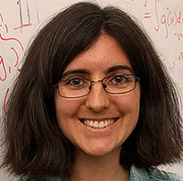
Tamara Broderick is an Associate Professor in the Department of Electrical Engineering and Computer Science at MIT, specializing in machine learning and statistics. Her research focuses on developing methods for uncertainty quantification in data analysis, Bayesian nonparametrics, and scalable inference algorithms. She leads a research group advising PhD students and postdocs in statistical machine learning. Her work spans Bayesian modeling, variational inference, spatial statistics, and applications in epidemiology and environmental science. Recent projects involve uncertainty-aware forecasting, robustness analysis of statistical methods, and efficient algorithms for high-dimensional inference. Broderick teaches Bayesian Modeling and Inference and contributes to MIT's statistics and data science initiatives.
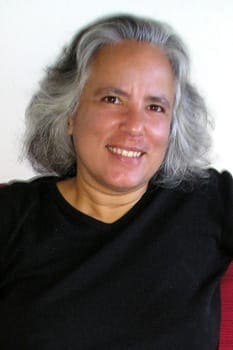
Professor Ben Goldys is a distinguished academic at The University of Sydney's School of Mathematics and Statistics, where he conducts research at the intersection of pure mathematics and applied sciences. His work spans multiple disciplines including stochastic analysis, partial differential equations, and financial mathematics, with significant contributions to both theoretical frameworks and practical applications in science and finance. Goldys' research interests center on stochastic (ordinary and partial) differential equations and their applications. His specific focus areas include stochastic partial differential equations, stochastic geometric PDEs, stochastic boundary value problems, stochastic fluid dynamics, ergodic theory of infinite-dimensional diffusions, and applications in financial mathematics such as interest rate derivatives, credit risk, and stochastic volatility. His work bridges pure mathematical theory (Functional Analysis, PDEs, Ergodic Theory) with complex real-world problems across multiple domains. His research aligns with the University of Sydney Faculty of Science Research Strengths including Understanding the Universe, Fundamental Laws of Nature, Complex Systems, and Next Generation Materials. Professor Goldys has secured multiple significant research grants from the Australian Research Council, including recent projects such as 'Mathematics for future magnetic devices' (2024), 'Mathematics for breaking limits of speed and density in magnetic memories' (2019), and 'Novel Approaches for Problems with Uncertainties' (2015). His current research projects focus on geometric stochastic partial differential equations and applications in micromagnetism, mean field games in finance, stochastic boundary value problems, and stochastic Navier-Stokes equations on the rotating sphere. He maintains extensive international collaborations with institutions in Germany (University of Tuebingen), Italy (LUISS University), Poland (Institute of Mathematics Polish Academy of Sciences), and the United Kingdom (University of York), working on projects involving optimal control, stochastic systems with memory, and geometric stochastic PDEs. Goldys is an active member of the Applied Mathematics Research Group and The University of Sydney Nano Institute, contributing to interdisciplinary research initiatives that connect mathematical theory with cutting-edge technological applications.
Karl Michael Göschka is an Associate Professor at Vienna University of Technology (TU Wien) in the Department of Distributed Systems (E194-02) within the Faculty of Computer Science. His academic title of Privatdozent indicates he has completed habilitation, the highest academic qualification in the German/Austrian system. He maintains an active research and teaching profile with courses scheduled through 2026S, including Bachelor Thesis supervision, Computer Science Projects, and PhD Seminars. His research spans over two decades with consistent publications from 2004 to 2022. Göschka's primary research interests focus on Dependable Distributed Systems, Web Engineering, and the convergence of voice and data technologies. His work demonstrates particular expertise in middleware, service-oriented architecture, wireless sensor networks, and fault tolerance mechanisms. He has supervised numerous master's and diploma theses since 2006, with his most recent doctoral supervision completed in 2022. Göschka's publication record shows a clear evolution from foundational work in distributed systems and replication (2004-2013) to more recent contributions in wireless sensor networks and dependable computing (2020-2022). His research consistently addresses the challenge of balancing dependability, performance, and security in distributed environments, with notable contributions in temporal decoupling techniques and adaptive systems. GIT-Preis des Österreichischen Vereins für Elektrotechnik (1999) Würdigungspreis des Ministeriums für Wissenschaft und Forschung (1998) GIT-Förderpreis des Österreichischen Vereins für Elektrotechnik (1994) Göschka has led and participated in multiple significant research projects including TRADE (2008-2011) on adaptive performance optimization, COMPASS (2005-2007) for automotive software systems, S-Cube (2008-2012), ALL-TIMES (2007-2010), and DeDiSys (2004-2007) on dependable distributed systems. His research has strong practical applications in automotive systems, online auctions, and critical infrastructure monitoring.
Beverly J. Silver is a Professor in the Department of Sociology at Johns Hopkins University and Director of the Arrighi Center for Global Studies. She holds a PhD in Sociology from SUNY Binghamton. Her research focuses on historical capitalism, global inequality, labor movements, and social conflict, employing comparative and world-historical methodologies. She examines how these phenomena interact across time and space, particularly in the context of globalization and geopolitical shifts. Key research interests include the dynamics of labor unrest, the evolution of social protest, and the role of hegemonic power structures in shaping global economic and political systems. Her work emphasizes long-term historical frameworks to identify recurring patterns and novel developments in contemporary globalization processes. Her publications analyze global social protest trends, the limits of US hegemony, and the interplay between economic crises and social conflict. She has contributed significantly to understanding labor movements' trajectories, especially in the automobile industry and emerging economies like China. Recent work explores the acceleration of social history and the implications of crises in global capitalism. Award-winning scholar (no explicit awards listed), her research spans over three decades, with a focus on the sociology of global systems. She advises no listed students and her grants/awards remain unspecified. She leads the Arrighi Center, fostering interdisciplinary global studies research.
Azita Emami serves as the Andrew and Peggy Cherng Professor of Electrical Engineering and Medical Engineering at the California Institute of Technology (Caltech), where she concurrently holds leadership roles as Executive Officer for Electrical Engineering and Director of the Center for Sensing to Intelligence. Appointed to Caltech's faculty in 2007, she progressed from Assistant Professor to her current endowed professorship through demonstrated scholarly excellence. Her academic foundation includes: B.S. in Electrical Engineering from Sharif University of Technology (1996) M.S. in Electrical Engineering from Stanford University (1999) Ph.D. in Electrical Engineering from Stanford University (2004) Professor Emami pioneers mixed-mode integrated circuit systems that bridge theoretical innovation with practical applications. Her research emphasizes ultra-low power consumption and high reliability in scalable semiconductor technologies, targeting transformative solutions across multiple domains. Key thrusts include: Biomedical implantables for neural recording/stimulation and gastrointestinal monitoring Photonics-electronics co-design for energy-efficient optical interconnects Machine learning-enhanced signal processing for brain-computer interfaces Miniaturized magnetic sensors with unprecedented noise performance Her work consistently demonstrates how circuit-level innovations enable breakthrough capabilities in medical diagnostics and high-speed computing. Analysis of her 2021-2024 publications reveals a strategic convergence of biomedical sensing and intelligent signal processing . While maintaining strong contributions to optical interconnects (accounting for ~40% of recent output), her lab increasingly focuses on closed-loop medical systems where low-power analog neural networks interpret physiological signals. This evolution reflects growing NIH and industry interest in implantable/wearable health technologies, with her group leading in CMOS-based sensor miniaturization and energy efficiency. Her professional recognition includes: IEEE Solid-State Circuits Society Distinguished Lecturer appointment Mentorship excellence is evidenced by students receiving prestigious awards including the Jakob van Zyl Predoctoral Research Award (Saransh Sharma, Ryoto Sekine) and Charles Wilts Prize (Kuan-Chang Chen). Her research program leverages strategic partnerships with Heritage Medical Research Institute and industry collaborators, supported through center-based funding like the Center for Sensing to Intelligence. Administrative leadership spans departmental governance (as Executive Officer) and conference organization (ISSCC technical committees). She directs Caltech's Mixed-mode Integrated Circuits and Systems Lab (MICS) , which operates as a nexus for cross-disciplinary innovation between electrical engineering and medical applications. The lab's industry-collaborative framework accelerates translation of circuit concepts into real-world biomedical solutions through the Center for Sensing to Intelligence.
Benjamin J. Keys is a Research Associate at the University of Pennsylvania's Wharton School within the Public Economics program. His work focuses on public economics, environmental economics, and financial risk management with particular emphasis on housing markets and climate change impacts. University of Pennsylvania - The Wharton School Public Economics Department His research explores: Climate risk capitalization in housing markets Mortgage insurance moral hazard Consumer credit card payment behaviors Emergency credit systems Regional economic redistribution through mortgages Email: benkeys@wharton.upenn.edu Scientific awards include: Fellowships on Consumer Financial Management
Edouard Oyallon is a CNRS Researcher at Sorbonne University's MLIA team within the Institute of Intelligent Systems and Robotics (ISIR). His research focuses on machine learning foundations, particularly the symmetries of deep neural networks, and large-scale distributed/decentralized training algorithms. He has contributed to frameworks like Kymatio for wavelet scattering transforms and collaborates on projects such as SHARP (Frugal Learning) and ADONIS (ANR-funded). He advises multiple PhD and postdoctoral researchers and teaches advanced deep learning courses at Institut Polytechnique de Paris (IPP). Grants include the ADONIS project (ANR/Sorbonne) and participation in VHS and CoCa4AI initiatives. His work spans theoretical and applied aspects, with recent emphasis on optimizing LLM training at exascale. He maintains active roles in academic service, including organizing workshops on federated learning and graph machine learning.
Thomas Bäck is a Professor at the Leiden Institute of Advanced Computer Science (LIACS) , Leiden University , Netherlands, and a member of the interdisciplinary programme Society, Artificial Intelligence and Life Sciences (SAILS) . His academic career spans roles at Leiden University (1996–present) and leadership positions at the Center for Applied Systems Analysis in Dortmund (1994–2000). Education : Diplom-Informatiker (Computer Science), Technische Universität Dortmund (1990) Dr. rer. nat. (Computer Science), Technische Universität Dortmund (1994) Research Interests : Dr. Bäck specializes in evolutionary computation , machine learning , and their applications in sustainable smart industry and healthcare . Recent work focuses on integrating large language models (LLMs) and quantum computing into optimization frameworks, with projects like CIMPLO (predictive maintenance), ECOLE (experience-based optimization), and SAPPAO (airline operations optimization). Scientific Contributions : His 526+ publications cover evolutionary algorithms, quantum optimization, and LLM-driven design, with recent trends including: Quantum computing (e.g., quantum approximate optimization, quantum advantage challenges) LLM integration (e.g., hyperparameter tuning, mutation control, code evolution graphs) Healthcare and industry (e.g., predictive maintenance, anomaly detection, melt quality prediction) Algorithm benchmarking (e.g., IOHprofiler, MA-BBOB, explainable benchmarking) Scientific Awards : IEEE Fellow (2022) Royal Netherlands Academy of Arts and Sciences (KNAW) member (2021) Academia Europaea member (2022) IEEE Computational Intelligence Society Evolutionary Computation Pioneer Award (2015) Fellow, International Society of Genetic and Evolutionary Computation (2003) Best Ph.D. thesis award, German Society of Computer Science (GI) (1995) Advising and Grants : He supervises Ph.D. candidates in evolutionary computation and machine learning and has secured 7 major grants from organizations like the Dutch Research Council , European Commission , and The Research Council of Norway . His editorial roles include Editor-in-Chief of the Evolutionary Computation Journal and associate editorships in leading AI journals.
Weijia Rao is an Associate Professor of Law at Boston University School of Law, located at 765 Commonwealth Avenue in Boston, Massachusetts. With a robust scholarly profile evidenced by 12 published papers with over 2,150 total downloads and 5 total citations, Professor Rao maintains an active research agenda in international legal studies. Professor Rao's research focuses primarily on international investment law, with particular expertise in investor-state dispute settlement mechanisms, bilateral investment treaties, and international arbitration. Their work examines the intersection of domestic politics and international investment law, the effects of foreign investors' challenges to domestic regulations, and the role of national security considerations in international legal frameworks. A significant portion of their research analyzes China's engagement with international investment law and WTO frameworks, as well as the dynamics of arbitrator behavior in ICSID proceedings. The scholarly output demonstrates a clear trend toward examining the practical implications of international investment law on domestic regulatory sovereignty, with recent work increasingly focusing on national security dimensions of international law. Professor Rao's research employs empirical methodologies to analyze how international legal frameworks interact with domestic political processes and economic outcomes, contributing valuable evidence-based insights to ongoing debates about reforming international investment law systems. Professor Rao has established productive research collaborations with scholars from institutions including University of Chicago Law School, University of Miami, and Brigham Young University. Their publications appear in prestigious venues such as the Harvard International Law Journal, Yale Journal of International Law, and Journal of Legal Studies, reflecting the high quality and impact of their scholarship.
Yi Lai is an Assistant Professor in the Department of Mathematics at the University of California, Irvine (UCI). He earned his Ph.D. from UC Berkeley in 2021 under Richard Bamler and served as a Szego Assistant Professor at Stanford University (2021–2024), mentored by Otis Chodosh. His research centers on geometric analysis, with a focus on Ricci flows, steady gradient solitons, and the geometry of 3-manifolds. Dr. Lai's work explores the construction and classification of geometric structures like flying wing solitons, convergence properties of Ricci flow, and curvature behavior in low-dimensional manifolds. His publications frequently address long-time existence of geometric flows and symmetry in solitons, blending PDE theory with differential geometry. At UCI, he teaches courses such as Linear Algebra (Math 121A). No awards, grants, or supervised students are mentioned in available sources.
Joshua B. Gross is an Associate Professor in the Department of Biological Sciences at the University of Cincinnati, where he has been conducting research since 2010. His work focuses on evolutionary biology, particularly using the Mexican cavefish ( Astyanax mexicanus ) as a model system to study adaptation to extreme environments. Dr. Gross received his academic training at prestigious institutions: Ph.D. in Organismic and Evolutionary Biology from Harvard University (2005) M.S. with Distinction in Biological Sciences from University of Denver (2001) B.A. in Psychology from Miami University (1995) Dr. Gross's research explores the genetic and developmental basis of evolutionary changes, with a focus on how organisms adapt to extreme environments. His primary model system is the Mexican cavefish ( Astyanax mexicanus ), which exists in both surface-dwelling (with eyes and pigmentation) and cave-dwelling (blind and depigmented) forms. His work integrates quantitative genetics, transcriptomics, and phenotypic analysis to understand the genetic changes underlying cave adaptation, including both regressive traits (like eye loss) and constructive traits (like enhanced taste systems). Analysis of Dr. Gross's recent publications reveals a strong focus on sensory adaptation and craniofacial evolution in cavefish. His work has increasingly incorporated genomic and transcriptomic approaches to understand how cavefish adapt to low-oxygen environments, changes in sensory systems (particularly taste and lateral line), and craniofacial modifications. There's a clear trajectory toward understanding the integration between different biological systems, such as how sensory neuromasts influence skeletal development. Dr. Gross has received several notable awards and recognitions: National Academies Education Fellow in the Life Sciences (2014-2015) Young Investigator Winner, Sigma Xi, University of Cincinnati Chapter (2016) Honorable Mention, Excellence in Doctoral Mentoring Award Nominated for 2018 Dean's Award for Innovative Instruction Young Anatomist's Publication Award from the American Association of Anatomists (2004) As a principal investigator, Dr. Gross has secured substantial funding from the National Science Foundation and National Institutes of Health, including multiple R01 grants from NIH and major awards from NSF. His current projects include "The developmental basis for sensory-skeletal integration: The osteo-inductive role of neuromasts" (NSF IOS-2205928, 2022-2026) and "The constructive evolution of gustation: Molecular, organismal and environmental attributes of taste tuning" (NSF DEB-2343857, 2024-2028). He has mentored numerous undergraduate and graduate students through research projects and has been recognized for his teaching excellence, particularly in Human Genetics. Dr. Gross leads a research laboratory focused on evolutionary and developmental biology at the University of Cincinnati. His team employs a multidisciplinary approach combining field work in Mexican caves, laboratory experiments, genomic analysis, and developmental studies. He has organized international scientific meetings, including the Astyanax International Meeting, fostering collaboration among researchers studying cave-adapted organisms worldwide.
Prof. Massimo Fornasier holds the Chair of Applied Numerical Analysis at the Technical University of Munich (TUM), within the School of Computation, Information and Technology and the Department of Mathematics. His research focuses on mathematical modeling, numerical analysis, and data-driven methods, particularly in areas like compression, sparse recovery, and optimization. He has made significant contributions to consensus-based optimization, control of multiagent systems, and applications in image/signal processing. Education: PhD in Computational Mathematics, University of Padua (2003) Postdoctoral fellowships at University of Vienna, Sapienza University of Rome, and Princeton University Awards: ERC Starting Grant (2012) START Prize (2011) Prix de Boelpaepe (2009) His work bridges theoretical analysis and computational methods, with applications ranging from compressive sensing to machine learning. Recent research emphasizes consensus-based optimization frameworks and their global convergence properties. Editorial roles include journals like Networks and Heterogeneous Media and Calcolo . He leads research groups in areas such as Data Science and Numerical Analysis at TUM.
Olivia Khoo is Professor of Film and Screen Studies and Head of Film, Screen and Culture in the Faculty of Arts at Monash University. She is a leading scholar in Asian Australian and Asian cinema studies, with extensive contributions to media diversity, gender and sexuality in media, and streaming technologies. She is actively involved in national research leadership, including roles in the Australian Research Council College of Experts and the Screen Diversity and Inclusion Network. PhD in Cultural Studies – University of Melbourne LL.B. (Hons) – University of New South Wales B.A. (Hons) in English Literature – University of Western Australia Graduate Certificate in Higher Education – Monash University Her research centers on screen media diversity, streaming platforms, and transnational Asian and Asian Australian cinema. She explores how gender, sexuality, and race intersect in media representation, with a strong focus on diasporic identities and cultural citizenship. Her work bridges cultural studies, legal frameworks, and media industry practices to advocate for inclusive screen ecosystems. The recent publications reflect a sustained engagement with streaming technologies, racial representation, leadership in Asian Australian communities, and policy development for media diversity. Her work spans academic monographs, journal articles, and influential policy reports, demonstrating both theoretical depth and real-world impact in shaping equitable media landscapes. Special Commendation for the Dean’s Award for Postgraduate Research Supervision (2022) Three-time nominee, Monash Graduate Association Supervisor of the Year Award Founding Series Editor, Gender, Sexualities and Cultures in Asia (Springer) Founding Associate Editor, Studies in World Cinema: A Critical Journal (Brill) Olivia has supervised 18 PhD and MA students to completion and has led major research projects, including two ARC Discovery Projects. She is currently leading interdisciplinary collaborations across Law, Business, and Arts at Monash, particularly on the Incentivising Australian Screen Diversity report. She also co-founded the Asian Australian Studies Research Network and has held fellowships at the Asia Research Institute (NUS) and the University of California Humanities Research Institute. She leads the Film, Screen and Culture program at Monash and is central to initiatives like the Streaming Industries & Genres Network. Her collaborative projects involve national and international institutions, focusing on media flows between Australia and East Asia, and the transformation of cultural identity through digital platforms.
Prof. Dr. M. Bjørn von Rimscha is a full-time Professor of Media Economics at the Department of Social Sciences, Media and Sport, Johannes Gutenberg University Mainz. He serves as Prodekan for Studium und Lehre since 2023 and previously held leadership roles including Geschäftsführender Leiter of the Institute for Journalism. His research focuses on media economics, digital transformation, advertising markets, and cross-border media management. Positions: Professor (2015–present), Prodekan (2023–present) Education: Freie Universität Berlin, University of Ulster Key Collaborations: Co-edited De Gruyter Handbook of Media Economics (2024), Handbuch Medienökonomie (2021) His recent work examines digital disruption in media industries, payment models for journalism, and the economic value of creativity. He advises PhD students like Robin Riemann and holds editorial roles at the Journal of Media Business Studies . Contact: b.vonrimscha@uni-mainz.de
Eduardo Rocha is a Professor and Head of the Microbial Evolutionary Genomics laboratory at the Institut Pasteur, within the Department of Genomes and Genetics. His research integrates bioinformatics, molecular evolution, and genomics to understand bacterial genome organization and dynamics, particularly focusing on mobile genetic elements and their role in adaptation and antibiotic resistance. His research interests include microbial evolutionary genomics, genome organization, horizontal gene transfer, mobile genetic elements (plasmids, phages, integrons), bacterial pathogen evolution, and computational biology. His work lies at the intersection of molecular evolution, population genetics, and molecular epidemiology, with strong translational implications for understanding antimicrobial resistance and infectious disease emergence. The recent publications highlight a consistent focus on mobile genetic elements, genome plasticity, and bacterial adaptation. Key themes include the role of integrons and CRISPR-Cas systems in bacterial immunity, plasmid-mediated spread of antibiotic resistance, phage-plasmid interactions, and the development of bioinformatics tools for microbial genomics. These works frequently appear in high-impact journals such as Science , Nature Microbiology , and PLoS Biology , reflecting significant contributions to the field. Eduardo Rocha leads multiple funded research projects, including ERC-2011-StG EVOMOBILOME, ANR Magisbac, and ANR SHAPE. He has developed and maintains several widely used bioinformatics software tools: IntegronFinder, MacSyFinder, PanACoTA, SatelliteFinder, CapsuleFinder, TXSScan, and others. He mentors a large team of PhD students, postdoctoral researchers, and engineers, and has supervised numerous former students who now hold independent research positions worldwide. Eduardo Rocha has received research funding from major agencies including the European Research Council (ERC) and the French National Research Agency (ANR). His work is central to the LabEx IBEID and the INCEPTION convergence program, where he serves on the steering committee, promoting interdisciplinary research in infectious disease emergence. His laboratory, part of the Genomes and Genetics department, actively contributes to microbial evolutionary genomics through both methodological development and biological discovery. The team participates in networks such as Phages.fr, GDR BIM, and GDR AIEM, reinforcing its collaborative and integrative approach.