Eric Le Bourhis is a Lecturer at INALCO (Institut National des Langues et Civilisations Orientales) in the Europe department, where he also serves as Head of the Latvian course and Racism/Anti-Semitism advisor. His research focuses on urban history across Soviet Union, Latvia, and France, with particular emphasis on housing practices, Holocaust studies, and Baltic region history. Current affiliations: INALCO, Europe-Eurasia Research Center (CREE) Teaching areas: Baltic region history, Latvian grammar/culture, Holocaust history Research Interests include social history embedded in spatial analysis, with micro-historical approaches to housing spoliation in Paris (1940-1946), Soviet urban planning in Riga (1945-1990), and Holocaust-related urban dynamics. His work connects housing policies with broader societal transformations. Recent publications (2021-2025) analyze: Jewish housing spoliation in Paris; Soviet architectural practices in Latvia; Holocaust urban geography; and Cold War nuclear threat planning. These works implement archival research across multiple languages and comparative analysis frameworks. Scientific distinctions include: Académie d’Architecture first prize (2017) Société française d'histoire urbaine special thesis prize (2016) Administrative roles cover Latvian course leadership and Holocaust-related advisory functions. He co-organizes research seminars at EHESS on Baltic spaces and Soviet historiography, while maintaining cross-disciplinary collaborations through CREE research center.
Maike Sach is a researcher at the Department of Eastern European History, Johannes Gutenberg University Mainz, specializing in Russian, Polish, and Baltic history. She currently leads DFG-funded projects including 'History Writing in the Mode of Invective' on Prince Andrei Kurbsky's historical work (since 2022) and previously directed research on Russian diplomacy in Poland-Lithuania (2021). Her academic career spans positions at the German Historical Institute Warsaw (2003-2009), University of Kiel (2010-2011), and Johannes Gutenberg University Mainz (2011-2012). Education: Doctorate in Eastern European History (2001, University of Kiel) on German-Russian relations Studies in Eastern European History, Medieval/Modern History, and Slavic Studies (University of Kiel) Research Focus: Dr. Sach's work centers on cultural and diplomatic history of Eastern Europe, particularly Muscovite state formation , Teutonic Order history , and cartographic representation . Her scholarship examines cross-cultural encounters, diplomatic protocols, and historical narratives through lenses of gender, exile, and identity formation. She pioneered research on Robert Vipper's contributions to Baltic historiography and Muscovy's interactions with Western courts. Publication Trends: Recent works (2020-2025) reveal intensified focus on early modern diplomatic practices, textual transmission, and historiographical methodology. Her articles analyze sovereignty crises in Polish-Lithuanian contexts, Orthodox-Catholic negotiations, and the role of exile historians in shaping national narratives, demonstrating consistent engagement with primary source interpretation and transnational history frameworks. Scientific Recognition: Monograph 'Hochmeister und Großfürst' (2002) received 12 major academic reviews Co-edited volumes on Baltic German historiography (2006) and Robert Vipper (2024) Active member of Association of Historians in Germany (VHD) and Association of Eastern European Historians (VOH) Research Leadership: Secured continuous DFG funding including the 'Socinian Correspondence' project (2018-2020) and 'Baltic History as Battleground' (2014-2016). Currently directs Kurbsky project while collaborating with Academy of Sciences and Literature Mainz and Johannes a Lasco Library. Her work bridges archival research with theoretical historiography across German, Russian, and Baltic scholarly traditions. Academic Networks: Core member of Mainz's Eastern European History department, contributing to 'Gentes trans Albiam' research network and Southeast Europe Society. Regularly participates in international conferences on medieval Baltic history and early modern diplomacy.
Dr. Marc-André Roy is a Full Professor in the Department of Psychiatry and Neurosciences at the Faculty of Medicine, Université Laval. He serves as Director of the RAPPSoDIS Lab and CAP-Rétablissement Research Teams at the Centre de Recherche CERVO, and as Psychiatrist and Medical Director at the Clinique Notre-Dame des Victoires (Institut universitaire de Santé mentale de Québec). His work focuses on early psychosis intervention within a recovery-oriented framework, with particular expertise in schizophrenia treatment approaches and comorbid conditions. Dr. Roy completed his medical and psychiatric training at Laval University in 1991, followed by a three-year fellowship in epidemiology and genetics research on psychotic disorders at the University of Iowa with Drs. Nancy Andreasen and Raymond Crowe, and further training in genetic epidemiology at the Medical College of Virginia with Dr. Kenneth Kendler. Dr. Roy's research centers on innovative approaches to treating psychosis and schizophrenia, with emphasis on early intervention. He has been a pioneer in Quebec and Canada in early psychosis research since 1997. His work examines pharmacological treatments including long-acting injectable antipsychotics and clozapine in real-world settings, as well as non-pharmacological approaches like cognitive remediation. More recently, his research has expanded to address comorbid conditions such as gaming disorder, problem gambling, and cannabis use among individuals with psychosis. Analysis of Dr. Roy's recent publications reveals a strong focus on real-world treatment effectiveness, patient-centered decision making, and understanding comorbid conditions in early psychosis. His work increasingly incorporates digital health interventions and rapid-learning healthcare systems to improve early psychosis services. Key trends include examining the impact of specific medications (particularly aripiprazole), developing harm reduction strategies for substance use, and implementing recovery-oriented practices in clinical settings. Dr. Roy has received numerous prestigious awards for his contributions to psychiatry: Robert W Kerwin prize (2024) for the best article in psychopharmacology published in 2022 Heinz E. Lehmann Excellence in Psychiatry prize (2020) Prix Hippocrate (2015) acknowledging physicians and pharmacists' collaboration First award for the book "Je suis une personne, pas une maladie" (2014) First award for the project "Anxiety disorders and psychosis" (2011) Dr. Roy has supervised over 20 graduate students and psychiatric residents across various disciplines. His research has been supported by multiple funding agencies, including the Canadian Institutes of Health Research. He leads the FRQ-SC CAP-Recovery Research Group, which focuses on understanding, acting, and sharing to support the recovery of people living with psychotic disorders. Through the RAPPSoDIS Lab, he conducts innovative research on optimizing treatment approaches for psychosis in real-world settings. Dr. Roy directs the Clinique Notre-Dame des Victoires, an early intervention program for young adults with psychotic disorders that emphasizes recovery-based interventions and family collaboration. The program involves a multidisciplinary team including psychiatrists, nurses, pharmacists, psychologists, social workers, and other healthcare professionals working together to provide comprehensive care.
Márkus Keller is an Associate Professor at ELTE TáTK Institute of Sociology, leading the Department of Comparative Historical Sociology. He also heads the MTA-SZTE-ELTE Research Group on the History of Globalization and co-leads the Research Group on the History of Professionalization. His work bridges historical sociology and comparative analysis across Central Europe. Eötvös Loránd University (ELTE) MTA-SZTE-ELTE Globalization Research Group His research focuses on: 19th-20th century social history Professionalization processes State-led housing policy Comparative historiography Globalization in socialist contexts Article trends reveal a focus on: State-society interactions in housing Professional autonomy under authoritarian regimes Transnational Cold War collaborations Comparative educational reforms Discursive construction of crises Material culture of socialist modernity Scientific honors: Humboldt Fellowship (2014-2016) Professional engagements include: Founding research groups on globalization and professionalization Board member of Hajnal István Circle – Social History Association Active participation in international academic networks
Dr. Vijayakumar Gali is a Senior Lecturer at the University of Hertfordshire's School of Physics, Engineering & Computer Science. With a PhD in Power Electronics from Malaviya National Institute of Technology Jaipur (2019) and prior academic roles at Nazarbayev University and Indian institutions, he specializes in smart grid technologies and renewable energy systems. PhD in Power Electronics (2019) - Malaviya National Institute of Technology Jaipur Postdoctoral Fellow at Nazarbayev University (2021-2024) Assistant Professor at Poornima University (2019-2021) His research focuses on power electronics applications in renewable energy, with particular emphasis on: Digital twin modeling for power distribution Smart grid resilience enhancement Hybrid PV-Wind-BESS systems Dynamic energy management Power quality optimization Dr. Gali's recent publications demonstrate expertise in microgrid stability, power conversion, and grid ancillary services. His work shows strong specialization in power electronics for sustainable energy systems.
Dr Maha Pervaz Iqbal is a Lecturer in Medical Education at the University of New South Wales' School of Population Health. With qualifications including a PhD in Medical Education (UNSW), Masters in Medical Education (University of Dundee), and MBBS (Army Medical College, Pakistan), she specializes in collaborative learning, educational design research, and healthcare quality improvement. PhD in Medical Education, University of New South Wales, Australia Masters in Medical Education, University of Dundee, Scotland, UK MBBS, Army Medical College, National University of Science and Technology, Pakistan Her research focuses on student learning processes, educational innovation, and clinician experiences in healthcare delivery. Recent work explores patient-reported experiences across diverse communities, primary care models for refugee populations, and clinician recovery after medical errors. Articles highlight her contributions to collaborative learning frameworks, infection prevention training for medical students, and healthcare quality metrics. 2017 UNSW Faculty of Medicine Award for Innovation in Learning and Teaching 2014 Australian Postgraduate Award (APA) for PhD Scholarship 2010 Dean's Letter of Appreciation, King Saud University 2005 & 2003 Merit Scholarships, Army Medical College Pakistan Dr Iqbal supervises research projects in medical education and mixed-method studies. She co-convenes undergraduate and postgraduate courses in health leadership and evidence-based decision-making, reflecting her commitment to advancing educational frameworks in clinical settings.
Dr. Simon Etkind serves as an Assistant Professor in Palliative Care at the University of Cambridge's School of Clinical Medicine and holds a clinical position as Consultant in Palliative Medicine at Cambridge University Hospitals NHS Foundation Trust. He co-leads the PELiCam Palliative and End of Life Care Research Group within the Department of Public Health and Primary Care, focusing on improving care for individuals with complex multimorbidities and frailty through integrated clinical-academic practice. His educational foundation includes an MB BChir and PhD from King's College London (KCL), establishing dual expertise in clinical medicine and research methodology. This training underpins his current work bridging patient care, medical education, and population health research. Etkind's research program centers on navigating uncertainty in advanced illness trajectories, particularly among older adults with frailty and multimorbidity. He investigates how prognostic uncertainties impact patient care experiences and outcomes, developing strategies to enhance communication and decision-making in ambiguous clinical scenarios. His work spans palliative care integration, symptom management, and ethical considerations in end-of-life care, with emphasis on vulnerable populations often excluded from traditional service models. Analysis of his recent publications reveals consistent focus on uncertainty management across diverse contexts—from community nursing roles to assisted dying debates—with methodological rigor combining qualitative, quantitative, and mixed-methods approaches. Key trends include reframing palliative care needs assessment beyond prognosis, addressing specialty-specific research barriers, and developing practical tools for uncertainty navigation in clinical practice. Scientific recognition includes: Marlow Prize (2023) for pioneering research on virtual reality applications reducing pain and anxiety in acute hospital palliative care settings As an educator, Etkind contributes to medical student teaching at Cambridge and mentors through the UK Palliative Trainees Research Collaborative (UK-PRC), which he co-founded to build national research capacity. His leadership has facilitated over 100 study sites across the UK, fostering a sustainable infrastructure for palliative care innovation. Current projects address prognostic communication, global palliative care needs, and equitable service access. The PELiCam research group functions as an interdisciplinary hub driving evidence-based improvements in palliative care delivery, with active projects spanning community care models, symptom management protocols, and policy-relevant analyses of population needs.
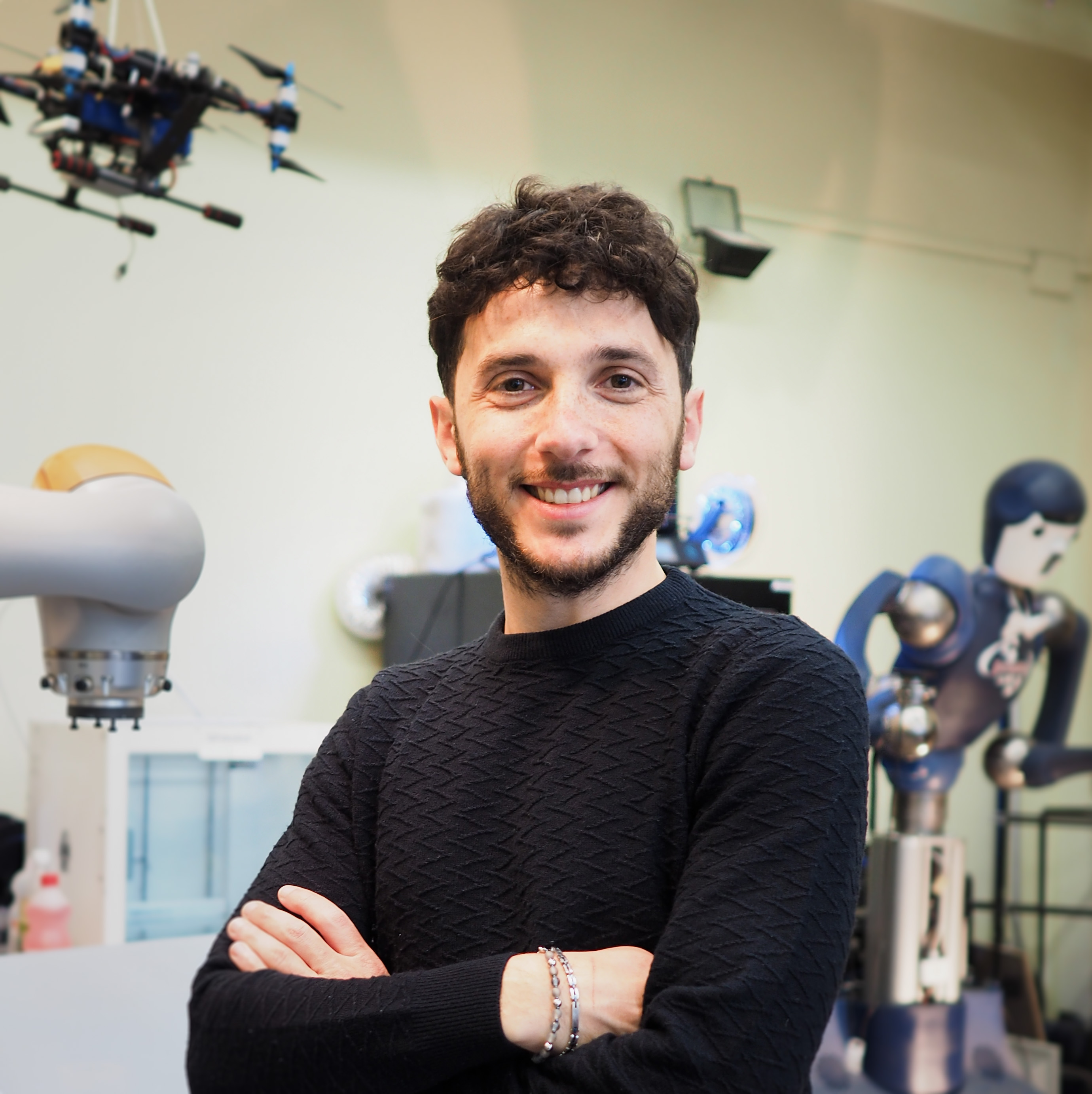
Mario Selvaggio is an Assistant Professor at the Department of Electrical Engineering and Information Technology, University of Naples Federico II. He actively contributes to robotics research through his involvement with PRISMA Lab and ICAROS , while co-founding spinoff companies BeyondShape and Herobots . His academic background includes a Ph.D. in Information Technology and Electrical Engineering (2020) under Prof. Bruno Siciliano, with previous degrees in Mechanical Engineering (2013, 2015). Ph.D. in Information Technology and Electrical Engineering (2020) Bachelor's and Master's in Mechanical Engineering (2013, 2015) His research interests focus on shared control/autonomy, robot teleoperation, passivity-based control, soft robotics, and robotic surgery. He has developed innovative solutions including: Shared-control teleoperation for soft growing robots Non-prehensile object transportation frameworks Advanced modeling of cable-suspended dual-arm systems Medical robotics with force-sensor equipped tools Virtual reality-based teleoperation architectures Recent publications (2021-2025) span topics from semi-autonomous aerial manipulation to cyber-physical measurement systems, with emphasis on human-robot interaction and industrial applications. He serves as Associate Editor for several IEEE conferences and journals. Scientific Awards IEEE RAS Technical Committee on Haptics grant ($2500, 2018) Second prize at Bioengineering Congress (2018) Finalist for 'Fabrizio Flacco' Best Paper Award (2020) Prof. Selvaggio teaches the Master's Course in Automation Engineering and Robotics (2024/2025) using Robot Operating System (ROS) curriculum. He actively collaborates with international research groups at IRISA/INRIA Rennes , Rainbow team , and University of California Santa Barbara (mechanical engineering department). His research combines theoretical advancements with practical implementations, demonstrated through extensive validation in simulated environments and real robotic platforms including KUKA LWR IIWA manipulators, dVRK systems, and humanoid platforms.
Dr. Valentina Battista is a Lecturer in Human Resource Management at Cranfield School of Management, Cranfield University, where she conducts research at the intersection of human resource management, performance measurement systems, and workplace technology. Her work bridges theoretical frameworks with practical applications across various organizational contexts. Education: PhD in Accounting, Management and Finance from the University of Pescara (Italy) Dr. Battista's research program centers on how organizations measure and manage performance in evolving work environments. She has developed expertise in cross-cultural management studies, particularly comparing Italian and Finnish managerial approaches, and has made significant contributions to understanding how digital technologies transform workplace dynamics and HR functions. Her scholarly work explores comprehensive performance measurement systems, with particular attention to the Balanced Scorecard framework and its implementation challenges. She has also investigated generational differences in workplace expectations, focusing on Generation Z in the UK context, and examined the relationship between organizational controls and institutional performance, especially in higher education settings. Her publication record reveals a clear evolution toward examining technology's impact on work, with increasing focus on quantified self technologies, employee monitoring, and digital transformation of HR functions. The interdisciplinary nature of her work spans human resources, organizational psychology, management control, and cross-cultural studies, often employing mixed-method approaches to address complex organizational challenges. Current Research Focus: Measuring employee performance using new technologies Impact of emerging technologies on HR functions Cross-cultural differences in managerial decision-making Comprehensive performance measurement systems design
PD Dr. Jörg-W. Link is a Lecturer at the Department of Education, University of Potsdam, specializing in educational history, school reform, and reform pedagogy . He habilitated at the Faculty of Humanities and Social Sciences, University of Augsburg (2022) with a thesis on Conditions for the Success of School Reform , focusing on educational history as a framework for understanding school development. His career spans roles as research assistant (since 2000), acting director of the Rochow Museum Reckahn (2001), and guest lecturer at the University of Kassel (2005). Education: Teacher training in history and German (Mainz, Bonn, Marburg 1985-1992); Doctorate (University of Potsdam, 1998) Research: Analyzes educational reform through historical lenses, particularly in the Weimar Republic and National Socialist contexts. Key publications include works on school camps, media pedagogy, and comparative educational systems. Recent articles explore radio as an educational medium (2022), Weimar school camps (2025), and transatlantic educational exchanges (2024), emphasizing interdisciplinary methodologies and long-term pedagogical impacts. Scientific Recognition: Awarded Potsdam University Society Prize (1998/99) and nominated for Heinz Maier-Leibnitz Prize (2000).
Professor Eyad Maher Dabbah, a leading expert in Competition Law and Policy , has served as Chair at Queen Mary University of London since 2001. He previously lectured at King's College London and is a Barrister (Middle Temple) with experience as Ordinary Member of the UK Competition Appeal Tribunal (2006-2018). His work spans antitrust law , international merger control , and anti-cartel enforcement , with a focus on developing economies and the Middle East . Author of seminal texts including International and Comparative Competition Law (Cambridge, 2010) and Competition Law and Policy in the Middle East (Cambridge, 2007) Co-editor of Merger Control Worldwide and Anti-Cartel Enforcement Worldwide Adviser to OECD , World Bank , and IDLO on competition law frameworks His research interests cover cross-border competition enforcement , trade dispute resolution , and the intersection of politics and economics in the Middle East . He founded the Institute for Competition and Consumers (formerly ICC) and led the LLM program at Queen Mary (2002-2005, 2014-2017). As Chairman of Israel's Anti-Dumping Tribunal (2012-2017), he addressed complex trade disputes. Recipient of the Harmsworth Major Scholarship Supervisor of PhD students in areas like consumer participation, Saudi arbitration law, and EU-China competition dynamics Active in public engagement , including House of Lords testimony on Brexit implications and keynote speeches on regional competition law and economic integration
Mason Marks is the Florida Bar Health Law Section Professor at Florida State University College of Law. He concurrently serves as Senior Fellow and Project Lead of the Project on Psychedelics Law and Regulation (POPLAR) at Harvard Law School's Petrie-Flom Center and is an Affiliated Fellow at Yale Law School's Information Society Project. Previously, he held fellowships at Harvard's Edmond J. Safra Center for Ethics and NYU's Information Law Institute. His research examines drug policy, FDA regulation, artificial intelligence in healthcare, psychedelics law, and constitutional rights. Core interests include controlled substance regulation, AI's impact on medical decision-making, therapeutic applications of psychedelics, and freedom of thought protections under the First Amendment. Publications demonstrate strong interdisciplinary focus across law, medicine, and technology. Recent work explores AI governance in healthcare, psychedelic therapy frameworks, constitutional drug decriminalization, and emergent medical data privacy. Articles frequently appear in top-tier law reviews (Harvard, Yale, Columbia) and medical journals (JAMA, NEJM, Nature). Advises federal and state regulators including the FDA, NIH, and HHS on controlled substance policy and psychedelic therapy frameworks. Leads POPLAR's initiatives to develop evidence-based regulations for emerging psychedelic therapies. Holds a J.D. from Vanderbilt Law School (2015), M.D. from Tufts University School of Medicine (2011), and B.A. from Amherst College (2000). Teaches Constitutional Law, Administrative Law, Drug Law, and seminars on technology and civil liberties.
Janet Walmsley is a Senior Lecturer in Speech and Language Therapy at the Department of Human Communication Sciences, School of Allied Health Professions, Nursing and Midwifery, University of Sheffield. She specializes in aphasia and works as a Specialist Aphasia Speech and Language Therapist, having established and developed the Aphasia Centre since 2013. She lectures on 'Language and Aphasia' and 'Integrated Interventions Studies' modules. Email: j.s.walmsley@sheffield.ac.uk Education: BA (Hons) in English and American Literature, University of East Anglia (1982) Speech and Language Therapy qualification with distinction, City University (London) (1991) PGdip, RSAdipTEFLA, CertMRCSLT, Reg HCPC Her research focuses on implementing evidence-based practices in speech and language therapy, particularly for individuals with aphasia. She emphasizes empowering patients to regain autonomy and control in their lives through tailored therapeutic interventions. Her work bridges clinical practice and research, with a strong commitment to patient and family experiences. Notable scientific award: Sternberg Award for Clinical Innovation (2015) from the Royal College of Speech and Language Therapists for contributions to the Aphasia Centre.
Professor Sarah Banks is a leading academic in the Department of Sociology at Durham University, UK, with a focus on professional ethics, community development, and community-based participatory research. She is a Fellow of both the Wolfson Research Institute for Health and Wellbeing and the Institute for Medical Humanities, and she co-founded the Centre for Social Justice and Community Action, promoting participatory action research for social justice. Key research areas: Professional Ethics, Community Development, Participatory Research Recent projects: Pandemic ethics, Household debt, Ethical guidelines for participatory research Her editorial roles include the Community Development Journal and Ethics and Social Welfare . She has contributed to global ethical guidelines and coordinates the Ethics Working Group of the International Collaboration for Participatory Health Research. Her recent publications address ethical challenges in participatory health research during pandemics, the role of virtue ethics in social work, and community development in the 21st century. She has also explored household debt dynamics and community organizing. Scientific Awards : Fellow of Wolfson Research Institute, Fellow of Institute for Medical Humanities Advising Roles : Co-convenor of UK Participatory Research Network, Past coordinator for European Social Work Research Association Professor Banks leads the Participatory Research Innovation and Learning Lab at Durham University, focusing on ethical research practices and community engagement.
Prof. Dr. Do Quang Hung is a Senior Lecturer at the Faculty of Political Science , University of Social Sciences and Humanities, Vietnam National University, Hanoi. With a PhD in History (Institute of Oriental Studies, Academy of Sciences of the USSR, 1986) and a Professor title appointed in 2001, he specializes in Religion and Politics , Religion and Law , and Modern Vietnamese History . Research Focus: Intersections of religion with political systems, legal frameworks, and historical evolution in Vietnam and beyond. Key Collaborations: France-Vietnam comparative studies, Soviet academic institutions. Scientific Contributions include over 15 recent publications analyzing religious policy, church-state relations, and historical narratives. His work spans books, journal articles, and edited volumes, reflecting interdisciplinary approaches to Vietnamese Catholicism, Protestantism, and broader religious dynamics. Scientific Awards include: Certificate of Creative Labor (2001, Vietnam General Confederation of Labor) Certificate of Creative Labor (2005, Vietnam Women's Union) Medal of Scientific Creativity (2006, Vietnam Academy of Social Sciences) Hanoi National University Science and Technology Award (2011-2015) His scientific works address themes like tolerance , colonial resistance , and revolutionary press , with a focus on Vietnam's socio-political and religious development.