Dr. Joanna Archutowska serves as an Assistant Professor in the Department of Logistics at the Warsaw School of Economics (SGH), Warsaw, Poland, where she contributes to academic instruction and research within the university's logistics framework. Her research focuses on core logistics disciplines, including supply chain optimization, transportation systems, inventory control, and operations research methodologies. These areas address critical challenges in global trade efficiency, resource allocation, and business process improvement across industrial and commercial sectors.
Monika Michalak-Majewska serves as Assistant Professor at the Department of Plant Food Technology and Gastronomy, University of Life Sciences in Lublin, where she also leads the Gastronomy Workshop. Holding a Doctor of Engineering (Dr. Eng.) and PhD qualification, her academic foundation combines engineering rigor with food science expertise. Her research focuses on the intersection of culinary arts and food technology, specializing in plant-derived food systems. Key interests include gastronomic innovation, food engineering processes for plant-based products, and technological optimization of culinary applications. This work bridges theoretical food science with practical gastronomic implementation. As head of the Gastronomy Workshop, she oversees a dedicated facility for hands-on research and training in culinary techniques and food product development. The workshop serves as an experimental hub for testing novel plant food technologies under controlled conditions.
Dr. Edward Kozłowski is a Professor at the Department of Quantitative Methods in Management within the Faculty of Management at Lublin University of Technology. He holds consultations every Wednesday from 10:00 to 12:00 in room 20 of the New Oxford Connecting Building and can be reached via email at e.kozlovski@pollub.pl or through his personal website. Dr. Kozłowski earned his academic credentials through a rigorous path: completing his Master's degree in 1996 from the Faculty of Mathematics and Physics at Maria Curie-Skłodowska University, his PhD in 2002 at the Systems Research Institute of the Polish Academy of Sciences in Warsaw with a thesis on 'Optimization of investment portfolio taking into account the cost of information,' and achieving habilitation in 2019 from the same institution. His research focuses on optimal adaptive control for stochastic systems with random horizon and modeling decision support and control systems under uncertainty. This work spans stochastic optimization, machine learning applications, statistical modeling, and decision theory under uncertain conditions. Dr. Kozłowski's approach consistently bridges theoretical mathematical frameworks with practical applications in management contexts. Analysis of his recent publications (2017-2020) reveals a strong trend toward interdisciplinary applications of quantitative methods. His work spans pandemic response modeling, manufacturing optimization, water resource management, transportation systems analysis, and building diagnostics. The integration of machine learning techniques with traditional statistical approaches has become increasingly prominent in his recent research. Dr. Kozłowski teaches courses in forecasting and simulations, descriptive statistics, and mathematical statistics, emphasizing practical applications of quantitative methods in management. His teaching philosophy aligns with the Department of Quantitative Methods in Management's postgraduate studies in Data Analysis, which focuses on teaching statistical methods as practical tools rather than theoretical constructs. His collaborative research network includes frequent partnerships with Tomasz Rymarczyk, Grzegorz Kłosowski, Anna Borucka, and Dariusz Mazurkiewicz across diverse application domains. This collaborative approach has resulted in numerous publications in reputable journals and conference proceedings.
Adrian Belowski serves as a Lecturer in the Department of Electrical Power Engineering at Lublin University of Technology, holding a Master of Science degree. His academic role focuses on teaching and departmental activities within the university's engineering framework. Research interests center on core electrical power domains including: Power Systems stability and control Power Electronics conversion technologies Electrical Machines design and optimization Integration of renewable energy sources into grid infrastructure These specialties align with the department's emphasis on modern electrical power engineering challenges. Direct contact is available via email at a.belowski@pollub.pl , with office location in Room 206 at the university's facilities.
Dr. Inga Maruszynska-Malachowska serves as Assistant Professor at Józef Piłsudski University of Physical Education in Warsaw since 2008, focusing on sports science, inclusive recreation, and physical activity promotion. Her research bridges historical analysis of Polish physical culture with contemporary public health applications in tourism and adaptive sports. Her primary research interests include: Inclusive sports accessibility for visually impaired populations (mountain tourism, maritime activities) Historical development of physical culture during Poland's PRL era Olympic sports performance trends and policy analysis Public health aspects of tourism including DVT prevention Social-educational functions of sports events and fan zones Her work consistently addresses accessibility barriers and societal impacts of physical activity programs. Recent publications reveal evolving research directions from historical sports analysis toward systematic reviews of health impacts (2022 military pilots study) and longitudinal accessibility research (2020 maritime cruise analysis). Her output demonstrates increasing international collaboration while maintaining focus on Polish sports contexts. No scientific awards are documented in her ORCID profile. Dr. Maruszynska-Malachowska maintains active research engagement through consistent publication since 2010, with recent works indicating ongoing projects in inclusive recreation and sports history. While specific advising details are unavailable, her collaborative publications suggest student involvement in data collection and analysis. Her time management book (2022) indicates interest in academic productivity methods. No dedicated research laboratory or formal team structure is mentioned in available records, though her multi-author publications demonstrate collaborative research networks.
Alexandre Dolgui is a Professor and Head of the Department of Automation, Production and Computer Sciences at IMT Atlantique (France), affiliated with LS2N - CNRS UMR 6004. He also serves as Vice-Chair and Working Group Chair for TC 5.2 of IFAC's CC 5 on Cyber-Physical Manufacturing Enterprises. His research spans several key areas in operations research and industrial engineering: Optimal Design of Production and Assembly Lines Inventory Control and Supply Chain Optimization Planning and Scheduling Discrete Optimization Methods He is a member of the LS2N laboratory (Laboratory of Digital Sciences of Nantes), a joint research unit of CNRS, IMT Atlantique, and the University of Nantes, where he conducts research in manufacturing systems and optimization.
Serena Finco serves as an Assistant Professor in Industrial Plants and Logistics within the Department of Management and Engineering at the University of Padova, Italy, based at the Vicenza campus (Stradella San Nicola, 3 - 36100 Vicenza). Her research focuses on digital transformation in manufacturing systems, with core expertise in: Digital Twin methodologies for industrial applications Real-time algorithms for assembly line design, balancing, and dynamic rebalancing Simulation-driven optimization of production planning in flexible manufacturing environments Dr. Finco chairs the Working Group for TC 5.2 (Management and Control in Manufacturing and Logistics) under IFAC's Technical Committee 5 on Cyber-Physical Manufacturing Enterprises, driving international collaboration in smart manufacturing logistics.
Prof. Dmitry Ivanov is a full Professor of Supply Chain and Operations Management at the Berlin School of Economics and Law (HWR Berlin), where he leads the Digital Supply Chain Lab and serves as Academic Director of the M.A. Global Supply Chain and Operations Management program. He previously held a professorship at the University of Hamburg. His research explores: Supply chain resilience, viability, and ripple effect theory Digital supply chain twins and Industry 4.0 implementation Optimal control methods for network dynamics Scheduling in cloud manufacturing environments Structural dynamics of complex supply networks Honors include: Ranked #1 in Operations Research (Stanford-Elsevier Top Scientists 2022-2024) Recipient of the IISE Transactions Best Paper Award (2021) Clarivate Highly Cited Researcher (2021-2024) OMEGA Best Paper Award (2022) He leads major research initiatives including the DFG Collaborative Research Cluster on Global Supply Chain Resilience (2024-2029) and EU Horizon projects ACCURATE/CERERE. With 25+ years of teaching experience, he has developed educational tools used at 300+ universities.
Khatab Abdelhakim serves as an Associate Professor (HDR) at Lorraine University's National School of Engineering of Metz, France, where he is affiliated with the Laboratory of Computer Engineering, Production & Maintenance (LGIPM). His research centers on Cyber-Physical Manufacturing Enterprises, Manufacturing Plant Control, and Management and Control in Manufacturing and Logistics, reflecting a strong focus on integrating computer engineering with industrial production systems. This work positions him at the intersection of automation, logistics optimization, and smart manufacturing technologies. He actively contributes to the International Federation of Automatic Control (IFAC) as a member of Technical Committee 5.2 on Management and Control in Manufacturing and Logistics, demonstrating his engagement with global research communities in manufacturing systems engineering.
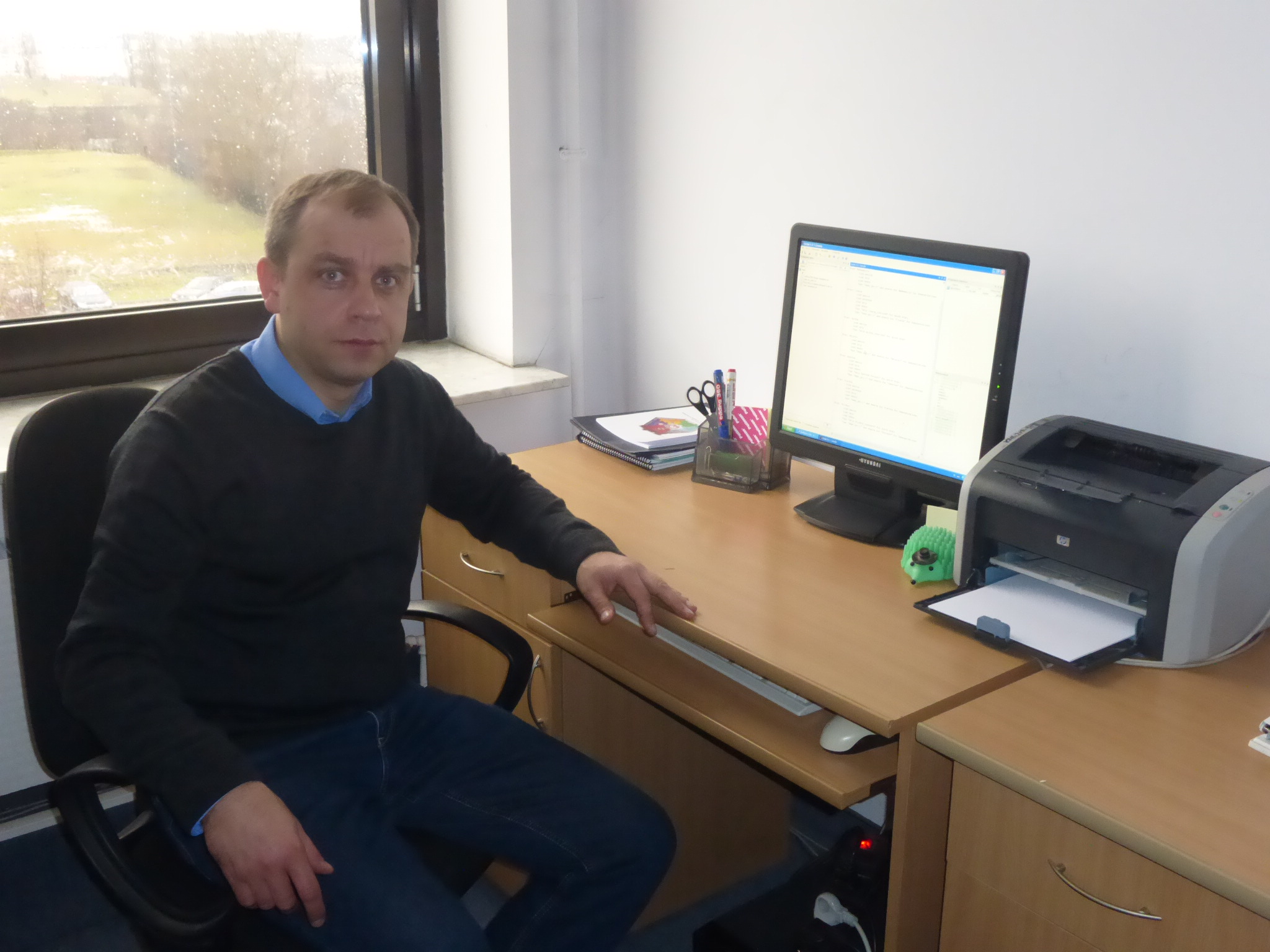
Bogdan Ruszczak serves as a Lecturer in the Department of Information Systems and Control at Opole University of Technology, Poland. Based in room P1-211 (Building 1), he maintains active teaching duties and student consultations while contributing to the university's engineering research ecosystem through his specialized expertise. His research concentrates on Information Systems integration with Control Engineering frameworks, particularly examining automation protocols and industrial informatics applications. This work bridges theoretical computer science with practical control system implementations, focusing on optimizing technological processes within modern manufacturing and infrastructure environments. No scientific awards or honors were documented in the available institutional records. While specific advising activities remain unlisted in public profiles, his lecturing role implies engagement with undergraduate and graduate student instruction. No research grants or external funding sources were referenced in the current employee documentation. The Department of Information Systems and Control operates within Opole University of Technology's engineering structure, driving innovation in cyber-physical systems and intelligent automation technologies through interdisciplinary collaboration.
Anna Korczak serves as a Lecturer at the Department of Logistics within Opole University of Technology, actively engaged in teaching duties and student consultations from her office in room ME-309c. Her academic role focuses on delivering curriculum in logistics education while maintaining research activities in supply chain optimization. Her research expertise spans Logistics, Supply Chain Management, Transportation Engineering, and Operations Research, with emphasis on quantitative methods for distribution network efficiency and sustainable freight systems. She applies analytical frameworks to solve real-world challenges in inventory control and multimodal transport planning. Anna maintains academic operations through scheduled student consultations and course instruction, utilizing university resources including the PO Knowledge Base profile system for educational coordination. Her work supports the Department of Logistics' mission in developing practical solutions for modern supply chain complexities.
Andrzej Bieniek serves as a Lecturer at the Department of Mechatronics of Vehicles and Machines, Opole University of Technology, where he conducts research and teaching in automotive and energy engineering disciplines. His primary research domains include: Energy aspects of vehicle traffic Vehicle drive systems (automatic drive systems, CVT, hybrid/electric drives, transmission losses, control systems) Combustion engines with alternative fuels (biogas, CNG, hydrogen) and exhaust emissions control Renewable energy sources (wind farms, hydroelectric plants for adverse conditions) Dr. Bieniek's work addresses critical engineering challenges in vehicle efficiency, alternative propulsion technologies, and sustainable energy infrastructure, with particular emphasis on operational performance in demanding environments. His research integrates mechanical engineering principles with energy systems optimization to develop practical solutions for transportation and power generation sectors.
Krystian Hennek serves as a Lecturer at the Department of Mechatronics of Vehicles and Machines, Opole University of Technology, where he conducts teaching activities and student consultations from office D-114. His research profile centers on the interdisciplinary field of Mechatronics, with specific expertise in Vehicle Engineering and Machine Engineering. These domains focus on the integration of mechanical systems, electronics, and computer control for advanced machinery and automotive applications, emphasizing practical engineering solutions and system optimization.