
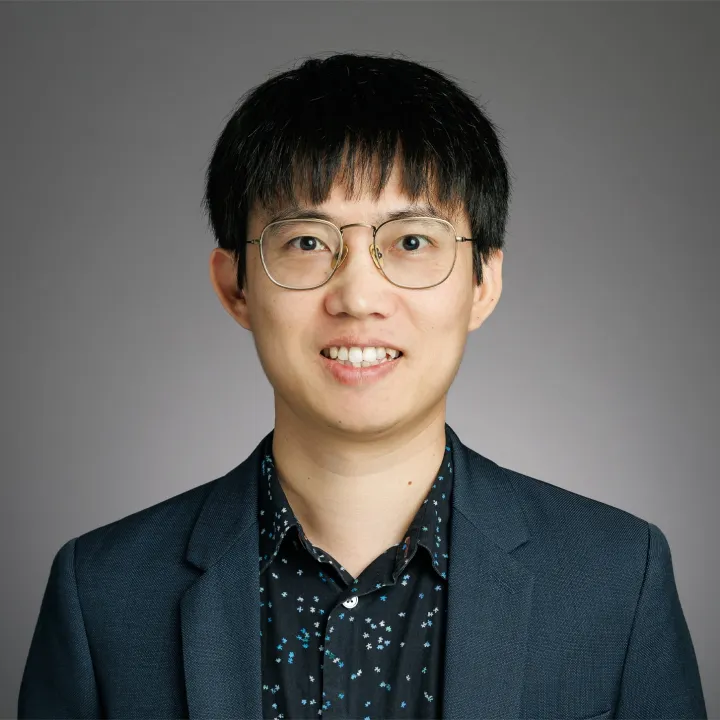
Mingjiang Zhong is an Associate Professor in the Department of Chemical & Environmental Engineering at Yale University, with additional appointments in Materials Science and Chemistry. His research is centered on the development of advanced synthetic methodologies for functional organic materials and organic-inorganic hybrid systems. Education: B.S., Peking University Ph.D., Carnegie Mellon University His research interests lie at the intersection of polymer chemistry, materials science, and sustainability. He focuses on polymer-derived carbon materials and hierarchical nanostructures for applications in energy conversion, catalysis, and environmental technologies. His group combines sophisticated molecular design with advanced analytical techniques to probe and control complex soft matter behaviors . An analysis of his 15 most recent publications reveals a strong and consistent research trajectory in controlled radical polymerization , particularly in developing novel methods for branching and stereocontrol . His work frequently involves block copolymer self-assembly to create functional nanocomposites and membranes, with a growing emphasis on applications in water treatment (e.g., anti-scaling polymers, desalination membranes) and energy (e.g., electrocatalysts, ion conductors). Scientific Awards and Honors: Camille Dreyfus Teacher-Scholar Award (2022) Wiley Journal of Polymer Science Early Career Investigator (2021) 3M Non-Tenured Faculty Award (2020) National Science Foundation CAREER Award (2019) ACS PMSE Young Investigator (2019) ACS Petroleum Research Fund Doctoral New Investigator (2017) Dr. Zhong leads an active research group, mentoring numerous graduate students and postdoctoral scholars, as evidenced by frequent lab news celebrating student achievements such as passing qualifying exams and successful PhD defenses. His group has secured significant recognition, indicating strong support for research grants. The lab is equipped with state-of-the-art instrumentation for polymer synthesis and characterization, including GPC, GC, and preparative chromatography systems.
جستوجوی استاد و پژوهشگر
استاد راهنما، استاد دانشگاه یا پژوهشگر مناسب برای مسیر پژوهشیتان را پیدا کنید و با او ارتباط بگیرید.
نمایش ۹۱-۱۰۵ از ۱٬۰۵۸ استاد راهنما
اطلاعات این پروفایلها از صفحات عمومی دانشگاهها جمعآوری شده و ممکن است بهروز نباشد.
Associate Professor Nicolas Bordenave is a cross-appointed member at the School of Nutrition Sciences, University of Ottawa, focusing on molecular interactions between macronutrients and phytonutrients in food systems. His research explores how these interactions affect glycemic response and phenolic bioavailability in cereal, fruit, and vegetable-based systems. Education: Ph.D. in Food Science (specific institution not mentioned in text) Prior Roles: Research positions at PepsiCo (Chicago, UK) and postdoctoral training at Purdue University's Whistler Center Professional Involvement: Board member of Feeding Tomorrow (IFT Foundation), contributor to Radio Canada's Moteur de recherche program His research spans starch/phenolic interactions , nutritional functionality , and biodegradable packaging materials , with applications in metabolic health and food formulation . Recent publications highlight trends in beta-glucan viscosity , starch digestibility , and phytonutrient delivery . Scientific contributions include methodological advancements in glycemic response assessment and chitosan-based packaging . Key collaborations include work with researchers at Purdue, PepsiCo, and industry partners. His lab investigates macronutrient-phytonutrient interactions , nutritional biochemistry , and functional food design . Current projects align with improving metabolic health through optimized food structures.
- Laser Polishing
- CNC Machining
- CAD/CAM Systems
- +۵ مورد دیگر
O. Remus Tutunea-Fatan is a Professor in the Department of Mechanical & Materials Engineering at Western University, with cross appointments in Biomedical Engineering and Electrical and Computer Engineering. His work focuses on laser polishing, CNC machining, and surface structuring for drag reduction and biomedical applications. Ph.D. in Mechanical Engineering, The University of Western Ontario M.E.Sc. and B.E.Sc. in Mechanical Engineering, Transilvania University, Romania Research interests include: Advanced CAD/CAM frameworks Laser remelting process optimization Biomedical device design Composite manufacturing techniques Surface topography analysis Artificial intelligence in process control Recent publications indicate expertise in: Laser polishing of metallic surfaces Riblet microstructures for drag reduction AI-driven process monitoring 5-axis machining error compensation Scientific recognition includes: Edward G. Pleva Award for Excellence in Teaching (Western University, 2023) Dr. Terry Base Memorial Teaching Award (2022 co-winner, 2021, 2019) R. Mohan Mathur Award (Faculty of Engineering, 2020) University Students' Council Teaching Honour Roll (2011-2012) Prof. Tutunea-Fatan serves as Associate Chair for Graduate Research Programs (2025-2027) Acting Associate Dean for Undergraduate Studies (2023-2024) Acting Chair, Department of Mechanical and Materials Engineering (2021-2022) He supervises over 40 graduate students and collaborates with industry partners including DuPont Safety and Construction, General Motors, and Active Industrial Solutions Inc.
Hong Wei is a Professor at the Department of Mechanics and Aerospace Engineering , Southern University of Science and Technology (SUSTech) . He also serves as Director of SUSTech Global and Associate Dean of Academic Affairs at Shuli College . Previously, he held tenured positions at Iowa State University and dual appointments at Hokkaido University . Hong Wei earned his B.S. and M.S. in Solid Mechanics from Tsinghua University , followed by a Ph.D. in Engineering Science from Harvard University (2006) . His research spans solid mechanics , soft matter mechanics , dielectric breakdown , smart materials , electrochemical reactions , and surface instability . Current work focuses on phase-field modeling and coupled deformation-transport phenomena in soft materials. His representative publications cover cutting-edge topics in Science Advances , J. Mech. Phys. Solids , and Soft Matter , with trends in hydrogel mechanics , electromechanical coupling , and material failure analysis . Scientific recognition includes being named a Fellow of the American Society of Mechanical Engineers (ASME) , alongside editorial roles in journals like Meccanica and International Journal of Applied Mechanics . Hong Wei has mentored students such as Sun Xingjian (doctoral student), Wang Sicong , Pan Lei , Feng Xianke , and Shen Zhiyuan , who received the Lixue Scholarship . He has led international projects and secured grants from the National Science Foundation (USA) and National Natural Science Foundation of China .
Thomas Brunetمشاهده پروفایل
پژوهشگر
Thomas Brunet is a researcher at the University of Bordeaux, specializing in physical acoustics and functional materials for acoustics. His work spans ultrasound physics, material characterization, and advanced modeling/simulation techniques. Key collaborations with research groups: APY (Physical Acoustics) , Functional Materials for Acoustics , and GCE (Civil and Environmental Engineering) . Focus areas: acoustic metamaterials , Anderson localization , contactless micromanipulation , and viscoelastic wave propagation . His publications (over 30 in the last decade) demonstrate expertise in ultrasonic imaging, nanophononics, and multiphysics problems involving mechanical, thermal, and fluid interactions. Collaborative projects include DuMAS (Sustainability of Materials) , IMC (Mechanical Engineering) , and MPI (Materials-Procedes-Interactions) initiatives. No formal awards or student advising details are publicly available in the provided data.
Devid Maniglioمشاهده پروفایل
دانشیار
- Bioengineering
- Biomaterials
- Tissue Engineering
- +۱۰ مورد دیگر
Devid Maniglio is an Associate Professor at the Department of Industrial Engineering, University of Trento. His research focuses on bioengineering, biomaterials, and tissue engineering, with a particular emphasis on bioprinting, surface modification, and functional materials. He has contributed to advancements in silk fibroin and hydrogel-based systems for medical applications. Research Interests Bioengineering for personalized medicine Biomaterials and surface engineering 3D bioprinting and tissue regeneration Molecular imprinting and biosensors Drug delivery and cell encapsulation Teaching Diagnostic and therapeutic technologies for personalized medicine Engineered materials for precision medicine Fundamentals of biomedical technologies Functional surfaces laboratory Labs & Collaborations Devid Maniglio is affiliated with the Functional Surfaces Laboratory at the University of Trento, collaborating with researchers such as Stefano Rossi and Flavio Deflorian. His work integrates interdisciplinary approaches in biomedical engineering and sustainable medical technologies.

Dr. Julian McClements is a Distinguished Professor in the Department of Food Science at the University of Massachusetts Amherst. He also holds adjunct/visiting roles at Zhejiang Gongshang University (China), Harvard University, and King Abdulaziz University (Saudi Arabia). His research focuses on food biopolymers, colloids, and delivery systems for nutrients/nutraceuticals, with over 1,200 peer-reviewed articles and 12 patents. He has secured $11.5M in grants and authored seminal books like *Future Foods* and *Food Emulsions*. Awards include the Nicolas Appert Award (IFT’s highest honor) and multiple fellowships. Education : Ph.D. in Food Science (1989), University of Leeds, UK. Postdoctoral training at UC Davis, University College Cork, and Leeds. Research Interests : Designing plant-based foods, food nanotechnology, encapsulation systems, and gastrointestinal fate of nutrients. His lab explores emulsion stability, hydrogel matrices, and sustainable food architectures. Achievements : Top-cited author in Agricultural Sciences (ISI) Over 1200 publications (H-index 162) Recipient of 12 patents Editorial roles at *Annual Reviews in Food Science and Technology* and other journals Advising & Grants : Advised numerous students (not listed) and secured grants from USDA, NSF, NASA, and industry partners. Research emphasizes healthful, sustainable food systems. Labs/Teams : Leads the Biopolymer and Colloids Research Group, organizing international conferences on food colloids and delivery systems.

Dr. Jean-Philippe St-Pierre is an Assistant Professor in the Department of Chemical and Biological Engineering at the University of Ottawa's Faculty of Engineering. He holds a Ph.D. in Materials Science and Engineering from the University of Toronto (2011), an M.Eng. in Biomedical Engineering from McGill University (2004), and a B.A.Sc. from the University of Ottawa. His research focuses on developing advanced biomaterials for tissue regeneration and 3D bioprinted tissue models to enhance understanding of physiological/pathological processes and therapeutic selection. Education: Ph.D., Materials Science and Engineering, University of Toronto (2011) M.Eng., Biomedical Engineering, McGill University (2004) B.A.Sc., University of Ottawa Research Highlights: Design of biomaterials for cartilage repair and vascular network formation 3D bioprinting of hydrogel-based constructs Biomechanical studies of aortic tissue and GAG modulation Development of biosensors for pathogen detection Publications Trends: Recent work emphasizes glycosaminoglycan (GAG) mechanics in vascular systems, 3D bioprinting of vascularized tissues, and polyphosphate-based drug delivery systems. His articles span biomaterial characterization, biomechanical modeling, and translational applications in regenerative medicine. Awards: No specific awards mentioned in available texts. Labs/Teams: Leads the Biomaterials Lab focusing on tissue regeneration strategies and advanced bioengineering technologies. Collaborates on projects involving bioreactors, nanomaterials, and biomedical diagnostics.
Vipul Guptaمشاهده پروفایل
مدرس ارشد
- 3D Printing
- Chromatography
- Microfluidics
- +۷ مورد دیگر
Vipul Gupta is an Adjunct Senior Lecturer in Chemistry at the University of Tasmania's School of Natural Sciences, where he conducts research at the intersection of 3D printing, analytical chemistry, and materials engineering. His academic positions include Lecturer (2021-present), ARC DECRA Fellow (2020-2023), and ACES Research Fellow (2018-2020). He holds a PhD from the University of Tasmania, an M.S. from Brigham Young University, and a B.Pharm from the University of Delhi. His research interests span 3D printing , chromatography , microfluidics , material science , and separation technologies . Gupta's work focuses on developing commercially viable analytical platforms through interdisciplinary approaches combining chemistry, engineering, and biology. Current projects include 3D printing of glass, multi-material high-resolution 3D printing, and point-of-care analysis systems. Analysis of his 15 most recent publications (2020-2023) reveals a strong emphasis on miniaturized analytical devices , 3D printed microfluidics , and advanced separation technologies . His work bridges fundamental materials science with practical applications in environmental monitoring, healthcare diagnostics, and sustainable manufacturing, particularly through innovations in polymer-derived ceramics and diamond-based separation media. His scientific achievements have been recognized with numerous awards: Tasmanian STEM Early Career Researcher of the Year Award ARC DECRA Fellowship (2020) Australian Academy of Science SIEF Fellowship (2015) Brigham Young University Roland K. Robins Fellowship (2012) The Royal Society of Tasmania Peter Smith Medal Selection as one of Australia's top 13 young researchers Gupta actively supervises doctoral students working on field-deployable analytical platforms, 3D printed microfluidic systems, and novel materials for separation science. His research is supported by multiple ARC grants totaling over $7 million, including the ARC Training Centre for Hyphenated Analytical Separation Technologies ($6.3 million) and the Portable and field-deployable analytical platforms for water monitoring project ($563,855). He also co-founded 3DMADe (3dmade.com.au) and authored the book '3D Printing in Chemical Sciences,' demonstrating his commitment to translating research into practical applications and industry partnerships.
Srikanthan Rameshمشاهده پروفایل
استادیار
- Biological Additive Manufacturing
- Micro-scale Additive Manufacturing
- Biomaterial Development
- +۷ مورد دیگر
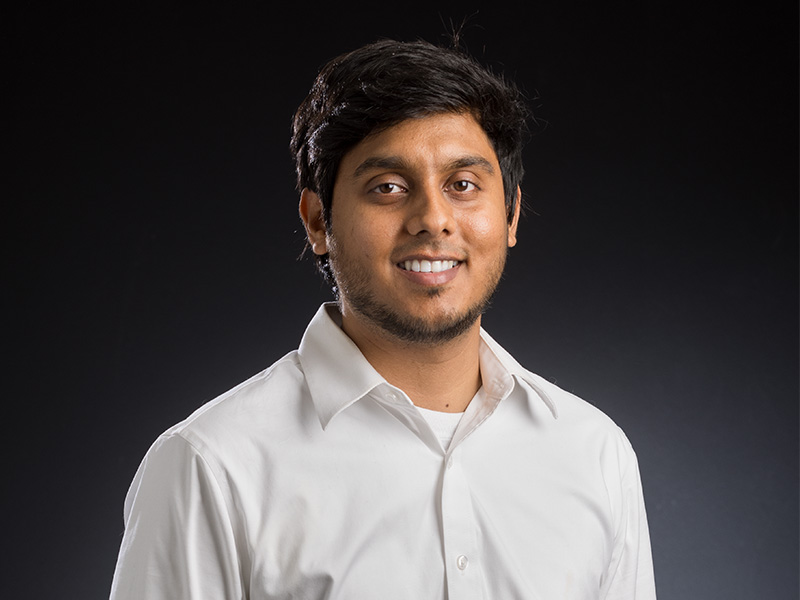
Dr. Srikanthan Ramesh serves as an Assistant Professor in the School of Industrial Engineering and Management within Oklahoma State University's College of Engineering, Architecture and Technology. Since establishing the Advanced Materials and Additive Manufacturing Laboratory in August 2022, he has led interdisciplinary research at the intersection of materials science, physical phenomena, and advanced manufacturing technologies, with applications spanning healthcare, aerospace, and electronics sectors. His educational foundation includes a Ph.D. in Mechanical and Industrial Engineering from Rochester Institute of Technology (2022) and an M.S. in Industrial and Manufacturing Systems Engineering from Iowa State University (2017). This academic background enables his innovative approach to manufacturing science. Dr. Ramesh's research program focuses on biological and micro-scale additive manufacturing (bio-AM), specializing in biomaterial development for tissue engineering and regenerative medicine. His work integrates computational fluid dynamics, machine learning, and real-time process monitoring to achieve precise control over mechanical, biological, and electrical properties of manufactured structures. He develops experimental tools and process frameworks for droplet-based and extrusion-based AM systems, with particular emphasis on wound healing applications and space-compatible microelectronics. Analysis of his 14 publications from 2020-2025 reveals a strong trajectory toward AI-driven manufacturing solutions, with increasing emphasis on multi-objective Bayesian optimization for bioink design, aerosol jet printing process refinement, and bioprinted tissue construct development. His recent work demonstrates sophisticated integration of machine learning with physical manufacturing processes to solve complex biomedical challenges. His scientific recognition includes: Doctoral Dissertation Pitch Competition (Runner-up), IISE, 2021 Best Oral Presentation, Graduate Showcase, Rochester Institute of Technology, 2019 Gilbreth Memorial Fellowship, IISE, 2018-2019 Wakonse College Teaching Fellowship, Iowa State University, 2018-2019 Graduate Research Excellence Award, Iowa State University, 2017 Best Overall Oral Presentation, Nano@IAstate, Iowa State University, 2017 Dr. Ramesh currently leads significant research initiatives including as Principal Investigator for an NSF REU Site on Additive Manufacturing and Cybersecurity ($464,606, 2025-2028) and a NASA EPSCoR Travel Grant for aerosol jet printing in space missions (2024-2025). As Co-PI on an NSF grant for Privacy-aware Collaborative Design in additive biofabrication ($599,981, 2025-2028), he develops frameworks for mass personalization in medical applications while addressing data security challenges. These projects support his lab's mission to advance manufacturing science through rigorous experimentation and computational innovation. The Advanced Materials and Additive Manufacturing Laboratory operates as a collaborative hub where Dr. Ramesh directs research teams in developing novel biomaterials, optimizing printing processes, and creating functional prototypes for wound dressings, liver tissue models, and space-rated microelectronics. The lab's interdisciplinary approach combines expertise in materials characterization, computational modeling, and machine learning to push the boundaries of what's possible in additive manufacturing for critical applications.
Carlo Rigoniمشاهده پروفایل
استاد مهمان
Carlo Rigoni is a Visiting Professor in the Department of Applied Physics, focusing on non-equilibrium systems and colloidal assembly. His research spans nanoparticle science, ferrofluid dynamics, and aqueous two-phase systems. Education: Doctoral degree in Natural Sciences from University of Padua Active projects: DissNano (2021–2024) on dissipative nanomaterials Research interests include: Coarse-grained modeling of colloidal systems Electrically/magnetically controlled fluid interfaces Self-assembly of nanoparticles in liquid crystals Non-equilibrium pattern formation in soft matter Thermodynamic control of multiphase separation Bio-inspired nanoparticle superlattices His recent publications address computational modeling of aqueous two-phase systems, magnetic colloids, and electroferrofluids. Collaborative activities include conference presentations on interfacial tension, magnetic rollers, and colloidal gradients. He contributes to open scientific datasets and disseminates findings through platforms like ORCID (0000-0001-6960-779X).
Luz Soteloمشاهده پروفایل
استادیار
Luz Sotelo is an Assistant Professor of Mechanical Engineering at Purdue University, located in West Lafayette, Indiana. She is affiliated with the College of Engineering's Department of Mechanical Engineering, conducting research in advanced manufacturing and materials science. Her work focuses on multi-process additive manufacturing, nondestructive evaluation, ultrasonics, and acoustic metamaterials. She holds a Ph.D. from the University of Nebraska-Lincoln and a B.S. from the University of Texas Rio Grande Valley. Research interests include developing novel techniques for evaluating additively manufactured components using ultrasonic methods, studying material properties of advanced composites, and exploring bio-inspired solutions for fluid dynamics challenges. Her research bridges fundamental science with engineering applications in convergent manufacturing and acoustics. Notable articles explore ultrasonic evaluation of AM materials, fatigue performance of laser-fused components, and bio-inspired flow control strategies. Her work emphasizes practical applications of ultrasonics in real-time manufacturing monitoring and material characterization. Awards: NASEM Research Assistantship Program (2021-22) Society of Hispanic Professional Engineers STAR Award (2020) Great Minds in STEM Leadership Award (2019) NSF Graduate Research Fellowship (2018-21) Professor Sotelo's advising and grant activities focus on advancing additive manufacturing and nondestructive evaluation technologies. She collaborates with industry partners to translate research into practical solutions for aerospace and biomedical applications. Her lab, located in MMRL 1900D, investigates cutting-edge materials and manufacturing processes.
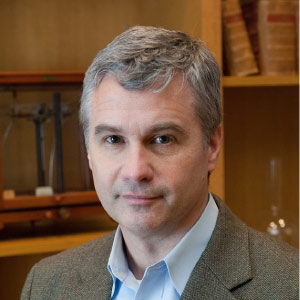
Douglas Adamson is a Professor in the Department of Chemistry at the University of Connecticut. His research focuses on materials synthesis, particularly on well-defined polymers and graphene-based composites. He utilizes high vacuum anionic polymerization and self-assembly techniques to create advanced materials with applications in energy storage, sensing, and environmental remediation. Ph.D., University of Southern California B.S., University of Evansville Research interests include: Graphene and 2D nanosheet composites Anionic polymerization for precision polymer architectures Conductive hydrogels and foams Bio-mimetic material design Flame-resistant polymer systems Recent publications highlight work on graphene-stabilized polyHIPE foams, conductive hydrogels, and bio-inspired polymer synthesis. His group explores the interplay between material microstructure and macroscopic properties through experimental and computational approaches. Lab and team activities center on creating novel polymer templates and scalable methods for graphene exfoliation. Projects include mineral separation technologies, wearable sensors, and self-assembled 3D graphene architectures.
Tadanori Kogaمشاهده پروفایل
استادیار
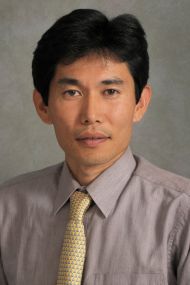
Tadanori Koga is an Assistant Professor in the Department of Chemical and Molecular Engineering at Stony Brook University, where he has served since 2006. His research focuses on green energy technologies through polymer nanofabrication, chemical recycling of plastics, and methane hydrate energy resources, utilizing advanced in situ x-ray/neutron scattering techniques at premier facilities like NSLS, APS, and NIST. Education: Ph.D. in Polymer Physics (1998) and M.S./B.S. in Solid State Physics from Kyushu/Kumamoto Universities Honors: Visiting Professor at Kyushu University (2008), Visiting Scientist at Kyoto University (2004) Current projects include: Green nanofabrication using supercritical CO2 Chemical recycling of waste plastics 3D-printing polymer dynamics studies Nanoscale control of methane hydrate formation His work has secured a $1.2M DOE grant for pathogen-preventing nanosurfaces. Recent publications emphasize polymer interface dynamics, self-assembly under stimuli, and scattering-based structural analysis. Collaborative efforts span Oak Ridge Leadership Computing Facility and Brookhaven National Laboratory.

- Polymer Physics
- Biophysics
- Soft Matter
- +۷ مورد دیگر
Dr. Andrew Parnell is a Lecturer in Soft Matter & Biological Physics at the University of Sheffield's School of Mathematical and Physical Sciences. He holds a PhD from the University of Sheffield (2007) and has held postdoctoral roles in Chemistry and Physics departments there. His research focuses on polymer physics, biophysics, and soft matter systems, with applications in photovoltaics, structural color, and antimicrobial surfaces. He was awarded the IChemE Innovative Product of the Year (2011) for tunable photonic materials and serves as a DPOLY Polymer Exchange Lecturer (2017). His work combines neutron/X-ray scattering with interdisciplinary approaches to study material morphologies and functional designs. Education: MPhys Physics (Sheffield, 2001), MSc Nanoscale Science & Technology (Leeds/Sheffield, 2002), PhD in Polyelectrolyte Brushes (Sheffield, 2007). Professional memberships include the Institute of Physics and IChemE. Research interests span structural color mechanisms in nature, phase separation dynamics in organic electronics, and responsive polymer systems. Key projects include EPSRC-funded studies on coatings technology with AkzoNobel. His lab employs advanced scattering techniques and computational methods to bridge nanoscale structure and macroscopic functionality. Grants: EPSRC Soft Nanotechnology, Prosperity Partnership with AkzoNobel. Awards: IChemE Innovation Award, DPOLY Lectureship.
فقط ۷۵۰ نتیجه اول نمایش داده میشود. برای رسیدن به نتایج دقیقتر، جستوجو را با فیلترها محدودتر کنید.