Lars Nordström is a Professor at the Division of Electric Power and Energy Systems within KTH Royal Institute of Technology, Stockholm, Sweden. His work bridges control systems , communication networks , and power systems , with a focus on future architectures, functionality, and quality aspects of ICT for power grid operations. He has led initiatives such as the Swedish Centre of Electric Power Engineering and served as Thematic Leader for Smartgrids in KIC InnoEnergy. In 2014, he was a Visiting Professor at Washington State University. Education : Ph.D., MSc.EE Nordström's research explores the intersection of smart grids , machine learning , and cybersecurity for power systems. Key areas include: Wide-Area Monitoring and Control (WAMC) systems Decentralized control strategies for DC microgrids Impedance modeling using neural networks Data-driven methods for islanding detection ICT reliability and protocol design for grid operations His recent publications emphasize machine learning applications in power systems, including LSTM networks for EV charging management, graph attention networks for stability monitoring, and digital twin approaches for cyber-attack mitigation. These works span disciplines such as Smart Grids, Power Electronics, and Data Science. Scientific Recognitions : Senior Member, IEEE Senior Member, CIRED Senior Member, Cigre Past Chairman, Swedish IEC TC57 Mirror Committee Nordström actively teaches and examines graduate courses like Communication and Control in Electric Power Systems and Computer Applications and Machine Learning in Electric Power Systems . His work influences industry practices through collaborations on digital substations, energy market analysis, and resilience strategies.
Zhibo Pang is an Adjunct Professor at KTH Royal Institute of Technology's Department of Intelligent Systems (EECS) and Senior Principal Scientist at ABB Corporate Research Sweden. His work focuses on digital transformation in industry and healthcare, spanning robotics, AI, control systems, and wireless communication. He leads projects in embodied intelligence, Industry 4.0, and Healthcare 4.0, with 23 granted patents and over 120 journal papers. Education: PhD in Electronic and Computer Systems (KTH, 2013), MBA in Innovation & Growth (University of Turku, 2012). Key Roles: IEEE Technical Committee Chair, Editor of 6 IEEE journals, ABB Inventor of the Year (2016, 2018, 2021). Research Interests: Robotics safety, wireless automation, federated learning, digital twins, and IoT security. Recent Projects: Cloud-fog automation frameworks, robot skin systems for healthcare, and latency-aware industrial control. His work bridges academia and industry through cross-functional collaborations.
Saurabh Amin is a Professor in the Department of Civil and Environmental Engineering at the Massachusetts Institute of Technology (MIT), where he also serves as the Edmund K. Turner Professor and Undergraduate Officer. He is a Principal Investigator at the Laboratory of Information and Decision Systems and holds affiliations with the Operations Research Center and the Center for Computational Science and Engineering. His educational background includes: B.Tech. 2002, Indian Institute of Technology (IIT) Roorkee M.S. 2004, University of Texas (UT) Austin Ph.D. 2011, University of California (UC) Berkeley Saurabh Amin's research focuses on the design and control of infrastructure systems using game theory and optimization in networks. His work spans three main areas: resilient network control, information systems and incentive design, and optimal resource allocation in large-scale infrastructure systems. By concentrating on critical infrastructure domains including highway transportation, electric power distribution, and urban water networks, his research develops innovative theory and tools to enhance system performance against both stochastic and adversarial disruptions. His approach involves modeling cyber-physical interactions in infrastructures to assess vulnerabilities, developing detection and response tools for failures at various scales, and designing economic incentive schemes that improve aggregate public good while accounting for dependencies and private information among strategic entities. Amin's work bridges mathematical systems theory with practical civil engineering applications, creating a rigorous theoretical foundation for infrastructure resilience that addresses diverse failure mechanisms from natural disasters to deliberate malicious actions. His recent publications demonstrate a strong focus on decarbonization of energy systems, resilient infrastructure planning under climate uncertainty, optimization methods for complex networked systems, and game-theoretic approaches to sustainable infrastructure management. His work increasingly integrates artificial intelligence and machine learning techniques with traditional control theory to address contemporary challenges in infrastructure resilience and sustainability. The research shows a clear trajectory toward addressing climate change impacts on infrastructure systems while maintaining economic efficiency and operational reliability. Professor Amin has received numerous prestigious awards and honors: Common Ground Excellence in Teaching Award, 2025 HSCC Test-of-Time Award, 2024 MIT CEE, Distinguished Service and Leadership Award, 2023 Samuel M. Seegal Prize (SoE) – inspiring students in pursuing and achieving excellence, 2022 Earll M. Murman for Excellence in Undergraduate Advising, 2022 C3.ai Digital Transformation Institute Research Award, 2020 MIT, Ole Madsen Mentoring Award, 2020 MIT, Energy Initiative Research Award, 2020 National Academy of Engineering, China-America Frontiers of Engineering Symposium speaker, 2019 MIT, Robert N. Noyce Career Development Professor, 2015-2018 Google Faculty Research Award, 2015 National Science Foundation CAREER Award, 2015 Siebel Energy Institute Research Award, 2015 MIT, Solomon Buchsbaum AT&T Research Fund Award, 2012 Professor Amin has been actively involved in significant research projects including the C3.ai DTI project on Causal Reasoning for Real-Time Attack Identification in Cyber-Physical Systems and another on Learning in Routing Games for Sustainable Electromobility. He serves as the chief scientist on multi-institutional NSF grants, including the $9 million Foundations of Resilient Cyber-Physical Systems (CPS) project. His teaching portfolio includes courses such as 1.008 Engineering for a Sustainable World, 1.104 Sensing and Intelligent Systems, 1.020 Engineering Sustainability: Analysis and Design, and 1.208 Resilient Networks. As Undergraduate Officer, he plays a key role in shaping the educational experience for civil and environmental engineering students at MIT. Professor Amin leads the Resilient Infrastructure Networks Lab at MIT, where his team develops theoretical foundations and practical tools for infrastructure resilience. The lab focuses on the intersection of control theory, game theory, and optimization applied to cyber-physical infrastructure systems. Current research directions include pandemic-resilient urban mobility and hurricane-resilient smart grid operations, reflecting the lab's commitment to addressing pressing societal challenges through rigorous systems engineering approaches.
Cyrille Artho is an Associate Professor in the Division of Theoretical Computer Science at KTH Royal Institute of Technology, actively contributing to research in formal methods, software testing, and cybersecurity. His work spans model checking, smart contract security, and concurrent systems verification, with significant contributions to tools like Java Pathfinder and Modbat. PhD from ETH Zurich (2005) with dissertation on multi-threading fault detection Teaches Software Safety and Security, Software Engineering Fundamentals, and supervises degree projects His research focuses on developing formal techniques for safety-critical systems, particularly in blockchain security and distributed applications. Recent work emphasizes smart contract verification, anomaly detection in microservices, and trusted execution environments for secure cloud analytics. The 15 most recent publications reveal a strong trend toward blockchain security (6 articles), formal verification of distributed systems (5), and novel testing methodologies (4), with increasing integration of machine learning for vulnerability detection. As chair of the FTSCS workshop series and contributor to major conferences like ASE and ICST, Artho has significantly shaped the formal methods community. His leadership in organizing workshops demonstrates commitment to advancing safety-critical systems research. Principal investigator for C3.ai DTI Cyber Safety Cage for Networks project Develops Modbat framework for model-based API testing Active in Digital Futures research initiative at KTH
Vanya Darakchieva is a Professor in Solid State Physics at Lund University's Faculty of Engineering (LTH), serving as Principal Investigator at NanoLund: Centre for Nanoscience and Director of C3NiT: Centre for III Nitride technology. She is a core member of Lund's profile areas in Nanoscience and Semiconductor Technology, Light and Materials, and The Energy Transition, reflecting her interdisciplinary impact. Her research centers on wide bandgap semiconductors, particularly gallium nitride (GaN) and gallium oxide (Ga 2 O 3 ), with emphasis on defect engineering, electron transport, and advanced characterization techniques. She pioneers terahertz spectroscopy and electron paramagnetic resonance methods to analyze material properties critical for quantum technologies and energy-efficient electronics. Her work bridges fundamental physics with industrial applications in high-frequency devices and green semiconductor technology. Recent publications reveal a sharp focus on structural optimization of GaN crystals, doping mechanisms, and contact engineering—key bottlenecks in next-generation power electronics. Trends show increasing collaboration with international teams on epitaxial growth techniques and defect-driven property control. No scientific awards were documented in the provided text. She actively supervises PhD candidates including Logotheti, A. and Rindert, V., guiding dissertation projects within major grants. Darakchieva leads nine research projects with 150+ million SEK in funding, including two flagship Knut and Alice Wallenberg Foundation initiatives (2025–2030) on quantum-ready semiconductors and ceramic-to-semiconductor transformation, plus Swedish Research Council and Vinnova grants targeting terahertz characterization and III-nitride technology. Her work is anchored in NanoLund and C3NiT infrastructure, fostering cross-departmental teams for nanofabrication and device prototyping. Current efforts integrate magnetron sputtering, MOCVD growth, and in-situ characterization to solve industry challenges in thermal management and electron mobility for 6G communications and renewable energy systems.
Karl Henrik Johansson is a Professor at the School of Electrical Engineering and Computer Science, KTH Royal Institute of Technology in Stockholm, Sweden, where he also serves as the Founding Director of Digital Futures. He is a Fellow of both IEEE and the Royal Swedish Academy of Engineering Sciences, and has held leadership positions including Immediate Past President of the European Control Association and IEEE Control Systems Society Vice President Diversity, Outreach & Development. Dr. Johansson earned his MSc in Electrical Engineering and PhD in Automatic Control from Lund University. His academic journey includes visiting positions at prestigious institutions such as UC Berkeley, Caltech, and NTU. His research focuses on networked control systems and cyber-physical systems with applications in transportation, energy, and automation networks. His work investigates fundamental challenges in connecting physical world systems through communication networks, exploring how wireless communication and sensor technology can enhance system robustness, reliability, energy efficiency, and safety. Current research directions include security of cyber-physical systems, distributed optimization, multi-agent systems, and applications to intelligent transportation and energy networks. Analysis of his recent publications reveals a strong focus on distributed optimization algorithms, secure networked control, multi-agent systems, and applications to transportation and energy networks. His work increasingly integrates machine learning techniques with traditional control theory, addressing challenges in privacy-preserving distributed computation, resilient state estimation, and resource allocation in complex networked systems. IEEE Control Systems Society Hendrik W. Bode Lecture Prize (2024) Swedish Research Council Distinguished Professor (2018-2027) Wallenberg Scholar (2009-2026) IFAC Young Author Prize IEEE CSS Distinguished Lecturer (2017-2019) IFAC Outstanding Service Award IEEE Fellow Dr. Johansson has supervised over 100 postdocs and PhD students, with many now holding prominent positions at institutions worldwide. His research has been supported by significant grants including the Swedish Research Council Distinguished Professor Grant (2018-2027), multiple Wallenberg Foundation grants, and numerous EU and national research projects. He has directed major research centers including ACCESS Linnaeus Centre (2009-2016) and Strategic Research Area ICT TNG (2013-2020). His research group operates within the Digital Futures initiative and maintains strong connections with industry partners through projects like the Integrated Transport Research Lab (supported by Scania and Ericsson) and Smart Mobility Lab. The group actively collaborates with international institutions and participates in major EU-funded projects addressing challenges in cyber-physical systems, transportation, and energy networks.
Thomas Winkler is an Associate Professor at the Division of Micro and Nanosystems, KTH Royal Institute of Technology, Sweden, and collaborates with TU Braunschweig, Germany. His research focuses on solving life science challenges using microsystems tools, particularly in neuropsychiatric disorders like schizophrenia. He develops organ-on-chip models, engineered microfluidic platforms, and biosensors for point-of-care diagnostics. Winkler leads an interdisciplinary ERC-funded team addressing metabolic coupling in neurovascular units and oxidative stress biomarkers. Key achievements include the ERC Starting Grant (2023) and work on electrochemical sensors for clozapine monitoring. He teaches courses such as Microsystem Technology (EK2350) and supervises PhD and postdoctoral researchers. Current projects include machine learning-guided robotic organoid maturation and electrochemical technology development for the CHIPzophrenia initiative. His lab actively seeks talent through open positions in Stockholm and Braunschweig. Scientific awards include the ERC Starting Grant and Marie Skłodowska-Curie Actions Fellowship. Research spans sensor development, microfabrication, and biomaterials, with a focus on translating lab technologies to clinical applications. Collaborations bridge engineering and life sciences, emphasizing personalized mental healthcare solutions.
Gustav Amberg is a Professor at KTH Royal Institute of Technology, affiliated with the Flow Mechanics research group within the School of Engineering Sciences. His primary appointment is in the Department of Mechanics, where he focuses on fluid dynamics, multiphase flow, and interfacial phenomena. He holds a permanent full professorship with no indication of兼职 roles. Research interests center on dynamic wetting mechanisms, phase-field modeling, and computational fluid dynamics applied to complex fluid systems. His work explores contact line behavior, microstructured surface interactions, and material phase transformations. Notable areas include rapid droplet spreading, viscoelastic fluid dynamics, and boiling heat transfer on engineered surfaces. Recent studies investigate the interplay between surface topography and wetting dynamics, oscillatory contact line phenomena, and numerical benchmarking across molecular and continuum models. He has pioneered methods for simulating surfactant effects in multiphase flows and developed novel approaches for analyzing weld pool behavior during sintering processes. No academic awards or grants are explicitly listed in the provided materials. His advising record remains undisclosed, though his prolific publication history suggests active research supervision. Laboratory affiliations are not detailed, but his work aligns with KTH's broader initiatives in computational mechanics and materials science.
Joakim Odqvist is a Professor and Head of Department at the Structures unit within the Royal Institute of Technology (KTH). He specializes in materials science, with a focus on phase separation in alloys, nanostructure evolution, and the mechanical behavior of advanced materials. His research integrates experimental techniques like small-angle neutron scattering and atom probe tomography with computational modeling to study materials such as stainless steels, cemented carbides, and cast irons. Odqvist teaches courses in ceramic materials, material design, and materials structures, mentoring students at both undergraduate and graduate levels. His work addresses challenges in corrosion resistance, fatigue, and additive manufacturing, contributing to the development of high-performance materials for industrial applications. Research Interests: Phase separation mechanisms, spinodal decomposition in Fe-Cr alloys, nanostructure evolution in duplex stainless steels, diffusion kinetics, and the application of statistical models to hydrogen diffusion. His studies often bridge fundamental material science with practical engineering solutions, emphasizing predictive simulations and material design. Recent Articles: His publications focus on controlling nanostructures in super duplex steels, functional gradient carbides, and statistical models for hydrogen diffusion. Key themes include optimizing heat treatments to mitigate embrittlement, understanding precipitation kinetics in additively manufactured materials, and leveraging phase field modeling to predict material behavior. These studies highlight his role in advancing materials for harsh environments, such as aerospace and energy sectors.
Olof Bälter is a Professor in Computer Science at KTH Royal Institute of Technology, affiliated with the Division of Media Technology and Interaction Design within the School of Electrical Engineering and Computer Science. He is the founder of the Technology-Enhanced Learning research group and holds a focus on learning engineering and human-computer interaction. His research interests center on technology-enhanced learning , question-based learning , learning analytics , AI in education , and inclusive pedagogy . A consistent theme in his work is improving efficiency in education and daily life through digital tools. He developed the Pure Question-Based Learning (Pure QBL) methodology, a digital Socratic approach that enhances student engagement and learning outcomes. His work extends to wellness in education through initiatives like walking seminars, and he investigates digital interventions for mental health, such as online Cognitive Behavioral Therapy (CBT) courses. His recent publications highlight trends in AI-generated educational content , learning efficiency , digital pedagogy , and inclusive course design , with applications in computer science education, language instruction, and global development. His research often employs experimental and data-driven methods, including randomized controlled trials and learning analytics. Teacher of the Year at the Surveying program KTH's Pedagogical Prize Higher Education Hero STINT Excellence in Teaching Scholarship (2008 and 2013) Olof Bälter has supervised numerous courses in programming, computer science, media technology, and learning engineering. He has collaborated with institutions such as Stanford University, Williams College, Region Stockholm, Stockholm University, and organizations like Promobilia and Begripsam. His projects aim to scale effective learning methods globally and make education more accessible and efficient. He leads research on the effectiveness of Pure QBL for students with ADHD and is involved in developing digital tools for health literacy and professional development in Ethiopia and Rwanda. His work bridges theory and practice, aiming to transform educational delivery through innovation and evidence-based design.
Jonas Bylander is a Professor at Chalmers University of Technology in the Department of Microtechnology and Nanoscience, specifically within the Quantum Technology division. He leads a research group focused on developing quantum computers using superconducting circuits.
Özer Özkahraman is a postdoctoral researcher at the Division of Robotics, Perception and Learning (RPL) at KTH Royal Institute of Technology. He works under Ivan Stenius and John Folkesson, focusing on underwater mission planning, simulation, and integration of autonomous systems. His email is ozero@kth.se . He completed his PhD at KTH under Petter Ögren, researching large-scale multi-agent coverage planning for autonomous underwater vehicles (AUVs). Current projects include the SMaRCSim multi-domain simulation platform and development of underwater vehicles like LoLo, SAM, and Evolo. Research interests span autonomous underwater systems, multi-agent coordination, control systems, and simulation infrastructure. He emphasizes modular, accessible frameworks for vehicle testing and real-world deployment. His work bridges theoretical methods (e.g., control barrier functions) with practical applications in marine robotics. Publications focus on AUV navigation, environmental sensing, and adaptive control. Projects like Real2Sim aim to align simulation with real-world vehicle dynamics using motion capture data. He collaborates internationally on topics like data-driven damage detection and model compression for resource-constrained robots. No academic awards are explicitly mentioned. He actively seeks collaborators for projects in sonar simulation, flow field modeling, and cyber-physical system integration.
Professor Ian Cousins is a leading researcher in the Department of Environmental Science at Stockholm University, specializing in the study of persistent organic pollutants, particularly per- and polyfluoroalkyl substances (PFAS). With over 200 peer-reviewed publications and recognition as a Highly Cited Researcher in 2018 and 2020, his work has significantly influenced environmental policy and scientific understanding of chemical pollution. BSc (Hons) in Chemistry, University of York (1989) Master's in Environmental Management, University of Surrey (1991) PhD in Environmental Science, Lancaster University (1998) Prof. Cousins' research focuses on the sources, transport, fate, and exposure pathways of contaminants in the environment, with particular emphasis on PFAS. His work combines experimental and modeling approaches to investigate how these persistent chemicals move through ecosystems, with recent studies examining sea spray aerosol transport of PFAS and their global distribution. His research has contributed to understanding PFAS as a planetary boundary issue, demonstrating that environmental contamination by these substances has exceeded safe operating limits. Prof. Cousins' extensive publication record shows a clear trend toward addressing the complex challenges of PFAS pollution, including their environmental behavior, risk assessment methodologies, regulatory frameworks, and the application of the essential-use concept for phasing out non-essential PFAS applications. His work spans fundamental environmental chemistry to policy-relevant research that has directly influenced European environmental decision-making. Highly Cited Researcher (2018, 2020) Listed among 30 EU politicians and professionals with greatest impact on European environmental policy (2023) Associate Editor of Environmental Science and Technology (2020-present) Associate Editor of Environmental Au (2021-present) Prof. Cousins actively supervises master's students focusing on organic pollutants and has coordinated major research projects including PERFORCE3, a Europe-wide doctoral training program on PFAS, and ZeroPM, targeting PFAS and persistent, mobile substances. His research has been supported by multiple European Union Horizon 2020 grants, reflecting the significance and impact of his work on global environmental challenges. He leads a research group that works closely with analytical chemists to better understand the behavior of PFAS and other contaminants, contributing to the development of evidence-based approaches for managing chemical pollution and protecting environmental and human health.
Anh Tuan Le is an Associate Professor at the Department of Electrical Engineering, Chalmers University of Technology. He holds a PhD in Power Systems from Chalmers (2004) and a Master's in Energy Economics from the Asian Institute of Technology (1997). Specializes in power grid planning, electricity market modeling, and renewable energy integration Active in electric vehicle-grid interaction and battery storage systems Develops voltage stability solutions and decentralized control strategies His recent research focuses on: Flexibility markets for congestion management Machine learning applications in load forecasting Real-time security margin control using AI Key projects include: DigiRES (2024-2027): Digital integration of multi-energy flexibility POTENT-X (2024-2027): Port energy transition hubs FLEXIGRID (2019-2023): Distribution grid flexibility solutions
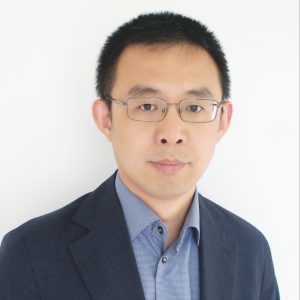
Xiongfei Wang is a Visiting Professor at KTH Royal Institute of Technology in Stockholm, Sweden, and a Digital Futures Fellow. He holds academic leadership roles, including Editor-in-Chief of IEEE Transactions on Power Electronics and chairs in IEEE committees. His research focuses on power electronics systems, stability analysis, and data-driven approaches for energy systems. Previously, he served as a Professor at Aalborg University (2009–2022). His work addresses challenges in power system stability, converter dynamics, and renewable integration. He leads projects like 'Machine Learning for Dynamics Analysis of Power Electronic Systems,' aiming to enhance grid resilience through AI-driven methods. Notable awards include IEEE Fellow (2023), Isao Takahashi Award (2022), and multiple best paper awards. Wang collaborates extensively, organizing conferences and editing journals. His research spans power electronics, grid stability, and smart grid technologies, with a focus on practical applications in energy transition.