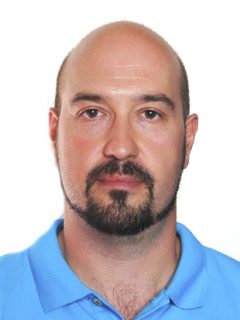
Marko Tanasković is a researcher at Singidunum University's Faculty of Informatics and Computing, specializing in control systems, robotics, and electrical engineering. He holds a PhD from ETH Zurich (2015) in Information Technology and Electrical Engineering, following degrees from University of Belgrade (BEng, 2009) and ETH Zurich (MEng, 2011). His research focuses on adaptive control systems, machine learning applications in engineering, and sensorless motor control. Key contributions include: Development of predictive algorithms for traffic systems and industrial automation Innovations in rotor orientation determination for PMSM motors Integration of AI in fraud detection and building climate control Recent work includes a 2024 study on wearable health monitoring devices and a 2022 paper on drone forensics. He has authored/co-authored over 15 peer-reviewed articles and holds patents in motor control technologies. Current affiliations include Singidunum University's Department of Electrical Engineering and Collaboration with ETH Zurich alumni networks. Active in international conferences such as Sinteza and IEEE events.
Marko T. Milojkovic is a full professor at the Faculty of Electronics, University of Nis, leading the Department of Automation since 2022. He holds a PhD in Systems Management (2012), Master's in Automation (2008), and a Bachelor's in Computer Engineering & Informatics (2003), all from the same institution. His research focuses on adaptive control systems, neural networks, and dynamical systems modeling, with 27 papers in impact-factor journals. He currently heads the Laboratory for Modeling, Simulation and Systems Management and participates in 2 national and 2 international projects. Education: PhD: Systems Management (2012) MSc: Automation (2008) BSc: Computer Engineering & Informatics (2003) Research interests include neuro-fuzzy systems, MIMO system optimization, and endocrine neural networks applied to adaptive control. His publications demonstrate expertise in quasi-orthogonal filters, sliding mode control, and time-series forecasting. No scientific awards are explicitly mentioned, but his extensive project participation highlights active collaboration in control systems and automation. Prof. Milojkovic's work bridges theoretical modeling and practical applications, with recent emphasis on intelligent control systems and nonlinear dynamics. His laboratory facilitates interdisciplinary projects addressing complex system management challenges.
Professor Nebojsa Mitrović is a distinguished faculty member at the Electronic Faculty of the University of Niš, Serbia, where he serves as a Professor in the Department of Power Engineering. With decades of academic and research experience, he has established himself as a leading expert in electric motor drives and power electronics. His work bridges theoretical research with practical industrial applications, particularly in crane systems and power quality issues. Professor Mitrović's research interests span electric motor drives, power electronics, control systems for electrical machines, induction motors, voltage sag effects on electrical drives, crane applications, renewable energy systems, and electromechanical energy conversion. His work demonstrates a consistent focus on improving the performance and reliability of electrical drive systems, particularly in industrial settings where power quality issues can significantly impact operations. He has made substantial contributions to understanding how voltage sags affect various types of motor drives and has developed innovative control strategies to mitigate these effects. His extensive publication record shows a clear research trajectory focusing on electric motor drives and power electronics. The most recent publications (2020-2023) demonstrate continued innovation in grid-connected converters, microgrid stability, and modern testing methodologies for electric drives. Earlier works (2006-2017) established foundational knowledge in direct torque control, multi-motor drive systems for cranes, and voltage sag effects on industrial drives. His research consistently addresses practical engineering challenges while advancing theoretical understanding in the field. Professor Mitrović has contributed significantly to academic literature through numerous journal articles, conference papers, and book chapters. His 2009 monograph "Implementacija algoritama za upravljanje momentom i fluksom asinhronih motora" (Implementation of Algorithms for Torque and Flux Control of Induction Motors) and the 2012 book chapter "Electrical Drives for Crane Application" in Mechanical Engineering published by InTech represent substantial contributions to the field. He has also co-authored educational materials including solved problem collections and laboratory exercises for electric motor drives courses. Professor Mitrović actively supervises student research and has been involved in numerous technical projects, including the development of laboratory setups for testing vector controlled induction motor drives. His work has practical applications in various industries, particularly in crane systems and industrial drive applications. He has collaborated extensively with colleagues including Vojkan Kostić, Milutin Petronijević, and Bojan Banković on research projects funded by various Serbian research initiatives. His laboratory work includes the development of testing systems for electric drives and the implementation of advanced control algorithms for industrial applications. Professor Mitrović is associated with the Power Engineering Department at the University of Niš, where he teaches courses including Electric Motor Drives, Selected Topics in Electric Motor Drives, Electrical Machines, Electromechanical Energy Conversion, and Modeling of Electrical Machines and Drives. His teaching reflects his research expertise and provides students with both theoretical knowledge and practical skills in electric drive systems.
Anđelko Aleksić is an Assistant Professor at the Chair of Machining, Faculty of Technical Sciences, University of Novi Sad. His work focuses on advanced machining processes and Industry 4.0 integration. Current Position: Assistant Professor (2025–Present) Previous Positions: Assistant Professor (2019–2025), Teaching Associate (2018–2019) Research interests span Electrical Discharge Machining (EDM) , surface roughness optimization, tool wear analysis, and Industry 4.0 applications. His work incorporates fuzzy logic , genetic algorithms , and other optimization techniques for machining processes. Recent publications analyze powder-mixed EDM for titanium alloys and ceramics, plasma arc cutting quality , and Industry 4.0 advancements . Themes include defect layer reduction, energy-efficient machining, and adaptive control systems. He contributes to the Chair of Machining department through research and teaching activities, emphasizing modern manufacturing technologies.
Srđan Divac is a Teaching Assistant at the Department of General Electrical Engineering and Electronics within the Faculty of Technical Sciences, University of Kragujevac . He earned his PhD in 2025 (average grade: 9.88) after completing his master's (2018, grade: 10) and bachelor's (2017, grade: 9.67) studies at the same institution. His research focuses on: Numerical methods in electromagnetics Measurement uncertainty analysis for electrical machines Dynamic hysteresis modeling in ferromagnetic materials Harmonic interpolation techniques for nonlinear circuits Instantaneous magnetisation power analysis Equivalent circuit parameter estimation Key article trends include simulation of magnetic hysteresis loops, electromagnetic computation for power systems, and advanced modeling of ferromagnetic and permalloy materials under varying excitation frequencies. His work appears in journals like Applied Sciences and Energies , as well as conferences such as IcETRAN and PES .
Marko Tanasković (born December 6, 1986) is a researcher at Singidunum University with a PhD in Information Technology and Electrical Engineering from ETH Zurich (2015). His academic background includes master's (ETH Zurich, 2011) and bachelor's (University of Belgrade, 2009) studies in Electrical Engineering. Doctoral studies: Information Technology and Electrical Engineering, ETH Zurich (2011-2015) Master studies: Information Technology and Electrical Engineering, ETH Zurich (2009-2011) Basic studies: Electrical Engineering, University of Belgrade (2005-2009) Tanasković's research focuses on control systems , predictive modeling , and optimization algorithms for mechanical and electrical systems. His work addresses adaptive model predictive control (MPC), sensorless motor positioning, and data-driven approaches for nonlinear systems. Recent publications (2018-2024) demonstrate expertise in: Embedded control systems (rotor polarity detection) Drone forensics and autonomous navigation Industrial automation (LabVIEW applications) Biomedical sensor development ('Smart Anklet') Machine learning optimization (firefly algorithm)
Milenko Sekulić is a Full Professor at the Chair of Machining within the Department of Production Engineering, Faculty of Technical Sciences, University of Novi Sad. He has held this position since 2017 and currently serves as Head of the Chair of Machining (since 2018), following previous roles as Associate Professor (2012-2017) and Assistant Professor (2008-2012) at the same institution. His academic foundation includes a Bachelor's degree (1993), Magister degree (1998), and PhD (2007), all in Mechanical Engineering from the Faculty of Technical Sciences. His educational journey focused on cutting force analysis in milling, development of cutting force calculation models, and determination of drilling forces. Professor Sekulić's research centers on advanced manufacturing engineering, specializing in machining process optimization, thermal analysis, and cutting force prediction. His work integrates fuzzy logic, evolutionary algorithms, and response surface methodology to solve complex problems in electrical discharge machining, abrasive water jet systems, and high-pressure jet assisted turning. Key contributions include energy efficiency models for EDM, surface roughness prediction frameworks, and thermal state optimization in creep-feed grinding. Analysis of his 15 most recent publications reveals a strong trend toward sustainable and intelligent manufacturing solutions. His work consistently addresses material-specific challenges (particularly nickel-based alloys), develops predictive models for machining outcomes, and pioneers hybrid techniques like laser-assisted cutting. The research demonstrates increasing sophistication in combining computational intelligence with traditional manufacturing physics. No scientific awards or fellowships are documented in the available information. Professor Sekulić actively mentors students through thesis supervision and teaching, building on his own academic progression within the institution. His leadership as Head of Chair involves guiding research direction and laboratory activities for the machining group. International collaborations with Slovenian institutions (evident in co-authored publications) highlight his cross-border research engagement. He leads the Chair of Machining research team, which maintains specialized laboratories for conventional and non-conventional machining processes including EDM, water jet systems, and high-pressure jet assisted equipment. Current work focuses on AI-driven process optimization and sustainable manufacturing techniques.
Miroslav Bjekić is a Full Professor at the Department of Electrical Power Engineering, Faculty of Technical Sciences, University of Kragujevac (Čačak, Serbia). His academic journey includes a PhD (2006) and Master's (1995) from Serbian institutions, with undergraduate studies completed at the Technical Faculty in Čačak (1991). He received academic excellence awards during his studies. His research spans electrical machines, energy efficiency, electromechanical simulation, and renewable energy systems . Key focus areas include: Design and optimization of electric motors/drives Energy-efficient industrial systems Educational technology for engineering Smart grid and distributed generation His publications emphasize experimental validation, simulation tools (GeoGebra, MATLAB), and applied solutions for energy challenges , with consistent themes in motor control efficiency, educational innovation, and sustainable energy integration. Awards/Honors: University of Kragujevac & Technical Faculty Čačak Study Excellence Awards Second Prize, International PhD Seminar (Ohrid, 2005) Leadership & Projects: He modernized laboratories for Electrical Machines/Drives and led national projects like TR33016 on energy efficiency in motor drives. International collaborations include TEMPUS initiatives and DAAD-funded programs. He chaired the Rotating Electrical Machines Standards Committee (Serbian Institute of Standardization, 2012–2017). Educational Development: Created original educational software for electrical engineering and accredited teacher training programs. Supervised laboratory development for remote experiments and industrial collaborations.
Predrag Petrović is a Full Professor at the Department of General Electrical Engineering and Electronics at the Faculty of Technical Sciences, University of Kragujevac, Serbia. He has been a faculty member since 1991, progressing from trainee assistant to full professor in 2011. His work focuses on power electronics, digital electronics, and signal processing. Dr. Petrović's educational background includes: Bachelor's degree in Electrical Engineering from Faculty of Electrical Engineering in Belgrade (1991) Master's degree with thesis "Realization of digital data encryptors" (1994) PhD with dissertation "Measurement of electrical power with slow A/D conversion" (2004) His primary research interests span power electronics, digital signal processing, cryptology, and real-time system management. Dr. Petrović has made significant contributions to the field of electrical measurement systems, particularly in developing methods for processing AC signals, power measurement techniques, and circuit design for signal processing. His work often bridges theoretical mathematics with practical electronic circuit implementation, resulting in numerous patented technologies. Analysis of his recent publications reveals a strong focus on advanced circuit design, particularly in the areas of memristor and memelement emulation, rectifier circuits, and power system analysis. His work demonstrates a consistent progression from fundamental signal processing techniques to more complex circuit implementations, with increasing emphasis on novel electronic components and their applications in power systems. Dr. Petrović has received several prestigious awards: Ministry of Science, Development and Technology award for best young scientist (2002) Ministry of Science of Republic of Srpska award for best published scientific paper (2006) IETE-S K MITRA MEMORIAL AWARD for best research oriented paper (2011) Throughout his career, Dr. Petrović has secured funding for multiple research projects, including four projects funded by the Ministry of Science of the Republic of Serbia and one EU-funded project. He has mentored numerous students in their diploma theses and has been instrumental in developing curriculum and educational materials in his field. His work is closely associated with the Laboratory for Electrical Machines, Electromotor Drives and Automation at the Faculty of Technical Sciences in Čačak, where he conducts both theoretical research and practical circuit implementation. His collaborations extend to researchers across Serbia and internationally, as evidenced by his co-authorship on numerous publications.
Dr. Dragan Brajović is a Professor at the Department of Power Engineering, Faculty of Technical Sciences Čačak, University of Kragujevac, Serbia. He has been employed at this institution since 2020, following a significant career at the Higher School of Technical Vocational Studies in Čačak from 1991-2020 where he progressed from assistant to professor of vocational studies. Dr. Brajović was born on December 12, 1963, in Čačak, Serbia. He completed his elementary education and secondary technical education with mathematics-technical focus in Čačak. He graduated from the Power Engineering Department at the Faculty of Electrical Engineering in Belgrade, earned his Master's degree from the Technical Faculty in Čačak, and completed his PhD at the Faculty of Electrical Engineering in Belgrade. He holds professional licenses as "Responsible Designer" and "Responsible Executor" for low and medium voltage electrical installations. His research focuses on power engineering, particularly high voltage equipment and systems, quality of electrical energy, electrothermal processes, and smart electrical installations. His work addresses critical challenges in electrical energy systems including insulation systems of high voltage machines, measurement techniques for fast voltage pulses, SF6 gas applications and alternatives, and reliability engineering for electrical equipment. Recent publications demonstrate particular emphasis on improving the insulation systems of high voltage asynchronous machines and developing more environmentally friendly alternatives to traditional SF6-based equipment. Dr. Brajović has published extensively in reputable journals including IEEE Transactions on Dielectrics and Electrical Insulation, Nuclear Technology and Radiation Protection, and Radiation Effects and Defects in Solids. His research shows strong interdisciplinary connections between electrical engineering, measurement technology, and nuclear engineering, particularly in radiation effects on electrical systems. As an educator, Dr. Brajović teaches a comprehensive range of courses covering power plants and distribution facilities, electrical installations and lighting, electrothermy, elements of electrical energy systems, fundamentals of electrical energy engineering, high voltage equipment and systems, project management in engineering, electrothermal processes, modern lighting systems and smart electrical installations, and quality of electrical energy. His teaching integrates practical applications with theoretical foundations, reflecting his professional experience in the field. His laboratory work involves research on electrical machines, high voltage systems, and measurement techniques, contributing to both academic knowledge and practical applications in the power engineering field. His research has direct implications for improving the reliability and efficiency of electrical power systems while addressing environmental concerns related to traditional high-voltage equipment.
Dr. Аlenka Milovanović is a Full Professor at the Department of Electrical Engineering, Faculty of Technical Sciences Čačak, University of Kragujevac. Her research focuses on Automatic Control , Electromagnetics , and Electrical Measurement , with over two decades of contributions to fields like PID control systems, magnetic material characterization, and educational technology integration. Affiliations: University of Kragujevac, Faculty of Technical Sciences Čačak Roles: Full Professor, Department of Electrical Engineering Her research interests span control systems , magnetic materials , and virtual instrumentation . Notable contributions include studies on nonlinear tank-level control, PID algorithms, and remote laboratory setups for electrical engineering education. She has authored/co-authored 7 books and over 50 peer-reviewed articles , with recent work focusing on applications in maritime engineering and e-learning platforms. Dr. Milovanović has actively participated in international conferences (e.g., ПЕС, UNITECH, KIMC) and contributed to projects like virtual instrumentation for magnetic flux measurement and energy efficiency testing. Her work emphasizes practical applications, such as improving control systems for marine boilers and developing educational tools for remote experimentation.
Diјana Stoјić is a Lecturer at the Department of Computer and Software Engineering , Faculty of Technical Sciences Čačak , affiliated with the University of Kragujevac . She holds a Master's degree in Computer Engineering and is currently pursuing her PhD in Electrical and Computer Engineering at the same faculty. Her academic role involves teaching subjects such as Programming Languages, Human-Computer Interaction, and Visual Programming. Born: March 7, 1988, in Foča, Bosnia and Herzegovina Education: Primary (Vuk Karadžić School, Čačak), Technical School in Čačak (Computer Engineering), BSc and MSc from the Technical Faculty in Čačak Her research interests span Computer Engineering , Internet of Things (IoT) , Machine Learning , and Human-Computer Interaction . Recent publications highlight her work in artificial neural networks , augmented reality applications , and image classification for agricultural and medical purposes. She has contributed to projects like the TR32043 project on low-power systems and the DeSKoll project on German-Serbian language resources. Notable scientific awards include: Award for Best First-Year Student in Electrical Engineering (Technical Faculty in Čačak) Scholarship from the Ministry of Education, Science, and Technological Development (2013-2017) Her grant involvement includes participation in the TR32043 project (2011-2019) and the DeSKoll project (2024-2025). She has also collaborated on lab experiments and remote engineering education initiatives during the pandemic.
Mladen Furtula is an Associate Professor at the Faculty of Forestry, University of Belgrade , Department of Wood Processing. His research focuses on woodworking machinery , energy in the wood industry , occupational safety , and wood biomass utilization . B.Sc. and Ph.D. from the Faculty of Forestry, University of Belgrade. Employment history: Assistant-Trainee (2003), Assistant (2011), Assistant Professor (2014), Associate Professor (2020). His research interests include: Development and optimization of CNC woodworking machines and reconfigurable systems . Energy efficiency and CO2 emission reduction in wood pellet production. Acoustic emission analysis for cutting force and surface roughness monitoring. Thermal modification of wood and its impact on color and surface properties . Publication trends highlight his work on wood biomass for decarbonization, precision in CNC machining , and sustainable energy strategies in the wood industry. He has contributed to conferences and journals like BioResources , Thermal Science , and Wood Research . He teaches courses on internal transport , energy in wood industry , and numerically controlled machines , with a focus on professional practice and safety.
Dr. Željko Jovanović is an Assistant Professor at the Department of Computer and Software Engineering , Faculty of Technical Sciences in Čačak , University of Kragujevac , Serbia. He holds a PhD in Electrical Engineering and Computing (2020) from the University of Niš, with a focus on Application of IT in improving the quality of patient transport , and a Diploma Engineer in Computer Science (2008) from the University of Kragujevac. Current roles: Head of Department (2023–present), Coordinator of Undergraduate Studies (2021–present) Teaching areas: Programming basics, Object-oriented programming, Software engineering, Medical informatics (PhD studies) His research focuses on Computer Engineering and Software Engineering , with applications in Medical Informatics , Intelligent Transportation Systems , IoT , and Smart Cities . He has contributed to 15+ publications in journals and conferences, including IEEE Transactions on Intelligent Transportation Systems , Electronics , and Transactions in GIS , emphasizing artificial neural networks , data mining , and comfort assessment in healthcare and transportation contexts. Projects include the national TR32043 initiative on low-power computing systems and the international NeReLa project for remote labs. He has developed technical solutions for thermal comfort monitoring , smart suspension control , and IoT-based systems , and serves on academic committees for software engineering and computer science education.
Sara Stanišić is a Teaching Professor at the Department of General Electrical Engineering and Electronics, Faculty of Technical Sciences in Čačak, University of Kragujevac. She graduated in 2024 as the top student in Mechatronics with an average grade of 9.77 and is currently pursuing her Master's degree in Electrical and Computer Engineering. Her research interests include Control Systems , Software Applications in Engineering , and Industrial Power Engineering , as evidenced by her diploma thesis on PID temperature regulation using various software packages. Her academic work aligns with theoretical and general electrical engineering. The Faculty of Technical Sciences in Čačak houses specialized laboratories such as the Computer Science Laboratory and the Laboratory for Electrical Machines, Electromotor Drives, and Automation , where she may contribute to technical and educational projects. Contact: sara.stanisic@ftn.kg.ac.rs | Phone: +381 032/302-720