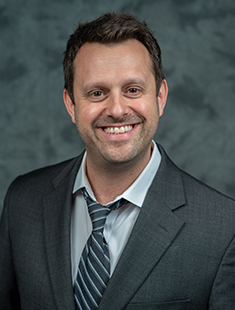
Ravid Shwartz-Ziv is an Assistant Professor and Faculty Fellow at NYU's Center for Data Science, with a dual role as Senior Research Scientist at Wand AI. His research bridges theoretical foundations and practical applications in artificial intelligence, focusing on Large Language Models (LLMs), information theory, and neural network interpretability. Ph.D. in Computational Neuroscience, Hebrew University of Jerusalem (2021) B.Sc. in Computer Science and Computational Biology, Hebrew University of Jerusalem (2014) His research spans: Developing min-p sampling for LLM text generation Preventing representation collapse in Transformers Creating contamination-free LLM benchmarks like LiveBench Advancing information-theoretic frameworks for neural networks Exploring representation learning and model adaptation Recent publications demonstrate expertise in LLM efficiency, self-supervised learning, and multi-agent systems. Notable awards include the Google PhD Fellowship, Moore-Sloan Fellowship, and multiple best paper recognitions. He has led research initiatives at Intel and Google AI, focusing on neural network compression, XGBoost comparisons for tabular data, and innovative benchmarking frameworks.
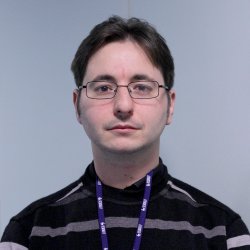
Marta Molinas is a Professor at the Department of Engineering Cybernetics within the Faculty of Information Technology and Electrical Engineering at the Norwegian University of Science and Technology (NTNU). Her research spans multiple interdisciplinary domains with a focus on EEG technology and brain-computer interfaces. She actively supervises numerous Master's projects and maintains extensive international collaborations with institutions including Kavli Institute for Systems Neuroscience, RIKEN Center for Brain Science, University of Tsukuba, Juntendo University, and several European universities. Professor Molinas' research interests center on developing innovative EEG technologies, particularly her FlexEEG concept for reduced-channel EEG systems with brain imaging capabilities. Her work integrates signal processing, artificial intelligence, and neuroscience to create practical applications in mental health, sleep research, neurorehabilitation, and human-computer interaction. She specializes in EEG source imaging, machine learning for brain signal analysis, and the development of brain-computer interfaces for various applications including locked-in syndrome communication, ADHD treatment, and driver monitoring systems. Her publication portfolio demonstrates strong trends in interdisciplinary research combining neuroscience with electrical engineering and artificial intelligence. The work shows particular emphasis on developing practical EEG-based systems that minimize invasiveness while maintaining analytical power, with applications spanning healthcare, rehabilitation, and human augmentation. Her research bridges theoretical signal processing with real-world implementations through numerous student projects and international collaborations. Professor Molinas actively supervises a large team of Master's and PhD students across multiple projects, with each project typically requiring two students working collaboratively. Her research is supported through numerous international collaborations with institutions in Japan, India, and Europe, indicating substantial research funding and project leadership. She has developed a pipeline of student projects that build upon previous work, creating a cumulative knowledge base within her research group. She leads the EEG ITK research team at NTNU, which focuses on developing the FlexEEG headset prototype featuring flexible, wireless, dry electrodes designed to move across the scalp. This team works at the intersection of neuroscience, electrical engineering, and computer science, developing applications for sleep research, mental health monitoring, neurorehabilitation, and brain-computer interfaces. The team collaborates extensively with international partners including the Kavli Institute for Systems Neuroscience, the International Institute of Integrative Sleep Medicine at University of Tsukuba, and several engineering departments across Europe and Asia.
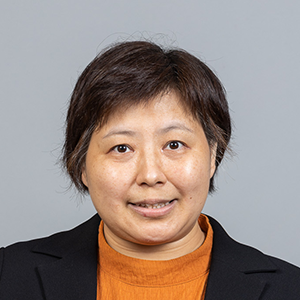
Dr. Chunyan Lai is an Associate Professor at the Department of Electrical and Computer Engineering, Concordia University. Her research focuses on electric drives, motor control, power electronics, electrified vehicles, and vehicle-to-grid solutions. She contributes to both graduate and undergraduate education through courses such as Controlled Electric Drives and Hybrid Electric Vehicle Power Systems . Research Emphasis : Electric motor drives and control systems, electrified transportation, power electronics innovations, and energy management strategies. Publications : Specializes in sensorless control techniques for Permanent Magnet Synchronous Motors (PMSM), thermal management in electric machines, and advanced energy trading frameworks for smart grids. PhD Opportunities : The Power Electronics and Energy Research (PEER) Group under Dr. Lai offers positions for developing efficient motor drives for EVs and grid-connected power converters. Collaboration : Industry-adjacent research with requirements for professional communication, patent development, and technical dissemination.
Jonas Bylander is a Professor at Chalmers University of Technology in the Department of Microtechnology and Nanoscience, specifically within the Quantum Technology division. He leads a research group focused on developing quantum computers using superconducting circuits.
Dr.-Ing. Steffen Klamt leads the Research Group 'Analysis and Redesign of Biological Networks' at the Max Planck Institute for Dynamics of Complex Technical Systems in Magdeburg, Germany, where he has been employed since 1998. He received his Diplom-Systemwissenschaftler degree from the University of Osnabrück in 1998 and his Dr.-Ing. from the University of Stuttgart in 2005. His research focuses on computational systems biology with emphasis on metabolic engineering, biochemical networks analysis, and bioprocess optimization. He develops computational tools like CellNetAnalyzer for network analysis and StrainDesign for metabolic engineering applications. Key research areas include constraint-based modeling, minimal cut sets analysis, and dynamic optimization of metabolic processes. His recent publications demonstrate strong focus on multi-stage bioprocess optimization, enzyme cascade engineering, and novel strain development strategies for chemical production. Common themes include ATP manipulation strategies, thermodynamic constraints in metabolism, and integration of experimental data with computational models. Scientific Awards: Ernst Dieter Gilles Lecture Award Ernst Dieter Gilles Fellowship He leads a research group developing computational methods for metabolic network analysis and maintains collaborations with experimental groups for model validation and application. The group develops open-source software tools widely used in systems biology research.
Matthew Lee Smith is a Professor at the Texas A&M School of Public Health , part of Texas A&M University . He is a core faculty member of the Center for Community Health and Aging (CCHA) and the Center for Health Equity and Evaluation Research (CHEER) , and serves as the Director of the Texas Research, Analytics, Innovations, and Research Lab (TRAIL) . Education: Post-Doctoral Fellowship, Health Science Center, Texas A&M University (2010) PhD in Health Education, Texas A&M University (2008) MPH, Indiana University Bloomington (2004) BS in Public Health Education, Indiana University Bloomington (2002) Research Interests: Dr. Smith’s research focuses on aging , chronic disease management , and evidence-based public health interventions . He is particularly interested in health behavior change , health risk assessment , and survey research methodology . His translational work bridges research and practice across healthcare, aging services, and public health systems. He has a strong focus on social determinants of health , including social isolation , caregiving , diabetes self-management , and fall prevention among older adults. His work often targets underserved populations, particularly Black/African American men and rural communities . Scientific Awards: Immunization Neighborhood Champion Award (2024) Responsible Research in Management Award (2023) J. Mayhew Derryberry Award (2022) Consumer Education Program Award (Silver) (2022) Bluebonnet Award (2021) Innovators in Aging Award (2019) Redefining American Healthcare Award (2019) Community ConnecTivity Award (2019) Phillip G. Weiler Award for Leadership in Aging and Public Health (2018) Leadership & Mentorship: Dr. Smith holds leadership roles in several national and state-level initiatives. He is the Co-Director of the Advancing Gerontology through Exceptional Scholarship (AGES) Program and serves on the Steering Committees of the Texas Falls Prevention Coalition , Texas Alzheimer’s Research and Care Consortium , and Texas Social Isolation and Loneliness Coalition . He is also the Director of the Research Scholars & Mentorship Program (RSMP) at the American Academy of Health Behavior. Labs & Centers: He leads the Texas Research, Analytics, Innovations, and Research Lab (TRAIL) , which focuses on developing and evaluating community-based interventions. He is also affiliated with: Center for Community Health and Aging (CCHA) Center for Health Equity and Evaluation Research (CHEER)
Prof. Dr. Rainer Nagel is affiliated with the University of Tübingen as a faculty member in the Faculty of Mathematics and Natural Sciences , specifically within the Department of Mathematics . He leads the Tübingen Functional Analysis Group (AGFA) and the AGFA-TRI-TEAM, focusing on functional analysis and its applications. Editorial roles: Journal of Evolution Equations , Semigroup Forum , Positivity , and others. Research interests: Functional analysis, operator theory, evolution equations, ergodic theory, and mathematical physics. Publications span topics like semigroups, nonautonomous Cauchy problems, and boundary feedback systems.
Dr. Umberto Montanaro is a Senior Lecturer in Autonomous Systems and Control Engineering at the University of Surrey's School of Mechanical Engineering Sciences, within the Centre for Automotive Engineering. He holds PhDs in Control Engineering (2009) and Mechanical Engineering (2016) from the University of Naples Federico II, Italy. His research focuses on adaptive control algorithms for automotive and mechatronic systems, including vehicle platooning, autonomous driving, and nonlinear control strategies. He has authored over 60 peer-reviewed publications and led projects like the Innovate UK-funded GPR for Localisation (2018–2019) and the EPSRC/JLR-funded CARMA initiative (2016–2021). His work spans control of multiagent systems, optimal control, and enhanced model reference adaptive control (MRAC) applications. Dr. Montanaro has supervised multiple PhD and MEng students, including co-supervision of Shilp Dixit's research on autonomous overtaking. Research Interests: Adaptive Control, Autonomous Vehicles, Vehicle Platooning, Nonlinear Systems, Model Reference Adaptive Control Grants: CARMA (EPSRC/JLR), GPR Localisation (Innovate UK) Teaching: Control and Dynamics (ENG3611), Engine Speed Control labs Labs/Teams: Active in automotive control systems and connected autonomous vehicle research
James Aspnes is the Harold W. Cheel Professor of Computer Science at Yale University, specializing in distributed algorithms and randomized methods. He holds a PhD from Carnegie Mellon University and degrees from MIT. His research focuses on distributed systems, peer-to-peer networks, and sensor networks, emphasizing tools for efficient data management and fault-tolerance. Education: PhD (CMU, 1992), SM & SB (MIT, 1987) Affiliations: Yale since 1993, IBM Almaden Research Center (1992–1993) Research interests include distributed algorithms, randomization, and applications in biology and economics. Notable contributions include skip graphs, population protocols, and consensus algorithms. He has received the ACM-EATCS Dijkstra Prize (2020) and Dylan Hixon Prize (2000). Publications span distributed computing, algorithms, and cryptography. Recent work explores consensus protocols and privacy in population models. Grants include NSF awards totaling over $2M. Active in editorial roles (Algorithmica, Distributed Computing) and conference organization (PODC 2005, DCOSS 2007).
Liu Lili is a Lecturer (Educator Track) in the Department of Computer Science at the School of Computing, National University of Singapore. She holds a Ph.D. from Nanyang Technological University and a Master's in Computer Science from Shanghai University. Prior to NUS, she served as a Senior Research Scientist at Singapore Polytechnic and a Scientist at A*STAR's Institute of High-Performance Computing. Her research focuses on Machine Learning, Computer Vision, and Multi-modal Learning, with applications in FinTech, Social Media Analysis, and Algorithms & Theory. Notable projects include AI-driven coating inspection systems for marine assets and behavioral competency assessment tools for navigational safety. She has contributed to robotics for construction quality assessment and interactive virtual environments for rehabilitation. Liu's publications span AI applications in finance, robotics, and material science, reflecting her expertise in bridging theoretical computer science with practical industrial solutions. Her work emphasizes automation, anomaly detection, and multi-modal data integration.
Prof. Dr. Arndt Brendecke is a Professor of Early Modern History at Ludwig-Maximilians-Universität München (LMU), holding the Chair for Early Modern History since 2011. He serves as a spokesperson for the Collaborative Research Centre 1369 ‘Cultures of Vigilance’ and has held leadership roles such as Dean of LMU’s Faculty of History and Arts (2021–2023) and Director of LMU’s History Department (2013, 2014, 2019). His academic career includes visiting professorships at the Université Paris 1 (Panthéon-Sorbonne) and the German Historical Institute in London. Brendecke’s research focuses on early modern political and colonial history, with a particular emphasis on Spain’s empire, knowledge politics, and vigilance cultures. Education: PhD in Modern History (1999), LMU Munich Habilitation in Modern History (2008), LMU Munich Research Interests : Brendecke explores the intersection of knowledge, power, and governance in early modern Europe, especially in Spanish colonial contexts. His work on ‘vigilance cultures’ examines how societies historically managed attention and surveillance. Key themes include colonial administration, archival practices, and the conceptual history of modernity. Awards and Roles : He is a member of the Bavarian Academy of Sciences and Humanities (2024), Academia Europaea (2016), and the LMU Centre for Advanced Studies. He co-edits major journals like Historische Zeitschrift and has led major research initiatives, including the Collaborative Research Centre 573 (2007–2009) and ProMoHist doctoral program (2012–2023). Grants and Advisory Roles : Funded projects include the Goethe-Institute’s translation of his habilitation thesis. He advises institutions such as the Bavarian Academy of Sciences and the Munich Centre for Global History. His work bridges historical scholarship with global perspectives, emphasizing the empirical dimensions of early modern empires. Labs/Teams : Leads the Collaborative Research Centre 1369, exploring vigilance as a cultural and historical phenomenon. Collaborates with international networks like the ‘Network of Early Modern Senses’ and the ‘Cooperation Network of European Routes of Emperor Charles V’.
Randall D. Beer is a Provost Professor at Indiana University with affiliations across multiple departments and centers, including the Cognitive Science Program , Program in Neuroscience , School of Informatics, Computing, and Engineering , and the Center for Complex Networks and Systems Research . His research focuses on understanding how organisms function as integrated wholes, emphasizing the interplay between brains, bodies, and environments. He develops computational models of neuromechanical systems, biologically-inspired robotics, and dynamical systems approaches to cognition. Education: While formal educational details are not explicitly listed, Beer's academic trajectory is reflected in his extensive publications and roles in interdisciplinary research programs. Research Interests: Beer investigates: - Embodied cognition and enaction frameworks - Neurodynamics and central pattern generators - Evolution of behavior in artificial agents - Metabolic and developmental systems biology - Dynamical systems theory - Computational modeling of C. elegans locomotion Software Contributions: Beer has developed tools like Dynamica (for dynamical systems analysis), CTRNN (neural network simulation), and Evolutionary Agents (robotics control frameworks). These tools are widely used in computational neuroscience and robotics research. Advising and Teams: He supervises a large group of graduate students and postdocs, contributing to projects such as neuromechanical modeling and evolutionary robotics. His work is supported through grants focusing on embodied cognition and systems biology. Labs and Collaborations: Active in the Center for Complex Networks and Systems Research and collaborates with interdisciplinary teams exploring topics like autopoiesis, viability theory, and robotic embodiment.
Prof. Jose Such is a Professor of Computer Science at King's College London (KCL), affiliated with the KCL Cybersecurity Centre and the Informatics Security Hub. His research focuses on cybersecurity, AI ethics, privacy engineering, and conversational systems. He leads major projects such as REPHRAIN (Phase I & II) and SAIS, funded by EPSRC, addressing privacy, adversarial influence, and secure AI assistants. His work contributes to UN Sustainable Development Goals related to privacy and digital security. Key research areas include large language models (LLMs), smart home security, multi-user privacy conflicts, and ethical AI governance. Prof. Such has published over 80 peer-reviewed papers, with recent emphasis on mitigating privacy risks in conversational AI and developing safety benchmarks for LLMs. He oversees research projects involving multi-disciplinary teams, integrating technical solutions with legal and ethical frameworks. Notable outputs include the MalProtect malware defense system and the CASE-Bench evaluation framework for AI safety. His datasets and tools, such as SkillVet and ELVIRA, address privacy risks in voice assistants and cloud services. Prof. Such collaborates globally, with recent work exploring cross-cultural privacy practices in smart homes and the security challenges faced by marginalized groups. His research bridges technical innovation with societal impact, advocating for transparent and accountable AI systems.
Saurabh Bagchi is a Professor at Purdue University, West Lafayette, USA. He holds a PhD in Computer Science from the University of Illinois Urbana-Champaign (2001). His research focuses on distributed systems security, networking, and embedded systems. Key areas include IoT security, cyber-physical systems resilience, and machine learning applications in edge computing. Bagchi's work spans theoretical and applied domains, addressing challenges in distributed algorithms, fault tolerance, and secure communication protocols. His contributions to firmware analysis, serverless computing optimization, and anomaly detection in industrial IoT systems have been widely recognized. He has published over 300 papers in top-tier conferences and journals such as IEEE Transactions on Dependable and Secure Computing, ACM Transactions on Sensor Networks, and CVPR. He collaborates with researchers in academia and industry to advance resilient networked systems, including projects funded by NSF and industrial partnerships. His lab explores cutting-edge topics like federated learning security, edge computing architectures, and game-theoretic approaches to cyber defense.
David Blaauw is the Kensall D. Wise Collegiate Professor of Electrical Engineering and Computer Science (EECS) at the University of Michigan. His research focuses on ultra-low-power analog/mixed-signal circuits, mm-scale sensors, neural networks, and biomedical applications. He leads the Blaauw Lab, which has pioneered innovations like the Michigan Micro Mote (M^3) and neural recording probes. His work emphasizes real-world deployability, with applications in environmental monitoring (e.g., monarch butterflies), medical devices, and robotics. Education: B.S. in Physics and Computer Science, Duke University (1986) Ph.D. in Computer Science, University of Illinois Urbana-Champaign (1991) Research Interests: Blaauw’s lab explores ultra-low-power computing, mm-scale systems, RF communication, in-memory computing, and genomics acceleration. Key projects include: Millimeter-scale computers (e.g., 0.04mm³ temperature sensors) Wireless neural interfaces for brain-machine communication Energy-efficient accelerators for edge AI and genomics Micro-robotics with sensing/actuation/computation Awards: IEEE Fellow 2016 SIA-SRC Faculty Award Motorola Innovation Award Best Paper Awards at ISSCC, ISCA, and RFIC Advising & Impact: Over 600 publications, 65 patents, and 4 startup companies spun from his lab. Current research includes genome sequencing accelerators (GenAx) and neural recording dust for brain mapping. He directs the Michigan Integrated Circuits Lab and chairs major conferences like ISSCC and DAC. Labs/Teams: Blaauw Lab (University of Michigan) Michigan Integrated Circuits Lab (MICAL)