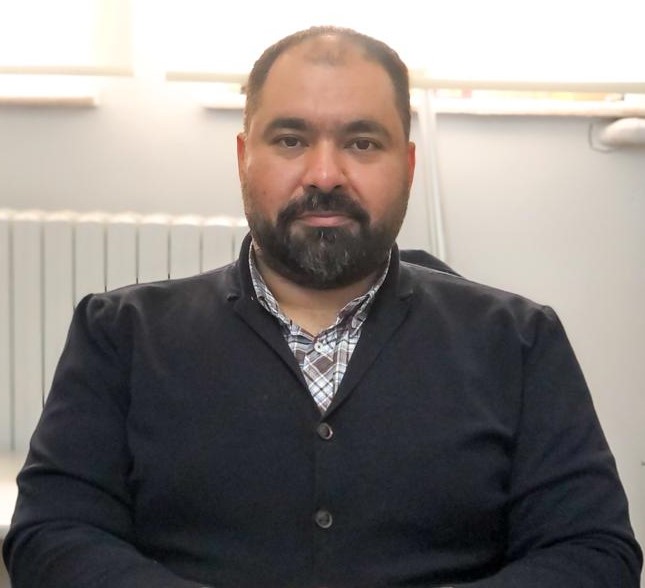
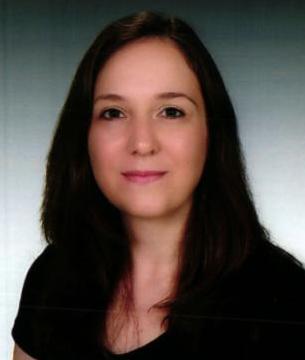
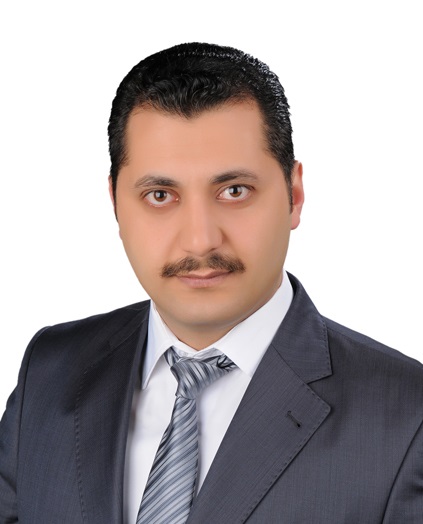
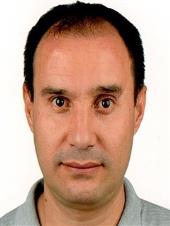
Assoc. Prof. Dr. Müge URGU ÖZTÜRK is an academic at Ege University's Faculty of Engineering, Department of Food Engineering. Her research focuses on Food Sciences and Engineering, particularly Milk/Dairy Technology and Meat/Meat Products Technology. Institution: Ege University Faculty: Faculty of Engineering Department: Department of Food Engineering Academic Rank: Associate Professor Her work emphasizes sustainable processing technologies, including UV light applications for microbial control in dairy products and plant-based fat substitution strategies in meat formulations. She explores chemical/microstructural properties of food systems and storage stability optimization through maltodextrin, microparticulated proteins, and novel emulsion systems. Article trends show expertise in dairy/meat emulsion engineering, fat substitution technologies, and sustainable food processing methods. Recent 2025 work focuses on industrial meat waste valorization for greener solutions. Contact: muge.urgu@ege.edu.tr
Prof. Halil Demir is an Associate Professor at Akdeniz University's Faculty of Agriculture, Department of Horticulture , where he has worked since 2009. He completed his PhD in Horticulture at Akdeniz University (2009) and holds a BSc from Cukurova University (1998). Doctorate: Akdeniz University (2003-2009) Postgraduate: Akdeniz University (1999-2002) Undergraduate: Cukurova University (1994-1998) His research focuses on horticultural science , particularly vegetable breeding , greenhouse cultivation , and sustainable agricultural practices . Key areas include biofertilizers , vermicompost applications , deficit irrigation techniques , and compost utilization in cool/hot climate vegetables. Recent research trends show strong emphasis on water stress management (partial root drying), organic amendments (spent mushroom compost), and plant-microbe interactions to enhance vegetable yield and quality. His 2023-2025 projects investigate biostimulants and molecular breeding for disease resistance in melons. Scientific contributions: Over 107 publications (Web of Science) 22 citations (WoS), 1239 Google Scholar citations H-index 6 (WoS), 18 (Scholar) TÜBİTAK Scientific Publication Incentive Award (2003) As supervisor, he has advised 8 postgraduate theses on topics from Cantaloupe breeding to microbial fertilizer effects . He serves as Editor for Isparta Uygulamali Bilimler University Journal and as peer reviewer for journals like Agronomy and Horticulturae .
Lecturer Mustafa Ayyildiz is affiliated with Akdeniz University , specifically at the Technical Sciences Vocational School in the Department of Electronics and Automation . His current academic position has been active since 2023, following prior non-academic engineering roles at Turkey Radio-Television Corporation (TRT) from 2020 to 2023. Doctorate: Akdeniz University, Institute of Science (2022–present) MSc: Suleyman Demirel University, Fen Bilimleri Enstitüsü (2019–2021) BSc: Akdeniz University, Faculty of Engineering, Electrical and Electronics Engineering (2014–2019) Dr. Ayyildiz specializes in adaptive control systems for mobile robotics , focusing on fault tolerance and parameter uncertainty mitigation. His research integrates sliding mode control methodologies to enhance reliability in wheeled mobile robots, with comparative studies against traditional PID controllers . Publications emphasize applications in automation engineering and robotic control systems . He has presented at peer-reviewed conferences like INISTA 2021 and contributed to journals such as Automatika . His work has accumulated 3 SCI/SSCI citations and 14 PlumX metrics (readership and citations). Prior non-academic roles involved electronics engineering at TRT's Transmitters Department.
Can Yüzükollar serves as an Assistant Professor in the Department of Computer Engineering at Sakarya University's Faculty of Computer and Information Sciences, where he has been a lecturer since 2018 following 13 years as an expert at the university's Computer Research and Application Center (2005-2018). Education: Doctorate (2007-2018) from Sakarya University's Institute of Science/Computer and Information Engineering with thesis: "Regional based adaptive reversible image watermarking based on interpolation errors". Master's (2005-2007) from Sakarya University's Institute of Science/Computer and Information Engineering with thesis: "Fingerprint and speaker recognition using artificial neural networks". Licence (2000-2004) from Sakarya University's Faculty of Engineering/Department of Computer Engineering. Research Interests: Dr. Yüzükollar specializes in secure image processing , particularly reversible watermarking techniques using interpolation error expansion and histogram modification. His work bridges biometric security (fingerprint/speaker recognition via neural networks) and energy systems optimization , with recent expansion into deep reinforcement learning for image authentication. Core methodologies include neural networks, cryptographic hashing, and algorithmic optimization for digital media security. Publication Trends: His scholarly output reveals an evolving trajectory from foundational biometric research (2007) through intensive image security contributions (2013-2018) to contemporary interdisciplinary work in deep learning (2023) and renewable energy (2021). The 2023 deep reinforcement learning paper signifies a strategic pivot toward AI-driven image authentication, while the 2021 wind energy publication demonstrates applied optimization expertise beyond core computer engineering domains.
Serap ÇAKAR KAMAN is an Assistant Professor at Sakarya University's Faculty of Computer and Information Sciences, Department of Computer Engineering. She has maintained a continuous academic career at the university since 2000, progressing from Research Assistant to Lecturer and finally to Assistant Professor. Her educational background includes: Doctorate in Electrical Engineering (2003-2009) from Sakarya University Institute of Science with thesis on "DIGITAL IMAGE WATERMARKING METHODS BASED ON MOMENT-BASED NORMALIZATION" Master's in Computer and Information Engineering (2000-2003) from Sakarya University Institute of Science with thesis on "DETECTING, TRACKING AND TARGET IDENTIFICATION OF OBJECT MOVEMENTS ON VIDEO IMAGES" Bachelor's in Electrical-Electronics Engineering (1996-2000) from Sakarya University Faculty of Engineering Dr. ÇAKAR KAMAN's research spans multiple domains within computer vision and artificial intelligence, with particular expertise in object detection, deep learning applications, and image processing. Her work bridges theoretical computer vision with practical applications in industrial automation, medical imaging, and electric vehicle technology. She has made significant contributions to metal surface defect detection, autonomous charging systems, and facial expression recognition for healthcare applications. Her research demonstrates a consistent pattern of applying advanced computer vision techniques to solve real-world problems across diverse domains. Analysis of her publication trends reveals a clear evolution from foundational work in digital image watermarking to cutting-edge applications of deep learning in industrial settings. Her recent publications (2023-2025) focus on practical implementations in agricultural technology (hazelnut kernel analysis), business intelligence (employee feedback analysis), and marine infrastructure (shore-to-ship charging). The consistent thread through her research is the development of robust computer vision algorithms that enhance automation and precision in various technical contexts. With an H-index of 4 in Web of Science and 114 citations, Dr. ÇAKAR KAMAN maintains an active research profile. Her academic contributions include teaching in the Department of Computer Engineering and likely supervision of graduate students, though specific student information isn't documented in the available materials. Her work contributes significantly to Sakarya University's research profile in computer engineering and supports Turkey's growing expertise in artificial intelligence applications. Her laboratory work appears to focus on computer vision systems with emphasis on real-time processing applications. The research groups she participates in likely include teams working on industrial automation, electric vehicle infrastructure, and medical image analysis, though specific team structures aren't detailed in the available information.
Ahmet ŞANSLI is a Lecturer at Sakarya University's Faculty of Computer and Information Sciences, Department of Computer Engineering. His academic journey includes a Bachelor's in Computer Engineering (2005), Master's in Computer and Information Engineering (2007), and Doctorate from the same institute (2020). He served as Deputy Director of the Computer Research and Application Center from 2018-2023. Research Expertise: Specializes in information security, cryptology, computer software engineering, and distributed systems. Key technical domains include web programming, cloud computing (BSM 470), mobile application development (BSM 447), and graduation project supervision. Publication Focus: Research spans cybersecurity applications (smart grids, DRM systems), network simulation tools, digital literacy studies, and biometric security. Recent works emphasize large-scale network analysis and critical infrastructure protection. Administrative & Projects: Deputy Director: Computer Research Center (2018-2023) Board Member: Distance Education Center (2022) Research projects: Real-time Ethernet protocol optimization (2010-2011)
Firdevs Sevde TOKER serves as a Researcher in the Department of Computer Engineering at Sakarya University's Faculty of Computer and Information Sciences, where she has maintained continuous academic engagement since 2019. Her institutional affiliation centers on critical infrastructure cybersecurity research within Turkey's higher education framework. Her academic credentials include: Doctorate in Computer and Information Engineering (2020-2021) from Sakarya University Institute of Science, with doctoral research focusing on MITRE ICS attack simulation and detection on EtherCAT-based drinking water systems Bachelor's degree in Computer Engineering (2012-2016) from Sakarya University's Faculty of Computer and Information Sciences Dr. TOKER's research program specializes in Industrial Control Systems (ICS) security, with particular emphasis on simulating cyberattacks against critical infrastructure using MITRE ATT&CK frameworks and EtherCAT industrial protocols. Her work bridges theoretical cybersecurity models with practical water treatment system vulnerabilities, contributing to sustainable development goals related to clean water security and infrastructure resilience. This research niche addresses emerging threats in operational technology environments where traditional IT security approaches prove insufficient. No scientific awards or major recognitions are documented in available sources. Current information indicates no formal student advisement activities or externally funded research grants. Dr. TOKER operates within the university's standard academic infrastructure without specific laboratory or dedicated research team affiliations mentioned in institutional records.
Prof. Mehmet Ali ERDEM is a faculty member at Istanbul University Faculty of Dentistry , currently holding the Professor rank in the Department of Oral and Maxillofacial Surgery . He has been affiliated with Istanbul University since 2000, progressing from Research Assistant (2001-2012) to Associate Professor (2012-2020) before becoming Professor in 2020. Doctorate: Istanbul University Faculty of Dentistry (2006) Postgraduate: Istanbul University Faculty of Dentistry (2000-2006) His research focuses on Oral and Maxillofacial Surgery with specific interests in bone regeneration , dental implant biomechanics , oral pathology , and biomaterial applications . Recent work includes finite element analysis of titanium meshes, temperature control in implant surgery, and novel surgical techniques for oroantral fistulas. Scientific output includes 114 WoS publications and 187 WoS H-index . Current research involves in-vitro studies on titanium surface treatments and biomechanical testing of fixation materials. Secretary General: Turkish Association of Oral and Maxillofacial Surgery Member: Turkish Association of Oral and Maxillofacial Surgery since 2002 Active in scientific conferences across Turkey and international venues like the USA and UK. Supervised 1 thesis and participates in research grants related to bone regeneration and implant stability.
Professor Halil İbrahim Çelik is a distinguished academic at Gaziantep University's Faculty of Engineering, Department of Textile Engineering, where he has served since 2005, progressing from Research Assistant to his current position as Professor (since 2024). His academic journey includes significant contributions to textile engineering, with particular expertise in machine vision applications, artificial intelligence in textiles, and carpet technology. He has held various administrative positions including Intern Tracking Coordinator, Social Awareness Projects Coordinator, ÖYP Coordinator, and Farabi Coordinator at Gaziantep University. Professor Çelik earned his education at Gaziantep University, completing his Doctorate in Mechanical Engineering (2007-2013), Master's in Textile Engineering (2004-2007), and Bachelor's in Textile Engineering (1999-2004). He also holds an Associate Degree in Foreign Trade from Anadolu University (2004-2006). His research interests span Textile Sciences and Engineering, Textile Technology, Machine Vision Applications, Artificial Intelligence in Textiles, Smart Textiles, Carpet Technology, and Composite Materials Testing. Professor Çelik has pioneered work in AI applications for fabric defect classification, machine vision systems for textile quality control, and innovative testing devices for carpet performance measurement. His research bridges traditional textile engineering with cutting-edge computational methods, creating practical industrial applications. Analysis of his recent publications reveals a strong focus on integrating artificial intelligence with textile manufacturing processes, particularly in quality control and predictive modeling. His work demonstrates a consistent trajectory toward developing smart, automated systems for textile production and quality assessment, with significant contributions in machine vision solutions for fabric inspection, AI-based property prediction, and innovative testing methodologies for carpets and composite materials. Among his recognitions, Professor Çelik received the 'Best University Reviewer' award from Osmaniye Korkut Ata University in 2017. His leadership extends to numerous research projects, including TÜBİTAK 1005 and 1505 projects focused on developing intelligent systems for textile quality control and innovative testing devices. Professor Çelik has supervised numerous graduate students, with completed theses covering topics such as AI applications in textile engineering, machine vision systems, carpet technology innovations, and sustainable textile production methods. His research group has secured significant funding through national research projects, particularly in the areas of machine vision for textile quality control and innovative carpet testing methodologies. His research team has developed several patented innovations, including earthquake warning filter systems, carpet static loading test devices, alternative finishing methods for woven carpets, and artificial vision systems for nonwoven surfaces. These developments demonstrate his commitment to translating academic research into practical industrial applications.
Professor Esra Mete Güneyisi is affiliated with Gaziantep University since 2020, serving within the Faculty of Engineering, Department of Civil Engineering . She holds a PhD and MSc in Civil Engineering from Boğaziçi University (2007 and 2002, respectively) and a BSc from the same institution (2000). Her research focuses on seismic analysis, composite structures, sustainable construction, and advanced material modeling. Education : PhD (Boğaziçi University, 2007), MSc (Boğaziçi University, 2002), BSc (Boğaziçi University, 2000) Professional Roles : Professor at Gaziantep University (2020–present), Associate Professor (2013–2020), Doctor Lecturer (2008–2013), Research Assistant at Boğaziçi University (2001–2008) Her research integrates artificial intelligence and finite element analysis for structural design, with a focus on reinforced concrete , steel structures , and seismic retrofitting . She has contributed to self-healing concrete and recycled aggregate applications . Her 15 most recent articles explore topics like rubberized CFST columns, eccentric bracing effects, and AI-driven design models, spanning civil engineering, materials science, and structural safety. She has supervised 19 PhD and 49 Master’s theses, addressing nonlinear structural analysis, seismic retrofitting, and composite materials. Her projects include TÜBİTAK-funded studies on structural behavior and international collaborations like the PROHITECH initiative. Memberships include the Structural Steel Association (2010) and the TMMOB-Chamber of Civil Engineers (2007).
Nihat Yildirim is a Professor in the Department of Mechanical Engineering at Gaziantep University's Faculty of Engineering. His academic qualifications include a PhD in Construction and Manufacturing from the University of Huddersfield (1990–1994), a Master's in Mechanical Engineering from Middle East Technical University (1987–1988), and a Bachelor's in Mechanical Engineering from the same institution (1981–1986). His research spans gear design (asymmetric/spur gears, cycloidal reducers), power transmission systems , CFD simulations for aerodynamics, and robotics applications . He also led a TÜBİTAK project commercializing a novel olive oil extraction technique. His publications focus on optimizing gear stress distribution, windage losses, and transmission efficiency, with consistent emphasis on industrial and aerospace applications. Yildirim advises numerous graduate students, with recent theses covering topics like asymmetric gear design, robotic reducer assembly, and non-circular gears. He has managed six national R&D projects, including KOSGEB-funded cycloidal reducer development for robotics and defense sectors.
MEHMET ERDEM İNCE is an Associate Professor in the Textile Engineering Department at Gaziantep University's Faculty of Engineering since 2023. Previously, he served as a Doctor Lecturer (2013-2023) and Research Assistant (2004-2013) at the same institution. His academic career spans nearly two decades with consistent progression through academic ranks. Education: Doctorate (2008-2013): North Carolina State University, USA Master's (2002-2005): Gaziantep University, Institute of Science, Textile Engineering (Thesis) Bachelor's (1998-2002): Afyon Kocatepe University, Uşak Faculty of Engineering, Textile Engineering Professor İnce specializes in advanced textile engineering with particular expertise in glass fiber textiles, weft-knitted structures, and textile composites. His research focuses on the mechanical properties, compressibility behavior, and structural characteristics of specialized textile materials. He has developed significant expertise in nonwoven fabrics, 3D textile structures, and protective textile applications. His work bridges theoretical modeling with practical textile manufacturing techniques, particularly in the realm of high-performance technical textiles. His publication record demonstrates consistent research productivity with 13 peer-reviewed articles spanning from 2007 to 2024, primarily focusing on glass yarn applications, fabric architecture effects, and textile composites. The research shows an evolution from fundamental yarn and fabric properties toward more complex composite material systems and protective textile applications. Scientific Recognition: Genç Bilim ve Sanat İnsanı Ödülü (2015) En İnovatif AR-GE Projesi Ödülü (2014) En iyi ikinci proje ödülü (2014) Mühendislik Fakültesi Birinciliği (2002) Professor İnce has actively supervised four Master's theses on textile properties and composites while securing multiple research grants including TÜBİTAK projects focused on textile-reinforced composites and protective fabrics. His administrative service includes roles as MÜDEK Accreditation Coordinator (2016-2020) and Vice Department Chair (2014-2020), demonstrating leadership within his academic department. He maintains active laboratory research in textile mechanics and composite materials, with current projects focusing on hybrid protective textiles, impact-resistant composites, and novel textile structures for engineering applications. His work bridges traditional textile engineering with advanced material science applications.
Dr. Ali Osman Arslan is an Assistant Professor in the Department of Electrical and Electronics Engineering at Gaziantep University's Faculty of Engineering. He holds a Doctorate (2021) and Master's degree (2012) from Gaziantep University, specializing in Electrical Machinery and Power Systems. University: Gaziantep University School: Faculty of Engineering Department: Electrical and Electronics Engineering Academic Rank: Assistant Professor His research focuses on advanced power conversion systems, including modular multilevel converters , hybrid inverter topologies , and adaptive control techniques for renewable energy integration and industrial applications. He has extensively studied phase-shifted PWM methods, arm inductance optimization , and submodule topologies in converter systems. Recent publications analyze comparative performances of FACTS devices and future prospects of modular converter technologies. He teaches graduate courses like Advanced Static Power Conversion and undergraduate courses covering Power Electronics and Electromechanical Energy Conversion . Scientific Awards: 2023 Most Original Design Award (Akıncılar Team) 2022 First Place & Performance Prize (Akıncılar Team) 2021 First Place Local Award (Hidden Danger R&D Team) 2021 Most Original Design Award (Toprak R&D Team) Projects: Led 2022-2023 Teknofest student support projects and contributed to electromagnetic high-speed train development (2009-2010).
Mehmet Merkepçi serves as an Assistant Professor in the Department of Computer Engineering at Gaziantep University's Faculty of Engineering, Turkey. Holding a Doctorate in Electrical and Electronic Engineering (2017), he has maintained continuous academic affiliation with the university since 2007 through progressive roles from Research Assistant to his current position. Academic Background: Doctorate (2017): Gaziantep University, Institute of Science, Electrical and Electronic Engineering Master's (2009): Gaziantep University, Institute of Science, Electrical and Electronics Engineering Bachelor's (2000): Karadeniz Technical University, Faculty of Engineering, Electrical-Electronic Engineering Merkepçi's research demonstrates exceptional interdisciplinary breadth with core emphasis on Cryptography and Artificial Neural Networks . His recent work pioneers neutrosophic number theory applications in public key cryptography, significantly advancing RSA and El Gamal algorithms. Parallel research trajectories include biomedical signal processing using photoplethysmography for non-invasive monitoring systems, and textile engineering innovations in fabric porosity and air permeability analysis. This multifaceted approach bridges theoretical mathematics with practical engineering solutions across diverse domains. Publication analysis reveals 10 journal articles concentrated in 2022-2025, with cryptographic research constituting 60% of recent output. The remaining publications demonstrate sustained engagement in biomedical engineering (20%) and textile science (20%), indicating strategic diversification while maintaining cryptographic expertise as the research cornerstone. This distribution reflects deliberate specialization in security-critical applications alongside targeted explorations of neural network implementations in physical systems. Merkepçi teaches advanced courses including Security Engineering and Occupational Safety at graduate level, and foundational undergraduate instruction in Computer Programming, Database Management, and Engineering Mechanics. His administrative service includes Department Vice Chairman (2020-present) and former Department Head (2020-2024), demonstrating institutional leadership alongside research and teaching responsibilities.
Prof. Dr. Seyhan ULUSOY is a faculty member at the Department of Biology, College of Engineering and Natural Sciences, Suleyman Demirel University. With an H-index of 18 and over 1233 citations, her research focuses on microbial interactions, nanomaterial applications, and plant-derived bioactives. PhD in Biology (Suleyman Demirel University, 2007) MSc in Biology (Suleyman Demirel University, 2003) BSc in Biology (Suleyman Demirel University, 2000) Her research interests include: Quorum sensing inhibition in Pseudomonas aeruginosa and Chromobacterium violaceum Development of antibacterial nanofibers/nanoparticles Essential oil-based antimicrobial agents Exopolysaccharide characterization for prebiotic applications Scientific trends in her publications highlight interdisciplinary work combining microbiology, materials science, and plant chemistry, with recent studies on nanofiber drug delivery systems and biofilm inhibition mechanisms.