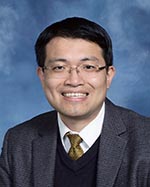
Roman Samulyak is a Professor in the Department of Applied Mathematics and Statistics at Stony Brook University. He holds a Ph.D. from NJIT in Applied and Computational Mathematics with specializations in Hydro- and Electrodynamics. His research develops advanced numerical algorithms for modeling complex physical systems in high-energy physics and fusion energy. Research spans computational methods for magnetohydrodynamics, plasma physics, nuclear fusion/fission systems, and particle accelerator design. Current applications include disruption mitigation in tokamaks and laser-driven particle acceleration. Recent publications demonstrate strong focus on plasma-based accelerators and fusion reactor modeling, particularly pellet ablation dynamics, laser wakefield acceleration, and MHD simulations of tokamak plasmas. Research utilizes high-performance computing resources for large-scale simulations. Office location is Math Tower 1-108 at Stony Brook University.
Prof. Xiao Hu is an Associate Professor in the Department of Physics and Astronomy at Rowan University, with joint appointments in Biomedical and Translational Sciences and Biomedical Engineering. His interdisciplinary research bridges biophysics, polymer science, and biomedical applications, focusing on protein-based biomaterials derived from silks, elastins, and plant proteins. Post-Doctoral Associate, Tufts University Ph.D., Polymer and Biophysics, Tufts University M.S., Biomedical Engineering, Tufts University M.S., Physics, Tufts University B.S., Crystal and Material Physics, Nanjing University His work on biopolymer self-assembly explores silk-elastin alloys, tissue engineering scaffolds, and tunable drug delivery systems. Recent studies involve ultrasound-assisted fabrication and ionic liquid processing of nanofibers. Key article themes include biocomposite crystallinity (2025), 3D-printed protein materials (2025), and electrospun drug carriers (2024). Awards highlight his leadership in thermal analysis societies and innovation. Rising Innovator Award (Rowan, 2016) President, North American Thermal Analysis Society (2023) Springer Best Poster Awards (2008, 2010) Prof. Hu mentors students in biophysics and biomedical engineering, co-authoring studies on silk-cellulose composites, thermal conductivity, and smart biomaterials for medical devices. His lab utilizes advanced equipment like FTIR, DSC, and electrospinning systems.
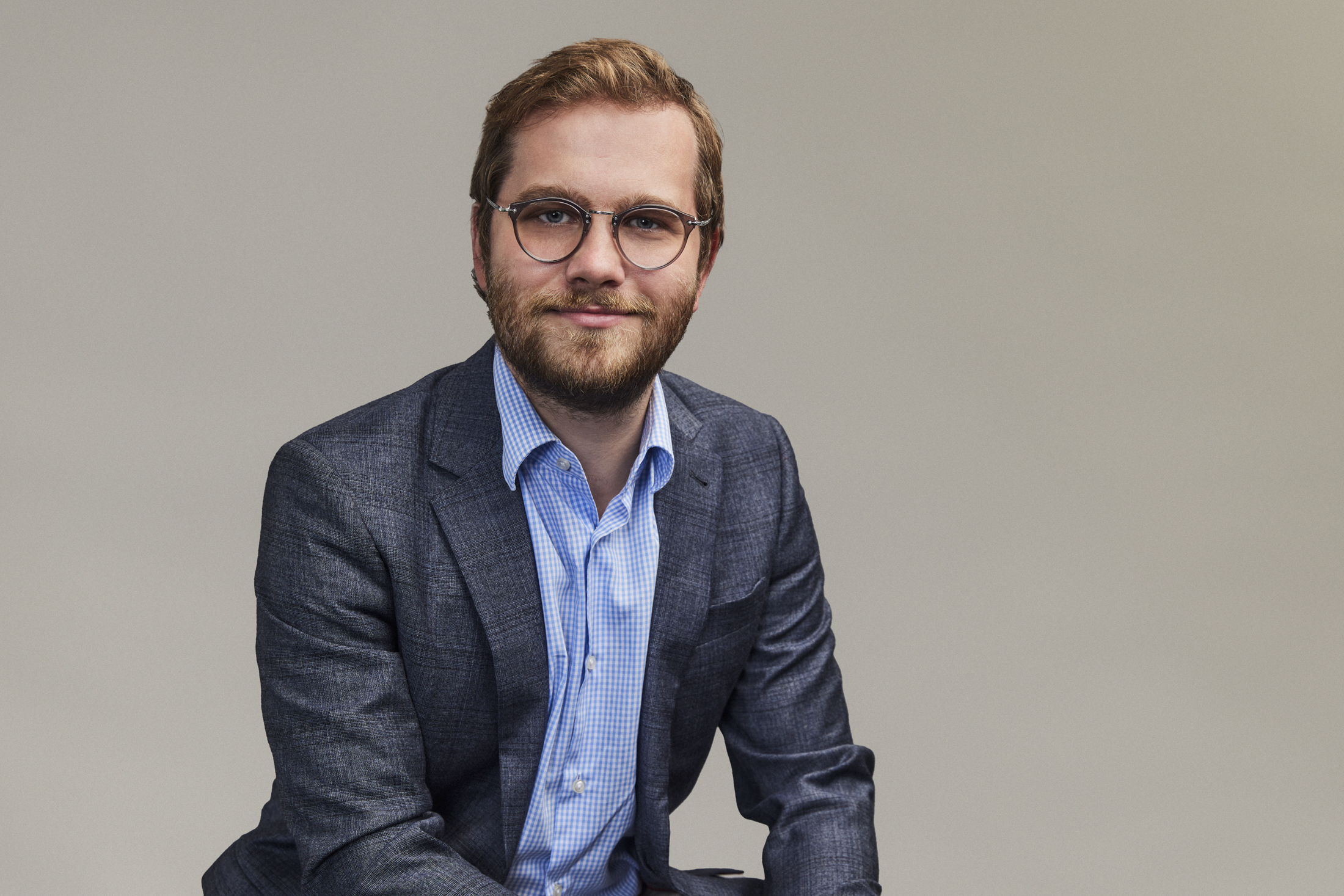
Lorenz Dörschel is an Adjunct Professor (Lehrbeauftragter) at the Institute of Automatic Control at RWTH Aachen University. He holds the academic title PD Dr.-Ing. habil, signifying post-doctoral research qualifications. His position is part-time, focusing on advanced control theory and applications. His primary research interests include: Control of distributed parameter systems (e.g., fluid dynamics, thermal processes) Model predictive control for industrial and automotive systems Parameter space methods for robust controller design Model reduction techniques for complex nonlinear systems Dörschel's recent publications (2018-2024) demonstrate broad applications across biomedical engineering, renewable energy, automotive systems, and industrial automation. His work consistently integrates mathematical rigor with practical implementations, emphasizing advanced control methodologies like nonlinear MPC, Lyapunov-based design, and Bayesian optimization. A recurring theme is the development of computationally efficient control strategies for distributed parameter systems. No scientific awards, student advising relationships, or research grants are documented in the available information.
Lt Col Darrell S. Crowe, PhD, is an Assistant Professor of Aerospace Engineering in the Department of Aeronautics and Astronautics at the Air Force Institute of Technology (AFIT), part of the Graduate School of Engineering and Management at Air University. He is an active military officer and educator contributing to advanced aerospace research and graduate education within the U.S. Air Force. Education: PhD in Aeronautical Engineering, Air Force Institute of Technology, 2014 MS in Aeronautical Engineering, Air Force Institute of Technology, 2008 BS in Aerospace Engineering, Texas A&M University, 2003 Dr. Crowe's research focuses on propulsion aerodynamics, computational fluid dynamics (CFD), supersonic and hypersonic flows, jet interaction effects, and store separation dynamics. His work involves high-fidelity simulations of exhaust nozzles, thermal distortion modeling, and active flow control, often in collaboration with military and aerospace applications. He investigates complex phenomena such as hot streaks in serpentine nozzles, film cooling, and cavity acoustics, contributing to improved aircraft and propulsion system design. His recent publications demonstrate a strong trend in advancing CFD methodologies for defense-related aerospace problems, particularly in propulsion-airframe integration, weapon bay aerodynamics, and supersonic/hypersonic flow control. The articles span both experimental validation and numerical modeling, emphasizing accuracy, turbulence modeling, and multi-physics coupling in extreme environments. Scientific Awards and Honors: AFIT Dean's Distinguished Teaching Professor, 2023 AIAA Associate Fellow, 2020 Air Force Meritorious Service Medal (2018, 2021) Joint Service Commendation Medal, 2017 Southwestern Ohio Council for Higher Education Faculty Excellence Award, 2015 Field Grade Officer of the Quarter, Air University, 2015 Air Force Commendation Medal, 2011 Company Grade Officer of the Quarter (2005, 2009) Air Force Achievement Medal, 2006 Dr. Crowe advises MS thesis students in aerospace engineering and teaches graduate-level courses in his domain. He has been involved in flight testing and simulation projects, often funded through U.S. Air Force research programs. His work supports critical defense capabilities in aircraft performance, propulsion efficiency, and weapon system integration. He is actively involved in professional organizations such as the American Institute of Aeronautics and Astronautics (AIAA) and contributes to major conferences and workshops, including the Propulsion Aerodynamics Workshops. His research is conducted within AFIT’s advanced simulation and modeling environment, leveraging tools like Kestrel and BCFD for high-fidelity analysis.
Jonathan Freund is Professor of Mechanical Science and Engineering and Aerospace Engineering at the University of Illinois at Urbana-Champaign, holding the Donald Biggar Willett Professorship since 2016. He serves as Head of Aerospace Engineering (2020-present) and is Co-Director of the Center for Exascale-enabled Scramjet Design (CEESD). His academic journey began with all three degrees in Mechanical Engineering from Stanford University (B.S. 1991, M.S. 1992, Ph.D. 1998), followed by faculty positions at UCLA (1997-2001) before joining UIUC. Freund's research spans fluid mechanics with applications in biomedical systems, aeroacoustics, and materials science. His work focuses on computational modeling of cellular blood flow, jet noise control, plasma-coupled combustion, uncertainty quantification, and nanoscale material processing. He develops advanced simulation tools to investigate phenomena ranging from atomically thin liquid films to spacecraft propulsion systems. His laboratory leverages high-performance computing to solve complex multiphysics problems requiring exascale capabilities. Analysis of his recent publications reveals a strong emphasis on computational fluid dynamics applied to biological systems (35%), aeroacoustics and jet noise (25%), materials processing at nanoscale (20%), and uncertainty quantification methods (20%). His work consistently bridges fundamental fluid mechanics with practical engineering applications, particularly in medical technologies and advanced propulsion systems. Donald Biggar Willett Professor (2016-present) Kritzer Faculty Scholar (2011-2016) Fellow of the American Physical Society (2011) Campus Excellence in Faculty Mentoring Award (2017) APS DFD Gallery of Fluid Motion Winner (2000) Associate Fellow of AIAA (2012) Freund has advised numerous graduate students and received multiple teaching honors including the Engineering Council Award for Excellence in Advising (2008, 2012) and repeated recognition on the List of Excellent Teachers. His research has been supported by agencies including the Department of Energy's National Nuclear Security Administration. He leads the CEESD center which develops physics-faithful predictive simulations for scramjet design using advanced high-temperature composite materials.
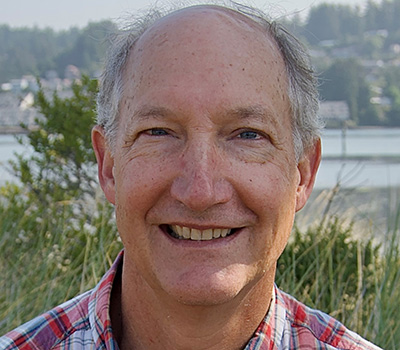
Jack Barth is a Professor in the College of Earth, Ocean, and Atmospheric Sciences (CEOAS) at Oregon State University (OSU) and Executive Director of the Marine Studies Initiative (MSI). He holds a Ph.D. in Oceanography from MIT and Woods Hole Oceanographic Institution (1987). His research focuses on coastal ocean dynamics, hypoxia, and marine ecosystem interactions. Barth has led projects on ocean observing systems, including glider technology and the Ocean Observatories Initiative (OOI). He serves on the Oregon Ocean Policy Advisory Council’s Scientific Committee and co-chairs the Ocean Acidification and Hypoxia Council. Education: B.A., University of Colorado (1982); Ph.D., MIT/WHOI Joint Program (1987). Experience includes roles as Postdoctoral Research Associate (1987–1989), Assistant Professor (1989–2001), and Professor (2001–present). He also served as Associate Dean for Research in CEOAS (2016–present) and Executive Director of MSI (2016–present). Research Interests: Coastal ocean circulation, hypoxia, inner continental shelf dynamics, eastern boundary currents, and ocean observing systems. He has published over 100 papers and mentored 20+ students/postdocs. Awards include Fellowships from The Oceanography Society (2013) and the American Meteorological Society (2017). Awards: Carl-Gustav Rossby Award (1988), Pattullo Teaching Award (2010), and multiple keynote lectures. His work addresses climate impacts, marine conservation, and interdisciplinary collaboration for sustainable ocean management.
Ronan Vicquelin is a University Professor (1st Class) at CentraleSupélec, Paris-Saclay University, affiliated with the EM2C Laboratory (CNRS). He serves as Head of the Department of Aeronautics, Space and Transport and co-supervises the High Performance Computing Mésocentre. His academic appointments include previous roles as University Professor (2nd class) and Head of Aerospace programs. Education includes Habilitation (University of Rouen Normandy, 2018), PhD in Energetics (École Centrale Paris, 2010), M.Sc. in Mechanical Engineering & Aerospace (École Centrale Paris, 2006), and Engineering Diploma (École Centrale Paris, 2006). Research focuses on turbulent reacting flows with emphasis on: numerical simulation of combustion systems, LES/DNS methodologies, uncertainty quantification, hydrogen combustion dynamics, conjugate heat transfer, and radiative energy transfer. Current investigations explore flame stabilization mechanisms, multi-physics coupling, and high-performance computing applications for aerospace propulsion systems. Publications predominantly address combustion science, with recent works (2021-2025) emphasizing hydrogen flame dynamics, NOx emission control, advanced numerical methods for reactive flows, and experimental validation of turbulent combustion models. Thermal radiation effects and multi-phase flow interactions constitute emerging themes. Advises multiple PhD candidates with projects funded by ANR, EU programs (ACHIEVE, SOPRANO), and industry partnerships (Safran, Air Liquide). Research grants include PEPR OXY3C, ANR HyMaX, and ANR OXYTEC focusing on zero-emission combustion technologies. Leads experimental and computational research at EM2C Laboratory, coordinating teams working on turbulent combustion diagnostics, high-fidelity simulations, and development of the Mésocentre HPC infrastructure for large-scale CFD.
Dr. Callum Atkinson is a Senior Lecturer in Mechanical & Aerospace Engineering at Monash University, specializing in turbulent flow dynamics and experimental fluid mechanics. His research focuses on understanding and controlling turbulent shear flows in pipes, boundary layers, jets, and rocket engines, combining high-fidelity numerical simulations with advanced optical diagnostics like holographic PIV and tomographic techniques. He has developed novel methodologies for 3D velocity and density measurements, contributing to drag reduction studies, heat transfer analysis, and flow control in aerospace and mechanical systems. His work addresses UN Sustainable Development Goals related to energy efficiency and sustainable transport. Current roles include leading collaborative projects on adverse pressure gradient boundary layers and flow mixing, and he actively participates in peer review for journals like Journal of Fluid Mechanics and Physics of Fluids . He supervises PhD students in topics such as hybrid rocket engine optimization and turbulence modeling, leveraging Monash's engineering research infrastructure. Notable contributions include one of the world's largest adverse pressure gradient simulations and pioneering volumetric flow visualization techniques. His experimental toolkit includes laser diagnostics, tomographic PIV, and background-oriented schlieren systems. Recent work has explored superhydrophobic surface drag reduction, thermal jet behavior, and the dynamics of high-speed jet flows. He maintains a strong focus on bridging experimental and computational fluid dynamics to advance fundamental understanding and industrial applications.
Gerd Grau is an Associate Professor of Electrical Engineering at York University, affiliated with the Lassonde School of Engineering and the Department of Electrical Engineering & Computer Science. He holds a BA and MEng from the University of Cambridge and a PhD from UC Berkeley (2016). His research focuses on semiconductor devices, microfabrication, printed electronics, and additive manufacturing, funded by NSERC, CIHR, Mitacs, and industry partners. He leads the Electronics Additive Manufacturing (E-AM) Lab, which integrates 3D printing and printed electronics for applications in biomedical devices, aerospace, and smart materials. Education: BA and MEng (University of Cambridge), PhD (UC Berkeley, 2016). Research interests include printed transistor devices, carbon fiber composites with integrated sensors, and machine learning optimization for printing processes. His lab houses advanced equipment like 3D printers, micro-inkjet systems, and characterization tools. Grau supervises a dynamic group of graduate and undergraduate students, with former advisees now leading roles in industry and academia. Teaching includes courses on semiconductor physics, nanoelectronics, and printed electronics. The E-AM Lab collaborates with Prof. Garrett Melenka on carbon fiber structural health monitoring and explores novel applications of laser-induced graphene for energy storage and environmental sensors.
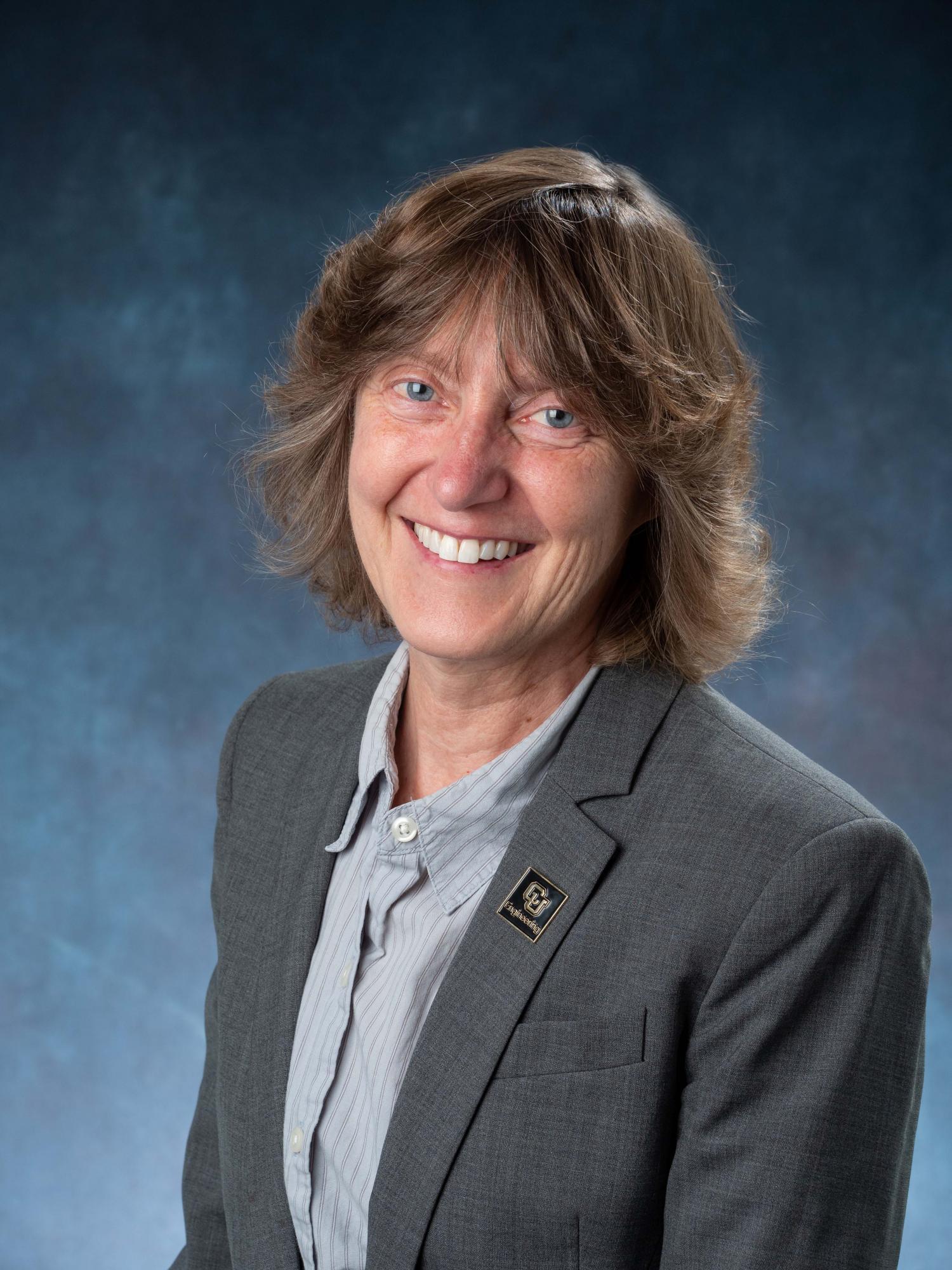
Dr. Hope Michelsen is an Associate Professor in the Department of Mechanical Engineering at the University of Colorado Boulder, specializing in Thermo Fluid Sciences and Air Quality. Her research focuses on carbonaceous particle formation mechanisms, combustion diagnostics, and their environmental impacts. She leads efforts in developing laser/X-ray-based diagnostic tools for studying soot evolution in flames and atmospheric systems. Research Interests include soot inception/growth, black carbon climate effects, and particle synthesis control. She has pioneered studies on resonance-stabilized radicals' role in soot formation and developed novel sampling techniques like jet-entrainment methods. Her work bridges fundamental combustion science with practical applications in air quality and climate mitigation. Awards: Fellow, American Physical Society Fellow, The Optical Society Alameda County Women’s Hall of Fame Inductee Lab facilities include advanced diagnostics at ECME 1B68/ECNW 180. Research collaborations involve multi-scale modeling of emissions and atmospheric transport. Current projects address wildfire soot dynamics and Arctic methane monitoring through inverse modeling techniques.
Dr. Je Hyeong Bahk is an Associate Professor jointly affiliated with the Departments of Mechanical and Materials Engineering and Electrical and Computer Engineering at the University of Cincinnati. His research focuses on thermoelectric materials and systems, wearable/flexible electronics, and nano-scale thermal transport phenomena. He holds a Ph.D. in Electrical Engineering from the University of California, Santa Barbara, and has authored over 100 peer-reviewed publications. Education: Ph.D., Electrical Engineering, University of California, Santa Barbara (2010) M.S., Electrical Engineering, Seoul National University (2000) B.S., Electrical Engineering, Seoul National University (1998) Research Interests: Human body-heat energy harvesting Thermoelectric materials and device fabrication Wearable/flexible electronics Nano-scale electron/thermal transport physics Thermoelectric air conditioning systems Recent Contributions: Dr. Bahk's work includes advancements in binder-jet printed ceramic composites, low-dimensional carbon-based energy harvesting, and thermoelectric cooling systems. His lab, the Thermoelectric Energy Conversion Lab, develops next-generation solid-state cooling and energy conversion technologies. Awards: 2023 URC Faculty Scholar Award 2016 UC Faculty Development Award 2010 Editor’s Choice Paper Award Lab & Team: The Thermoelectric Energy Conversion Lab collaborates on projects such as firefighter jacket cooling systems and nanocarbon-based composites. Recent student advisees include Thiraj, Nitin, Isaac, Anirudh, and Ahmad.
Professor Xinyan Wang is a leading academic at Brunel University London, affiliated with the College of Engineering, Design and Physical Sciences and the Department of Mechanical and Aerospace Engineering. He serves as a Principal Editor for Fuel (Elsevier) , editorial board member for multiple journals, and committee member for Hydrogen Europe Research and UK Chinese Society of Automotive Engineering. PhD, Power Machinery and Engineering, Tianjin University MSc, Power Machinery and Engineering, Tianjin University BEng, Thermal Energy and Power Engineering, Jiangsu University His research focuses on low-carbon fuel technologies for internal combustion engines, including hydrogen/ammonia combustion, biofuels, and nanobubble applications. He develops advanced hybrid electric systems and specializes in engine design optimization for alternative fuels. His work spans experimental investigations, computational modeling (CFD/MD/Chemkin), and optical diagnostics of combustion processes. Recent publications (2024-2025) highlight trends in hydrogen combustion analysis, nanofluid applications, dual-fuel strategies, and 2-stroke engine optimization. Key themes include emission reduction, ignition process decoupling, and integration of machine learning with molecular simulations for fuel characterization. UKRI Future Leaders Fellowship (2020) Editorial roles at Fuel , Highlights of Vehicles , and MDPI journals BSI committee member for fine bubble technology He supervises research on topics including zero-carbon fuel combustion, numerical simulations (chemical kinetics, CFD), and optical diagnostics for spray/combustion analysis. His teaching includes vehicle propulsion systems and major engineering projects at undergraduate/graduate levels.
Dr. Robert D. Moser is a Professor at the University of Texas at Austin and holds the W.A. "Tex" Moncrief, Jr. Chair in Computational Engineering and Sciences I. He is affiliated with the Thermal and Fluid Systems program, the Institute for Computational Engineering and Sciences (ICES), and serves as Director of the DOE-funded Center for Predictive Engineering and Computational Sciences (PECOS). Ph.D. in Mechanical Engineering from Stanford University (1984) His research focuses on computational methods for turbulence modeling, cardiovascular fluid mechanics, and uncertainty quantification in complex physical simulations. He develops large-eddy simulation techniques for aerospace applications and biological flow analysis, while pioneering methods to characterize uncertainties in reentry vehicle simulations and turbulence modeling. Dr. Moser leads interdisciplinary research at PECOS and ICES, combining computational engineering with biomedical applications. His work spans theoretical turbulence physics, numerical methods for Navier-Stokes equations, and practical implementations for aerodynamic and medical device design.
Rudie P.J. Kunnen is an Associate Professor at the Faculty of Applied Physics and Science Education , Eindhoven University of Technology, leading the Turbulent and Multiphase Flows group. His research focuses on heat, mass, and particulate transport in turbulent flows, with applications in geophysics and industry. Active in UN Sustainable Development Goals related to environmental protection Collaborator in projects like Active Contamination Control for Equipment and SubstrateS Research Interests : Turbulent flow dynamics, rotating convection, vortex structures, thermophoresis, plasma-liquid interactions, and geostrophic turbulence. His work combines experimental and numerical approaches (e.g., direct numerical simulation, particle image velocimetry). Scientific Awards : NWO Vici Prize (2024) Advising and Collaborations : Supervised multiple BSc and MSc theses at TU/e. Collaborates with researchers like F. Toschi and H.J.H. Clercx on turbulence projects.
Kursat Kara is an Assistant Professor in the Department of Mechanical and Aerospace Engineering at Oklahoma State University (OSU), leading the Kara Aerodynamics Research Laboratory. He holds a Ph.D. in Aerospace Engineering from Old Dominion University (2008), and has held academic positions including Assistant Professor at Khalifa University (2010–2018), where he received the President’s Faculty Excellence Award for Teaching (2015). His research focuses on fluid dynamics, computational aerodynamics, hypersonic flows, quantum computing, and flow separation control using techniques like CFD and miniPIV. He has advised numerous graduate and undergraduate students, and collaborates on projects such as hypersonic boundary-layer stability, quantum computing for fluid dynamics, and urban wind field modeling for UAS navigation. Dr. Kara’s expertise spans experimental and numerical fluid dynamics, including work on sweeping jet actuators, boundary-layer transition, and aerodynamic design optimization. He is a member of AIAA (Senior), APS, and ASME, and has contributed to facilities like the $3.5M Khalifa University Low-Speed Wind Tunnel. His teaching includes courses on computational fluid dynamics, quantum computing, and unsteady aerodynamics. Recent research highlights include applications of machine learning in wind field prediction and interdisciplinary projects like interface learning for multiphysics systems. Scientific achievements include publications on hypersonic flow stabilization, quantum solvers for Burgers’ equation, and reduced-order models for urban wind simulation. His lab engages students from high school to PhD levels, emphasizing project-based learning and computational tools. Key collaborations involve NASA, the DOD, and industry partners like Sikorsky Aircraft Corp.