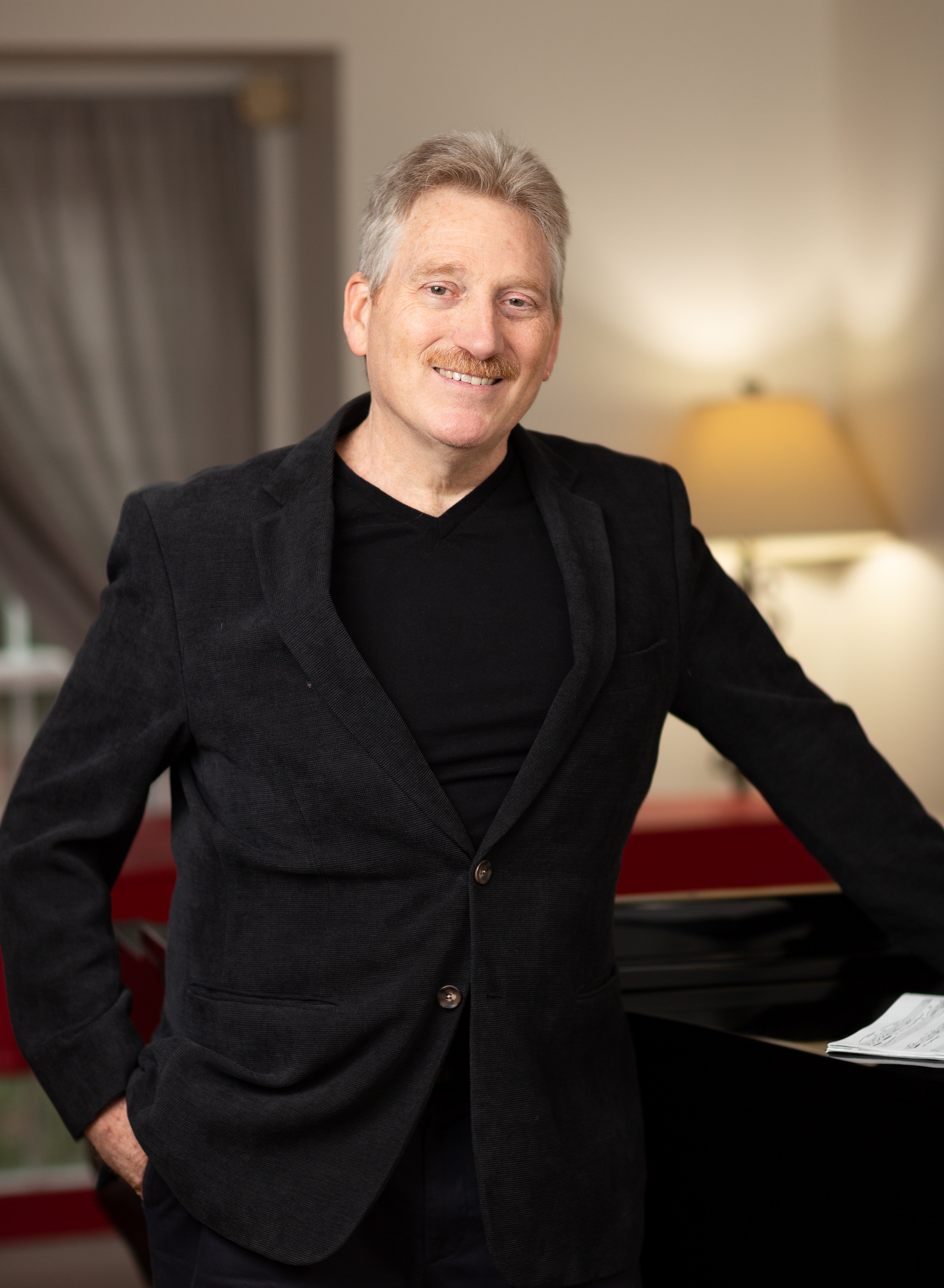
Univ.-Prof. Maja Jaku holds the Chair of Vocals at the Faculty of Music, JAM MUSIC LAB Private University. She specializes in Jazz and Pop vocal pedagogy, teaching since 2017 at JAM and Friedrich Gulda School of Music. Her career includes collaborations with artists like Dave Stroud (SLS technique) and Dean Kaelin, and performances at major festivals like Jazz Festival Vienna and Nashville. She has released four acclaimed CDs under Universal Austria Label, blending jazz, pop, and classical techniques. Education: Jazz vocals studies at University of Music and Performing Arts Graz (1991-1995) Key mentors: Mark Murphy, Sheila Jordan, Mary-Francis Lubahn Research focuses on vocal techniques (SLS method), cross-genre performance practices, and artistic expression through vocal improvisation. Her performances include leading roles in 'Porgy & Bess' and 'Godspell', alongside TV/Radio productions with Gerd Schuller's Fusion Band. Universal Artist since 2018 with extensive live experience across Europe and North America.
Dr. Pablo Galaz is a Lecturer in Composition and Analysis at the University of Southampton. His work bridges music composition, live electronics, and interdisciplinary collaboration. He actively participates in research projects such as 'Sound and mental health' and 'Machine Learning-Driven Gestural Control for Expressive Sound Synthesis', collaborating with researchers like Dr. Chaitanya Paruchuri and Dr. Richard Polfreman. His creative output includes multimedia installations and instrumental works with live electronics, reflecting interests in interactive performance and technological integration. Research Focus: Sound art, machine learning in music, and interdisciplinary collaboration Notable Projects: Human-like inclinations (AI-driven multimedia installation), Transnodal (cello/electronics) Publications: Focused on creative media artifacts blending acoustic and electronic elements His recent works (2023-2025) emphasize real-time interaction between performers and technology, while earlier pieces (e.g., Roren) explore structural composition in chamber music. No awards are listed but shows active grant-funded research activities.
Fabrice Marandola is an Associate Professor and Area Coordinator (Percussion) at McGill University’s Schulich School of Music. He holds a PhD in Ethnomusicology from the Sorbonne (2003) and has performed extensively with orchestras such as the National Orchestra of France and the New Philharmonic Orchestra of Radio France. His research focuses on percussion performance, ethnomusicological studies of Central African music, and the intersection of music with new technologies. He has been a key figure in Montreal’s contemporary music scene since 2005, co-founding the Sixtrum Percussion Ensemble and serving as Associate Director of the CIRMMT from 2009-2014. His awards include Prix Opus for innovative performances and a Senior Research Chair (Sorbonne-Universités, 2015-2016). His pedagogy emphasizes exploration and creativity, integrating gesture analysis and eye-tracking technologies. He directs the McGill Percussion Ensemble and has contributed to over 30 peer-reviewed publications, including studies on Bedzan Pygmy polyphonies and cross-cultural percussion techniques. Education: PhD in Musicology (Sorbonne, 2003) DEA in Music History (Sorbonne, 1994) Master’s in Music (Sorbonne, 1993) Conservatory Diplomas (Paris, 1991-1997) Research Interests: Marandola’s work spans percussion performance science , ethnomusicology of Central Africa , and music-technology interfaces . He pioneers methodologies combining experimental techniques with traditional fieldwork, particularly in analyzing Bedzan Pygmy vocal polyphonies and Zandé xylophones. His recent projects explore eye-hand synchronization in xylophone performance and haptics-based music education tools. Grants & Leadership: - Elected President of Le Vivier’s board (2014-2017) - Co-directed the Rythmopolis festival (2018-19) - Principal investigator on DiP-Core documentation project Labs & Teams: - CIRMMT (Centre for Interdisciplinary Research in Music Media and Technology) - Sixtrum Percussion Ensemble - Akrostick Percussion Duo - McGill Percussion Ensemble
Dr. Kerry Hagan is an Associate Professor of Composition-Theory at the University of Illinois Urbana-Champaign and concurrently serves as President of the International Computer Music Association (ICMA). She holds degrees from Carnegie Mellon University (BS Electrical Engineering, BFA Music Composition) and UC San Diego (MA/PhD Music). Her work bridges acoustic and electronic media through real-time spatialization, stochastic algorithms, and interdisciplinary collaborations. She co-leads the Higgs whatever ensemble and the Bowers-Hagan Duo, performing globally at festivals like Piksel and ICMC. Previously (2007-2023), she was a Lecturer at the University of Limerick where she founded the Spatialization and Auditory Display Environment (SpADE) lab. Key roles include founding the Irish Sound, Science and Technology Association (ISSTA) as its inaugural President (2010-2015). Research focuses on algorithmic methods for composition, spatial audio techniques, and electronic musicology. Major works include Memento Mori , Transmogrificaciones Incesantes , and Agus í á bá , performed by ensembles like RTÉ National Symphony Orchestra. Recent activities span curating ICMA events, developing IoT-based music systems, and exploring gesture-controlled timbre transformation. Teaching includes graduate-level composition, live coding with Pure Data, and advanced electroacoustic analysis courses. Her work has been featured at SEAMUS, ICMC, and SMC conferences, with publications in Computer Music Journal and Organised Sound . Collaborations span composers like Miller Puckette (co-author of Between the Tracks ) and John Bowers, emphasizing experimental performance formats and networked music systems.
Akito van Troyer is an Associate Professor in the Department of Electronic Production and Design (EPD) at Berklee College of Music, where he teaches sound design, audio programming, machine learning, digital musical instrument design, and multimedia performance. He holds a Ph.D. from the MIT Media Lab (2018), a master's from the MIT Media Lab (2012), and another master's from the Georgia Tech Center for Music Technology (2010), reflecting his interdisciplinary background in media arts, music technology, and interactive systems. His research lies at the intersection of music, technology, and human expression, focusing on developing new musical interfaces and systems that enhance audience participation and creative exploration. His work spans human-computer interaction, digital signal processing, tangible interfaces, machine learning, and assistive technologies. Projects such as DrumTop, FATkit, KinéPhone, and Tactiloscope demonstrate his innovative approach to redefining musical interaction through physical and digital integration. His recent publications reveal a consistent trajectory in exploring novel forms of musical engagement, from GAN-based interface design to sensory augmentation for food perception and interspecies communication. These works reflect a deep commitment to pushing the boundaries of how music is created, experienced, and shared across diverse contexts and communities. People's Choice Awards for Most Unusual Musical Instrument, Guthman Musical Instrument Competition (2017) Best Artwork Award, the ACM Creativity and Cognition Conference (2011) Dr. van Troyer’s professional experience includes roles as a senior research engineer at Sonos and founder/lead technologist at AVTLab, enriching his academic teaching with real-world industry insights. He has taught at MIT and Colorado College, and his collaborative projects emphasize teamwork, communication, and interdisciplinary innovation. He mentors students through hands-on learning and has led numerous workshops and creative projects that bridge theory and practice. His research has been supported by grants such as the Boston Foundation grant for the Digital Split-Keyboard project. He leads AVTLab, a research and development lab focused on creating new musical instruments and interactive experiences. His future work continues to explore sensory translation, inclusive design, and AI-driven creativity in music.
John Whynot is an Associate Professor in the Music Production and Engineering (MP&E) department at Berklee College of Music, where he actively teaches and mentors students in audio engineering, music production, and sound mixing. He integrates decades of professional experience into his pedagogy, emphasizing hands-on learning, artistic inquiry, and technical mastery. His research and professional interests span Music Production , Audio Engineering , Sound Mixing , Film Scoring , and Recording Technology . He advocates for a holistic understanding of music creation, asking students to reflect on the purpose and audience of their recordings. His teaching blends storytelling, theory, and live demonstrations to make technical concepts engaging and practical. The 15 most recent articles reflect a consistent focus on high-profile film and album projects, particularly in sound mixing and audio engineering . These works demonstrate expertise in cinematic sound design, narrative audio, and hybrid analog-digital production. Subfields such as score-to-picture synchronization , spatial audio engineering , and acoustic clarity in vocal-centric albums recur, indicating a deep engagement with both technical precision and emotional impact in sound. Grammy-winning work on 'Timeless: A Hank Williams Tribute' by Lucinda Williams John Whynot has advised numerous artists in professional settings and contributed to major recording projects, though formal student advisees are not listed. He has been involved in grants and collaborations through film and album productions. He leads no formal lab but operates as a core faculty member in Berklee’s MP&E program, influencing curriculum and student development through direct instruction and industry integration.
Per Roar serves as Professor at the Department of Dance, Oslo National Academy of the Arts, where his work critically intersects dance practice with sociological inquiry, memory studies, and political discourse. His institutional affiliation reflects deep engagement with performative research methodologies across global contexts including Southern Africa, Eastern Europe, and Southeast Asia. His research program centers on Collective Trauma , Memory Work , and Autoethnography , examining how dance improvisation and choreography process societal crises. Key interests span Dance Anthropology, Ethnographic Fieldwork, and the politics of representation, with explicit focus on white privilege, climate emergency, and counter-narrative construction through embodied practices. This interdisciplinary approach bridges Composition, Sociology, and Performance Studies to challenge dominant historical frameworks. Recent publications (2020-2024) demonstrate consistent thematic urgency around trauma and social justice, evolving from climate crisis analyses ( When Monday Came ) toward explicit anti-racist critique ( Anger, ignorance and white privilege ). The 2024 works reveal methodological maturation in Performative Memory Work , utilizing dance anthropology to excavate marginalized histories while maintaining artistic research rigor. He leads significant projects including ART=POLITICS: A choreographic case study and PILOT: PREPARING Performative Time , which investigate remembrance politics through choreographic inquiry. These initiatives reflect sustained commitment to using dance as a tool for political intervention, particularly regarding collective trauma processing and representation ethics.
Roger Beaty is an Associate Professor of Psychology at Pennsylvania State University, where he serves as Cognitive Area Coordinator and leads the Cognitive Neuroscience of Creativity Laboratory (CNCL). His research program investigates the neural and cognitive foundations of creative thinking using multimodal approaches. Education Ph.D. (2015) from University of North Carolina at Greensboro Research Focus Dr. Beaty's work examines brain network dynamics during creative cognition using fMRI, tES-fNIRS neuromodulation, and computational methods. His lab develops open-access tools for automated creativity assessment (e.g., SemDis, CAP platform) and studies creativity across domains including musical improvisation, scientific problem-solving, and education. Key research themes include: Default and executive network interactions in creative thought Associative thinking as a core mechanism of creativity Cross-domain applications of computational creativity assessment Neuromodulation techniques for cognitive enhancement Publications Focus Dr. Beaty's recent publications (2016-2025) demonstrate three key trajectories: 1) Development of computational creativity assessment platforms using semantic distance metrics; 2) Neurocognitive investigations of brain network dynamics in creative thinking; and 3) Domain-specific creativity studies in science and music. His work consistently bridges cognitive neuroscience with computational approaches. Student Advising Dr. Beaty mentors graduate students in the CNCL lab, including award recipients of the Chateaubriand Fellowship (Simone Luchini), Matthew Ryan Serafino Scholarship (Clin Lai), and Harold F. Martin Teaching Award (Dan Zeitlen). Laboratory The Cognitive Neuroscience of Creativity Laboratory employs behavioral testing, neuroimaging (fMRI, fNIRS), and computational modeling to study creative cognition. The lab maintains an active publication record and develops open-access research tools for the scientific community.
Morten Thanning Vendelø is an Associate Professor at the Department of Organization, Copenhagen Business School (CBS), specializing in organizational responses to crises and innovations. His research spans crowd safety at events like Roskilde Festival, Arctic emergency management, and pandemic adaptation, co-founding the Copenhagen Center for Disaster Research (COPE) in 2012 to advance interdisciplinary disaster studies. His primary research areas include Crisis Management, Event Safety Management, Organizational Decision Making, and Sensemaking in Organizations. Vendelø investigates how organizations learn from unexpected events through field studies in high-stakes environments, emphasizing improvisation, collective mindfulness, and adaptive decision processes. His work bridges theoretical frameworks with practical safety protocols for festivals and emergency response systems. Recent publications reveal consistent focus on organizational adaptation during prolonged crises (e.g., Covid-19), crowd behavior analysis at mass gatherings, and intuitive decision-making under uncertainty. Key trends include ethnographic studies of safety practices, conceptualizations of 'cold disasters' in Arctic contexts, and the interplay between data-driven and intuitive judgment in crisis response. Vendelø has supervised over 100 master's theses and 8 PhD dissertations, including Katharina Christiane Nielsen Jeschke's 2022 study on dynamic safety practices in construction and Signe Bruskin's 2020 ethnography of bank organizational change. His research is supported by projects like the Nordic Centre of Excellence on Resilience and Societal Security and the Otto Mønsted Visiting Professorship. He actively contributes to the Centre for Organization and Time (COT) and co-founded COPE, developing practical tools like a learning game for Arctic Search and Rescue with Rasmus Dahlberg. His work integrates academic rigor with real-world safety applications through collaborations with emergency management institutions and event organizers.
Laurent MERIADE is a full Professor of Management Sciences at Clermont Auvergne University's IAE School of Management, where he co-holds the 'Health and Territories' research chair. His academic career includes progression from Lecturer (2016-2022) to Professor (2022-present), with previous positions at university institutes in Clermont-Ferrand and Albi. His research focuses on three interconnected domains: Healthcare organization governance examining performance tensions in public hospitals Public management control systems including cost accounting and policy instrumentation Territorial health systems analyzing geographic determinants of care pathways Recent work investigates crisis management adaptations during COVID-19, e-health implementation challenges, and thermal therapy integration for long COVID rehabilitation. Analytical examination of his 15 most recent publications (2011-2025) reveals methodological emphasis on: Comparative case studies of public institutions Geospatial analysis of healthcare access Hybrid management control frameworks Cross-cultural public administration studies (particularly France-China) Crisis-driven organizational adaptation patterns He leads research activities within the CleRMa laboratory and maintains extensive collaborations across healthcare institutions in Auvergne. His work has been published in journals including Social Science & Medicine , Implementation Science , and Abacus .
Lynn Shehab is an Assistant Professor in the Civil and Environmental Engineering Department at the University of Alberta's Faculty of Engineering. Her research and teaching focus on construction management, integrating human-centered design principles, wearable technologies, and simulation models to enhance project planning, control, and workforce well-being. Research Interests: Current work emphasizes Lean Construction 4.0, agent-based simulation for analyzing team dynamics, and the application of wearable sensors to bridge cognitive and physiological aspects of construction labor. She explores innovative metrics like the Last Planner System (LPS) for resource allocation and gamification to improve project control. Publications: Recent articles investigate chaos theory in project management, psychophysiological impacts on construction crews, and digital human modeling for workload estimation. Her studies span simulation frameworks, improvisation in planning, and post-disaster reconstruction strategies (e.g., Beirut port explosion case study). Courses: She teaches CIV E 406, which covers construction estimating, planning, and control, including risk analysis and bid preparation.
Lance R Hulme serves as Professor at North Carolina Central University's College of Arts, Social Sciences, and Humanities, where he directs the Music Theory and Composition program and teaches Music Industry and FabLab courses. His leadership extends to developing the educational software Basic Training in Music Skills and directing the acclaimed À la carte concert series. His educational background includes a DMA and MMA from Yale University, MM from Eastman School of Music, BM from University of Minnesota, and studies at Universität für Musik in Vienna. His career spans conducting premieres, jazz fusion performance with Dreamscape band, and 17 years in Europe co-founding Ensemble Surprise. Yale University: DMA (1998), MMA (1994) Eastman School of Music: MM (1989) Universität für Musik Wien: AA (1987) University of Minnesota: BM (1983) Hulme's research spans compositional eclecticism, music technology integration, and aural skills pedagogy. Critics describe him as a 'chameleon composer' weaving diverse musical traditions into rich expressive textures. His work bridges 'serious' and vernacular music while employing advanced structural techniques, with special focus on computer-assisted composition and interactive collaborations with choreographers. His publication trends reveal sustained exploration across genres: from sacred choral works (Psalm 62) to electronic compositions (Caritas Abundat), jazz arrangements (My Favorite Things), and chamber pieces (JethroZen). The corpus demonstrates consistent engagement with cross-cultural synthesis, technological innovation, and expressive narrative forms, with recent works emphasizing digital media integration. Notable awards include: Grand Prize, International Witold Lutoslawski Composition Competition First Prize, ASCAP/Rudolf Nissim Prize 2021 Malta International Composition Competition First Prize Fulbright Grant to Austria MacDowell Colony Fellowship Hulme's advising impact manifests through his educational software used across institutions and mentorship via the À la carte concert series, which has become 'one of North Carolina's most important concert series' (Classical Voice NC). His technological contributions include sound engineering for album productions and real-time dance installations at Modern Repertory Dance Theater. He leads NCCU's FabLab music technology initiatives and continues directing Ensemble Surprise's legacy through À la carte, presenting '700 years of new music' across genres and epochs. Current projects include interactive computer compositions and expanding his educational software platform.
Associate Professor Matthew Krehl Edward Thomas SFHEA is an Associate Head of School, Teaching and Learning in the Faculty of Arts and Education at Deakin University. He is an established researcher who critiques the systems in which educators are formed and works to enhance teaching at a system level, focusing on the development of highly capable, relational teachers for a more equitable society. His research is centered on enhancing initial teacher education globally, with a particular interest in critically disrupting dominant power relations by examining the structures of teaching and learning (power, time, social justice) and how these privilege learners unevenly. Associate Head of School, Teaching and Learning (2025-present) Director of Professional Experience (2021-2024) Course Director: Master of Teaching (Overall) (2019-2021) Global Experience Academic Coordinator: Oceania, Europe, Asia (2018-2021) Senior Fellow of the Higher Education Academy (SFHEA) Professor Thomas's research interests span Initial Teacher Education, Sociology of Time & Education, Systems Thinking, Human Rights, Surveillance Capitalism, and Pedagogy & Curriculum. His work seeks to critically disrupt dominant power relations by examining the structures of teaching and learning and how these privilege learners unevenly. His most recent research explores the intersection of temporality and commodification of personal data, with several publications examining how AI surveillance transforms educational norms through a Foucauldian lens. His recent publications reveal a consistent focus on teacher education challenges, with particular attention to classroom readiness, mentorship practices, and the impact of surveillance technologies on educational environments. The research demonstrates significant engagement with theoretical frameworks including Bourdieu's concepts of practice architectures, Foucault's theories of surveillance, and critical pedagogy approaches to examining power dynamics in education. His work addresses practical concerns in Australian teacher education while contributing to international scholarly conversations. Renaissance Scholar Award (2023, School of Education) Teaching and Assessment Approaches that are Effective in Supporting Student Learning Award (2023) Vice Chancellors Award: Safer Learners (2023) Curriculum design that is innovative, motivates and inspires (2022) 2017 ESRI REDI inaugural Travelling Fellow Professor Thomas is actively involved in several major research projects funded by the Department of Education and Training Victoria, including 'Isolation, placement poverty and learning to teach in the Bush' ($216,024.09) and 'Implementing a Multi-Provider Professional Practice Model in Victorian Regional Communities' ($208,330.00). He currently supervises seven doctoral and master's students across a range of topics including AI in educational decision-making, teacher identity formation, and microaggressions against female academics of color. His supervision approach emphasizes relational teaching and critical engagement with structures of power in education, positioning him as a significant contributor to teacher education research and practice in Australia and internationally.
Ecuadorian-born American guitarist Anton Machleder serves as Adjunct Assistant Professor of Guitar at Houghton University's Greatbatch School of Music, with additional teaching roles at Alfred University and Finger Lakes Community College. He directs Red Creek Recording Studios in Rochester, NY, and maintains an active performing career featuring solo recitals and chamber music concerts across the United States since his 1992 Carnegie Hall debut as Artists International Competition winner. His academic foundation includes a DMA in guitar and music literature from the Eastman School of Music under Nicholas Goluses, with prior studies under Ronald Purcell and Manuel Barrueco. Machleder's research centers on Latin American classical guitar traditions, particularly Cuban repertoire and Mexican composer Manuel Ponce's works. His scholarly contributions appear in American String Teacher, Ex tempore, and Soundboard journals, complemented by lectures for the College Music Society and master classes at Brooklyn College and Oberlin College focusing on performance techniques and improvisation. Key recognitions include: Artists International Competition victory enabling Carnegie Hall debut D’Addario Strings fellowship supporting artistic development Bowdoin Festival fellowship for chamber music excellence Yale’s Norfolk Summer Festival fellowship for advanced study His professional activities integrate performance, scholarship, and studio direction at Red Creek Recording Studios, where his critically acclaimed recordings—praised by Guitar Player Magazine for "crisp upper-register work, sumo-weight bass tones, and remarkable dynamic control"—are produced under the La Tapa Recordings label.