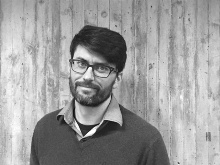
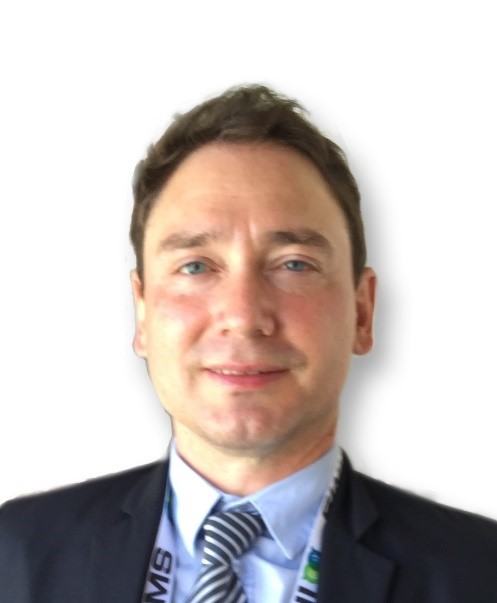
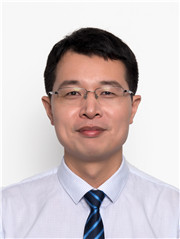
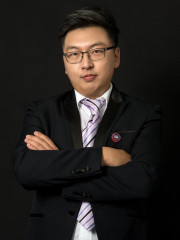
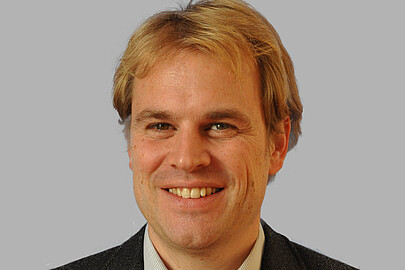
Oliver A. Bucklin is a Researcher and doctoral candidate at the Institute for Computational Design and Construction (ICD) at the University of Stuttgart. His work focuses on sustainable building practices, particularly the development of energy-efficient solid timber construction systems using computational design and advanced fabrication techniques. Master of Architecture (M.Arch) – Harvard Graduate School of Design Bachelor of Fine Arts in Ceramics – University of Washington His research explores the integration of thermodynamic principles, robotics, and computational models to optimize timber building envelopes. Additional interests include embedded electronics, sensing networks, and kinematic control algorithms. He contributes to teaching in computational design and robotic fabrication within the ITECH Master’s Program at the University of Stuttgart. Oliver’s projects include the IBA Timber Prototype House and the ITECH Research Demonstrator , emphasizing material efficiency and recyclability. He is part of the Performative Wood research group at ICD, advancing innovations in solid timber systems.
Dr. rer. nat. Xu Li is a researcher at the Institute of Semiconductor Technology within the TU Braunschweig (Technische Universität Braunschweig), Germany. Affiliated with the Faculty of Electrical Engineering, Information Technology, Physics , Xu Li contributes to interdisciplinary research spanning materials science, environmental science, and computer engineering. Fields of Interest : Materials Science, Environmental Science, Biotechnology, Sensor Technology, Computer Science, Civil Engineering, IoT Contact : xu.li@tu-braunschweig.de Xu Li's research focuses on: Materials Science : Developing magnetoelectric sensors with energy harvesting capabilities, exploring concrete shrinkage mechanisms using porous aggregates. Environmental Science : Investigating microplastic impacts on soil ecosystems and carbon dynamics in tea plantations. Biotechnology : Advancing PCR-based mutation detection for viral pathogens. Computer Science : Innovating face recognition algorithms and agricultural IoT systems.
Georg Wimmer is a Professor at the School of New Materials and New Energy , Shenzhen Technology University , PR China. He holds a Ph.D. in Numerical Mathematics from Munich Technical University and has held academic roles at the Technical University of Applied Sciences Würzburg-Schweinfurt and Helmut Schmidt University Hamburg, Germany. Education : Ph.D. (2004), Master's (1998), and Bachelor's (1996, Mathematics; 1994, Physics) from Munich Technology University. Research Interests : Computational Electromagnetics, Numerical and Computational Mathematics, and High Performance Computing, with a focus on adaptive finite element methods and electromagnetic field simulations. Scientific Awards : IEEE subcommittee member for electromagnetic safety standards (2008) Multiple student awards and scholarships in Germany (1989–1991) Projects : Led research on finite element methods for adaptive grids (2019–2021), RLCG-parameter calculations (2015–2018), and quality assurance for 2D-FEM solvers (2015–2016). Previously involved in German Research Foundation projects on magnetodynamic simulations (2004–2007) and stabilized flight trajectories (1998–2003). Publications : Authored ~40 papers and served as a reviewer for Transactions on Magnetics and conferences like CEFC, IGTE, and ISEM.
Zhao Zhigang is an Associate Professor at the School of New Materials and New Energy, Shenzhen University of Technology, where he has been employed since May 2017. Previously, he served as a Lecturer at the School of Optoelectronic Engineering, Shenzhen University (2013-2017) and completed postdoctoral research at Shenzhen University (2010-2012) after earning his PhD from Huazhong University of Science and Technology. His academic journey began with undergraduate and master's studies at PLA Ordnance Engineering College (now Army Engineering University). His educational background includes: PhD in Optical Engineering, Huazhong University of Science and Technology (2005-2010) Master's in Optical Engineering, PLA Ordnance Engineering College (2002-2005) Bachelor's in Military Optoelectronic Engineering, PLA Ordnance Engineering College (1995-1999) Zhao's research focuses on hyperspectral imaging systems and machine learning applications for material classification. His work emphasizes embedded image data acquisition and processing using ARM and FPGA platforms, with significant contributions to micro-hyperspectral imaging technology. His research spans three primary areas: hyperspectral image processing on ARM/FPGA systems, machine learning applications in spectral analysis, and embedded AI implementations on FPGA/Zynq platforms. This interdisciplinary work bridges optical engineering, computer vision, and hardware design. Analysis of his recent publications reveals a strong emphasis on hyperspectral data compression techniques , machine learning applications for spectral analysis , and embedded system implementations . His work demonstrates a consistent focus on practical applications of hyperspectral imaging in fields ranging from food quality assessment to battery health monitoring, with increasing incorporation of deep learning techniques in recent years. His scientific recognition includes: Multiple teaching awards at Shenzhen University of Technology (2019-2024) Shenzhen City high-level professional talent designation (2016) Numerous national competition awards as student supervisor (2016-2023) Outstanding Paper Award at Shenzhen Optical Society (2010) Zhao has secured substantial research funding as Principal Investigator, including horizontal projects (2023-2024), Shenzhen Postdoctoral Research Funding (2019-2020), and Shenzhen Basic Research Projects. He has successfully guided students in academic competitions, resulting in five national first prizes. His research group maintains strong industry connections through multiple school-enterprise cooperation projects focused on practical applications of hyperspectral imaging technology. His laboratory work centers on FPGA-based embedded systems for hyperspectral imaging, with recent projects developing micro-hyperspectral spectrometers for UAV platforms, real-time video processing systems, and specialized hardware for spectral data acquisition and compression. These efforts demonstrate a clear trajectory from fundamental optical engineering toward practical applications of machine learning in spectral analysis.
Wang Luyang serves as Associate Professor at Shenzhen University of Technology's School of New Materials and New Energy since 2021, previously holding an Assistant Professor position from 2017-2021. His academic journey includes postdoctoral research at Hong Kong Polytechnic University (2015-2017) following a PhD in Organic Chemistry from Sungkyunkwan University. His educational background features: PhD in Organic Chemistry, Sungkyunkwan University (2015) Master's in Pharmacy, Changchun University of Chinese Medicine (2013) Bachelor's in Chemistry, Jilin University (2009) Research focuses on surface defect engineering , lithium battery cathode recycling , and photocatalytic carbon neutrality , with strong emphasis on nanomaterial design for sustainable energy solutions. His work bridges fundamental materials chemistry with practical environmental applications. Analysis of his 15 most recent publications reveals dominant themes in solar hydrogen production through defect-engineered semiconductors (TiO 2 , BiVO 4 , WO 3 ), cocatalyst-free photocatalysis, and dual-function systems for simultaneous energy generation and waste degradation. Major recognitions include: Shenzhen Peacock Plan Category B Talent (2018) Advanced Individual award for university establishment efforts He leads multiple funded projects including the National Natural Science Foundation Youth Program (250,000 yuan) and Shenzhen's 4.5 million yuan Overseas High-level Talent Start-up Project, focusing on photocatalytic hydrogen production and battery material recycling with significant industrial collaboration potential.
Dr. Rumiana Dimova is a Professor and Group Leader at the Max Planck Institute of Colloids and Interfaces in Potsdam, Germany. She leads the Biophysics Lab focused on Sustainable and Bio-inspired Materials, with particular emphasis on biomembranes and giant vesicles as model systems. She also holds a Privatdozent position in Biophysics at Potsdam University since 2014 and completed her Habilitation there in 2012. Dr. Dimova has been a Group Leader at the Max Planck Institute since 2000 and a Staff Scientist since 2005. Her research focuses on using giant lipid vesicles as a biomimetic tool to directly observe membrane behavior at cell-size scales. Her work explores membrane properties, membrane wetting, budding and tubulation, vesicles in electric fields, and ATPS vesicles. She has made significant contributions to understanding how biomolecular condensates interact with membranes, membrane remodeling, and the effects of various conditions on membrane mechanics. Her recent publications (2023-2025) show a strong focus on biomolecular condensates and their interactions with membranes, membrane asymmetry, photoswitchable lipids, and the electromechanical properties of biomimetic membranes. These works span biophysics, soft matter physics, membrane biology, and biomimetic materials science, with particular attention to membrane wetting phenomena, curvature generation, and phase separation effects. Dr. Dimova has received several prestigious awards for her work: Thomas E. Thompson award of the Biophysical Society (2023) for excellent work on membrane rigidity and tension, membrane curvature and membranes in electric fields Liesegang Prize of the German Colloid Society (2021) for work on lipid bilayers and biomembranes Emmy Noether distinction for women in physics from the European Physical Society (2014) Dr. Dimova has organized several conferences including Biomembrane Days in Berlin (2019, 2016, 2014), served as Chair of the Membrane Structure and Assembly Subgroup of the Biophysical Society (2017), and has given numerous invited talks worldwide. Her lab maintains extensive international collaborations across Germany, France, USA, Spain, Bulgaria, China, Argentina, Israel, and Austria, reflecting the interdisciplinary nature of her research.
Prof. Dr. Katharina Oberpriller is a faculty member at the Department of Mathematics, University of Munich, working in the Financial and Insurance Mathematics research group. Her research focuses on model uncertainty, insurance risk markets, and credit risk modeling. She collaborates extensively on publications related to stochastic processes, affine models, and financial risk management.
Peter Philip is a Senior Lecturer at the Department of Mathematics, Faculty of Mathematics, Computer Science, and Statistics of Ludwig-Maximilians University Munich. His career since 2008 at LMU includes research in shape optimization and numerical analysis of integro-partial differential equations, with prior roles at the Weierstrass Institute for Applied Analysis and Stochastics (WIAS) and the Institute for Mathematics and its Applications (IMA). He has taught extensively across mathematics disciplines and led software development for crystal growth simulations. Positions: Academic Senior Counselor (2013–present), Academic Counselor (2008–2013), Industrial Postdoctoral Fellow (2004–2006), Research Associate (1997–2004) Education: Habilitation (2012) and Ph.D. (2003) in Mathematics from LMU Munich and Humboldt University Berlin, respectively; Diplom in Mathematics (1997, with excellence) from Free University Berlin Research Interests: His work focuses on Shape optimization via control of integro-partial differential equations Conductive-radiative heat transfer analysis and control Crack propagation modeling using energy functional minimization Numerical simulation of semiconductor crystal growth processes Finite volume methods for anisotropic and complex geometries Optimal control of electromagnetic heating systems Publications: He has published extensively in applied mathematics journals, with key contributions to conductive-radiative heat transfer, sublimation growth of SiC crystals, and crack propagation models. His work bridges theoretical analysis, numerical implementation, and industrial applications. Teaching: Since 2008, he has taught courses such as Numerical Mathematics, Analysis, Linear Algebra, and Axiomatic Set Theory, with a teaching load of 13 hours per week. His lectures include both foundational and advanced topics, supported by freely downloadable lecture notes.
Dorothea Pantförder, Dr.-Ing., is a researcher at the Chair of Automation and Information Systems at the Technical University of Munich, working under Prof. Vogel-Heuser. Her office is located at Boltzmannstr. 15, 85748 Garching b. Munich, where she maintains regular office hours on Mondays from 8:30 a.m. to 9:15 a.m. Her research focuses on human-machine interaction with particular emphasis on digital twin technology, industrial augmented reality applications, and advanced process data visualization techniques. She has pioneered work in 3D visualization for process control systems and has extensively explored how mixed reality technologies can enhance industrial maintenance procedures and operator training in manufacturing environments. Analysis of her publication history reveals a consistent research trajectory centered around making complex industrial processes more accessible through innovative visualization techniques. Her work bridges the gap between theoretical human-computer interaction principles and practical industrial applications, particularly in the context of Industry 4.0 initiatives and cyber-physical production systems. Throughout her career, Pantförder has collaborated extensively with Prof. Vogel-Heuser and other researchers across multiple institutions, contributing to numerous research projects focused on automation technologies, information systems, and human-centered design in industrial contexts. Her work has been supported by various research grants and has contributed to several demonstration projects showcasing Industry 4.0 applications. She has been instrumental in developing visualization techniques that help operators better understand complex production processes, with applications ranging from maintenance support to team knowledge management systems. Her research has evolved from foundational work on 3D process visualization to more recent explorations of digital twins integrated with mixed reality technologies for industrial applications.
Peter Vary is a Professor at the Faculty of Electrical Engineering and Information Technology of RWTH Aachen University, serving as Director of the Institute for Communication Systems. His work focuses on speech and audio signal processing for communication systems. Digital Signal Processing Speech Enhancement Acoustic Echo Control Microphone Array Beamforming Communication Systems Audio Compression His recent publications (2023–2024) emphasize speech coding, noise reduction, and bandwidth extension for hearing aids and mobile devices, with technical innovations in Kalman filters, hybrid digital-analog transmission, and wind noise detection. He holds a leadership role in the Institute for Communication Systems and serves as Ombudsperson for teaching in his faculty. Contact: vary@iks.rwth-aachen.de
Dr. Yulin Hu serves as a Visiting Professor at RWTH Aachen University, holding the Chair of Information Theory and Data Analytics. His research program bridges theoretical foundations with practical implementations in next-generation wireless systems, with particular emphasis on UAV-aided networks and information-theoretic approaches to communication challenges. His core research interests span multiple interconnected domains: Wireless Communications (especially finite blocklength regimes) Information Theory applications in network design UAV trajectory optimization and network integration Wireless power transfer with nonlinear energy harvesting Edge computing and distributed learning systems Data analytics for network performance optimization Analysis of Dr. Hu's 2025 publication record reveals a concentrated research thrust on UAV trajectory design, where he develops joint optimization frameworks addressing energy efficiency, security, and reliability constraints. His work consistently integrates information-theoretic principles—particularly finite blocklength analysis—to solve practical challenges in ultra-reliable low-latency communications (URLLC) and wireless power transfer. A distinctive feature of his approach is the fusion of deep reinforcement learning with traditional optimization methods for dynamic network scenarios, including no-fly zone constraints and covert operations. While no specific scientific awards are documented in the available materials, his prolific output across top-tier venues demonstrates significant scholarly impact. Details regarding graduate student mentoring and research funding mechanisms remain unspecified in the current documentation. The Chair of Information Theory and Data Analytics, which Dr. Hu leads, functions as a specialized research unit focused on theoretical rigor and algorithmic innovation for wireless systems, though specific laboratory infrastructure or team composition details are not provided.
Carsten Klempt is an apl. Prof. (extraordinary professor) at the Institute of Quantum Optics within the Faculty of Mathematics and Physics at Leibniz University Hannover. He serves as Group Leader of the Quantum Atom Optics research group, focusing on ultracold quantum gases and quantum entanglement. His research has significant implications for quantum metrology, atom interferometry, and quantum information processing. Education: 2002: Diploma in Physics from the Johannes Gutenberg University 2001-2002: Diploma thesis at the Institute of Nuclear Physics, University of Mainz "Construction and testing of a BaF2 detector" 1998-1999: Studied at the University of Washington (Seattle) 1996-2002: Physics studies at the Johannes Gutenberg University Mainz 2003-2007: Doctorate at the Institute of Quantum Optics "Interaction in Bose-Fermi quantum gases" 2012: Habilitation in the Faculty of Mathematics and Physics at Leibniz University Hannover: "Nonclassical states in ultracold quantum gases" Professor Klempt's research primarily focuses on quantum optics and atom optics , with particular emphasis on ultracold quantum gases , Bose-Einstein condensates , and quantum entanglement . His work explores the fundamental properties of quantum systems at extremely low temperatures, investigating phenomena such as quantum phase transitions, spin dynamics, and nonclassical states in atomic ensembles. A significant portion of his research addresses practical applications in quantum metrology and precision measurement, developing techniques for atom interferometry and quantum-enhanced sensing. His recent publications demonstrate a strong focus on quantum state tomography , quantum entanglement , and quantum metrology , with particular attention to number-resolved detection of quantum states and the development of advanced techniques for quantum-enhanced measurements. Klempt's work bridges fundamental quantum physics with practical applications in precision measurement technology. Scientific Awards: Lower Saxony Science Prize 2013 (Young Scientist Category) Professor Klempt leads the Quantum Atom Optics group at Leibniz University Hannover, where he supervises numerous PhD students and postdoctoral researchers. His research has been supported by significant funding, including his role as Head of a Junior Research Group in the Cluster of Excellence "Centre for Quantum Engineering and Space-Time Research" (QUEST) from 2008-2013. His work contributes to major collaborative projects such as ELGAR (European Laboratory for Gravitation and Atom-interferometric Research) and SAGE (Space Atomic Gravity Explorer). The Quantum Atom Optics laboratory under Professor Klempt's leadership focuses on experimental investigations of ultracold atomic systems, particularly spinor Bose-Einstein condensates. The group develops advanced techniques for quantum state preparation, manipulation, and measurement, with applications ranging from fundamental tests of quantum mechanics to practical quantum sensors for precision measurements.
Dr. Sofia Angeli is a Group Leader at the Institute of Catalysis Research and Technology (IKFT), Karlsruhe Institute of Technology (KIT), Germany, since March 2024. Previously, she held roles as Senior Scientist/Group Leader (2021–2024) and Postdoctoral Researcher (2017–2019) at KIT. Her research focuses on catalysis for energy transition, CO₂ valorization, kinetic modeling, and digitalization of catalytic processes. She leads interdisciplinary projects integrating experimental and computational methods to advance sustainable chemical processes. PhD in Chemical Engineering (2016): Aristotle University of Thessaloniki, Greece. Thesis: Hydrogen production via intensified methane steam reforming processes. M.Sc. in Advanced Materials (2012): Aristotle University of Thessaloniki. Diploma in Chemical Engineering (2009): Aristotle University of Thessaloniki. Research Interests : Sofia’s work spans kinetic modeling, CO₂ conversion, catalytic pollutant removal, and digital tools for catalysis research. She develops novel catalysts for methane reforming and designs data management systems like Adacta and CaRMeN to streamline reaction mechanism analysis. Her projects often address industrial challenges in emissions reduction and renewable energy. Her recent publications emphasize catalytic processes for energy sustainability (e.g., methane oxidative coupling) and automated modeling frameworks. She collaborates widely, contributing to journals like Chemical Engineering Journal and ACS Catalysis . Advising & Teams : As a Group Leader, she oversees researchers in catalysis and data-driven processes. Her team works on cutting-edge projects supported by KIT’s infrastructure and interdisciplinary networks. Labs/Teams : Active in the IKFT and the Deutschmann Group, focusing on catalyst design and process intensification.
Prof. Dr. Tabea Arndt is a Professor and Director of the Superconducting Magnet Technology group at the Karlsruher Institut für Technologie (KIT), within the Department of Electrical Engineering and Information Technology (ETIT). Her research focuses on advanced superconducting technologies for energy-efficient systems, including high-temperature superconductors (HTS), fault current limiters, and innovative electric machines. She leads projects involving HTS applications in motors, generators, and hybrid energy pipelines integrating liquid hydrogen transport with superconducting cables. Her work spans fundamental material science (e.g., MgB2 films on Hastelloy substrates) to industrial-scale applications in power grids and accelerators. Prof. Arndt’s recent advancements include compact HTS motor designs cooled by liquid hydrogen, novel magnet configurations (e.g., disk-up-down-assembly), and superconducting undulators for laser-plasma accelerators. Her contributions address challenges in thermal management, magnetic field optimization, and cost-effective HTS integration into critical infrastructure. Publications highlight interdisciplinary efforts in electromagnetics, energy transmission, and sustainable mobility. Despite no explicitly listed awards, her leadership in KIT’s Technische Physik institute underscores her influence in advancing superconductivity for next-generation technologies.
James H. Cross II is a Professor in the Department of Computer Science and Software Engineering at Auburn University's College of Engineering, with prior affiliations at the University of Nevada Las Vegas' Business School and Drexel University's College of Medicine. His research focuses on software engineering education, program visualization, reverse engineering, and educational technology. Key Roles : Software Engineering Educator, Java Pedagogy Innovator, Program Visualization Researcher His work emphasizes enhancing code comprehension through dynamic data structure visualizations (e.g., jGRASP IDE), reverse engineering methodologies, and interdisciplinary applications in software maintenance and curriculum development. Recent trends in his publications (2019–2024) include FAIR data principles, ontological frameworks, and token-based incentives for scholarly contributions. Notable collaborations include T. Dean Hendrix, Larry A. Barowski, and David A. Umphress. Affiliated with institutions like Auburn University, University of Nevada Las Vegas, and Drexel University's College of Medicine, his career spans software engineering research, educational tool development, and academic leadership.