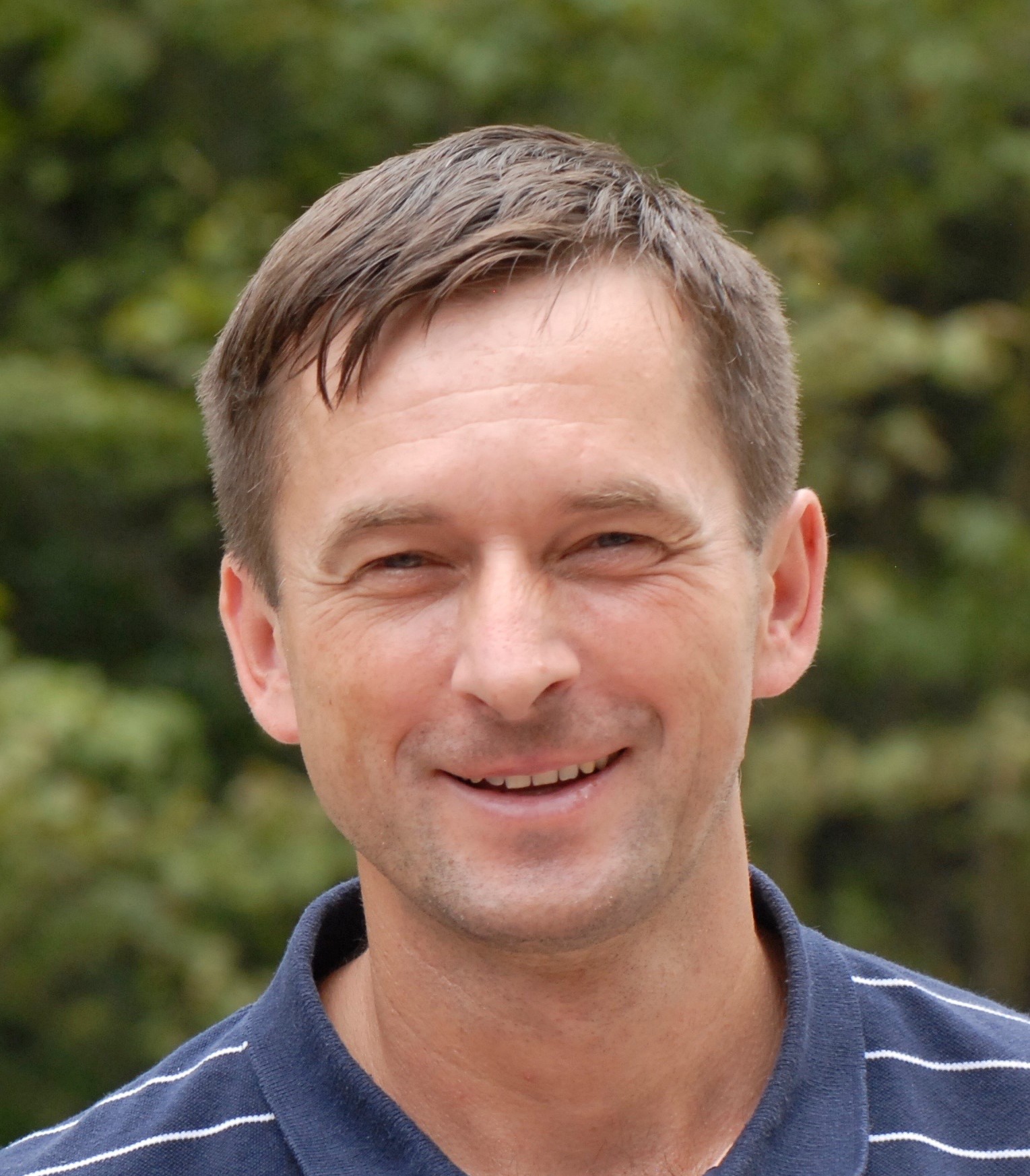
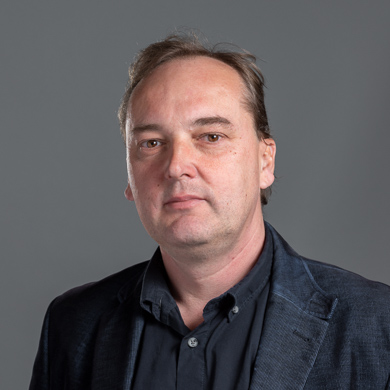
Pavel Cejnar is a Professor at the Institute of Particle and Nuclear Physics, Faculty of Mathematics and Physics, Charles University in Prague. He has been a full professor since 2012, following his appointment as an associate professor in 2004 and assistant professor in 1995. His research focuses on quantum theory, particularly quantum phase transitions, quantum chaos, and nuclear structure models as laboratories for studying quantum phenomena. Cejnar received his Master's degree in nuclear physics from Charles University in 1988, his Ph.D. in 1995 with a thesis on "statistical modelling of nuclear processes," and his Doctor of Science (DSc.) in 2010. He has held research positions at several international institutions including the University of Fribourg, Yale University, Michigan State University, University of Stellenbosch, University of Cologne, and the European Center for Theoretical Studies in Nuclear Physics in Trento. His research interests span quantum chaos, quantum phase transitions, quantum entanglement, and quantum computing. He views nuclear-structure models as ideal laboratories for studying quantum effects. His work has significant implications for understanding fundamental quantum phenomena in many-body systems. Professor Cejnar's publications show a strong focus on excited-state quantum phase transitions, with numerous papers exploring the connections between quantum criticality, quantum dynamics, and many-body physics. His recent work has delved into quantum geometry, open quantum systems, and the application of quantum phase transitions to quantum information processing. Among his notable scientific contributions are the development of theoretical frameworks for understanding quantum phase transitions in nuclear models and their extensions to other quantum systems. His work bridges nuclear physics with broader quantum physics concepts. Cejnar has supervised numerous students at various levels, from bachelor's theses to PhD dissertations, with research topics centered around quantum phase transitions, quantum chaos, and quantum information. He is also actively involved in teaching quantum mechanics and related topics to both physics students and non-specialists. He has contributed significantly to science popularization, including co-authoring the book "Einstein again in Prague" and developing the "Physics as an Adventure of Knowledge" course, which introduces key concepts of modern physics to bachelor's students.