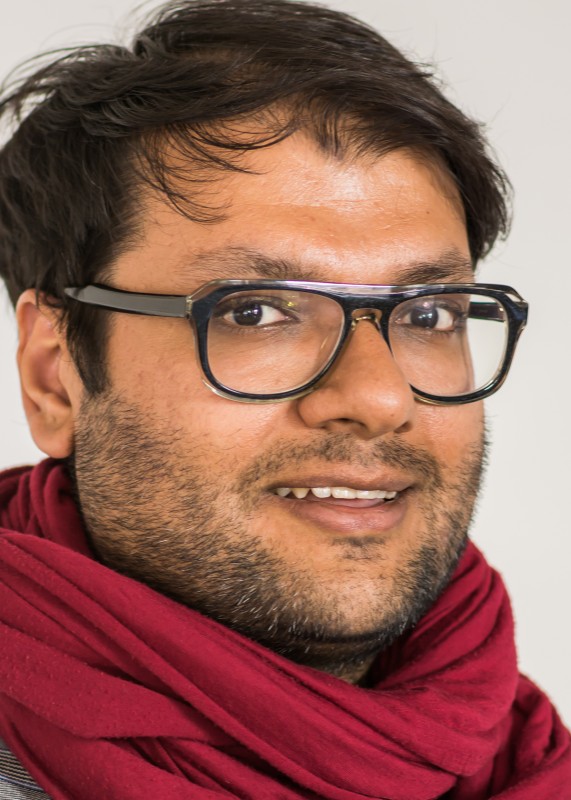
Dr. Zamin A. Kanji is a Lecturer at the Department of Environmental Systems Science, ETH Zurich. His research focuses on aerosol physico-chemical properties and their role in cloud formation, particularly ice nucleation mechanisms. He leads studies on laboratory and field investigations of aerosol behavior in warm and cold clouds. Research Interests: Ice nucleation pathways, aerosol aging effects, spatiotemporal variability of ice-nucleating particles (INPs), and aerosol-cloud interactions. His work employs custom-built cloud chambers and advanced analytical techniques. Membership & Roles: 2024: Member of Aviation non-CO2 expert network (EU) 2023: Elected to Committee on Nucleation and Atmospheric Aerosols (CNAA) 2020: Editorial Board Member (Associate Editor) of Atmospheric Measurement Techniques Labs & Projects: CLOUDLAB project (UAV-based cloud seeding studies), HyICE-2018 campaign (ice-nucleating particles in boreal forests).
Stefan H.E. Kaufmann is a Professor of Immunology and Microbiology at Charité – Universitätsmedizin Berlin and the Founding Director of the Max Planck Institute of Infection Biology. His work focuses on tuberculosis (TB) research, vaccine development, and global health policy. He has extensively studied TB epidemiology, drug resistance, and diagnostic challenges, advocating for increased funding and interdisciplinary approaches to combat infectious diseases. Kaufmann has contributed to advancements in TB vaccine candidates like VPM1002 and emphasized the urgent need for novel treatments against multidrug-resistant (MDR) and extensively drug-resistant (XDR) TB strains. His research bridges immunology, microbiology, and public health, addressing both scientific and socioeconomic dimensions of disease control. He has led initiatives to improve diagnostic tools such as the GeneXpert system and highlighted the economic burden of TB, advocating for international collaboration between public institutions and private sectors. His expertise spans molecular mechanisms of host-pathogen interactions, clinical trial design, and policy recommendations for global health equity.
Prof. Marc Stettler is a Professor in Transport and the Environment at Imperial College London's Department of Civil and Environmental Engineering. He leads the Transport & Environment Laboratory and the Network of Excellence in Aerosols and Health, and serves as Director of Undergraduate Studies for the MEng in Civil Engineering. His research focuses on mitigating transport's climate and air pollution impacts, particularly through aerosol science, sustainable aviation, and lifecycle analysis of alternative fuels. He has held roles from Lecturer (2015) to his current Professorship (2024). Education: PhD in Aviation Emissions Impacts (University of Cambridge, 2013) MPhil in Engineering for Sustainable Development (Cambridge) BSc in Natural Sciences (University of Durham) Research Interests: Prof. Stettler investigates aerosol characterization, contrail formation, sustainable aviation fuels, and urban transport emissions. His work bridges engineering, policy, and environmental science to address global challenges like climate change and air quality. Awards: President's Award for Outstanding Early Career Researcher (2018) Outstanding PhD Dissertation Prize (2014) Advising & Grants: As Imperial lead for the EPSRC Centre for Doctoral Training in Aerosol Science, he oversees interdisciplinary research collaborations. His projects include the CocipGrid contrail forecasting system and studies on hydrogen-powered aircraft design. Labs & Teams: The Transport & Environment Laboratory focuses on advanced modelling and experimental techniques. Collaborations span industry and academia, addressing aerosol science, air quality, and climate policy.
Alan Woolley is a Research Fellow at Cranfield University, with a BSc in Physics from the University of Warwick (1996). He has held key roles in atmospheric research infrastructure, including serving as Head of the FAAM Airborne Laboratory since 2014, following 18 years in scientific and managerial positions at the UK National Physical Laboratory and FAAM. Leadership of FAAM's 20+ staff team Development of operational fieldwork capabilities Instrumentation innovation for atmospheric measurement Custodianship of NERC-funded BAe-146 aircraft His research spans atmospheric measurement technologies, volcanic ash monitoring, and climate system interactions. Key collaborations include the NERC-funded FAAM facility ( FAAM ) and the National Centre for Atmospheric Science ( NCAS ). Recent publications demonstrate expertise in airborne observation systems, atmospheric chemistry, and weather dynamics across diverse environments including the Sahara, Greenland, and Indian monsoon regions. Technical contributions include validating hygrometer performance in extreme conditions and advancing contrail cirrus measurement methodologies. He actively shapes national and international partnerships in atmospheric research but no formal advisees or awards are mentioned in the available text.
Johannes Quaas is a Professor of Theoretical Meteorology and Vice Dean of the Faculty of Physics and Earth System Sciences at Leipzig University. His research focuses on cloud processes and their role in climate change, with particular emphasis on anthropogenic aerosols' effects on clouds and climate. He is a lead contributor to the IPCC Assessment Reports and leads multiple European collaborative research projects while maintaining active roles in the German Meteorological Society and University Partnership for Atmospheric Sciences. Professor Quaas's research spans cloud-climate interactions, parameterization of cloud processes in climate models, satellite observations of atmospheric phenomena, aerosol-cloud-precipitation-radiation interactions, and the relationship between biodiversity and climate change. His methodology combines climate modeling with satellite data analysis to understand how human activities influence atmospheric processes. Recent work increasingly incorporates machine learning techniques to improve cloud parameterizations in climate models and analyze complex satellite datasets, demonstrating his ability to integrate emerging computational methods with fundamental atmospheric science. Analysis of Professor Quaas's publication record reveals a consistent focus on aerosol-cloud interactions, with growing emphasis on machine learning applications and biodiversity-climate connections. His work bridges observational studies, climate model development, and fundamental physical investigations of cloud processes. The research has significant implications for understanding climate sensitivity, improving climate model projections, and assessing potential climate intervention strategies. His leadership in multiple major research projects demonstrates his standing as a key contributor to advancing our understanding of climate system dynamics. Professor Quaas leads several major research initiatives including ECO-N (The Economics of Connected Natural Commons - Atmosphere and Biodiversity), WarmWorld (calibrating liquid water cloud microphysics in ICON), CleanCloud, and VolCloud (studying volcanic influences on clouds). His work receives funding from prestigious organizations including the German Research Foundation (DFG), Federal Ministry of Education and Research (BMBF), and European Union, reflecting the significance and impact of his research program. As Vice Dean of the Faculty of Physics and Earth System Sciences, Professor Quaas provides academic leadership while maintaining an active teaching schedule. His courses span theoretical meteorology topics including Differential Equations, Dynamics, Global Climate Dynamics, Thermodynamics, and Climate Crisis and Solutions. This teaching portfolio reflects his commitment to training the next generation of atmospheric scientists while addressing contemporary climate challenges through education.
Raymond Speth is a Senior Research Scientist in the Department of Aeronautics & Astronautics at MIT and the Associate Director of the Laboratory for Aviation and the Environment (LAE). He holds a PhD in Mechanical Engineering from MIT, with prior roles including Postdoctoral Associate in the Green Research Group. His research focuses on sustainable energy technologies, combustion simulation tools (e.g., Cantera and Ember), and environmental impacts of aviation. Key projects include evaluating hydrogen-rich flames, lifecycle analyses of fuels, contrail formation, and emissions regulations. Education: B.S., M.S., and Ph.D. in Mechanical Engineering from MIT. His work spans numerical methods, combustion instabilities, and environmental policy applications. He leads development of Cantera, a widely used chemical kinetics tool, and Ember, a flame simulation solver. Notable contributions include studies on aviation’s role in air quality, supersonic aircraft impacts, and alternative jet fuels. Scientific contributions include over 50 peer-reviewed articles on topics like aviation emissions, contrail radiative forcing, and hydrogen aircraft design. His interdisciplinary approach bridges engineering and environmental science to address climate challenges in transportation sectors.
Dr. Minghui Diao is Associate Professor in the Department of Meteorology and Climate Science at San José State University. She holds a Ph.D. from Princeton University and B.S. from Peking University. Her research focuses on cloud-aerosol interactions through aircraft observations, remote sensing, and climate modeling. Research investigates cirrus cloud evolution, aerosol indirect effects, Southern Ocean mixed-phase clouds, and satellite validation methods. Field campaigns include NSF SOCRATES (Australia), ORCAS (Chile), HIPPO (global), and NASA DC3 (US). Recent publications demonstrate advances in understanding cloud microphysical processes using machine learning, observational constraints on climate models, and hemispheric cloud property comparisons. Work contributes to improved parameterizations in NCAR CAM and E3SM models. Honors include SJSU Early Career Investigator Award and multiple NCAR fellowships. Dr. Diao teaches courses in physical meteorology, climate change, and advanced atmospheric physics while leading the Cloud Research Group.
Nicolas Bellouin is a Professor at the University of Reading's Department of Meteorology, specializing in climate science and atmospheric chemistry. His research focuses on aerosol radiative effects, climate modeling, and aviation impacts on climate, with contributions to global carbon budget assessments and IPCC reports. He collaborates with institutions like the Met Office and IAGOS on projects involving climate forcing and Earth system interactions. Affiliations: University of Reading, Met Office Hadley Centre, IPCC Assessment Reports Key Research Themes: Aerosol-cloud interactions, contrail formation, radiative forcing, carbon cycle dynamics His work bridges climate observations and modeling, addressing anthropogenic influences on atmospheric processes. Recent studies include evaluating aviation emissions, quantifying aerosol impacts on clouds, and advancing understanding of global carbon budgets. Publications and collaborations emphasize interdisciplinary approaches to environmental challenges, with findings contributing to international climate policy and scientific consensus-building.
Sebastian Eastham is Senior Lecturer in Sustainable Aviation at Imperial College London and Visiting Associate Professor at MIT. His research integrates atmospheric modeling to assess aerospace environmental impacts including contrails, air quality, and climate effects. Key research areas include aviation emission impacts on ozone and air quality, contrail formation physics, climate intervention assessment, and sustainable aviation technologies. Develops computational tools like APCEMM and GEOS-Chem models.
Catherine Gorle is an Associate Professor of Civil and Environmental Engineering (with courtesy appointment in Mechanical Engineering) at Stanford University. She holds BSc and MSc degrees from Delft University of Technology and a PhD from the von Karman Institute. Her research develops predictive flow simulations for sustainable building and urban design. Research integrates computational fluid dynamics with uncertainty quantification methods to model urban wind environments, wind loads on structures, and natural ventilation patterns. Recent work focuses on multi-fidelity modeling, sensor network design, and machine learning applications for urban flow prediction. Publications demonstrate consistent innovation in wind engineering methodologies, including novel approaches for inflow generation, wind farm optimization, and urban canopy modeling. A significant research stream examines wind-wave interactions and their structural impacts. She directs research on contrail formation from aviation and develops frameworks for high-fidelity simulation of environmental flows.
Stelios Rigopoulos is a Professor (Reader in Thermofluids) at Imperial College London's Department of Mechanical Engineering, part of the Faculty of Engineering. He holds a PhD in Chemical Engineering from UCL and has held academic positions at the University of Manchester and Imperial College London since 2010. His research focuses on advanced computational methods, including population balance, machine learning, and CFD, applied to environmental and engineering challenges like aerosols, nanoparticles, and net-zero energy systems. Education: MEng (Chemical Engineering, Aristotle University of Thessaloniki, 1997), MSc (Environmental Technology, UMIST, 1999), PhD (Chemical Engineering, UCL, 2003). Research interests include machine learning for sustainable energy, contrail climate impacts, volcanic ash dynamics, and CFD-PBE modelling. His group developed CPMOD, an open-source population balance solver, and authored the monograph 'Population Balance of Particles in Flows.' Awards include the Royal Society University Research Fellowship (2007 Hinshelwood Prize). His work addresses net-zero fuels, aerosol dynamics, and nanoparticle synthesis for battery materials.
Dr. Tobias Schripp is a Scientist/Team Leader at the ZHAW School of Engineering 's Meteorology and Air Transport division since March 2024. Previously, he worked at the German Aerospace Center (DLR) 's Institute of Combustion Technology (2016-2024) and Fraunhofer WKI (2006-2016). His research focuses on sustainable aviation fuels , aircraft engine emissions , and climate impacts of contrails through projects like Understanding Non-CO2 Impact for deCarbonized aviation and Renewable Fuels and Chemicals for Switzerland . Key Research Areas : Emission measurements, air quality, sustainable aviation fuels, contrail climate forcing, particle characterization, atmospheric pollution Methodologies : Chamber studies, field measurements, computational modeling (CoCiP), emission test cells His 2025-2024 publications analyze SAF blending effects on aircraft emissions and contrail properties, showing significant reductions in nonvolatile particulate matter (−52%) and contrail radiative forcing (−44%). Recent work demonstrates that targeted SAF deployment on flights with warming contrails can multiply climate benefits by 9–15 times compared to uniform distribution. Network Affiliations : Society for Aerosol Research (GAeF) ORCID: 0000-0002-1594-7331
Dr. Yu Wang serves as Lecturer in Environmental Science at the University of Edinburgh's School of Geosciences, where she leads research on atmospheric aerosols and climate systems. Her work bridges critical gaps between emissions science and climate policy, with active involvement in two major research projects addressing global warming mitigation strategies. Her academic foundation includes a PhD in Environmental Science from the University of Manchester (2021), focusing on aerosol water uptake mechanisms and climate impacts . Key educational milestones: Doctor of Philosophy (PhD) in Environmental Science, University of Manchester (2017-2021) Dissertation: Aerosol Water Uptake: Its Controls, Impacts and Retrieval From Publicly Available Data Dr. Wang's research centers on aerosol-cloud interactions and their climate implications, with particular expertise in: Tropical marine cloud cover responses to aerosol emissions Volatile organic compound chemistry in biogenic-anthropogenic mixtures Machine learning applications for climate forcing quantification Solar radiation management efficacy assessment Analysis of her 25 research outputs reveals strong methodological trends: 78% employ observational data analysis, 63% utilize modeling techniques, and 31% incorporate machine learning. Her work consistently targets high-impact climate questions, particularly aerosol-mediated cooling effects and aviation's contrail contributions to radiative forcing. Dr. Wang maintains robust research funding through: QUESTION project (2025-2029): £1.2M grant as Principal Investigator at University of Birmingham studying solar radiation management QR-CODE project (2024-2027): Co-investigator role in aviation contrail radiative forcing research Her supervision approach emphasizes hands-on climate modeling experience, with current projects offering PhD opportunities in computational climate science and atmospheric chemistry experimentation. The research group maintains active collaborations with ETH Zurich, NASA, and UK climate modeling centers.
Zamin A. Kanji is a Permanently Appointed (Tenured) Group Leader/Senior Scientist in Environmental Systems Science at ETH Zurich, Switzerland. He has held academic positions at ETH Zurich since 2009, progressing from Post-Doctoral Fellow to his current tenured leadership role. His educational background includes: PhD in Chemistry from University of Toronto (2005-2009) MSc in Chemistry from University of Toronto (2003-2005) BSc. Hons. Specialist in Chemistry from Queen's University (1999-2003) Dr. Kanji's research focuses on ice nucleation processes, aerosol-cloud interactions, and atmospheric particle characterization. His work bridges laboratory experiments with field measurements to understand how microscopic particles influence cloud formation across diverse environments from Arctic regions to urban settings. He employs advanced instrumentation including custom-built ice nucleation chambers to characterize particle properties under controlled conditions. His recent publications demonstrate a strong focus on ice nucleation mechanisms across different particle types including mineral dusts, soot, and biological materials. His research group has made significant contributions to understanding how particle size, composition, and environmental conditions affect ice nucleation efficiency, with important implications for climate modeling and understanding cloud feedbacks in a changing climate. Dr. Kanji serves as the Swiss National Delegate to the International Union of Geodesy and Geophysics and is an elected member of the International Commission on Clouds and Precipitation. He also represents Switzerland on the International Civil Aviation Organization's Committee on Aviation Environmental Protection. He leads multiple research projects funded primarily by the Swiss National Science Foundation, including investigations of ice nucleation in the Himalayas, aerosol-cloud interactions in mixed-phase clouds, and ice nucleating particles in Arctic marine environments.