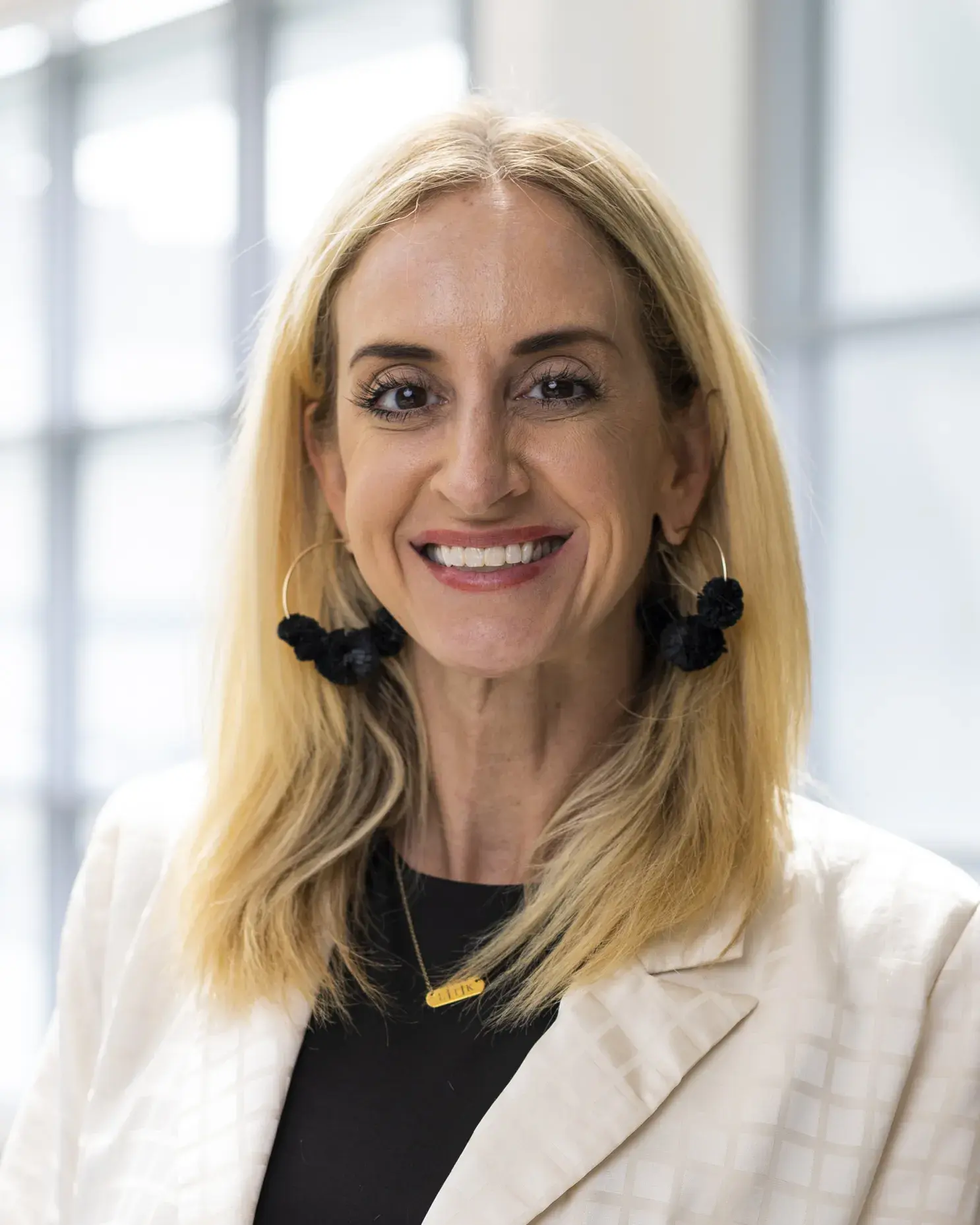
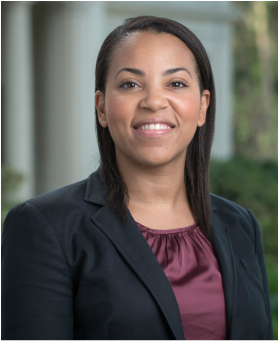
Brooke Hudspeth, PharmD, is an Associate Professor and Chief Practice Officer at the University of Kentucky (UK) College of Pharmacy. She oversees community pharmacy initiatives and serves as acting President of the Kentucky Pharmacists Association (KPhA). Her roles include mentoring pharmacy students and residents as a preceptor, and leading collaborative projects with organizations like the American Pharmacists Association Foundation, Kroger Co., and the CDC. Educationally, she holds a Doctor of Pharmacy from the UK College of Pharmacy, alongside PGY1/PGY2 Community-based Pharmacy Practice Residencies from the same institution. Her research focuses on diabetes prevention, obesity, and pharmacist-driven clinical services, particularly through expanding the National Diabetes Prevention Program (NDPP) to five U.S. states via a $7.5M CDC grant. Research interests emphasize health disparities, vaccine accessibility, and optimizing pharmacist roles in self-care conditions. Notable projects include influenza point-of-care testing and pharmacy partnerships during the pandemic. Her work bridges academic innovation with real-world healthcare challenges, advocating for policy changes to enhance pharmacist payment for clinical services. Despite no explicitly listed awards, her impactful grant-funded projects reflect significant contributions to public health. She advises students and residents while leading residency expansion initiatives. Collaborations with major institutions underscore her role in advancing pharmacy practice and education nationally. Hudspeth’s lab/team is embedded within UK’s College of Pharmacy, focusing on translational research to improve patient care through pharmacist-led interventions. Future work includes expanding telehealth pharmacy services and addressing healthcare workforce shortages.
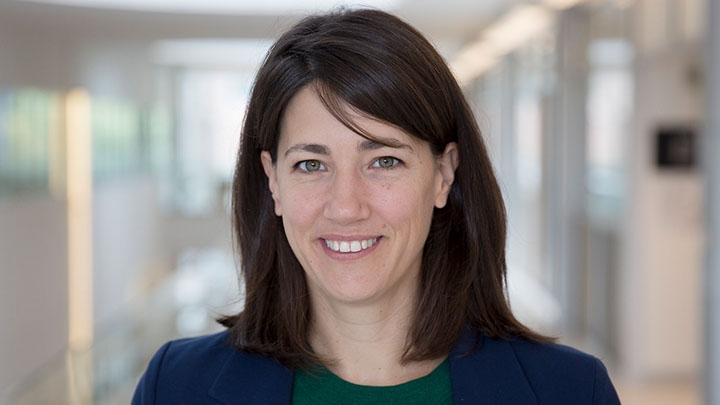
Dr. Frances Chen is a Professor and Area Coordinator in the Department of Psychology at the University of British Columbia (UBC), located on the traditional, ancestral, and unceded territory of the Musqueam People. She holds a PhD from Stanford University (2009). Her research integrates health psychology, social psychology, and neuroendocrinology to explore how social experiences influence mental and physical health. Key areas include the physiological impacts of loneliness, social support, and hormonal changes during puberty on adolescent development. Education: PhD, Psychology, Stanford University, 2009 Research Focus: Dr. Chen investigates how social interactions 'get under the skin' through studies on loneliness, stress, conflict negotiation, and hormonal mechanisms. Her work emphasizes interventions to enhance social connection and reduce health disparities. Recent Article Trends: Recent publications highlight interdisciplinary approaches, including genetic influences on depression, effects of near-infrared lighting on cognition, and longitudinal studies on adolescent hormonal contraceptive use. Her work bridges basic science and applied health outcomes. Awards & Grants: Michael Smith Health Research BC C2 Award (2022) Killam Faculty Research Fellowship (2019) Teaching & Learning Enhancement Fund Grant (2025) SSHRC Prosociality Project Funding (2023) Lab & Mentorship: Director of the Social Health Lab, she mentors graduate and undergraduate students, prioritizing equity and inclusion. Recent lab achievements include studies on teen health development and interventions to improve student success in psychology programs. Lab Initiatives: UBC Teen Health and Development Study (longitudinal hormonal/mental health tracking) NIR lighting health impact research (collaborative interdisciplinary project) Prosociality 'in the Wild' SSHRC project
Lisa L. Wynn is Professor in the School of Social Sciences (Discipline of Anthropology) at Macquarie University in Sydney, Australia. She serves as Associate Editor of American Ethnologist (2022-2027) and previously held leadership positions including President of the Australian Anthropological Society (2020) and membership on the AAS Executive Committee (2018-2021). Wynn earned her PhD in 2003 from Princeton University's Anthropology Department, followed by postdoctoral positions at Princeton's Office of Population Research and Center for Health and Wellbeing. Her research program centers on gender, reproductive health technologies, sexuality, and religion, with continuous fieldwork in Egypt since 1998. More recently, she has expanded her work to examine ethics review bureaucracies, lay understandings of infectious disease, and young adult vaping behaviors in Australia. Her methodological approach combines deep ethnographic engagement with critical analysis of how power structures intersect with medical technologies and bodily experiences, particularly among marginalized communities. Analysis of her recent publications reveals an evolving trajectory that maintains her foundational interest in Middle Eastern contexts while increasingly addressing digital spaces (as seen in studies of online fatwas) and contemporary health crises (including pandemic responses and vaping culture), with consistent attention to bodily autonomy and reproductive justice. Her significant scholarly contributions have been recognized through multiple prestigious awards: Vice Chancellor's Teaching Excellence Award from Macquarie University (2009) Australian Award for Teaching Excellence (2012) OLT National Teaching Fellowship (2012-2014) Leeds Honor Prize from the Society for Urban, National, and Transnational/Global Anthropology (2008) Wynn actively mentors graduate researchers specializing in gender, sexuality, medicine and technology, with particular emphasis on sexual and reproductive health. Her research program has received substantial funding from the Social Science Research Council, Australian Research Council, Office of Learning and Teaching, and Hort Innovation. Notably, she co-led a major international project to develop multilingual sexual and reproductive health resources that have reached millions of users across 208 countries. She also created a free online ethics training program for humanities and social sciences researchers at Macquarie University. Through collaborations with Cambridge Reproductive Health Consultants and other partners, Wynn has successfully translated academic research into accessible public resources, including evidence-based information on medication abortion available in six languages (English, Spanish, French, Arabic, Turkish, and Farsi).
Saifuddin Ahmed, PhD, MBBS, is a Professor at the Bloomberg School of Public Health, Johns Hopkins University. His primary department affiliation is Population, Family and Reproductive Health, with a joint role in Biostatistics. He is affiliated with the William H. Gates Sr. Institute for Population and Reproductive Health and the Hopkins Population Center. His research focuses on reproductive epidemiology, maternal mortality estimation, family planning, and complex population surveys. Key interests include reducing maternal mortality disparities, improving access to family planning services, and enhancing healthcare systems in low-resource settings. Dr. Ahmed’s work spans global health challenges, particularly in South Asia and sub-Saharan Africa. His projects address maternal and child health, neonatal care, and the integration of technology (e.g., mobile health surveys) into public health monitoring. He has authored over 200 publications, with recent contributions on maternal mortality frameworks, neonatal hypothermia management, and contraceptive equity. His research often bridges clinical practice and policy, aiming to translate evidence into actionable health strategies. Dr. Ahmed’s grants and collaborations involve international organizations and institutions, focusing on population health surveillance and intervention efficacy. He actively participates in global initiatives to address gaps in maternal healthcare and improve birth outcomes.
Sharon Sassler is a Professor in the Department of Policy Analysis and Management at Cornell University's Brooks School of Public Policy. She joined the Cornell faculty in 2005 and holds a Ph.D. in Sociology/Demography from Brown University (1995). Her research examines life course transitions of young adults across education, work, relationships, and parenthood, with critical attention to gender, race/ethnicity, and social class disparities. Education: Post-Doctoral Fellowship, Johns Hopkins University, Department of Population Dynamics (1995-96) Ph.D. in Sociology/Demography, Brown University (1995) M.A. in Sociology/Demography, Brown University (1991) B.A. in English & American Literature and Politics, Brandeis University (1984) Professor Sassler's research spans two interconnected domains: family demography and STEM gender dynamics. In family studies, she investigates cohabitation, marriage, and non-marital childbearing through publications like Cohabitation Nation: Gender, Class, and the Remaking of Relationships (2017), which demonstrates how cohabitation patterns exacerbate family inequality. Her work reveals how union transitions affect maternal health, child educational outcomes, and relationship stability across racial and socioeconomic lines. Concurrently, she examines women's retention in STEM fields, analyzing gender wage gaps, occupational attrition, and the impact of family formation on career trajectories in science and engineering professions. Her 2022-2025 publications reveal intensifying focus on cross-national comparisons of union formation and STEM career dynamics, with growing attention to policy impacts. Notable trends include state abortion policy effects on pregnancy outcomes, the retreat from marriage among college-educated STEM professionals, and intersectional analyses of job search strategies. Her work consistently centers gendered power dynamics within cohabiting relationships while documenting how racial and class inequalities shape family formation and STEM participation. Scientific Awards: No specific awards mentioned in source materials Professor Sassler actively mentors through collaborative research projects like Collaborative Research: Early Career Transitions into STEM Employment (2014), indicating grant-funded work examining structural barriers for women in technical fields. Her extensive co-authorship network suggests significant graduate student supervision, though formal advisee lists aren't documented. She teaches core sociology courses including Population and Public Policy (SOC 2030) and Population Controversies in Europe (SOC 3620), connecting demographic theory with contemporary policy debates. Based in Martha Van Rensselaer Hall, she contributes to Cornell's interdisciplinary research ecosystem through affiliations with both the Sociology program and Policy Analysis and Management department, bridging demographic methods with public policy applications to address pressing social inequalities.
Dr. Deborah R. McFarlane is a Professor and Regents Lecturer at the University of New Mexico, specializing in public policy and health policy. She holds a DrPH from the University of Texas Health Science Center, an MPA from Harvard University, and an MPH from the University of Michigan. Her research focuses on reproductive health policy, fiscal federalism, and global population dynamics. She has held faculty positions at Johns Hopkins Bloomberg School of Public Health and other institutions. Dr. McFarlane leads the Population and Reproductive Health Oral History Project, funded by the Hewlett Foundation. Her work has been recognized with the UNM Louie Award for Service (2011). She explores topics like abortion policy, healthcare access for undocumented populations, and climate change impacts on population health. Her publications span comparative policy analyses, including U.S. vs. Western Europe abortion frameworks and global population trends. She advises on federalism and state-level policy implementation, with a focus on reproductive rights and equity.
Krystale Littlejohn is an Associate Professor in the Department of Sociology at the University of Oregon’s College of Arts and Sciences. Her research focuses on race, gender, and reproduction, examining how cultural categories shape intimate relationships and health outcomes. She employs mixed methods across disciplines such as reproductive justice, health and medicine, social cognition, and intersectionality. B.A. in Sociology and Spanish Language and Culture, Occidental College (2007) Ph.D. in Sociology, Stanford University (2013) Her work interrogates the social underpinnings of reproductive processes, including projects on contraceptive use, abortion access, and the embodiment of biomedical technologies. She has secured grants from the Society of Family Planning, American Association of University Women, and NIH, including a K01 award for research on risk tolerance in contraceptive use among couples. Recent publications explore themes like mental and emotional health in reproductive care (2025), gendered heterosexuality and mixed feelings about sex (2024), and disparities in contraceptive dissatisfaction by race and education (2012). These works span subfields including reproductive justice, intersectionality, and social cognition. ASA Minority Fellowship Program American Association of University Women Fellowship Society of Family Planning Funding NIH K01 Award Professor Littlejohn mentors graduate and undergraduate researchers, though specific advisees are not listed. She also provides productivity consulting and performance coaching to academics, reflecting her commitment to interdisciplinary collaboration and public health advocacy.
Dr. Bethany White is a Clinical Senior Lecturer at the Central Clinical School, University of Sydney. Her expertise lies in public health research, particularly in drug and alcohol use, hepatitis C epidemiology, and health services evaluation. She has led numerous clinical and community-based studies focusing on marginalized populations, including people who inject drugs and imprisoned women. Her work integrates harm reduction policies, healthcare access improvements, and substance use disorder treatments in custodial and community settings. Research Focus: Dr. White's research emphasizes epidemiological methods to address health inequalities, with a focus on opioid use disorders, hepatitis C prevention, and women's substance use. She has pioneered studies on depot buprenorphine treatment efficacy in prisons and developed models of care for substance-using mothers. Her work bridges clinical practice and policy, aiming to improve healthcare accessibility in high-risk groups. Key Themes: Health inequalities, harm reduction, custodial healthcare Recent Projects: Costing models for depot buprenorphine, contraception integration in opioid treatment centers Grants & Collaborations: Principal investigator on a 2025 NHMRC-funded grant exploring clinical evidence translation for substance use disorder outcomes. Collaborates with institutions like Edith Collins Centre and NSW Health. Labs/Teams: Affiliated with the Edith Collins Centre, focusing on addiction medicine and health service innovation.
Sarah Boyd, MD is an Associate Professor specializing in Female Pelvic Medicine & Reconstructive Surgery. She focuses on optimizing patient outcomes for pelvic floor disorders through surgical and non-surgical approaches. Board-certified in Obstetrics and Gynecology (2017) and Female Pelvic Medicine & Reconstructive Surgery (2021), her expertise spans pelvic organ prolapse, urinary incontinence, and minimally invasive gynecologic procedures. Female Pelvic Medicine & Reconstructive Surgery Fellowship, Hartford Hospital (2016-2019) Obstetrics and Gynecology Residency, Christiana Care Health System (2012-2016) MD from Marshall University John C. Edwards School of Medicine (2008-2012) Her research explores adverse outcomes in pelvic reconstructive surgery, postoperative opioid consumption, catheter management, and non-surgical interventions for prolapse. She collaborates in multi-institutional research groups analyzing perioperative outcomes. Articles demonstrate trends in data-driven surgical optimization and pain management protocols. Scientific Awards: Pyrtek Research Paper Distinction Award in Clinical Research (2019)
David P. Baker is a Professor in both Education Policy Studies and Sociology and Criminology at Penn State University's College of Education. His office is located in the 647 Susan Welch Liberal Arts Building, and he can be reached at dpb4@psu.edu or 814-863-0955. Dr. Baker leads the Population Research Institute and maintains an active research program examining education's global impact on societal development. His educational background includes a Ph.D. in Sociology from The John Hopkins University (1982), an M.S. in Communication Research from Boston University (1975), and a B.A. in Psychology from Albion College (1974). These diverse academic foundations inform his interdisciplinary approach to studying education's societal impacts. Baker's research spans the sociology of education, science productivity, world health, demographic change, and the formation of social institutions. His work examines how education transforms cognitive skills in populations, reshapes occupations, influences health behaviors globally (including HIV/AIDS in Africa, smoking patterns, and obesity), and drives technological adaptation across 63 nations. He conducts innovative research through randomized clinical trials and historical analyses of universities' role in knowledge production. His publications reveal consistent focus on education's transformative power across multiple domains. Recent work examines nicotine reduction policies, cognitive transformations in the labor market, and the global testing culture. His book The Schooled Society represents a major contribution to understanding how education has reshaped modern society. Outstanding Book of the Year by the American Education Research Association Silver Medal in the Independent Publisher Book Awards (IPPYs) Best poster award at Population Association of America conference Professor Baker actively mentors students and colleagues, with numerous collaborative projects including the Population Education Transition Curve research. His laboratory work includes experimental studies on education and health messaging, with funding from the Spencer Foundation and Penn State's Population Research Institute. Current projects examine how education shapes perceptions of low-nicotine cigarette messaging and the cognitive transformation of social opportunity.
Associate Professor Jenni Ilomaki holds a position at Monash University's Centre for Medicine Use and Safety. With expertise in clinical pharmacy, epidemiology, and public health, she leads a research group analyzing administrative claims data. Her work spans collaborations with governmental and non-governmental organizations globally, yielding over 150 peer-reviewed publications and $4 million in grants. She previously served as Chair of ASCEPT's Pharmacoepidemiology Special Interest Group and currently serves as Science Lead for the Monash Addiction Research Centre and Executive Editor of the British Journal of Clinical Pharmacology. Education includes a Bachelor of Science (Pharmacy) from the University of Kuopio (1999) and Master of Science (Pharmacy) from the University of Kuopio (2004). She completed a PhD in alcohol epidemiology at the University of Eastern Finland (2011) and a postdoc at the University of South Australia (2011-2014). Notable recognitions include Young Epidemiologist of the Year (2011) and the Ronald D. Mann Best Paper Award (2021). Key research focuses on quality use of medicines, medicine safety, large population studies, and innovative epidemiological methods. Major projects include developing clinical decision support tools for cardiovascular prevention, analyzing preventable hospitalizations in aged care, and investigating psychotropic medication trends in youth. Her work contributes to UN Sustainable Development Goals related to health equity and non-communicable disease reduction. Recent publications emphasize drug repurposing (e.g., SGLT2 inhibitors), opioid prescribing patterns, hip fracture outcomes, and dementia detection algorithms. She chairs multinational studies on stroke and myocardial infarction cost burdens, demonstrating interdisciplinary impact across pharmacology, epidemiology, and health economics.
Leah Okenwa Emegwa is an Associate Professor of Public Health Sciences at the Swedish Red Cross University (part of Red Cross College), where she has worked since 2017. She holds a PhD in Public Health (2011, Karolinska Institutet), a Master's degree in Public Health (2006), and a Doctor of Optometry (2000). Her work experience spans clinical optometry (primary care, aviation vision care) and academic roles including program directorships and vice-dean assignments. Her research focuses on social determinants of health, emphasizing interpersonal violence (gender-based/family violence), workplace health promotion, refugee/migrant health, and human rights-based approaches. She also explores innovative teaching methods in higher education for addressing social change. Key activities include: Representing the Swedish Red Cross University in ASPHER (European public health network) and the Flemingsberg Science Foundation Guest editing journals like Frontiers in Public Health and Socialmedicinsk Tidskrift Peer review for multiple scientific journals Teaching responsibilities include epidemiology, research methods, gender equity, and occupational health at both undergraduate and graduate levels. Her work emphasizes global health challenges such as violence prevention and health equity in vulnerable populations. Publications highlight themes like refugee mental health, workplace violence mitigation, and educational strategies for addressing gender-based violence. Her 2011 doctoral thesis investigated intimate partner violence and reproductive health in Nigeria.
Julia Behrman serves as an Associate Professor of Sociology at Northwestern University, where she conducts internationally recognized research on family change in global contexts. Her work examines how family structures interact with major societal forces including educational expansion, environmental change, women's labor force participation, and migration patterns, with particular attention to power dynamics within households and their implications for social inequality. Dr. Behrman earned her PhD from New York University in 2017 following a Postdoctoral Prize Research Fellowship at Nuffield College, University of Oxford. Her methodological expertise combines advanced quantitative techniques with comparative demographic analysis across diverse geographical settings. Her research program centers on family sociology, gender studies, and demography, with significant contributions to understanding how events like natural disasters, migration, and policy changes alter family power structures. She investigates whether evolving family forms mitigate or reinforce inequalities both between and within households, addressing critical questions about who holds decision-making authority in families and how crises reshape these dynamics. Analysis of her recent publications reveals a strong methodological emphasis on quantitative analysis of large-scale datasets, with thematic focus on reproductive health preferences, migration impacts, and family size norms across the United States, France, and Sub-Saharan Africa. Her work consistently bridges demographic trends with sociological theory to explain household-level responses to macro-level social changes. Her scholarly excellence has been recognized through multiple prestigious awards: American Sociological Association Section on Education Award American Sociological Association Section on Population Award American Sociological Association Section on Development Award Society for the Study of Social Problems Award Population Association of America Award Sociologist AIDS Network Award Dr. Behrman has secured competitive research funding from the National Science Foundation and South African Medical Research Council to support her investigations into family and demographic change. As an educator, she teaches undergraduate courses including "Gender and Society" and graduate-level courses in "Research Design" and "Regression II," while actively mentoring PhD students through a structured advising process that emphasizes methodological rigor and theoretical innovation.
Mathias Lerch serves as Lecturer and Head of the Urban Demography Laboratory (URBDEMO) at the School of Architecture, Civil and Environmental Engineering (ENAC) of the Swiss Federal Institute of Technology Lausanne (EPFL). With expertise spanning population dynamics, urbanization, and demographic estimation, he bridges demography with urban planning and environmental science through interdisciplinary research on mortality, fertility, and migration patterns. His research centers on Population and Development, International Demography, and Urban Demography, examining how socioeconomic and environmental factors interact with demographic change. Methodologically, Lerch specializes in data collection, linkage, quality assessment, and advanced statistical modeling for demographic estimation and multi-regional projection, with particular focus on migration systems, fertility transitions, and mortality disparities in urban contexts. Analysis of his 15 most recent publications (2017-2025) reveals consistent investigation into migration patterns across rural-urban continua, fertility transitions in developing regions, and mortality outcomes in urban environments. His work demonstrates methodological innovation through multi-regional projection techniques and large-scale dataset integration, significantly advancing demographic estimation practices and policy-relevant insights for urban population growth. Dr. Lerch currently advises PhD students Beckendorff Dorothee and Du Wenxiu while teaching courses including Urban Demography and Border Forensics at EPFL. His advisory work focuses on training the next generation of demographers in quantitative methods and urban population analysis. As head of URBDEMO, Lerch leads a research team developing systemic frameworks for understanding urban population dynamics. The laboratory's work integrates demographic methods with urban studies to address contemporary challenges in urbanization, migration flows, and sustainable city development through innovative data linkage and modeling approaches.
Kathleen H. Sienko is the Arthur F. Thurnau Professor in the Department of Mechanical Engineering at the University of Michigan's College of Engineering. She directs the Sienko Research Group, a multidisciplinary lab focused on developing technological solutions at the intersection of healthcare and engineering. Her work spans medical device design, design science, and engineering education with a strong emphasis on global health contexts. Dr. Sienko earned her Ph.D. in Medical Engineering and Bioastronautics from the Harvard-MIT Division of Health Sciences and Technology (HST) program in 2007, an S.M. in Aeronautics & Astronautics from MIT in 2000, and a B.S. in Materials Engineering from the University of Kentucky in 1998. Ph.D., Medical Engineering and Bioastronautics, Harvard-MIT Division of Health Sciences and Technology, 2007 S.M., Aeronautics and Astronautics, Massachusetts Institute of Technology, 2000 B.S., Materials Engineering, University of Kentucky, 1998 Her research focuses on sensory augmentation, rehabilitation engineering, biomechanics, and medical device design with emphasis on global health contexts and task-shifting devices. She has pioneered efforts to incorporate global health technology constraints within engineering design education at undergraduate and graduate levels, establishing field sites in sub-Saharan Africa and Asia where numerous devices have been conceptualized and refined with local stakeholders. Her work in design science examines how and when designers use prototypes in development cycles and how prototypes assist during stakeholder interactions and user requirements identification. Her recent publications reveal a strong trend toward human-centered approaches in global health design, with increasing focus on stakeholder engagement, contextual factors in engineering design, and equity considerations in health technology development. Her work bridges biomechanics, rehabilitation engineering, and design methodology with applications in balance assessment, medical device development for low-resource settings, and engineering education. Dr. Sienko has received numerous prestigious awards including the NSF CAREER Award, University Undergraduate Teaching Award, Provost's Teaching Innovation Prize, and the Miller Faculty Scholar Endowed Award. Her recognition spans teaching excellence, research innovation, and outreach contributions. NSF CAREER Award, 2009 Provost's Teaching Innovation Prize, 2012 Miller Faculty Scholar Endowed Award, 2013 University Undergraduate Teaching Award, 2012 Raymond J. and Monica E. Schultz Outreach and Diversity Award, 2011 She has advised numerous graduate students including Nick Moses (who defended his dissertation in December 2023), Lucy Spicher, Marty Kilbane, and Ibrahim Mohedas. Her research has been supported by significant grants from the National Science Foundation, including the CAREER program, Research Initiation Grants in Engineering Education, and the Graduate Research Fellowship program, as well as funding from the University of Michigan's Rackham Merit Fellows program and Center for Research on Learning and Teaching. The Sienko Research Group operates as a talented multidisciplinary lab developing novel methodologies to create technological solutions addressing pressing societal needs at the healthcare-engineering intersection. Current research thrusts include Design Science, Autonomous Vehicles, Balance, Sensory Augmentation, and Wearable Devices, with particular emphasis on how design ethnography can inform medical device development and how engineering students develop ethnographic skills for global health contexts.