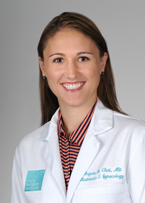
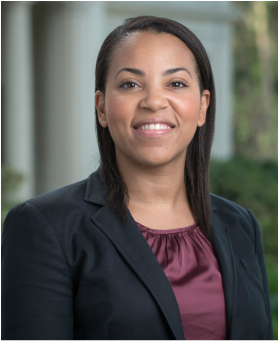
Dr. Angela Rank Choi is an Associate Professor in the Department of Obstetrics and Gynecology at the Medical University of South Carolina (MUSC). She joined MUSC Women's Care in 2013 after completing her undergraduate studies at Wake Forest University, medical school, and residency at MUSC. Her clinical and academic work focuses on contraception, family planning, preconception counseling, adolescent gynecology, obstetrics, and menopause, with a particular emphasis on preventative health strategies. Education: Bachelor's Degree: Wake Forest University Medical School: MUSC College of Medicine (2009) Residency: Medical University of South Carolina Medical Center (2013) Research & Clinical Interests: Dr. Choi specializes in menopause management (certified via the Menopause Society), contraception options, and adolescent gynecological care. She advocates for holistic preventative health approaches integrating nutrition and exercise into patient care. Awards: Menopause Society Certified Practitioner (MSCP) Advising & Grants: No formal advisee list or grants specified in available records. Her current professional activities focus on clinical care and academic contributions in obstetrics/gynecology. Labs/Teams: No specific research labs or collaborative teams explicitly mentioned in provided materials.
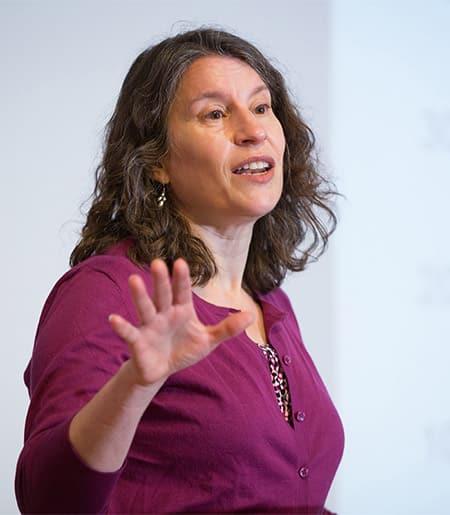
Ellen J Amster is the Jason A. Hannah Chair in the History of Medicine at McMaster University and holds a joint appointment as Associate Professor in the Departments of Family Medicine and Religious Studies. She is an interdisciplinary historian and qualitative health researcher specializing in global health, bringing together history with health and religious studies. Her work focuses on the history of medicine in the West, the Islamic world, and French empire. Dr. Amster received her B.A. from the University of Chicago and her Ph.D. from the University of Pennsylvania. She has established herself as an expert in the history of public health, Islam and North Africa, France and French empire, maternal and infant health, global primary care, Islamic studies, religion and nonwestern healing systems, colonialism and postcolonial theory, and women's histories and gender. Her research portfolio reveals strong thematic continuity across time periods, with a focus on the intersection of medicine, colonialism, and identity. Recent publications demonstrate increasing engagement with critical race theory in medicine, gender studies, and contemporary social justice issues including analyses of the George Floyd protests. Her work spans history of medicine, medical humanities, and global health policy, with particular attention to Morocco and French colonial contexts. Dr. Amster has secured funding from prestigious sources including the Canadian Institutes of Health Research (CIHR), the Social Sciences and Humanities Research Council (SSHRC), the IIE Fulbright-Hayes program, the Chateaubriand Program of the French Government, and the American Institute for Maghrib Studies. She teaches courses on gender and religion, public health, and Middle East/North Africa for the Department of Religious Studies, the Master of Public Health Program, and the Michael G. DeGroote School of Medicine. Dr. Amster also organizes the Hannah History of Medicine and Medical Humanities Speaker Series and created the History of Medicine and Medical Humanities Research Portal (https://medhumanities.mcmaster.ca/), funded by Associated Medical Services.
Saifuddin Ahmed, PhD, MBBS, is a Professor at the Bloomberg School of Public Health, Johns Hopkins University. His primary department affiliation is Population, Family and Reproductive Health, with a joint role in Biostatistics. He is affiliated with the William H. Gates Sr. Institute for Population and Reproductive Health and the Hopkins Population Center. His research focuses on reproductive epidemiology, maternal mortality estimation, family planning, and complex population surveys. Key interests include reducing maternal mortality disparities, improving access to family planning services, and enhancing healthcare systems in low-resource settings. Dr. Ahmed’s work spans global health challenges, particularly in South Asia and sub-Saharan Africa. His projects address maternal and child health, neonatal care, and the integration of technology (e.g., mobile health surveys) into public health monitoring. He has authored over 200 publications, with recent contributions on maternal mortality frameworks, neonatal hypothermia management, and contraceptive equity. His research often bridges clinical practice and policy, aiming to translate evidence into actionable health strategies. Dr. Ahmed’s grants and collaborations involve international organizations and institutions, focusing on population health surveillance and intervention efficacy. He actively participates in global initiatives to address gaps in maternal healthcare and improve birth outcomes.
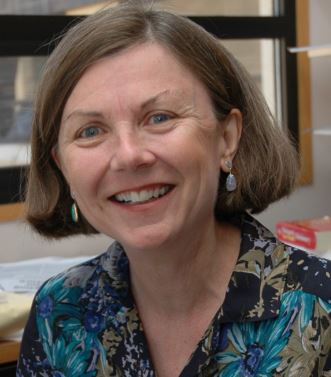
Sharon Sassler is a Professor in the Department of Policy Analysis and Management at Cornell University's Brooks School of Public Policy. She joined the Cornell faculty in 2005 and holds a Ph.D. in Sociology/Demography from Brown University (1995). Her research examines life course transitions of young adults across education, work, relationships, and parenthood, with critical attention to gender, race/ethnicity, and social class disparities. Education: Post-Doctoral Fellowship, Johns Hopkins University, Department of Population Dynamics (1995-96) Ph.D. in Sociology/Demography, Brown University (1995) M.A. in Sociology/Demography, Brown University (1991) B.A. in English & American Literature and Politics, Brandeis University (1984) Professor Sassler's research spans two interconnected domains: family demography and STEM gender dynamics. In family studies, she investigates cohabitation, marriage, and non-marital childbearing through publications like Cohabitation Nation: Gender, Class, and the Remaking of Relationships (2017), which demonstrates how cohabitation patterns exacerbate family inequality. Her work reveals how union transitions affect maternal health, child educational outcomes, and relationship stability across racial and socioeconomic lines. Concurrently, she examines women's retention in STEM fields, analyzing gender wage gaps, occupational attrition, and the impact of family formation on career trajectories in science and engineering professions. Her 2022-2025 publications reveal intensifying focus on cross-national comparisons of union formation and STEM career dynamics, with growing attention to policy impacts. Notable trends include state abortion policy effects on pregnancy outcomes, the retreat from marriage among college-educated STEM professionals, and intersectional analyses of job search strategies. Her work consistently centers gendered power dynamics within cohabiting relationships while documenting how racial and class inequalities shape family formation and STEM participation. Scientific Awards: No specific awards mentioned in source materials Professor Sassler actively mentors through collaborative research projects like Collaborative Research: Early Career Transitions into STEM Employment (2014), indicating grant-funded work examining structural barriers for women in technical fields. Her extensive co-authorship network suggests significant graduate student supervision, though formal advisee lists aren't documented. She teaches core sociology courses including Population and Public Policy (SOC 2030) and Population Controversies in Europe (SOC 3620), connecting demographic theory with contemporary policy debates. Based in Martha Van Rensselaer Hall, she contributes to Cornell's interdisciplinary research ecosystem through affiliations with both the Sociology program and Policy Analysis and Management department, bridging demographic methods with public policy applications to address pressing social inequalities.
Dr. Deborah R. McFarlane is a Professor and Regents Lecturer at the University of New Mexico, specializing in public policy and health policy. She holds a DrPH from the University of Texas Health Science Center, an MPA from Harvard University, and an MPH from the University of Michigan. Her research focuses on reproductive health policy, fiscal federalism, and global population dynamics. She has held faculty positions at Johns Hopkins Bloomberg School of Public Health and other institutions. Dr. McFarlane leads the Population and Reproductive Health Oral History Project, funded by the Hewlett Foundation. Her work has been recognized with the UNM Louie Award for Service (2011). She explores topics like abortion policy, healthcare access for undocumented populations, and climate change impacts on population health. Her publications span comparative policy analyses, including U.S. vs. Western Europe abortion frameworks and global population trends. She advises on federalism and state-level policy implementation, with a focus on reproductive rights and equity.
Anna Dreber Almenberg is the Johan Björkman Professor of Economics at the Stockholm School of Economics (SSE), specializing in meta-science and behavioral economics. She holds a chaired professorship and is actively involved in advancing research credibility through initiatives like Lab2 and the Institute for Replication. Her work focuses on replication studies, predicting replication outcomes, and investigating economic preferences influenced by biological factors like testosterone. She serves as an Editor at the Journal of Political Economy Microeconomics, emphasizing credible results over clear outcomes. Dr. Dreber Almenberg’s research spans experimental economics, including large-scale studies such as a testosterone administration trial involving 1,000 participants. She is a Wallenberg Scholar and a member of prestigious academies (KVA and IVA). Her recent work critiques selective reporting of placebo tests in economics and explores design heterogeneity in replications. Her key contributions include high-powered replications of asset market results and collaborations on hormone administration studies (e.g., contraceptive pill effects). She advocates for pre-registration and transparency in research, reflected in her editorial role and involvement with journals like Nature Human Behaviour.
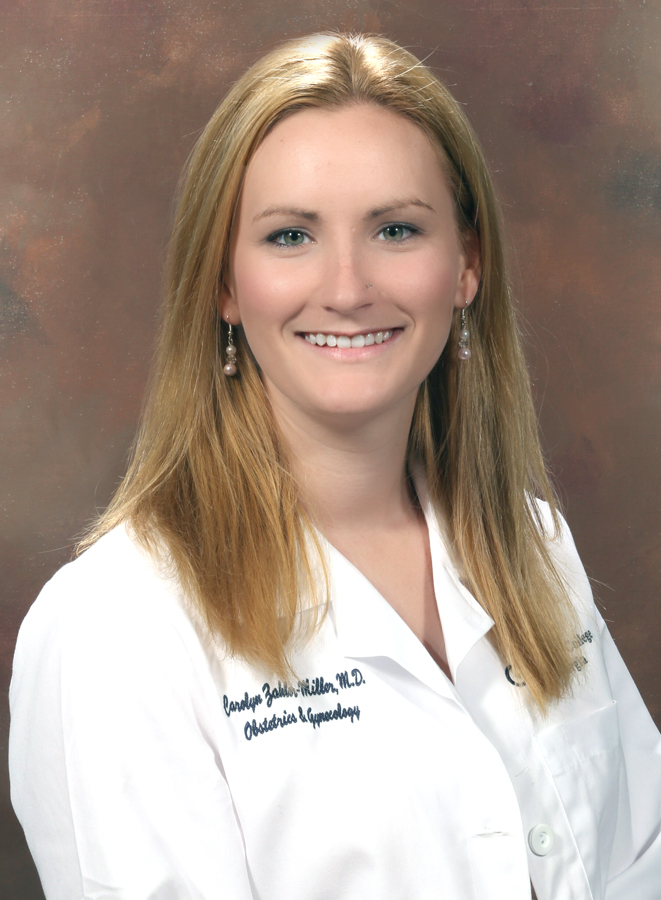
Carolyn Zahler-Miller serves as Associate Professor and Assistant Dean for Clinical Integration at Augusta University's Medical College of Georgia, Department of Obstetrics and Gynecology. She directs the Ob/Gyn medical student clerkship and provides clinical care at downtown Augusta and Grovetown sites, specializing in abnormal uterine bleeding, PCOS, menopausal medicine, and breastfeeding optimization. Her educational background includes: MD, University of Florida, 2014 BS in Chemistry, University of Florida, 2010 Dr. Zahler-Miller's research focuses on women's health across the lifespan, with expertise in abnormal uterine bleeding, PCOS, menopausal disorders, breastfeeding medicine, HPV vaccination, and gestational diabetes. Her work integrates clinical practice with educational innovation to develop evidence-based interventions for patient care and physician training. Recent publications (2023-2025) demonstrate her commitment to translational research, spanning mobile health applications for breastfeeding support, RSV prevention in newborns, surgical decision-making in benign gynecology, menopausal sexual health therapies, and cost-effective surgical training models. These works highlight her dual focus on clinical outcomes and medical education advancement. Notable honors include: AU/MCG Woman Who Inspires (2023) Fellow of the American College of Obstetricians and Gynecologists (2021) As an educator, Dr. Zahler-Miller teaches 12+ medical student courses, chairs the Ob/Gyn Student Advising Committee, and serves on departmental and college committees including the Executive Committee and Curriculum Enrichment Committee. She actively shapes medical education through curriculum development, student mentorship, and clerkship leadership while maintaining clinical practice in general obstetrics and gynecology.
Krystale Littlejohn is an Associate Professor in the Department of Sociology at the University of Oregon’s College of Arts and Sciences. Her research focuses on race, gender, and reproduction, examining how cultural categories shape intimate relationships and health outcomes. She employs mixed methods across disciplines such as reproductive justice, health and medicine, social cognition, and intersectionality. B.A. in Sociology and Spanish Language and Culture, Occidental College (2007) Ph.D. in Sociology, Stanford University (2013) Her work interrogates the social underpinnings of reproductive processes, including projects on contraceptive use, abortion access, and the embodiment of biomedical technologies. She has secured grants from the Society of Family Planning, American Association of University Women, and NIH, including a K01 award for research on risk tolerance in contraceptive use among couples. Recent publications explore themes like mental and emotional health in reproductive care (2025), gendered heterosexuality and mixed feelings about sex (2024), and disparities in contraceptive dissatisfaction by race and education (2012). These works span subfields including reproductive justice, intersectionality, and social cognition. ASA Minority Fellowship Program American Association of University Women Fellowship Society of Family Planning Funding NIH K01 Award Professor Littlejohn mentors graduate and undergraduate researchers, though specific advisees are not listed. She also provides productivity consulting and performance coaching to academics, reflecting her commitment to interdisciplinary collaboration and public health advocacy.
Professor Kristina Gemzell Danielsson is a Senior Physician and Head of the Department of Women's and Children's Health at Karolinska Institutet. She holds a Docent title (2000) and has been employed at Karolinska since 2006. Her research focuses on reproductive health, obstetrics, and gynaecology, with a particular emphasis on medical abortion protocols, contraception efficacy, and global health equity. She leads initiatives to improve access to safe abortion services and has contributed to policy reforms in reproductive health care. Her academic roles include: Head of Division for Neonatology, Obstetrics, Gynaecology, and Reproductive Health Member of international advisory boards on reproductive medicine Research interests span reproductive medicine, hormonal contraception safety, and the intersection of gender-based violence with healthcare. Key contributions include studies on telemedicine abortion, epigenetic biomarkers in cancer risk, and endometriosis pathophysiology. Her publications analyze over 50 studies, emphasizing translational research and global health impact. Notable work includes randomized controlled trials on medical abortion protocols and systematic reviews on climate change and sexual health.
Dr. Michelle Frances Meglin is an Associate Professor in the Department of Obstetrics and Gynecology at the Medical University of South Carolina (MUSC) College of Medicine. She joined MUSC in 2015 and specializes in comprehensive gynecological care, with a focus on pediatric and adolescent gynecology, minimally invasive surgery, and contraception. Her academic interests include medical education, gynecologic surgery, and women's health screening. Education: Bachelor’s from Davidson College, Medical Degree from Wake Forest University School of Medicine (2011), and OB/GYN residency at Virginia Commonwealth University (2015). Certifications: ABOG Focused Practice Designation in Pediatric and Adolescent Gynecology (2022). Dr. Meglin is actively involved in resident and medical student education, emphasizing evidence-based medicine and patient-centered care. She practices at MUSC Women's Health East Cooper in Mount Pleasant, SC.
Dr. Bethany White is a Clinical Senior Lecturer at the Central Clinical School, University of Sydney. Her expertise lies in public health research, particularly in drug and alcohol use, hepatitis C epidemiology, and health services evaluation. She has led numerous clinical and community-based studies focusing on marginalized populations, including people who inject drugs and imprisoned women. Her work integrates harm reduction policies, healthcare access improvements, and substance use disorder treatments in custodial and community settings. Research Focus: Dr. White's research emphasizes epidemiological methods to address health inequalities, with a focus on opioid use disorders, hepatitis C prevention, and women's substance use. She has pioneered studies on depot buprenorphine treatment efficacy in prisons and developed models of care for substance-using mothers. Her work bridges clinical practice and policy, aiming to improve healthcare accessibility in high-risk groups. Key Themes: Health inequalities, harm reduction, custodial healthcare Recent Projects: Costing models for depot buprenorphine, contraception integration in opioid treatment centers Grants & Collaborations: Principal investigator on a 2025 NHMRC-funded grant exploring clinical evidence translation for substance use disorder outcomes. Collaborates with institutions like Edith Collins Centre and NSW Health. Labs/Teams: Affiliated with the Edith Collins Centre, focusing on addiction medicine and health service innovation.
Sarah Boyd, MD is an Associate Professor specializing in Female Pelvic Medicine & Reconstructive Surgery. She focuses on optimizing patient outcomes for pelvic floor disorders through surgical and non-surgical approaches. Board-certified in Obstetrics and Gynecology (2017) and Female Pelvic Medicine & Reconstructive Surgery (2021), her expertise spans pelvic organ prolapse, urinary incontinence, and minimally invasive gynecologic procedures. Female Pelvic Medicine & Reconstructive Surgery Fellowship, Hartford Hospital (2016-2019) Obstetrics and Gynecology Residency, Christiana Care Health System (2012-2016) MD from Marshall University John C. Edwards School of Medicine (2008-2012) Her research explores adverse outcomes in pelvic reconstructive surgery, postoperative opioid consumption, catheter management, and non-surgical interventions for prolapse. She collaborates in multi-institutional research groups analyzing perioperative outcomes. Articles demonstrate trends in data-driven surgical optimization and pain management protocols. Scientific Awards: Pyrtek Research Paper Distinction Award in Clinical Research (2019)
David P. Baker is a Professor in both Education Policy Studies and Sociology and Criminology at Penn State University's College of Education. His office is located in the 647 Susan Welch Liberal Arts Building, and he can be reached at dpb4@psu.edu or 814-863-0955. Dr. Baker leads the Population Research Institute and maintains an active research program examining education's global impact on societal development. His educational background includes a Ph.D. in Sociology from The John Hopkins University (1982), an M.S. in Communication Research from Boston University (1975), and a B.A. in Psychology from Albion College (1974). These diverse academic foundations inform his interdisciplinary approach to studying education's societal impacts. Baker's research spans the sociology of education, science productivity, world health, demographic change, and the formation of social institutions. His work examines how education transforms cognitive skills in populations, reshapes occupations, influences health behaviors globally (including HIV/AIDS in Africa, smoking patterns, and obesity), and drives technological adaptation across 63 nations. He conducts innovative research through randomized clinical trials and historical analyses of universities' role in knowledge production. His publications reveal consistent focus on education's transformative power across multiple domains. Recent work examines nicotine reduction policies, cognitive transformations in the labor market, and the global testing culture. His book The Schooled Society represents a major contribution to understanding how education has reshaped modern society. Outstanding Book of the Year by the American Education Research Association Silver Medal in the Independent Publisher Book Awards (IPPYs) Best poster award at Population Association of America conference Professor Baker actively mentors students and colleagues, with numerous collaborative projects including the Population Education Transition Curve research. His laboratory work includes experimental studies on education and health messaging, with funding from the Spencer Foundation and Penn State's Population Research Institute. Current projects examine how education shapes perceptions of low-nicotine cigarette messaging and the cognitive transformation of social opportunity.
Joanna N. Erdman is an Assistant Professor and MacBain Chair in Health Law and Policy at Dalhousie University's Schulich School of Law. Her work focuses on reproductive rights, health equity, and human rights within legal frameworks. She has extensively researched abortion law, global health policies, and gender equality in healthcare access. Erdman's scholarship addresses intersections between law, public health, and human rights, particularly in contexts like abortion accessibility, HPV vaccine equity, and prenatal care ethics. Her research interests emphasize harm reduction strategies, evidence-based lawmaking, and transnational legal perspectives. Erdman has contributed to influential discussions on constitutionalizing abortion rights in Canada, WHO guidelines on safe abortion practices, and the implementation of CEDAW in healthcare systems. Her work often critiques legal barriers to healthcare access and advocates for policy reforms grounded in human rights principles. Erdman has collaborated with leading scholars like Rebecca J. Cook and Bernard Dickens on publications analyzing abortion law and medical ethics. Her articles frequently appear in interdisciplinary journals such as the International Journal of Gynecology and Obstetrics and Emory Law Journal . While no formal grants or awards are cited here, her extensive citation count (over 5,000 downloads on SSRN) underscores her impact in health law research. Erdman’s recent work includes updating global abortion policy analyses and exploring gender equality in health systems through CEDAW frameworks. She maintains an active research agenda on transnational healthcare law and its implications for marginalized communities.
Søren Lundbye-Christensen is an Associate Professor and Biostatistician affiliated with the Clinical Institute at the Faculty of Health Sciences, Aalborg University, and Aalborg University Hospital in Denmark. He specializes in biostatistical support for medical research, with a strong emphasis on cardiovascular and epidemiological studies. His research interests include biostatistics, survival analysis, cohort studies, clinical epidemiology, and statistical modeling in public health. He has contributed to a wide array of healthcare research, particularly in cardiovascular diseases, cancer, maternal health, and infectious diseases. His methodological expertise spans time-to-event analysis, registry-based research, and interval-censored data modeling. The recent publications highlight a strong trend in applying advanced statistical methods to large-scale clinical and population-based datasets. His work often involves collaboration with medical researchers to derive prognostic models, validate clinical databases, and assess public health outcomes. Key themes include cardiovascular risk, fertility, cancer biomarkers, and implementation of medical training programs. Scientific Contributions and Recognition: Published over 320 research articles and datasets. Active contributor to methodological advancements in biostatistics. Regular peer reviewer, including for journals like the R Journal. Public engagement through media appearances on statistics and health. Academic Advising and Grants: Søren has supervised 31 student theses, formally serving as PhD supervisor for 14 theses and as a biostatistical advisor for 19 others, primarily in mathematics and statistics. He has participated in numerous research projects funded through institutional and national grants, including studies on seasonal disease trends, postoperative complications, and metabolic disease prediction. His work often involves interdisciplinary collaboration across medicine, public health, and data science. Labs and Research Teams: He is embedded in collaborative research networks at Aalborg University Hospital and Aalborg University, contributing statistical expertise to clinical research groups. He is involved in projects utilizing Danish national health registries and has contributed to the development and validation of clinical databases. His work supports both hypothesis-driven medical research and methodological innovation in biostatistics.