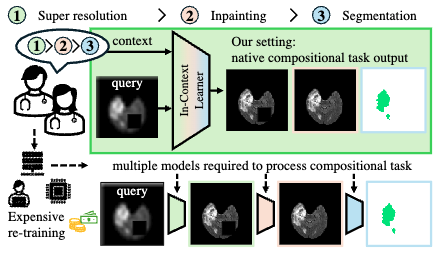
Prof. Dr. Erik Rodner is a faculty member at the University of Applied Sciences Berlin (HTW Berlin), where he serves as a Professor for Machine Learning and Data Science. He also contributes to the School of Engineering Sciences - Technology and Life. His research spans computer vision, machine learning, and biomedical applications, with a focus on learning with limited data, robust visual recognition models, and medical image analysis. He has developed innovative methods for medical diagnostics, industrial classification, and anomaly detection. Recent publications (2025-2016) highlight his expertise in visual in-context learning, semi-weakly segmentation, and active learning frameworks. He has collaborated with institutions such as ZEISS Group, Friedrich Schiller University Jena, and UC Berkeley. Scientific Awards: Award for Excellent Teaching (2023)
Prof. Dr. Susanne Gruß is Chair of English Literature at the Department of English and American Studies, Otto-Friedrich-University Bamberg since April 2024. Previously, she was Professor of English Literature and Culture with a focus on Gender and Queer Studies at the University of Cologne (2022-2024) and held visiting professorships at the universities of Bonn, Passau, and Frankfurt/Main. She serves as Head of Examination Board for MA English and American Studies and as representative of internationalisation at Bamberg University. Her academic background includes: M.A. in English literature, German literature, and Contemporary History from FAU Erlangen-Nürnberg (2001) Ph.D. in English literature with summa cum laude (2007), published as "The Pleasure of the Feminist Text: Reading Michèle Roberts and Angela Carter" (Rodopi/Brill 2009) Habilitation (2020) on "The Laws of Excess: Law, Literature, and the Laws of Genre in Early Modern Drama" Prof. Gruß's research spans two primary temporal domains: contemporary British literature and early modern English literature. Her specializations include gender studies and feminist theory, neo-Victorianism, Black British writing, film adaptation, and the cultural implications of the fungal world. In early modern studies, she focuses on revenge tragedy, tragicomedy, collaboration in theatre, early modern piracy, and law and literature. Across both fields, she examines popular culture, canonization, and genre formation with an interdisciplinary approach that often bridges legal studies and literary analysis. Her recent publications reveal a growing interest in fungal studies and posthumanism within literary contexts, alongside continued engagement with neo-Victorianism and early modern drama. There's a clear interdisciplinary trajectory connecting her work on law and literature with explorations of collaborative authorship across historical periods. Her scholarship demonstrates consistent attention to questions of gender, queerness, and marginalized perspectives within both contemporary and historical frameworks. Her scientific awards include: FAU-Lehrpreis für Nachwuchswissenschaftlerinnen und Nachwuchswissenschaftler (2020) Travel grant from FAU Erlangen-Nürnberg (2019) DAAD travel grant (2017) DAAD scholarship for academic year at Trinity College Dublin (1997-98) Stipendium nach dem Bayerischen Begabtenförderungsgesetz (1995-2001) Prof. Gruß actively mentors students and supervises final theses, with specific guidelines available on her Padlet page. She has served on numerous editorial boards including Zeitschrift für Anglistik und Amerikanistik and Journal for the Study of British Cultures. Her academic service extends to peer reviewing for multiple journals and participation in professional organizations such as the German Association for the Study of English and the European Society for the Study of English. At Bamberg University, she leads the Chair of English Literature, which participates in various extracurricular activities including the Book Club and the University English Drama Group. The department hosts events such as the Winter Workshop and Shakespeare productions, fostering a vibrant literary community beyond the classroom.
Professor Julia Schlüter is a distinguished academic in the Chair of English Linguistics within the Humanities Faculty at the University of Bamberg, Germany. She has served as Senior Lecturer at the Chair of English Linguistics and Language History under Prof. Manfred Krug since June 2008, holding the title of Professor following her habilitation in 2008. Her institutional profile demonstrates deep commitment to both research and teaching innovation, particularly through her leadership of the KorPLUS project and development of open educational resources for corpus linguistics. Her research interests span corpus linguistics for English language learners, empirical methods for studying language variation and change, and the application of corpus methods to teaching. She specializes in examining grammatical, phonological, and lexical differences between British and American English across historical periods from Middle English to present-day usage. Her work investigates phonological variation (particularly phonotactically controlled alternations), morphological change, and syntactic variation through corpus analysis, with special attention to functional grammar and grammaticalization theory. Professor Schlüter's recent publications (2022-2025) reveal a strategic evolution in her research focus, with increasing emphasis on the intersection of corpus linguistics and digital education. While maintaining her foundational work in historical English linguistics, she has developed significant expertise in applying corpus methods to language teacher education and evaluating AI writing tools. Her work demonstrates consistent methodological innovation, moving from traditional corpus analysis to blended learning approaches and digital educational resource development. Her scientific recognition includes: Winner of the 2025 Teaching Innovation Prize from the International Society for the Linguistics of English for the KorPLUS project University of Bamberg Prize for outstanding habilitation (2009) Lise Meitner Programme post-doctoral scholarship (2005-2006) Rectorate Prize from University of Paderborn for outstanding Ph.D. thesis (2005) Multiple DAAD scholarships for international study Professor Schlüter actively supervises doctoral research, currently guiding three Ph.D. candidates (Katharina Deckert, Aklima Nahar, and Nikolai Beland) while having successfully completed supervision for several others. She leads the KorPLUS project (2021-2025), funded by the Stiftung Innovation in der Hochschullehre, which develops open educational resources for corpus linguistics. Her research has been consistently supported by the German Research Foundation (DFG) and other funding bodies throughout her career. She heads the KorPLUS team (with Carina Großmann and Katharina Deckert) which develops the interactive Open Educational Resource platform for corpus linguistics. Her YouTube channel offers video tutorials on corpus basics, and she has created the Video Podcast Series "How to Update your Grammar" for English teachers. She regularly organizes in-service teacher trainings and collaborates with the Virtual Linguistics Campus at RWTH Aachen University to deliver her educational materials globally.
Massachusetts Institute of TechnologyUnited States
Akash Srivastava is a Research Scientist and Principal Investigator (PI) at the MIT-IBM Watson AI Lab in Cambridge, MA, and Chief Architect of Large Language Model Alignment at IBM Research. His work focuses on generative modeling , Bayesian inference , and machine learning for constrained engineering design . He previously conducted PhD research at the University of Edinburgh under Dr. Charles Sutton and Dr. Michael U. Gutmann on variational inference for generative models using deep learning. His research spans Neuro-Symbolic AI , Language Model Alignment , and Synthetic Data Generation , with applications in 3D modeling , urban logistics , and material science . Recent publications highlight advancements in diffusion models , continual learning , and privacy-preserving data synthesis . As a PI, he collaborates with MIT faculty like Prof. Faez Ahmed and Prof. Rafael Gomez-Bombarelli on projects such as generative modeling for mechanical systems , synthetic data in decision-making , and greener delivery networks . He has received funding through a DARPA grant for machine common sense research.
Ntzoufras Ioannis is a Professor in the Department of Statistics at the Athens University of Economics and Business (AUEB), School of Information Sciences and Technology, where he has served continuously since 2004 (promoted to Professor in 2015). Previously, he held teaching positions at the University of the Aegean (2000-2004) and completed military service (1999-2000). Education B.Sc. in Statistics and Insurance Science (1994) M.Sc. in Statistics with Application in Medicine, University of Southampton (1995, with distinction) Ph.D. in Statistics, Athens University of Economics and Business (1999) Research Focus His work centers on Bayesian and computational statistics , specializing in categorical data analysis, statistical modeling, and variable selection methodology. He develops sophisticated models for applications in medical research (clinical trials, risk estimation), psychometrics (latent variable models), and sports analytics (football/basketball modeling), with emphasis on computational efficiency and real-world implementation. Publication Trends Recent publications (2023-2025) reveal three dominant trends: (1) Advanced Bayesian variable selection methods for high-dimensional data, (2) Sports analytics applications in football (goal modeling, competitive balance) and basketball (in-play performance), and (3) Development of specialized R packages (ssifs, PEPBVS) for statistical computation. His work consistently bridges theoretical innovation with practical domain applications. Scientific Awards Lefkopouleion Prize for Greece's best statistics thesis (1999-2000) PROSE Award Honorable Mention for 'Bayesian Modeling Using WinBUGS' (2010) Academic Leadership He has supervised graduate students across AUEB's Statistics, Business Analytics, and Data Science programs, and taught postgraduate courses at the University of Athens (Biostatistics), University of the Aegean (Business Administration), and Italian institutions (University of Pavia, Universita Cattolica, University of Bicocca-Milan). As General Secretary of the Greek Statistical Institute (2006-2007), he advanced national statistical initiatives. Research Community He founded and maintains grstats (http://grstats.forumotion.net/), Greece's primary online statistics community, facilitating collaboration among 1,200+ statisticians and data scientists through forums, workshops, and resource sharing.
Lionel Truquet is a Lecturer-Researcher in Statistics at ENSAI (École Nationale de la Statistique et de l'Administration Économique), where he focuses on Statistics for dependent data and Time series analysis . He serves as a Director of Research and has contributed significantly to fields like Markov chains and nonlinear dynamics . Research Interests: Time series models for ecological and economic data Statistical inference for categorical and discrete-valued processes Ergodic properties of Markov chains in random environments Mixing conditions for nonstationary processes Perturbation techniques in stochastic modeling Recent Publications: His work spans nearest neighbor sampling , multivariate autoregressive models , and mixing properties of count processes , with applications in ecology and econometrics. Key trends include nonparametric methods for high-dimensional data and stationarity analysis in time-varying systems. Scientific Awards: TJALLING C. KOOPMANS ECONOMETRIC THEORY PRIZE (2021–2023) for groundbreaking work on multivariate count autoregressions.
Associate Professor Louise Jenkins serves as Deputy Dean (Education) in the Faculty of Education at Monash University, where she is an expert Initial Teacher Educator and music education specialist. Her work leverages performing arts expertise to drive socially inclusive educational practices and actively engage students in their learning journeys across diverse backgrounds. Professor Jenkins' research integrates Action Research and Experiential Learning to develop innovative pedagogical frameworks, particularly through Blended Learning approaches in music education. Her scholarship spans: Music Education and inclusive teaching practices LGBTIQ+ and disability-inclusive pedagogy Historical analysis of Australian women music educators (1890-1950) Initial Teacher Education reform Technology-enhanced self-regulated music learning Her recent publications reveal strong thematic continuity across music education and inclusion, with emerging focus on digital tools for instrumental practice, queer-inclusive teacher development, and post-pandemic educational adaptation. The work demonstrates consistent application of qualitative methodologies to address systemic barriers in educational environments. Professor Jenkins' contributions have been recognized through significant honors: Award for Teaching Excellence (2017) Dean's Award for Partnership Development (2017) MPA Supervisor of the Year Award Finalist (2014, 2016) Vice-Chancellor's Award Finalist (2018) She actively supervises PhD candidates on critical topics including post-COVID music education recovery, compassionate school leadership, and mindfulness applications. Current research projects like the South East Program and Universal Design for Learning initiative demonstrate her commitment to translating theory into practical educational innovation through university-school partnerships. As a member of the Monash Assistive Technology and Society centre leadership team, she drives collaborative initiatives that bridge academic research with community impact, particularly in developing inclusive educational frameworks for diverse learners.
Dr Lynette Pretorius is a Lecturer at Monash University's School of Curriculum Teaching & Inclusive Education, where she has established herself as an award-winning educator and researcher. With extensive experience teaching across undergraduate, postgraduate, and graduate research levels, she supervises PhD students while weaving together interdisciplinary expertise to create inclusive and transformative learning environments. Her work spans multiple academic contexts while maintaining a consistent focus on compassionate, equitable education. Dr Pretorius's research centers on doctoral education, academic identity, student wellbeing, and AI literacy, with particular emphasis on creating more just and creative academic spaces. Drawing from autoethnography and qualitative methodologies, her work interlaces personal narratives with institutional systems to understand how lived experiences and academic structures shape one another. She champions pedagogies of care that prioritize wellbeing, justice, and student growth through reflexive, relational ethics and methodological transparency. Her recent publications reveal a growing focus on AI literacy in higher education, with multiple 2024-2025 works developing frameworks for responsible AI use, examining AI's decolonial potential, and exploring how generative AI transforms academic communication and research practices. Alongside this emerging AI focus, her longstanding work on doctoral education continues through writing groups, wellbeing research, and investigations into academic identity formation. Dr Pretorius has received significant recognition for her contributions, including: Dean's Award for Teaching Excellence (2022) Global Impact Grant (Student Success) (2022) Senior Fellow, Higher Education Academy (2021) Dean's Citation for Outstanding Contribution to Student Learning (2019) Dean's Award for Programs that Enhance Learning (2019) Her research leadership extends to multiple funded projects including 'Behind the Academic Curtain: Doctoral Students and the Hidden Rules of Academia' (2025-2026) and 'Learning about Academic Publishing through Collaborative Online International Learning' (2024-2025). She actively supervises doctoral students and has developed innovative approaches to research and teaching, particularly through her work on doctoral writing groups as transformative spaces. Dr Pretorius maintains a strong public scholarly presence through her Scholar's Way Blog, University Study Made Easy YouTube Channel, and the AI Literacy Lab. These platforms extend her research impact beyond traditional academic boundaries, reaching broader educational communities and providing practical resources for students and educators navigating contemporary academic challenges.
Stephen T. Wong holds the John S. Dunn Presidential Distinguished Chair in Biomedical Engineering and serves as Professor of Radiology and Medicine with Tenure and Chief of Medical Physics at Houston Methodist. He maintains professorships across multiple prestigious institutions including Weill Cornell Medicine (Radiology, Neurosciences, Pathology and Laboratory Medicine), Texas A&M University, Baylor College of Medicine, University of Texas MD Anderson Cancer Center, Rice University, University of Texas Health Houston, and University of Houston. Weill Cornell Medicine: Professor of Computer Science and Bioengineering in Radiology (since 2008), Pathology and Laboratory Medicine (since 2010), and Neuroscience (since 2012) Houston Methodist: John S. Dunn Presidential Distinguished Chair in Biomedical Engineering Academic leadership: Director of multiple research centers including Ting Tsung and Wei Fong Chao Center for BRAIN and AI in Innovative Medicine lab Dr. Wong's research employs a systems-based approach integrating engineering with biology and medicine to elucidate disease mechanisms. His laboratory focuses on discovering novel drugs and biomarkers while developing advanced diagnostic and therapeutic devices, with particular emphasis on cancer, neurological disorders, and metabolic diseases. Current projects target micro- and macroenvironments of cancer and Alzheimer's disease, apply spatial and systems biology methods for drug discovery, create label-free point-of-care molecular diagnostics, and develop AI applications for stroke triage and treatment. His publication portfolio demonstrates consistent growth over three decades, with over 500 peer-reviewed papers and five books. Recent work shows strong emphasis on artificial intelligence applications in medical imaging, cancer therapeutics, and neurological diagnostics, with multiple 2025 publications featuring multimodal AI approaches for hepatocellular carcinoma, lung cancer interventions, tumor evolution, brain imaging, and thyroid nodule characterization. Fellowships: IEEE, AIMBE, IAMBE, ACMI, AMIA, Optica, and AAIA Honors: AIIA Fellow (2024), American College of Medical Informatics Fellow (2023), AAIA-Fellow (2021), AIMBE Fellow (2021) Professional: Registered Professional Engineer (PE), Executive education from Stanford, MIT, and Columbia Business Schools Dr. Wong has trained over 170 PhD, MD/PhD, and postdoctoral scholars, with four now holding endowed chairs. His research has received continuous NIH funding for three decades, supporting 35 active and completed projects including DeepStroke+ for AI stroke detection, Alzheimer's disease research, and cancer diagnostics. He has founded multiple research centers including the Division of Shared Resources at Houston Methodist Neal Cancer Center, Translational Biophotonics Lab, and Center for Modeling Cancer Development.
State University of New York at FredoniaUnited States
James A. Davis serves as Professor of Musicology and Chair of the Music History Area at the School of Music, State University of New York at Fredonia. He holds a PhD in music history and theory from Boston University, following an MM in composition from the University of Texas and a BS in Music from the University of Colorado at Denver with emphasis in scoring and arranging. Davis's scholarly work centers on the music and musicians of the American Civil War, with significant contributions to understanding Civil War-era music, patriotism in songs, military bands, and musical expression during this historical period. His research extends to music history pedagogy, American popular music of the 19th and 20th centuries, and the history of bands. His teaching interests include American Music, 18th- and 19th-century concert music, the history of popular music, and music history pedagogy. His publications reveal a consistent focus on Civil War music, with recent articles examining topics like "Old 100th" hymns, Civil War bandsmen and humor, patriotism in songs, and the role of dance during the war. His scholarly output demonstrates both chronological depth in historical research and contemporary relevance in music pedagogy approaches. Davis has presented papers at major academic conferences including the American Musicological Society, Society for American Music, College Music Society, Society for Ethnomusicology, Society for Military History, Music Library Association, and American Culture Association. He serves as the founding Editor for The Teaching of Music History Series with Routledge. His research appears in prestigious journals including American Music, College Music Symposium, Journal of Military History, Journal of Band Research, and Journal of American Culture, as well as pedagogical journals like International Journal of Teaching and Learning in Higher Education and Philosophy of Music Education Review.
Professor Barbara Skinner is a Professor of TESOL and Education at Ulster University's School of Education, based at the Coleraine campus. She serves as Director of Development and Partnerships for the School of Education and is a member of the School's Senior Management Team. Dr. Skinner was the first lecturer in Ulster's Centre for English Language Teaching (CELT) and moved to the School of Education to become Course Director of MA TESOL in 2006. Her educational background includes a Doctorate of Education from the University of Bristol (2014). Originally from Cornwall, she has extensive experience teaching ESOL and EAP, and has served as a UCLES examiner and IELTS examiner. Professor Skinner's research focuses on language teacher education, higher education pedagogy, and intercultural competence. Her current work explores minority language pupils in Northern Ireland, examining their educational attainment, home-school partnerships between schools and migrant parents, and the socio-emotional well-being of refugee pupils. She also investigates teacher talk and second language teacher education, with particular interest in conversation analysis, threshold concepts, and teacher identity. Her research has resulted in numerous publications in key international journals including the English Language Teaching Journal, Journal of Studies in International Education, and Journal of Education for Teaching. Professor Skinner has secured significant funding from external sources including the British Council, UKISA, and international partners in Spain, Korea, China, and Central Asia, with recent projects focusing on inclusive English language teaching across multiple countries. Sustained educational excellence award (2021) Professional Practice Innovation award (2021) Distinguished teaching fellowship - highly commended (2010) Excellence in International Partnership award (2020) Professor Skinner is actively involved in doctoral supervision and examination, and serves as Northern Ireland representative for the British Educational Research Association (BERA). She is an Editor of the BERA Blog and a member of BERA Publications Committee. Her professional activities include reviewing for several prestigious journals and mentoring new reviewers globally. She leads multiple international projects, including the MA TESOL dual award program between Kazakhstan and Northern Ireland, demonstrating her commitment to advancing language education worldwide.
Joseph Madaus is a Professor in the Department of Educational Psychology at the University of Connecticut and Director of the Collaborative on Postsecondary Education and Disability. His expertise spans Special Education , Post-Secondary Transition , Assessment , and Learning Disabilities . He has held leadership roles such as Past President of the Division on Career Development and Transition (Council for Exceptional Children) and serves on the editorial boards of nine journals, including the Journal of Postsecondary Education and Disability and Career Development and Transition for Exceptional Individuals . Education: Ph.D., Special Education, University of Connecticut (1996) M.A., Counseling Psychology, Boston College (1991) B.A., Elementary Education/Moderate Special Education, Boston College (1988) Research Focus: Dr. Madaus investigates postsecondary transition , universal design for learning , and self-determination for students with disabilities . His work includes studies on twice-exceptional students with autism , disability documentation requirements , and remote learning during the pandemic . Recent publications analyze international perspectives on higher education and disability and ethical frameworks in disability services . Scientific Awards: 2018 Oliver P. Kolstoe Award (lifetime contributions) 2019 Neag School Distinguished Scholar award 2008-2009 University Teaching Fellow 2007 Teaching Promise and Innovation Awards 2003-2004 Mary Switzer Distinguished Research Fellow Reviewer of the Year (2008, 2011) Grants and Leadership: Dr. Madaus has secured grants from the Office for Postsecondary Education, Office for Special Education Programs, and the Jacob K. Javits Program. He co-edited the Handbook of Higher Education and Disability and Preparing Students with Disabilities for College . His media appearances include features in The Atlantic and The Wall Street Journal , and he advocates for disability documentation reform and policy changes under the ADA Amendments Act.
Hannes Hick is a Professor at Graz University of Technology , affiliated with the Institute of Machine Elements and Development Methodology . His research focuses on mechanical development, tribology, and systems engineering for automotive and industrial applications. He actively contributes to engineering education and methodology standardization. Research Interests Hydrogen internal combustion engines System modeling and digital twins Tribology in electric drivetrains Sustainable engineering practices MBSE (Model-Based Systems Engineering) Friction and wear analysis Article Trends His recent work emphasizes hydrogen propulsion systems, model-based approaches for interdisciplinary engineering challenges, tribological optimization for sustainable mobility, and integrating AI with mechanical design workflows. Labs and Teams He leads research at the Institute of Machine Elements, focusing on mechanical validation and development methodologies for advanced powertrain systems.
Dr. Barbara E. Jones serves as an Associate Professor in the Department of Internal Medicine at the University of Utah School of Medicine, with dual appointments in Pulmonary and Critical Care Medicine. Her clinical practice spans diverse healthcare settings within the Veterans Affairs system and academic medical centers, focusing on evidence-based adaptation of care to varied patient populations. Her educational background includes: M.D. from University of Washington School of Medicine B.A. in Philosophy from Dartmouth College Master of Science in Clinical Investigation (M.S.C.I) from University of Utah Postdoctoral Fellowship in Pulmonary and Critical Care Medicine at University of Utah Residency in Internal Medicine at University of Utah Dr. Jones' research centers on decision-making processes in pneumonia diagnosis and treatment, employing a tripartite informatics approach combining population analytics, cognitive behavior analysis, and clinical decision support systems. Her work specifically targets reducing diagnostic uncertainty and treatment variation across healthcare systems, with emphasis on equitable care delivery for diverse patient populations. Current projects investigate diagnostic discordance in community-acquired pneumonia, electronic surveillance for hospital-acquired infections, and machine learning applications for diagnostic error detection. Analysis of her 15 most recent publications reveals consistent focus on pneumonia management systems, with emerging emphasis on pandemic impacts on diagnostic practices and AI-driven quality improvement. Her work predominantly utilizes large VA healthcare datasets spanning 100+ medical centers, featuring mixed-methods approaches that integrate quantitative analytics with qualitative clinician experience assessment. Dr. Jones actively contributes to clinical guideline development and medical education through editorial work in major journals including Chest and Annals of Internal Medicine , where she frequently addresses controversies in pneumonia diagnosis and antibiotic stewardship. Her research program operates at the intersection of the University of Utah Health system and the Veterans Affairs national healthcare network, leveraging electronic clinical decision support implementations across diverse hospital settings including rural and critical access facilities. Current initiatives focus on real-time feedback systems for diagnostic performance improvement and automated surveillance for healthcare-associated infections.
Aris T. Pagourtzis is a Professor of Computer Science at the School of Electrical and Computer Engineering of the National Technical University of Athens (NTUA), where he also serves as the Head of the Computer Science Division. He is additionally a Lead Researcher at the Archimedes Research Center, Athena RC. His academic career includes positions at the University of Ioannina, the University of Liverpool, the ETH Zuerich, the University of Athens, and the Athens University of Economics and Business. Education: Diploma in Electrical Engineering (1989) and Ph.D. in Electrical and Computer Engineering (1999), both from the National Technical University of Athens Professor Pagourtzis's research spans multiple areas of theoretical computer science, with particular emphasis on computational complexity, graph algorithms, distributed algorithms, approximation algorithms, network algorithms, cryptography, and counting complexity. His work often bridges theoretical foundations with practical applications in network design, security protocols, and optimization problems. He has developed novel algorithms for problems ranging from community detection in networks to Byzantine fault-tolerant protocols and privacy-preserving voting systems. His recent publications show a continued focus on fundamental algorithmic problems while expanding into newer areas like temporal graph analysis, blockchain applications, and privacy-preserving technologies. There's a clear trend toward addressing real-world challenges through rigorous theoretical frameworks, particularly in distributed systems, secure computation, and optimization under constraints. Professor Pagourtzis has served on program and organizing committees for numerous theoretical computer science and cryptography conferences, co-chairing CIAC 2017 and FCT 2021. His research has received funding from diverse sources including US, UK, French, EU, and Greek national resources. He is actively involved in teaching both undergraduate and graduate courses at NTUA, including Algorithms and Complexity, Foundations of Computer Science, Computational Cryptography, and Network Algorithms and Complexity. He leads the Computation and Reasoning Laboratory (corelab) at NTUA, which focuses on theoretical computer science research.