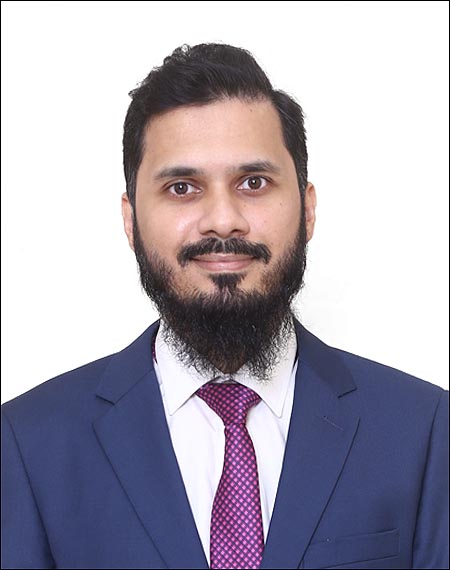
Simon Shibli is Professor of Sport Management and Head of the Sport Industry Research Centre (SIRC) at Sheffield Hallam University. A Chartered Management Accountant (CIMA), his research examines finance and economics in sport, including elite sport performance, economic impact of major events, and sport participation analysis. He directs SIRC, a £1m business unit, and has authored textbooks on sport economics and facility management. Current projects include evaluations for Sport England, UK Sport, and international comparisons of elite sport systems. Key contributions: National Benchmarking Service for Sport England Economic impact studies for The Open Golf Championship International comparative analysis of elite sport policies (SPLISS)
Rebecca Lissner is a Senior Fellow for U.S. Foreign Policy at the Council on Foreign Relations (CFR) and a former professor at the U.S. Naval War College, where she served in the Strategic and Operational Research Department within the College of Operational and Strategic Studies. She has held senior national security roles in the Biden-Harris administration, including Deputy Assistant to the President and Principal Deputy National Security Advisor to the Vice President, advising on U.S.-China competition, Ukraine, AI, and climate policy. AB in Social Studies, Harvard University MA and PhD in Government, Georgetown University Lissner’s research focuses on American grand strategy, the future of the liberal international order, and U.S. global leadership. She explores how the United States can adapt its foreign policy to maintain influence amid rising powers and domestic political shifts. Her work emphasizes reimagining, rather than restoring, the post-World War II international system through strengthened alliances, democratic coalitions, and strategic innovation. Her recent publications reveal a consistent focus on grand strategy, U.S. foreign policy after Trump, NATO and European security, and the evolving liberal order. These works span journals like Foreign Affairs , Foreign Policy , and Washington Quarterly , highlighting her expertise in strategic planning, crisis management, and alliance politics. Themes include the resilience of international institutions, the need for strategic coherence, and the importance of proactive leadership in shaping global norms. Scientific awards and honors are not explicitly mentioned in the provided texts. Lissner has advised national security leadership and presidential campaigns, including those of Biden, Harris, and Clinton. She has contributed to major policy documents such as the Biden administration’s National Security Strategy and led contingency planning on Russia-Ukraine. Her media engagement includes commentary for CNN, MSNBC, BBC, and writing in The Atlantic and Washington Post , demonstrating broad influence in both policy and public discourse. She has held research affiliations at Georgetown University, Perry World House at the University of Pennsylvania, Yale’s International Security Studies, and Columbia’s Saltzman Institute, reflecting a robust academic network. While no formal lab or team is specified, her collaborative work with Mira Rapp-Hooper and leadership in government strategy teams indicate active participation in high-level research and policy teams.
Dr. Anas Iftikhar is an International Lecturer (Assistant Professor) in Logistics and Supply Chain Management at Lancaster University's Management School, United Kingdom. He is affiliated with the Centre for Productivity and Efficiency and contributes to the Supply Chain Management department with research focusing on contemporary supply chain challenges. Dr. Iftikhar completed his Ph.D. in Economics, Management, and Quantitative Methods from the University of Salento, Italy in May 2021. During his doctoral studies, he held visiting researcher positions at Ghent University (Belgium) and Cardiff Business School at Cardiff University (UK), gaining valuable international research experience. Prior to his academic career, he accumulated industry experience in inventory planning and operations management. Dr. Iftikhar's research primarily investigates how supply chain capabilities enhance resilience in disruptive and complex environments. His work explores the intersection of supply chain complexity, digital technologies, and resilience strategies. He employs methodological approaches including systematic literature reviews, meta-analysis, and structural equation modeling. His research has significant implications for organizations navigating geopolitical uncertainties, digital transformation, and supply chain disruptions. His publication portfolio demonstrates a clear evolution from foundational work on network trust and ripple effects to more sophisticated examinations of digital transformation's role in supply chain resilience. Recent publications increasingly focus on the synergistic effects of multiple capabilities (network capability, innovation ambidexterity) in addressing complex challenges like geopolitical turmoil. The research trajectory shows a progression from single-factor analyses to more complex, integrated models that better reflect real-world supply chain dynamics. Dr. Iftikhar actively participates in the academic community through presentations at major conferences including the European Operations Management Association (EUROMA) annual conference, IFAC Conference on Manufacturing Modelling, Management & Control, and Industrial Engineering Operations Management (IEOM) society events. He has also delivered invited talks such as 'Contemporary Issues in Logistics Management' at Bukhara State University. As an educator, Dr. Iftikhar is willing to supervise PhD students in supply chain resilience, disruption management, supply chain complexity, and innovative technologies in supply chain management. His industry experience enriches his teaching approach, bridging theoretical concepts with practical applications. His research outputs have been published in leading Operations and Supply Chain Management journals including International Journal of Production Research, Production Planning and Control, Annals of Operations Research, and Journal of Business Research.
Katrin Bromber is a German Researcher at the Centre for Modern Oriental Studies in Berlin, where she has led the research group "Progress and its Discontents: Ideas, Practices, Materiality" since 2014. Her career spans senior research roles at ZMO and academic teaching positions at the University of Vienna. Nationality: German. Language skills: Native German, fluent English/Swahili, moderate Amharic, good reading knowledge in French/Russian, basic Tigrinya. Habilitation (2009–): African Studies, University of Vienna PhD (1993): African Linguistics, University of Leipzig MA (1988): Swahili Studies, University of Leipzig Katrin Bromber's research interrogates intersections of body politics , sports history , Swahili linguistics , and Ethiopian modernity . Her work traces how physical culture, media representation, and colonial/imperial narratives shape national identities across Africa and Asia. Current focus: "Progress" as contested concept in Ethiopian and Gulf urbanism. Key article trends reflect her translocal methodology: 2017 studies on Ethiopian stadiums and fitness culture ; 2014-2013 publications analyzing East African military press , sports branding in the Gulf , and Swahili poetry ; 2007-2000 works on colonial linguistic politics , Indian Ocean slavery , and German colonial Swahili promotion . Recurring sub-fields: body as political text, translocal modernity, media historiography. Scientific Awards: Research Grant of the Berlin City Council (1999-2000): Gendered Slavery study Service to the Scientific Community: Chairwoman, Academic Association for Horn of Africa Studies (2012–) Editorial Advisory Board - Stichproben. Vienna Journal of African Studies (2015–) Editorial Advisory Board - Studies of Department of African Languages and Cultures (2015–) Teaching Experience: Textlinguistics, Mediacommunication, African Linguistics, Swahili (elementary/advanced), Swahili Literature, Swahili in Arabic Script at Leipzig, Humboldt-Berlin, Free Berlin, and Vienna universities Anthropology of the Body at Mekelle University Summer School Field Research: Tanzania (1993-2003): Swahili Poetry, Intellectual History Kenya (2005): Indian Ocean WW2 UAE/Bahrain (2009): Sports and Body Cultures Ethiopia (2009-2015): Sports, Body Politics
Rebecca Herman is an Associate Professor in the History Department at the University of California, Berkeley. As a historian of the Americas, her research spans environmental politics, US military basing in Latin America during World War II, and transnational environmental organizing in decolonizing contexts. Current research: Antarctic governance and sovereignty in international borderless zones Secondary research: Latin American engagement with sustainable development and global environmentalism in the 1980s-90s Her work examines tensions between national sovereignty and global governance, particularly through case studies involving Argentina, Chile, and Panama. She is writing a book analyzing competing visions for Antarctica's future resource management in the context of decolonization. 50% of her recent publications focus on Latin American environmental politics, including a 2024 Environmental History article on Greenpeace's Buenos Aires office and a 2024 chapter exploring colonial legacies in Antarctic governance. Other works analyze US-Latin America relations during World War II and Cold War-era global governance frameworks. National Endowment for the Humanities Fellowship American Society for Environmental History Fellowship Hellman Fellows Program Fellowship Society for Historians of American Foreign Relations Bernath Scholarly Article Prize Honorable Mention Benenson Award in the Arts Lewis Hine Documentary Fellowship She received her PhD in History (2014) and MA in History (2010) from UC Berkeley, following a BA in Literature & History and Spanish from Duke University (2008). Prior to academia, she worked in Argentina, Bolivia, Brazil, and Boston on documentary and translation projects. Her research has been supported by fellowships from Social Science Research Council, Smithsonian Institution, and Council on Library and Information Resources.
Rachel Pottinger is a Professor in the Department of Computer Science at the University of British Columbia within the Faculty of Science. She has been at UBC since 2004, progressing from Assistant Professor to Associate Professor in 2012 and to full Professor in 2021. She is affiliated with research centers including CAIDA (Centre for Artificial Intelligence Decision-making and Action) and DFP (Designing for People), and is part of ICICS (Institute for Computing, Information and Cognitive Systems). Her research focuses on data management, particularly semantic data integration, metadata management, and making data more accessible and understandable to users. She leads the Data Management and Mining Lab and has supervised numerous doctoral and master's students. Her work addresses three main areas: helping people understand and explore their data, managing data not well supported by databases, and coordinating data across multiple databases. Her recent publications demonstrate strong trends in database usability, data provenance visualization, query recommendation systems, and building information modeling integration. Her work bridges theoretical database concepts with practical human-centered applications, particularly in making complex data systems more accessible to non-expert users. UBC Computer Science Department Faculty Teaching Award 2013 Computer Science Department Teaching Award 2010 CS Department Teaching Award Denice Denton Emerging Leader Award 2007 Pottinger has supervised numerous PhD and Master's students, with research focusing on data provenance, database usability, and data coordination. She has been involved in significant research projects related to data lakes, open data navigation, and query recommendation systems. Her current research explores table annotation and discovery in data lakes, query refinement for aggregation queries, and query prediction based on past user behavior. She is actively involved in the academic community, serving as Secretary-Treasurer for SIGMOD, on the VLDB Journal editorial board, and as a member of the Computing Research Association's Board of Directors. She previously served as General Co-Chair of SIGMOD 2020 and as Associate Head for the Undergraduate Program of the Department of Computer Science from 2018-2020.
Prof. Rama Cont is a Statutory Professor of Mathematics at the University of Oxford and a Professorial Fellow at St Hugh's College . He serves as Director of the Centre for Doctoral Training in Mathematics of Random Systems , Faculty Member of the Stochastic Analysis Group , and Senior Research Fellow at the Institute for New Economic Thinking . Additional roles include Director of the Oxford Martin Programme on Systemic Resilience , Principal Investigator at the Oxford Suzhou Centre for Advanced Research , and Editor-in-Chief of Mathematical Finance . His research interests span pathwise methods in stochastic analysis, rough analysis, functional Ito calculus, mathematical modeling in finance, systemic risk, and data-driven decision systems. Recent publications focus on causal transport, rough volatility, and deep residual networks, reflecting his interdisciplinary approach to mathematics and finance. Functional Ito calculus and pathwise integration Rough volatility and financial market dynamics Systemic risk in financial networks Deep learning applications to finance and stochastic processes He has received prestigious awards including the Louis Bachelier Prize , SIAM Fellowship, Royal Society APEX Award, and IMA Fellowship. His editorial roles and seminar leadership underscore his influence in mathematical finance and stochastic analysis.
Marc Sachon is a Full Professor and Director of the Department of Operations, Information, and Technology at IESE Business School, University of Navarra . He serves as Academic Director for Advanced Management Programs (AMP) and specialized courses like Successful Change Management and Industry 4.0 . His leadership extends to the annual IESE Automotive Industry Conference (since 1986) and consulting engagements with global firms such as BMW Group , Phoenix Group , and Traton Group . PhD in Industrial Engineering and Engineering Management from Stanford University MBA from IESE Business School Master's in Aerospace Technology from University of Stuttgart His research focuses on operations strategy , particularly in the automotive industry , and the impact of Industry 4.0 on manufacturing and logistics. He explores how digital transformation reshapes value chains, emphasizing human-machine collaboration and supply chain resilience. His work spans academic journals like IEEE Transactions and business publications like IESE Insight , with case studies on companies such as Porsche and Netflix . Professor Sachon has received multiple teaching awards and maintains an active consulting practice across industries including airlines , pharmaceuticals , and logistics . He previously worked at Airbus and IBM , and currently advises a mobility startup board. His recent publications highlight trends in electric mobility , 3D printing , and supply chain sustainability .
Dr. Emre Alp is an Associate Professor at the Environmental Engineering Department of Middle East Technical University (METU) , where he has served since 2014. Previously, he held roles as Assistant Professor (2011-2014), Instructor (2008-2011), and Part-time Instructor (2008). His research spans Watershed Management , Water-Energy-Food Nexus , and Environmental Economics , with a focus on Diffuse Pollution and Water Quality Modeling using GIS and Remote Sensing . Education : Ph.D. in Civil and Environmental Engineering (2006), M.S. in Environmental Engineering (1999), and B.S. in Environmental Engineering (1997) from METU and Marquette University. Research : His work integrates Environmental Risk Assessment with optimization models like SWAT for nutrient load analysis, economic valuation of ecosystems, and urban waterway pollution control. Key projects include Sustainable Stormwater Management on METU campus and Water-Energy Nexus studies in Turkey. Publications : Over 14 refereed journal articles since 2007, focusing on Urban Hydrology , Environmental Economics , and Watershed Modeling . Awards : Post-Doctoral Scholarship (Marquette University, 2006-2008) and Research/Teaching Assistantships (Marquette, 2000-2006). Students : Supervised 2 Ph.D. and 7 M.S. theses on topics like climate change impacts, water allocation, and pollution control.
Kunhee (KC) Choi is a Professor in the Department of Construction Science at Texas A&M University, holding the History Maker Homes Endowed Professorship and serving as a Chancellor EDGES Fellow. His research focuses on enhancing transportation systems through cyber-enabled solutions, including digital twinning, artificial intelligence, and data-driven modeling. B.E. in Architectural Engineering, Korea University (1999) M.S. in Construction Science, Texas A&M University (2002) Ph.D. in Civil and Environmental Engineering, University of California, Berkeley (2008) Dr. Choi’s work addresses four key areas: (1) AI-powered mobility and safety solutions for highway projects, (2) cost-time-risk tradeoff analyses under alternative contracting methods, (3) infrastructure sustainability through life-cycle assessment, and (4) stochastic modeling for civil planning and management. His research has been funded by NSF, USDOT, NCHRP, and TxDOT. Recent publications highlight his emphasis on predictive analytics, flood resilience, pavement engineering, and AI-driven disaster recovery frameworks. The i²dEAS Lab, which he directs, has produced 130+ peer-reviewed publications and secured $500k+ in annual research funding. Chancellor EDGES Fellow (2022) NSF Grant Recipient for Road Safety Research Texas Sea Grant Program Award (NOAA Funding) for AI-based evacuation route modeling Dr. Choi’s teaching philosophy emphasizes integrative learning and interdisciplinary critical thinking in construction management. His lab collaborates with academia, government, and industry to optimize transportation infrastructure performance through safer, more efficient management strategies.
Julie Yujie Chen is an Assistant Professor at the Institute of Communication, Culture, Information, and Technology (ICCIT) at the University of Toronto Mississauga, with a graduate appointment at the Faculty of Information. She holds a PhD in American Studies from the University of Maryland, College Park, and previously served as a Lecturer at the University of Leicester's School of Media, Communication, and Sociology. Her research focuses on the intersection of culture, digital technologies, and economic structures in shaping work experiences, particularly in China's platform economy. Key areas include ride-hailing and food-delivery sectors, worker resistance in digital capitalism, and the sociocultural impacts of platforms like WeChat. She is the lead author of *Super-sticky WeChat and Chinese Society* (2018), the first academic work analyzing WeChat's societal and political influence. Research interests: Digital labour, platform capitalism, AI-driven work, global labour patterns, and socio-technological change. Current supervision: Hiu-Fung Chung and Mathew Iantorno. Her recent work examines platform labour dynamics, national employment policies in China, and comparative studies of global digital economies. Articles often explore themes like worker agency, algorithmic management, and socio-technical resistance strategies.
John Joseph is a Professor of Strategy and Entrepreneurship at the Paul Merage School of Business, University of California, Irvine. His research and teaching focus on organizational design, strategic decision-making, innovation, and the integration of artificial intelligence in business strategy. He is actively involved in editorial leadership as Senior Editor at Organization Science and former editor of the Journal of Organization Design . PhD, Kellogg School of Management, Northwestern University MBA, Wharton School, University of Pennsylvania John Joseph's research centers on how organizations can be designed to enhance innovation, strategic planning, and decision-making. His work explores the role of attention, feedback mechanisms, and AI in shaping strategic outcomes. He investigates organizational structures in technology and healthcare sectors, with a focus on platform ecosystems and community-driven innovation. His recent publications and research projects examine AI-enabled organizational transformation, mobile industry innovation, and healthcare system design. The body of work shows a strong trend toward behavioral strategy, integrating cognitive and structural perspectives to understand how firms adapt and grow. 2017 Ralph Gomory Award, Industry Studies Association John Joseph has advised numerous organizations including General Electric, Samsung Electronics, Molina Healthcare, and UC Irvine. He has received multiple teaching awards and has taught in full-time, part-time, and executive education programs at Kellogg, Duke, and UC Irvine. He serves as Chair of the Behavioral Strategy Interest Group of the Strategic Management Society. His research is supported by engagements with centers such as the Center for Health Care Management and Policy and the Beall Center for Innovation and Entrepreneurship at UCI.
Jan van den Ende is a Full Professor of Management of Technology and Innovation at the Rotterdam School of Management (RSM), Erasmus University. He is also Professor of Horticulture Innovation and a Visiting Professor at LUISS Università Guido Carli in Rome, Italy, reflecting his broad academic engagement across disciplines and institutions. His research centers on the development of new products and services, with a focus on idea management , control of NPD projects , design management , and sustainable innovation . His work is deeply interdisciplinary, spanning innovation management, organizational studies, and strategic management, as reflected in his publications in top journals such as Research Policy , Harvard Business Review , and IEEE Transactions on Engineering Management . The trends in his recent publications highlight a sustained focus on innovation processes in complex environments, including project-based organizations, multinational enterprises, and high-tech industries like video games. His research increasingly explores socio-organizational dynamics such as status, resource scarcity, and entrepreneurial incubation. He has held long-standing editorial roles in leading journals including: Research Policy (Editor since 2003) IEEE Transactions on Engineering Management (Editor since 2007) Journal of Management Studies (Editor since 2009) Service Business (Editor since 2012) He teaches in MBA and Executive Education programs for global firms such as ASML, FrieslandCampina, IFF, and MAN, bridging academic research with industry practice. He has supervised 25 academic works, indicating a strong commitment to mentoring the next generation of scholars. His work contributes to UN Sustainable Development Goals, particularly those related to sustainable economic growth and innovation. He earned his PhD from Delft University of Technology.
Christopher John O'Donnell is a distinguished Professor at the School of Economics, University of Queensland, Australia, where he holds a dual affiliation (50% each) with both the main School of Economics and the Centre for Efficiency and Productivity Analysis (CEPA). His research primarily focuses on efficiency and productivity analysis across various sectors including agriculture, fisheries, public services, and healthcare. As a leading scholar in his field, he has published extensively in top-tier economics and operations research journals and is recognized as being among the top 5% of authors globally according to multiple citation metrics. O'Donnell's research interests span several interconnected domains: efficiency analysis, productivity measurement, agricultural economics, econometrics, state-contingent production frontiers, and metafrontier analysis. His work often bridges theoretical methodology with practical applications, particularly in estimating efficiency and productivity changes under various constraints and uncertainties. He has developed innovative approaches for measuring productivity in public service providers, agricultural sectors, and healthcare institutions, with particular attention to how weather, climate change, and demand uncertainty affect performance metrics. His research output demonstrates consistent productivity, with publications spanning from the 1990s to the present, including significant contributions in the last five years. O'Donnell frequently collaborates with researchers internationally, particularly with scholars from Australia, Europe, and Asia, reflecting the global relevance of his work. His publications appear in leading journals such as the American Journal of Agricultural Economics, Journal of Productivity Analysis, European Journal of Operational Research, and Agricultural and Applied Economics journals. Ranked among top 5% authors by citation metrics (Number of Citations) Ranked among top 5% authors by citation metrics (Number of Citations, Discounted by Citation Age) Ranked among top 5% authors by citation metrics (Number of Citations, Weighted by Number of Authors) Ranked among top 5% authors by citation metrics (Number of Citations, Weighted by Number of Authors, Discounted by Citation Age) Ranked among top 5% authors by citation metrics (Euclidian citation score) O'Donnell has supervised numerous graduate students, as evidenced by his 'Record of graduates' noted in his RePEc profile. His research has been supported by various institutions, particularly focusing on agricultural productivity, public sector efficiency, and resource economics. He has contributed significantly to methodological developments in productivity measurement, including nonparametric approaches and metafrontier frameworks that allow for cross-technology comparisons. As a core member of the Centre for Efficiency and Productivity Analysis (CEPA) at the University of Queensland, O'Donnell contributes to one of the world's leading research centers in efficiency and productivity analysis. His work has practical applications for policymakers in agriculture, fisheries management, healthcare, and public service delivery, helping organizations measure and improve their performance in increasingly complex economic environments.
Dr. Yi-Ping Fang is an Assistant Professor at the EDF Chair SSEC with a joint appointment at the Industrial Engineering Laboratory, CentraleSupélec, Université Paris-Saclay, France. His research focuses on computational methods for risk, vulnerability, and resilience analysis of critical infrastructures including smart grids, electrified transportation, and interdependent lifeline systems. Risk Analysis Resilience Engineering Optimization Under Uncertainty Game Theory Applications His work applies advanced techniques like distributionally robust optimization, POMDP modeling, and interdependency analysis to enhance infrastructure resilience against climate change, natural hazards, and intentional attacks. Publications demonstrate expertise in hybrid optimization algorithms, stochastic modeling, and network vulnerability assessment. Recent trends include: Smart grid resilience enhancement Uncertainty quantification in infrastructure systems Multi-stage decision modeling Game-theoretic approaches for interdependent networks Integration of deep learning for dynamic system prediction