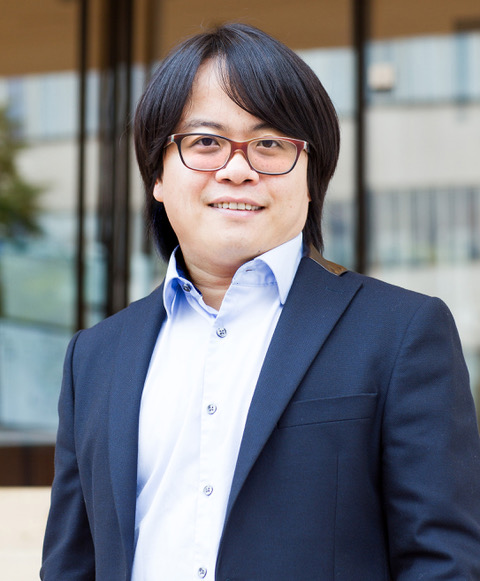
Zhang Daqing is a Professor at Peking University (Boya Chair Professor since 2014) and Full Professor at Telecom SudParis, France (2007–present). Previously, he held roles such as Department Head at the Institute for Infocomm Research (2004–2007) and Research Scientist positions in Singapore and Italy. He earned his Ph.D. in Physics from the University of Rome 'La Sapienza' in 1996. His research focuses on urban computing, context-aware systems, wireless sensing, and big data analytics. His work has been cited over 14,400 times with an H-index of 59. Key awards include the IEEE Fellow (2019) and multiple best paper awards at conferences like ACM UbiComp and IEEE UIC. Zhang has served as General Chair for 17 international conferences and is an associate editor for journals such as IEEE Pervasive Computing and ACM Transactions on Intelligent Systems. His contributions to context modeling have significantly impacted pervasive computing and service computing communities.
Peter Druschel is a Professor and founding Director of the Max Planck Institute for Software Systems (MPI-SWS) in Saarbrücken, Germany. He holds adjunct professorships at Saarland University and the University of Maryland. His research focuses on distributed systems, operating systems, and privacy-preserving technologies. He earned his Ph.D. from the University of Arizona in 1994 and has held roles at Rice University since 1994, including Professor of Computer Science (2002–2005). Education: Ph.D. in Computer Science, University of Arizona (1994) Research Interests: Distributed systems, operating systems, network security, accountable computing, and privacy technologies. Current projects include privacy compliance in data systems (Thoth), secure communication (EbN), and privacy-aware image capture (I-Pic). Awards: SIGOPS Mark Weiser Award (2008) NSF CAREER Award (1995) Member of Academia Europaea and German Academy of Sciences Leopoldina Grants & Leadership: Leads the ERC Synergy Project imPACT, chairs the Max Planck Society’s Chemistry, Physics, and Technology Section, and collaborates with institutions like Cornell and Google. Advises on policy issues related to technology and privacy. Labs/Teams: Distributed Systems Group at MPI-SWS, collaborations with Microsoft Research and MIT. Current team includes students and postdocs working on privacy, security, and distributed systems.
Hui Pan is a distinguished academic holding dual positions as Nokia Chair in Data Science and Professor of Computer Science at the University of Helsinki, and Chair Professor of Computational Media and Arts at the Hong Kong University of Science and Technology (HKUST). His research spans networking, mobile computing, augmented reality, and computational social science. He earned his Ph.D. in Computer Science from the University of Cambridge in 2007. His work bridges social networks with mobile systems, pioneering fields like mobile social networks and opportunistic forwarding algorithms. Research interests include data science, complex networks, and innovative applications of augmented reality. His recent publications focus on low-latency AR frameworks, blockchain for computation offloading, and mobile web visualization. He has received prestigious awards, including IEEE Fellow (2018), ACM Distinguished Scientist (2016), and the Nokia Chair Endowment (2017). He has supervised over 15 PhD and 12 MPhil graduates, with 13 current Ph.D. students and 2 MPhil students. His editorial roles include Associate Editorships at IEEE Transactions journals and guest editorships at top venues like IEEE JSAC and ACM Transactions. He has organized conferences such as WWW Track Chair and ExtremeCom General Chair.
Johanna Pirker serves as an Associate Professor at the Institute of Human-Centred Computing, Graz University of Technology, where she holds teaching authorization in Applied Computer Science. Her work bridges academic research with practical applications in interactive technologies, maintaining active consultation hours for students every Monday morning. Her research centers on human-centered computing with emphases on virtual/augmented reality systems, serious game design, and AI-driven interactive experiences. She investigates player behavior, user experience optimization, and therapeutic/educational applications of immersive technologies across diverse contexts including rehabilitation, engineering education, and social platforms. Recent 2025 publications reveal strong trends in AI integration for gaming ecosystems (toxicity detection, dialogue systems), VR-based educational tools across disciplines, and cross-cultural analyses of gaming communities. Her work consistently combines experimental user studies with novel system development to address real-world challenges. While specific grant details and student advising records aren't documented in source materials, her extensive publication output across venues like FDG and iLRN indicates active leadership in interdisciplinary collaborations focused on advancing immersive technologies for societal benefit.
Hongbo Jiang is a Distinguished Professor and Vice Dean of the College of Computer Science and Electronic Engineering at Hunan University, China. He holds concurrent roles as Director of the Trusted Systems and Networking Key Laboratory of Hunan Province and Director of the Hunan International Technical Cooperation Base for High-Performance Computing and Distributed Systems. His academic journey includes tenures as a Professor at Huazhong University of Science and Technology and a Hong Kong Scholar Research Fellow at The Chinese University of Hong Kong. Education: PhD in Computer Science (Case Western Reserve University, 2008), B.S./M.S. in Mathematics (Huazhong University of Science and Technology, 2002). Research Interests: Distributed systems, mobile computing, smart sensing, wireless networks, IoT, and edge computing. Ongoing projects include mobile/wireless applications, data science in IoT, and edge computing platforms. His work emphasizes practical implementations such as DriverSonar for driving safety and SmileAuth for biometric authentication. Key Achievements: Elected Member of Academia Europaea (2022), Fellow of AAIA, IET, and BCS. Notable awards include the Wu Wenjun Science and Technology Award (2020) and multiple best paper recognitions. Over 100+ publications in top venues like ACM MobiCom, IEEE/ACM Transactions. Professional Contributions: Editorial roles across 8+ journals including IEEE Transactions on Mobile Computing and ACM Transactions on Sensor Networks. Conference leadership includes co-founding ACM TURC and EAI ICECI. Active in technical committees for INFOCOM, MOBIHOC, and ICDCS. Labs/Teams: Leads research groups focused on networking, IoT, and edge computing. Current openings for PhD/MSc students and PostDoc researchers with strong mathematical and systems backgrounds.
Mathias Benedek is an Associate Professor at the Institute of Psychology, Faculty of Natural Sciences, University of Graz, Austria. He directs the Creative Cognition Lab and is actively involved in several research networks, including the "Complexity of Life" profile area, the "Brain and Behavior" research network, and the "FUTURE EDUCATION" research network at the University of Graz. His research focuses on the cognitive and neural mechanisms underlying creative thinking, with particular emphasis on the role of memory processes, metacognition, and eye movement patterns during creative ideation. Dr. Benedek's work bridges psychological theory with empirical research methods including eye tracking, neuroimaging, and computational modeling of creative processes. His research has important implications for understanding how creative potential develops and how it can be assessed and nurtured in educational and professional contexts. Dr. Benedek's publication record demonstrates a consistent focus on creative cognition across multiple dimensions. His recent work has expanded into emerging areas such as human-AI collaboration for creative tasks, automated assessment of creativity using large language models, and the relationship between physical activity and creative performance. His research shows a strong trajectory toward more ecologically valid methods for studying creativity in real-world contexts, moving beyond traditional laboratory paradigms. Seraphine Puchleitner Anerkennungspreis (PhD Supervision Award), University of Graz, 2021 William-Stern-Preis, German Psychological Society, 2019 Research Prize, University of Graz, 2017 Research Prize (Publication Category), Initiative Gehirnforschung, 2016 Berlyne Award, Division 10, American Psychological Association, 2015 Dr. Benedek has demonstrated strong commitment to mentoring the next generation of researchers, as evidenced by his 2021 PhD Supervision Award. His research has been supported by multiple grants from national and international funding bodies, though specific grant details are not provided in the available information. His professional service includes leadership roles in the Initiative Gehirnforschung Steiermark since 2010 and active membership in several psychological societies across Europe and North America. Dr. Benedek leads the Creative Cognition Lab at the University of Graz, which employs a multidisciplinary approach to studying creative processes. The lab integrates methods from cognitive psychology, neuroscience, and computational modeling to investigate the mechanisms underlying creative thought. Current research projects examine the relationship between eye movements and internal cognitive processes, the development of automated assessment tools for creativity, and the application of creativity research to educational contexts.
Hans Tompits is an Associate Professor in the Department of Knowledge-Based Systems at Technische Universität Wien (Vienna University of Technology). His research focuses on computational logic, declarative logic programming, and formal methods, with a particular emphasis on Answer-Set Programming (ASP). He coordinates the Master's program in Logic and Computation and leads projects in areas such as formal methods for optimization, fault-tolerant autonomous systems, and algorithmic composition. His work bridges theoretical advancements with practical applications, including tools like SeaLion (an ASP IDE with debugging support) and dlvhex (an ASP-based semantic web reasoner). He has contributed to foundational topics like program equivalence, debugging techniques, and integration of ASP with external systems. His recent projects address challenges in autonomous vehicle architectures, music composition algorithms, and safety-critical system design. Tompits has published extensively on topics ranging from nonmonotonic reasoning and modal logics to the development of declarative programming tools. His interdisciplinary approach spans computer science, mathematics, and AI, with applications in both academic and industrial contexts.
Vienna University of Economics and BusinessAustria
Alexander Kaiser serves as Associate Professor and Head of the Department of Knowledge Management at the Vienna University of Economics and Business (WU Wien). With over two decades of academic experience since his appointment in March 2000, he has established himself as a leading figure in knowledge management, organizational learning, and strategic vision development. His position as Head of Department and Deputy Director demonstrates his significant institutional leadership within the university. Dr. Kaiser completed his education at the University of Vienna, where he studied business informatics. He earned his doctorate with distinction from the Vienna University of Economics and Business, followed by his habilitation in Business Administration and Business Informatics in December 1999, which was awarded the prestigious Cardinal Innitzer Promotion Prize and Senator Wilhelm Wilfling Promotion Prize . His academic journey reflects a strong foundation in both business administration and information systems. His research focuses on the intersection of knowledge management, organizational learning, and spiritual dimensions of professional work. Kaiser has pioneered approaches to spiritual knowledge management, exploring how individuals and organizations can develop toward their 'best version' through meaningful knowledge processes. His work on vision development as a knowledge-creating process has significantly contributed to strategic management literature. He investigates how organizations can identify hidden needs, develop sustainable visions, and implement learning processes that incorporate future-oriented thinking, with recent work examining the connection between spirituality, calling, and knowledge management. Over his prolific career, Kaiser has published 91 scholarly works spanning from 1988 to 2025, with a noticeable acceleration in output since 2010. His publication pattern reveals a clear evolution from technical business informatics topics toward more holistic approaches integrating knowledge management with organizational psychology, spirituality, and sustainability. Recent publications (2023-2025) demonstrate his growing focus on wisdom, AI, and the integration of rational and non-rational knowledge in business contexts. Cardinal Innitzer Promotion Prize Senator Wilhelm Wilfling Promotion Prize Beyond his academic work, Professor Kaiser maintains strong practical connections through his role as founder and managing director of WaVe - Center for Growth and Change. His professional training as a systemic coach complements his academic research, creating a unique bridge between theoretical knowledge management frameworks and practical organizational applications. He has developed innovative methodologies like the 'Theory Wave' for sustainable vision development and tools for assessing transversal professional competences that have been implemented in both academic and business settings. As department head, Kaiser leads a research team focused on advancing knowledge management theory while maintaining strong connections to practical applications. The department hosts symposium series that foster interdisciplinary dialogue between academia and practice, reflecting Kaiser's commitment to ensuring knowledge management research remains relevant to real-world organizational challenges.
Dietmar Jannach is a Full Professor at the University of Klagenfurt, Austria, affiliated with the Institute for Artificial Intelligence and Cybersecurity where he leads the Research Group for Information Systems. His academic roles include membership in the university's Senate and Curricular Commissions for Liberal Arts and Information Management. His research spans: Core Areas : Artificial Intelligence, Recommender Systems, and Software Engineering. Methodological Focus : Algorithm reproducibility, fairness in AI, sequential recommendations, and hybrid learning models. Emerging Interests : Generative AI for group decision support, ethical recommender systems, and foundation model applications. Jannach's recent publications critically evaluate reproducibility challenges in AI research, advocate for calibrated recommendations to mitigate bias, and explore agentic paradigms in group recommender systems. He emphasizes real-world validation, with studies on deployment challenges and developer experiences in software processes. He actively contributes to academic governance and mentors through research groups, though specific student advisees are not listed. Contact via Dietmar.Jannach@aau.at .
Constantine Stephanidis is a Professor at the Department of Computer Science, University of Crete, and Director of the Institute of Computer Science at the Foundation for Research and Technology - Hellas (FORTH). He also serves as Head of the Human-Computer Interaction Laboratory, Centre for Universal Access and Assistive Technologies, and the Ambient Intelligence Programme of ICS-FORTH. Additionally, he is faculty of the Interdepartmental Graduate Programme in the BRAIN and MIND sciences of the University of Crete, and President of the Board of Directors of the Science and Technology Park of Crete. His research focuses on Human-Computer Interaction, Universal Access, and Assistive Technologies. Dr. Stephanidis introduced the concept and principles of Design for All in Human-Computer Interaction in the early 1990s. His work spans multiple areas including ambient intelligence environments, universally accessible game design, and health telematics. He has pioneered approaches to making technology accessible to diverse user populations, with particular attention to context-aware and adaptive interfaces that accommodate varying user needs and abilities. Prof. Stephanidis has published over 350 technical papers and edited several influential books including "The Universal Access Handbook" (2009) and "User Interfaces for All" (2001). His publication record shows a consistent focus on making technology accessible to all users, with recent work emphasizing ambient intelligence environments, universally accessible gaming, and health telematics applications. His research demonstrates a progression from foundational work on universal access principles to more specialized applications in various domains. ERCIM WG Award (2000) ERCIM Information and Communication Science and Technology Award (ICST 1999) Over the past 25 years, Prof. Stephanidis has served as Scientific Responsible for more than 40 European Commission and nationally funded projects. He has held leadership roles in numerous academic and policy initiatives, including serving as Editor-in-Chief of the Springer journal "Universal Access in the Information Society," Founding Chair of the ERCIM Working Group "User Interfaces for All," and General Chair of the International Conference 'Universal Access in Human-Computer Interaction.' He has also been actively involved in European Commission R&D Policy on Information Society, serving on various committees including the FP6 Information Society Technologies Management Committee and the eAccessibility Expert Group. He founded and leads the Human-Computer Interaction Laboratory, the Centre for Universal Access and Assistive Technologies, and the Ambient Intelligence Programme at ICS-FORTH. These research units form an integrated ecosystem focused on developing inclusive technologies that adapt to diverse user needs and contexts. His teams have been instrumental in shaping European research agendas in universal access and accessibility.
Prof. Martin Teufel is a Professor at the University of Teacher Education Styria, Austria, affiliated with the Institute for Digital Media Education. He specializes in educational technology with a focus on mobile learning, digital competency, and innovative teaching methodologies. His work includes developing MOOC-based learning systems and analyzing student digital preparedness. Key projects include the Styrian University Conference digital competency analysis and the Digital Learning Lab initiative. He holds a BEd from the University of Graz and actively contributes to teacher training programs integrating emerging technologies. Research interests span digital pedagogy, seamless learning environments, and computational thinking tools like BBC micro:bit. His publications highlight patterns in online learning behaviors and institutional digital transformation strategies. He advises on educational technology policy and has led cross-institutional studies on student readiness for digital education. His work often bridges theory and practice through collaborative formats like the Hochschuldidaktik-Café for educators' professional development. Teaching responsibilities include courses on digital media in education and technology-enhanced learning design. He manages educational technology projects and serves as a consultant for digital learning infrastructure. His GPG public key (F361ADE9) indicates active engagement in secure academic communication.
Navid Rekab-saz is an Assistant Professor at the Institute of Computational Perception, Johannes Kepler University Linz (JKU), Austria. He is actively involved in research and teaching, offering courses such as Natural Language Processing and Natural Language Processing with Deep Learning . He maintains regular office hours and is accessible via email and a dedicated booking system for meetings. His research focuses on natural language processing , information retrieval , fairness and bias in AI , and recommender systems , with applications in humanitarian action and ethical AI. He employs deep learning and machine learning techniques to address challenges in bias mitigation, explainability, and domain adaptation. His work often bridges technical innovation with societal impact, especially in developing inclusive and fair AI systems. The recent publications of Navid Rekab-saz reflect a strong trend in debiasing strategies , parameter-efficient learning , and evaluation of societal biases in search and recommendation systems. His research spans from foundational work on word embeddings and retrieval models to applied studies in humanitarian NLP and gender bias in user queries. He frequently collaborates with a broad network of researchers and contributes to the development of datasets and benchmarks. Scientific Awards: Best Student Paper Award at ISMIR 2022 for 'Traces of Globalization in Online Music Consumption Patterns and Results of Recommendation Algorithms' Advising and Grants: Navid Rekab-saz has advised and collaborated with numerous students and researchers, many of whom are co-authors on his publications. While specific grant details are not listed in the provided text, his extensive publication record in top-tier venues suggests active involvement in funded research projects, likely supported by national or European funding bodies. He is also engaged in interdisciplinary research, particularly at the intersection of technical AI and legal or social implications. Labs and Teams: He is a core member of the Institute of Computational Perception at JKU, where he contributes to research projects in computational linguistics and AI. He collaborates closely with the team led by Prof. Markus Schedl and participates in initiatives related to music information retrieval, fairness in AI, and humanitarian applications of NLP.
Christine Bauer is a Professor of Interactive Intelligent Systems at the Department of Artificial Intelligence and Human Interfaces (AIHI), University of Salzburg, Austria. She is also Co-Lead of the interdisciplinary focus area InterMediation. Music—Effect—Analysis at the inter-university organization Wissenschaft & Kunst. Her research lies at the intersection of artificial intelligence, human-computer interaction, and human-centered computing, with a strong emphasis on fairness, context-awareness, and multi-method evaluation in recommender systems. Doctoral degree in Social and Economic Sciences (Business Informatics), 2009, University of Vienna MSc in Business Informatics, 2011, TU Wien Diploma in International Business Administration, 2002, University of Vienna Study of Jazz Saxophone, Konservatorium der Stadt Wien Her research interests center on interactive intelligent systems , particularly recommender systems in music and media, with a human-centered approach. She investigates how technology can align with societal and individual needs, focusing on fairness in algorithms , culture-aware recommendation , and multi-stakeholder evaluation . Her work often integrates interdisciplinary methods and real-world impact. The recent publications highlight a consistent trend in fairness and diversity in music and news recommendation, cross-cultural user behavior , and evaluation frameworks . Her research bridges technical rigor with ethical considerations, particularly in algorithmic bias and artist equity. She has made significant contributions to understanding gender imbalance , cultural granularity , and user conformity in digital music ecosystems. Elise Richter laureate (FWF) 6 best paper awards, 5 nominations Women in RecSys Journal Paper of the Year Award (2023, 2024) 5 awards and 6 recognitions for reviewing excellence Christine Bauer has supervised over 70 theses and taught at 17 institutions worldwide. She is deeply involved in academic service, including editorial roles (AE at TOIS, TORS, JITT), conference organization (RecSys, CHI, CIKM), and mentoring initiatives (WiMIR, LEA, Allyship at CHI). She leads impactful projects such as FairRecKit and SpART: Spotlight on Artists in Recommender Systems , aiming to create more equitable and transparent recommendation technologies. She frequently engages in public outreach through keynotes, media appearances, and policy discussions. She is affiliated with the University of Salzburg as her primary institution and was previously associated with JKU Linz and the University of Klagenfurt. Her labs and research teams focus on interactive intelligent systems , music recommenders , and fair AI , often in collaboration with interdisciplinary partners in arts and social sciences.
Wenwu Zhu is a Professor and Vice Chair of the Department of Computer Science and Technology at Tsinghua University. He has held prominent positions at Microsoft Research Asia, Intel Research China, and Bell Labs, establishing himself as a leading figure in multimedia computing and networking with international recognition as a FOREIGN member of the Academy of Europe (elected 2018). His educational background includes: Ph.D. in Electrical and Computer Engineering from New York University (1996) Professor Zhu's research focuses on the intersection of multimedia systems, networking, and big data. His work has pioneered advancements in internet video streaming, multimedia cloud computing, and social-aware content distribution. He has made significant contributions to understanding how multimedia content can be efficiently delivered across diverse network environments, from traditional wired networks to modern mobile and social platforms. His research bridges theoretical computer science with practical applications, with his work on social-aware video content distribution being transferred to Tencent company. His publication record shows a clear evolution from foundational work on internet video streaming in the early 2000s, through multimedia cloud computing in the early 2010s, to more recent work on social-aware multimedia and network embedding using deep learning approaches. This progression reflects the changing landscape of multimedia computing from infrastructure-focused to socially-aware and AI-driven systems. Professor Zhu has received numerous prestigious honors: AAAS Fellow (2016) SPIE Fellow (2013) IEEE Fellow (2010) Minister of Education's Natural Science Award, 1st prize (2017) Chinese Institution of Electronics's Natural Science Award, 1st prize (2015, 2012) National Natural Science Award, 2nd prize (2012) Chief Scientist for NSFC Major Project (2016) Chief Scientist for Ministry of Science and Technology's 973 Project (2014) Multiple Best Paper Awards including ACM Multimedia 2012 As Editor-in-Chief of IEEE Transactions on Multimedia since 2017 and through leadership roles as General Co-Chair for ACM CIKM 2019 and ACM Multimedia 2018, Professor Zhu has significantly shaped the multimedia research community. His research has been supported by major grants including NSFC Major Projects and Ministry of Science and Technology's 973 Projects, demonstrating both academic and national strategic importance. He has published over 300 referred papers with an H-Index of 55, including 6 Best Paper Awards and 7 books or book chapters. Professor Zhu leads a research group at Tsinghua University focused on multimedia big data computing, with strong industry connections. His team has made pioneering contributions to structural network embedding using deep learning and social contextual recommendation systems, bridging theoretical advances with practical applications in social media platforms.
Marko Tkalčič is a Full Professor at the Faculty of Mathematics, Natural Sciences and Information Technologies (FAMNIT) at the University of Primorska in Koper, Slovenia. He is affiliated with the Department of Information Sciences and Technologies and leads research in psychologically-informed recommender systems through the HICUP lab. His academic journey includes prior roles as Associate Professor and Assistant Professor at the Free University of Bozen-Bolzano, and postdoctoral work at Johannes Kepler University and the University of Ljubljana. Research interests include computational psychology, user modeling, personality and emotion modeling, affective computing, and bias mitigation in AI. His work integrates machine learning, data mining, and user studies to enhance personalization systems by incorporating cognitive and emotional models. He focuses on music and film domains, with applications in social media, automotive interfaces, and multimedia. The recent publications demonstrate a strong trend toward human-centric AI , exploring eudaimonic and hedonic user experiences, cognitive load in driver assistance, music relistening behavior, privacy in group recommendations, and emotion-based video and music prediction. His research increasingly blends cognitive science theories (e.g., ACT-R) with practical recommender system design. University of Primorska Golden Plaque Award (2024) Stanford List of Top Scientists Cited Worldwide Best Reviewer Award at ISMIR 2020 Italian National Habilitation for Full Professor (2020) Italian National Habilitation for Associate Professor (2017) He actively supervises PhD students, including Elham Motamedi, and has secured teaching and research roles within his team. He is a member of the editorial board for UMUAI and Frontiers in Psychology, and has co-edited books and special issues on group recommender systems and human-centered AI. He leads the HICUP lab, fostering interdisciplinary research at the intersection of psychology and computer science.