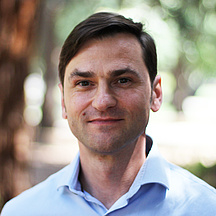
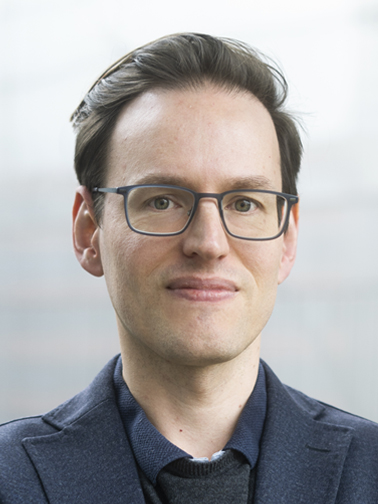
Michael Wimmer is a Full Professor at TU Wien, leading the Rendering and Modeling Group and directing the Center for Geometry and Computational Design. He holds a M.Sc. (1997) and Ph.D. (2001) from TU Wien. His research focuses on real-time rendering, procedural modeling, computational design, and point-based graphics. He has co-authored over 200 papers and the book *Real-Time Shadows*. He serves as Co-Editor-in-Chief of Computer Graphics Forum , chairs SIGGRAPH Asia 2025, and received the Eurographics Outstanding Technical Contributions Award (2023). Education: M.Sc. in Computer Science (1997), TU Wien Ph.D. in Computer Science (2001), TU Wien Research Interests: Real-time rendering and visualization Procedural modeling and computational design Point-based graphics and neural rendering Applications in computer games and urban environments Awards: Eurographics Outstanding Technical Contributions Award (2023) Wolfgang Straßer Award (Best Paper, 2022) Eurographics Fellow (2018) Outstanding Service Award (2012) Advising & Grants: Coordinator of the Special Research Programme Advanced Computational Design Key researcher at VRVis Research Center Labs & Teams: Rendering and Modeling Group Center for Geometry and Computational Design
Peter Mohr-Ziak is a researcher affiliated with both the Institute of Computer Graphics and Vision at the University of Technology Graz (TU Graz) and VRVis Forschungs GmbH. His primary focus areas include Augmented Reality (AR) and Mixed Reality (MR) systems, specifically in the domains of AR visualization, content generation for AR, and head-mounted display (HMD) technologies. He is actively involved in projects with AVL List GmbH in addition to his academic research. Academic Rank: Researcher at TU Graz Education: Telematics, TU Graz Peter's research interests center on creating interactive AR systems with applications in industrial assembly, remote assistance, and education. His work spans technical aspects of AR visualization and practical implementations for skill training (e.g., guitar tutorials) and complex tasks like maxillofacial surgery. He investigates spatial rendering techniques, adaptive perspective models, and light field applications in mixed reality environments. Recent research trends include: 2024: Expanding into human-robot interaction and AR affordance templates 2023: Developing interactive guitar tutorials and state-aware configuration detection systems 2022: Advancing focus cues in video see-through MR and assembly instruction authoring 2019-2020: Improving HMD interaction with TrackCap and light field remote assistance 2017: Creating adaptive perspective rendering and video tutorial retargeting systems Scientific recognition includes: 2021: ISMAR Best Conference Paper 2017: CHI Best Paper Honorable Mention He contributes to projects at TU Graz's Institute of Computer Graphics and Vision, including collaborations with VRVis Forschungs GmbH and AVL List GmbH, while maintaining personal interests in photography and drone flying.
Assoc. Prof. David Ahlström is an Associate Professor at the Department of Informatics Systems, Alpen-Adria-Universität Klagenfurt. He also teaches within the Department of Media and Communications, focusing on human-computer interaction and interface design. His research spans multiple areas in human-computer interaction (HCI), including graphical user interfaces, usability engineering, and interactive mobile systems. Department of Informatics Systems (main affiliation) Department of Media and Communications (teaching) David Ahlström's research explores both theoretical and practical aspects of interaction design: Human-computer interaction (HCI) Graphical user interfaces (GUIs) Usability engineering Mobile computing interfaces Information design Interactive systems His publications demonstrate a consistent focus on interface innovation across different device categories. Early work investigated fundamental menu interaction models and mobile screen usability (2002-2007), while recent research (2015-2025) explores advanced spatial interfaces, vibration-based input methods, and multimodal UAV control systems. Common themes include: Evaluating new interaction techniques Optimizing spatial navigation Developing intuitive gesture systems Exploring wearable interface possibilities Advancing smartphone interaction paradigms Improving visual search performance As a member of the Equal Opportunities Working Group, he contributes to institutional initiatives beyond his technical research. His work often addresses practical challenges in mobile device usability across various contexts including education, emergency response, and domestic smart home systems.
Hsiang-Yun Wu is a Research Fellow at the Computer Graphics department of Vienna University of Technology (TU Wien), actively contributing to information visualization and visual analytics. Her work spans biological network visualization, graph drawing, schematic network maps, and data physicalization, with a focus on interactive techniques and human-centric design. Projects: ArtVis (2022–2027) , SANE (2024–2027) , SMGV-Esprit (2024–2027) , and HumAlgo (2018–2023) . Affiliations: Member of the Visualization Group at TU Wien. Her recent publications emphasize uncertainty visualization, network physicalization, and dynamic graph representations. Notably, she received the EuroVis 2019 Honorable Mention Award for optimizing stepwise animations. Wu supervises diploma theses in areas like metabolic pathway visualization and semantic-aware character animation. Key research trends include integrating biological data with urban-style schematic maps ( Metabopolis ), physicalization workflows for anatomical education ( Slice and Dice ), and mixed labeling strategies in 3D environments.
Frank van Harmelen is a full professor at the Vrije Universiteit Amsterdam and scientific director of The Network Institute. He specializes in Artificial Intelligence, Knowledge Representation, and the Semantic Web. His research includes foundational contributions to OWL, Sesame, and large-scale reasoning engines. He holds a PhD from the University of Edinburgh (1989) and has been recognized with awards like the 10-Year Impact Award (2012). Research interests span symbolic knowledge representation, large knowledge bases, and medical guideline formalization. Notable projects include the EU-funded Large Knowledge Collider and the formalization of Dutch breast-cancer guidelines using dynamic temporal logic. Awards: Distinguished Lecturer (2003), Keur der Wetenschap (2005), European AI Society Fellow (2007), and Most Cited Article Award (2011). Advising includes student Jacopo Urbani, co-author of prize-winning work. His work integrates theorem-proving with medical applications and semantic web infrastructure.
Katharina Kleinen-von Königslöw is a Full Professor of Journalism and Communication Studies at the University of Hamburg , focusing on digital communication and sustainability. Since 2018, she serves as Vice Dean for Teaching and Studies at the Faculty of Economics and Social Sciences and leads the Erasmus Mundus Master's program Journalism, Media and Globalisation . Her research spans digital public spheres , transnational communication , and sustainability framing in social media, with a methodological emphasis on quantitative and qualitative empirical methods . Recent publications analyze: Platform governance (Google/YouTube’s role in conspiracy theories) Climate futures framing across countries Right-wing populists’ linking practices Automated content analysis via machine learning She has secured major grants from institutions like Landesforschungsförderung Hamburg and Swiss National Science Foundation , co-leading interdisciplinary projects on security and sustainability. Her work has been cited over 1,600 times on Google Scholar. Her team includes researchers like Dr. Gerret von Nordheim and Dr. Laura Liebig, with collaborations across Europe and North America.
FH-Prof. Dr. Kerstin Blumenstein is a Professor in the Department of Media and Digital Technologies at the University of Applied Sciences St. Pölten. She has been with the institution since 2019, leading research in Interaction Design, User Experience, and Information Visualization. Her work focuses on multi-device ecologies, mobile computing, and digital media integration in cultural and educational contexts. Education includes a Bachelor's in Media Technology (2010) and a Master's in Digital Media Technologies (2012), both from St. Pölten University of Applied Sciences. Prior roles include student assistant at the Institute of Media Informatics and work as a Media Designer in Germany. Research projects like MEETeUX and Seekoi explore user-centered design for multi-device systems and context-aware mobile applications. Key interests span Human-Computer Interaction, second-screen applications, and visualization frameworks for real-time data. Publications emphasize cross-platform visualization tools, mobile interface design, and empirical evaluations of information displays. Current work addresses challenges in BYOD environments and cultural heritage digitalization through projects like KuKoNö . No scientific awards explicitly listed. Active in teaching across multiple programs including Media Technology (BA), Digital Healthcare (MA), and Interactive Technologies (MA).
Alexander Meschtscherjakov is a Professor at the University of Salzburg specializing in Artificial Intelligence and Human Interfaces . With over 198 research outputs and 18 projects, his work focuses on Human-Computer Interaction (HCI), Augmented Reality (AR), and Interactive Systems for mobility and urban design. Active Projects : DiMo-NEXT (2024-2028), Doctoral College Human-Computer Interaction (2022-2027), LBI Digital Health (2019-2026) Research Themes : AR in public spaces, adaptive motion tracking, sustainable design, and user-centered AI frameworks His 15 most recent articles (2023-2025) explore AR applications in urban design (2025), generative AI democratization (2025), motion sickness prevention (2016), and breathing-based interaction methods (2023). Notable scientific awards include the Lasting Impact Award Automotive UI (2024), CHI 2019 Honourable Mention , and multiple best paper awards.
David Ribeiro Lamas is a Professor of Human-Computer Interaction at Tallinn University's School of Digital Technologies, where he heads the Human-Computer Interaction group. He also serves as the chair of the Estonian chapter of ACM's SIGCHI and as an expert member of IFIP's TC13. With an extensive international career spanning the USA, UK, Portugal, Cape Verde, Mozambique, Afghanistan, and Estonia, he has developed deep expertise in designing organizations, communities, and human technologies. His educational background includes a PhD in Human Computer Interaction from Portsmouth University (1998), an MSc in Computer Science from Minho University (1994), and an Honours BSc in Informatics/Applied Mathematics from Portucalense University (1989). He also completed specialized studies in Strategic Management at the Polytechnic University of Catalunya and a postdoc in Augmented and Virtual Environments at Michigan State University. Lamas' research primarily focuses on design theory and methodologies, with recent work emphasizing trust in technology, facial recognition systems, and vibrotactile interfaces. He has pioneered academic programs including the Master in Human-Computer Interaction and the Masters in Interaction Design (run online with Cyprus University of Technology). His approach combines theoretical rigor with practical application, particularly in cross-cultural contexts. His publication record shows a strong trend toward understanding human trust in technology systems, with significant work on facial recognition, vibrotactile feedback systems, and trust frameworks. His research spans both theoretical contributions to HCI methodology and practical applications addressing real-world challenges in digital accessibility and user experience. 2025 HCI Pioneer Award from IFIP TC13 2025 Tallinn Conference Ambassador 2024 IFIP Service Award 2015 Badge of Merit from Tallinn University 2011 Best Paper Award for work on Estonia's M-Government Services 2000 Best Paper Award for research on Web navigation guidance Lamas has successfully supervised forty-eight master students, seven doctoral students, and two post-doc researchers, and currently supervises twelve doctoral students. His leadership extends to numerous research projects including COST Actions on Interactive Narrative Design and Human-Computer Interaction methodologies. He founded and leads STARTS.EE, Tallinn University's initiative promoting encounters between science, technology, and the arts. He has been instrumental in building the Estonian HCI community through seasonal courses on Experimental Interaction Design, Research Methods in HCI, and the Design of Human Technologies since 2010. His World Usability Day events bring together over 600 researchers and practitioners annually from the Baltics, Nordic countries, and beyond. Lamas has chaired major international conferences including INTERACT 2019, NordiCHI 2020, AfriCHI 2021, and ICIDIS 2021.
Eduard Gröller is a Full Professor of Visualization at the Vienna University of Technology (TU Wien), leading the Research Unit of Computer Graphics and the Visualization Group within the Institute of Visual Computing & Human-Centered Technology (VC&HCT). He holds adjunct professorships at the University of Bergen, Norway, and chairs several academic committees. His academic journey began with a PhD in 1993 from TU Wien, followed by extensive contributions to visualization research. His research focuses on visual computing, scientific visualization, and medical imaging, with applications in energy modeling, climate analysis, and molecular biology. Gröller has pioneered methods like BEMTrace for BIM-based energy models and HORA 3D for flood risk visualization. He co-authored over 300 publications, including foundational work in IEEE Transactions on Visualization and Computer Graphics and Computer Graphics Forum . Gröller's awards include the IEEE VGTC Technical Achievement Award (2019), Eurographics 2015 Outstanding Technical Contributions Award, and Fellow of the Eurographics Association (2009). He actively contributes to conferences like EuroVis and IEEE Visualization as program chair and reviewer. His educational efforts span courses in visual computing, graphics, and data analysis, with a focus on immersive tools like ImNDT for material data exploration. Current projects include Climate-Sensitive Adaptive Planning for Resilient Cities, Visual Analytics in Radiation Therapy, and scalable web-based visualization techniques. He leads teams in VRVis, a research center for applied visualization, and collaborates internationally on medical imaging and environmental data challenges.
Dr. Denis Kalkofen serves as an Associate Professor at the Institute of Computer Graphics and Vision (ICG) at Graz University of Technology, Austria. His academic journey began with a Dipl.-Ing. (2004) from the University of Magdeburg, followed by a Dr. techn. (2009) from Graz University of Technology. University of Magdeburg - Dipl.-Ing. (2004) Graz University of Technology - Dr. techn. (2009) University of Michigan, Ann Arbor - Virtual Reality Laboratory member Stanford University - Visiting Assistant Professor at Computational Imaging Laboratory (2019) University of South Australia - Visiting Researcher at Wearable Computer Laboratory (2019) Dr. Kalkofen's research centers on developing visualization, interaction, authoring, and display technologies for Virtual and Mixed Reality environments, with particular emphasis on combining computer graphics and computer vision techniques to create comprehensible and accessible VR/MR experiences. His work spans situated visualization (addressing label placement and X-ray visualization), photometric rendering (recovering lighting properties for realistic AR), and content creation automation (leveraging existing data sources for AR content). His publication trends over the past 15+ years demonstrate consistent leadership in AR/MR research, evolving from foundational work on visualization techniques to current cutting-edge research in neural rendering, neuroadaptive systems, and industrial AR applications. Recent work shows increased focus on practical industrial implementations, error management in AR assembly, and multimodal learning applications. Best paper award for 'enRoute: Dynamic path extraction from biological pathway maps' (2012) Best short paper for 'TutAR: Augmented Reality Tutorials for Hands-only Procedures' (2018) Best paper for 'Tools for Teaching Mining Students in Virtual Reality' (2020) Honorable Mention for Best Paper for 'Adaptive User-Perspective Rendering' (2017) Dr. Kalkofen leads Team Kalkofen at ICG, supervising researchers including Peter Mohr, Shohei Mori, David Mandl, and Ana Stanescu. His team has secured significant funding for projects related to AR/VR content creation, visualization techniques, and industrial applications. They maintain strong collaborations with institutions including Stanford University, University of South Australia, and University of Michigan. Team Kalkofen operates within the Institute of Computer Graphics and Vision at TU Graz, focusing on three main research thrusts: situated visualization for AR, photometric rendering for realistic MR, and automated content creation for professional AR applications. The team maintains active partnerships with industry and academic institutions worldwide, contributing to the advancement of practical AR/MR technologies.
Frank Leymann is a Professor of Computer Science at the University of Stuttgart, where he serves as Director and Founder of the Institute of Architecture of Application Systems. His career spans academia and industry, including 20 years at IBM Germany as a Software Architect. Research Focus: Workflow Management, Service Computing, Cloud Computing, Quantum Computing, Pattern Languages, Digital Humanities. Standards: Co-author of BPEL, BPMN, WS-RF, TOSCA, Human Task specifications. His work on quantum computing emphasizes hybrid quantum-classical applications and practical integration challenges. He pioneered the OASIS cloud standard TOSCA and developed the open-source OpenTOSCA platform, which has over 1,000 downloads. Scientific awards include an Honorary Doctorate from the University of Crete (2015), IBM Distinguished Engineer (2000), and IBM Academy of Technology membership (1996). Google Scholar cites his work over 43,300 times (H-Index 89), ranking him among the world's top computer scientists.
Sebastian Eresheim serves as a Researcher at the Institute of IT Security Research within the Department of Computer Science and Security at St. Pölten University of Applied Sciences. His work focuses on developing innovative approaches to cybersecurity education and defense mechanisms through gamification, machine learning, and reinforcement learning techniques. He contributes to academic programs including Data Intelligence (MA) and Data Science and Artificial Intelligence (BA). Eresheim's research interests span across cybersecurity, artificial intelligence, and machine learning applications in security contexts. His work particularly emphasizes practical security solutions through gamification of security concepts, reinforcement learning for malware containment, and threat intelligence systems. He has developed cyber defense games like PenQuest that provide hands-on security training experiences. His research bridges theoretical security concepts with practical implementations, especially in the areas of process classification for anomaly detection and modeling real-world threat scenarios. Analysis of Eresheim's recent publications reveals a strong focus on applying artificial intelligence to cybersecurity challenges. His work demonstrates a progression from theoretical security modeling toward practical implementations, with increasing emphasis on gamification techniques for security education and reinforcement learning environments for cyber defense training. His research spans multiple domains including IT/OT infrastructure security, threat modeling, and security awareness training, showing interdisciplinary connections between computer science, game theory, and security engineering. Eresheim actively participates in various research projects including KliWaSim, the Webinar Series "Secure Home Office," and the Josef Ressel Center for Unified Threat Intelligence on Targeted Attacks (TARGET). He regularly presents at conferences and delivers workshops on AI and security topics, including events like the ACTA TECH DAY 2024 where he presented "Artificial Intelligence 101." His outreach extends to media appearances on ORF NÖ heute discussing practical AI applications.
Dr. Markus Tatzgern serves as Professor for Mixed Reality and Game Development and Head of Research at the Department for Creative Technologies, Salzburg University of Applied Sciences. He leads the Digital Realities Lab, a multi-disciplinary research group focused on human-centered solutions at the intersection of software, design, and creative engineering for technology interaction. His academic foundation includes a Master of Science and Doctorate with highest distinction from Graz University of Technology. He furthered his expertise through post-doctoral research at the Christian Doppler Laboratory for Handheld Augmented Reality, recognized as a world-leading facility in mobile AR. Tatzgern's research spans Augmented Reality, Virtual Reality, Mixed Reality, and Human-Computer Interaction with emphasis on practical applications. His work addresses critical challenges in view management, haptic feedback systems, industrial procedure visualization, medical imaging interfaces, and game development. Key contributions include novel techniques for eye-perspective rendering, breathing-based VR interaction, and latency compensation in medical robotics. His publication trajectory reveals evolving focus from foundational AR visualization (2010-2016) toward applied XR solutions in healthcare, industrial training, and user experience optimization (2017-2024). Recent work demonstrates increasing integration of physiological inputs, real-world safety applications, and enterprise-grade XR prototyping. Scientific recognition includes: Honorable Mention for Best Paper at CHI 2022 for 'AirRes Mask' breathing interface Honorable Mention for Best Paper at IEEE 3DUI 2017 for adaptive rendering techniques As Head of Research, Tatzgern actively shapes the field through program committee roles and peer review for top venues including ACM CHI and IEEE VR. His four patents in AR visualization demonstrate translational impact from academic research to practical applications. The Digital Realities Lab operates as an innovation hub where software engineers, designers, and creative technologists collaborate on next-generation interaction paradigms. Current projects emphasize medical XR applications, industrial training systems, and accessibility-focused AR solutions for vulnerable populations.
Paul Primus is a researcher at the Institute of Computational Perception, Johannes Kepler University Linz, specializing in audio processing and machine learning. His work focuses on sound event detection, acoustic scene classification, and language-based audio retrieval, with significant contributions to the DCASE (Detection and Classification of Acoustic Scenes and Events) challenges. Education: Dr. (PhD) MSc BSc Research Interests: Primus's research bridges audio signal processing and deep learning, addressing real-world challenges in machine listening. His work emphasizes device invariance, data efficiency, and transformer architectures for audio analysis. Key contributions include knowledge distillation for audio retrieval, multi-stage transformer training, and novel approaches to language-audio interaction. He actively explores low-complexity solutions suitable for embedded systems and edge deployment. Publication Trends: Primus's recent work (2023-2025) shows a clear trajectory toward multimodal audio-language systems, leveraging transformers and pretraining techniques. His publications increasingly focus on data efficiency, device generalization, and practical deployment constraints, as evidenced by his DCASE challenge submissions. The integration of metadata and cross-modal alignment represents a growing research emphasis. Activities: Adversarial Robustness in Data Augmentation (2020) Exploiting Parallel Audio Recordings to Enforce Device Invariance in CNN-based Acoustic Scene Classification (2019) Labs and Teams: Primus is a core member of the Institute of Computational Perception at JKU, which leads research in computational audio analysis. The institute maintains strong participation in international challenges like DCASE and collaborates extensively on audio transformer development and language-audio interaction systems.