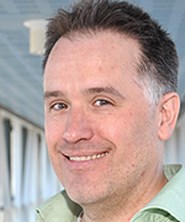
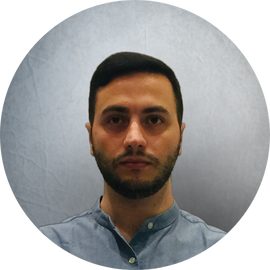
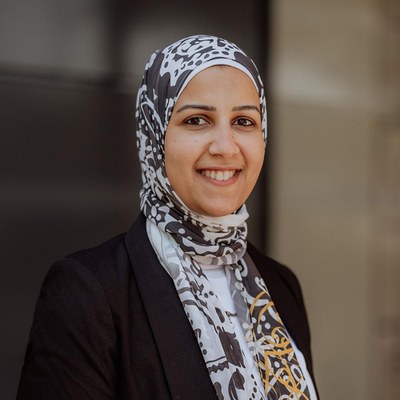
Michael Minock is an Associate Professor in Computing Science at Umeå University. His research focuses on the intersection of AI and relational databases, particularly in natural language interfaces, semantic tractability, and knowledge representation. He has led significant projects such as the VR grant (2015-04953) and EU STREP SpaceBook (2011–2014). Minock also co-founded C-Phrase Technologies AB and teaches courses on databases and large language models. B.S. in Computer Science (Honors), University of Michigan Ph.D. in Computer Science, UCLA His research explores the logical foundations of database query languages, emphasizing higher-order logic in natural language interfaces. Recent work integrates LLMs into database management systems. Key publication trends include query containment analysis, cooperative question answering, and context-aware navigation systems. Subfields span natural language processing, spatial databases, and semantic reasoning. Scientific Awards: Pell Grants Michigan Competitive Scholarship DARPA AASERT Award Minock's teaching includes courses on database management and LLM applications in IT. He actively contributes to open-access publications and maintains a strong interdisciplinary focus across AI, logic, and real-world database challenges.
Laura Rodríguez García is a full Professor at the University of Leon in the Department of Biodiversity and Environmental Management , affiliated with the Faculty of Biological and Environmental Sciences . She specializes in Physical Anthropology and is a member of the Q-GEO Environmental Geology, Quaternary and Geodiversity research group. Her research focuses on: Hominin skeletal morphology (femora, tibiae, fibulae, clavicles) Biomechanical analysis of Middle Pleistocene human remains Evolutionary implications of bone volume and skeletal weight Dental microwear and isotope analysis for dietary reconstruction Neanderthal symbolic behavior and social complexity 3D geometric morphometrics in skeletal studies Recent publications highlight trends in: Neanderthal postcranial anatomy Human evolution in Iberia Technical innovations in skeletal maturity assessment Interdisciplinary collaborations across Europe Integration of archaeological and paleontological contexts Application of computational methods to bone analysis She collaborates with institutions like: University of Burgos Universidad Isabel I Complutense University of Madrid National Research Center on Human Evolution Melka Kunture (Ethiopia) expeditions Oldowan horizon studies
Dan Jones is an Associate Professor of Management at the University of Nevada, Reno, College of Business, where he also serves as Director of the Ph.D. in Business Administration Program. His research focuses on toxic personality traits, particularly the Dark Triad (Machiavellianism, narcissism, psychopathy) and Dark Tetrad (including sadism), examining their links to unethical behavior in organizational, cybersecurity, and criminal contexts. Ph.D., Personality and Social Psychology, University of British Columbia (2011) M.A., Social Psychology, University of Arizona (2005) B.S., Psychology, Richard Stockton College of New Jersey (2001) His work bridges psychology and business ethics, exploring deception strategies, moral disengagement, and organizational misbehavior. He has contributed to understanding how dark personalities influence financial misconduct, cyberattacks, and interpersonal aggression, with recent studies addressing phishing vulnerabilities and legal/illegal profit-seeking behaviors. His publications include analyses of the Dark Triad's role in cybersecurity, corporate crime, and relationship dynamics. He co-developed the Dark Triad Peer Assessment (D3PA) and investigates strategies to mitigate harmful behaviors through inoculation against moral disengagement and real-time phishing defenses. Dr. Jones advises Ph.D. candidates Edit Szabo and Sogol Mozafari. He leads the Dark Triad & Corporate Climate Lab , which studies personality-environment interactions. His research spans psychology, business ethics, criminology, and cybersecurity, with applications in organizational policy and security training.
Hugo Barbosa is an active faculty member in Informatics Engineering, affiliated with Lusófona University – Porto University Center and Porto Polytechnic (IPP). He teaches both theoretical and practical aspects of informatics and collaborates with the Social Innovation and Interactive Systems (SIIS) R&D unit at ISEP, focusing on applied research in interactive technologies for education and healthcare. Master’s in Informatics Engineering – Graphics and Multimedia Systems Bachelor’s in Informatics Engineering – Computers and Systems Professional Aptitude Certificate (CAP) PhD candidate in Informatics Engineering at FEUP (60 ECTS completed) Senior Member, Portuguese Engineers Association (OE) Hugo Barbosa's research lies at the intersection of technology and education, with a strong emphasis on serious games , virtual reality , and interactive simulation for training and rehabilitation. His work explores how adaptive digital environments can enhance learning, particularly in medical and engineering contexts, and investigates the integration of cybersecurity and network optimization in these systems. He focuses on user-centered design, aiming to create accessible and effective solutions for diverse populations, including the elderly and individuals with mobility or cognitive challenges. His publication record from 2009 to 2020 reveals a consistent trajectory in applied informatics, with a recent concentration on serious games for rehabilitation , cybersecurity in healthcare , and digital privacy . These works reflect a multidisciplinary approach, bridging computer science with health sciences and education. His research often addresses real-world challenges such as data protection in national health systems, adaptable therapeutic environments, and immersive training simulations. Hugo Barbosa has been recognized as a Senior Member of the Portuguese Engineers Association (OE), a professional distinction reflecting his contributions and expertise. While no additional awards are explicitly mentioned, his active participation in conferences and publications in research journals underscores his scholarly engagement. He is involved in research advising and project development through his work with SIIS at ISEP/IPP, though no named students are listed. His academic and professional activities suggest involvement in research grants and collaborative projects, particularly within R&D units focused on social innovation and interactive systems. His dual teaching role across institutions also indicates a broad educational impact. Hugo Barbosa is actively involved with the Social Innovation and Interactive Systems (SIIS) research unit at ISEP, Porto Polytechnic. This lab focuses on developing innovative interactive applications for social good, particularly in healthcare, education, and rehabilitation. His work there involves designing and evaluating multimedia and simulation-based tools that support learning and therapy, leveraging technologies like serious games and virtual environments.
Ryan Corey (he/him/his) is an Assistant Professor at the University of Illinois Chicago in the Department of Electrical and Computer Engineering, College of Engineering. His research focuses on audio and acoustic signal processing for human listening technologies such as hearing aids and augmented reality systems. Education: MS in Electrical and Computer Engineering from University of Illinois at Urbana-Champaign (2014), BSE in Electrical Engineering from Princeton University (2012) Teaching: Co-instructor for TE 401: Develop Breakthrough Projects, ranked as excellent by students multiple times Corey's research explores signal processing algorithms that combine audio signals from distributed microphone arrays to isolate desired sounds from background noise. His work has potential applications in hearing devices that can enhance specific speaker voices in crowded environments. He also investigates innovative prototyping approaches using unconventional microphone placements on wearable devices. His recent publications focus on advanced beamforming techniques, adaptive filtering methods, and sensor network applications in audio processing. These include topics such as random projections in beamforming, neural adaptive filters, and sound field interpolation using acoustic sensor networks. Scientific Honors: Best Student Paper Award at WASPAA 2019 Intelligence Community Postdoctoral Fellowship (2019) Microsoft Research Dissertation Grant (2018) National Science Foundation Graduate Research Fellowship (2013) Corey leads the Listening Technology Lab and collaborates with Professor Andrew Singer in the Augmented Listening Laboratory. He has mentored students in developing innovative listening technologies, including prototypes for hearing aids with improved directional audio capabilities and devices that modify sound environments for better hearing experiences.
Alessandro Fogli is a PhD Student at Imperial College London in the Department of Computing, affiliated with the Large-Scale Data & Systems (LSDS) Group . His research focuses on systems support for data analytics in cloud environments, including distributed systems, resource management, and query processing. Education PhD in Computer Science, 2019–Present, Imperial College London MSc in Computer Science, 2015–2017, Roma Tre University BSc in Computer Science, 2012–2015, Roma Tre University His research spans Distributed Systems , Databases , Data Analytics , and Modern Hardware . Recent work examines chiplet-based processor architectures and runtime mapping systems, with applications in performance optimization and hardware-aware query execution. Scientific Contributions Co-developed CHARM (2025), a runtime mapping system for chiplet heterogeneity Published in VLDB (2024) on OLAP processing for chiplet-based CPUs Contributed to HeatWave at Oracle Labs, improving query offloading to in-memory accelerators
Laura Gonzalez is a Professor of Research and Interdisciplinary Work at the Royal Conservatoire of Scotland and an Athenaeum Research Fellow. She serves as a summer faculty member, advisor, and supervisor for the MFA and PhD residency program at Transart Institute. Her work spans performance art, medical humanities, psychoanalysis, and embodied practices, with a particular focus on hysteria studies and breathwork. Her educational background includes: PhD in Cultural Communication and Computing Research Institute (C3RI), Art and Design Research Centre, Sheffield Hallam University (2005-2010) Postgraduate Certificate in Learning and Teaching in Art, Design and Communication (2004-2005) Master of Fine Art: Drawing, Wimbledon School of Art (2000-2001) Licenciada en Bellas Artes (BA equivalent), Universidad del Pais Vasco, Spain (1995-2000) Gonzalez's research explores the intersections of performance, psychoanalysis, and medical humanities, with particular emphasis on hysteria as a cultural and embodied phenomenon. Her work investigates how knowledge is produced through the body, especially through 'illegitimate forms of knowledge' such as intuition, magic, and oracles. She examines the relationship between breath, performance, and consciousness, developing practices that connect somatic awareness with artistic expression. Her research also engages with feminist theory, exploring how women's bodies have been historically pathologized while simultaneously serving as sites of resistance and creative transformation. Her recent publications reveal a consistent trajectory exploring embodiment, hysteria, and breath as artistic and scholarly concerns. She has increasingly focused on the medical humanities, examining historical medical texts and case histories through performance. Her work demonstrates a movement from theoretical analysis of seduction in art toward practical applications of breathwork and embodied knowledge in performance contexts. The interdisciplinary nature of her scholarship bridges art practice, psychoanalytic theory, and medical history. Her notable awards and recognitions include: Shortlisted for the Adrian Howells Award For Intimate Performance (2019) Athenaeum Award – Knowledge Exchange Route (2023) Glasgow Medical Humanities Network Foundation Award (2023) Athenaeum Award for research (2021) Multiple Research Development Funds from The Glasgow School of Art (2012-2016) AHRC Collaborative Doctoral Awards (2005, 2006, 2013) Gonzalez has supervised numerous doctoral students across institutions including the Royal Conservatoire of Scotland, Glasgow School of Art, and Transart Institute. Her supervision focuses on interdisciplinary projects at the intersection of performance, visual arts, and embodied research. She has secured significant grant funding for projects exploring the relationship between imitation and dance, breath practices, and hysteria studies. Her collaborative projects often involve partnerships with medical humanities scholars, performance practitioners, and community organizations. She is actively involved in several research collectives including The Workroom (since 2017), where she develops collaborative performance projects. She co-founded @TheGlasgowJam (2015-2018), creating space for multidisciplinary arts exploration. In 2021, she created the Scottish Breath Network, fostering interdisciplinary research on breathing practices. She also co-founded the Dialectical Materialist Book Group with Ian Macbeth, exploring Marxist theory through collective reading.
Derry Wijaya is an Associate Professor in the Data Science program at Monash University, Indonesia, specializing in natural language processing with a focus on multilingual applications, machine translation, and large language models. Her research bridges computational linguistics with social applications, examining how language technologies can address challenges in low-resource language settings. Her research interests center on natural language processing, with particular expertise in machine learning applications for multilingual contexts. Wijaya investigates how well-annotated languages can improve translation of less-documented languages, and explores the use of images, related tasks, data augmentation, and large language models to enhance representation and translation for languages with limited training data. Her work demonstrates strong interdisciplinary connections between technical NLP research and real-world social applications. Analysis of her recent publications (2023-2025) reveals a research trajectory that spans core NLP methodologies while increasingly incorporating social media analysis, policy applications, and cross-cultural communication challenges. Her work shows particular strength in addressing low-resource language challenges while maintaining relevance to Indonesian and global contexts, with notable publications examining climate change perception among Indonesian youth and comparative water quality issues between Indonesia and the United States. Wijaya maintains active research collaborations across multiple institutions, with numerous co-authored publications addressing diverse applications of NLP from public health communication to political discourse analysis. Her research demonstrates consistent productivity, with significant output in top computational linguistics venues.
Simon Butler is a Senior Lecturer in the Department of Information Technology at the University of Skövde's School of Informatics. He is an active member of the Distributed Real-Time Systems research group and contributes significantly to undergraduate computer science education. His academic work bridges theoretical research with practical industry applications in software development. Butler's research interests center on the challenges software developers face in creating and maintaining software systems, with particular focus on program comprehension, software maintenance, and the socio-technical and educational aspects of software development in hybrid environments where open source and proprietary solutions coexist. His work addresses critical issues in Internet of Things (IoT) systems and the practical implementation of open source software solutions in industrial contexts. His publication record from 2018-2023 reveals a strong research trajectory focused on open source software adoption, interoperability challenges, and standardization processes. His work spans diverse venues including Software Quality Journal, Journal of Systems and Software, IEEE Transactions on Software Engineering, and OpenSym proceedings, demonstrating both academic rigor and practical relevance to industry challenges. Butler is actively involved in several significant research projects including SUDO (2020-2024) addressing lock-in effects in IT systems, OSSD (2021-2023) developing educational programs for sustainable digitalization, and LIM-IT (2016-2020) investigating interoperability and long-term maintenance challenges. His teaching portfolio includes core computer science subjects such as Operating Systems, Object Oriented Programming, Algorithms and Data Structures, and Distributed Systems. As a member of the Distributed Real-Time Systems research group, Butler collaborates with industry partners to address real-world challenges in software development practices, particularly focusing on how organizations can effectively integrate open source solutions while avoiding problematic lock-in effects that compromise long-term system sustainability.
Jan Huisken is a Humboldt Professor for Multiscale Biology at the Georg-August-Universität Göttingen, affiliated with the Johann Friedrich Blumenbach Institute of Zoology and Anthropology. His research focuses on advanced light sheet microscopy techniques for biomedical and developmental biology applications. Role: Humboldt Professor University: Georg-August-Universität Göttingen Department: Johann Friedrich Blumenbach Institute of Zoology and Anthropology Research interests include light sheet microscopy , biomedical imaging , and developmental biology with a strong emphasis on zebrafish models. He develops tools for tissue clearing , image processing , and 3D microscopy . The 15 most recent publications analyze innovations in light sheet microscopy, tissue clearing protocols, and computational methods for image restoration. These works span fields such as optical imaging , developmental cardiology , computational biology , and biomedical instrumentation . Huisken contributes to open-source microscopy systems like 'Flamingo' and 'BigFUSE,' aiming to democratize access to advanced imaging technologies. His work integrates engineering, computer science, and biology to solve complex imaging challenges.
Nicolas Labroche serves as a Researcher in the Department of Computer Science at the Polytechnic School of the University of Tours. He is affiliated with the Fundamental and Applied Computer Science Laboratory of Tours (LIFAT) within the UFR of Sciences and Technology. His academic work spans multiple research domains with significant contributions to machine learning methodology and applications. His primary research focuses on Explainable Artificial Intelligence , particularly for medical applications where model interpretability is critical. He has pioneered methods in clustering of local attributive explanations and discernibility in medical ML models . Additional expertise includes exploratory data analysis through mathematical programming for comparison queries, time series forecasting for environmental monitoring, and preference-based explanations in recommender systems. His work bridges theoretical computer science with practical applications in healthcare, environmental science, and business intelligence. Analysis of his publication trends reveals consistent innovation in making data exploration more efficient and interpretable. Recent work emphasizes user-centric explainability (2024-2025), mathematical optimization for analytics (2022-2023), and synthetic data generation (2022). His research demonstrates strong interdisciplinary connections between computer science, medicine, and environmental science. His laboratory affiliation with LIFAT provides the infrastructure for his computational research. While specific grant details aren't public, his publication record indicates sustained research productivity across multiple European-funded projects focused on data science applications.
Dr. YI LING LIN is an Associate Professor in the Department of Management Information Systems at National Chengchi University, where she has been serving since 2017 (promoted to Associate Professor in 2019). Her research focuses on recommender systems, human-computer interaction, and information systems, with particular expertise in micro-moment recommendation, crowdsourcing, and programming education. Dr. LIN earned her Ph.D. in Information Management from the University of Pittsburgh (2007-2013). Prior to joining National Chengchi University, she served as an Assistant Professor at National Sun Yat-sen University (2014-2017). Her research centers on recommender systems, particularly micro-moment recommendation systems that respond to users' immediate needs. She investigates human-computer interaction, programming education technologies, and e-commerce applications, often combining theoretical frameworks with empirical studies to understand user behavior and improve system design. Her work spans multiple domains including healthcare Q&A forums, programming education, and financial applications. Dr. LIN's publication record demonstrates consistent contributions to top journals and conferences in information systems and human-computer interaction. Her recent work focuses on competitive gamification in recommendation systems, the influence of social relationships and emotions on micro-moment recommendations, and AI-assisted programming education. She has developed frameworks for personalized interaction mechanisms and explored applications in e-commerce, insurance, and streaming retailing. 資深優良教師(10年) (Long-service Excellent Teacher) Multiple teaching excellence awards from National Chengchi University National Science and Technology Council Research Awards 2022 National College Smart Innovation Competition (E-commerce and Financial Technology) 2021 National College Information Application Service Innovation Competition Taiwan Service Science Society Academic Research Award Dr. LIN has been Principal Investigator for numerous research projects, primarily funded by the National Science and Technology Council (MOST). Her current projects focus on micro-moment recommendation systems, digital insurance experiences, and e-commerce optimization. She has led educational innovation projects for programming instruction and maintains strong industry connections through various collaborative projects with financial institutions and technology companies. Dr. LIN is affiliated with the Department of Management Information Systems at National Chengchi University, which houses several research labs including the E-Business Lab, Ambient e-Services Laboratory, and Lab for Electronic Commerce and Service Science. Her research aligns particularly with the E-Business Lab and Lab for Electronic Commerce and Service Science.
Xingcheng Zhou is a Research Assistant at the Technical University of Munich (TUM), affiliated with the Chair of Robotics, Artificial Intelligence and Real-time Systems since 2023. He holds an M.Sc. in Electrical and Computer Engineering from TUM (2021) and previously worked as an Industrial AI Researcher at Siemens. Research Interests: Focus on Large Language Models , Vision Language Models , 3D Environment Perception , and Domain Adaptation in autonomous driving contexts. Publications: Contributions to 3D object detection refinement, sim2real domain adaptation, vision-language models, and dataset development for intelligent transportation systems. Teaching Involvement: Co-supervisor for master's theses and seminars on autonomous agents, perception models, and traffic environment understanding. Advising: Mentoring students on projects including LiDAR-guided monocular detection, world models, and multimodal benchmarks for transportation scenes. Trends in Research: Zhou's work bridges low-light image enhancement with spatial-frequency features, surface-aware frameworks for 3D detection, and weakly-supervised domain adaptation. He contributes to benchmarking spatio-temporal video understanding and evaluating autonomous driving datasets. Supervision and Collaboration: Co-authored key surveys and frameworks with Prof. Alois C. Knoll and peers, focusing on real-time roadside LiDARs, graph-based object relationships, and vision-language integration for traffic analysis.
Dr. Denis Paperno is an Assistant Professor of Computational Linguistics at Utrecht University in the Department of Languages, Literature and Communication within the Humanities faculty. He maintains a dual affiliation, working at Utrecht University while on détachement from a researcher position at CNRS (the National Center of Scientific Research). His academic background includes a PhD in Linguistics from the University of California Los Angeles and prior work at the University of Trento in Marco Baroni's research group. Dr. Paperno's research expertise spans several critical domains in computational linguistics: Semantics and meaning representation Artificial Intelligence applications to language Distributional and neural semantic models Word embeddings and semantic compositionality Cross-modal and cross-lingual language understanding Language typology and lexical semantics His research program investigates fundamental questions about computational meaning representation, exploring how word meanings interact to form complex expressions and how to integrate diverse information sources like images, knowledge bases, and linguistic resources into unified frameworks. He has developed significant benchmarks for evaluating language models and made important contributions to semantic typology and quantification theory. Dr. Paperno's publication record demonstrates consistent contributions to top-tier computational linguistics venues, with recent work spanning theoretical linguistics to practical deep learning applications. His articles reveal expertise bridging formal semantic theory and cutting-edge neural network approaches to linguistic problems. He is actively involved in teaching courses including 'Formal and Natural Languages,' 'Machine Learning I,' 'Models for Language Processing,' and 'Semantics.' Current research projects include work with Pablo Mosteiro funded by an Applied Data Science research grant from Utrecht University, and he is scheduled to deliver a keynote at the 16th International Conference on Computational Semantics (IWCS) in Düsseldorf in September 2025.
Dr. Yomna Abdelrahman is a Professor of Usable Security and Privacy at the Bundeswehr University Munich . Her research focuses on thermal imaging for security and privacy , virtual reality usability, eye tracking , and biometric authentication . She collaborates with researchers like Florian Alt and Albrecht Schmidt on projects exploring how thermal sensing can enhance user identification and privacy awareness . Key Research Areas : Thermal Imaging, Human-Computer Interaction, Virtual Reality, Password Security, Biometric Authentication, Eye Tracking, Privacy Her recent publications address VR emotion detection , password usability , and privacy implications of thermal imaging . She has contributed to conferences like CHI, MUM, and INTERACT, often examining security-privacy trade-offs and non-invasive biometric systems . Notably, her work on thermal attacks reveals vulnerabilities in mobile authentication through thermal residue. She holds a PhD in Computer Science from the University of Stuttgart (2018), where her thesis, "Thermal Imaging for Amplifying Human Perception," laid the foundation for her later work on thermal-based interaction and cognitive load estimation . Her collaborations span diverse domains, from smart home notifications to industrial worker assistance , reflecting her interdisciplinary approach to usable security and interactive systems .