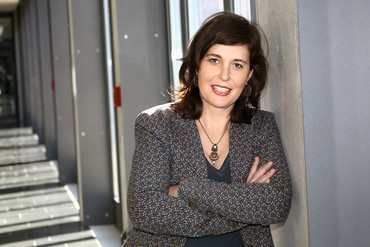
Marieke van Summeren serves as an Assistant Professor in the Faculty of Medicine at Utrecht University, specializing in applied ethics within pediatric care. Her work bridges clinical practice and ethical analysis, focusing on real-world dilemmas in genomic sequencing and childhood obesity interventions. Her research centers on empirical ethical investigations into pediatric genomic sequencing, particularly informed consent processes and unsolicited findings in whole exome sequencing (WES). She examines parental perspectives, moral acceptability of interventions like gastric banding for adolescent obesity, and develops tailored ethical frameworks through collaboration with Utrecht's Institute of Ethics. Current projects address how patients, parents, and practitioners navigate ethical challenges in precision medicine. Analysis of her 2014-2024 publications reveals a dominant focus on bioethics in pediatric genomics, with recurring themes of autonomy, uncertainty management, and context-specific ethical guidelines. Earlier work explored vitamin K/D metabolism in childhood obesity, evolving into her current ethics specialization. Dr. van Summeren leads zonMW-funded projects including ethical research on gastric banding in adolescent obesity and WES informed consent protocols. Her collaborative approach involves multidisciplinary teams across genetics, pediatrics, and philosophy, contributing to policy-relevant insights published in journals like BMC Medical Ethics and European Journal of Human Genetics .
Prof. Dr. Thomas Weißer is Professor of Theological Ethics at the Otto-Friedrich University of Bamberg since 2012. With a distinguished academic career spanning several decades, he has made significant contributions to the fields of theological ethics, moral philosophy, and religious studies. His work bridges academic scholarship with public engagement, addressing contemporary ethical challenges through a theological lens. Dr. Weißer's educational background includes studies in Catholic Theology and German Studies at the Universities of Bonn and Tübingen, where he earned his doctorate summa cum laude in 1999 with a dissertation on lifestyle as an ethical concept. He completed his habilitation in Theological Ethics in 2003. Before his current position, he served as a Research Assistant at the University of Tübingen (1992-2006) and as State Broadcasting Representative of the Catholic Church in Rhineland-Palatinate (2006-2012). His research spans multiple interconnected areas including fundamental questions of theological ethics, everyday morality, ethics and identity, gender discourse, media ethics, poverty and wealth, and bioethics. A recurring theme in his work is the examination of how religious ethics interact with contemporary social and cultural contexts. His recent publications have focused on topics such as blasphemy in modern society, gender issues in Christian ethics, and ethical implications of digital technology. His scholarly output demonstrates both depth in specialized areas and breadth across disciplinary boundaries. Current position: Professor of Theological Ethics, Otto-Friedrich University of Bamberg (2012-present) Previous positions: Research Assistant, University of Tübingen (1992-2006); State Broadcasting Representative, SWR Mainz (2006-2012) Academic credentials: Doctorate in Catholic Theology (1999); Habilitation in Theological Ethics (2003) Prof. Weißer maintains active engagement with both academic and public spheres, regularly participating in conferences, public lectures, and media discussions on ethical issues. His work reflects a commitment to making theological ethics relevant to contemporary social challenges while maintaining rigorous academic standards. His dual identity as Thomas Weißer (academic) and Thomas Laubach (lyricist) demonstrates his integration of scholarly and creative approaches to theological expression.
Dr. Rishi Krishnamoorthy is an Assistant Professor in the Department of Curriculum, Teaching and Learning at the University of Toronto's Ontario Institute for Studies in Education. Their academic trajectory includes previous positions as Assistant Professor at Pennsylvania State University and postdoctoral work at Rutgers University. They hold leadership roles including Co-President of the Network of the Learning Sciences in Canada and committee memberships in several international education organizations. Their research program examines sociopolitical dimensions of science education through three interconnected strands: Co-designing justice-oriented science curricula with youth and teachers Desettling colonial methodologies in educational research Examining how Hindu supremacy shapes diasporic South Asian youth identities This work integrates critical race, feminist, queer, and decolonial frameworks to transform science education. Analyses of their scholarly publications reveal consistent themes: Decolonizing science curricula and research methods Examining power dynamics in learning environments Developing critical approaches to data and science practices Centering relational ontologies in educational research Addressing sociopolitical dimensions of STEM education Their work consistently challenges Eurocentric knowledge systems while advancing justice-oriented pedagogies. Notable scientific recognition includes: Best Poster Award, International Conference of the Learning Sciences (2021) Best Paper Award, Canadian Science Education Research Group (2020) Their research has secured substantial grant support from organizations including: Canadian Institutes of Health Research (Community-engaged health equity projects) National Science Foundation (Science learning in community-relevant contexts) NYU Steinhardt Global Research Incubator (International participatory design) They teach graduate courses in critical research methodology and science education, mentoring students in justice-oriented scholarship.
Prof. Dr. Silke Schicktanz is Professor for Culture and Ethics of Biomedicine and Head of the Institute for Ethics and History of Medicine at the University Medical Center Göttingen, Georg-August-University. She has held this position since April 1, 2010, following her Junior Professorship for the History, Theory, and Ethics of Medicine (2006-2010). She has also held adjunct positions at San Francisco State University and conducted research at UC Berkeley with a Feodor Lynen Fellowship. Dr. Schicktanz earned her doctorate in "Ethics in the Life Sciences" from the University of Tübingen in 2002, focusing on medical and animal ethical aspects of xenotransplantation. Her academic journey includes research positions at the University of Tübingen, Max Delbrück Center for Molecular Medicine, Research Center Jülich, and the University of Münster. She led Germany's first nationwide citizens' conference on genetic diagnostics at the German Hygiene Museum Foundation in Dresden. Her research focuses on the intersection of bioethics, digital health technologies, and dementia care. She explores cultural differences in bioethics, the relationship between ethics and empiricism, and public engagement in healthcare decision-making. Her work particularly examines how co-intelligent monitoring and assistance systems impact privacy, empowerment, and quality of care for people with dementia. She investigates how cultural contexts shape ethical perspectives on technology in healthcare, with comparative studies between Germany and Israel. Her recent publications reveal a strong emphasis on the ethical implications of AI and digital technologies in dementia care. She examines cross-cultural perspectives, value-sensitive design approaches, and the integration of ethical considerations into technology development. Her work consistently addresses the tension between technological innovation and fundamental ethical values like privacy, autonomy, and human dignity in healthcare contexts. Feodor Lynen Fellowship from the Alexander von Humboldt Foundation President of the Academy for Ethics in Medicine (elected 2022) Appointed Member of European Research Council Grant Evaluation Panels (2009-2017) Member of Committee on Freedom and Research in Science of ICSU (2012-2019) Member of IAG Gene Technology Report (since 2019) Appointed Member of Central Ethics Committee for Stem Cell Research (2020-2023) As Principal Investigator, Schicktanz leads multiple significant research projects including EIDEC (Ethical and social aspects of co-intelligent monitoring and assistance systems in dementia care), PANDORA (Patient-Oriented Digitalization), and "Our Healthcare of Tomorrow." She has supervised numerous doctoral students and researchers, fostering interdisciplinary collaboration between ethicists, technologists, and healthcare professionals. Her team approach emphasizes stakeholder engagement, bringing together patients, caregivers, and healthcare providers in the research process. She directs the Schicktanz Working Group which focuses on Digitalization & AI in healthcare ethics, conducting both theoretical and empirical research on emerging technologies.
Daniel Rodger serves as a Senior Lecturer in Operating Department Practice at London South Bank University's Institute of Health and Social Care, where he has been employed since 2016. His academic credentials include a DipHE in Operating Department Practice, a BSc(Hons) in History and Religion from The Open University, an MA in Contemporary Ethics, and he is currently completing a PhD in Psychology at Birkbeck, University of London under Jonathan A Smith. His research spans critical intersections of healthcare practice and ethics: Bioethics in medical decision-making and emerging technologies Artificial intelligence applications and ethics in healthcare education Xenotransplantation and innovative solutions to organ shortages Ethical frameworks for perioperative care practices Impact of lived experience on acceptance of novel biotechnologies Rodger's scholarly contributions include the influential edited book 'Fundamentals of Operating Department Practice' (2nd edition, Cambridge University Press, 2022) and over 50 research outputs through 2025. His recent publications demonstrate growing influence in bioethics journals including BMC Medical Ethics, Public Health Ethics, and Nurse Education in Practice. His work has garnered significant academic attention, with substantial readership on platforms like Mendeley and notable social media engagement across X (Twitter) and Bluesky. Professional recognition includes active research output with 13 publications in 2025 alone, reflecting sustained scholarly productivity. Prior clinical experience as a Senior Operating Department Practitioner at Evelina London Children's Hospital ensures his academic work remains grounded in practical healthcare contexts, bridging theory and practice in medical education.
Océane Fiant is a Research Fellow at COSTECH (Centre de recherche sur les domaines innovants de la connaissance), affiliated with the University of Technology of Compiègne. Her work bridges philosophy of technology, epistemology, and history of medicine with a specific focus on medical decision support systems and artificial intelligence integration in clinical practice. Her research interests center on the philosophical and historical dimensions of algorithmic decision-making in medicine. She investigates how technologies like AI transform medical reasoning, knowledge production, and clinical workflows, particularly through historical case studies such as pulmonary embolism diagnostics and depression rating scales. Her methodology uniquely combines historical analysis, empirical fieldwork, and conceptual philosophy to examine both contemporary AI systems and pre-digital medical algorithms. Her publication record demonstrates consistent scholarly output since 2017, with recent work focusing on explainable AI in pathology, contextual implementation challenges, and historical continuities in algorithmic bias. Her research has been presented at major international conferences including the Society for Philosophy and Technology biennial meetings. Fiant holds a doctorate in Epistemology and History of Science and Technology from Nantes University (2021), where her thesis examined medical decision automation through historical case studies. She has taught Epistemology and History of Science at both Nantes University and UTC, and was qualified for lecturer positions in Philosophy and Epistemology in 2022.
Gillian McKay is an Honorary Research Fellow in Social Science at the London School of Hygiene and Tropical Medicine (LSHTM), affiliated with the Department of Global Health and Development within the Faculty of Public Health and Policy. She works closely with Elrha's R2HC programme to ensure research meets humanitarian community needs and is effectively disseminated. Her extensive experience includes collaborations with the World Health Organization, International Rescue Committee, UK-Med, Imperial College, and GOAL Global. Dr. McKay holds a DrPH from LSHTM, where her research focused on community engagement in Ebola epidemics and integration of local knowledge into response actions. She earned her BSN from the University of British Columbia and an MSc in Public Health from LSHTM. As a 2016 Pierre Elliott Trudeau Foundation Scholar, she maintains active connections in Canadian academic circles. Her research spans epidemic disease response, community engagement in humanitarian crises, maternal health, gender and human rights, and health impacts of global trends including urbanization, migration, and climate change. She specializes in examining how communities interact with epidemic responses, particularly focusing on women's experiences and perspectives during outbreaks like Ebola and COVID-19. Her work consistently bridges academic research and practical humanitarian application, emphasizing the importance of local knowledge and community-centered approaches. Analysis of her recent publications reveals a strong focus on school-based pandemic responses during COVID-19, particularly examining mental health impacts and implementation challenges in educational settings. Her earlier work centers on Ebola responses in Sierra Leone and the Democratic Republic of Congo, with particular attention to family planning services during outbreaks and community feedback mechanisms. A consistent theme across her publications is the examination of gender dimensions in epidemic responses and the often-overlooked needs of vulnerable populations. 2016 Pierre Elliott Trudeau Foundation Scholar Dr. McKay serves as a critical bridge between academic research and humanitarian practice, ensuring evidence generation meets priority needs of the humanitarian community. Her work with Elrha's R2HC programme focuses on translating research into actionable insights for field practitioners. She has contributed to multiple high-impact research projects examining epidemic responses across different contexts, with particular attention to community perspectives and gender dimensions. Her research often involves multi-country collaborations and mixed-methods approaches that combine quantitative data with rich qualitative insights from affected communities. Her work spans multiple settings including Sierra Leone, Democratic Republic of Congo, South Sudan, and the United Kingdom, with particular expertise in how health systems respond to shocks and how community engagement can strengthen outbreak responses. She maintains strong connections to both Canadian and UK academic networks while focusing her research on global health challenges.