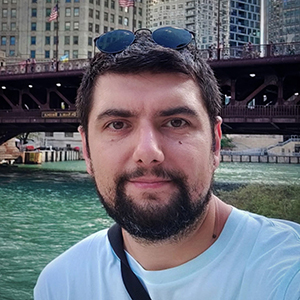
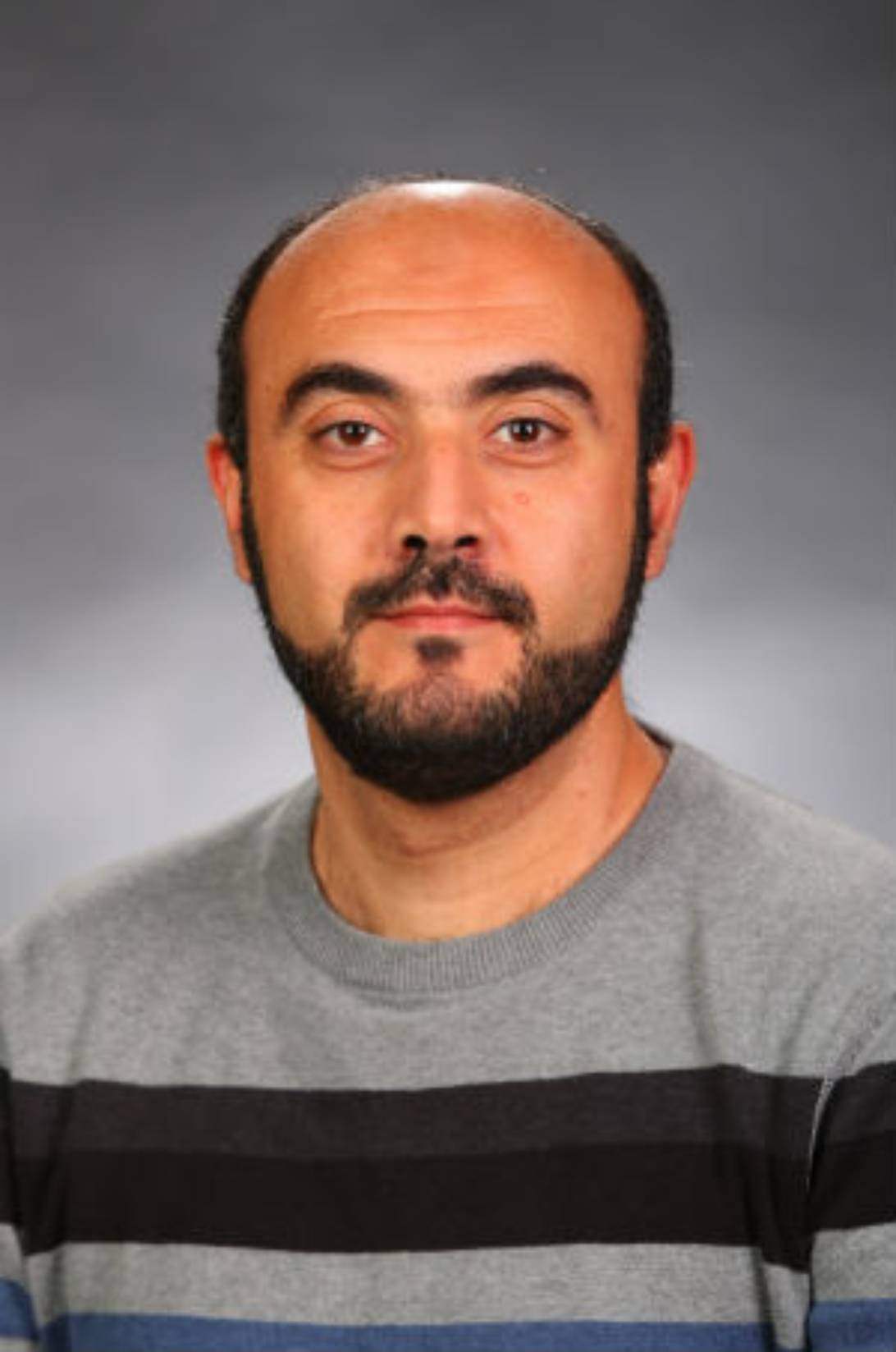
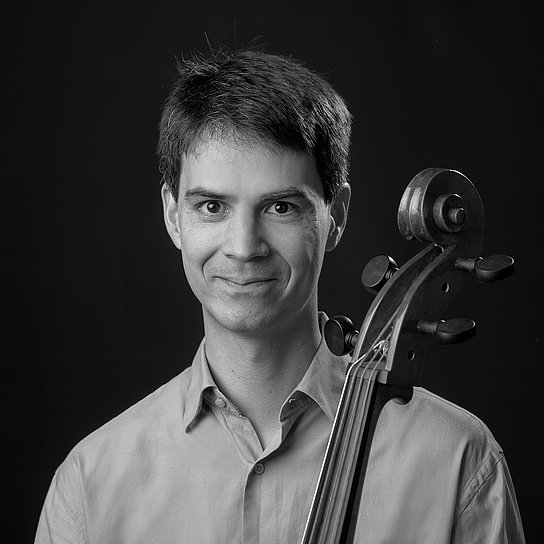
Dr. Umut Can Çabuk is a Lecturer in the Department of Computer Science at San Diego State University (College of Sciences). His expertise spans wireless communications, networked device security, and interconnected cyber-physical systems. He also contributes to blockchain, machine learning, and artificial intelligence research. Education: Ph.D. in Information Technology (Ege University), M.Sc. in Information Technology Engineering (Aarhus University), B.Sc. in Electronics Engineering (Uludag University) Dr. Çabuk’s research focuses on real-world applications of autonomous UAVs, drones, and IoT technologies. His work addresses critical challenges in lightweight cryptography, topology control, and wireless communication efficiency. Recent publications highlight trends in UAV network reliability, Industrial IoT algorithms, drone energy modeling, and IoT security protocols. These studies integrate blockchain for data integrity and explore context-aware authentication in cyber-physical systems. He serves as a Topical Advisory Panel Member for MDPI Drones and a Grant Review Panelist for NSF CPS. Additional roles include conference organizing committees (CNSM 2021).
Professor Marius Laurinaitis is a distinguished academic at Mykolo Romerio University (MRU) in Vilnius, Lithuania, holding positions as Professor and Senior Researcher. He serves as the head of the Law and Fintech bachelor's program at MRU and is affiliated with multiple academic units including the Faculty of Public Governance and Business, the Institute of Business and Economics, and the Law School. With a robust research portfolio spanning cybersecurity, hybrid threats, financial regulation, and data protection, Professor Laurinaitis has established himself as a leading expert in the intersection of law, technology, and security in the Lithuanian and international academic communities. Professor Laurinaitis's research primarily focuses on cybersecurity, hybrid threats, financial regulation, and data protection. His work bridges legal frameworks with technical security challenges, examining how legal systems can effectively address emerging cyber threats while protecting individual rights. He has conducted extensive research on hybrid threats as a new generation of security challenges, Belarus's cyber landscape, Russian cyber activities in the Ukraine conflict, and the implementation of cybersecurity measures in various sectors including healthcare and financial institutions. His research demonstrates a consistent pattern of addressing contemporary security challenges through interdisciplinary approaches that combine legal analysis with technical understanding of cybersecurity threats and solutions. Professor Laurinaitis has supervised numerous master's theses covering diverse topics within cybersecurity, data protection, and financial technologies. His supervision portfolio includes research on cyber literacy, responsible disclosure principles, personal data leakage prevention, cybersecurity culture in Lithuanian hospitals, social networks for business marketing, online identity verification, biometric technologies, and youth financial literacy. This breadth of supervision topics demonstrates his commitment to developing the next generation of experts in cybersecurity and related fields. Professor Laurinaitis leads or is affiliated with research initiatives focused on cybersecurity, particularly examining hybrid threats and their implications for national and international security. His work often involves international collaboration, as evidenced by co-authored publications with researchers from Australia and other countries. His research group appears to focus on practical applications of cybersecurity principles in real-world contexts, with particular attention to regulatory frameworks and organizational implementation challenges.
Dr. Kathryn Ostermeier serves as an Associate Professor of Management in the Department of Management at Bryant University's College of Business, specializing in organizational behavior and leadership studies since joining in August 2018 after completing her Ph.D. at the University of North Texas. Her academic credentials include a Ph.D. in Management (Organizational Behavior) from the University of North Texas (2018), an MBA from the University of Texas at Tyler, and a BBA in Business Honors from Texas A&M University. Ostermeier's research investigates how self-views and authenticity expression impact workplace outcomes, with core interests in identity dynamics, belonging, employee well-being, and team effectiveness. She employs quantitative survey methodologies and measure development, recently expanding her focus to pandemic-related workplace challenges in healthcare settings. Her publication record from 2016-2024 reveals evolving research trajectories from healthcare policy analysis to authentic leadership frameworks, with increasing emphasis on relational dynamics and identity integration in organizational contexts across premier journals like the Journal of Applied Psychology and Academy of Management Annals. Notable recognitions include: Faculty Research Excellence Award for Research and Publication (2021) Faculty Merit Award (2021) Best Paper nominee, Academy of Management Annals (2020) Outstanding Reviewer honors (2016, 2017) She actively mentors students through honors theses supervision and internship guidance while teaching undergraduate courses including MGT 203 (Honors Management for Organizational Leadership) and MGT 480 (Leadership Seminar). Her service includes membership on the IDEA Leadership Team and Rank & Appointment committee, along with editorial board positions for the Journal of Applied Behavioral Science and Journal of Comparative International Management. Dr. Ostermeier also develops and delivers professional workshops on authenticity and leadership development for organizational clients.
María Belén Pérez Lancho is a Full Professor in the Department of Computer Science and Automation at the University of Salamanca, Spain. With over 25 years of academic experience since completing her PhD in 1995, she maintains active affiliations with multiple research groups including BISITE (Bioinformatics, Intelligent Computing Systems and Educational Technology), CaUSAL (Academic Culture, Heritage and Social Memory), and Process Supervision and Control. Dr. Pérez Lancho earned her doctoral degree from the University of Salamanca with her thesis "Integrated process control system: a practical approach" supervised by Dr. Eladio Sanz García. Her academic foundation in systems engineering and automation has evolved into diverse research applications across multiple domains. Her research program demonstrates remarkable breadth while maintaining technical coherence. She has pioneered context-aware multiagent systems for home care environments, developing architectures like HoCa and HoCCAC that monitor patients and optimize task scheduling. In environmental science, she created hybrid intelligent systems for forest fire prediction using Case-Based Reasoning with topology-preserving algorithms. More recently, she has addressed cybersecurity challenges in educational technology through two-factor authentication systems. Her work consistently bridges theoretical computer science with practical implementations in real-world settings. Analysis of her publication trajectory reveals a consistent focus on adaptive intelligent systems that respond to environmental changes. Her earliest work established foundations in systems engineering, which evolved into sophisticated multi-agent applications across healthcare, environmental monitoring, and security domains. The most recent publications continue this trajectory while addressing contemporary challenges in educational technology security. Dr. Pérez Lancho maintains extensive collaborative relationships, particularly with Juan M. Corchado at the University of Salamanca, as evidenced by numerous co-authored publications. Her research has been implemented in actual home care environments and environmental monitoring systems, demonstrating the practical impact of her work. Her research infrastructure includes: BISITE group focusing on intelligent computing systems and educational technology CaUSAL group examining academic culture and heritage Process Supervision and Control group applying her foundational work to industrial contexts These affiliations support her interdisciplinary approach to solving complex problems through computational methods.
Hayssam El-Razouk serves as Associate Professor in the Electrical and Computer Engineering Department at California State University, Fresno within the Lyles College of Engineering. He holds a PhD in Electrical and Computer Engineering from Western University (2015) and maintains active industry connections through prior roles at IBM Canada and RedIron Technologies. Education: PhD in Electrical and Computer Engineering, Western University, London, Ontario, Canada (2015) MESc in Electrical and Computer Engineering, Western University, London, Ontario, Canada (2006) BEng in Electrical and Computer Engineering, Beirut Arab University, Beirut, Lebanon (2002) - First Rank Research Focus: Dr. El-Razouk's work centers on Hardware Security and Cryptographic Hardware , with significant contributions to VLSI Circuits Design for finite field arithmetic. His research bridges theoretical cryptography with practical implementations, emphasizing defect tolerance in digital circuits, data compression techniques, and pseudo-random sequence generation for secure communications. Current projects address emerging threats in embedded systems and IoT security. Publication Trends: Analysis of his 15 most recent publications (2025-2016) reveals consistent specialization in GF(2^m) arithmetic optimization using Gaussian Normal Basis and Polynomial Basis representations. His work demonstrates progressive refinement from foundational finite field operations (2016-2019) toward integrated security solutions (2020-2025), with increasing focus on side-channel attack resistance and hardware-software co-design for real-world applications including automotive systems and smart homes. Scientific Recognition: Natural Sciences and Engineering Research Council (NSERC) Canada Graduate Scholarship-Doctoral (2011-2015) Best Presenter Award, IEEE CCWC 2023 Best Paper Award, IEEE CCWC 2021 Outstanding Faculty Publication Award, CSU Fresno (2019, 2020) Jamal Abdul Nassir Golden Medal Distinction Award (2002) Research Funding and Mentorship: Dr. El-Razouk secured a $378,002 Department of Defense grant (W911NF-21-1-0210) in 2021 for hardware security research. He teaches core courses including ECE 150 (Cloud and Cybersecurity) and ECE 156 (Cryptography), supervising senior design projects on topics like RFID security and temperature monitoring systems. As an IEEE and ASEE member, he actively contributes to conference program committees and journal reviews.
Viktor Töpelmann is Professor of Historical Performance Practice at the University of Music and Dance Cologne since 2025. An accomplished cellist and gambist, he performs internationally and served as musical director of the Vokal Ensemble München (2015-2022). His career bridges performance, research, and pedagogy with a focus on historical context and authenticity, guided by Johann Friedrich Reichardt's 1782 exhortation to "strive for high enthusiasm." 2001-2004: Bachelor of Music, King's College London 2004-2006: Master of Music, Royal Academy of Music London 2006-2008: Master, Hochschule für Musik Köln 2011-2015: PhD, King's College London Töpelmann's research focuses on historical performance practice, examining cultural contexts of 17th-18th century music. His work explores Empfindsamkeit in Mozart's Salzburg, music trade history, and development of viola da gamba and baroque cello. He approaches historical performance not as rigid reconstruction but as a creative inspiration source for contemporary musicians, emphasizing historical empathy that fosters personal artistic expression. His publications reveal consistent focus on bridging historical research with practical performance. Works span detailed composer studies to broader cultural analyses of Salzburg's musical life during Mozart's era. His research demonstrates how historical understanding can enrich modern interpretation while maintaining artistic freedom, with particular attention to instrumentology and performance techniques. King's College Graduate School Scholarship (2011-2015) Publications in Cambridge University Press and specialized musicology journals Critical acclaim for Vokal Ensemble München performances As an educator, Töpelmann has taught at LMU Munich, Royal Academy of Music London, and University of Augsburg. He views teaching as holistic human development, integrating technical skill, emotional expression, cognitive understanding, and social awareness. His current professorship allows him to combine scholarly research with practical instruction in historical performance practice. His performance work includes numerous recordings as soloist and ensemble member, with special focus on historically informed performance. Solo CDs "Exquisite Delight" (2023) and "Harmonice Mundi" (2021) demonstrate expertise in viola da gamba repertoire using period instruments, reflecting his commitment to authentic sound production while maintaining artistic vitality.
Mengjun Xie serves as Professor and Head of the Department of Computer Science & Engineering at the University of Tennessee at Chattanooga (UTC), holding dual distinguished titles as Guerry Professor and UC Foundation Professor. He directs the UTC InfoSec Center, a hub for cybersecurity research and education, and teaches advanced courses including Algorithm Analysis, Network Security, and Software Engineering. His leadership spans departmental administration, curriculum development, and strategic initiatives in computer science education. Education: PhD in Computer Science, College of William and Mary, 2010 (Supporting Areas: Cybersecurity) Dr. Xie's research spans Cybersecurity, Cloud/Edge Computing, Mobile Computing, Social Network Analysis, Big Data Analytics, and Computer Education. His work focuses on practical security solutions for IoT systems through knowledge graph applications, remote live forensics for Android devices, and blockchain-based IoT platforms. He pioneers educational tools for hands-on cybersecurity training, emphasizing privacy technologies and cloud-based lab development. His publications demonstrate consistent innovation at the intersection of theoretical research and real-world implementation. Recent publications (2022-2024) reveal a strong trend toward knowledge graph applications in cybersecurity, particularly for IoT forensics and log anomaly detection. His research bridges cloud security challenges with educational outreach, evidenced by developments like ForensiQ for IoT forensics and hands-on lab materials for privacy education. This dual focus on cutting-edge security research and pedagogical innovation defines his scholarly impact. Dr. Xie actively mentors students through thesis and dissertation supervision and serves as Faculty Advisor for UTC MocSec Cyber Defense since 2018. His service portfolio includes: Faculty Member, UTC Quantum Initiative (2022-Present) Committee Member, UTC Faculty Senate (2020-2024) Project Supervisor, UTC Employee COVID-19 Self-Check Application (2020-2021) Committee Chair, UTC CAE-CD Re-designation Committee (2022-2023) Committee Member, CECS Outreach and Research Committee (2023-2025) As Director of the InfoSec Center , he leads a multidisciplinary team advancing cybersecurity research, education, and community engagement through the CAE-CD program, industry partnerships, and national collaborations including NSA-sponsored initiatives.