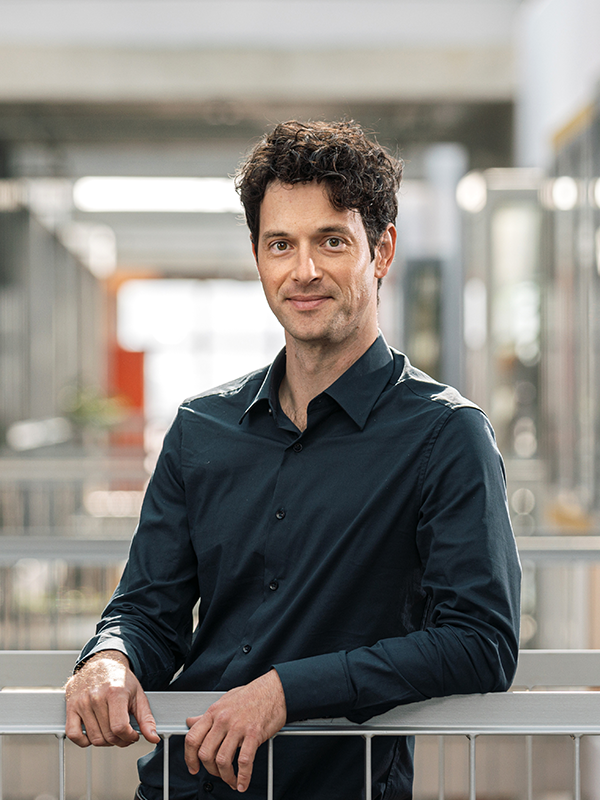
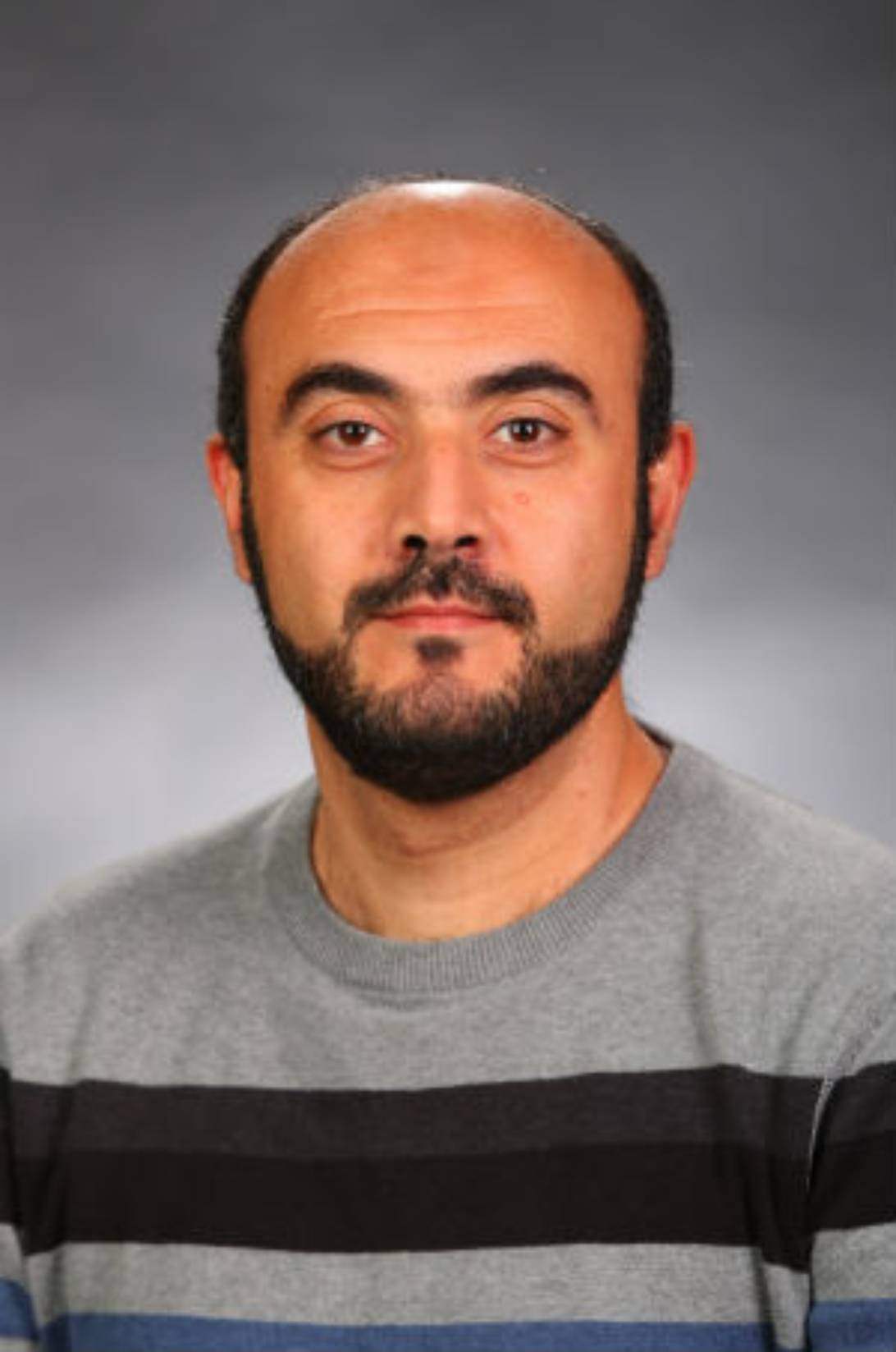
Manuel Gil Pérez is an Associate Professor in the Department of Information and Communication Engineering at the University of Murcia, Spain. His research focuses on cybersecurity, intrusion detection systems, trust management, and privacy-preserving data sharing in dynamic scenarios. University of Murcia (Faculty of Computer Science) Researcher in EU H2020/FP7 projects Key research areas include: Cyber deception frameworks for threat actor profiling Trust management in 5G/6G networks Decentralized federated learning security Privacy-preserving healthcare data systems Context-aware security mechanisms Recent publication trends highlight: Integration of knowledge graphs for threat analysis Moving target defense in distributed systems Standardization of trust frameworks for next-gen networks Adaptive risk assessment models Scientific contributions include: Design of antifragile deception systems Development of Fedstellar DFL platform Pre-standardization of reputation-based trust models Hardware fingerprinting for IoT security
Isaac Cho is an Assistant Professor in the Computer Science Department at the College of Engineering , Utah State University . His research focuses on immersive technologies and visual analytics, with specific expertise in virtual/augmented reality, human-computer interaction, and spatiotemporal data visualization. Research Interests: Dr. Cho's work bridges computational methods and human-centered design. Primary domains include: VR/AR interaction techniques (e.g., bimanual controls, olfactory interfaces) Immersive analytics for climate science and infrastructure Visual perception in tiled displays and virtual environments Geospatial and political data visualization Publication Trends: Recent articles (2023-2025) emphasize extended reality (XR) applications in industrial, environmental, and energy contexts. Key themes include sensory augmentation, collaborative digital twins, grid resilience visualization, and reproducible climate science tools. Awards & Students: No awards or supervised students are listed in available sources.
Marianne Gullberg is a Professor of Psycholinguistics at Lund University , where she serves as Director of the Lund University Humanities Lab and Huminfra , Sweden's national infrastructure for digital and experimental humanities research. Her work integrates second language acquisition , bilingualism , and gesture studies , focusing on semantic and discourse processing in multilingual contexts. Research Leadership: She leads the TEAM program on transdisciplinary approaches to multilingualism and co-founded the LAMiNATE network for language acquisition and teaching. Scientific Contributions: Known for pioneering research on speech-gesture integration in bilinguals, she co-established the Nijmegen Gesture Centre and directed the Max Planck Institute's Dynamics of Multilingual Processing group (2003-2009). Honors: Recipient of the 2019 European Second Language Association Distinguished Scholar Award , 2019 Swenson Prize , and 2014 Rausing Prize . Leadership Roles: President of the International Society for Gesture Studies , Vice-President of EuroSLA (2003-2007), and Non-resident Fellow at the Swedish Collegium for Advanced Studies . Academic Service: Former Associate Editor for Language Learning (2009-2014), Frontiers in Psychology , and Gesture (2000-2017). Key Research Themes include embodied cognition in language learning, multimodal communication, and cognitive-linguistic interactions in multilingual speakers. Her recent publications emphasize methodological innovations (e.g., smartphone-based tracking via the LANG-TRACK-APP ) and comparative studies of language exposure in migration vs. study abroad contexts. Scientific Awards: European Second Language Association Distinguished Scholar Award (2019) Swenson Prize in Humanities and Social Sciences (2019) Rausing Prize in Humanities (2014) Eva and Lars Gårding's Prize in Linguistics (2010) Infrastructure Development: As Director of Huminfra, she coordinates national digital humanities resources. Her editorial work spans top journals like Language Learning and Frontiers in Psychology .
Anind K. Dey is a Professor and Dean of the Information School at the University of Washington, with adjunct appointments in the Allen School of Computer Science & Engineering and Department of Human-Centered Design & Engineering. His research bridges human-computer interaction, machine learning, and ubiquitous computing, focusing on behavioral modeling through passive mobile sensing. Education: PhD, MS in Computer Science (Georgia Tech), MS in Aerospace Engineering, BASc in Computer Engineering Research Interests: Context-aware computing, health behavior modeling, fairness in AI, digital interventions for substance abuse and mental health His 2023-2022 publications address fairness in ubiquitous systems, biobehavioral rhythms, workplace sensing, and health interventions for college students and substance use. Scientific awards include ACM Fellow (2021), CHI Academy (2015), and multiple best paper recognitions across UbiComp, CHI, and MobileHCI conferences. Currently recruiting students for Autumn 2025, Dey collaborates with experts in mental health, sustainability, and medical research. No specific lab/team information is mentioned in available texts.
Sarah Morrison-Smith is an Assistant Professor of Computer Science at Hamilton College. Her research explores the intersection of psychology and computer science to enhance collaborative work environments and advance accessible technological design. She teaches courses in human-computer interaction and programming languages. Ph.D., University of Florida (Human-Centered Computing) M.S., Colorado State University (Computer Science) B.S., Montana State University (Computer Science) Morrison-Smith's research focuses on human-computer interaction , collaborative tools , and accessibility . She investigates natural user interfaces for mobile devices and wearables, develops ambient displays for team awareness, and studies bioinformatics software challenges. Her recent publications analyze data-sharing transparency , gesture interaction , and collaborative workflows across 15 studies from 2015-2025. Key themes include multimodal authentication, qualitative data analysis tools, and accessibility in scientific research. NSF CRII: RUI: Transparency and Access Control in Life Science Data Sharing (2022) Google Explore CS Research (exploreCSR) Morrison-Smith employs interdisciplinary methodologies combining user studies , dataset creation , and interface prototyping . Her work spans bioinformatics, plant phenotyping, and multimodal authentication systems.
Elina Valentynivna Tereshchenko serves as Associate Professor and Head of the Department of Systems Analysis and Computational Mathematics at Zaporizhzhia Polytechnic National University's Faculty of Computer Science and Technologies. Holding a Candidate of Physical and Mathematical Sciences degree (equivalent to PhD), she graduated from Dnipropetrovsk State University in 1992 with specialization in 'automatics and control in technical systems'. Her research spans discrete optimization , graph theory , and fuzzy logic systems , with recent publications focusing on ontology engineering, team formation algorithms, and agricultural data analysis. Current projects include ontology control systems in Neo4j (2025), competition-based team optimization models (2024), and sunflower cultivation ontologies for Ukrainian agricultural contexts. Her 15 most recent publications (2022-2025) reveal strong interdisciplinary work connecting computer science with agricultural informatics, cybersecurity, and economic modeling. Key trends include graph-theoretic formulations for team formation, fuzzy logic applications in access control, and optimization under resource uncertainty. Professional affiliations include: ORCID: 0000-0001-6207-8071 Scopus: 57202151469 Google Scholar: https://scholar.google.com/citations?user=DwEYAVcAAAAJ&hl=uk She teaches core subjects including discrete mathematics , optimization methods , algorithm theory , and decision-making theory . Her departmental leadership involves developing educational programs such as the bachelor's curriculum 'Intelligent Technologies and Decision Making in Complex Systems' (2021). Research infrastructure includes work on the HELIANTHUS ontology for sunflower cultivation and analytics modules for war damage assessment systems. Current projects integrate graph theory with competitive dynamics for high-performance team design.
Komninos Andreas is an Assistant Professor in the Computer Engineering & Informatics Department at the University of Patras, specializing in Mobile and Pervasive Computing, Internet of Things, and Human-Computer Interaction. His research spans intelligent environments, context awareness, and virtual reality applications. His research focuses on mobile text entry systems, psycho-cognitive modeling of human behavior, and accessibility for visually impaired users. Key areas include large language model applications for text entry evaluation, pseudo-haptic feedback in VR, and spatial multimodal alerts for industrial environments. He develops simulation tools like RoboType for realistic text entry evaluations and open-source cognitive models. Notable achievements include a Best Paper Award at the ACM Greek SIGCHI Chapter (2023) for VR text entry research. He serves as co-general chair for EICS'26 and holds leadership roles in MobileHCI'24 and UbiComp/ISWC'24 as Workshops & Tutorials Chair and Student Competition Chair respectively. Best Paper Award at ACM Greek SIGCHI Chapter (2023) Co-General Chair for EICS'26 Workshops & Tutorials Chair for MobileHCI'24 Student Competition Chair for UbiComp/ISWC'24 His publications demonstrate strong emphasis on empirical validation of text entry systems, with recent work integrating LLMs for affective phrase generation and psycho-cognitive modeling. He actively promotes open data practices in HCI research and has contributed to digital twin systems for environmental education and maritime industry applications.
Tuğrul TAŞCI serves as an Assistant Professor in the Department of Information Systems Engineering at Sakarya University's Faculty of Computer and Information Sciences, where he has maintained continuous academic service since 2001. His career progression includes Research Assistant positions across multiple university units before advancing to his current faculty role in 2016. His academic credentials include: Doctorate in Computer and Information Engineering (2014) from Sakarya University Institute of Science, thesis: Real-Time Motion Tracking with Particle Filtering Based on Data Fusing Master's degree in Computer and Information Engineering (2004) with thesis: Design of an Integrated Web-Based Distance Education System Bachelor's degree in Computer Engineering (2001) with thesis: Course Scheduling with Genetic Algorithms Dr. TAŞCI's research centers on Artificial Intelligence applications, particularly Natural Language Processing for Arabic text and Computer Vision . His work integrates particle filtering , data fusion , and optimization algorithms (e.g., Artificial Bee Colony, Firefly) to solve problems in text summarization, motion tracking, and image processing. Recent publications demonstrate expansion into deep learning for industrial defect detection and time series analysis. Analysis of his 2019-2024 publications reveals three dominant research trajectories: (1) Arabic NLP with focus on extractive summarization using PageRank and word embeddings, (2) Computer vision systems for motion tracking and text detection leveraging particle filters and curvature features, and (3) Hybrid optimization techniques applied to diverse domains from emergency management to customer churn prediction. Current academic advising activities and research grant details are not publicly documented in available sources. Similarly, no institutional laboratories or research teams are explicitly associated with his profile in the provided materials.
Bjørn Jonny Villa serves as Associate Professor at the Norwegian University of Science and Technology (NTNU), specializing in computer networking with emphasis on adaptive video streaming and Quality of Experience (QoE) optimization. His research addresses critical challenges in home networks, public WiFi security, and bandwidth management, as evidenced by publications spanning 2010-2014 in top venues including IEEE, Springer, and international journals. Villa earned his PhD from NTNU in 2014 with the dissertation "Enhancing Quality Aspects of Adaptive Video Streaming in Home Networks," establishing foundational work for his subsequent research. His academic journey reflects deep specialization in network performance optimization for multimedia delivery systems. Core research interests include adaptive HTTP video streaming, QoE measurement and optimization, network security vulnerabilities (particularly in public WiFi), and active probing techniques for bandwidth estimation. Villa employs experimental user studies and traffic analysis to develop practical solutions for improving streaming fairness and network resource allocation, with significant contributions to understanding how burst durations and traffic shaping impact user-perceived quality. Analysis of Villa's publication timeline reveals consistent focus on video streaming challenges: early work (2010-2011) established monitoring frameworks and home gateway optimization, mid-period research (2012-2013) advanced fairness algorithms and traffic shaping, while his 2014 output expanded into security implications of public networks. His collaborative approach is evident through recurring partnerships with Poul Einar Heegaard and Anders Instefjord across multiple publications. No scientific awards are documented in the available records. Similarly, no information regarding research grants or student supervision appears in the provided materials. Villa actively engages with the research community through conference presentations including Forskningsdagene (2013) and NIK conferences, and contributes to public discourse through media appearances in Aftenposten and Inside Telecom. His work operates within NTNU's telecommunications research ecosystem, focusing on practical implementations of network optimization techniques for real-world video delivery systems.
Ai. Prof. DUX is a Lecturer in Artificial Intelligence Engineering at Near East University . Their research spans public health, medical informatics, and behavioral science, with a focus on health behaviors and social media analysis in Northern Cyprus and Türkiye. Current affiliation: Near East University, Department of Artificial Intelligence Engineering Research themes: Public Health, Behavioral Science, Social Media Analysis DUX’s work analyzes health behaviors such as tobacco use, vaccine hesitancy, and health-seeking practices through cross-sectional studies, social media audits, and clinical data analysis. Their publications highlight collaborations in Northern Cyprus and Türkiye, addressing pandemics, reproductive health, and environmental risks. Recent articles examine smoking trends among medical students , HPV vaccine acceptance , caesarean rates , and social media accuracy in family planning . These studies often employ cross-sectional methodologies and policy analysis in regional healthcare contexts.
Veljko Pejović is an Associate Professor at the Faculty of Computer and Information Science (FRI), University of Ljubljana, Slovenia, where he also serves as Head of the Computer Communications Laboratory. His research focuses on mobile computing with special emphasis on resource efficiency in mobile and IoT environments. His educational background includes a PhD in Computer Science from the University of California, Santa Barbara (2012) and a dipl. ing (BS) from the University of Belgrade, Serbia (2006). Pejović's research interests center around mobile deep learning, approximate computing, and resource-efficient computing. His work explores how computation accuracy can be dynamically adapted based on contextual factors to optimize resource usage without significantly compromising user experience. He has made significant contributions to mobile sensing, machine learning on resource-constrained devices, and security in IoT environments. His recent publications reveal a strong trend toward making AI more efficient and accessible on mobile and edge devices, with particular focus on approximate computing techniques, federated learning frameworks, and context-aware adaptation of computational resources. His research spans applications from precision agriculture using UAVs to behavioral authentication in IoT environments and mental health inference from mobile sensor data. Scientific Awards: 10-Year Impact Runner Up Award at ACM UbiComp for InterruptMe work Outstanding research achievement award for 2024 by the Faculty of Computer and Information Science Best Paper Nominee (top 4%) at UbiComp'14 for InterruptMe Pejović actively mentors PhD and master's students, with numerous theses resulting in workshop, conference, and journal publications. He serves as Associate Editor for ACM IMWUT and ACM JCSS, and has held organizational roles in major conferences including ACM UbiComp 2025. His research is supported by multiple significant projects including approXimation for adaptable diStributed artificial intelligence (ARIS), CODA, AgriAdapt, and CARMA. His laboratory, the Computer Communications Laboratory at FRI, focuses on developing practical systems and frameworks for resource-efficient mobile computing, with several open-source tools and datasets publicly available for the research community.
Dr. Tazar Hussain is a Lecturer in Computing Science at the School of Computing, Ulster University , where he teaches deep learning and IoT. He completed his PhD at Ulster University on IoT management frameworks for decision-making under unreliability and worked as a part-time Research Associate on the BTIIC 'Data to Action' project. Previously, he served as a Lecturer at King Saud University (9 years) , securing research funding from NPST and DSU. Education: PhD (Ulster University), MSc in Data Telecommunication and Networks (Salford University), Bachelor of Information Technology (Sarhad University) Research Focus: Deep Learning, NLP, IoT Security, Explainable AI, and Human Activity Recognition (HAR) Projects: Active member of the PwC Advanced Engineering and Research Centre (2021-2026), specializing in Few-Shot Learning and Smart Cities His work bridges IoT systems and cybersecurity , with a focus on intrusion response mechanisms. Publications span machine learning applications in security, risk-based decision frameworks , and C4I systems . He is a certified IBM Security Specialist and trained in smart cities and cloud technologies. Key Trends: 1) Application of Explainable AI in pathology LIS systems, 2) Cognitive modeling for IoT cyberattack responses, 3) Risk-based decision-making in IoT environments, 4) Cost-sensitive intrusion response systems, 5) Formal methods (e.g., Situation Calculus) in cybersecurity Collaborations include Invest Northern Ireland and BTIIC , with expertise aligning to UN Sustainable Development Goals in digital security and smart infrastructure.
Hans Perrild serves as a Clinical Associate Professor in the Department of Clinical Medicine at the University of Copenhagen's Faculty of Health and Medical Sciences. His clinical specialization focuses on Internal Medicine with emphasis on Endocrinology, particularly diabetes care and management. Based at Bispebjerg Bakke 23 in Copenhagen NV and affiliated with Blegdamsvej 3 in Copenhagen N, he maintains active clinical and research roles within the Danish healthcare system through Region H. Dr. Perrild's research primarily centers on diabetes care optimization, with particular emphasis on medication management for complex patients, especially those with polypharmacy needs. His work frequently addresses challenges in caring for socially vulnerable diabetic populations and investigates the effectiveness of various treatment approaches including metformin therapy, insulin regimens, and advanced carbohydrate counting techniques. His research methodology heavily features randomized clinical trials and population-based studies, often focusing on Danish patient cohorts. Analysis of his recent publication record reveals a strong focus on practical clinical interventions for type 2 diabetes management, with recurring themes including medication review processes, treatment optimization for complex patients, and addressing healthcare disparities among vulnerable populations. His work bridges clinical practice with research, often examining how theoretical treatment approaches translate to real-world patient outcomes in the Danish healthcare context. Dr. Perrild has established extensive collaborative networks, as evidenced by his 104 research outputs including 100 journal articles, 2 book chapters, 1 article in proceedings, and 1 letter. His work has garnered attention across multiple platforms with mentions in news outlets, policy documents, academic social media, and substantial readership on platforms like Mendeley. His research has been referenced in policy sources and featured in videos, demonstrating translational impact beyond academic circles. His clinical work appears closely integrated with research activities, particularly through medication review processes and implementation of structured care approaches for diabetes patients. The collaborative nature of his work suggests active participation in multidisciplinary research teams focused on improving diabetes care outcomes across various patient populations.
Hayssam El-Razouk serves as Associate Professor in the Electrical and Computer Engineering Department at California State University, Fresno within the Lyles College of Engineering. He holds a PhD in Electrical and Computer Engineering from Western University (2015) and maintains active industry connections through prior roles at IBM Canada and RedIron Technologies. Education: PhD in Electrical and Computer Engineering, Western University, London, Ontario, Canada (2015) MESc in Electrical and Computer Engineering, Western University, London, Ontario, Canada (2006) BEng in Electrical and Computer Engineering, Beirut Arab University, Beirut, Lebanon (2002) - First Rank Research Focus: Dr. El-Razouk's work centers on Hardware Security and Cryptographic Hardware , with significant contributions to VLSI Circuits Design for finite field arithmetic. His research bridges theoretical cryptography with practical implementations, emphasizing defect tolerance in digital circuits, data compression techniques, and pseudo-random sequence generation for secure communications. Current projects address emerging threats in embedded systems and IoT security. Publication Trends: Analysis of his 15 most recent publications (2025-2016) reveals consistent specialization in GF(2^m) arithmetic optimization using Gaussian Normal Basis and Polynomial Basis representations. His work demonstrates progressive refinement from foundational finite field operations (2016-2019) toward integrated security solutions (2020-2025), with increasing focus on side-channel attack resistance and hardware-software co-design for real-world applications including automotive systems and smart homes. Scientific Recognition: Natural Sciences and Engineering Research Council (NSERC) Canada Graduate Scholarship-Doctoral (2011-2015) Best Presenter Award, IEEE CCWC 2023 Best Paper Award, IEEE CCWC 2021 Outstanding Faculty Publication Award, CSU Fresno (2019, 2020) Jamal Abdul Nassir Golden Medal Distinction Award (2002) Research Funding and Mentorship: Dr. El-Razouk secured a $378,002 Department of Defense grant (W911NF-21-1-0210) in 2021 for hardware security research. He teaches core courses including ECE 150 (Cloud and Cybersecurity) and ECE 156 (Cryptography), supervising senior design projects on topics like RFID security and temperature monitoring systems. As an IEEE and ASEE member, he actively contributes to conference program committees and journal reviews.
Ross Greer is an Assistant Professor in the Department of Computer Science & Engineering at the University of California Merced. He leads the Mi³ Lab, focusing on machine intelligence, human-agent interaction, and safe autonomous systems. Education : B.S. and B.A. in EECS, Engineering Physics, and Music from UC Berkeley (2015), M.S. in Electrical & Computer Engineering from UC San Diego (2018), Ph.D. in Electrical & Computer Engineering at UC San Diego (2021) under Mohan Trivedi and Shlomo Dubnov. His research explores computational intelligence for open-world adaptability, robustness to rare events, and safety in chaotic environments. Key applications include autonomous driving, driver state analysis, trajectory prediction, and AI-assisted musical creativity. Recent publications emphasize vision-language models, active learning for 3D object detection, and safety metrics. Awards include the 2024 Interdisciplinary Research Award, Henry Booker Award for Ethical Engineering, and multiple best poster/grand prizes. Scientific Awards : 2024 Interdisciplinary Research Award 2024 Henry Booker Award for Exemplary Ethical Engineering Postdoctoral Networking Fellowship (Germany's Academic Exchange Service) Grand Prize (AWS Automotive Day competition at IEEE Intelligent Vehicles Symposium, 2023) Best Poster Awards (2021/2023 Jacobs Research Expo) He also co-authored the textbook Deep and Shallow: Machine Learning in Music and Audio (Chapman & Hall, 2023) and serves as a music director for UCSD's Symphonic Student Association and UC Merced's marching band.