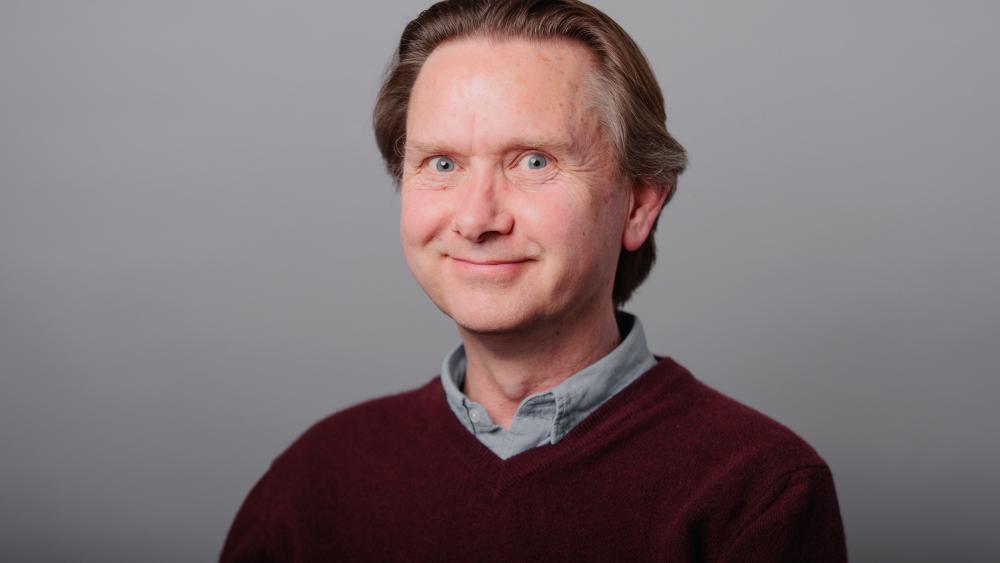
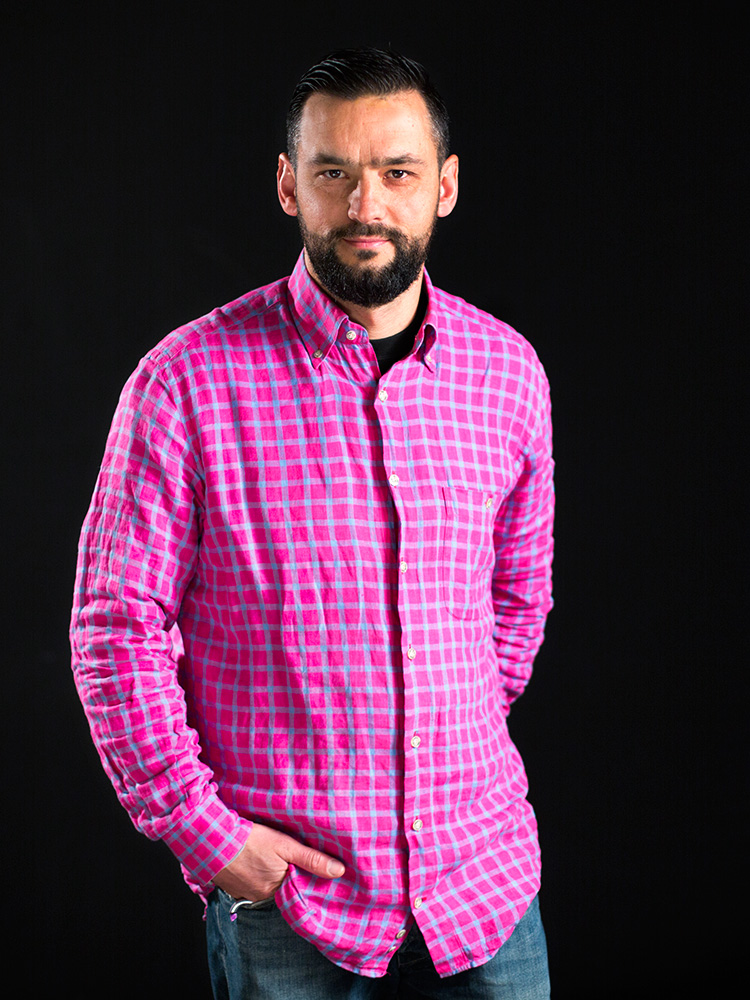
Professor Catherine Allerton is a faculty member in the Department of Anthropology at the London School of Economics and Political Science (LSE). She specializes in the materialities and mobilities of everyday life, with a focus on place, kinship, childhood, migration, and temporalities in island Southeast Asia. Her fieldwork spans a two-placed village in Flores, Indonesia, and Kota Kinabalu, Sabah, East Malaysia. Her research emphasizes interdisciplinary ethnographic methods, particularly involving child participants to challenge adult-centric approaches. She launched the 'Childhood in the Migrant City' exhibition using child-taken photographs from her ESRC-sponsored research. Current projects include exploring discordant temporalities between migration systems and childhood development, as well as completing a book manuscript on moral economies of belonging. Key research interests include the social and political dimensions of landscapes, the anthropology of children, and the impacts of legal status on marginalized youth. She teaches an LSE course on 'Children and Youth in Contemporary Ethnography' and actively supervises PhD students focusing on childhood, migration, citizenship, and Southeast Asian studies. Her work addresses exclusionary practices tied to race, religion, and legal frameworks in Malaysia and Indonesia. Languages spoken include Bahasa Manggarai, English, Indonesian, and Malay. No part-time status is mentioned, indicating full-time faculty commitment.
Mesha M Maren is an Associate Professor of the Practice of English at Duke University's Trinity College of Arts & Sciences since 2023. She holds an M.F.A. from Queens University of Charlotte (2014). Her academic career includes prior roles as Assistant Professor of the Practice (2019-2023) and extensive teaching in creative writing. Maren’s work focuses on narrative-driven creative writing, particularly exploring themes of rural life, family dynamics, and social issues through fiction and literary essays. Her acclaimed novel Sugar Run (2019) examines the complexities of Appalachian culture. She has received prestigious fellowships including the Fulbright Research Award (2018) and MacDowell Colony residency (2015). Recognition highlights include the Thomas Wolfe Fiction Prize (2015) and multiple short story contest victories. Her teaching portfolio spans introductory creative writing courses to advanced fiction workshops. Maren’s research interests intersect literary arts with sociocultural narratives, evident in publications like West Virginia in Transition (2019) and Milk River (2019). She actively engages in cultural initiatives through Duke's arts programs, co-teaching interdisciplinary courses on New York’s cultural landscape. Awards & Fellowships: Fulbright Research Award (2018) MacDowell Colony Fellowship (2015) Thomas Wolfe Fiction Prize (2015) Multiple short story contest victories (2011–2012) Teaching emphasizes craft development in fiction writing, with courses like Advanced Workshop in Fiction and Writing the City: New York as Subject . No formal lab affiliations are noted, though her creative projects often involve collaborative cultural research initiatives.
Dr. Galina Miazhevich is a Senior Lecturer at the School of Journalism, Media and Culture (JOMEC) at Cardiff University, UK. Previously, she served as a lecturer at the University of Leicester's School of Media, Communication and Sociology (2013-2017) and as the Gorbachev Media Research Fellow at the University of Oxford (2008-2012). Her academic career focuses on media representations in post-communist contexts, with particular expertise in Russian and Eastern European media landscapes. Dr. Miazhevich earned her PhD from the University of Manchester, where she subsequently worked for two years as a Research Associate on an AHRC-funded project examining representations of Islam as a security threat. Her educational background has informed her research trajectory, which bridges media studies, political communication, and cultural analysis of post-Soviet societies. Dr. Miazhevich's research spans several interconnected domains: media representations of Islam and multiculturalism in Europe; media and democracy in post-communist Europe; gender, media, and emergent forms of post-Soviet identity; feminism; Eurovision and popular culture; and diaspora, transnationalism, and media. Her work consistently examines how media shapes and is shaped by political transitions, identity formation, and social movements in post-Soviet contexts, with particular attention to marginalized voices and resistance practices. Analysis of Dr. Miazhevich's recent publications reveals a consistent focus on resistance, identity, and power dynamics in post-Soviet media environments. Her work increasingly examines gender and sexuality as political categories, particularly through the lens of feminist and LGBTQ+ resistance to authoritarian regimes. The Eurovision Song Contest serves as a recurring analytical framework for understanding cultural diplomacy and nation-branding strategies. More recently, her research has pivoted toward documenting anti-war resistance following Russia's invasion of Ukraine, examining how celebrities and media figures navigate political dissent under authoritarian conditions. Dr. Miazhevich has received several notable recognitions for her scholarly contributions: AHRC Leadership grant 'A Quiet Revolution: Discursive Representations of Non-heteronormative Sexuality in Russia' (2018-2020, £250,960) Visiting Fellowship at the Davis Centre for Russian and Eurasian Studies, Harvard University (Fall 2023) Fellow of the Higher Education Academy (FHEA) Associate Editor for the Oxford Encyclopedia of Race, Ethnicity, and Communication (2024) Dr. Miazhevich actively mentors the next generation of scholars, currently co-supervising PhD students Diyana Dobreva (with Professor Martin Innes) and John Tasker (with Professor Paul Bowman). She welcomes PhD proposals in areas including digital culture and resistance, media management and misinformation, media and democracy, representation of minority groups, post-communist identity politics, gender and feminism, Eurovision and popular culture, and geopolitics and nation-branding. Her grant portfolio demonstrates sustained success in securing competitive research funding, including leadership of an AHRC grant and participation in the Academy of Finland project FEMCORUS (2021-2025). Dr. Miazhevich is deeply engaged with academic communities, serving as co-convenor of the (Digital) Media and Culture group at the British Association for Slavic and East European Studies (BASEES) since 2016 and as a member of the Advisory Board of the European Communication Research and Education Association (ECREA) since 2021. Her work extends beyond academia through public engagement, including invited talks at prestigious institutions like Harvard University and participation in policy-relevant events at Chatham House addressing LGBTQ+ politics in Russia.
Chia-rong Wu serves as Associate Professor in the Department of Global, Cultural and Language Studies at the University of Canterbury, New Zealand, holding this position since June 2019. His academic work centers on Sinophone literature, film, and video games through postcolonial theories, Indigenous studies, diaspora, and ecocriticism frameworks. Dr. Wu earned his PhD in Comparative Literature from the University of Illinois at Urbana-Champaign. His scholarly contributions include two monographs: Supernatural Sinophone Taiwan and Beyond (Cambria Press, 2016) and Remapping the Contested Sinosphere: The Cross-cultural Landscape and Ethnoscape of Taiwan (Cambria Press, 2020). He has co-edited Taiwan Literature in the 21st Century: A Critical Reader (Springer, 2023) and is preparing The Southern Discourse in Sinophone Literature: Moving Borders (Routledge, forthcoming September 2025). His research examines cultural production across Taiwan and the Sinophone world, with particular focus on how literature, film, and video games engage with historical trauma, identity formation, and cultural politics. Recent projects explore youth narratives in Taiwanese horror video games, Indigenous perspectives on Oceanic Taiwan, and the global South discourse in Sinophone literature, revealing connections between transnational migration, racial dynamics, gender politics, and indigenous awareness. Dr. Wu serves as executive editor and Advisory Board member of Taiwan Lit and the Global Sinosphere (ISSN: 2994-6816), and holds positions on the Board of the American Association for Chinese Studies, the International Advisory Board of Interdisciplinary and Transcultural Approaches to Chinese Literature (Routledge Book Series), and the Cultural History Editorial Advisory Board (Bloomsbury Book Series). Currently supervising PhD students in Sinophone literary and cultural studies, Dr. Wu is developing a new monograph focused on transmedia narratives of youth politics, continuing his exploration of how contemporary media forms engage with political consciousness and historical memory in Taiwan and beyond.
Yavuz Köse is a University Professor of Turkology at the Department of Near Eastern Studies, Faculty of Philology and Cultural Studies, University of Vienna. He currently serves as Head of the Institute of Oriental Studies (since June 2024) and previously as Deputy Head (October 2022-June 2024). Before joining the University of Vienna in 2019, he was W3 Acting Professor for Turkology at the Asia-Africa Institute of the University of Hamburg (2010-2018). His educational background includes a Master of Arts in History and Culture of the Near East as well as Turkology, Psychology and Economics from Ludwig Maximilian University of Munich (2001). Professor Köse's research focuses on social, economic and consumer history of the Ottoman Empire and Turkey, environmental and tourism history, history of science, and migration and workers' history. His work examines Ottoman social structures, economic transformations, cultural heritage, and identity formation, with particular attention to urban contexts and cross-cultural interactions. His recent publications show a strong emphasis on Ottoman social history, with particular attention to conversion narratives, cultural exchanges, and urban economic structures. The 2025 edited volume Becoming Ottoman represents a significant contribution to understanding identity formation in the Ottoman Empire. Among his notable recognitions is the Emerald Literati Award (2020) Professor Köse has supervised numerous doctoral students at both the University of Vienna and University of Hamburg, with research topics spanning cultural heritage in Turkey, migration histories, women's work and property, and Ottoman economic history. He has secured significant research funding including projects funded by FWF, DFG, and VolkswagenStiftung, such as the current 'Lebensmittelhändler von Istanbul' project examining Istanbul grocers as urban actors in supply chains. He is actively involved in academic leadership, serving as Head of the Institute of Oriental Studies and Deputy Spokesperson of the Doctoral School for Philological and Cultural Studies. He co-founded and serves as Editor-in-Chief of the Diyâr. Journal for Ottoman, Turkish and Middle Eastern Studies and is a member of numerous scholarly organizations including the Society for Armenian Studies and the Society for Turkology, Ottoman Studies and Turkey Research.
Associate Professor Marcus Mietzner specializes in the politics of Indonesia, focusing on democratization, electoral systems, and the role of the military. He holds a PhD from the Australian National University (ANU) and an MA from Goethe University Frankfurt. His research explores Indonesian political parties, campaign financing, and the presidency in democratic Indonesia. Mietzner has authored over 95 publications and led projects such as the Indonesia Project Phase V and SEARBO (Supporting the Rules-Based Order in Southeast Asia). His work analyzes Indonesia’s political dynamics, including Jokowi’s majoritarianism, elite collusion, and democratic decline. Notable articles discuss Indonesia’s 2024 elections, autocratisation limits, and military oversight crises. Mietzner has contributed to understanding Indonesia’s post-authoritarian trajectory, emphasizing institutional resilience and elite competition. Research supervision focuses on Southeast Asian electoral politics and political parties. His projects address governance challenges, constitutional reforms, and civil society’s role in resisting democratic erosion. Mietzner’s interdisciplinary approach combines historical analysis with contemporary political developments, positioning him as a leading scholar on Indonesia’s political landscape.
Nancy Reynolds is an Associate Professor of History at Washington University in St. Louis, with affiliate appointments in Women, Gender and Sexuality Studies and Jewish, Islamic, and Middle Eastern Studies. Her research focuses on environmental and social-cultural history of twentieth-century Egypt, examining political-material intersections in built environments from department stores to dams. Her academic background includes: PhD in History from Stanford University MA in History from Stanford University BA from Harvard University Reynolds' scholarship spans Environmental History , Social History , and Urban Studies , with emphasis on how mundane objects (socks, store floors) and monumental structures (Aswan Dam, temples) reflect nationalist struggles. Her work critically engages gender dynamics and decolonization , revealing how consumption patterns and urban spaces became sites of political contestation in semicolonial Egypt. Her 13 publications (2000-2024) demonstrate an evolution from consumer culture studies (department stores, Cairo Fire) to environmental history (Aswan Dam, desert ecologies), with recent collaborative work on Middle Eastern wastelands and sustainable architecture. The 2024 corpus particularly emphasizes political ecologies and materialized absence. Her scientific recognition includes: Roger Owen Book Award (2013) for A City Consumed American Council of Learned Societies Fellowship (2012) Bernadotte E. Schmitt Grant (2010) Stanford Humanities Center Geballe Dissertation Prize Social Science Research Council Fellowship Reynolds actively shapes graduate education as former administrator of History and JIMES PhD/MA programs. Her research is sustained by major grants including a Mellon Sawyer Seminar (2016-2018) and Mellon New Directions Fellowship (2014-2016), both supporting transregional collaborations on environmental humanities. She co-leads the Grounding the Ecocritical research collective with Dr. Anne-Marie McManus, producing the "Following Absence" symposium and CSSAAME special section on Middle Eastern wastelands.
Katrin Bromber is a German Researcher at the Centre for Modern Oriental Studies in Berlin, where she has led the research group "Progress and its Discontents: Ideas, Practices, Materiality" since 2014. Her career spans senior research roles at ZMO and academic teaching positions at the University of Vienna. Nationality: German. Language skills: Native German, fluent English/Swahili, moderate Amharic, good reading knowledge in French/Russian, basic Tigrinya. Habilitation (2009–): African Studies, University of Vienna PhD (1993): African Linguistics, University of Leipzig MA (1988): Swahili Studies, University of Leipzig Katrin Bromber's research interrogates intersections of body politics , sports history , Swahili linguistics , and Ethiopian modernity . Her work traces how physical culture, media representation, and colonial/imperial narratives shape national identities across Africa and Asia. Current focus: "Progress" as contested concept in Ethiopian and Gulf urbanism. Key article trends reflect her translocal methodology: 2017 studies on Ethiopian stadiums and fitness culture ; 2014-2013 publications analyzing East African military press , sports branding in the Gulf , and Swahili poetry ; 2007-2000 works on colonial linguistic politics , Indian Ocean slavery , and German colonial Swahili promotion . Recurring sub-fields: body as political text, translocal modernity, media historiography. Scientific Awards: Research Grant of the Berlin City Council (1999-2000): Gendered Slavery study Service to the Scientific Community: Chairwoman, Academic Association for Horn of Africa Studies (2012–) Editorial Advisory Board - Stichproben. Vienna Journal of African Studies (2015–) Editorial Advisory Board - Studies of Department of African Languages and Cultures (2015–) Teaching Experience: Textlinguistics, Mediacommunication, African Linguistics, Swahili (elementary/advanced), Swahili Literature, Swahili in Arabic Script at Leipzig, Humboldt-Berlin, Free Berlin, and Vienna universities Anthropology of the Body at Mekelle University Summer School Field Research: Tanzania (1993-2003): Swahili Poetry, Intellectual History Kenya (2005): Indian Ocean WW2 UAE/Bahrain (2009): Sports and Body Cultures Ethiopia (2009-2015): Sports, Body Politics
Sergiusz Michalski is a Professor at the Institute of Art History within the Faculty of Philosophy at the University of Tübingen, where he has held his position since 2001. Previously, he served as Managing Director of the Art History Institute at TU Braunschweig from 1996-2001 and completed his Habilitation at Goethe University Frankfurt in 1995. His distinguished academic career spans multiple European institutions including universities in Munich, Leipzig, Frankfurt, Kiel, Fribourg, Zurich, and Torun. Michalski's research focuses encompass Reformation and Art, Mannerism, 16th and 17th century Dutch and Flemish painting, Art theory, 18th century French painting, 20th century art, Public monuments, and Methodological questions in art history. His scholarly output includes approximately 270 publications with notable books such as 'The Reformation and the Visual Arts' (1992), 'Public Monuments' (1998), 'L'art de l'Europe Centrale' (2008), and 'Einführung in die Kunstgeschichte' (2015). His recent publications demonstrate continued engagement with contemporary issues in art history, particularly in public monument discourse, digital methodologies, and Central European art traditions. Michalski has edited several prominent art history journals including Ars Artibus et Historiae, Folia Historiae Artium, and Ikonotheka. Member of Royal Swedish Academy for Literature and Humanities Member of Polish Academy for Sciences and Arts Member of Göttingen Academy of Sciences Member of Academia Europaea / The Academy of Europe London Member of Latvian Academy of Sciences Member of Council of Experts of European Science Foundation Michalski maintains an active research profile with recent publications addressing digital methodologies in art history, contemporary monument discourse, and Central European art traditions. His international scholarly network is reflected in his editorial roles and academy memberships across Europe.
Dr Crispin Branfoot is a Reader in the History of South Asian Art and Archaeology at SOAS University of London, affiliated with the School of Arts and the Department of History of Art and Archaeology. He holds a BA in Ancient History and Archaeology from Manchester University, and an MA and PhD in Art and Archaeology from SOAS. His research focuses on the arts of southern India from the 14th to 20th centuries, with emphasis on Hindu temple architecture, colonial-era renovations, and the intersection of photography, archaeology, and conservation. He has supervised four PhD students examining topics ranging from temple iconography to colonial paper-making practices. His work explores how sacred spaces like the Minakshi-Sundareshvara temple in Madurai were reconfigured through colonial and post-colonial interventions, while also analyzing pilgrimage routes, portraiture traditions, and the legacy of the Vijayanagara Empire. He has contributed to major publications such as India: A History in Objects (2022), and his research bridges material culture studies with postcolonial theory. He previously worked at De Montfort University and the British Museum, where he gained expertise in South Asian art curation and historical documentation.
Bonnie Effros is Professor and Head of the Department of History at the University of British Columbia since 2022. With a PhD from UCLA and BA from Brandeis, her academic journey spans prestigious roles at University of Liverpool, University of Florida, Binghamton University, and Southern Illinois University. A Fellow of the Royal Historical Society and recipient of the French Colonial Historical Society’s Alf Andrew Heggoy Book Prize, she shapes historical discourse through her work on archaeology, gender, and colonial legacies. PhD, History, UCLA (1994) MA, History, UCLA (1990) BA, History, Brandeis University (1987) Her research bridges late antique/early medieval archaeology and 19th-century antiquarianism , focusing on France and its colonial possessions. Recent projects examine Père Camille de la Croix ’s contested Christian archaeology in France and Salomon Reinach ’s assimilation politics. She connects material culture to gender dynamics, Christian conversion debates, and colonial power structures through extensive fieldwork in Vatican archives and French/British collections. Key trends in her 15 most recent publications include: analyzing 19th-century museum-building in Algeria; investigating gender through Merovingian burial practices; and exploring colonial narratives via artifact circulation. Her work often intersects with museum studies , gender archaeology , and historiographical critique . French Colonial Historical Society’s Alf Andrew Heggoy Book Prize (2019) SSHRC Insight Development Grants (2023-2025, 2025-2027) Royal Historical Society Fellowship University of Florida’s International Educator of the Year (2014) As a graduate supervisor, Effros mentors students in late antique/early medieval European history with colonial contexts, emphasizing Latin proficiency and multilingual research. She co-edits the Brill Series on the Early Middle Ages and Studies in Late Antiquity , while serving on the Medieval Academy of America’s Council. Her pandemic-era work on Liverpool silversmith Joseph Mayer’s collections demonstrates continued engagement with cultural patronage and museum provenance issues.
Jose Antonio Hinojos Morales is a contemporary artist and researcher affiliated with Miguel Hernández University of Elche, where he completed his PhD in 2020. His academic work focuses on contemporary painting practices within the broader context of visual arts research. His research interests center around pictorial languages and procedures in contemporary contexts , with particular emphasis on the relationship between landscape, nature, and culture. He investigates how landscapes function as cultural constructs and explores innovative methodologies in the representation of the human face through art. His work also engages with decolonial thought and aesthetics, media archaeology, and expanded painting techniques. Hinojos Morales' artistic output demonstrates significant trends in contemporary Spanish art, particularly in the exploration of spiritual, philosophical, and scientific concepts through visual media. His work often challenges conventional perceptions and hegemonic epistemological positions, creating dialogues between traditional and contemporary artistic approaches. Second place, VIII International Painting Competition 'Miradas 2018', Chicago (USA), 2018 Second Prize, XIX Pastor Calpena Painting Prize, Aspe (Alicante), 2015 First Prize, XLVI National Painting Contest Vila de Sant Joan d'Alacant, 2013 First Prize, III National Painting Competition No to Fear, La Nucía (Alicante), 2013 Third Prize, XVII National Painting Competition City of Antequera, Antequera (Málaga), 2013 As an educator and researcher, Hinojos Morales has coordinated the Altea Artistic Residency program, directing multiple landscape-focused scholarship-residencies that support emerging artists. His work bridges academic research with professional artistic practice, contributing to both scholarly discourse and the contemporary art scene in Spain.
Dr. Daniel Allen is a Lecturer in Human Geography at Keele University's School of Life Sciences, specializing in human-animal relations. An IUCN/SSC otter specialist, his research on otter conservation and dog theft informs policy and advocacy. He led an Environment Agency project on otter predation perceptions and founded the 'Pet Theft Reform' campaign, influencing UK legislation (Pet Abduction Act 2024). His research examines human-animal bonds, including dog theft impacts and mental health benefits. Current projects include 'No pets! Young people’s transitions to campus living,' funded by the Society for Companion Animals Studies. Teaching includes modules on Nature Conservation, Space and Society, More-than-human Geographies, and Animals and Society. He supervises PhD student Emma Randall on eco-therapy. Awards include the Daily Mirror’s Peoples Pet Awards Special Recognition (2021) and the PM’s Points of Light Award (2022). Publications emphasize spatial justice, animal advocacy, and policy impacts, with recent work on pet theft trends and human-animal bonds in crises.
Prof. Michael Janoschka is a Professor of Regional Studies at the Karlsruhe Institute of Technology (KIT), leading the Institute of Regional Studies since June 2022. His work focuses on urban transformation, housing market dynamics, and participatory research methods. He holds a doctorate from Goethe University Frankfurt and has taught internationally in institutions including the University of Leeds, Universidad Autónoma de Madrid, and Universidad de Santiago de Chile. Research interests include financialization of housing markets, urban displacement processes, and governance innovations. He has conducted fieldwork across Latin America, Southern Europe, and German urban regions like Leipzig and Karlsruhe. Notable projects include CONTESTED_TERRITORY (EU-funded, 2025), CoprodAction (Ecuador urban co-production study), and the IECO Institute for Eco-Industrial Development (BMBF-funded). Publications span over 20 years, with key works on gentrification dynamics, post-crisis urban landscapes, and transnational real estate investment. His 2016 study Gentrification, displacement, dispossession established frameworks for understanding Latin American urban processes. Current research emphasizes spatial justice and the 'Right to the City' discourse. Education: Humboldt University of Berlin (undergraduate), Goethe University Frankfurt (PhD) Labs/Teams: Institute of Regional Studies research group, IECO eco-industrial development initiative Grants: Over €5M in EU and German federal funding since 2020
HUANG Fei is a Professor of Chinese History and Society in the Department of Chinese Studies at the Faculty of Humanities, University of Tübingen, Germany. She has held this position since 2020, following a Junior Professorship at the same institution from 2014 to 2020. Her academic journey began with a BA in History from Sun Yat-sen University (Guangzhou, 2005) and culminated in a PhD in Chinese Studies from Leiden University (2012). University: University of Tübingen School: Faculty of Humanities Department: Department of Chinese Studies Academic Rank: Professor Email: fei.huang@uni-tuebingen.de Her research spans an interdisciplinary terrain, combining landscape studies, environmental history, history of the body, cultural geography, historical anthropology, art history, and material culture studies . Her work primarily investigates China’s historical development from the 16th to the 20th century, with a regional focus on Southwest China, especially Yunnan, and thematic attention to frontier dynamics, urban environments, and the interplay between natural resources and cultural memory. Professor Huang’s recent publications reveal a consistent and evolving scholarly trajectory centered on the transformation of natural and urban landscapes. Her research on hot springs —such as Huaqing Hot Springs—explores their roles in public health, urban planning, and ideological representation in modern China. Her earlier work on Dongchuan examines how imperial and local actors reshaped frontier landscapes through cultural representation, religious practice, and economic interests. Articles on sulfur manufacturing, bathing culture, and Tusi succession highlight her ability to connect local practices with broader global and environmental networks. Scientific Awards and Recognition: No specific awards or fellowships are mentioned in the provided texts. Advising and Grants: She supervises PhD and Master’s theses in Chinese history and culture, though specific student names are not listed. No explicit mention of grants or funded research projects is made in the texts, but her extensive publication record in top-tier journals suggests active research engagement. Labs and Research Teams: She is affiliated with the Department of Chinese Studies at the University of Tübingen and participates in interdisciplinary research within the Faculty of Humanities. Her work often involves collaboration with scholars in anthropology, geography, and environmental history, as evidenced by her co-taught courses and international academic engagement.