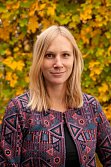
Dr. Veronika Nagy is an Assistant Professor in Criminology at the Willem Pompe Institute for Criminal Law and Criminology of Utrecht University . Her research focuses on the intersection of surveillance , digital inequality , and migration , particularly examining state-corporate security technologies' transformative power. She is a board member of the Dutch Society of Criminology and coordinator of the RENFORCE research building block on Citizenship and Migration . Research Themes: Governing the Digital Society, Institutions for Open Societies (IOS), Migration and Societal Change Expertise: Digital ethnography, critical theory, policing, behavioral control, interethnic attitudes Her recent Gerda Henkel Fellowship supports the Virtual Asylum project on refugees' digital self-censorship. She has held visiting positions at the National University of Public Services and University of Milan , and contributes to editorial boards of Intersections and European Journal of Criminology .
Larissa Fleischmann is a Scientific Team Leader at the European Centre of Just Transition Research and Impact-Driven Transfer (JTC) at Martin Luther University Halle-Wittenberg (MLU Halle-Wittenberg). Her research spans critical migration and border studies , more-than-human political geographies , and biosecurity , with a regional focus on Eastern Germany, Europe , and Sub-Saharan Africa . She has been affiliated with MLU Halle-Wittenberg since 2018 and previously worked at the University of Konstanz. Education : Doctorate in Social Sciences (Dr. rer. soc.), University of Konstanz (2018) Master’s in Human Geography, University of Glasgow (2014) B.Sc. in Geography, University of Bayreuth (2013) B.A. in Geographical Development Studies of Africa, University of Bayreuth (2013) Research Projects : Animals, Power and Space (2021–present): Funded by the German Research Foundation (DFG), explores biosecurity practices (fencing, zoning, mapping, killing) for African Swine Fever (ASF) through a more-than-human lens. The Contested Solidarities of Refugee Support (2014–2018): Analyzed refugee volunteering during the 2015 European crisis, focusing on power and political ambiguity. Key Publications : Contested Solidarity (2020, open access monograph) Guest Editorial in Political Geography (2023) Peer-reviewed articles in journals like sub/urban , Environment and Planning E , and Preventive Veterinary Medicine Scientific Awards : 2021 Promotion Prize, Migration and Ethnic Minorities Section of the German Sociological Association Teaching and Mentorship : Co-leads courses in Human Geography at MLU Halle-Wittenberg Contributed to workshops on more-than-human borderlands and biosecurity Labs/Teams : Lead of Innovation Team A6 "Demographic Change and Migration" at JTC Collaborates with institutions across Europe and Southern Africa
Anna Zalik is an Associate Professor at York University's Faculty of Environmental and Urban Change. Her research program critically examines the political economy and political ecology of extractive industries—particularly oil, gas, and minerals—with empirical focus on strategic exporting regions including Nigeria's Niger Delta, Mexico's hydrocarbon zones, and Canadian energy landscapes. She investigates the intersection of corporate security protocols with social welfare interventions and analyzes grassroots resistance to extraction in relation to financialized risk frameworks. Zalik's scholarship centers on three interconnected domains: 1) The spatial reorganization of energy infrastructure amid market transitions and climate pressures; 2) The geojuridical reconfiguration of resource sovereignty in terrestrial and marine frontiers; and 3) The political economy of transparency regimes in extractive governance. Her work employs interdisciplinary methodologies spanning legal geography, critical policy analysis, and political ecology. Analysis of her 15 most recent publications (2018-2025) reveals dominant thematic trajectories: evolving governance of ocean spaces beyond national jurisdiction; contested transitions in hydrocarbon economies; and critical auditing of corporate environmental accountability. Her research consistently foregrounds decolonial critiques of extraction, with recent emphasis on epistemic justice in ocean governance and the racialized calculus of environmental harm in petro-states.
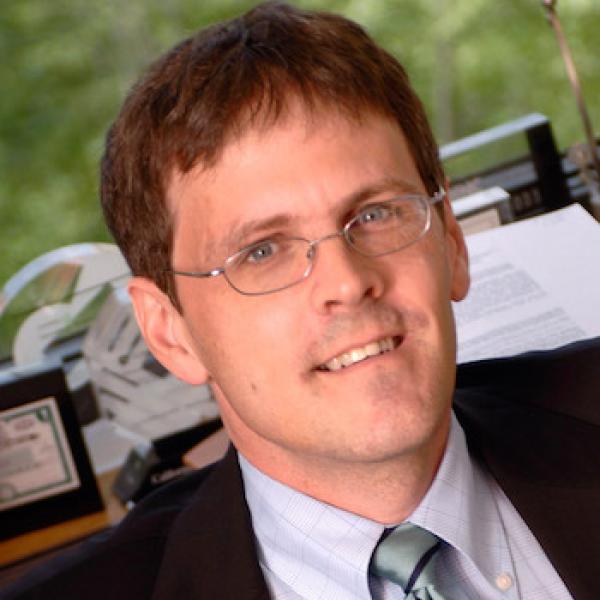
John Coates IV serves as Research Director for the Center on the Legal Profession and holds the John F. Cogan, Jr. Professorship of Law and Economics at Harvard Law School. Appointed in 1997 after practicing as a mergers and acquisitions partner at Wachtell, Lipton, Rosen & Katz, he teaches Mergers & Acquisitions, Financial Institutions Regulation, Contracts, Corporations, and History of Capitalist Institutions. Prior to Harvard, he taught adjunct courses at NYU and Boston University law schools. His empirical research examines S&P 500 companies' legal service procurement, M&A transaction dynamics, mutual fund regulation, and executive turnover patterns. This work bridges corporate law and economics to analyze how regulatory frameworks interact with market forces—revealing how legal doctrines evolve in response to transactional complexities and institutional pressures. Recent publications demonstrate consistent focus on regulatory adaptation: M&A contract evolution studies show increasing documentation complexity, while Volcker Rule analyses highlight tensions between structural banking reforms and administrative law principles. His work consistently connects theoretical legal concepts to measurable market outcomes through rigorous empirical methodologies. Professor Coates actively translates research into practice through consulting for the SEC, law firms, and financial institutions. He serves on the NYSE Legal Advisory Committee and directs the American Law and Economics Association, demonstrating significant influence in both academic and regulatory spheres. He leads the Corporate Purchasing Project—a mixed-methods study of corporate legal service markets—and contributes to executive education programs. His seven-year authorship of the definitive financial institution M&A survey underscores his role as a central figure in transactional law scholarship.
Nicola Martellozzo is a Researcher at the Department of Philosophy and Cultural Heritage, Ca' Foscari University of Venice. His work focuses on anthropological interpretations of environmental disasters, cultural memory, and political symbolism. He teaches courses in History of Popular Traditions and has been permanently based at Ca' Foscari since at least 2019. Current teaching includes HISTORY [FT5] and HISTORY [FTR5] courses on popular traditions Key research themes: environmental disasters, multispecies relations, political symbolism, cultural memory His recent publications analyze post-disaster recovery in Italian mountain valleys and conspiracy rhetoric in North African contexts. Collaborations include co-authored works with Andrea Tollardo. Martellozzo's scholarship bridges ethnographic fieldwork with critical theory from Walter Benjamin to Ernesto De Martino, examining how societies process crises through symbolic systems and material practices. His 2024-25 publications emphasize: Climate crisis and mountain communities Human-wildlife coexistence Temporal dimensions of disaster recovery Symbolic interpretations of environmental phenomena Anthropological approaches to public policy Memory and heritage in contested landscapes
Marie Bassi is a Lecturer in Political Science at the ERMES Laboratory (University of Côte d'Azur). Her research focuses on migration studies , border politics , and solidarity networks in Europe and North Africa. Key research themes : Sociology of migrations/diasporas, Social movements, European policy, Italy's migration governance Teaching : French political life, Migration Studies, Political sociology, European Union institutions Her recent publications analyze migrant encampment in Sicily, border violence in the Mediterranean, and activism around migration. These works engage with critical border theory, migrant political economy, and non-state actor dynamics. Labs/Teams : Core member of ERMES, co-organizer of Political Studies seminars, and head of the Migration Studies Master’s program . She frequently collaborates with international researchers and participates in EU-focused migration conferences.
Dr. Sara McDowell is a Senior Lecturer in the School of Geography and Environmental Sciences at Ulster University (Coleraine Campus), where she serves as Course Director for the BSc Geography programme. A Fellow of the Higher Education Academy and LFHE Aurora alumna, she specializes in Political Geography with teaching focused on research methods and human geography concepts. Her research examines conflict and peacebuilding in divided societies through two interconnected strands: Memory/heritage negotiations in contested spaces (e.g., Northern Ireland, Sri Lanka) Social media's influence on border politics This work has secured funding from ESRC, AHRC, NERC, and British Academy/Leverhulme Trust. Recent publications analyze post-Brexit instability, youth citizenship, and ethical approaches to Northern Ireland's legacy issues, employing methodologies from spatial analysis to participatory filmmaking. Awards & Recognition: Fellow of the Higher Education Academy Member of AHRC Peer Review College Academic Friend of the European Peacebuilding Liaison Office (EPLO) She maintains active collaborations with government agencies (NISIB, Flanders) to translate research into peacebuilding praxis.
Gaëlle Le Pavic serves as an associate postdoctoral researcher at Ghent University's Institute of Social Work and Social Pedagogy and holds a Fellowship at the United Nations University – CRIS in Bruges. She concurrently conducts research at ZOiS (Leibniz-Zentrum für Zeithistorische Forschung Potsdam), where she collaborates with Dr. Sabine von Löwis on displacement patterns in Transnistria. Her research program centers on migration dynamics, with particular expertise in the social consequences of contested borders in Eastern Europe and the Caucasus. Dr. Le Pavic currently investigates migration flows resulting from Russia's invasion of Ukraine, emphasizing diverse social support mechanisms for displaced populations. She integrates feminist geopolitical frameworks and critically examines knowledge production processes within migration scholarship, creating an interdisciplinary approach that bridges social work, political geography, and migration studies. Dr. Le Pavic's research portfolio includes significant contributions to EU-funded initiatives: the InHere project analyzing inclusive heritage approaches in migration contexts, and RefugeeWellSchools examining educational integration of refugees. Her scholarly work builds upon extensive field experience in project management and international cooperation across Russia, Croatia, and Belgium, providing practical grounding for her academic investigations into migration governance and social support systems.
Jared Van Ramshorst serves as Assistant Professor in the Department of Political Science at California Polytechnic State University, San Luis Obispo. His academic journey includes prior teaching positions at Kean University (New Jersey) and College of the Holy Cross (Massachusetts), bringing interdisciplinary expertise from geography and political science to his current role. His educational background features a Ph.D. in Geography from Syracuse University (2020), an M.A. in Geography from San Diego State University (2014), and a B.A. in History from California State University, Fullerton (2012). This foundation informs his critical approach to migration studies. Professor Van Ramshorst's research critically examines immigration policy through the lens of Latina/o/x experiences, with particular focus on Central and South American migration routes toward the United States. His work interrogates how border enforcement, policing practices, and legal frameworks shape immigrant subjectivity and mobility across transnational spaces. Key themes include spatial hierarchies in enforcement systems, the racialization of migrants, and ethical considerations in migration research. His publication record demonstrates consistent scholarly output in top geography and border studies journals, with recent work addressing positionality in fieldwork, Mexico's southern border operations, and the expansion of exclusionary practices in asylum systems. The research reveals evolving trends toward increasingly securitized border management and its human consequences. Through his teaching and scholarship, Professor Van Ramshorst contributes to understanding contemporary migration challenges, emphasizing qualitative methodologies and critical perspectives on power dynamics within immigration systems. His work provides valuable insights for students interested in border politics, migration policy, and qualitative research methods in politically contested contexts.
Socrates Stratis is a Professor in the Department of Architecture at the University of Cyprus, actively engaged in research and practice at the intersection of architecture, urban design, and political activism. His work critically examines spatial practices within contested urban environments, with a focus on Cyprus (particularly Famagusta) and European networks like Europan Europe, advocating for architecture's role in supporting urban commons and social justice. His research centers on the political dimensions of architecture, critical spatial practices in conflict zones, and the territorial turn in urban design. Stratis investigates how architecture can reveal spatial-social-political dynamics and serve as an agent for public engagement, employing hybrid methodologies that integrate teaching, curatorial work, and grassroots interventions such as the "Hands-on Famagusta" initiative for peace-building in divided cities. Analysis of his 15 most recent publications reveals consistent engagement with conflict transformation, ecological urbanism, and emancipatory spatial practices. His work frequently connects Cypriot case studies (especially Varosha) to broader European urban challenges through Europan projects, emphasizing themes of territorial repair, spatial justice, and the role of everyday practices in resistance. Scientific awards include: Fulbright Visiting Scholarship (2020) Professor Stratis has secured significant research funding including a Marie Curie ETN Horizon 2020 project ("Spatial Practices in Art and Architecture for Empathetic Exchange - Space X", 650,000 euro) and grants from UNDP, the Embassy of the Netherlands, and the Venice Biennale. His practical work encompasses award-winning urban interventions like Limassol's Plateia Herown redevelopment (2020) and the "Hands-on Famagusta" initiative, which applies spatial practices for conflict transformation in Cyprus.
John Morán González serves as the J. Frank Dobie Regents Professor of American and English Literature and Chair of the English Department at the University of Texas at Austin within the College of Liberal Arts. A leading scholar in Latine literature and U.S.-Mexico borderland studies, he explores intersections of race, violence, and cultural memory in post-1865 American literary traditions. His academic foundation includes: Ph.D. in English and American Literature, Stanford University (1998) M.A. in English and American Literature, Stanford University (1991) A.B. in English Literature, Princeton University (1988, magna cum laude) González's research critically examines borderland cultures through Mexican-American literary history and public humanities initiatives. His work confronts historical trauma while documenting cultural renaissances in contested spaces, particularly focusing on state violence along the U.S.-Mexico border and its representation in literature. His publications reveal a sustained engagement with ethnic literary emergence, historical memory, and transnational narratives. Monographs and edited volumes consistently bridge academic scholarship with community-centered public history, demonstrating how borderland literature challenges dominant national narratives through counter-memory practices. Major recognitions include: Induction into the Texas Institute of Letters (2025) CHOICE Outstanding Academic Title award (2018) for co-editing The Cambridge History of Latina/o American Literature Public history awards from the American Historical Association, Organization of American Historians, National Council on Public History, and Western History Association for Refusing to Forget Administrative leadership includes former Directorship of the Center for Mexican American Studies and Acting Directorship of the Plan II Honors Program. Current board service with Humanities Texas and the Recovering the U.S. Hispanic Literary Heritage Project reflects ongoing institutional commitment to preserving marginalized narratives. González co-founded Refusing to Forget (RTF), a pioneering public history project memorializing state violence in South Texas borderlands (1910-1920). RTF's award-winning work combines archival research with community engagement, establishing new models for confronting historical trauma through exhibitions, educational programs, and policy advocacy.
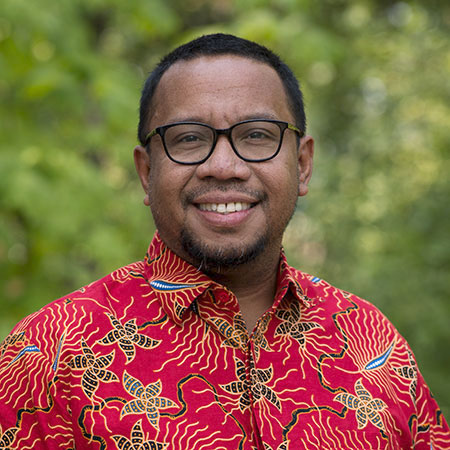
Ekaputra Tupamahu is an Associate Professor of New Testament and Director of Masters Programs at Portland Seminary, George Fox University. He received his PhD from Vanderbilt University in 2019 and holds additional degrees from Claremont School of Theology, Asia Pacific Theological Seminary, and Sekolah Tinggi Theology Satyabhakti. His academic journey includes significant educational milestones: PhD from Vanderbilt University (2019), MA from Claremont School of Theology, MA/MDIV from Asia Pacific Theological Seminary, and BTh from Sekolah Tinggi Theology Satyabhakti. Dr. Tupamahu's research focuses on the intersection of New Testament studies with postcolonial theory, politics of language, race and ethnic theory, and global Pentecostal/Charismatic movement. His work explores how these frameworks inform early Christian contexts and contemporary interpretations of biblical texts. His monograph, Contesting Languages: Heteroglossia and the Politics of Language in the Early Church (Oxford University Press, 2022), examines language dynamics in early Christianity, while his second book manuscript explores 1 Corinthians within the T&T Clark Study Guides series. His scholarly output demonstrates a consistent focus on bridging biblical scholarship with contemporary social issues, particularly examining power dynamics, racial formation, and linguistic imperialism through biblical texts. His work often centers on Pauline literature while incorporating postcolonial and Asian American perspectives. Forum for Theological Exploration Dissertation Fellowship (2017) Louisville Institute Honorary Dissertation Fellowship (2017) Asian Theological Summer Institute Fellowship (2016) Faculty Achievement Award for Graduate Teaching (2022) Dr. Tupamahu is actively engaged in academic leadership as co-chair of the Asian and Asian American Hermeneutics Unit at the Society of Biblical Literature, steering committee member for Book of Acts and Paul and Politics program units, associate editor for Currents in Biblical Research, and member of editorial boards for Political Theology and Review of Biblical Literature. He serves on the Society of Biblical Literature's Committee on Underrepresented Racial and Ethnic Minorities in the Profession (CUREMP). His scholarly influence extends globally through invited talks at institutions including Cambridge University, University of Minnesota, and Satya Wacana Christian University.
PD Dr. Robert Feustel is a Privatdozent in the Department of Sociology of Knowledge and Social Theory at Friedrich Schiller University Jena. His academic work spans cultural sociology, political theory, and the history of science, with particular expertise in discourse analysis, drug and intoxication cultures, and digitalization studies. Previously, he held research positions at Leipzig University across multiple projects. His educational background includes: Political science and history studies in Leipzig and Madrid (1997-2006) Doctorate from the Faculty of Social Sciences and Philosophy (2012) with thesis "Crossing Borders: Cultures of Intoxication since the Renaissance" (summa cum laude) Habilitation in Sociology at Friedrich Schiller University Jena (2021) with thesis "In the beginning was information. On the genealogy of digitalization" Feustel's research explores the intersections of cultural sociology, political theory, and historical analysis. His work frequently examines how concepts of knowledge, power, and social order evolve through historical transformations, particularly analyzing intoxication cultures across history and the genealogy of digitalization. His approach employs discourse analysis to uncover how social phenomena are constructed and contested through language and practice, with notable contributions to understanding right-wing political discourse through his book "Populist Games: Bullshit as a Political Strategy." His scholarly output shows consistent engagement with both historical analysis and contemporary political debates, particularly evident in his recent publications examining predictive policing, digital transformation, and drug cultures. His work demonstrates how historical patterns inform current social phenomena while maintaining theoretical sophistication. His academic achievements include: Friedrich Ebert Foundation scholarship (2008-2012) Doctorate with summa cum laude distinction Extensive publication record including multiple monographs and edited volumes As an educator, Feustel has supervised numerous bachelor seminars on diverse topics including sociology of drugs, political sociology of football, and media theories. His teaching reflects his interdisciplinary approach, connecting theoretical frameworks with concrete social phenomena. He coordinates the Academic Lab | Science Laboratory project, which explores the social dimensions of scientific practice and knowledge production, providing potential research opportunities for students interested in the sociology of science.
Karin Dean is a Senior Research Fellow at Tallinn University's School of Humanities, specializing in political geography with a focus on Southeast Asian borderlands, particularly Myanmar. She holds a PhD from the National University of Singapore (2003) and has been affiliated with Tallinn University since 2007, serving as Associate Professor (2016-2020) and Asian Studies MA Programme Director (2007-2022). Her international academic engagements include visiting positions at Kyoto University (2024), Chiang Mai University (2022), and Mandalay University (2019). Dean's research centers on political geography, border studies, and Southeast Asian politics, with particular expertise on Myanmar's ethnic conflicts and Chinese infrastructure projects in border regions. Her work examines state-building processes, ethnic minorities, and geopolitical dynamics through extensive field research conducted across Myanmar, Thailand, and Northeast India since 2010. She applies theoretical frameworks including assemblage theory to analyze how border spaces are transformed by transnational developments. Recent publications (2021-2025) focus on Chinese investments in Myanmar's borderlands, particularly examining the Belt and Road Initiative's local impacts. Her scholarship appears in leading geography and area studies journals including Eurasian Geography and Economics, Advances in Southeast Asian Studies, and Territory, Politics, Governance, demonstrating both regional expertise and theoretical sophistication in borderland studies. Awards and Recognition: 2009: First prize, national contest for supervising BA thesis 'Identifying Peripheral Peoples in Southwest China' 1999: Ph.D. scholarship, National University of Singapore 1995: Stipend from Estonians-in-exile group in Seattle Dean actively contributes to the academic community through editorial board memberships (Journal of Borderlands Studies, European Journal of East Asian Studies), international conference organization, and peer review for top geography and Asian studies journals. She has supervised postdoctoral researchers including John Buchanan and Alessandro Rippa, whose work focused on Southeast Asian politics and China-Myanmar borderlands. Her research combines extensive fieldwork with theoretical innovation, examining how border communities navigate geopolitical transformations in one of Asia's most complex border regions. Dean maintains strong institutional connections across Asia and Europe through Erasmus+ exchanges and collaborative research networks.
Dr. Hanno Hochmuth serves as Scientific Officer and Project Manager at the Leibniz Centre for Contemporary History (ZZF Potsdam) in the Leibniz Lab 'Social Upheavals and Transformations' since April 2024. He has maintained a continuous academic career at ZZF since March 2011 while simultaneously teaching Master's level courses in Public History at Freie Universität Berlin. His institutional affiliations also include research collaborations with the Luxembourg Center for Contemporary and Digital History and the Stiftung Stadtmuseum Berlin. His academic background includes: Doctorate from Freie Universität Berlin (2016) on 'Public and Private in Friedrichshain and Kreuzberg' Magister Artium from Freie Universität Berlin (2004) Studies at University of Minnesota (2001-2002) Historical studies at Freie Universität Berlin and Theater Studies at Humboldt-Universität zu Berlin (1997-2004) Hochmuth's research examines the complex interplay between public and private spheres in divided Berlin, with particular focus on Friedrichshain and Kreuzberg neighborhoods. He investigates historical authenticity in urban spaces, the commercialization of history through tourism, and how media representations shape collective memory. His work bridges academic research with public engagement through historical city tours, museum exhibitions, and media appearances. Analysis of his recent publications reveals three dominant research trajectories: the evolving relationship between historical memory and urban space in Berlin; critical examination of historical representation in popular media (particularly television series like Babylon Berlin); and the commodification of history through tourism and museum practices. His work consistently explores how historical narratives are constructed, contested, and consumed in contemporary society. As an educator, Hochmuth has developed and taught numerous specialized courses in Public History at Freie Universität Berlin since 2008, including seminars on 'Babylon Berlin as Urban History,' 'Checkpoint Charlie,' and 'Public Visual History.' His teaching emphasizes practical application of historical methods in public settings. He currently leads the multimedia documentation project of Berlin Wall history (1961-1989/90), a major collaboration between ZZF, the Federal Agency for Civic Education, Deutschlandradio, and the Berlin Wall Foundation. He previously co-directed the exhibition 'Ost-Berlin. Die halbe Hauptstadt' at the Ephraim Palace Museum and completed research on historical tourism's development since the 1980s.