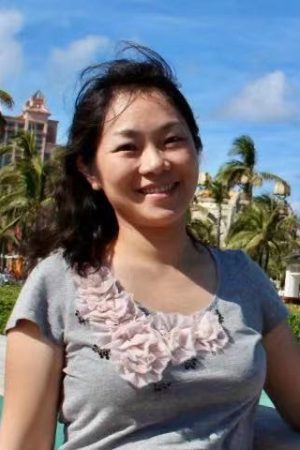
Professor Beata Zarzycka, affiliated with the John Paul II Catholic University of Lublin , serves as a leading academic in the Department of Social Psychology and Psychology of Religion under the Faculty of Social Sciences . Her research bridges psychology and religious studies, focusing on spiritual well-being, religious coping, meaning-making processes, and mental health in Polish Catholic contexts. Over her career, she has explored faith transitions, therapeutic relationships, and the psychological impact of pandemics and chronic illness. Her publications span topics like deconversion in adolescence , religiosity and life satisfaction in seniors, and spiritual struggles in healthcare workers . She has validated key psychological scales (e.g., Religious Comfort and Strain) for Polish populations and investigated MMPI-2 and 16PF-5 in predicting religious vocation outcomes. Her work often employs mediation and moderation models to uncover complex psychological-spiritual dynamics. Recent studies include 2024 articles on parental attachment and adolescent deconversion, and 2023 work on religious support networks. She has received national honors like the Bronze Medal for Long Service and KEN Medal , reflecting her contributions to psychology and religious studies. Her peer-review activities for journals like International Journal for the Psychology of Religion and Roczniki Psychologiczne further highlight her academic leadership.
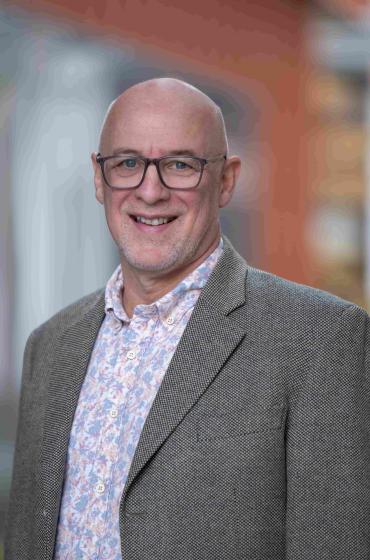
Henner Busch is an Associate Professor at LUCSUS (Lund University Centre for Sustainability Studies), part of Lund University's Faculty of Social Sciences. His academic journey includes a background in Governmental Studies from Erfurt, Germany, an MSc in Environmental Studies and Sustainability Science (LUMES) from Lund University (2010), and a PhD in Sustainability Science from Lund University (2016). Before his current position, he worked at the Department of Human Geography at Lund University from February 2018 to November 2020, and as a researcher at LUCSUS from 2016 to 2017. His previous professional experience includes work at the Leibniz Institute for Agricultural Engineering in Potsdam-Bornim, Germany. Busch's research primarily focuses on the intersection between energy systems, climate policies, and society, with particular emphasis on questions of justice within energy transitions. His work examines who benefits from energy projects and who bears the burden, whose interests are served by different energy developments, and who has power to shape debates on future energy systems. He approaches these questions through multiple ongoing projects including JUSTIT (Just Swedish Transport Industry Transitions), Workers as Agents of a Green and Just Transition, Burying problems? Imaginaries of Carbon Capture and Storage in Scandinavia, and Of People, PV, Power Lines: Energy Islands in the Nordics. His research spans theoretical frameworks including energy justice, community energy development, urban climate governance, and the social dimensions of carbon capture and storage. Analysis of Busch's recent publications reveals a strong focus on energy justice frameworks across multiple contexts - from coal phase-outs to community energy initiatives and carbon capture technologies. His work consistently examines the distributional, procedural, and recognition dimensions of justice within energy transitions, with particular attention to Scandinavian and European contexts. The publications demonstrate interdisciplinary approaches combining political science, environmental sociology, and sustainability science to address complex questions of power, representation, and equity in energy systems. Researcher at LUCSUS (Lund University Centre for Sustainability Studies) Associate Professor at Lund University Member of LUCID research school (Lund University Centre of Excellence for Integration of Social and Natural Dimensions of Sustainability) Busch actively engages in teaching at undergraduate, master's, and PhD levels, with supervisory experience spanning approximately 40 master's theses on topics ranging from community energy to urban development and climate change depictions in video games. His educational approach integrates methodology-oriented content such as systems thinking and energy justice with empirical examinations of energy systems and globalization. His work contributes to multiple United Nations Sustainable Development Goals, particularly those related to sustainable cities and communities, affordable and clean energy, and climate action.
Rob Gleasure is a Professor in the Department of Digitalization at Copenhagen Business School (CBS), Denmark. His research focuses on the intersection of information systems, digital technologies, and human behavior, with particular expertise in blockchain technology, crowdfunding, AI applications, and technology adaptation. Based at Solbjerg Square 3 in Frederiksberg, he contributes to CBS's mission of advancing knowledge in business and society through digital transformation. Professor Gleasure's research spans several key areas within information systems and digital innovation: Digital finance and blockchain technologies, including cryptocurrency and financial applications Crowdfunding platforms and digital fundraising mechanisms Artificial intelligence applications in various domains including healthcare and banking Human-computer interaction and the psychological aspects of technology adoption Digital collaboration and the affective dimensions of online work Quantum computing infrastructure and emerging technologies His recent publications reveal an evolving research trajectory that increasingly addresses the societal implications of digital technologies. Gleasure has moved from foundational work on crowdfunding and blockchain to more complex examinations of AI ethics, gender bias in technological systems, and the psychological impacts of digital media. His research demonstrates growing attention to sustainable development goals, particularly those related to responsible consumption and production, reduced inequalities, and climate action. The interdisciplinary nature of his work bridges business, technology, and social sciences, often employing both qualitative and experimental methodologies. Professor Gleasure has served as a supervisor for numerous students (21 supervisor tasks mentioned) and has been active in academic service including co-chairing the ACM Collective Intelligence Conference in 2021. His research has attracted media attention, with contributions to discussions on cryptocurrency, carbon offsetting in aviation, and AI applications.
Sara Scott Shields is an Associate Professor and Associate Dean of Academic Affairs in the Department of Art Education at Florida State University (FSU), part of the College of Fine Arts. She holds a PhD in Art Education from the University of Georgia, and earlier degrees from East Carolina University. Her career spans 14 years of teaching at secondary and college levels, with a focus on integrating visual journaling, contemporary art, and community history into civically engaged pedagogy. Shields has been recognized with national awards including the Southeastern Higher Educator of the Year (2019) and Florida Higher Educator of the Year (2018). Education: PhD in Art Education, University of Georgia (Advisor: Dr. Tracie Costantino) MAEd in Art Education, East Carolina University (Advisor: Dr. Alice Arnold) BFA in Art Education and Ceramics, East Carolina University (Advisors: Dr. Nancy House and Seo Eo) Research Focus: Shields’ work emphasizes civically engaged art education , leveraging visual journaling and arts-based research to foster socially just educational practices. She explores how art can bridge personal/community histories with contemporary issues, empowering students and educators to engage in civic discourse. Her interdisciplinary approach integrates qualitative methods, practitioner research, and curriculum design. Recent Scholarship Trends: Her publications (2018–2025) highlight resilience during crises (e.g., pandemic impacts), youth-led artistic research, and digital-age pedagogical strategies. Notable works include frameworks for civically engaged art education and studies on graduate student identity in academia. Awards & Contributions: National & regional teaching awards Leadership in art education policy Advocacy for equity in arts curriculum Teaching & Mentorship: Shields instructs core art education courses such as Contemporary Issues in Art Education and Arts-Based Research . She mentors pre-service teachers in designing inclusive, community-oriented curricula. Labs/Teams: Active in FSU’s Art Education Department, contributing to interdisciplinary initiatives and community art projects.
Prof. Dr. Stefan Eicker is a Professor and Chairholder of Business Information Systems and Software Engineering at the Faculty of Computer Science, University of Duisburg-Essen, Germany. He has held this position since April 2004, following previous academic appointments at the Technical University of Clausthal, the University of Essen, and other German institutions. His research spans multiple domains within information systems and software engineering, with a particular focus on digital transformation and emerging technologies. Prof. Eicker's research interests center around Smart Products , Service Systems , Internet of Things , and Platform Economics . His work explores how digital technologies transform traditional business models and create new value propositions. He has developed taxonomies for smart services and investigated quality factors in self-tracking solutions, demonstrating his interdisciplinary approach that bridges technical and business perspectives. His research particularly emphasizes the integration of physical and digital components in modern products and services. His recent publications (2019-2024) reveal a strong focus on digital platform economies, smart services, and IoT applications. The research shows a clear trajectory toward understanding value creation mechanisms in digital ecosystems, with increasing attention to practical applications in energy systems, self-tracking technologies, and business model innovation. His work often involves collaboration with colleagues like Gero Strobel and Tobias Brogt, indicating an active research group focused on digital transformation. Prof. Eicker has contributed significantly to the academic community through his extensive publication record spanning nearly two decades, with work appearing in journals, conference proceedings, and edited volumes. His research bridges theoretical frameworks with practical applications in business contexts. He maintains an active role in academic administration and education at the University of Duisburg-Essen, where he has contributed to curriculum development and the implementation of systems for managing academic information. His work on the bolognaT3 system demonstrates his commitment to improving academic processes through technology.
Andrew M. Olney is Professor in both the Institute for Intelligent Systems and Department of Psychology at the University of Memphis. His work bridges artificial intelligence, cognitive science, and education, with a primary focus on natural language interfaces for learning. His educational background includes a Ph.D. in Computer Science from the University of Memphis (2006), an M.S. in Evolutionary and Adaptive Systems from the University of Sussex (2001), and a B.A. in Linguistics with Cognitive Science from University College London (1998). Dr. Olney's research centers on intelligent tutoring systems and natural language processing applications in education. His specific interests include vector space models, dialogue systems, unsupervised grammar induction, and computational representations of meaning. He has made significant contributions to conversational intelligent tutoring systems and task-oriented natural language interfaces, with particular emphasis on dyadic interaction and engagement in learning contexts. Analysis of his recent publications reveals a consistent focus on leveraging AI for educational enhancement, particularly through automated content creation, question generation, and adaptive learning systems. His work spans multiple disciplines including computer science, cognitive science, linguistics, and education, demonstrating strong interdisciplinary integration. Scientific Awards and Recognition: Best Paper Award, Proceedings of Empowering Education with LLMs (2023) Associate Editor, International Journal of Artificial Intelligence in Education (Impact Factor 4.9) Dr. Olney has been actively involved in mentoring graduate students and securing research funding. He has served as Principal Investigator on $6M of federal grants within a total of $18M in federal grant funding. His service includes former editorship of the Journal of Educational Data Mining (2017-2022) and former leadership roles as Director/Associate Director of the Institute for Intelligent Systems (2006-2017). He currently coordinates both the Cognitive Science Graduate Certificate and Undergraduate Minor in Cognitive Science at the University of Memphis. His BrainTrust project, funded by the NSF, addresses the knowledge engineering bottleneck for intelligent tutoring systems through innovative approaches to virtual student simulation and knowledge representation.
Tero Päivärinta is a Professor at the University of Oulu, Faculty of Information Technology and Electrical Engineering. His work focuses on software engineering, digital ecosystems, and cybersecurity. He specializes in empirical studies of software systems, digital twins, and autonomous driving technologies. His research explores hybrid intelligence systems, data-centric decision-making, and governance of collective ambidexterity in digital initiatives. Education: PhD holder with extensive experience in academic and industry collaborations. Key research domains include cyber-physical systems, DevSecOps automation, and IT governance in public sectors. He co-leads projects such as the NUVE Lab’s vehicle testing frameworks and contributes to initiatives like the Software-Defined Vehicle project. Research highlights include advancing knowledge graphs for manufacturing, cybersecurity compliance in DevOps pipelines, and evaluating data-driven decisions. His articles emphasize interoperability challenges, adaptive systems design, and sustainable digital transformation in public utilities. Professional contributions include organizing the TKTP Annual Symposium and co-editing volumes celebrating academic peers like Markku Oivo. His work bridges theoretical software engineering with practical applications in mobility, governance, and industrial systems.
Alan Fern is a Professor of Computer Science and Robotics in the School of Electrical Engineering and Computer Science at Oregon State University. He leads research in artificial intelligence, focusing on reinforcement learning, planning, and robotics applications like humanoid robotics and agricultural AI. His work includes co-directing the Dynamic Robotics Lab and leading the AgAID National AI Institute for agricultural solutions. Fern holds a Ph.D. from Purdue University and has contributed to over 100 publications. His recognitions include the NSF CAREER Award and multiple best paper awards. Education: B.S., Electrical Engineering, University of Maine (1997) M.S. & Ph.D., Computer Engineering, Purdue University (2000 & 2004) Research Interests: His research spans machine learning, planning, and robotics. Key areas include: AI for humanoid robotics (e.g., bipedal locomotion on Cassie) Reinforcement learning algorithms and applications Agricultural AI for specialty crops Explainable AI and anomaly detection Awards: 2017 College of Engineering Research Collaboration Award 2013 AAAI Outstanding Paper Award 2006 NSF CAREER Award Advising & Labs: Supervised over 50 students. Key collaborations include the Dynamic Robotics Lab (with Jonathan Hurst) and AgAID. His teams address challenges like robot navigation, policy learning, and AI ethics. Labs/Teams: Dynamic Robotics Lab, AgAID National AI Institute, and contributions to computational sustainability initiatives.
Dr Doğa Istanbulluoglu is a Lecturer in the Department of Marketing at the Birmingham Business School, University of Birmingham . She holds a PhD in Marketing from the same institution and teaches undergraduate courses such as 'Research Methods'. She also serves as the EDI Representative for the Marketing Department and PGTA Coordinator for both Marketing and Strategy & International Business Departments. Education: Postgraduate Certificate in Academic Practice (Distinction), Centre for Learning and Academic Development, University of Birmingham (2017) PhD in Marketing, University of Birmingham (2014) MSc in Marketing (Merit), University of Birmingham (2008) BSc in Business Management (High Honour), Bilkent University, Turkey (2007) Her research focuses on online consumer behavior , particularly on social media platforms. She investigates negative consumer behaviors such as complaining, negative word-of-mouth, boycotts, and anti-consumption, as well as problematic technology use including smartphone addiction. Her work emphasizes post-purchase behaviors and the psychological and social dynamics behind consumer dissatisfaction and resistance. The recent articles show a strong trend in digital consumer behavior , with recurring themes in anti-consumption , fake online reviews , complaint handling , and technology overuse . Her research combines marketing theory with psychological and sociological insights, often using empirical methods to analyze consumer responses in digital environments. Dr Istanbulluoglu has published in leading journals such as European Journal of Marketing , Computers in Human Behavior , and Information Technology & People . Her work contributes to understanding ethical issues in digital marketing and strategies for effective online customer engagement and service recovery. She supervises postgraduate research and is involved in academic leadership through her PGTA and EDI roles. While no formal grants or doctoral students are listed, her collaborative publications suggest active research partnerships. She does not appear to lead a dedicated lab but contributes to interdisciplinary discussions on consumer ethics and digital behavior.
Reza Tourani is an Assistant Professor in the Department of Computer Science at Saint Louis University since Fall 2018. He earned his Ph.D. (2018) and M.S. (2012) in Computer Science from New Mexico State University, preceded by a B.S. in Computer Engineering from Islamic Azad University of Tehran (2008). His career includes prior work in the telecommunications industry in Iran. University: Saint Louis University School: School of Science and Engineering Department: Department of Computer Science Academic Rank: Assistant Professor Dr. Tourani’s research focuses on security and privacy in resource-constrained environments, including: Internet of Things (IoT) : Secure communication protocols and edge computing Information-Centric Networking (ICN) : Access control and request flooding mitigation Cyber-Physical Systems : Smart grid and UAV swarms Private Communication : Anonymity in distributed systems Networked Systems : DDoS defense and caching optimization His recent articles explore trends in: DDoS mitigation in Named Data Networking (PERSIA framework, 2020) Secure UAV swarm communications (2020) Attribute-based encryption for edge computing (APECS, 2021) Collaborative caching mechanisms (MuNCC, 2016) Smart grid data security (iCASM, 2020) Dr. Tourani has secured research grants from Saint Louis University and Intel Labs to advance projects on privacy-aware contact tracing and edge computing security . He actively mentors students in cybersecurity, IoT, and networked systems.
Subodha Kumar is the Paul R. Anderson Distinguished Chair Professor of Statistics, Operations, and Data Science at Temple University’s Fox School of Business. He also serves as Founding Director of the Center for Business Analytics and Disruptive Technologies and holds a secondary appointment in Information Systems. With prior faculty roles at the University of Washington and Texas A&M University, he has been recognized with prestigious awards including the INFORMS ISS Distinguished Fellow Award (2023) and POMS Fellow (2019). His research focuses on artificial intelligence, machine learning, blockchain, fintech, and cybersecurity, with over 240 publications in top journals and two books. He actively contributes to academic leadership as Deputy Editor of the Production and Operations Management Journal and Founding Executive Editor of Management and Business Review. Research Interests: Artificial Intelligence Machine Learning Blockchain Fintech Healthcare Analytics Social Media Analytics Supply Chain Analytics Awards: INFORMS ISS Distinguished Fellow Award (2023) POMS Fellow (2019) Changjiang Scholars Chair Professorship (China) Namesake Award: The Subodha Kumar and Geoffrey G. Parker Award for Digital Transformation Research Grants & Advising: Secured NIH grants, advises PhD students in Operations & Supply Chain Management, and oversees the Center for Business Analytics. His editorial roles include multiple top journals and conference leadership (e.g., POMS Annual Conference 2018). Labs/Teams: Leads the Center for Business Analytics and Disruptive Technologies, fostering innovation in analytics and tech-driven business strategies.
Kevin Hong is a Professor and Miami Herbert Centennial Endowed Chair at the University of Miami's Miami Herbert Business School , where he also serves as Associate Dean for Research. His work focuses on information systems and digital platform design. Current roles: Professor, Centennial Endowed Chair, Associate Dean for Research Email: yxh1034@miami.edu ORCiD: 0000-0002-0577-7877 Research Interests: Kevin Hong's work explores digital privacy, user engagement, and behavioral economics across online platforms. His studies examine: Temporal cues in online learning environments Privacy-enhancing designs in dating applications AI implementation in customer service Content generation incentives in knowledge platforms Labor dynamics in gig economy marketplaces Publication Trends: Recent studies demonstrate expertise in field experimentation, behavioral analytics, and platform economics. Key methodologies include: Randomized controlled trials Difference-in-differences modeling Large-scale observational studies
Prof. Dr. Torsten-Oliver Salge is a University Professor and Co-Director of the Institute for Technology and Innovation Management (TIM) at RWTH Aachen University, where he heads the Innovation, Strategy and Organisation (ISO) Group since April 2013. He also serves as a Fellow of Cambridge Digital Innovation at the University of Cambridge, maintaining strong international academic connections. His work bridges theoretical organizational research with practical applications across multiple sectors. Salge completed his business administration studies across multiple European countries including Germany, France, Italy, and England. He earned both his Ph.D. and M.Phil. degrees from the University of Cambridge. His academic journey includes positions as interim professor at the University of Duisburg-Essen (2012-2013), junior professor at the Ruhr-University Bochum (2009-2012), and post-doctoral research associate at Cambridge (2009). His research focuses on organizational behavior in innovation contexts , particularly examining collaboration across disciplinary, organizational, and institutional boundaries. He investigates how organizations learn from performance feedback, approach problem-solving, and implement strategic HRM practices that enhance employee well-being. A distinctive feature of his work is the examination of technology legitimation, adoption processes, and payoff realization in complex organizational settings. His research combines behavioral and institutional perspectives to understand innovation processes. Analysis of Salge's publication record reveals a strong emphasis on healthcare innovation management, with numerous studies examining hospital information systems, infection control, and healthcare service improvement. His work often applies dynamic capabilities theory to innovation processes and demonstrates methodological sophistication through both quantitative and qualitative approaches. The publications show consistent contributions to top-tier management journals including Academy of Management Review , MIS Quarterly , and Journal of Product Innovation Management . Scientific Recognition: Nominated for European Research Paper of the Year 2016 (CIONET) Multiple Best Paper awards at Academy of Management conferences across various divisions Shortlisted for Strategic Management Society (SMS) Best Conference Paper Awards Recipient of prestigious scholarships including ESRC, DAAD, and Cambridge European Trust funding Recognized with the Knut Holt Best Paper Award from ISPIM Throughout his career, Salge has maintained active collaborations with organizations across healthcare, central government, and financial services sectors. His international scholarly network is evidenced by visiting appointments at universities in Auckland, Buenos Aires, Cambridge, Oxford, and Philadelphia. At RWTH Aachen, he leads an interdisciplinary team within the TIME Research Area, which comprises over 100 senior and junior researchers working at the intersection of innovation, technology management, marketing, and entrepreneurship. As Co-Director of the RWTH TIM institute, Salge oversees a research unit with approximately 30 doctoral candidates, 5 postdocs, and more than 20 student researchers. The institute maintains strong industry connections and focuses on strategic technology management, open innovation, innovation culture, organizational change, business model development, and customer-oriented value creation.
Jing Yang is a full Professor and Director of MS CS Program in the Computer Science Department at the University of North Carolina at Charlotte (UNCC). She has been actively involved in data visualization and visual analytics research since joining UNCC in 2005 after completing her PhD at Worcester Polytechnic Institute. Dr. Yang earned her Bachelor's degrees in Engineering Mechanics and Computer Science from TsingHua University in 1997 and completed her Ph.D. in Computer Science from Worcester Polytechnic Institute in May 2005 under advisors Matthew O. Ward and Elke A. Rundensteiner. Her research focuses on developing visual analytics techniques for abstract data including multidimensional data, time-oriented data, networks, hierarchies, text documents, and trajectory data. She conducts design studies for application domains such as sports, bioinformatics, finance, network security, and health, while exploring fundamental visualization topics like interactions, insight management, clustering-based approaches, and animations. Her recent work emphasizes sports analytics, urban data, and multivariate time series visual analytics. Analysis of Dr. Yang's publication record reveals a strong focus on practical applications of visualization techniques across diverse domains. Her work consistently bridges theoretical visualization frameworks with real-world data challenges, particularly in transportation (taxi trajectories), sports (tennis match analysis), financial transactions, and bioinformatics. The publications demonstrate an evolution from foundational visualization techniques to increasingly sophisticated domain-specific applications. Dr. Yang has secured substantial research funding from NSF, EPA, DHS, and industry partners including Google and Bank of America. Her grants portfolio includes significant projects like TrajAnalytics (NSF, $200,950), Visualizing Event Dynamics (NSF EAGER, $75,317), and Visualizing High Dimensional Categorical Datasets (Google Faculty Research Award, $60,000), among others totaling over $4 million in research support. As an educator, Dr. Yang has taught numerous courses including Visual Analytics, Information Visualization, and Database Design. She directs the Charlotte Visualization Center and has mentored numerous students through research projects. Her collaborative approach is evident in her extensive co-authorship network spanning multiple institutions and disciplines. Current research directions include narrative animation for streaming text visualization and advanced techniques for exploring high-dimensional categorical datasets.
Mark Hoover is an Associate Research Scientist and Intermittent Lecturer at the University of Michigan's Marsal Family School of Education, Department of Mathematics Education. His work focuses on disrupting systemic educational inequities through mathematics teaching and teacher professionalization, emphasizing social justice and ethical pedagogy. He draws inspiration from civil rights activist Robert Moses and education researcher Deborah Ball, whose collaborations are highlighted in his research. Hoover has held roles in both research and teaching, contributing to the development of practice-based approaches to studying teaching demands and advocating for curricula that promote civic participation. His research bridges mathematics content and pedagogy, exploring how teaching practices can address historical injustices embedded in educational systems. Research Interests: Equity in STEM education, mathematical knowledge for teaching (MKT), teacher professionalization, curriculum development, assessment design, and the intersection of mathematics education with social justice movements. He critiques oppressive educational standards and accountability systems while investigating how teaching can be reimagined to center justice. His work also explores the role of mathematicians in shaping mathematics education and the importance of tasks for assessing teaching proficiency. His scholarly output reflects a sustained engagement with equity and justice, analyzing classroom practices and teacher education through critical frameworks. Recent publications emphasize collaborative research initiatives (e.g., TWG19) and the moral dimensions of pedagogy. Grants: Recipient of the Communicating Mathematically Across Difference in the Work of Teaching Award (2018-2025). Advising: No formal advisees listed in provided materials, but his work supports professional learning communities across disciplines. Hoover is affiliated with the Connected Mathematics Project, contributing to curriculum development and its impact assessment. His contributions span both research and practical teaching, aiming to create inclusive and just educational environments.