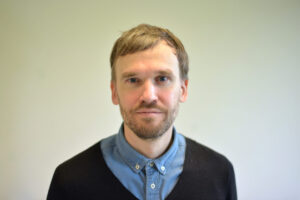
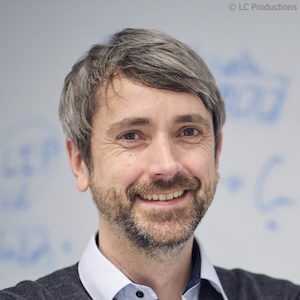
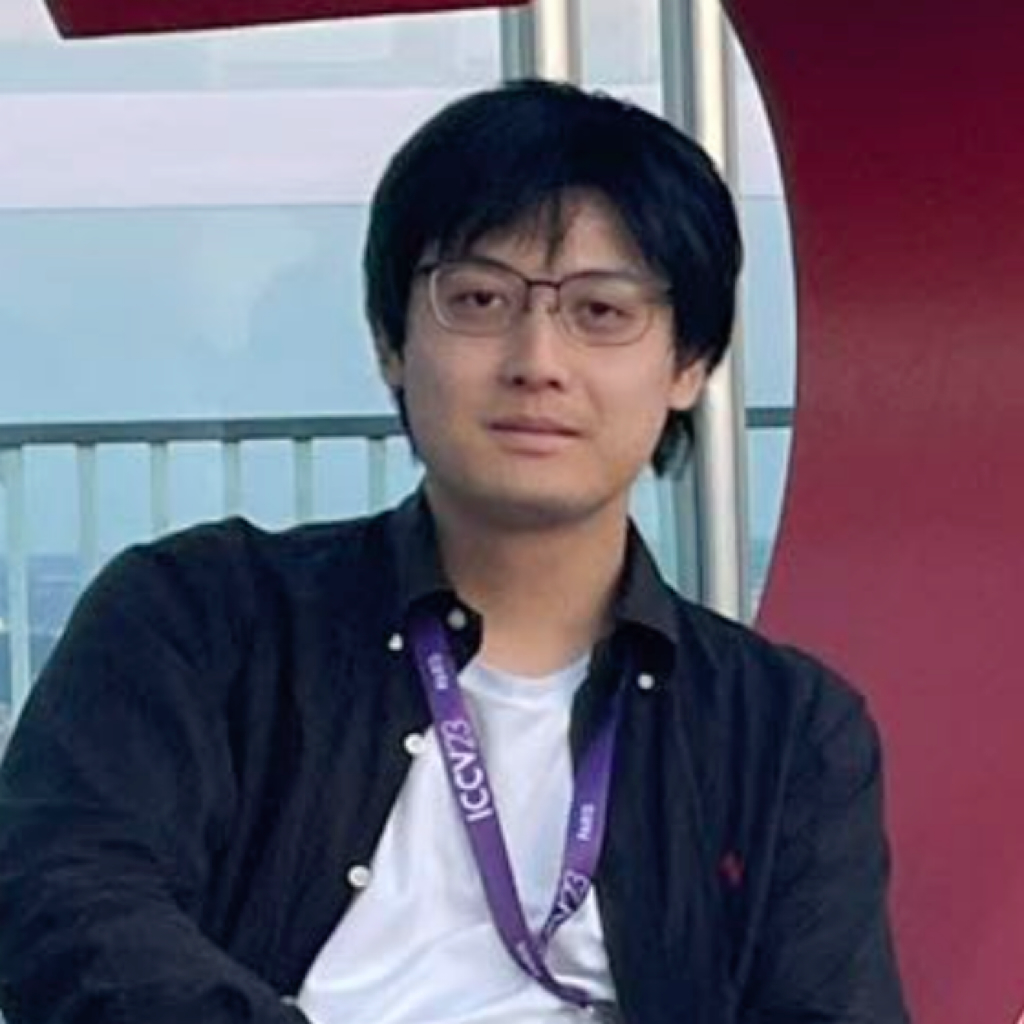
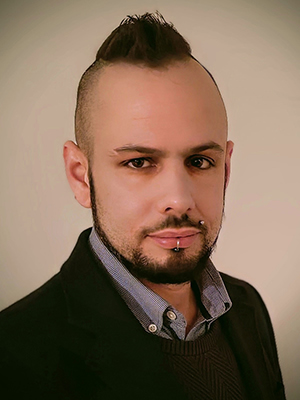
Prof. Waldemar Kolanus leads the Molecular Immunology and Cell Biology department at the University of Bonn's Life & Medical Sciences Institute (LIMES) . His research bridges immunoregulation , stem cell dynamics , and metabolic stress responses in immune cells. Unit 2 member at LIMES Principal investigator in SFB 704 and ImmunoSensation Cluster Leads a multidisciplinary lab with postdocs, PhD students, and technical staff His work focuses on intracellular signaling pathways connecting immune activation to tissue homeostasis, particularly through: Cytohesin proteins in integrin-mediated adhesion and migration TRIM71 in stem cell regulation and congenital hydrocephalus High-salt environments affecting macrophage function Publication trends show expertise in immune cell migration , genetic models , and chemical inhibition , with frequent use of mice and zebrafish for in vivo studies. Key articles explore: TRIM71's dual role in auditory development and germ cell maintenance Cytohesin family's Golgi regulation and insulin signaling Ruxolitinib's off-target migration inhibition of dendritic cells Contact details: Address: LIMES Institute, Carl-Troll-Straße 31, Bonn Email: kolanus.sekretariat@uni-bonn.de Phone: +49 228 73-62788
Prof. Dr. sc. techn. ETH Oliver Staadt is Full Professor of Computer Science and Chair of Visual Computing at the University of Rostock , Germany. Since 2023 he also serves as Director of the Institute for Visual and Analytic Computing within the Faculty of Computer Science and Electrical Engineering . Previously he was Dean (2016–2018) and Vice Dean (2010–2016) of the same faculty. Education Ph.D. in Computer Science, ETH Zürich (2001) M.Sc. in Computer Science, TU Darmstadt (1994) Research Interests Prof. Staadt’s research spans virtual and augmented reality , computer graphics , visualization , telepresence , immersive analytics , and human–computer interaction . A particular focus lies on real-time rendering and display technologies for large high-resolution display systems, depth-image enhancement for RGB-D sensors, and interaction techniques that leverage spatial cognition and eye-tracking. His work is frequently applied to collaborative settings and microgravity environments, including experiments aboard parabolic flights and the International Space Station. Recent Publication Trends Between 2019 and 2021 his output centers on foveated rendering , AR viewpoint guidance , collaborative analytics on wall-sized displays , and embodied interaction metaphors . Earlier work addressed bandwidth-efficient telepresence, depth-image filtering, and physically-based animation. The corpus reveals a steady evolution from fundamental graphics algorithms toward applied immersive systems. Scientific Awards & Honors Fellow of the Eurographics Association Associate Editor, IEEE Transactions on Visualization and Computer Graphics (past) Associate Editor, Computers & Graphics (past) Associate Editor, Computer Animation and Virtual Worlds (past) Associate Editor, Frontiers in Virtual Reality (current) Chair, Expert Group on Virtual & Augmented Reality, German Informatics Society (2013–2020) Advising & Funding He has successfully supervised more than ten PhD graduates whose dissertations range from collision detection and physically-based animation to 3D interaction in microgravity and predictive user modeling. Current PhD researchers include Bipul Mohanto, Mana Takhsha, and Sven Kluge. His projects are supported by national and EU programs such as EVOCATION, SMOOTH, ARGuide, 3DPick, DIVA, and Telepresence. Labs & Teams Prof. Staadt leads the Visual Computing Group at Rostock, operating state-of-the-art facilities including large tiled display walls, VR/AR laboratories, and motion-capture systems. The institute hosts interdisciplinary collaborations with partners in visualization, computer vision, psychology, and aerospace engineering.
Gernot Grabher is a Professor at HafenCity University Hamburg, where he is affiliated with the School of Urban Planning. He is a leading scholar in economic geography and urban studies with extensive research on innovation, platform economies, and project ecologies. His work bridges theoretical and empirical approaches to understanding contemporary economic transformations. Grabher's research interests focus on the intersection of economic geography, urban planning, and digital transformation. He explores how platformization reshapes industrial production, how urban futures are made through professional agency, and how project ecologies cope with ignorance and uncertainty. His work combines theoretical innovation with empirical rigor, particularly in studying temporary organizations and their role in economic development. His recent publications reveal a strong focus on platform economies, showing how digital platforms transform industrial production, urban governance, and knowledge creation. The research demonstrates a consistent interest in the spatial dimensions of economic processes, particularly how digital transformations interact with geographical contexts. His work often takes a critical perspective on technological disruption, revealing how new forms of platformization are embedded in existing social and economic structures rather than representing clean breaks from the past. Best Paper Award 2024 of the Project Management Journal Fellow of the Regional Studies Association (FeRSA) Top 2% of the most cited researchers worldwide in his field (Elsevier and Standford University Data Base) Member of the Selection Committee for the Alice Amsden Award (SASE) Most cited economic geographer in German-speaking area (ZitArt 2020 ranking) Professor Grabher has successfully supervised numerous PhD students whose work spans urban biodiversity, former industrial neighborhoods, global garment production, smart city participation, and creative processes. He leads the DFG-Research Training Group 'Urban future-making: Professional agency across time and scales' and frequently organizes international workshops on creativity and innovation. His research has been supported by significant grants including DFG funding for projects on the temporal structuring of creative processes. Grabher is actively involved in major international conferences, regularly hosting special sessions at the Global Conference of Economic Geographers and other venues. He serves on editorial boards and selection committees for prestigious academic organizations, reflecting his standing in the field of economic geography and urban studies.
Cornelius Puschmann is a Professor of Communication and Media Studies at the University of Bremen's ZeMKI, leading the Digital Communication and Information Diversity (DCID) Lab. He has held affiliations with institutions including Zeppelin University, the Alexander von Humboldt Institute for Internet and Society, and the Leibniz Institute for Media Research / Hans Bredow Institute. His research focuses on computational communication, digital media usage, hate speech, and algorithmic impacts on digital communication. Current projects: Informed by Influencers? (INDI), Political Polarization and Individualized Online Information Environments (POLTRACK) Member of Deutsche Gesellschaft für Publizistik- und Kommunikationswissenschaft (DGPuK), European Communication Research and Education Association (ECREA), and International Communication Association (ICA) His recent publications explore topics such as alternative news consumption, political polarization, and communicative AI. He has also contributed to open-source methodologies like the RPC-Lex dictionary for analyzing right-wing populist discourse. Notable affiliations include visiting scholar roles at the Oxford Internet Institute, Berkman Klein Center for Internet and Society, and University of Amsterdam's Department of Media Studies.
Olia Lialina is a Professor for New Media and Art and Design Online at Merz Akademie, Stuttgart. Born in Moscow and active since the early 1990s, she is a pioneer of net.art, co-founder of the Geocities Research Institute, and curator of the One Terabyte of Kilobyte Age Archive. Her work explores digital folklore, the vernacular web, and human-computer interaction through artistic and theoretical lenses. Research Interests : Digital art, net.art theory, media archaeology, user-generated content, web preservation, and internet culture. Recent Articles : Focus on digital literacy, vernacular web practices, and critiques of UX design, with an emphasis on historical internet aesthetics and the evolution of user identity. Scientific Awards : Netbased Award 2018 for Self Portrait (Basel). Academic Service : Active in international conferences, juries (Female Artist Award 2021), and publications like Turing Complete User (2021) and Olia Lialina: Net Artist (2020).
Prof. Dr. Johannes Kinder is a Professor and Chair of Programming Languages and Artificial Intelligence at the Institute of Informatics , Ludwig Maximilian University of Munich. His research focuses on software security through program analysis and machine learning, particularly targeting malware detection , vulnerability analysis , and reverse engineering . He has held faculty positions at Royal Holloway, University of London, and Bundeswehr University Munich. Research Interests include: Securing software systems via program and machine learning techniques Detection of software vulnerabilities and malware Preventing exploitation through binary analysis Applications of formal methods in systems security Recent Publications highlight advancements in binary function embedding , malware detection in npm , and speculative execution attack modeling . His work appears in top venues like USENIX Security and IEEE S&P . Education : Diplom from TU Munich (2005), Doctorate from TU Darmstadt (2010). Professional Roles : General Chair, ACM CCS 2019 Doctoral Symposium Chair, ESSoS 2016 Program Committee member for NDSS 2026, IEEE S&P 2022-2025
Thorsten Quandt is a Professor of Online Communication at the University of Münster, affiliated with the Faculty of Arts and Humanities and the Department of Communication Science. His academic journey includes a Ph.D. in Communication Science from TU Ilmenau (2004) and a habilitation from Ludwig Maximilian University of Munich (2008). He has held visiting professorships at the University of California, Santa Barbara (2014) and has been a faculty member at institutions like the University of Hohenheim and Freie Universität Berlin. Quandt's research focuses on online communication, digital journalism, and computational analysis of media ecosystems. Notable projects include studying conspiracy theories and ideological movements online, media innovations, and gaming disorder. He leads the Cluster of Excellence project B3-44 on computational methods for analyzing new ideological movements. His work bridges communication studies and computational social science, addressing topics like dark participation, media trust, and information disorder. Awards include an ERC Advanced Grant (2025), ICA Fellowship (2023), and ERC Starting Grant (2009). He serves on editorial boards of journals like Journal of Communication and Digital Journalism . Quandt’s research has explored gaming’s psychosocial impacts, digital journalism’s evolution during crises, and media moderation strategies. His recent work emphasizes computational methods and interdisciplinary approaches to understanding digital media’s societal role.
Ricardo Azambuja Silveira is a Professor at the Federal University of Santa Catarina, Brazil, with a distinguished research career spanning over two decades in the fields of multi-agent systems, intelligent tutoring systems, and semantic web technologies for education. His work bridges artificial intelligence with educational technology, creating innovative frameworks for adaptive learning environments and intelligent educational agents. Dr. Silveira's research interests focus on developing agent-based approaches to enhance educational experiences through technologies like BDI (Belief-Desire-Intention) architectures, ontology-based systems, and multi-context reasoning. His work particularly emphasizes the integration of intelligent agents with learning management systems to create personalized educational experiences. His recent publications demonstrate a continued evolution from foundational multi-agent frameworks to sophisticated neural-symbolic integrations and context-aware educational technologies. Throughout his career, he has published over 60 scholarly works, with consistent output from 2001 through 2024, demonstrating sustained research productivity. His publication trends show a clear trajectory from early work on JADE (Java Agent Development Framework) for distance education to current research on neural-symbolic integration in agent systems. The majority of his publications appear in prominent conferences like PAAMS, MICAI, and ICAART, reflecting his standing in the multi-agent systems community. Dr. Silveira has mentored numerous researchers who have become his frequent collaborators, including Arnoldo Uber Junior, Rodrigo Rodrigues Pires de Mello, and Thiago Ângelo Gelaim. His research has been supported through various academic grants that enabled the development of frameworks like Sigon (a multi-context system framework) and iEnsemble (for committee machine learning). He has been actively involved in the organization of academic events, particularly the Methodologies and Intelligent Systems for Technology Enhanced Learning (MIS4TEL) conference series, where he has served as both participant and organizer. His work contributes significantly to the theoretical foundations and practical implementations of intelligent educational technologies.
Currently a Research Fellow at Harvard University & MIT , Fangneng Zhan specializes in Neural Rendering and Generative AI . His research focuses on developing evolutive rendering frameworks, 3D-aware generative models, and multimodal synthesis techniques. Previously, he was a postdoctoral researcher at the Max Planck Institute for Informatics under Prof. Christian Theobalt. He earned his Ph.D. in Computer Science & Engineering from Nanyang Technological University, Singapore and a Bachelor's in Communication Engineering from the University of Electronic Science and Technology of China . His work spans 3D reconstruction, robotics applications , and lighting estimation , with significant contributions to SIGGRAPH , NeurIPS , and CVPR conferences. Recent research highlights include evolutive gauge transformations for neural fields, generalizable 3D style transfer via Gaussian splatting, and multimodal synthesis frameworks leveraging pre-trained models like CLIP and Stable Diffusion. He has co-authored Top50 Popular Paper in TPAMI 2023 and organized workshops at CVPR 2024 on generative models. Scientific Awards: Top50 Popular Paper, IEEE Transactions on Pattern Analysis and Machine Intelligence (TPAMI) 2023 Collaborative Network: Mentored students at institutions like Harvard, NTU, and ETH Zurich. His projects include datasets for lighting estimation and real-time scene text detection systems.
Prof. Dr. Ulrike Cress is the Director of the Leibniz Institute for Science and Mathematics Education (IWM) in Tübingen and a W3 Professor of Psychology at Eberhard Karls University of Tübingen. She leads the Knowledge Construction and e-teaching Transfer research groups, focusing on social and cognitive processes in collaborative knowledge creation, with applications in digital learning, science communication, and human-AI collaboration. Her work integrates theories of co-evolution in learning and knowledge construction, extending to mass collaboration (e.g., Wikipedia) and participatory decision-making in healthcare. Roles: Director of IWM since 2017, Co-Director of Tübingen LEAD Graduate School, and member of the Standing Scientific Commission for German Education Policy. Key Projects: Includes EU- and DFG-funded initiatives on digital learning, AI in education, and science communication. Awards: 2024 Order of Merit of Baden-Württemberg, 2022 ISLS Fellow. Her research interests span educational technology, collaborative learning, and the societal impact of digital media. She co-edits the International Journal of Computer-Supported Learning and contributes to national education policy through roles in UNESCO and the Deutsche Telekom Foundation. Recent work explores AI’s role in science communication and medical education, emphasizing ethical frameworks and human-AI synergies. She advises on institutional strategies for digital education transformation and collaborates with interdisciplinary networks like Leibniz Research Network Educational Potentials (LERN). Award-winning contributions include over 150 peer-reviewed articles and books, such as the International Handbook of Computer-Supported Collaborative Learning . Her lab develops practical tools for e-teaching and evaluates innovations in teacher training and medical curricula.
Davide Di Ruscio is a Full Professor at the Department of Information Engineering Computer Science and Mathematics of the University of L'Aquila (Italy), where he leads research in Model-Driven Engineering and Software Engineering. His work spans domain-specific modeling languages, model transformations, and recommender systems applied to open source software and autonomous systems. His research interests focus on Model Driven Engineering , Model evolution , Open Source Software , and Recommender Systems , with recent work exploring LLM applications in code analysis and fairness engineering. Key application domains include service-based systems, autonomous systems, and hybrid polystore systems. Di Ruscio actively contributes to the software engineering community through leadership roles in major conferences and journals. He serves on the steering committees of ICMT, SLE, SATTOSE, MiSE, and RoSE, and is on the editorial boards of SoSyM, IEEE Software, Journal of Object Technology, and IET Software. His work has been published in over 200 papers across top-tier venues. He has contributed to numerous European and Italian research projects since 2006, applying MDE concepts to real-world systems. Current teaching includes Software Engineering for Autonomous Systems and Software Engineering for the Internet of Things, with office hours on Tuesdays and Wednesdays from 11:30-13:30 at Edificio Alan Turing, Room 208.
Dr. Lea Frermann is an active researcher in computational linguistics and natural language processing, with a focus on media framing analysis, fairness in AI, and Bayesian modeling of semantic categories. Her work bridges machine learning with social science applications, particularly in political discourse and climate communication contexts. PhD in Bayesian models of category acquisition (University of Edinburgh, 2017) Key collaborations with University of Melbourne, ACL, EMNLP, and CoNLL communities Research emphasizes: Media framing analysis across cultures Explainable AI for bias detection Bayesian approaches to language understanding Word association modeling for value systems Computational methods for political discourse analysis Applications in mental health support forums Recent publications focus on large language models' limitations in hierarchical reasoning, multimodal categorization, and systematic fairness evaluation frameworks. Collaborations show strong connections with researchers like Timothy Baldwin, Trevor Cohn, and Omri Abend.
Stefan Bruckner is a Professor at the University of Rostock , leading the Chair of Visual Analytics within the Institute of Visual and Analytic Computing. His work bridges Visual Analytics , Biomedical Visualization , and Interactive Systems , with a focus on translating complex datasets into actionable insights. Role: Chair of Visual Analytics Key Affiliations: Eurographics Executive Committee, IEEE VGTC Editorial Leadership: Associate Editor, IEEE Transactions on Visualization and Computer Graphics Research spans Medical Visualization , Immersive Analytics , and Proteogenomic Data Exploration . Recent work includes: ProHap Explorer for haplotype analysis Line Harp sonification techniques Narrative visualization frameworks His publications reveal trends in interactive data exploration , multi-omics visualization , and user behavior analysis within medical contexts. Awards include contributions to the Dirk Bartz Prize in 2019. He actively collaborates with international institutions and maintains memberships in ACM, IEEE, and GI.
Prof. Dr. Karsten Niehaus serves as Head of the Proteome and Metabolome Research Group at the Center for Biotechnology (CeBiTec) and Faculty of Biology, University of Bielefeld. His research focuses on proteomics and metabolomics applications in plant-microbe interactions, bacterial stress responses, and disease model systems. His laboratory employs advanced mass spectrometry imaging and cell phenotyping technologies to investigate molecular responses in crops like sugar beet and grapevines under abiotic stress conditions, as well as in cancer models where differentiation therapy impacts tumor malignancy. The group also explores microbial biotechnology through Xanthomonas campestris studies on xanthan production and stress adaptation. Selected publications highlight innovations in 3D microfluidics for biomarker detection and bioinformatics platforms like MetHoS for metabolomics data analysis. His work appears in journals covering Frontiers in Plant Science , Scientific Reports , and Journal of Experimental Botany . Contact: kniehaus@cebitec.uni-bielefeld.de | Office: UHG W7-117
Elena Simperl is a Professor at King's College London, UK, with former affiliations at the University of Southampton and Karlsruhe Institute of Technology. Her work focuses on knowledge graphs, semantic web technologies, and AI-driven data management. She leads research in collaborative knowledge engineering, dataset search, and AI ethics, contributing to projects like the TheyBuyForYou platform for public procurement transparency. Her research interests span knowledge representation, crowdsourcing, and human-AI collaboration. Notable contributions include advancing methods for knowledge graph construction, improving data quality via crowdsourced and automated approaches, and exploring the societal impact of AI systems. She has co-edited major conferences such as ISWC and ESWC, and her work bridges technical innovation with practical applications in public policy and information systems. Key projects include developing frameworks for dataset usability, AI-ready data infrastructure, and systems for fact-checking visual content. Her collaborations span academia and industry, addressing challenges in data governance, misinformation detection, and ethical AI deployment.