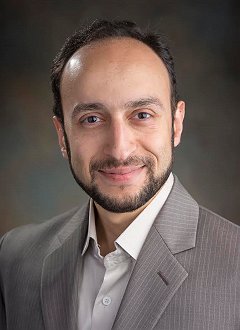
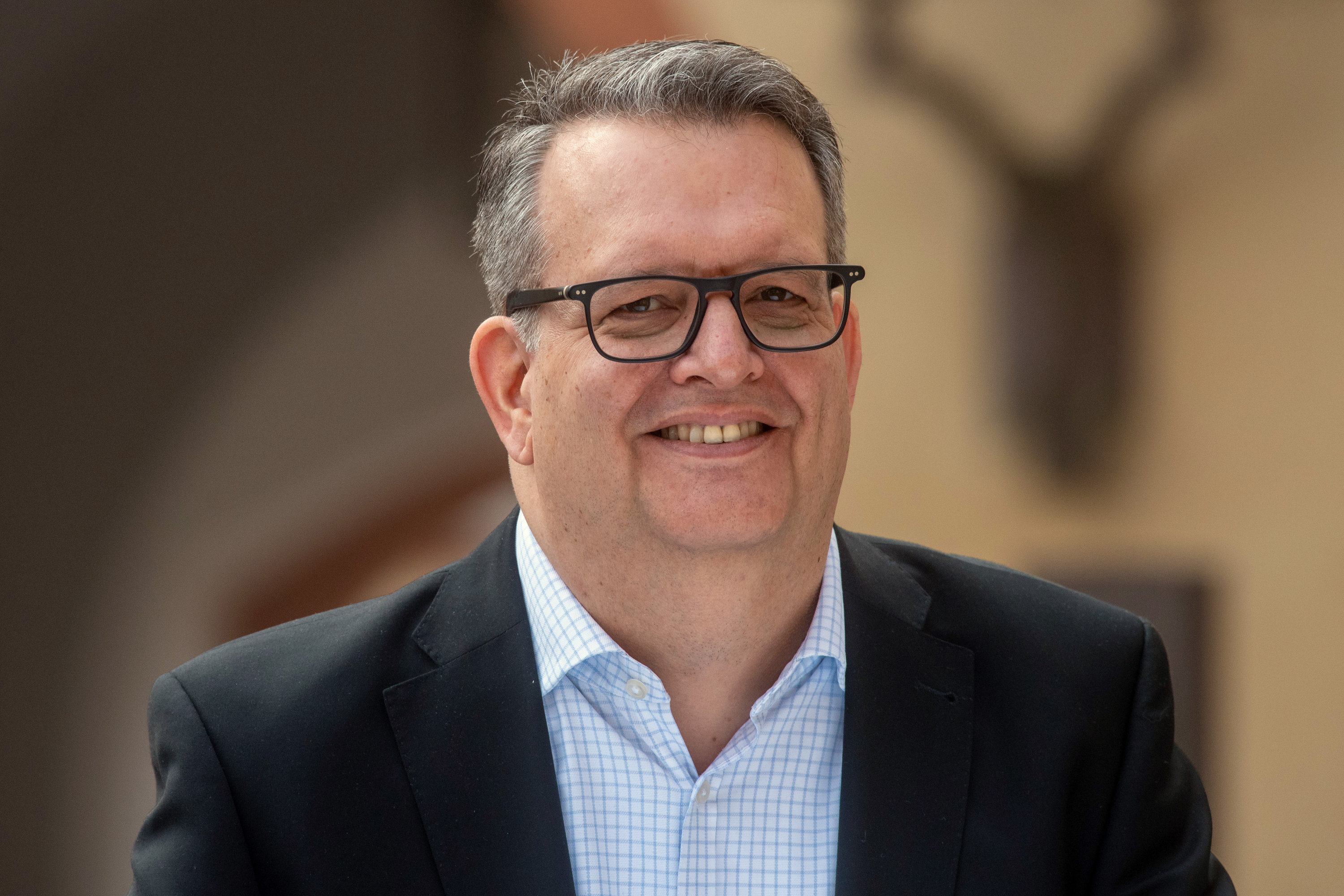
Prof. Hans-Arno Jacobsen is a full professor at TUM's Department of Informatics, holding the Chair of Application and Middleware Systems since 2012 via an Alexander von Humboldt Professorship. He previously worked at the University of Toronto in Computer Science and Electrical & Computer Engineering. His research integrates computer science, engineering, and information systems, focusing on middleware systems, event processing, and energy-efficient ICT solutions. Notable collaborations include work with Bell Canada, IBM, and Sun Microsystems. Education: Doctoral studies across Germany, France, and the USA, followed by postdoctoral research at INRIA Paris. His applied research explores FPGA integration into middleware architectures to enhance performance and energy efficiency. Scientific Awards: Alexander von Humboldt Professorship (2012) Research Trends: Recent publications emphasize database indexing (BE-tree), adaptive content routing, and distributed SOA architectures for business processes. His work bridges theoretical computer science with industrial scalability challenges. No listed grants or advisees are explicitly mentioned in the text, though his industry partnerships suggest significant collaborative projects. His lab focuses on middleware innovations for modern hardware environments.
Dr. habil. Ute Schmiedel is a Postdoctoral Researcher at the Institute of Plant Sciences and Microbiology , University of Hamburg, focusing on Organismic Botany and Mycology . Her work spans biodiversity monitoring, phylogenetics, and climate change adaptation in arid ecosystems. PhD (2002) and Habilitation (2022) in Biology, both centered on South African quartz field flora. Key research themes: long-term ecological observation in the Succulent Karoo, functional trait analysis, edaphism, and participatory biodiversity research. Scientific Contributions include studies on genetic differentiation in Oophytum , edaphic drivers of vegetation in quartz fields, and transdisciplinary approaches to climate resilience in African savannas. Her 2024 article in Annals of Botany explores micro-scale speciation dynamics in the Knersvlakte. Awards: Lita Beukes Cole Memorial Conservation Award (2024) for arid zone conservation efforts. Advising: Supervises 15+ theses on topics like plant-soil interactions, lichen diversity, and remote sensing applications in ecology. Active in SASSCAL and DFG projects, with expertise in vegetation mapping, population genetics, and restoration ecology. She collaborates with paraecologists in community-based research and integrates interdisciplinary methods for climate adaptation strategies.
Yen-Chia Hsu is an Assistant Professor at the Informatics Institute, University of Amsterdam, where they teach courses in Information Visualization and Data Science. Previously, they served as a Postdoctoral Researcher at the Department of Sustainable Design Engineering, Faculty of Industrial Design Engineering, TU Delft, and as a Project Scientist in the CREATE Lab at Carnegie Mellon University (CMU). Their academic journey reflects a unique interdisciplinary background bridging computer science and architectural design. Dr. Hsu earned their Ph.D. degree in Robotics in 2018 from the Robotics Institute at CMU, where they conducted research on using technology to empower local citizens and communities. Prior to that, they received their Master's degree in tangible interaction design in 2012 from the School of Architecture at CMU, where they studied and built prototypes of interactive robots and wearable devices. Before CMU, they earned a dual Bachelor's degree in both architecture and computer science in 2010 at National Cheng Kung University, Taiwan. Dr. Hsu is a computer scientist with an architectural design background whose research focuses on Community-Empowered Artificial Intelligence (AI) , where they co-design, implement, deploy, and evaluate interactive AI systems that empower communities, especially in addressing environmental and social issues. Their work spans both social and technical aspects of community engagement with technology. On the social side, they have proposed an alternative framework called Community Citizen Science (CCS) , which extends traditional citizen science methods to a hyper-local scale, emphasizing continued community engagement after technology interventions. On the technical side, they investigate human feedback in AI pipelines and algorithms that enable machine learning models to incorporate different types of human input. Dr. Hsu's scholarly output demonstrates a consistent focus on applying computer vision, machine learning, and data science to environmental monitoring and community empowerment. Their recent work shows an evolution from developing specific tools for pollution monitoring toward more comprehensive frameworks for community engagement with AI systems. A notable trend is the increasing emphasis on empathy-centered design and policy implications of community-driven data collection systems. Their research bridges the gap between technical innovation and social impact, particularly in the domains of air quality monitoring and environmental justice. Outstanding Student Academic Achievement (2005, 2006, 2007) from Department of Architecture, National Cheng Kung University, Taiwan Third Prize, National Country House Design Competition (2008) from Ministry of the Interior, Taiwan Best New Artist, The National Golden Award for Architecture (2009), Taiwan Webby People's Voice Award, Best Use of Video or Moving Image (2014) Best Paper Honorable Mention Award (Top 5%) at ACM CHI Conference (2017) Best Paper Honorable Mention Award (Top 2.5%) at ACM IUI Conference (2019) Prize for Community Collaboration, The Constellation Prize (2020) Dr. Hsu has been actively involved in numerous research projects that bridge academia and community action. Their work on the Smell Pittsburgh platform, which allows citizens to report pollution odors to regulators, has been particularly influential in environmental advocacy. They have collaborated with organizations including ACCAN, PennEnvironment, GASP, Sierra Club, ROCIS, Blue Lens, LLC, PennFuture, Clean Water Action, and Clean Air Council. Their research has received support from the Heinz Endowments and has been featured in TIME, Pittsburgh Post-Gazette, PC Magazine, and other media outlets. Dr. Hsu also maintains an active open-source presence, with several tools and datasets released to support community-driven environmental monitoring. Dr. Hsu leads projects that focus on developing tools for community engagement at scale, including COCTEAU, an empathy-based tool for decision-making, and Project RISE, which recognizes industrial smoke emissions. Their work connects with the Multimedia Analytics Lab Amsterdam, where they contribute to data science education and research. Their approach emphasizes co-creation with communities rather than top-down technology deployment, positioning them at the forefront of human-centered AI research with real-world social impact.
Nurhizam Safie is an academic at Universiti Kebangsaan Malaysia's Faculty of Information Science and Technology, focusing on cybersecurity, AI, and IoT research. His work addresses critical challenges in smart cities, healthcare systems, and public sector digitalization. Key Collaborations: Mohammad Kamrul Hasan (13 papers), Shayla Islam (8 papers), Taher M. Ghazal (4 papers) Research Themes: IoT security protocols, AI maturity models, cloud health systems, and 5G/6G network architecture His publications show strong focus on interdisciplinary applications of technology in healthcare and urban infrastructure. Notable work includes: 2025: 5G/6G network architecture for smart cities 2024: Hybrid encryption techniques against side-channel attacks 2023: Solar activity prediction using ML in urban environments While no formal awards are listed, his systematic literature reviews on AI maturity and BIM-IoT integration demonstrate methodological expertise. Current work emphasizes ethical technology implementation in both commercial and public sectors.
David Broneske is a Researcher at the Otto von Guericke University of Magdeburg , Germany. His work spans Database Systems , Heterogeneous Computing , and Machine Learning Applications , with a focus on GPU/FPGA Acceleration and Non-volatile Memory (NVM) Optimization . He has contributed to projects like ADAMANT (co-processor integration) and GridTables (H2TAP data stores). Key Research Areas : Database acceleration via specialized hardware, Graph database applications in clinical/biological domains, and AutoML for domain-aware model selection. Collaborations : Frequent co-author with Gunter Saake, Bala Gurumurthy, and Sajad Karim on topics like NVM Storage and GPU-based Query Execution . Publications : Over 105 papers (2012–2025) covering Protein Identification Systems , Entity Resolution , and Software Evolution Datasets . Workshops : Co-organized the Workshop on Novel Data Management Ideas on Heterogeneous (Co-)Processors (NoDMC) and contributed to standards like Backlogs/Interval Timestamps for temporal graph queries.
Dragan Jankovic is a prominent researcher at the University of Niš, Faculty of Electronic Engineering , Department of Computer Science and Informatics. His work spans multiple disciplines with a focus on Medical Information Systems , IoT for Healthcare , and Multi-Valued Logic applications. Collaborating extensively with researchers like Petar Rajkovic and Aleksandar Milenkovic, Jankovic has contributed to the evolution of resource-aware systems, software development methodologies, and digital logic optimization.
Prof. Yuval Shavitt is a Professor at Tel Aviv University's School of Electrical Engineering within the Iby and Aladar Fleischman Faculty of Engineering. His research focuses on Internet measurement, network mapping, and security, where he leads the globally recognized DIMES project for large-scale Internet topology analysis. Based in the Computer and Software Engineering department, he maintains an active research program with continuous publications and international collaborations. His primary research interests encompass Internet measurement and characterization, network mapping and modeling, Internet routing security (particularly IP hijack attacks), artificial intelligence applications in networking, network motifs, transportation networks, QoS routing, peer-to-peer network data mining, and active networks. This work has established him as a leading figure in Internet topology research, with methodologies adopted by major scientific initiatives. His research bridges theoretical algorithms and practical network infrastructure challenges, emphasizing real-world applicability through distributed measurement systems. Analysis of his 2009-2018 publications reveals consistent focus on Internet topology mapping, IP geolocation accuracy, and network security vulnerabilities. Key trends include the development of structural approaches for PoP-level geolocation, quantification of measurement biases in topology mapping, and analysis of geopolitical impacts on network infrastructure (notably the 2011 Arab events). His work demonstrates increasing integration of AI techniques for networking challenges and growing emphasis on infrastructure security. Scientific Recognition: Best Student Paper Award at ConTel 2009 He has secured significant research funding, including an 8-year Israel Science Foundation Center of Excellence grant for Internet modeling (with Danny Dolev, Shlomo Havlin, and Sarit Kraus), and led DIMES through EU projects EVERGROW, MOMENT, OneLab II, and GN3. While student advisement isn't explicitly detailed in the source material, his extensive publication record suggests substantial mentorship activity. Current grants focus on AI-driven network analysis and infrastructure security. He directs the DIMES project, a volunteer-driven distributed measurement system with global reach that has generated foundational Internet topology data. The project operates through an international consortium including EU partners and has been featured in Science Magazine for its innovative approach. Current work involves AI4Net (Artificial Intelligence for Networking) and network motif analysis within the Computer and Software Engineering infrastructure at Tel Aviv University.
Prof. Noam Koenigstein is a Professor in the Department of Industrial Engineering at Tel Aviv University's Iby and Aladar Fleischman Faculty of Engineering. His research focuses on developing scalable machine learning solutions for real-world recommendation systems, with extensive industry collaborations including Microsoft (Xbox) and Yahoo! Music. His primary research interests include recommender systems, collaborative filtering, and neural approaches to user modeling. He pioneered neural item embedding techniques like Item2Vec and advanced Bayesian methods for diversity-aware recommendations using Determinantal Point Processes. His work consistently bridges theoretical machine learning with industrial-scale deployment challenges. Analysis of his publication record reveals a strong evolution from traditional matrix factorization toward deep learning and attention-based architectures, always emphasizing practical scalability and addressing cold-start problems. His research demonstrates exceptional continuity in solving core recommendation challenges across domains including e-commerce, music, and video services. Scientific recognition includes: Best paper runner up award at TVX 2014 for group viewing pattern analysis Prof. Koenigstein has led multiple industry-academia partnerships that produced deployable recommendation frameworks, notably for Xbox Movies and Windows Store. His invited RecSys 2017 talk highlighted critical gaps between academic research and industrial requirements in recommender systems, establishing him as a leading voice in practical recommendation science.
Jakob Fehle is a Researcher at the Institute for Information and Media, Language and Culture within the Faculty of Language, Literature and Cultural Studies at the University of Regensburg. Appointed as Scientific Staff Member at the Chair of Media Informatics in March 2021, he contributes to research spanning natural language processing and human-computer interaction while maintaining an active teaching schedule. His academic credentials include: Master of Science (M.Sc.) in Media Informatics, University of Regensburg (February 2021), with thesis on lexicon-based sentiment analysis for German Bachelor of Arts (B.A.) in Media Informatics, University of Regensburg (February 2019) Fehle's research centers on Natural Language Processing with specialized expertise in Text Mining and Sentiment Analysis for German-language content. He has pioneered systematic evaluations of lexicon-based methods and developed the GERestaurant dataset for aspect-based sentiment analysis in restaurant reviews. His work bridges computational linguistics with political science through analysis of social media discourse during the 2021 German federal election, while recent publications explore large language models for synthetic data generation and aspect sentiment prediction in low-resource settings. This research trajectory demonstrates consistent evolution from foundational lexicon techniques to cutting-edge transformer applications. Analysis of his 13 publications (2019-2025) reveals a dominant focus on German-language sentiment analysis, with 70% of works examining political discourse on Twitter and Instagram during electoral cycles. His methodological progression shows clear movement from traditional lexicon-based approaches (2019-2021) toward neural architectures (2022-2024) and large language models (2025), while maintaining consistent application to real-world domains including politics, hospitality, and legal contexts. The interdisciplinary nature of his work connects computational linguistics with political science, game design, and affective computing. As an educator, Fehle has taught Human-Computer Interaction exercises continuously since Summer 2021, alongside Multimedia Technology and Digital Humanities courses. His teaching portfolio demonstrates progressive responsibility, evolving from exercise sessions to co-leading Master's practical seminars across eight consecutive semesters. He maintains office hours by appointment in Building PT, Room 3.0.30 at the University of Regensburg. Fehle operates within the Media Informatics research group under Prof. Dr. Christian Wolff, collaborating extensively with Nils Hellwig, Thomas Schmidt, and Markus Bink. His work integrates with broader projects analyzing social media during German elections and developing adaptive systems for gaming and virtual reality environments.
Leonard Konle is a researcher at the University of Würzburg, affiliated with the Institute of German Philology within the Faculty of Philosophy. He is part of the Chair of Computational Philology and Modern German Literary History, working alongside Prof. Dr. Fotis Jannidis and other researchers including PD Dr. Katrin Dennerlein, Anton Ehrmanntraut, Thora Hagen, Patrick Helling, Agnes Hilger, Dr. Kerstin Jung, Dr. Steffen Pielström, and Thorsten Vitt. His research focuses on the intersection of computational methods and literary analysis, particularly in German literature. His primary fields of interest include: Computational Philology and Digital Humanities Literary Emotion Analysis German Poetry Analysis from Realism to Modernism Corpus Linguistics and Text Mining Machine Learning Applications in Literary Studies Annotation Methods and Inter-annotator Agreement Leonard's scholarly work demonstrates a strong focus on applying computational methods to analyze German literary texts, particularly poetry. His research spans multiple dimensions of digital literary studies, from developing specialized language processing pipelines like LLpro for German narrative texts to analyzing emotional content across literary periods. He has made significant contributions to understanding how literary forms and emotional expressions evolve over time, particularly between 1850 and 1920. His technical expertise extends to modern NLP techniques including BERT-based classification systems and specialized metrics for measuring text similarity in short literary works. He has also contributed methodological frameworks for annotating poetic similarity and emotion markers, showing a commitment to rigorous research practices in computational literary analysis.
Kathrin Klausmeier is a full professor at the University of Göttingen's Seminar for Medieval and Modern History since October 2024, previously holding a professorship at the University of Leipzig (2022–2024). She also serves as a visiting researcher at Queen’s University Belfast (since 2024) and actively contributes to academic networks like the BMBF ReTransfer project. Education: PhD in History Didactics at Friedrich Schiller University Jena (2013–2019), First State Examination in German and History (2004–2009) Her research examines dictatorship studies (GDR and European dictatorships post-1945) through empirical approaches to historical learning , focusing on digital education , democratic education , and the internationalization of teacher training . Key projects include the "Historical Education and Public History" book series (co-edited with Christian Kuchler and Christian Bunnenberg) and advisory roles for institutions like the Andreasstraße Memorial and Ettersberg Foundation. Recent publications analyze GDR memory in post-unification Germany, digital tools for historical inquiry, and cross-cultural educational frameworks . She frequently lectures on topics such as "Contested Memories" and the intersection of political radicalization with historical education. Scientific Awards: Alfried Krupp Schülerlabor Fellowship Editorships: Series "Historical Education and Public History" (Wallstein-Verlag) Klausmeier advises extracurricular institutions and collaborates internationally on projects addressing historical consciousness and democratic resilience . Her work bridges academic research with public engagement, including media appearances and contributions to debates on counterfactual history and algorithmic impacts on democracy .
Amin Milani Fard is an Associate Professor of Computer Science at New York Institute of Technology - Vancouver Campus, and a visiting faculty member in Management Information Systems at Simon Fraser University's Beedie School of Business in Vancouver, Canada. Previously, he served as an Assistant Professor at NYIT Vancouver from 2018 to 2023. Dr. Milani Fard received his Ph.D. in Computer Software Engineering from the University of British Columbia (2012-2017), his M.Sc. in Computer Science from Simon Fraser University (2009-2010), and his B.Sc. in Computer Software Engineering from Ferdowsi University of Mashhad. His academic journey began with notable achievements including the 1st Rank Khwarizmi Award (awarded by Iran's President Mohammad Khatami) and an Exceptional Talents Admission Award. His research spans multiple disciplines, primarily focusing on Security, Privacy, and Assurance of Software and Information , with significant contributions to software testing, blockchain security, financial market prediction, and machine learning applications. His work on JavaScript security code smells, Ethereum smart contract vulnerabilities, and financial market prediction using multimodal data has been widely recognized. His publications demonstrate a consistent pattern of high-quality research with numerous papers in top conferences including ASE, ICST, and IEEE journals. Dr. Milani Fard's research portfolio shows a clear evolution from foundational work in software testing and JavaScript analysis toward more complex applications in financial technology and AI-driven security solutions. His most recent work focuses on integrating LLM technologies with security applications and advancing financial prediction models using sophisticated time series analysis. Scientific Awards and Recognition: Most Influential Paper Award at IEEE SCAM 2023 Presidential Excellence Award Finalist for Teaching at NYIT (2023) Best Paper Award at ECIR 2019 Multiple research grants including NSERC Alexander Graham Bell Canada Graduate Scholarship IEEE Best Paper Award Nominee at ICST 2017 As an active researcher, Dr. Milani Fard serves on program committees for major conferences including ASE and has contributed significantly to the software engineering community through his publications and research leadership. His work bridges theoretical computer science with practical applications in cybersecurity and financial technology, demonstrating both academic rigor and real-world impact.
Dr. Yuan Tian is an Assistant Professor in the School of Computing at Queen's University, Canada. Her research focuses on applying artificial intelligence and machine learning techniques to solve software engineering challenges, particularly in the areas of code analysis, technical debt management, and developer productivity enhancement. Dr. Tian received her Ph.D. in Information Systems from Singapore Management University in May 2017 under the supervision of Prof. David Lo (IEEE/ACM fellow). Prior to joining Queen's University, she worked as a data scientist at the Living Analytics Research Centre (LARC) in Singapore. She has also conducted research visits at Carnegie Mellon University in 2015 and Inria Paris in 2013. Dr. Tian's research spans several key areas in software engineering with AI: Automatic technical debt, bug, and code change management LLM applications for code transformation and generation Human-AI collaboration in software development Analysis of developer interactions with AI tools like ChatGPT Mining software repositories for insights into development practices Her recent work has increasingly focused on leveraging Large Language Models to address software engineering challenges, with publications examining code translation, technical debt identification, and the dynamics of developer-AI interactions. Her research demonstrates a strong empirical approach, often analyzing large datasets from GitHub and other software development platforms. Dr. Tian has received recognition for her work, including the Best Research Paper Award at AI Foundation Models and Software Engineering (Forge), 2024 for her paper "Exploring the Impact of the Output Format on the Evaluation of Large Language Models for Code Translation." Dr. Tian leads the RISE research lab at Queen's University, which currently includes 5 PhD students, 2 MSc students, and 2 undergraduate research assistants. She has successfully supervised several graduate students to completion, with alumni now working at institutions including Duke University and Veeva Systems. Her research is supported by funding including an NSERC Alliance-Mitacs project on "Pragmatic Automated Code Transformation Leveraging Large Language Models" in collaboration with industry partner Ross Video. The RISE lab (Goodwin 621) is dedicated to developing reliable and intelligent support for software engineering. The lab's current research focuses on three main thrusts: automatic technical debt/bug/code change management, LLM for code transformation, and human-AI collaboration in software development.
Professor Matthias Goeken is a faculty member at Deutsche Bundesbank's University of Applied Sciences, where he specializes in business informatics and economic sciences. His academic career spans several prestigious institutions including Philipps University of Marburg and Frankfurt School of Finance & Management. Education: Studied economics at Philipps University of Marburg Awarded PhD by Philipps University of Marburg Research assistant to Professor Hasenkamp at Philipps University of Marburg's Institute for Economic Policy Professor Goeken's research focuses on IT governance frameworks including COBIT and ITIL, with emphasis on strategic effectiveness and efficiency. His work explores the integration of IT governance with business processes, reference modeling approaches, and the application of meta-models to configure governance frameworks for specific organizational contexts. He has made significant contributions to understanding the balance between comprehensive governance and bureaucratic complexity. Analysis of his recent publications reveals a strong focus on evidence-based approaches to IT governance, systematic reviews of research literature, and the practical application of reference models. His work increasingly addresses the challenges of digital transformation, in-memory technology adoption, and the human factors influencing governance effectiveness. Professor Goeken has founded and directed several significant projects including the IT-Governance-Practice-Network at Frankfurt School of Finance & Management, and managed third-party funded initiatives such as EiSFach, SemGoRiCo, and Tosl. He serves as Director for publications for ISACA Germany Chapter and as a FIBAA expert for system and programme accreditations. He is also the founder and co-editor of the journal IT-Governance published by dpunkt-Verlag, demonstrating his leadership in establishing academic discourse around governance frameworks and their practical implementation in organizational settings.
Kaiwen Zhang is a prolific researcher affiliated with institutions including École de Technologie Supérieure (Montréal, Canada), Technical University of Munich, and McGill University. His work spans blockchain technologies, distributed systems, federated learning, and privacy-preserving protocols, with a focus on applications in electric vehicle infrastructure, smart grids, and online gaming. Research Interests: He specializes in blockchain-based solutions for supply chain traceability, IoT security, and federated learning monetization. His studies often integrate decentralized architectures, cryptographic protocols, and event-driven systems, addressing challenges in scalability, privacy, and resource allocation. Publication Trends: Over 17 years (2008–2025), Zhang’s 39 publications (323 citations) emphasize blockchain’s intersection with cybersecurity, transportation, and distributed computing. Key subtopics include smart contracts, privacy-preserving EV charging, and federated learning frameworks. Collaborations: He frequently collaborates with colleagues like Hans-Arno Jacobsen, Mohammad Sadoghi, and Syed Muhammad Danish, contributing to conferences such as Middleware, DEBS, and ACM/SIGAPP Symposium on Applied Computing.