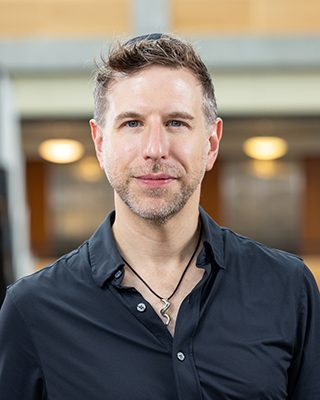
Alp Atakan Overview Alp Atakan is a Professor and Head of School in the School of Economics and Finance at Queen Mary University of London. He holds a PhD from Columbia University and previously served as an Assistant Professor at Northwestern University and Associate Professor at Koç University. His research focuses on Microeconomic Theory, Game Theory, Auction Design, and Information Economics. Key contributions include studies on reputation dynamics, search markets, and information aggregation in auctions. Education PhD in Economics (with distinction), Columbia University, 2003 MA in Economics, Columbia University, 2000 MBA, Columbia University, 1997 BS in Economics, University of Pennsylvania, 1993 Research & Grants Recipient of an ERC Consolidator Grant (2016–2021) for 'Market Selection, Frictions, and the Information Content of Prices'. Notable research includes work on bargaining dynamics, price discovery mechanisms, and the role of information asymmetry in auctions. He has published in top journals like Econometrica , Journal of Economic Theory , and American Economic Review . Teaching spans MBA/EMBA courses on managerial economics and microeconomic theory, alongside advanced graduate courses in game theory and dynamic programming. Grants & Projects ERC Consolidator Grant: Market Selection & Price Information (€1,089,000) Tubitak Grants: Sequential Debate (2014–2015) and Auctions & Information (2012–2014) His work bridges theoretical economics with practical market design, emphasizing strategic interactions in decentralized systems.
Mina Lee is an Assistant Professor in Computer Science at the University of Chicago, affiliated with the Data Science Institute and Cognitive Science. Her research focuses on 'Writing with AI,' exploring how AI transforms writing processes, content, and identities. She designs AI writing assistants and evaluates human-AI collaboration through user studies and experiments, addressing ethical implications like authorship norms and educational impacts. Education: Ph.D. in Computer Science from Stanford University (2023), advised by Percy Liang. B.S. in Computer Science from Korea University (2016). Postdoctoral research at Microsoft Research's Computational Social Science group (2023–2024). Research interests span Human-Computer Interaction (HCI), NLP, and computational social science. She co-founded workshops on Intelligent Writing Assistants and Human-centered Evaluation of Language Models. Notable awards include MIT Technology Review's Innovators Under 35 Korea (2022) and a Best Paper Award at GPCE 2016. Her work has been published in top venues like CHI, ACL, NeurIPS, and Nature Human Behavior. She advises PhD students on AI-assisted writing, cognitive augmentation, and safe generative models. Current lab projects include designing explainable AI tools and studying AI disclosure norms in writing.
Oleksandr Kapranov is an Associate Professor of English at NLA University College's Teacher Education program. His work intersects discourse analysis, climate change communication, and English language teaching (ELT), with a focus on sustainable development education and intercultural communication. Research areas include political speeches (e.g., Keir Starmer, Rishi Sunak), corporate disclosures (Bank of England, Vedanta Resources), and media framing (Greenpeace branches, King Charles III). Key pedagogical interests: digital competence, beginner EFL training, and discourse markers in academic writing. His recent publications analyze climate change discourse through syntactic structures, metonymy, modality, and evidentiality, emphasizing institutional and political narratives. While no formal awards are listed, his work spans interdisciplinary collaborations with NGOs, governments, and universities.
Zhi Da is the Howard J. and Geraldine F. Korth Chair in Finance and Professor of Finance at the University of Notre Dame , Mendoza College of Business, Department of Finance. He completed his Ph.D. in Finance at Northwestern University’s Kellogg School of Management (2006), preceded by an M.Sc. in Financial Engineering from the National University of Singapore (2001) and a B.B.A. with First-Class Honors (1999) from the same institution. Holding editorial roles at Journal of Finance , Management Science , Review of Financial Studies and several other top journals, he is a leading voice in empirical finance research. Education Ph.D. in Finance, 2006 – Kellogg School of Management, Northwestern University M.Sc. in Financial Engineering, 2001 – National University of Singapore B.B.A. (1st Class Honors), 1999 – National University of Singapore Research Interests Zhi Da’s scholarship sits at the intersection of asset pricing , behavioral finance , and market microstructure . He investigates how investor attention, institutional trading, liquidity frictions, and information flows jointly determine the cross-section of expected returns. His work delves into retail margin trading, the role of pension-fund flows in exchange-rate dynamics, the informational content of SEC filings, and the efficiency of short-selling mechanisms. By combining large-scale data analytics, textual analysis, and structural modeling, he uncovers novel predictors of returns ranging from presidential approval ratings to real-time attention measures. Recent projects explore fractional trading ’s impact on price efficiency, hedging demand as a driver of intraday momentum, and the hidden effort problem in delegated portfolio management. These themes collectively advance our understanding of limits to arbitrage and the formation of extrapolative beliefs. Publication Landscape Spanning 2025 back to 2009, his 15 most recent articles in Journal of Finance , Review of Financial Studies , Management Science , Journal of Financial Economics , and Journal of Financial and Quantitative Analysis converge on three broad motifs: (1) micro-level trading frictions—liquidity costs, margin requirements, and short-selling constraints; (2) macro-finance linkages—exchange rates, fiscal policy, and global capital flows; and (3) information economics—attention allocation, media analytics, and regulatory disclosures. The collective evidence demonstrates that seemingly small trading or informational frictions aggregate into large, persistent cross-sectional return predictability. Honors and Awards 2017 William F. Sharpe Award for Best Paper, Journal of Financial and Quantitative Analysis Lead-article distinctions in Journal of Finance , Review of Financial Studies , and Management Science Featured coverage in SmartMoney and CNBC Teaching & Mentorship At Notre Dame’s Mendoza College, Professor Da teaches Investments (undergraduate and MBA) and Fixed Income Securities , integrating cutting-edge research insights into the curriculum. While specific advisees are not listed, his extensive co-author network (22+ recurring collaborators) attests to a vibrant mentoring environment. Laboratory & Data Resources He publicly distributes the NAT (Net Arbitrage Trading) dataset, a stock-quarter panel of arbitrage positions used in Chen, Da & Huang (2019). This resource has become a standard tool for researchers studying arbitrage capital movements.
Janna Parker is a professor in the Department of Marketing at James Madison University, specializing in digital marketing, retailing, and nonprofit marketing. With a career transition from political campaigns, she focuses on social media's role in personal and professional branding. Her research examines work-personal social media boundaries, employer governance policies, and volunteerism in nonprofit contexts. Education: Bachelor's in History (California State University Sacramento), Master's (Cameron University), Doctorate (Louisiana Tech) Teaching Interests: Digital marketing education, social media strategy, nonprofit marketing Her scholarly work spans social media governance, volunteer engagement, and retail dynamics, with recent emphasis on digital marketing pedagogy and cancel culture implications. Parker has contributed to academic journals through empirical studies and conceptual commentaries. Key article trends include: Digital marketing education evolution (2024) Social media governance in corporate and nonprofit contexts (2024) Online teaching satisfaction in higher education (2022) Volunteer brand community dynamics (2020) Consumer behavior frameworks (2019) Her media appearances include expert commentary on holiday retail strategies and social media research, reflecting practical applications of her academic work.
Marie Sandberg is an Associate Professor in the Promotion Programme at the Saxo Institute, University of Copenhagen. She is affiliated with the Faculty of Humanities and participates in HUM:Global initiatives focused on interdisciplinary global studies. Her research emphasizes ethnological analyses of migration, borders, and refugee policies, particularly exploring temporal governance, state-civil society interactions, and the paradoxes of welfare-state frameworks. Her work examines the everyday practices of refugees and volunteers in contexts of temporary protection status, as well as the ethical challenges in digital migration studies. She contributes to debates on deterrence policies, repatriation agendas, and the precarity of academic labor. Sandberg’s research methodologies often combine ethnography with critical analysis of policy frameworks. Key Research Themes: Refugee temporariness, border studies, humanitarianism, and academic precarity Professional Roles: Member of the Professional Project Group (PPG) in HUM:Global, coordinating interdisciplinary projects Geographic Focus: Europe, with emphasis on Denmark, Poland, and Germany Recent publications highlight her focus on the interplay between state policies and grassroots efforts, as well as the temporal dimensions of displacement. She has co-edited special issues on migration and authored studies on volunteerism in refugee relief work.
Dr. Nienke Smit is an Assistant Professor in the Department of Education at Utrecht University's Faculty of Social and Behavioural Sciences. Her research focuses on scaffolding processes, adaptive teaching, and classroom observational research from a complex dynamic systems perspective. Specializes in teacher-student interaction Expert in adaptive instruction and observational methods Collaborates with Data Science department Develops tools for classroom observation Research interests include language learning and teaching , judgment and decision-making in education , and professional development of teachers . She leads projects like Eye Get It (joint attention in classrooms) and a replication study on adaptive instruction effectiveness. Her work applies dynamic systems theory to second language development and foreign language pedagogy. Recent publications address translanguaging in multilingual classrooms, replication studies , and process-oriented research . She teaches at Utrecht's Graduate School of Teaching and works on initiatives to reduce teacher shortages through improved training programs.
Jae Eun Chung is a Professor in the Department of Communication Studies at Howard University's School of Communications. Her research focuses on new media technologies, their psychosocial impacts, and health communication, with a particular emphasis on community engagement and digital discourse. Ph.D. in Communication from the University of Southern California M.A. in Telecommunications from Indiana University at Bloomington Dr. Chung's work explores the intersection of social media and health, analyzing how digital platforms influence public health perceptions, patient-doctor interactions, and health equity. She has published extensively in journals like Journal of Communication , Computers in Human Behavior , and Health Communication , often employing community-based participatory research (CBPR) to address disparities in asthma care, maternal health, and HPV-associated cancer awareness. Recent publications highlight trends in leveraging social media for health interventions, examining misinformation dynamics during crises like the COVID-19 pandemic, and analyzing digital ecosystems. Her methodological approaches include network analysis, narrative studies, and assessments of digital engagement metrics. Howard University RCMI Grant: Enhancing recruitment of African-Americans and Hispanics in health research NSF HDR Grant: Collaborative research on data analytics for community enrichment PACRI Grant: Improving health outcomes for asthmatic children in public housing Bezos Earth Fund: Indoor environmental quality disparities in underserved communities Dr. Chung collaborates with interdisciplinary teams, including public health experts and data scientists, to advance health communication strategies. She has mentored students and researchers in projects analyzing social media's role in health promotion, digital privacy, and community-academic partnerships.
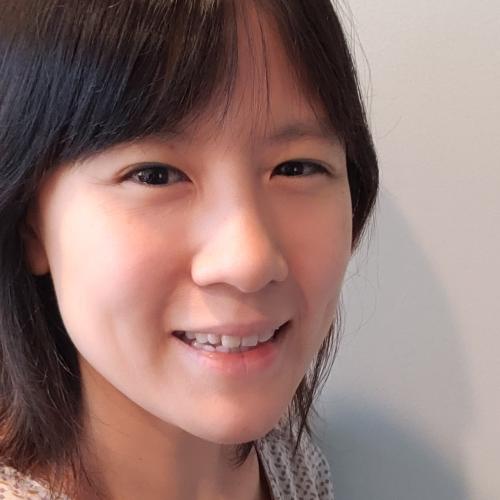
Dr. Muhammad Umar Farooq is a Lecturer and Module Director at York St John University's London Campus , specializing in Business, Marketing, and Project Management education for postgraduate students. He joined the university in 2022 and previously held roles as an Associate Lecturer at the University of West London, while also contributing to teaching and supervision at the University of East London and Regent’s University London. He holds a Doctorate in Business Administration (DBA), an MBA, and a Postgraduate Diploma in Leadership and Strategy, coupled with the prestigious Fellow of the Higher Education Academy (FHEA) distinction. His research focuses on digital marketing, SME innovation, AI applications in content creation, and project management strategies. Notable areas include generative AI for SME competitiveness, sustainable lean practices in construction, and agile methodologies in software development. He actively contributes to academic governance as an external examiner at Northumbria University and the University of Huddersfield. Teaching modules include Marketing Communication , Digital Marketing Strategy , Strategic Project Management , and Applied Research Project . His work bridges academic rigor with industry insights, emphasizing practical applications for organizational success. Research Awards: Recognized as FHEA. Professional Contributions: External examiner roles, LinkedIn engagement, and RaY Postgraduate Research supervision.
Bart Cammaerts is Professor of Politics and Communication at the Department of Media and Communications , London School of Economics and Political Science (LSE). He previously served as Head of the Department and held academic roles at LSE since 2005, including Lecturer , Senior Lecturer , and Associate Professor . Earlier, he conducted postdoctoral research at LSE (Marie Curie Fellowship, 2003–2005), the University of Amsterdam (2002–2003), and doctoral research at the Vrije Universiteit Brussel (1997–2002). Education: MA in Political Sciences, Vrije Universiteit Brussel (1996) PhD in Social Sciences, Vrije Universiteit Brussel (2002) Research Focus : Interdisciplinary work at the intersection of media and communication studies and political science , emphasizing the dialectic interplay between media and resistance, alternative media, protest movements, and critical analyses of neo-fascism normalization. His methodological approach combines quantitative (surveys, content analysis) and qualitative (interviews, discourse analysis) methods. Publications include books on anti-austerity protests , youth participation in democracy , and mediation of protest movements , reflecting themes like media strategies of activists , symbolic resistance , and hegemonic struggles . He is currently writing books on Dichotomies in Media Theory and the War on Woke . Scientific Awards Marie Curie Fellowship Postdoctoral Funding from EU’s 5th Framework Program Doctoral Supervision : Supervises Jessica Kong and has mentored Jessica Baines , Brooks DeCillia , and Cornelia Reyes Acosta to completion. He has taught postgraduate courses including Mediated Resistance and Activism , Political Communication in Democracies , and Modern Campaigning Politics .
Ming-Syan Chen is a distinguished academic holding dual roles as a Distinguished Research Fellow and Director of the Research Center for Information Technology Innovation (CITI) at Academia Sinica, Taiwan, and a Distinguished Professor jointly appointed across multiple departments at National Taiwan University (NTU), including Electrical Engineering (EE), Computer Science and Information Engineering (CSIE), and the Graduate Institute of Communication Engineering (GICE). His career spans academia and industry, with prior roles as a research staff member at IBM Watson Research Center and leadership positions in Taiwan's technology sector. Education: He earned a B.S. in Electrical Engineering from National Taiwan University, followed by M.S. and Ph.D. degrees in Computer, Information, and Control Engineering from the University of Michigan, Ann Arbor. Research Interests: Chen's work focuses on databases, data mining, machine learning, multimedia networking, and cloud computing. He has authored over 350 papers and holds numerous patents, contributing to foundational advancements in query processing, data management, and networked systems. Award Highlights: Recipient of ACM and IEEE Fellowships, National Chair Professorship (lifetime honor), Teco Award, Pan Wen Yuan Distinguished Research Award, and IBM's Outstanding Innovation Award. His contributions span research, teaching, and technology commercialization. Leadership & Service: Former Dean of NTU's College of Electrical Engineering and Computer Science, CEO of Taiwan's Networked Communication Program, and Editor-in-Chief of the International Journal of Electrical Engineering. He has chaired international conferences and served on editorial boards of journals like IEEE TKDE and VLDB. Labs & Teams: Leads the Network Database Laboratory and collaborates on national initiatives in information and communication technologies. His research groups focus on data science, distributed systems, and social network analysis.
Professor Brent Mittelstadt is a leading academic in data ethics and AI governance at the University of Oxford's Oxford Internet Institute (OII), serving as Professor of Data Ethics and Policy and Director of Research. He coordinates the Governance of Emerging Technologies (GET) programme, focusing on ethics, law, and technology interplay. His work bridges academic research with policy impact, contributing frameworks like 'counterfactual explanations' and fairness metrics ('Conditional Demographic Disparity') used globally. He leads high-profile projects such as Trustworthiness Auditing for AI and A Right to Reasonable Inferences in Advertising and Financial Services. Research interests span AI ethics, medical ethics, technology governance, and non-discrimination law. He has pioneered ethical frameworks addressing algorithmic bias, GDPR compliance, and AI accountability. His work has influenced policy bodies like the UK Information Commissioner’s Office and the European Commission, and is implemented by tech giants such as Google and Microsoft. Awarded O2RB Excellence in Impact Awards (2018, 2021) and PLSC Best Paper (2019) Funded by Wellcome Trust, Sloan Foundation, and others Advisory roles for NHSx, GSK Consumer Healthcare, and regulatory bodies Recent work focuses on AI regulation (EU AI Act), generative AI ethics, and healthcare AI governance. He co-leads the OxonFair toolkit for algorithmic fairness and investigates societal impacts of deepfake proliferation and large language models.
Noah Smith is the Amazon Professor of Machine Learning at the University of Washington's Paul G. Allen School of Computer Science & Engineering. He holds adjunct appointments in Linguistics and serves as Senior Director of NLP Research at the Allen Institute for Artificial Intelligence. Previously an Associate Professor at Carnegie Mellon University, Smith earned his Ph.D. from Johns Hopkins University and dual BS/BA degrees from the University of Maryland. His research focuses on developing algorithms for language/music data processing, AI methodology improvement, and human capability augmentation. He co-directs the OLMo open language modeling initiative and leads the NSF/NVIDIA-funded 'Open Multimodal AI Infrastructure to Accelerate Science' project. Research spans machine learning foundations, NLP applications, and computational social science methodologies. Smith's publications demonstrate consistent focus on transformer architectures, language model optimization, and AI ethics. Recent work addresses length extrapolation techniques, self-supervised alignment, domain adaptation, toxicity evaluation, and linguistic transfer learning. ACL Fellow (2020) Amazon Alexa Prize (2017) UW Innovation Award (2016-2018) NSF CAREER Award (2011-2016) 15+ best paper awards at major conferences He has graduated 32 PhD students and mentored 18 postdocs, with 28 alumni in faculty positions globally. Leads the Noah's ARK research group and UW NLP lab, focusing on open-source AI infrastructure development.
Gareth Roberts is an Associate Professor in the Department of Linguistics at the University of Pennsylvania, where he serves as Graduate Chair. He is also a faculty member of the Psychology Graduate Group, founder and director of the Cultural Evolution of Language Lab, and co-director of the Social and Cultural Evolution Working Group at Penn. Roberts earned his PhD in Linguistics from the University of Edinburgh in 2010, following an MSc in Evolution of Language and Cognition (2006) and a BA in German and Russian (2003) from the University of Nottingham. His academic journey includes postdoctoral positions at Yeshiva University and the University of Stirling before joining Penn as an Assistant Professor in 2014, where he was promoted to Associate Professor in 2022. His research focuses on the role of social and communicative pressures in shaping language emergence and evolution. Roberts investigates fundamental questions about linguistic variant spread, phonological system structuring, and how communication shapes linguistic structure. His work bridges linguistics, cognitive science, and cultural evolution through innovative experimental approaches using artificial languages and laboratory simulations. Analysis of Roberts' recent publications reveals a consistent focus on experimental semiotics, with particular attention to social biases in language evolution, phonological organization, indexicality emergence, and the dynamics of linguistic variation. His work often combines computational modeling with human experiments to isolate specific mechanisms driving language change. Linguistic Society of America Cognitive Science Society Philological Society Cultural Evolution Society Roberts has successfully secured substantial research funding including an NSF PAC Grant ($102,648), Penn URF Research Grants ($12,155), MindCORE initiative grant ($600,000), and multiple smaller grants totaling over $20,000. His lab currently includes researchers investigating diverse topics from case and gender marking emergence to AI agent effects on group dynamics, linguistic and genetic data in British history, and phonological space organization. The Cultural Evolution of Language Lab, which Roberts founded and directs, conducts cutting-edge research using experimental semiotics methodologies. Current projects examine how social factors influence language change, the emergence of linguistic structure through communication, and the interaction between iconicity and combinatoriality in communication systems.
Dr. Louise Alexander is an Associate Professor in Mental Health Nursing at Deakin University's School of Nursing & Midwifery (Faculty of Health). She holds prior academic roles including Senior Lecturer (ACU, 2018–2023) and Lecturer positions (ACU and Holmesglen Institute). Her research focuses on mental health nursing workforce sustainability, stigma reduction, simulation-based education, and curriculum development. Key interests include nurse resilience, pandemic impacts on healthcare workers, and improving student attitudes towards mental illness. Education: PhD from Deakin University; GCHE qualification Certifications: University of Melbourne's Emerging Leaders & Management Program (2021–2022) Teaching: Leads courses in forensic mental health, therapeutic communication, and health promotion Research Highlights: Recent work examines pandemic trauma among nurses, alcohol consumption trends post-COVID, and leadership's role in workforce retention. Her studies emphasize qualitative methods and integrative reviews to address systemic challenges in mental health nursing education and practice. Awards/Grants: No explicit awards listed; research supported by institutional collaborations. Active in developing transition-to-practice programs and evaluating simulation-based training efficacy. Labs/Teams: Collaborates with interdisciplinary teams on mental health workforce resilience and stigma reduction initiatives. Engages in national and international nursing education networks.



/prod01/yorksjacuk/media/content-assets/staff-profile-images/1705856253539.jpg)