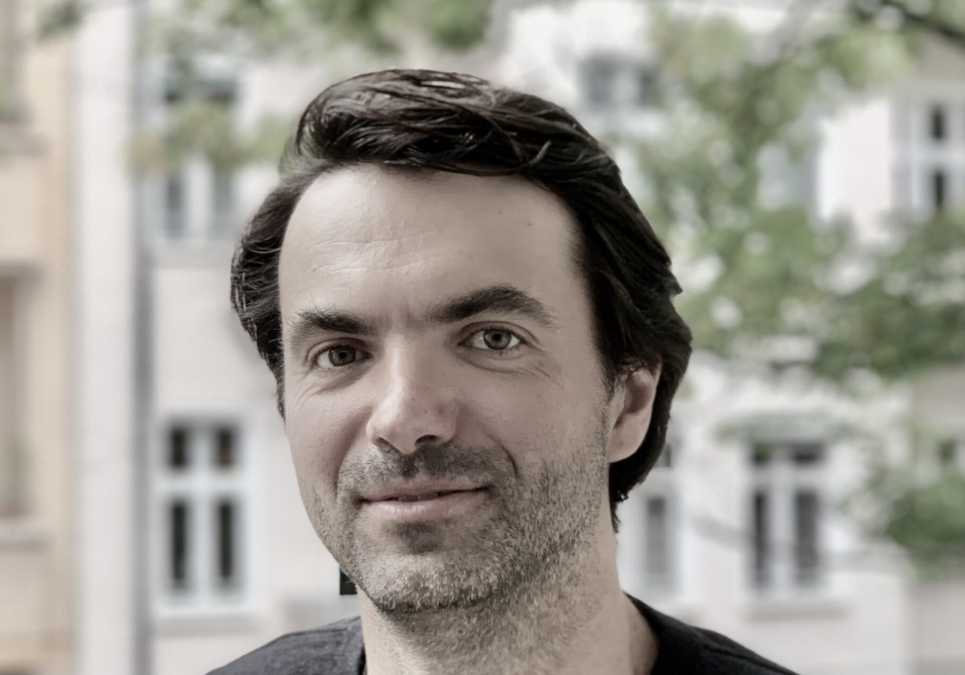
Mariano Bacigalupo Saggese is a distinguished Professor in the Department of Administrative Law at the National University of Distance Education (UNED), with significant affiliations at Complutense University of Madrid and the National Commission of Markets and Competition (CNMC). His academic career spans over three decades with continuous scholarly output from 1990 through 2025, demonstrating his active engagement in legal scholarship and policy development. His research interests focus on Administrative Law, European Union Law, Energy Regulation, Competition Law, and Public Sector Regulation. Bacigalupo Saggese's work bridges theoretical legal frameworks with practical regulatory challenges, particularly in energy markets and EU competition policy. His scholarship demonstrates a consistent pattern of addressing contemporary legal issues through both national and European perspectives. His most recent publications (2023-2025) reveal continued engagement with pressing legal challenges including energy crisis management, state aid regulation, disinformation governance, and constitutional reform in Spain's autonomous system. These works demonstrate his ability to address evolving legal landscapes while maintaining scholarly rigor. Bacigalupo Saggese has authored numerous books, directed theses, and published extensively in leading Spanish legal journals. His work shows particular strength in translating complex regulatory frameworks into accessible scholarly analysis, with significant contributions to understanding the intersection of administrative law, EU law, and sector-specific regulation. His scholarly impact is reflected in his H-index of 6 with 182 citations, indicating substantial influence within his academic fields. His publications span traditional legal scholarship while addressing contemporary regulatory challenges in energy, competition, and digital governance. Throughout his career, he has maintained strong connections between academic scholarship and practical regulatory frameworks, serving as a bridge between theoretical legal analysis and real-world policy implementation. His work with the National Commission of Markets and Competition demonstrates this practical application of legal scholarship.
Matthew Lease is a Professor at the School of Information, University of Texas at Austin, where he serves as Director of Doctoral Studies and Assistant Graduate Advisor. He is a Distinguished Member of the Association for Computing Machinery (ACM), a Senior Member of the Association for the Advancement of Artificial Intelligence (AAAI), and an Amazon Scholar. Lease co-directs the $20M NSF-Simons AI Institute for Cosmic Origins (CosmicAI) and is a faculty founder and leader of UT's Good Systems, an eight-year, $20M university-wide Grand Challenge aimed at designing responsible AI technologies. In 2023-2024, he was invited four times to address the Texas Legislature on responsible AI. Ph.D. Computer Science, Brown University, 2010 M.Sc. Computer Science, Brown University, 2004 B.Sc. Computer Science, University of Washington, 1999 Lease directs the UT Austin Laboratory for Artificial Intelligence and Human-Centered Computing (AI&HCC), where his research spans artificial intelligence modeling and human-computer interaction design. His work focuses on creating novel datasets, building AI models, and evaluating both model performance and their impact on end-users. When automated AI falls short, his team designs human-in-the-loop approaches, leveraging AI model explanations and creative user interfaces. To promote fair AI, they focus on better annotation techniques to avoid bias and develop modeling strategies to mitigate dataset biases. Their work tackles real-world problems as part of UT Austin's Good Systems Grand Challenge, with an ongoing emphasis on content moderation—exploring automated, human-in-the-loop, and human-safe practices to combat disinformation, hate speech, and online polarization. Lease's recent publications (2021-2024) demonstrate a strong focus on human-centered AI, particularly in the areas of fair and explainable AI, content moderation, fact-checking, and crowdsourcing. His research integrates technical AI development with human factors considerations, emphasizing the importance of designing AI systems that work effectively with human users. The publications reveal a consistent theme of addressing bias in AI systems, improving human-AI collaboration, and developing methods to ensure the ethical deployment of AI technologies in sensitive domains like content moderation and misinformation detection. His work shows progression from foundational techniques in crowdsourcing and human computation toward more sophisticated approaches that consider psychological impacts and ethical implications. 2024 Test of Time Paper Award, AAAI Conference on Human Computation and Crowdsourcing (HCOMP) 2024 Most Influential Paper Award, IEEE/ACM International Conference on Automated Software Engineering (ASE) 2024 Best Paper Honorable Mention, ACM Conference on Computer Supported Cooperative Work (CSCW) 2022 Best Student Paper, Conference on Information Systems and Technology (CIST) 2020 Conference Award Track, Journal of Artificial Intelligence Research (JAIR) 2019 Best Student Paper, European Conference for Information Retrieval (ECIR) Early Career awards from DARPA, NSF, and IMLS Lease has secured significant funding for his research, including the $20M NSF-Simons AI Institute for Cosmic Origins and the $20M Good Systems Grand Challenge. His lab, AI&HCC, has developed numerous tools and methodologies for human-AI collaboration, particularly in the context of content moderation and fact-checking. He has advised numerous students who have gone on to publish in top-tier conferences and journals in AI, HCI, and NLP. Lease actively collaborates with industry partners including Amazon, where he serves as an Amazon Scholar, and has served on advisory boards for JASIS&T, Texas Advanced Computing Center (TACC), and UT Austin-Amazon Science Hub. His research has led to practical tools like SQUARE for aggregating crowd responses and methods for transparent AI evaluation. Lease leads the UT Austin Laboratory for Artificial Intelligence and Human-Centered Computing (AI&HCC), which has developed innovative approaches to human-AI collaboration. The lab's work on content moderation addresses critical challenges in online safety, including the psychological well-being of content moderators who face traumatic material. Their research on fair and explainable AI has produced methods for detecting toxic speech while maintaining accuracy across demographic groups. The lab actively collaborates with fact-checking organizations through co-design processes to create tools that meet real-world needs. As part of UT Austin's Good Systems initiative, the lab is developing AI technologies that prioritize human values and social responsibility from the outset of the design process.
Christian Katzenbach is Professor of Media and Communication at the University of Bremen and Head of the Lab "Platform Governance, Media, and Technology". At the Alexander von Humboldt Institute for Internet and Society (HIIG), he is project lead researcher for the Research Program: The Evolving Digital Society. Previously, he was interim professor for communication policy and media economics at the Institute for Media and Communication Research at Freie Universität Berlin and chair of the Section Digital Communication of the German Communication Association. His educational background includes: Media and Communication Studies Philosophy Computer Science studied across institutions in Berlin, Madrid, and Potsdam. Professor Katzenbach's research focuses on the intersection of technology, communication, and governance. His primary areas of interest include the governance and regulation of digital platforms, discourses and governance of artificial intelligence, and the increasing role of data, algorithms, and digital infrastructures in organizing communication and social interactions. His work examines how technological systems shape and are shaped by social, political, and regulatory frameworks, with particular attention to the evolving structures of platform governance and AI policy. He approaches these topics from interdisciplinary perspectives that bridge communication studies, science and technology studies, and digital governance frameworks. His recent publications demonstrate a consistent focus on platform governance, AI policy, and digital society issues. The research shows an evolution from examining foundational issues in platform governance toward more specific analyses of AI systems, content moderation mechanisms, and the regulatory challenges posed by algorithmic systems. There is a clear methodological diversity in his work, incorporating qualitative, quantitative, and mixed methods approaches to understand the complex interplay between technology and society. His notable scientific achievements include: German Communication Association Best Dissertation Award (2016-2017) for his conceptual work on governance, technology, and communication Professor Katzenbach has secured significant research funding for multiple international projects. His current projects include "Shaping 21st Century AI – Controversies and Closure in Media, Policy, and Research" (2021-2024; ESRC, DFG, ANR, SSHRC), "Imaginaries of Artificial Intelligence: The Communicative Construction of AI in China, Germany and the US" (2021-2024; SNF, DFG), "Platform Governance and Copyright" (H2020) (2020-2022; H2020), and "Innovative Open Access in Small Sciences" (InnOAccess) (2019-2021; DFG). He has successfully led research initiatives funded by the German Research Foundation, the EU Framework Programme H2020, the German Ministry of Education and Research, and the Volkswagen Foundation. He leads the "Platform Governance, Media, and Technology" Lab at the University of Bremen and is actively building the "Platform Governance Archive" – a longitudinal corpus of platform policies. Additionally, he is a co-initiator of the open access journal Internet Policy Review and a PI of a research project on sustainable funding of scholar-led open access journals. He co-initiated a research network in the field of platform governance and was co-responsible for hosting the 2016 conference of the Association of Internet Researchers in Berlin – for the first time in Germany.
Dr. Tobias Mast serves as Senior Researcher leading the 'Regulatory Structures and Rule Formation in Digital Communication Spaces' research area at the Leibniz Institute for Media Research | Hans Bredow Institute (HBI) since January 2022, while also holding a lecturer position at the University of Hamburg's Faculty of Law. He was appointed as an expert to the German Bundestag on Digital Services Act implementation in January 2024 and elected to the Advisory Board of the Coordination Office for Digital Services at the Federal Network Agency in July 2024. Albert Ludwig University of Freiburg: Law studies with focus on information and media law HBI: Doctorate completed January 2019 on 'the state's public information activities' from interdisciplinary perspective University of Mainz: Currently pursuing habilitation under Prof. Dr. Matthias Bäcker Mast's research centers on the evolving regulatory landscape of digital communication spaces, particularly examining how rules in social networks shape social understanding and self-assurance practices. His work bridges legal theory with practical platform governance, focusing on EU digital regulation frameworks like the Digital Services Act and Digital Markets Act. He investigates how private entities engage in lawmaking through terms of service while analyzing structural changes in legal systems adapting to digital environments. His publication portfolio reveals a clear trajectory toward increasingly influential work in EU digital regulation, with recent focus on DSA implementation challenges, trusted flagger systems, and public broadcasting resilience. Mast's interdisciplinary approach combines legal scholarship with media studies and systems theory, producing work that informs both academic discourse and policy implementation at the highest governmental levels in Germany. Mast serves as associate editor at verfassungsblog.de and acts as examiner in the state section of the First Legal Examination for the Hamburg Judicial Examination Office. His current policy engagement demonstrates significant impact on Germany's approach to digital services regulation. At HBI, Mast leads research examining rule formation in digital communication spaces, with particular focus on social networks and emerging social practices. His work contributes to the institute's broader mission of understanding media transformation in digital societies through rigorous interdisciplinary research.
Michael Lyu is a Professor at The Chinese University of Hong Kong specializing in software engineering with a focus on cloud reliability, AIOps, and log analysis. His research bridges the gap between theoretical advances and practical industrial applications in large-scale cloud systems. His research interests span Software Engineering , Cloud Computing Reliability , AIOps , and Log Analysis . Dr. Lyu's work addresses critical challenges in modern cloud operations, including failure diagnosis, anomaly detection, and reliability engineering. His recent research has pivoted toward leveraging large language models for software engineering tasks, particularly in code generation and log analysis. His publication portfolio demonstrates consistent contributions to major software engineering conferences (ASE, ICSE, ESEC/FSE) from 2018-2025, with a noticeable increase in LLM-related research since 2023. The trend shows a clear evolution from traditional software engineering topics toward AI-driven approaches for cloud operations. ICSE 2021 Keynote: "Reliability-Driven AIOps for Cloud Resilience" ASE 2023: Maat: Performance Metric Anomaly Anticipation for Cloud Services ASE 2024: LILAC: Log Parsing using LLMs with Adaptive Parsing Cache Dr. Lyu actively mentors students, with numerous co-authored publications showing his advisees as first authors. His work receives significant attention in both academic and industrial software engineering communities, addressing practical problems faced by large-scale cloud service providers. His research group appears focused on developing data-driven approaches for improving cloud system reliability through advanced analytics of logs, traces, and KPIs.
Shubin Yu serves as Adjunct Associate Professor in the Department of Communication and Culture at BI Norwegian Business School, with concurrent visiting appointments at Peking University HSBC Business School's Shenzhen and UK campuses. His academic journey includes previous positions as Assistant Professor at BI Norwegian Business School (2021-2024) and Peking University HSBC Business School (2019-2021), following a postdoctoral fellowship at the latter institution. Ph.D. in Communication Science, Ghent University (2017) M.S. in Statistics, KU Leuven (2016) M.A. in Business Economics, KU Leuven (2014) M.A. in Cultural Studies, KU Leuven (2014) Yu's research centers on digital communication dynamics, particularly examining how digital technology reshapes human interaction patterns. His work spans luxury brand management in digital contexts, crisis communication strategies across cultures, and the psychological mechanisms underlying chatbot-human interactions. Notable contributions include cross-cultural studies on emoji usage in crisis response and investigations into service response timing effects on luxury brand perception. His research employs experimental methodologies to uncover nuanced consumer behavior patterns in emerging digital environments. Analysis of Yu's recent publications reveals a strong focus on emerging digital frontiers: 40% examine AI-mediated communication (chatbots, generative AI), 30% explore luxury brand challenges in digital transformation (NFTs, metaverse), and 30% investigate cross-cultural crisis communication dynamics. His work consistently bridges theoretical frameworks like Stereotype Content Model with practical business applications. Yu actively contributes to academic discourse through conference presentations at major venues including AMA, ICA, and ACR conferences, with recent work addressing generative advertising applications and laughter as crisis communication strategy. His teaching and research integrate technical expertise in statistics with deep understanding of cultural and business contexts, reflecting his interdisciplinary educational background. Current projects examine AI overreliance in professional settings and grotesque advertising in avant-garde branding.
Dr. Persephone Blue Berge (they/her) is an Assistant Professor of Experimental Game Design at the University of Alberta, cross-appointed in the Media & Technology Studies Program and the Department of Women's and Gender Studies within the Faculty of Arts. They direct the Discord Academic Research Community and co-founded Tabletop Research in Practice, contributing significantly to queer game studies and platform analysis. Dr. Berge's research centers on trans game design, feminist platform studies, and toxic technocultures, with particular interest in 'unplayable' games and the intersections of identity and digital spaces. Their work explores how marginalized communities navigate and reshape gaming platforms, examining issues of representation, queerness, and power dynamics in both digital and tabletop gaming environments. Analysis of Berge's publications reveals a consistent focus on queer interpretations of gaming culture, particularly examining slash-ship fandoms, trans representation in games like Dungeons & Dragons, and the dynamics of online communities on platforms like Discord. Their research demonstrates how fan communities actively create space for queer visibility through creative labor, challenging heteronormative game structures. As an educator, Berge teaches courses including Understanding Video Games (MST 350), Topics in Building in Context (DH 530), Special Topics in Media Studies (MST 399), and Sexualities: Special Topics (WGS 470), integrating their research on experimental game design and gender studies into the classroom. Dr. Berge's work appears in prestigious journals including New Media & Society, Game Studies, and Feminist Media Studies, reflecting their interdisciplinary approach that bridges game studies, gender studies, and digital media research. Their scholarship has significantly contributed to understanding how gaming communities negotiate identity, representation, and power in digital spaces.
Affiliations & Roles Michael W. Godfrey is a Professor in the David R. Cheriton School of Computer Science at the University of Waterloo . He holds the David R. Cheriton Faculty Fellowship and has served as an associate director of Cornell's M.Eng. program. His roles include: General Chair for ICPC 2025 (IEEE Program Comprehension) Member of steering committees for ICSME, MSR, SCAM, and SWAN Course coordinator for CS138/CS246 and instructor for advanced topics courses Research Focuses on software evolution , program comprehension , and mining software repositories . His work addresses challenges in code clone analysis, developer productivity, and empirical software engineering. Notable contributions include: Advocating for intentional cloning as valid design practice Pioneering studies on code review quality and anomaly detection Developing tools like JavaDUCK (educational project) and mel (model extraction) Awards & Recognition Recipient of: Best Paper Awards at WCRE 2006, 2011, 2013 Most Influential Paper Award at SANER 2016 Outstanding Reviewer Awards (ICSME 2019/2020) Service & Outreach Active in: Program committee roles for ICSE, ICSM, MSR, and 30+ conferences University service: Undergraduate Recruitment Committee (2016–present) Industry collaborations with CWI (Amsterdam), Sun Microsystems, and automotive software teams
Lisa-Maria Neudert is a Research Fellow at the Weizenbaum Institute and a Doctoral Candidate at the Oxford Internet Institute (University of Oxford). She holds an MSc in Social Science of the Internet from Oxford and a BA in Communication Science from Ludwig-Maximilians-University Munich, with additional studies as a Fulbright Scholar at Georgetown University and the National University of Singapore. Her research focuses on platform regulation, AI governance, and disinformation, with particular attention to content moderation and democratic processes. She leads core research for the Programme on Democracy and Technology and serves as Secretary to the Oxford Commission on AI & Good Governance. Her work bridges academic research and public policy, with commentary featured in outlets like The Guardian and MIT Tech Review. Education: MSc in Social Science of the Internet, University of Oxford (2017) BA in Communication Science, Ludwig-Maximilians-University Munich (2016) Fulbright Scholar Studies at Georgetown University (USA) and National University of Singapore (2016) Neudert’s research projects include DemTech (computational propaganda in public life), Computational Propaganda , and Political Communication, AI, and Data Diversity in the US . She co-founded Pattrn Analytics & Intelligence and actively advises on AI ethics and digital governance frameworks. Her work emphasizes global perspectives on misinformation risks and regulatory innovation. Awards: Fulbright Scholar Program (2016) Her research has informed policy discussions on AI in public services and democratic accountability, with recent contributions to frameworks like the Four Principles for Integrating AI & Good Governance and global studies on AI attitudes across 142 countries.
Scott Galloway is a Professor of Marketing at the NYU Stern School of Business, renowned as a serial entrepreneur and host of the Prof G and Pivot podcasts. He focuses on analyzing business strategy, global politics, and economic trends through these platforms. His interdisciplinary research bridges marketing, geopolitics, and economics, often critiquing corporate and political dynamics. His work spans political commentary (e.g., dissecting Trump’s policies) and market analysis (e.g., NATO’s defense spending). Recent episodes of Raging Moderates and Prof G Markets highlight themes like U.S.-Iran relations, fiscal policy debates, and corporate strategy in industries like automotive and energy. Podcasts: Prof G, Pivot, Raging Moderates Key Topics: Geopolitical conflict, economic policy, corporate governance Notable collaborations include discussions with experts like Robert Greene (on power dynamics) and Ian Bremmer (on global security). His content often blends academic rigor with accessible commentary, addressing audiences interested in business, politics, and current affairs.
Muhammad Shazzad Hossain is a Professor at the University of Western Australia , School of Earth and Oceans. With over 15 years of experience in offshore geotechnical engineering, his work focuses on foundation solutions for marine infrastructure and environmental sustainability initiatives. PhD (University of Western Australia, 2009) Australian Research Council (ARC) Future Fellow Core member of ISO TC67/SC7/WG7/P4 His research addresses: Seabed deformation mechanics Novel spudcan foundation design Dynamically installed fish anchors Repurposing decommissioned flowlines Plastic pollution mitigation Cutting-edge projects include computational modeling of calcareous soils and centrifuge testing for offshore applications. Industry collaborations span Korea (Daewoo, Samsung, POSCO), USA (Delmar Systems), Norway (NGI), France (TOTAL), and Singapore (Subsea 7). Scientific recognition includes: 2015 Vice-Chancellor’s Mid-Career Research Award 2013 Woodside Early Career Scientist of the Year 2012 ASCE Best Civil Engineering Paper Award 2012 Outstanding Young Investigator Award Secured $3.4M in research funding as lead investigator, including ARC Linkage Projects with contributions from Daewoo Engineering, Daewoo Shipbuilding, and Keppel Offshore. Delivered 33 invited seminars across China, Korea, Singapore, and USA.
Dr. Stephanie Hardacre is a Research Fellow at the Australian National University’s School of Medicine and Psychology and a researcher at the University of Newcastle’s Centre of Excellence for Equity in Higher Education. She holds a PhD in Social Psychology (University of Newcastle, 2020) and is pursuing a Master of Clinical Psychology. Her work focuses on gender-based violence’s impact on higher education access, mental health interventions for working-class students, and leadership roles in gender equality initiatives. Current roles: ARC-funded researcher on online strategies for student integration, gender equity projects Research interests: Intersection of gender violence, mental health, and social class in education Teaching experience: Course coordinator for applied psychology and social research methods Her research highlights systemic inequities exacerbated by gender-based violence and advocates for policy reforms addressing victim-survivors’ academic challenges. Recent publications emphasize shame and stigma in education systems, social media’s psychological effects, and gendered power dynamics in leadership. Grants: Received $5,000 in 2022 for inter-agency collaboration supporting domestic violence survivors’ access to higher education.
Professor Joe Carthy is a Full Professor at the School of Computer Science and Informatics, University College Dublin (UCD). He has served as Dean of Science at UCD since 2011, following roles as Head of the School of Computer Science and Informatics (2007–2011). With over 30 years at UCD, he holds a BSc and PhD in Computer Science and a Graduate Diploma in University Teaching and Learning. His research focuses on cybersecurity, digital forensics, and social media analysis, particularly investigating extremist online communities and cloud forensics. He has secured €5.4M in research funding and established the UCD Centre for Cybersecurity, collaborating with Europol, Interpol, and UNODC. Professor Carthy has supervised 14 PhD and 20 MSc students and contributed to education projects with €1.8M in funding. He chairs CyberSafeIreland and previously led Camara, a nonprofit distributing refurbished computers to schools globally. Education: BSc in Computer Science, UCD PhD in Computer Science, UCD HDip University Teaching & Learning, UCD Research Interests: Cybersecurity, digital forensics, social media analysis, incident analysis, lexical chaining, and news story segmentation. Professional Roles: Founding Director, UCD Centre for Cybersecurity Board Member, CyberSafeIreland Former Director/Chair, Camara Teaching: Coordinates modules on Information Security, Case Studies, and leadership/management courses. Labs/Teams: Leads the UCD Centre for Cybersecurity, fostering collaborations with law enforcement and international bodies. His 127+ publications span cybersecurity, digital forensics, and social media dynamics, with recent work addressing far-right activity on Telegram and algorithmic radicalization on YouTube. Grants and advisory roles highlight his impact on both academic and societal challenges.
Mijke Slot is an Assistant Professor in the Department of Media and Communication at the Erasmus School of History, Culture and Communication, Erasmus University Rotterdam. Her work focuses on the evolving dynamics between media producers and audiences in the digital era, with particular expertise in journalism innovation, user engagement, serious games, and the societal impact of technology. Her research explores how digital transformation affects news consumption, audience trust, and participatory culture. She investigates the motivations behind audience engagement—or disengagement—with online journalism, especially in the context of cancel culture and digital backlash. Her work also delves into the innovative practices of news organizations and the challenges posed by digitization to traditional media business models. The trends in her recent publications reflect a strong focus on digital journalism, audience behavior, media credibility, and educational applications of gaming. Her research combines qualitative and digital methods to analyze user motivations, trust-building strategies, and the role of social media in shaping public discourse. Best Young Researcher Award at the COST Conference The Good, The Bad and The Challenging, Copenhagen (2009) Best Student Award (2001) EUR Education Prize (2015) Teaching Prize Media & Communication (2022) Mijke has been actively involved in advising policymakers, including the Dutch Ministry of Education, Culture and Science, on the future of journalism. She has secured funding from the Dutch Journalism Fund (Stimuleringsfonds voor de Journalistiek) for her current research on journalist-audience relationships. She has supervised academic work as a PhD examiner and contributed to curriculum innovation through the development of a MOOC on Serious Games with Prof. Jeroen Jansz. She is affiliated with the ERMeCHS research clusters, particularly the JIM - Journalism, Information Technologies and Media Use group, where she collaborates on interdisciplinary projects examining media change and digital innovation.
Sunil Choenni is a Lecturer in Future Information & Communication Technology at the Rotterdam University of Applied Sciences and an active researcher within the Creating010 Knowledge Center . He leads and participates in the Data Driven Society project, where his work centers on algorithmic transparency, big-data analytics, large language models, and privacy & security engineering. Research Interests: Algorithmic transparency and explainable AI Big-data analytics for smart government and justice systems Privacy engineering and data minimization technologies Security architectures, including Zero-Trust models Open and semi-open data governance Ethical implications of AI and machine learning in society Across nearly 50 refereed contributions since 2013, Choenni’s publications reveal a sustained focus on leveraging data science to enhance public-sector decision-making while rigorously safeguarding individual privacy and fairness. His 2024 pre-print on explainable ML using concept activation vectors, together with articles on Zero-Trust smart-shipping architectures and privacy-minimization in public organizations, exemplify his forward-looking research agenda. Scientific Awards & Recognition: No specific awards or fellowships are listed in the provided materials. Advising & Grants: While the text does not enumerate PhD or Master’s advisees, Choenni actively mentors students and practitioners through Rotterdam University’s internship and graduation-research programs. External grant details are not supplied. Labs & Teams: Choenni is embedded in the Creating010 Knowledge Center , an interdisciplinary research environment that integrates ICT, media, and behavioural sciences to foster innovation in the digital society.