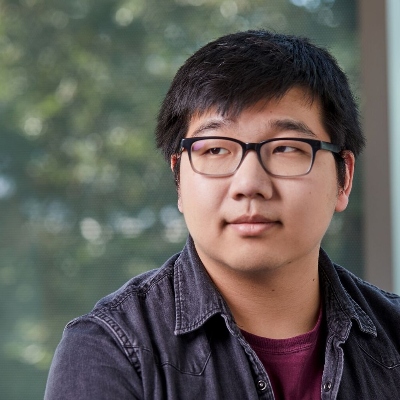
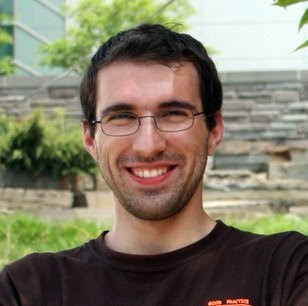
Prof. Luke Zettlemoyer is an Adjunct Professor of Computer Science and Engineering at the University of Washington, with affiliations to the Department of Linguistics. He focuses on machine learning, natural language processing, and multimodal systems, contributing to advancements in large language models, ethical AI, and scalable architectures. His research addresses challenges in model alignment, generalization, and cross-domain integration. Key research interests include multimodal reward models, efficient tokenization strategies, and model optimization techniques. He has explored topics such as neural trajectories for robot learning, content-adaptive image processing, and ethical mitigation of verbatim data reproduction. His publications span 2023–2025, emphasizing practical applications of AI in robotics, vision-language systems, and scalable retrieval-based models. While no formal awards are listed, his work reflects significant contributions to foundational AI research.
Noah Snavely is a Professor of Computer Science at Cornell Tech and the Cornell Ann S. Bowers College of Computing and Information Science. His research spans computer vision and graphics with a focus on 3D scene understanding from image collections. He also works at Google DeepMind in NYC and leads the Cornell Graphics and Vision Group. His research interests include computer vision and computer graphics , particularly in recovering 3D structure from large photo collections, neural radiance fields, image-based rendering, and scene understanding. His work enables applications in mapping technologies, immersive VR experiences, and synthesizing 3D worlds from text prompts with implications for game design and filmmaking. Recent publications show a strong trend toward generative 3D modeling and neural rendering , with significant contributions in neural radiance fields, view synthesis, and dynamic scene reconstruction. His research group explores unstructured photo collections to develop new technology for 3D world modeling and image analysis. PECASE Microsoft New Faculty Fellowship Alfred P. Sloan Fellowship SIGGRAPH Significant New Researcher Award ACM Fellow (2023) IEEE Fellow NSF CAREER Award Helmholtz Prize Snavely has mentored numerous PhD students and postdocs including Ruojin Cai, Qianqian Wang, and Zhengqi Li. His teaching includes CS5670: Computer Vision across multiple semesters. He has received the Cornell College of Engineering Mr. and Mrs. Richard F. Tucker Teaching Excellence Award (2012). At Cornell Tech, his research group develops technology for modeling the world in 3D from online photo collections and analyzing images for computer graphics applications. His work has been featured in major news outlets including the New York Times, New Scientist, and MIT Technology Review.
Adriana Kovashka is an Associate Professor at the University of Pittsburgh , affiliated with the School of Computing and Information and serving as Department Chair . Her academic journey began with BA degrees in Computer Science and Media Studies from Pomona College (2008) and a PhD in Computer Science from The University of Texas at Austin (2014). Joined Pitt’s faculty in January 2015 NSF CAREER awardee (2021) Google Faculty Research Award recipient Dr. Kovashka’s research spans Computer Vision , Machine Learning , and Natural Language Processing , focusing on visual rhetoric, weak multimodal supervision, and domain adaptation. She pioneered techniques for analyzing political imagery, developing robust object detection frameworks, and exploring the intersection of visual and textual persuasion through large-scale annotated datasets. Her recent work emphasizes geographic diversity in vision-language systems, audio-visual fusion for domain generalization, and shape-texture bias mitigation in CNNs. Key publications include groundbreaking studies on symbolic reasoning, multimodal dialogue systems, and ethical AI applications in education. Scientific honors include: NSF CRII Award (2016) NSF CAREER Award (2021) Pitt CRDF Award (2016, 2018) Best Paper at ECV Workshop (2021) Google Faculty Research Award (2016, 2018) Dr. Kovashka actively mentors students in multimodal learning projects and collaborates with interdisciplinary teams on NSF-funded initiatives. She co-organizes workshops like the first CVPR workshop on advertisement understanding and leads research groups exploring human-AI co-learning systems.
Alan Ritter is an Associate Professor at the School of Interactive Computing , Georgia Institute of Technology, with additional affiliation to the Machine Learning Center . His research focuses on Natural Language Processing , particularly robust models across domains/languages with fewer labels and efficient resource use, plus data-driven dialogue agents for open-topic conversations. Research Interests : Robust NLP models, cross-lingual transfer, resource-efficient learning, dialogue systems, cultural bias measurement, and privacy-aware language models Students : Mentors Ph.D. students in Georgia Tech's ML and CS programs, including Junmo Kang, Yang Chen, and Duong Minh Le. Alumni include Fan Bai (Ph.D. 2023), Yang Chen (Ph.D. 2024), and Andrew Li (M.S. 2024). Awards : NSF CAREER Award, Amazon Research Award, ACL 2024 Best Social Impact Paper, IUI 2009 Best Student Paper. Recent Work : Studies training budget allocation between supervised and preference-based finetuning, cross-lingual information extraction, cultural bias in LLMs, and privacy risk mitigation in social media disclosures. Service : Served as Program Chair for NAACL 2025, Area Chair for multiple top-tier conferences (COLM, EMNLP, ACL, EACL, AAAI). Email : alan.ritter@cc.gatech.edu
Osbert Bastani is an Associate Professor at the Department of Computer and Information Science, University of Pennsylvania, leading the trustml@Penn research group. He is affiliated with the ASSET , PRECISE , and PRiML centers, and the PLClub research group. His research focuses on Trustworthy Neurosymbolic Systems , Synthesizing Neurosymbolic Programs , and Machine Learning for Programmer Productivity , with applications in verification, fairness, and human-AI collaboration. He received the NSF CAREER Award in 2023. His recent publications (2024-2025) emphasize AI Safety , LLM Robustness , and Algorithmic Fairness , including work on adversarial robustness, conformal prediction, and program synthesis. Students he has advised include Sagnik Anupam, Stephen Mell, Jason Ma, Shuo Li, and others. Awards: NSF CAREER Award (2023)
David A. Smith is an Associate Professor at the Khoury College of Computer Sciences, Northeastern University. His research focuses on Natural Language Processing (NLP) and computational linguistics, with applications in machine translation, information retrieval, digital humanities, and social sciences. He is a founding member of the NULab for Texts, Maps, and Networks, a research center focused on digital humanities and computational social sciences. Smith's work has been funded by grants from the Mellon Foundation, NEH, and IMLS, supporting projects such as the Viral Texts initiative analyzing 19th-century newspaper networks and the Oceanic Exchanges project tracking transnational information flows. He has contributed to advancements in OCR for historical texts, text reuse detection, and computational analysis of classical languages. He has advised numerous PhD students, including Shijia Liu, Si Wu, and Ryan Muther, and teaches courses like Natural Language Processing and Information Retrieval. His research has been featured in outlets like Wired and the Economist .
Jiatao Gu is an Assistant Professor in the Department of Computer and Information Science (CIS) at the University of Pennsylvania, with a part-time role as Staff Research Scientist at Apple (MLR). He holds a Ph.D. in Electrical and Electronic Engineering from the University of Hong Kong (2018) and a B.Eng. in Electronic Engineering from Tsinghua University (2014). His research focuses on generative machine learning and AI agent interaction with the physical world, emphasizing multi-modal systems spanning language, images, videos, and 3D. Key themes include efficient modeling , flexible architecture design , and scalable decision-making frameworks . 2025: ICLR paper on DART framework 2024: TMLR work on GFlowNet alignment 2023: NeurIPS research on diffusion stability 2022: ACL papers on speech translation Recent publications explore diffusion models for text-to-image synthesis, 3D reconstruction, and efficient sampling techniques. His work addresses fundamental challenges in attention mechanisms, entropy collapse, and multi-stage distillation while advancing non-autoregressive translation and vision-language reasoning . Prospective students can apply through his recruitment process at UPenn. Prior affiliations include Meta AI (FAIR Labs) and academic collaborations with institutions like New York University's CILVR Lab.
Sarah Dean is an Assistant Professor in the Computer Science Department at Cornell University, affiliated with the College of Engineering. Her research focuses on the interplay of machine learning, optimization, and dynamics in real-world systems, particularly in control theory, recommendation systems, and ethical AI. Education: PhD in EECS, University of California, Berkeley (2021) Postdoctoral Research, University of Washington (2021-2022) Research Interests: Data-driven control systems, reinforcement learning, recommendation systems, user dynamics, algorithmic fairness, and the societal impacts of AI. She emphasizes foundational understanding of how learning systems interact with human and social processes. Recent Work Trends: Her articles explore topics like bilinear system identification, user participation dynamics in recommendation platforms, and ethical considerations in AI development. Recent work includes harm mitigation strategies and mathematical modeling of AI-human feedback loops. Awards: AI2050 Early Career Fellow (2024) Best Paper at ICML 2018 (Delayed Impact of Fair Machine Learning) Best Student Paper in Imaging Systems (OSA Congress 2018) Advising & Labs: Advises over 15 graduate and undergraduate students. Leads research on interactive ML systems, with contributions to projects like the 'MSGD' repository for streaming data learning. Active in the GEESE group, promoting socially responsible computing.
Lexing Xie is a Professor in Computer Science at the Australian National University. He leads the ANU Computational Media Lab ( http://cm.cecs.anu.edu.au ) and the ANU Integrated AI Network. His work focuses on the intersection of machine learning, social media analysis, and multimedia understanding. Dr. Xie's research broadly focuses on innovative design and use of machine learning algorithms, especially on large-scale graph data and collective behaviour. His recent work spans several key areas: Popularity in social media -- understanding, predicting, and optimization Multimedia knowledge graphs, vision and language integration Humanising machine intelligence through better understanding of social dynamics His publications reveal a strong trend toward understanding information diffusion patterns in social media, particularly through visual content. He has made significant contributions to the study of visual memes, popularity prediction using point processes, and multimodal learning that connects vision with language. His work often bridges theoretical machine learning with practical applications in social media analysis. Dr. Xie has received recognition for his research, including an Honourable Mention at CSCW 2019 for his work on attention flow in online video networks. His research has been supported by collaborations with major institutions including IBM Research and Columbia University. As an advisor, Dr. Xie has mentored numerous students who have gone on to contribute significantly to publications in top-tier conferences. His lab, the ANU Computational Media Lab, serves as a hub for interdisciplinary research connecting computer science with social sciences.
Roles & Affiliations: Manolis Savva is an Associate Professor at Simon Fraser University's School of Computing Science and holds a Canada Research Chair in Computer Graphics. He leads research in 3D scene understanding, with applications in graphics, vision, and robotics. Previously, he was a researcher at Facebook AI and Princeton University. Education: Ph.D. in Computer Science (2016), Stanford University, advised by Pat Hanrahan B.A. in Physics and Computer Science (2009), Cornell University Research Interests: His work focuses on analyzing, organizing, and generating 3D content, particularly for holistic scene understanding. Key areas include articulated objects, embodied AI, and datasets like ScanNet , Matterport3D , and Habitat . His methods drive applications in robotics, autonomous agents, and virtual environments. Publications Trends: Recent work emphasizes generative models (e.g., SINGAPO for articulated object parts), embodied AI benchmarks (Habitat), and multimodal scene analysis. His papers often address challenges in scalability, realism, and cross-modal fusion for 3D environments. Awards: CHCCS Early Career Researcher Award (2022) ICLR 2023 Outstanding Paper Award ICCV 2019 Best Paper Nomination (Habitat) Advising & Grants: Supervised over 15 graduate students, many advancing to top PhD programs and tech companies. Active in grants for embodied AI, scene understanding, and robotics. Labs/Teams: Leads the 3DLG (3D Learning Group) and GrUVi (Graphics and Vision) groups at SFU. Collaborates extensively with industry (e.g., Meta, NVIDIA) on AI-driven 3D research.
Lars Ulander is a Professor at Chalmers University of Technology specializing in radar remote sensing. His research focuses on synthetic aperture radar (SAR) signal processing, particularly for applications in forest biomass mapping and ground imaging using VHF/UHF-band systems. He is a key proposer for ESA's BIOMASS satellite mission (launching 2025) and leads the BorealScat project, utilizing a 50-meter tower-based tomographic radar to study boreal forest dynamics. His work spans radar system development, SAR tomography techniques, and environmental monitoring of forests and sea surface currents. Current research areas include vegetation water content estimation, bistatic radar configurations, and optimization of SAR data processing algorithms for multi-temporal analysis. Recent publications demonstrate expertise in P-band/L-band SAR for biomass retrieval, passive radar systems, and interferometric techniques. His articles investigate radar backscatter sensitivity to forest structure, moisture parameters, and seasonal changes, while contributing to mission design frameworks like SLAINTE and SESAME.
Professor Winston Hsu is a distinguished faculty member in the Department of Computer Science and Information Engineering at National Taiwan University, where he has served as a full professor since 2015. He is the co-director of the Communications and Multimedia Laboratory (CMLab) and founder of the MiRA (Multimedia indexing, Retrieval, and Analysis) research group. Additionally, he serves as the Founding Director for NVIDIA AI Lab at NTU, the first such lab in Asia. Professor Hsu received his Ph.D. in Electrical Engineering from Columbia University in 2007 under the supervision of Professor Shih-Fu Chang. Prior to his academic career, he was a founding engineer and research manager at CyberLink Corp., now a public image/video software company. National Taiwan University (2007-Present): Professor (2015-Present), Assistant/Associate Professor (2007-2015) MobileDrive (2021-2024): CTO and Vice President (Joint Venture between Foxconn and Stellantis) IBM TJ Watson Research Center (2016-2017): Visiting Scientist Microsoft Research Redmond (2014): Visiting Researcher Columbia University (2007): Ph.D. in Electrical Engineering Professor Hsu's research focuses on machine learning, computer vision, large-scale image and video search and recognition, and embedded AI. His work spans from fundamental research in visual recognition to practical applications in automotive systems, medical imaging, and e-commerce. He has pioneered work in disguised face recognition, low-resolution face hallucination, 3D model search, and virtual try-on systems. His current research emphasizes Embodied AI, integrating perception, action, and learning technologies for applications in automotive and robotics domains. His research group has produced numerous influential publications, particularly in top computer vision and multimedia conferences like CVPR, where they won first place in the Disguised Face Recognition competition in 2018. Their work spans diverse application areas including security, medical diagnostics, automotive systems, and e-commerce solutions, demonstrating strong translation from academic research to real-world impact. IBM Research Pat Goldberg Memorial Best Paper Award (2018) First Place, IARPA Disguised Faces in the Wild Competition (CVPR 2018) Best Brave New Idea Paper Award, ACM Multimedia 2017 NVIDIA AI LAB Award (First in Asia, 2016) First Place, MSR-Bing Image Retrieval Challenge (2013) World's Top 2% Scientists (2023) Professor Hsu actively mentors students and researchers, with his group consistently recruiting PhD students, postdocs, and research assistants. He has successfully bridged academia and industry through multiple collaborations, including his role as CTO at MobileDrive (a joint venture between Foxconn and Stellantis) from 2021-2024. His research has been supported by significant industry partnerships with Microsoft, IBM, and NVIDIA, as well as government grants from Taiwan's Ministry of Science and Technology. His laboratory, the Communications and Multimedia Laboratory (CMLab), maintains strong industry connections and focuses on cutting-edge research in visual AI. The lab has produced numerous award-winning projects and maintains active collaborations with global technology companies, particularly in the automotive and consumer electronics sectors.
Professor Gabriel Brostow is a faculty member in the Department of Computer Science at University College London (UCL), where he leads research in Computer Vision and Human-Computer Interaction. He also serves as Chief Research Scientist and Senior Director of the R&D Team at Niantic, the company behind Pokémon GO. His work bridges academic research and industry applications, focusing on developing AI systems that enhance human capabilities through what he terms 'Human in the Loop AI'—now commonly referred to as Human-Centered AI. Brostow completed his BS in Electrical Engineering at UT Austin, followed by a PhD with Irfan Essa at Georgia Tech. He then pursued postdoctoral research with Roberto Cipolla's Computer Vision & Robotics Group at Cambridge University as a Marshall Sherfield Fellow, and with Marc Pollefeys in ETH Zurich's CVG Group. His research explores how AI, particularly Computer Vision, can serve as 'super-tools' for professionals across various domains including filmmaking, architecture, robotics, and scientific research. Specific interests include assistive technology for everyday life, authoring systems that maximize user effort, 3D reconstruction, depth estimation, and vision-language models. His work often involves creating systems that are validated through real-world human interaction to ensure practical utility. Analysis of his recent publications reveals a strong focus on practical applications of Computer Vision that directly interact with humans. His research spans 3D scene understanding, depth estimation, sketch-based interfaces, and multimodal AI systems. There's a clear emphasis on creating benchmarks and tools that facilitate human-AI collaboration, with applications in assistive technology, urban planning, filmmaking, and biodiversity monitoring. His work frequently appears at top conferences including CVPR, NeurIPS, ECCV, and CHI. Marshall Sherfield Fellowship Brostow actively mentors PhD students, with current advisees including Ross Murphy, Skanda Koppula, Gizem Unlu, Omiros Pantazis, and Jamie Watson. His alumni include numerous PhD graduates and MSc students who have gone on to successful careers in academia and industry. He emphasizes selecting students based on passion and potential rather than just academic credentials, valuing traits like helpfulness, drive, and hunger to learn. His research is supported through collaborations with major institutions and companies including DeepMind, MIT, and the University of Edinburgh. He leads a research group at UCL that collaborates closely with Niantic's R&D team, creating a unique bridge between academic research and industry application. His team's work frequently involves developing novel Computer Vision techniques that are validated through real-world human interaction, ensuring practical utility alongside technical innovation. The group explores blue-sky research problems with applications ranging from assistive technology to professional tools for filmmakers, architects, and scientists studying diverse environments.
Raquel Fernández is Full Professor of Computational Linguistics and Dialogue Systems at the University of Amsterdam, where she leads the Dialogue Modelling Group at the Institute for Logic, Language & Computation (ILLC). As Vice-Director for Research at ILLC and a Fellow of the ELLIS Society, she bridges computational linguistics, cognitive science, and artificial intelligence through her research on language use in multimodal and conversational contexts. PhD in Computational Linguistics from King's College London Prior research positions at University of Potsdam and Stanford University's CSLI Her work explores how cognitive constraints, social interaction, and perception shape language use, with a focus on: Visually-grounded language processing Multimodal dialogue modeling Model uncertainty and calibration Language grounding in multimodal data Language learning and semantic change Dialogue reference resolution Recent publications analyze multimodal reasoning limitations, cross-lingual knowledge consistency, and uncertainty modeling in dialogue systems. She has received multiple accolades including an ERC Consolidator Grant , NWO VENI/VIDI/Aspasia fellowships , and EMNLP/GenBench awards . Outstanding Paper Award (EMNLP 2023) Best Data Award (GenBench Workshop 2023) ELLIS Society Fellow ERC Consolidator Grant #819455 recipient NWO VENI/VIDI/Aspasia awardee As a leader in academic service, she serves on the SIGDAT Executive Committee and chairs multiple conference committees. Her lab develops models for multimodal dialogue, visual storytelling, and grounded language understanding.
Prof. Dr.-Ing. Rüdiger Daub serves as Professor and Chair of Production Engineering and Energy Storage Systems at the Technical University of Munich (TUM), operating within the Department of Mechanical Engineering. His leadership encompasses research direction, academic supervision, and strategic development of battery production technologies at TUM's Garching campus (Boltzmannstr. 15), with active industry collaborations driving innovation in sustainable manufacturing. Daub's research program pioneers advanced production methodologies for lithium-ion and solid-state batteries, focusing on electrode manufacturing, electrolyte filling, and cell assembly processes. His work investigates critical parameter interdependencies affecting battery safety and performance, developing inline monitoring systems and digital twin technologies for real-time process optimization. Key contributions include moisture control in electrode production, electrochemo-mechanical characterization of solid-state systems, and robotics solutions for deformable object assembly, all integrated with machine learning for quality assurance in industrial settings. Analysis of his 2023-2025 publications reveals a dominant research trajectory toward solving production bottlenecks in next-generation energy storage. The work demonstrates increasing integration of computational modeling with empirical validation, particularly in solid-state battery manufacturing and high-voltage electrolyte systems. A notable trend is the cross-pollination of robotics, computer vision, and uncertainty quantification techniques to address complex assembly challenges and distribution shifts in quality monitoring, reflecting industry's urgent need for adaptable, data-driven production systems. Leading TUM's specialized laboratories for battery cell production, Daub's team maintains comprehensive facilities for electrode calendering, electrolyte filling, and cell assembly with integrated tracking and tracing capabilities. The research infrastructure supports collaborative projects with automotive OEMs and battery manufacturers to develop scalable production processes, emphasizing environmental sustainability through water-based electrode production and footprint optimization. Current initiatives focus on digital factory modeling and prelithiation technologies for next-generation battery systems.