Nathalie Rachlin is Professor of French and Francophone Studies at Scripps College, holding the Margaret McKenzie Distinguished Professorship in Modern Foreign Languages. She specializes in contemporary French intellectual history with research spanning Holocaust studies, immigration narratives, and documentary film. Her scholarly work critically examines sociopolitical themes through cinematic expression, particularly analyzing how French filmmakers engage with globalization, historical trauma, and cultural identity crises. Research emphases include: Representations of genocide and collective memory Postcolonial immigration dynamics Intersections of political philosophy and visual media Publications demonstrate sustained focus on French cinema's response to global sociocultural shifts, with recurrent analysis of marginalization and resistance narratives.
Lauren DeLand is a Professor of Art History at Savannah College of Art and Design (Atlanta), specializing in contemporary art, performance, and queer studies. She previously held roles including Assistant Professor at Indiana University Northwest and Adjunct positions at The Art Institute of Chicago and Efrain Lopez Gallery. Education: Ph.D., Art History, University of Minnesota M.A., Art History, University of Minnesota B.F.A., Fiber & Art History, Kansas City Art Institute Research Interests: DeLand focuses on performance art, queer theory, and the intersection of art with cultural politics. Her work critiques media representation, identity formation, and the ethical dimensions of contemporary art practices. She has curated exhibitions exploring queer forms and multidisciplinary art. Publications: Her recent work includes critiques of Jeff Koons, Carole McCurdy, and David Wojnarowicz, published in TDR , Criticism , and Art in America . Her writing often bridges scholarly analysis with accessible art criticism. Awards: Midwest Art History Society Emerging Scholar Award (2018) Summer Faculty Fellowships (Indiana University Northwest, 2016–2017) Curatorial & Professional Work: As Associate Director at Efrain Lopez Gallery, she managed exhibitions and artist relations. Her curatorial projects include Queer Forms at Katherine E. Nash Gallery, emphasizing interdisciplinary art practices.
Irene Domingo Sancho is an Associate Professor in the Department of Modern and Classical Languages at the University of St. Thomas, Minnesota, within the College of Arts and Sciences. She holds a PhD in Romance Languages and Literatures from Washington University in St. Louis, an MA from the same institution, and a BA in Hispanic Philology from the Universidad de Zaragoza, Spain. Her research focuses on cultural production in late-Francoist and post-Francoist Spain, examining themes like censorship, memory, migration, and neoliberalism through film, literature, and cultural studies. She has published extensively in peer-reviewed journals such as Bulletin of Spanish Studies , Ciberletras , and Social Semiotics , and co-edited volumes on friendship in contemporary Spanish cinema. Her teaching includes Spanish language courses and specialized topics like environmental justice in the Hispanophone world. She regularly organizes academic panels and presents at major conferences in Hispanic Studies. Her edited volume Tiempo de amistad (2025) explores representations of friendship in Spanish cinema as a counterpoint to neoliberal ideologies. Current courses include Intermediate Spanish I and Honors Beyond Climate Doom . Her work bridges critical theory with cultural analysis, addressing intersections of class, gender, and political economy. Recent studies highlight how films like Truman and En tierra extraña critique neoliberalism’s impact on social relations and migration narratives. Her interdisciplinary approach spans film studies, memory studies, and eco-criticism, reflecting her commitment to understanding Spain’s socio-political evolution through artistic expression.
Arnold J. Kemp is a multidisciplinary artist, writer, and educator born in Boston, MA, in 1968 to Caribbean parents. His work engages with socio-political themes, decolonization, and the Black psyche, often through performances, artist’s books, and collaborative projects. Affiliated with institutions like Boston University, UC Davis, and Pacific Northwest College of Art (PNCA), he holds an MFA from Stanford University and a BA/BFA from Tufts University and the School of the Museum of Fine Arts, Boston. Education: MFA, Stanford University (2005) BA/BFA in English Literature & Studio Art, Tufts University and SMFA Boston (1991) Kemp’s research spans decolonization , postcolonial crisis , cultural difference , and Black queer identity . His exhibitions, such as Less Like an Object and More Like the Weather (2022) and False Hydras (2021), critique colonial legacies and explore hybrid narratives. Recent publications include plays like In Arms (2022) and essays on decolonization (2020). His grants feature the Ellis-Beauregard Foundation Fellowship (2022), Guggenheim Fellowship (2012), and Art Matters Grant (2009). Kemp’s work is collected by institutions like the Metropolitan Museum of Art and the Studio Museum in Harlem. Labs/Teams: Collaborated with Raymond Boisjoly and Joar Nango at Banff Centre (2014), and co-led thematic programs exploring postcolonialism and Indigenous practices.
Joshua Higgason serves as Professor of the Practice in Theater Arts at the Massachusetts Institute of Technology (MIT), where he teaches design courses focusing on the integration of technology in live performance. His academic appointment is within the Theater Arts program, contributing to both undergraduate and graduate education through hands-on instruction in contemporary performance design methodologies. Higgason's research and creative practice centers on the fusion of digital media with traditional stagecraft, exploring how video projections, interactive systems, and dynamic lighting can transform narrative delivery and audience engagement. His work bridges technological innovation with artistic expression, creating immersive environments that challenge conventional boundaries between performer and spectator. This interdisciplinary approach has established him as a leader in redefining spatial and visual language for modern theater, opera, and concert productions globally.
Dr. Jennifer Clement is a Senior Lecturer in English Literature at the University of Queensland's School of Communication and Arts. She holds an affiliation with the Centre for Critical and Creative Writing. Her research focuses on early modern literature, religious rhetoric, adaptation studies, and the history of print culture. Clement earned her B.A. and M.A. from the University of New Hampshire and a Ph.D. from Vanderbilt University. She has previously taught at the University of Canterbury in New Zealand. Her major work includes the book Reading Humility in Early Modern England (2015), which examines humility in Renaissance texts. Current projects explore early modern sermons and emotions. She has published widely on Shakespearean adaptations, Elizabeth I's cultural legacy, and book history. Clement’s teaching innovations include digital platforms for student engagement, as seen in the Cirrus project. Her research also engages with historical emotions, medieval allegory, and the interplay between literature and religious discourse. Key contributions include analyzing posthumous sermons, Shakespearean film adaptations, and the intersection of gender and power in early modern texts. She frequently presents at conferences on topics like the Virtual Paul’s Cross Project and emotional communities in Donne’s sermons.
Samuel Amago is a Professor of Spanish and Interim Director of Environmental Humanities at the University of Virginia. He previously chaired the Department of Spanish, Italian and Portuguese at UVA (2019-2022) and held leadership roles at the University of North Carolina at Chapel Hill, including Bowman and Gordon Gray Distinguished Term Professor of Spanish and Department Chair of Romance Studies. His academic career includes tenure at the University of Notre Dame as Associate Professor of Spanish. His research focuses on post-dictatorship Spanish cultural production, examining waste and space, memory and modernity through mediums like photography, documentary, narrative, comics, and film. Key areas include environmental humanities, historical memory recovery, and queer studies. Amago’s work bridges interdisciplinary approaches to cultural analysis, particularly in addressing Spain’s traumatic historical legacies. Amago has received significant recognition, including the Katherine Singer Kovacs Prize for his book *Basura: Cultures of Waste in Contemporary Spain* (2021). His administrative leadership includes fellowships in UVA's Leadership in Academic Matters Program (2021) and UNC's Chairs Leadership Program (2018). His scholarship also extends to global cinema studies, with notable contributions on Almodóvar, Bardem, and Cuarón. Amago’s publications span monographs, edited volumes, and peer-reviewed articles, reflecting a prolific output since the 2000s. His research often intersects with ethical, aesthetic, and political questions in contemporary Spanish cultural production.
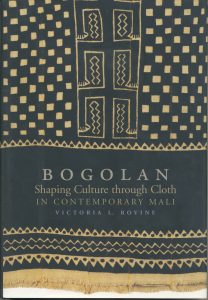
Victoria L. Rovine is a Professor of African Art History at the University of North Carolina and Director of the African Studies Center. She holds adjunct faculty status in the Department of African, African American, and Diaspora Studies. Her research focuses on African textiles, dress practices, and Africa’s representation in Western visual culture, particularly in early 20th-century Europe. Rovine has conducted extensive fieldwork in Mali, Senegal, South Africa, Ghana, and elsewhere since the 1990s. She earned her MA and PhD from Indiana University. Prior to UNC, she taught at the University of Florida (2005–2014) and served as curator of African and non-Western art at the University of Iowa Museum of Art (1995–2004). Her courses span topics like African textiles, colonial art, and contemporary African art. Rovine’s scholarship explores the intersections of colonial history, fashion, and material culture. Her books include Bogolan: Shaping Culture Through Cloth in Contemporary Mali (2001/2008) and African Fashion, Global Style (2015), which examine textile traditions and Africa’s influence on global fashion. Recent research engages colonial-era weaving practices and the temporal dimensions of fashion in colonial contexts. Her articles analyze topics such as colonial clothing politics, the role of textiles in religious practices, and the mobilization of tradition in African fashion design. Rovine’s work bridges art history, anthropology, and cultural studies, emphasizing Africa’s central role in global narratives of art and fashion.
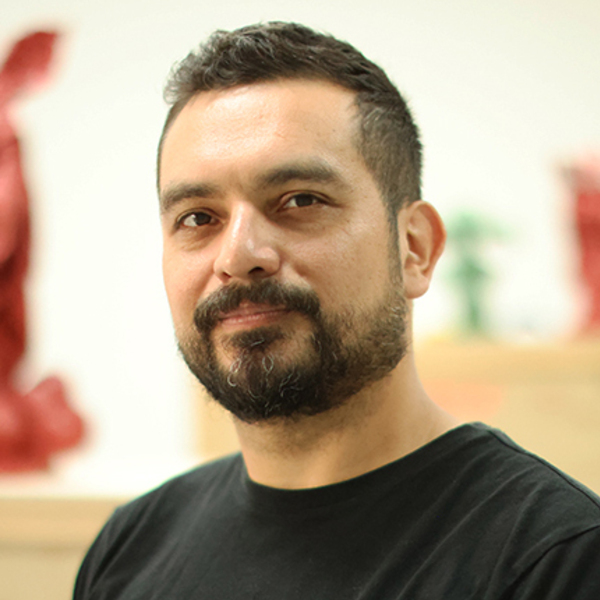
Rodrigo Lara Zendejas is an Assistant Professor and Area Head of the Ceramics Department at the University of Notre Dame’s College of Arts and Letters, within the Department of Art, Art History, and Design. He holds an MFA from the School of the Art Institute of Chicago (2013) and a BFA (Summa Cum Laude) from the Universidad de Guanajuato (2003). His work focuses on sculpture, ceramics, installation, and performance, exploring themes like memorialization, ancestral heritage, and social practice. He has exhibited widely in institutions such as the Museo de Arte Moderno (Mexico), the National Museum of Mexican Art (Chicago), and Test Site Projects (Las Vegas). Key awards include the First Prize in Sculpture at Mexico’s Premio Nacional de las Artes Visuales (2010), the Emerging Artist Grant from the Joan Mitchell Foundation (2016), and an O-1 Visa for Extraordinary Abilities. He has held residencies at MASS MoCA, Vermont Studio Center, and Cerámica Suro. Lara’s publications include the monograph Memorials (2020) and catalogues like Mascaras y Artefactos (2010). His teaching spans institutions such as Hyde Park Art Center and the School of the Art Institute of Chicago, emphasizing sculpture techniques and community engagement.
Kirsten E. McAllister is a Professor in the School of Communication at Simon Fraser University, where she has established herself as a leading scholar in interdisciplinary research at the intersection of memory studies, visual culture, and critical race theory. Her academic journey includes a PhD in Sociology from Carleton University, an MA in Communication from Simon Fraser University, and a BA in Geography from the same institution, followed by an SSHRC Postdoctoral Fellowship at Lancaster University. McAllister's research focuses on political violence, racism, migration and diaspora through interdisciplinary approaches drawing on Memory Studies, Visual Studies, Ethnography, Critical Race Studies, and Indigenous Studies. Her methodological toolkit incorporates Art History, Ethnography, Literary Studies, and Autoethnography, with significant community-based research projects examining WWII Japanese Canadian internment camps, asylum seekers, and contemporary Asian Canadian artists exploring sites of memory regarding war, military occupation, colonialism, and environmental disaster. Her scholarly output reveals consistent engagement with transnational memory practices, particularly examining how communities navigate trauma, memorialization, and cultural identity across borders. The trajectory of her work demonstrates increasing focus on the intersections between Indigenous and Japanese Canadian experiences, settler colonialism, and redress politics, with recent publications addressing questions of whiteness in communication studies and the limitations of state-led reconciliation processes. SSHRC Insight Grant (2013-2016): 'Transpacific Memories: Moving from the Trauma of Canada's National Past to the Transnational Present' SSHRC Standard Grant (2006-2010): 'Public Discourses of Fear and Containment: Refugees in Canada and Scotland' National Association of Japanese Canadians funding (2008): 'Tracing the Lines: A Symposium on Contemporary Poetics and Cultural Politics to Honour Roy Miki' SSHRC Post-doctoral Fellowship (2000-2002): 'Re-presentations of Everyday Life in Internment Camps: Hostile Environments or Familiar Landscapes?' McAllister actively contributes to academic discourse through conference participation, including organizing panels on #CommunicationSoWhite and participating in Scholarstrike Canada's 'Anti-Asian Racism Undone' symposium. She teaches courses including Design and Method in Qualitative Communication Research and The Media of Memory: Political Violence, mentoring the next generation of critical communication scholars.
Dr. Isabella Capezio is a Lecturer at the School of Art, RMIT University, based at the City Campus in Australia. Her research interests focus on Feminist and queer theory, photography practices, and visual arts. She supervises research projects such as 'Approaches to photographic practice as strategies to reframe and reclaim contemporary Vietnamese narratives of the American War in Vietnam' (2025). Her work includes creative projects like Blind Call (2024), exploring queer ecologies and environmental art, and academic contributions like Unsettling Australian Landscape Photography (2024). She is open to collaborative projects and industry partnerships. Contact: isabella.capezio@rmit.edu.au | ORCID: 0000-0002-2741-9608. Research outputs span creative works and conference papers addressing themes such as queer contexts in art, photobooks, and memory studies. Her practice often merges theoretical frameworks with experimental photographic techniques.
Dr. Ray Cook is a Lecturer in Photography at RMIT University's School of Art, based at the City Campus in Australia. His work focuses on intersections of queer theory, identity politics, and neoliberal cultural critique through photographic and conceptual art practices. He actively supervises Master's and PhD research projects exploring documentary ethics, anti-ethnographic approaches, and post-conflict visual narratives. Teaching emphasizes photographic practice alongside critical analysis of neoliberalism's impact on identity and cultural production. Research interests include the cultural constitution of sexuality and the economy's role in shaping artistic expression. His creative outputs challenge conventional documentary practices and explore marginalized narratives through provocative visual storytelling. Recent supervision projects include investigations into Hong Kong's post-National Security Law sociopolitical landscape, maternal identity, and the vanishing value of contested spaces. Cook's work is exhibited internationally with notable shows at Tacit Gallery and Bundoora Homestead Art Centre.
Jeremy Carr is a Faculty Associate in the Department of English at Arizona State University (ASU), where he teaches film studies courses and serves as a Visiting Research Fellow at the ASU Center for Film, Media and Popular Culture since 2010. He holds an M.L.St. in Film and Media Studies (Summa Cum Laude, 2010) and a B.A. in English (2006), both from Arizona State University. His research focuses on global film history and criticism, with expertise spanning: Genre studies (Westerns, film noir, science fiction) Auteur theory and director studies International cinema movements (French New Wave, Japanese New Wave) Film restoration and archival practices Socio-political dimensions of cinema Analysis of his 15 most recent publications reveals consistent engagement with: Auteurist examinations of directors like Tarantino, Fuller, and Antonioni Genre evolution in Westerns and thrillers Formal analysis of cinematic techniques Historical contextualization of film movements Key professional activities include: Curating film series at Phoenix Art Museum (2012-2015) Serving on committees for Association of Moving Image Archivists (Preservation, Education) Developing online course FMS 394: Arizona Identity and the Western Film Securing Arizona Humanities Council grant for 'Politics of 1950s American Film' series
Paola Marrati is a Professor and Department Chair in the Department of Comparative Thought and Literature at Johns Hopkins University, with a joint appointment in Philosophy and affiliation in Anthropology. She previously held a Chair in Philosophy of Art and Culture at the University of Amsterdam and directed research programs at the Collège International de Philosophie in Paris. Her research focuses on modern/contemporary French philosophy, American pragmatism, cinema-philosophy intersections, and gender studies. Education: BA in Philosophy from Università degli Studi di Pisa, PhD from École des Hautes Études en Sciences Sociales (Paris) and Marc Bloch University of Strasbourg. Research emphasizes transformative philosophy through figures like Bergson, Deleuze, Derrida, and Cavell. Explores philosophical expressions in cinema, literature, and TV. Teaches courses like 'Gilles Deleuze. Critical Philosophy' and 'Cinema and Philosophy.' Publications include Genesis and Trace (2005), Gilles Deleuze. Cinema and Philosophy (2008), and upcoming works on Bergson and Cavell. Serves on the Scientific Board of the Ecole Normale Supérieure's Center for French Contemporary Philosophy. Labs/Teams: Affiliated with interdisciplinary humanities programs at Johns Hopkins, including the Program for the Study of Women, Gender, and Sexuality (2007-2011).
Maria Österlund is an Associate Professor in the Department of Culture, History and Philosophy at Åbo Akademi University, Faculty of Humanities, Psychology and Theology. She is based in Finland and conducts interdisciplinary research at the intersection of children's literature, girlhood studies, fat studies, and visual literacy. Her work is deeply embedded in Nordic literary traditions, particularly Finland-Swedish literature. Her research interests include: Girlhood and female adolescence in literature Fat studies and body representation in young adult novels Silence and narrative voice in children’s books Trauma, evacuation, and historical memory in picturebooks Multilingualism in early childhood literature Word art as both artistic expression and pedagogical tool Her recent publications reveal a strong thematic continuity, focusing on identity, embodiment, and literary form. She frequently collaborates with scholars such as Maria Lassén-Seger and contributes to edited volumes and critical anthologies. Her work bridges academic research and public discourse, often engaging with contemporary debates on children’s literature and education. She has received notable scientific awards, including: Astrid Lindgren Foundation’s Solkatten research grant (2001) Young & Promising Scholar award from the International Research Society for Children’s Literature (1999) Hagforsmedaljen (2015) Handledarepriset (2016) Kanslers guldkantsstipendium (2019) Maria Österlund is actively involved in advising and academic service, including doctoral thesis evaluations, peer review, editorial work, and organizing research networks and workshops. She is a principal researcher in two major projects: 'Swedish children’s literature research and criticism in Finland' and 'Scientific anthology on word art as an art form and pedagogy in Swedish in Finland'. These projects emphasize collaboration, critical analysis, and educational innovation. She also leads the Ordkonstnätverket (Word Art Network) at Åbo Akademi, fostering interdisciplinary dialogue around literary arts.