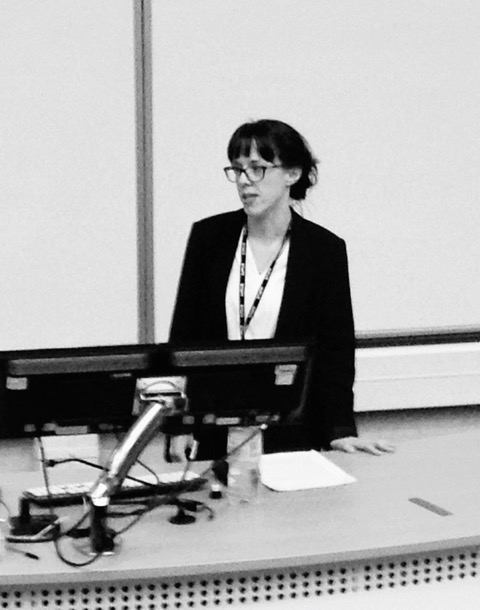
Dr. Marianne Sison is an Honorary University Fellow at RMIT University's School of Media & Communication. Her research focuses on public relations ethics, corporate social responsibility (CSR), cultural studies, and global communication strategies, with a particular emphasis on Southeast Asia. She has supervised projects on city branding through social media and disaster communication in isolated communities, reflecting her interest in stakeholder engagement and community-driven approaches. Teaching interests include advocacy communication, diversity and inclusion, and the strategic use of public relations in multinational contexts. Her work often bridges theory and practice, addressing contemporary challenges such as workplace well-being for female professionals, ICT access in marginalized communities, and the ethical dimensions of global PR. Key research outputs include studies on CSR implementation in multinational companies, gender dynamics in workplaces during pandemics, and the role of public sector communicators in fostering global citizenship. Her interdisciplinary approach integrates cultural studies, organizational behavior, and international development perspectives.
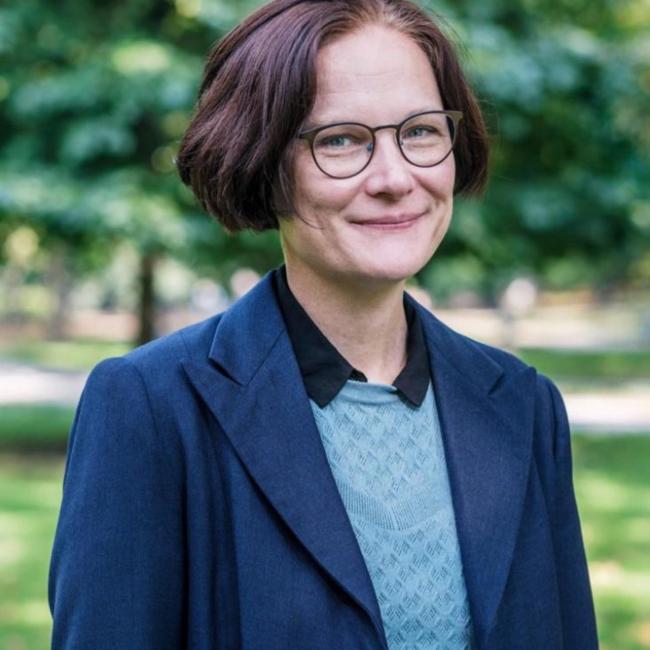
Dr Amanda Rogers is an Associate Professor in Human Geography and the Geohumanities at Swansea University, affiliated with the School of Biosciences, Geography and Physics within the Faculty of Science and Engineering. Her research focuses on the intersections between geography, performing arts, and geopolitics, particularly exploring contemporary Cambodian dance, post-conflict societies, and creative practices. She holds a PhD from Royal Holloway University and has held postdoctoral fellowships funded by the British Academy and ESRC. Education: PhD in Geographies of Identity and Performance (Royal Holloway, 2008), ESRC Doctoral Studentship (2003–2006). Research Interests: Rogers examines how Cambodian dance addresses legacies of war and genocide, the geopolitics of cultural diplomacy, and translocal creative networks. Her work bridges cultural studies, performance theory, and critical geopolitics. Notable projects include a Leverhulme Trust-funded monograph on Cambodian dance and a British Academy grant studying the 1990 Cambodian National Dance Company’s UK tour. Awards: Recipient of the 2017 Dillwyn Medal (Learned Society of Wales) for Creative Arts and Humanities. She serves as Reviews Editor for cultural geographies and Research Secretary for the Association of South East Asian Studies (UK). Grants & Collaborations: Over £1 million in funding from the Leverhulme Trust, AHRC, British Academy, and others. Collaborations include Papertrail Theatre Company and the Our Place soundscape project with Bridget Keehan. She advises on films like The Orphan of Zhao Redux and contributes to Cambodian Living Arts initiatives. Teaching: Co-director of the MSc in Society, Environment and Global Change. Teaches modules on Creative Geographies, Urban Regeneration, and research methods, emphasizing critical connections between theory and practice. Professional Roles: Sits on the editorial board of cultural geographies , advises NGOs on arts policy, and advocates for marginalized artists through her work with refugee communities and international festivals.
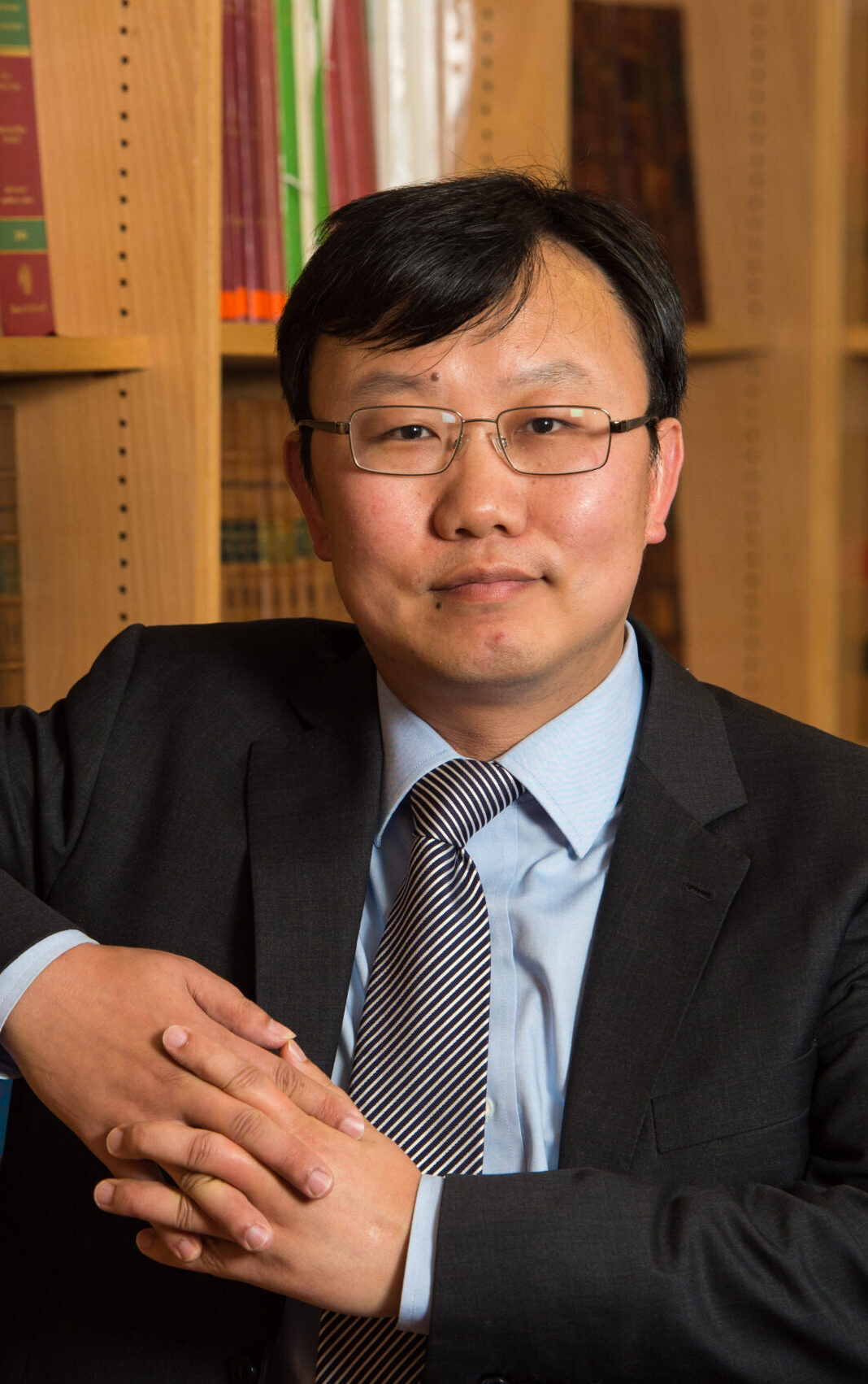
Professor DU Ming is a Visiting Professor in Chinese Law and Co-Director of the Global Policy Institute at Durham University. He holds an LLM from Harvard Law School and a DPhil from the University of Oxford. His research focuses on global economic governance, China's approach to international law, and the development of legal frameworks in contemporary China. He advises on complex international disputes and sits on editorial boards of leading law journals. **Education:** Tsinghua University School of Law (China) LLM, Harvard Law School (Victor and William Fung Fellow) DPhil, University of Oxford (Clarendon Scholar) **Research Interests:** His work bridges legal theory and practice, particularly in cross-border trade/investment law, corporate governance, and the ethical implications of emerging technologies. Recent publications explore federated learning governance, model licensing, and AI ethics within legal systems. **Awards:** Victor and William Fung Fellowship (Harvard) Clarendon Scholarship (Oxford) His advisory roles and legal practice in New York and Beijing inform his research on transnational legal challenges. Collaborations span technical and legal domains, addressing issues like data privacy in federated learning systems.
David Hopkins is an Honorary Professorial Research Fellow at the University of Glasgow's School of Culture & Creative Arts. His work focuses on modern and avant-garde art, particularly Surrealism, Dada, and the influence of figures like Marcel Duchamp and Max Ernst. He has authored and edited numerous books, including Dada and Surrealism: A Very Short Introduction and Dark Toys: Surrealism and the Culture of Childhood . His research explores themes such as masculinity, childhood, and the intersections between art and cultural history. His recent publications include studies on gene expression profiling in medical contexts, Blake's influence on British Surrealism, and Surrealist toys. His academic contributions also include curated exhibitions like Childish Things and Dada's Boys , examining contemporary art through avant-garde lenses. Despite no formal awards listed, his extensive publications and editorial roles highlight his scholarly impact. His work bridges art history with broader cultural and philosophical discourses, emphasizing interdisciplinary approaches.
Baptiste Bacot is a Researcher at the RITMO Centre for Interdisciplinary Studies in Rhythm, Time and Motion at the University of Oslo. His work focuses on electronic music production, groove design, and the intersection of music technology with creative practices. He holds a PhD in Music, History, Society from EHESS and IRCAM in Paris, with prior roles at CNRS labs in Lille and Paris. Education: PhD in Music, History, Society (EHESS/STMS-Ircam, Paris), Masters in Art/Music Theory (EHESS), Bachelors/Masters in Philosophy (Grenoble University). Research interests revolve around how sound technologies reshape music creation through material and digital mediums. Current projects include studying bass music producers' rhythmic approaches and the 'Groove design in Bass music' project exploring electronic music production practices. Methods include fieldwork, interviews, and digital data analysis. Publications span topics like electronic music instrumentation, hacking in music tech ethics, and historical acoustic research in Marseille. His work bridges musicology, technology, and philosophy, with a focus on interdisciplinary approaches. Advising and grants: Postdoctoral fellowships at CRIStAL lab (Lille) and STMS lab (Paris), supervised by Prof. Marc Chemillier and Dr. Nicolas Donin. Active in collaborative projects like the Dezrann music corpus platform. Labs/Teams: RITMO Centre, Algomus team (Lille), Analysis of Musical Practices team (Paris), and STMS lab collaborations.
Hedvig Mårdh is a Senior Lecturer in Cultural Studies at Karlstad University's Faculty of Arts and Social Sciences. She is affiliated with the Department of Political, Historical, Religious and Cultural Studies. Her research focuses on cultural heritage, museums, exhibitions, and the intersection of art history with silent film and theatre studies. Mårdh has been part of Karlstad University since 2019 and previously held a Researcher position at Uppsala University's Centre for Gender Studies (2019–2023). She serves as Director of Studies at Karlstad and is a member of KuFo (Culture Studies research group). Her work explores topics like the transformation of psychiatric hospitals into residential areas and the cultural memory of the Gustavian era. Mårdh is on the editorial board of Konsthistorisk tidskrift and involved with NORDIK, the Nordic Association for Art Historians. Education: PhD in Art History (2017, Uppsala University), with a thesis examining the Swedish Gustavian style’s cultural heritage and neoclassical revivals. She holds a strong academic background in art history and cultural studies. Research interests emphasize cultural heritage management, museum studies, and historical authenticity. Her funded projects include studies on psychiatric hospital transformations (Swedish National Heritage Board 2017–2019; Formas 2020–2023). Key publications include Komplext kulturarv: från psykiatriskt sjukhus till bostadsområde (2021) and recent work on Hedvig von Numers’ play linked to Gustavian cultural memory (2024). Her articles span interdisciplinary topics from silent film authenticity to scenographic interventions in historic sites. Mårdh’s work bridges academic research with practical cultural heritage preservation, emphasizing public engagement and historical reinterpretation.
Beth Gazley is a Professor at the Paul H. O'Neill School of Public and Environmental Affairs, Indiana University Bloomington, where she has served since 2004. Her expertise spans nonprofit management, civil society policy, and public administration with emphasis on intersectoral collaboration and disaster response. Her educational background includes: Ph.D., University of Georgia M.P.A., University of Georgia C.F.R.E., Certified Fund-Raising Executive, Association of Fundraising Professionals B.A., Middlebury College, Vermont C.E.P., Certificat d'Etudes Politiques, University of Paris, France Gazley's research investigates civil society dynamics, nonprofit governance, and public-private partnerships with cutting-edge focus on climate change vulnerability and political 'Culture Wars' impacting nonprofit rights. Her work bridges academic rigor and policy relevance through empirical studies on coproduction, volunteerism, and disaster resilience, establishing her as a leading voice in nonprofit scholarship. Her 85+ publications reveal an evolving scholarly trajectory from foundational governance studies to contemporary climate adaptation research. Recent work emphasizes systematic analysis of nonprofit collaboration and empirical investigations into disaster response systems, highlighting the sector's critical yet under-supported role in community preparedness amid escalating climate threats. Her accolades include: Elected Fellow of the National Academy of Public Administration As an educator, Gazley mentors graduate students in public affairs and nonprofit management. Her $47 million Indiana University 'Grand Challenges' grant (2017-2019) advanced preparedness research, while ongoing climate change studies receive external funding. She provided expert consultation for federal legislation including the Partnerships for Energy Security and Innovation Act of 2020. She leads the Indiana Natural Disaster Preparedness Study research team and co-founded the O'Neill Teaching and Learning Faculty Group, driving innovation in public affairs education through evidence-based curriculum development and professional practice integration.
Jennifer Raab is a Professor of History of Art at Yale University, specializing in American art, the history of photography, and the intersections between art, science, and environmental humanities. She holds a B.A. from Stanford University and a Ph.D. from Yale University. Her research explores themes such as the material culture of war, racial violence, memory, and colonialism, with a focus on 19th-century American landscapes and transregional artistic exchanges. Her most recent book, Relics of War: The History of a Photograph (2024), examines a Civil War-era photograph of Clara Barton's artifacts from Andersonville prison, interrogating themes of national memory and state responsibility. Earlier works include Frederic Church: The Art and Science of Detail (2015), which redefined approaches to 19th-century landscape painting through scientific discourse analysis. Raab teaches courses on photography's material histories, contested monuments, and environmental humanities, and is affiliated with Yale’s American Studies, History of Science and Medicine, and Public Humanities programs. She leads the Environmental Humanities Program steering committee and mentors graduate students in transregional art studies, earning the 2021 Graduate Mentor Award for her teaching excellence. Her research has been supported by the Mellon, Wyeth, and Terra Foundations, and her scholarship spans art history journals like Art Bulletin , Art History , and American Art . She co-curated major exhibitions including Picturesque and Sublime: Thomas Cole’s Trans-Atlantic Inheritance (2018) and is completing Frederic Church: Global Artist for 2026.
Professor Demetris Vrontis serves as the Vice Rector for Faculty and Research and holds the rank of Professor of Strategic Management at the University of Nicosia, Cyprus. He is also the Founding Editor and Editor-in-Chief of the EuroMed Journal of Business , and leads the EuroMed Academy of Business and Gnosis Mediterranean Institute for Management Science. His editorial roles span over 80 guest-edited editions in top-tier journals, and he has authored over 450 refereed articles, 60 books, and 80 book chapters across management, marketing, and business disciplines. His research focuses on strategic management, international marketing, and organizational behavior, with a growing emphasis on digital transformation and sustainability. Education: PhD in International Marketing Management and Business, Manchester Metropolitan University (2000) MBA (Distinction), University of Hull (2000) BSc (Hons) in Business Studies, Manchester Metropolitan University (1997) Research Interests: Strategic Management, International Marketing, Digital Innovation, Sustainability, and Organizational Behavior. His work addresses contemporary challenges in business ecosystems, including AI integration, green innovation, and cross-cultural management. Awards & Affiliations: Fellow Member, Chartered Institute of Marketing Chartered Business Consultant Member of numerous international editorial boards and advisory councils Key Projects: Leads ERASMUS+ initiatives on digital excellence, sustainable education, and mental health in youth football. His research often bridges academia and industry, with collaborations in Vietnam, Italy, and South Africa. Institutional Roles: Serves on the boards of international companies and advises on policy at the national level in Cyprus and abroad.
Kim Fallen Bailey is a Lecturer in Music Education at the Royal Irish Academy of Music (RIAM), specializing in Leaving Certificate curriculum development and Junior Musicianship. She holds a BMusEd (Hons) from Trinity College Dublin (2007) with a Commendation Award for Teaching. Her roles include designing and delivering the RIAM's 2-year Leaving Cert Music course, Easter Revision Course, Music Technology Workshop, and the Foundations preparatory program. She also directs the e-course 'Teaching Leaving Cert Music, Sets A and B.' Her professional experience spans special education (Crannog Nua Special School) and founding Ceol Draíochta music school, where she focuses on piano, theory, vocal training, and Leaving Cert grinds. Research interests include contemporary music pedagogy, curriculum design, and special needs education integration. Key presentations include analyses of Gerald Barry's work (Galway Music Residency, 2019), Leaving Cert teaching methodologies (RIAM Conference, 2014), and graphical score utilization (Post Primary Music Teachers Association, 2011). She has also presented on Irish music education systems to international delegates (Estonian Society for Music Education, 2007).
Maria Roszkowska-Menkes serves as Professor at the Louvain School of Management (LSM), Université catholique de Louvain (UCLouvain), Belgium. She is actively affiliated with the Louvain Research Institute in Management and Organizations (LouRIM), conducting research at the intersection of corporate governance, sustainability reporting, and institutional theory. Her institutional base operates within the College of Deans at Place des Doyens 1, Louvain-la-Neuve, where she contributes to LSM's mission of advancing management scholarship through critical organizational analysis. Her research program centers on Corporate Social Responsibility (CSR) evolution, Environmental, Social, and Governance (ESG) disclosure mechanisms, and non-financial reporting frameworks. She investigates how cultural contexts and regulatory environments shape corporate sustainability practices, with particular expertise in German and Polish business ecosystems. Her work employs institutional theory to analyze decoupling phenomena in sustainability reporting, cross-cultural variations in ESG implementation, and the effectiveness of European non-financial reporting directives. Current projects examine institutional investor influences on disclosure quality and the translation of sustainability rhetoric into operational practices. Analysis of her recent publications reveals a methodological emphasis on comparative institutional analysis, with increasing focus on the implementation gaps between regulatory requirements and corporate practices. Her scholarship demonstrates consistent engagement with critical questions about greenwashing mechanisms, cultural contingencies in CSR adoption, and the political economy of sustainability reporting. The trajectory shows deepening exploration of how varieties of capitalism frameworks explain divergent corporate responses to global sustainability challenges. Maria Roszkowska-Menkes operates within the Louvain Research Institute in Management and Organizations (LouRIM), a multidisciplinary hub fostering research on contemporary organizational challenges. This institute provides the collaborative environment for her investigations into governance-sustainability linkages, supporting both theoretical development and policy-relevant scholarship through its network of European management scholars.
Lisa Birke is an interdisciplinary artist and faculty member at the University of Saskatchewan’s College of Arts and Science , where she founded the Digital and Integrated Practice (DIP) area in the Department of Art & Art History in 2019. Her work intersects performance, video art, augmented reality, and installation to critique cultural norms and explore subjective realities through Canadian landscape narratives. Education: BFA (1999) in Visual Art (Painting) from Emily Carr Institute of Art and Design MFA (2013) in Fine Arts (Studio Art) with distinction from the University of Waterloo Birke’s research investigates the collision of art history, pop culture, and everyday life in multi-channel digital works. She blurs the line between theatrics and documentation, focusing on themes like postfeminist critique, relational aesthetics, and technological mediation. Recent projects include TrippingTime (2024) and Natures of Reality (2021), both utilizing augmented reality for public engagement. Key scientific trends: Immerse audiences in layered realities, challenge normative representations, and employ collaborative digital tools (360 video, AR) to address themes of community, tolerance, and the deconstruction of perfection. Scientific awards: Provost’s New Teacher Award (2022) USSU Teaching Excellence Award (2022) Canada Council for the Arts Grow Grant (2023-2024) Arizona International Film Festival Jury Award (2024) Teaching & advising: Birke advocates for competence, autonomy, and relatedness in pedagogy, emphasizing foundational skills alongside experimental risk-taking. She served as graduate chair (2019-2022) and mentors students in digital media, installation, and performance art. Labs & teams: Principal Investigator for the Shared Spaces augmented reality outreach project (University of Saskatchewan), collaborating with international institutions and grade 8 students in Germany.
Dorota Rancew-Sikora is a Professor at the University of Gdańsk , affiliated with the Faculty of Social Sciences and serving as Head of the Department of Sociological Theory and Social Research Methodology . Her work bridges qualitative sociology , social anthropology , and discourse analysis , with a focus on multimodal communication and everyday culture . Education : PhD in Sociology (Faculty of Humanities, Nicolaus Copernicus University, Toruń), dissertation: Conversational Analysis in the Context of Social Structure Habilitation in Sociology (University of Warsaw), based on The Meaning of Hunting: Contemporary Meanings of Traditional Practices MA in Psychology (University of Gdańsk), thesis: Contradictions as Factors Favoring Intuition Research Interests center on qualitative methods , human-animal relationships , and environmental sociology . She explores conversational analysis of family rituals , hospitality practices , and social movements , often using video recordings to study multimodal interaction . Her work spans Polish-Icelandic collaborations on leisure practices and nature perception . Scientific Awards : Rector’s Individual Award (University of Gdańsk, 2010) for The Meaning of Hunting Rector’s Award (University of Gdańsk, 2022) for Hospitality: Letting Its Ideal Go Grants and Leadership include a National Science Centre Grant on Cultural Diagnostics (2009) and a Humanities Development Programme Grant (2012-2016) as principal investigator. She chairs the Polish Academy of Sciences Sociology Committee (2024–2027) and co-edits Przegląd Socjologii Jakościowej . Her international collaborations with scholars like Unnur Dís Skaptadóttir (Iceland) and Anna Horolets (Poland) highlight cross-border research on community gardens and transnational hospitality . Labs and Teams : She leads the Discourse.net network and co-founded the Discourse Analysis Consortium . Her team investigates micro-level social practices through conversation analysis , discourse theory , and ethnographic fieldwork , including studies of urban peripheries and Polish-Norwegian intercultural dynamics .
Professor Dr. Thomas Lobinger holds the Chair of Civil Law, Labor and Commercial Law at Heidelberg University's Faculty of Law, specifically within the Institute for Civil Law, Labor Law and Insolvency Law. His office is located in rooms R. 309, 310, 313, 314, and 414 at Friedrich-Ebert-Anlage 6-10 in Heidelberg. With a distinguished career spanning multiple decades, Professor Lobinger has established himself as a leading scholar in German civil and labor law with a particular focus on European developments. Professor Lobinger's research focuses on civil property law (Books 1-3 of the German Civil Code) with special attention to European developments, labor law particularly questions of labor constitution in German and European law, and commercial law in its relationship to general civil law. His work consistently bridges theoretical legal dogmatics with practical applications in contemporary labor relations and civil law challenges. He has made significant contributions to anti-discrimination law, collective labor law, and the intersection of fundamental rights with private law relationships. His recent scholarly output demonstrates remarkable breadth and depth, with publications spanning civil law, labor law, constitutional law, and their intersections. The 15 most recent articles reveal a consistent focus on labor constitution, private law autonomy, collective bargaining rights, and the evolving relationship between civil law principles and contemporary social challenges including discrimination, workplace relations, and European legal harmonization. ars legendi Prize 2013 (Faculty Prize for Law) Professor Lobinger actively supervises numerous doctoral and habilitation candidates, with current projects addressing topics such as communication fundamental rights and private law, effectiveness requirements of works agreements, delimitation of removal claims from injunctions, and various aspects of labor and civil law. He has previously supervised dozens of successful doctoral candidates whose work spans employment discrimination protection, collective bargaining freedom, contractual interpretation, and numerous other specialized areas of labor and civil law. Professor Lobinger has also contributed to significant research initiatives including the "Future of the World of Work" Commission of the Robert Bosch Foundation (2013). Professor Lobinger leads a vibrant research environment with multiple academic associates and student research assistants working under his supervision. He is actively involved in the "HeidelPräp!" program for legal examination preparation, demonstrating his commitment to innovative legal education. His research group regularly participates in academic conferences and contributes to ongoing legal discourse through publications, lectures, and participation in expert commissions addressing contemporary legal challenges.
Jane Kingsley-Smith is a Professor at the University of Roehampton's School of Arts, Humanities, and Social Sciences, affiliated with the Centre for Research in Society, Culture, and Social Change. She holds a BA from Oriel College, Oxford, and a PhD from the Shakespeare Institute, Stratford-upon-Avon. Her academic work focuses on Shakespeare's enduring cultural impact through both historical analysis and contemporary adaptations. Kingsley-Smith's research examines: Shakespeare's works in historical/cultural contexts Reception history of Shakespeare's Sonnets Early modern literature and desire (Cupid iconography) Performance adaptations across media (theater, film, music) Textual editing practices and scholarly controversies Her current book project explores Shakespeare's Sonnets in performance history. Her recent publications (2022-2025) demonstrate: Sustained focus on Shakespeare's Sonnets through editorial, racial, and emotional lenses Interdisciplinary approaches combining literary analysis with book history and performance theory Investigation of textual authenticity in early modern poetry Awards & Honors: Senior Fellowship of the Higher Education Academy Supervision & Outreach: Actively mentors PhD candidates in early modern topics. Leads public engagement initiatives including Folger Shakespeare Library podcasts, educational YouTube content for the Shakespeare 2020 project, and theater collaborations. Serves as peer reviewer for major Shakespeare journals and book series.