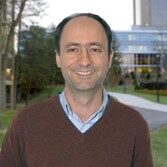
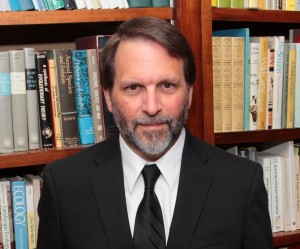
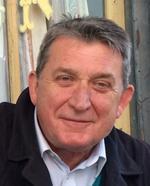
Peter K. Kitanidis is a Professor in the Department of Civil and Environmental Engineering and the Institute for Computational and Mathematical Engineering at Stanford University . His research focuses on groundwater flow , hydrologic forecasting , and stochastic inverse modeling , with applications to pollutant remediation and CO₂ storage monitoring . Education : Diploma, National Technical University of Athens (1974) M.S., MIT (1976) Ph.D., MIT (1978) Research Interests : Groundwater modeling and contaminant transport Hydraulic tomography and aquifer characterization Stochastic methods for uncertainty quantification Bioremediation and enhanced in-situ pollutant decay Dilution and mixing processes in heterogeneous media Real-time river flow forecasting Scientific Awards : L.G. Straub Award (1979) W.L. Huber Research Prize (1994) ISI Highly Cited Researcher (2001) AGU Hydrologic Sciences Award (2011) ASCE Pioneers in Groundwater Lecturer (2011) Advising and Grants : Advised 20+ PhD and MS students (1978–2018) Principal investigator on NSF, EPA, and DOE-funded projects Developed software for groundwater data analysis and CO₂ monitoring Contributed to bioremediation protocols and hydraulic tomography algorithms Labs and Teams : Kitanidis Laboratory for groundwater crisis solutions Collaborated with Oak Ridge National Laboratory and Stanford Hydrogeology Group Mentored postdocs (2000–2017) in reactive transport and inverse modeling
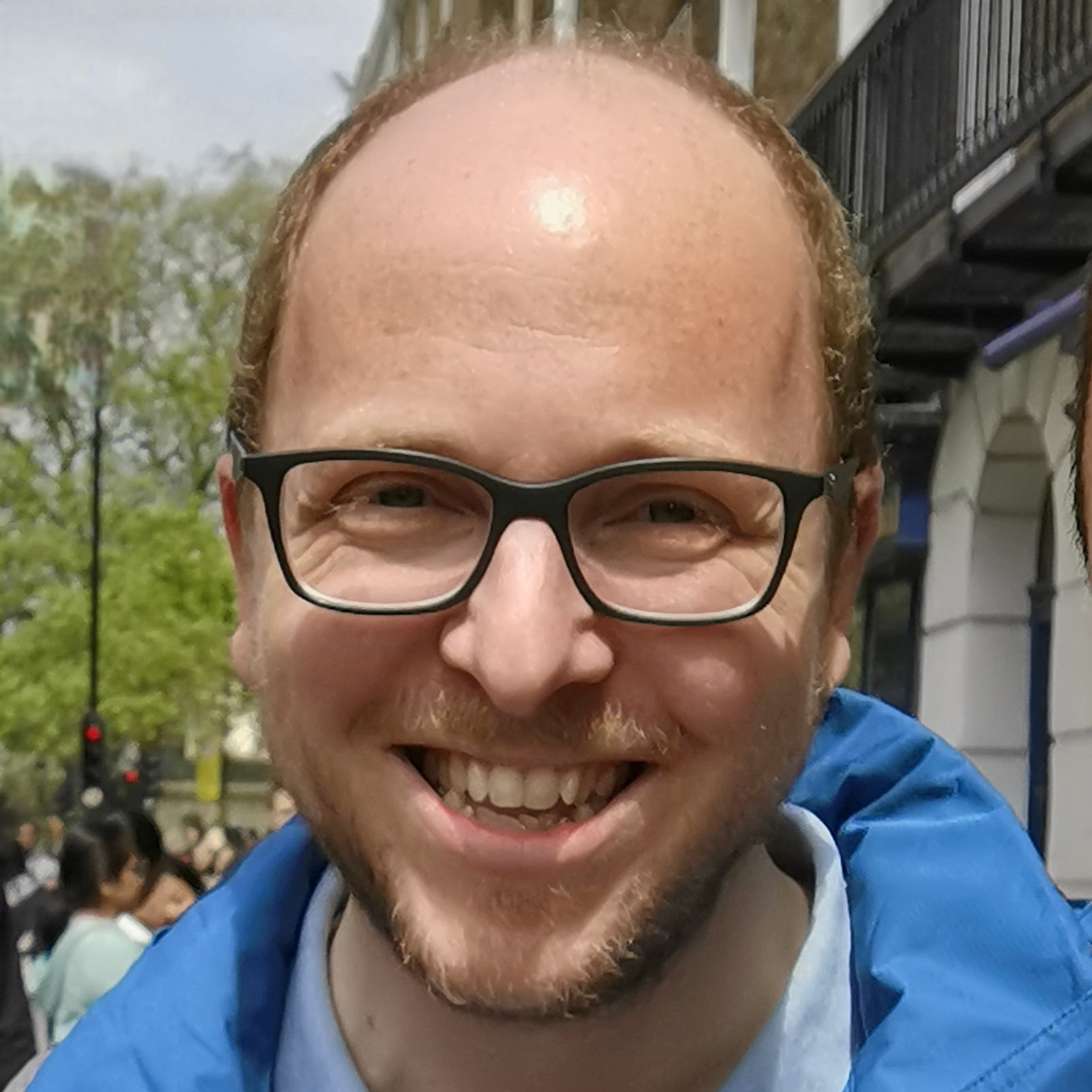
Charles F. Harvey is a Professor in the Department of Civil and Environmental Engineering at the Massachusetts Institute of Technology (MIT), where he investigates hydrology, carbon cycling, and groundwater contamination. His work spans tropical peatlands, arsenic pollution in South Asia, and coastal groundwater dynamics, with field sites in Borneo, Bangladesh, and Vietnam. Education: B.A. in Mathematics (Oberlin College, 1986), M.S. in Applied Earth Science (Stanford University, 1992), Ph.D. in Geological and Environmental Sciences (Stanford University, 1996). Harvey’s research focuses on hydrogeology , carbon sequestration , and contaminant transport . He explores how groundwater flow and biogeochemical processes interact in tropical peatlands and coastal systems, with significant implications for climate change and water security. His recent publications emphasize tropical peatland hydrology , arsenic mobilization , and coastal groundwater exchange , integrating field experiments, remote sensing, and computational models. Scientific Awards AGU Fellow GSA Fellow Meinzer Award (GSA) Prince Sultan bin Abdulaziz International Prize for Water M. King Hubbert Award for Hydrology NSF Young Investigator Award Harvey leads the Harvey Lab , mentoring students and researchers in projects ranging from groundwater arsenic mitigation to coastal marsh biogeochemistry . His work bridges terrestrial and marine systems , addressing critical planetary challenges.
Dr. Amir Hakami is a Professor in the Department of Civil & Environmental Engineering at Carleton University , where he leads the Carleton Atmospheric Modelling Group . His research focuses on advanced air quality modeling techniques to inform environmental policy. Degrees: B.Sc. (Polytechnic of Tehran), M.Sc., Ph.D. (Georgia Tech), Postdoc (Caltech) Contact: Office 3454 Mackenzie Building, Phone: 613-520-2600 ext. 8609, Email: amir.hakami@carleton.ca Research Interests: Air quality modeling at multiple spatial scales Adjoint sensitivity analysis for atmospheric response Inverse modeling and data assimilation techniques Uncertainty quantification in environmental systems Interdisciplinary applications in policy, public health, and economics Teaching: Courses include Environmental Engineering Systems Modeling , Contaminant Transport , and Air Pollution & Emissions Control at undergraduate and graduate levels. Research Group: The group includes Ph.D. candidates, postdoctoral fellows, and alumni working on topics ranging from atmospheric chemistry to sustainable energy systems. Members come from diverse backgrounds in engineering, science, and policy disciplines.
Joel S. Hayworth is an Associate Professor in the Department of Civil Engineering at Auburn University's College of Engineering. His research focuses on environmental and ecosystem restoration, particularly in estuarine, terrestrial, and freshwater systems. He leads the Estuarine Environments Research Program (EERP), which investigates the fate of endocrine-disrupting chemicals (EDCs), PFAS, and oil spill residues in coastal environments. Dr. Hayworth's educational background includes a PhD in Civil Engineering (Hydrology/Hydraulics) from Auburn University, an MS in Hydrology from the University of Nevada, Las Vegas via the Desert Research Institute, and a BS in Geophysics from the University of California, Santa Barbara. He previously worked at the Tennessee Valley Authority Engineering Laboratory and the U.S. Air Force Research Laboratory, and founded Hayworth Engineering Science in 1999 before returning to academia in 2010. His research interests span environmental engineering, hydrology, hydraulics, estuarine science, pollutant fate and transport, and chemical fingerprinting. He has developed advanced analytical methods for detecting EDCs and PFAS in water, sediment, and biota. His work integrates field studies, laboratory experiments, and environmental modeling to understand complex hydrologic, geologic, chemical, and biological processes in human-impacted ecosystems. The 15 most recent articles highlight a strong trend in environmental contaminant analysis, particularly focusing on PFAS, oil spill residues, and endocrine disruptors. His research combines analytical chemistry with environmental modeling and field monitoring, often in collaboration with interdisciplinary teams. Key themes include the development of UHPLC-MS/MS and GC-MS/MS methods, fate and transport modeling of pollutants, and ecological risk assessment in estuarine systems. Dr. Hayworth's scientific contributions are supported by funding from agencies such as the Gulf Coast Ecosystem Restoration Council (RESTORE Council). His work has led to significant publications in journals like Science of the Total Environment , Marine Pollution Bulletin , and Water . He actively mentors students and collaborates with researchers like T.P. Clement, G.F. John, and V. Mulabagal. His projects, such as the restoration assessment of Cotton Bayou and Terry Cove, demonstrate applied science for environmental problem-solving. He has developed state-of-the-art analytical laboratories and partnered with coastal communities for long-term monitoring. His laboratory, the Estuarine Environments Research Program (EERP), conducts multi-year studies on endocrine disruptors in estuaries, develops innovative sampling and analysis methods, and trains the next generation of environmental engineers and scientists. The team works across disciplines to address complex environmental challenges in the Gulf Coast region.
James King is an Associate Professor in the Department of Geography at the University of Montreal, specializing in geomorphology and aeolian processes. His research focuses on wind erosion, mineral dust dynamics, and their impacts on climate and ecosystems, particularly in high-latitude regions like the Yukon and Namibia. He holds a BSc in Earth surface sciences from the University of Guelph and a PhD in Physical Geography from an unmentioned institution, with postdoctoral training in climatology. Key research areas include dust emission climatology, glacial retreat impacts, and aerosol-climate interactions. Over 20 ongoing and completed projects, including dust dynamics in proglacial valleys and high-latitude dust sources, are funded by CRSNG, FCI, and international collaborations. King supervises graduate students on topics like dust deposition effects on ecosystems and remote sensing applications. His work integrates field measurements, remote sensing, and climate modeling to advance understanding of dust processes in arid and semi-arid environments. He collaborates with global teams, such as the Hominin Dispersals Research Group, and contributes to initiatives like the Changing Atmospheric Chemistry, Transport, and Emissions (ACTE) project.
Dr. Nicola Mingotti is a Research Associate in the Department of Earth Sciences at the University of Cambridge, affiliated with the Institute for Energy & Environmental Flows (IEEF). His experimental research focuses on fluid mechanics in the context of energy transition, particularly carbon sequestration and underground hydrogen storage, while also addressing oceanic microplastics dispersion and atmospheric volcanic ash transport. Research Associate, University of Cambridge IEEF Flow Laboratory His work on multiphase flows spans volcanic eruptions, oceanic microplastics separation, and contaminant dispersion in hospital environments. Recent studies include Journal of Fluid Mechanics publications on bubble plumes (2023) and sediment-laden oceanic plumes (2022), alongside Communications Earth & Environment articles on CO2 storage (2024) and volcanic dynamics (2021). Scientific awards and honors: None explicitly mentioned in the text. As an engineering researcher, he led investigations on droplet transport in ventilation systems (Royal Papworth Hospital, 2021) and historical surgical environment design (2021). His publications demonstrate interdisciplinary expertise across environmental fluid mechanics, geological engineering, and public health.
Dr. Zaheer Nasar is a Reader in Atmospheric Aerosols at Cranfield University's School of Aerospace, Transport and Manufacturing. His work focuses on real-time bioaerosol characterization, indoor/outdoor air quality dynamics, and environmental health impacts of particulate matter. He leads the NERC-funded Light-Induced Fluorescence sensor project and contributes to the BioAirNet network (NE/V002171/1) as Co-I. Research Interests Physico-chemical and biological characterization of aerosols Spatio-temporal dynamics of particulate matter (PM) and bioaerosols Quantitative microbial risk assessment (QMRA) methodologies Low-cost air quality sensor networks and machine learning calibration Urban green infrastructure effects on air pollution Policy development in Hindu Kush Himalayan air quality Recent publications emphasize machine learning-enhanced sensor calibration (2024 IEEE paper), wastewater plant bioaerosol risks (2024 Water Research), and urban air quality interventions across the UK and Lahore. He has secured over £1.6M in grants from NERC, STFC, and UKRI GCRF, with significant work on BTEX exposure in Nigeria and SARS-CoV-2 risks in wastewater facilities. Scientific Recognition Fellow of the Higher Education Academy (FHEA) Co-investigator in multiple NERC/UKRI projects Active participant in BSI bioaerosol standards committee As an advisor, he mentors five postgraduate researchers including Reece Dillon and Hathaikarn Tathong, with a strong publication record in journals like Environmental Science: Atmospheres , Risk Analysis , and BJPsych Open . His work bridges environmental science, public health, and policy implementation through interdisciplinary research.
Bryan Watts is the Director of the Center for Conservation Biology and holds the Mitchell A. Byrd Research Professorship in Conservation Biology at William & Mary. He has a B.S. in Biology from Virginia Tech, an M.A. in Biology from William & Mary, and a Ph.D. in Ecology from the University of Georgia. His research focuses on avian conservation, wetland ecosystems, and the impacts of environmental changes on bird populations, particularly in coastal regions. He leads long-term monitoring programs for species like ospreys, red knots, and black rails, emphasizing habitat conservation and population dynamics. His work integrates citizen science, toxicology assessments, and climate adaptation strategies for vulnerable species. Watts collaborates with federal agencies and NGOs to inform policy decisions and habitat management. His projects include the Virginia Marshbird Survey, Whimbrel migration tracking, and assessments of contaminants in apex predators like peregrine falcons and bald eagles. Key areas of focus include the demographic responses of birds to fluctuating fish stocks, the effects of human activity on nocturnal roosting behaviors, and the development of conservation strategies for coastal wetlands under climate change. His research outputs span over three decades, addressing both applied and theoretical questions in conservation biology. Watts also advises on wildlife management policies, such as landfill use by bald eagles and wind energy siting to minimize bird collisions.
Michele DiBenedetto is an Assistant Professor in the Department of Mechanical and Aerospace Engineering at Princeton University, associated with the High Meadows Environmental Institute (HMEI). Her research focuses on environmental fluid mechanics, ocean waves, and turbulent flows, with applications in contaminant transport, biomonitoring, and ocean sensing. She holds a PhD from Stanford University (2019) and moved to Princeton in 2025 after serving as an Assistant Professor at the University of Washington (UW). Her work integrates laboratory experiments, mathematical modeling, and field observations to study interdisciplinary challenges like plastic pollution, renewable energy, and air-sea interactions. Key achievements include an NSF CAREER Award (2023) and NOAA Sea Grant funding (2024). She advises a team of graduate and undergraduate students, including Carlos, Julio, Andrew, and Ethan, whose research contributes to understanding particle dynamics in turbulent systems. Notable projects include investigating buoyant particles in wind-driven ocean boundary layers and developing methods to track particle orientation using collimated light. Her lab’s move to Princeton in 2025 marks a strategic shift to enhance collaborations in environmental fluid mechanics. Publications span experimental fluid mechanics and environmental applications, emphasizing ocean transport and marine biology.
Professor Lydia Bourouiba is a faculty member at the Massachusetts Institute of Technology (MIT), affiliated with the Department of Civil and Environmental Engineering and the Institute for Medical Engineering and Science (IMES). Her research focuses on the intersection of fluid dynamics and disease transmission, with a strong emphasis on biophysics, interfacial flows, turbulence, and multiphase systems. Ph.D. in Applied Mathematics from McGill University (2008) Research on fluid fragmentation, droplet/bubble dynamics, and pathogen transport Co-Founder and Associate Director of the NSF Center for Pandemic Prevention (APPEX) Her work spans fundamental and applied domains, including: Biophysics of pathogen transport in air and water Turbulent multiphase flows in respiratory events Fluid-plant interactions in agricultural disease Nonlinear dynamics in public health contexts Key article trends highlight: Biomedical fluid mechanics Climate and environment-driven disease modeling High-risk/high-reward public health innovations Interdisciplinary approaches combining physics, biology, and engineering Scientific awards include: Fellow of the American Physical Society (2021) American Institute for Medical and Biological Engineering Fellow (2022) Smith Family Foundation Odyssey Award for biomedical research Ole Madsen Mentoring Award She serves as Associate Editor for the journal FLOW and has founded conferences like the Gordon Research Conference on Fluids in Disease Transmission. Her lab (Fluids and Health Network) develops experimental and theoretical frameworks to address contamination, pandemic control, and fluid-health-environment interactions.
Yong Zhang is a Professor in the Department of Geological Sciences at the University of Alabama, serving as Undergraduate Program Director. His research focuses on stochastic hydrology, contaminant transport in soil/water/aquifers (including heavy metals, PFAS, microplastics, and antibiotics), and surface water-groundwater interaction. He has held postdoctoral positions at the University of California, Davis; Desert Research Institute; and Colorado School of Mines. Current research includes the 'Groundwater 2070' project in Baldwin County, Alabama, addressing climate change impacts and seawater intrusion. Education: BS in Hydrogeology and Geo-Engineering (Nanjing University, 1993), PhD in Hydrology and Water Resources (Nanjing University, 1998). He teaches courses like GEO 101, GEO 306, and specialized topics such as Fractional Calculus and Hydrogeophysics. His work integrates fractional calculus with hydrogeology, yielding models for non-Fickian transport and pollutant source identification. Students under his advisement include Jonathan Frame, Chaloemporn Ponprasit, and Hossein Gholizadeh. Research outputs emphasize environmental geochemistry, numerical modeling, and groundwater sustainability. Notable collaborations involve Dr. Geoff Tick on co-advised PhD students.
Marius Gilbert is a Full Professor at Université libre de Bruxelles (ULB) since 2023, with dual administrative roles as Vice-rector of Research and Valorization (since 2020) and Vice-rector of Culture and Scientific Mediation (current mandate). He obtained his PhD in spatial epidemiology from ULB in 2001 after studying Agricultural Sciences (1995) and conducting visiting research at Oxford's Department of Zoology. Key Research Areas: Spatial epidemiology of animal diseases and invasive species Impact of agricultural and ecosystem changes on pathogen emergence Specialization in avian influenza and emerging infectious diseases Development of livestock distribution models and antimicrobial resistance tracking Scientific Contributions: His 15 most recent publications (2025-2021) focus on viral phylogeography , livestock-environment interactions , antimicrobial use forecasting , and pandemic response modeling . Notable work includes COVID-19 spatio-temporal analysis and global antibiotic resistance trends in food animals. Public Engagement: Played a central role in French-speaking media during the pandemic , authored the book "Juste un Passage au JT" , and maintains a Le Soir column on science-society intersections. Co-founded the Spatial Epidemiology Lab (SpELL) in 2016, now led by Simon Dellicour.
Bruno TASSIN is a Professor at École nationale des ponts et chaussées and serves as Research Director at the Ministry of Ecological and Inclusive Transition. His primary affiliation is with the Department of City Environment Transport Information. He leads research at the Water, Environment and Urban Systems (Leesu) laboratory and co-directs the Urban Futures Laboratory of Excellence (Labex). He also serves as deputy director of the EFLUVE Observatory of Universe Sciences. His work focuses on urban hydrology, water contamination dynamics, and microplastic pollution in urban watersheds. Since 2012, he has co-led a research program on plastics in urban waterways with Johnny Gasperi. He is a member of the ASTEE research committee and vice-president of the scientific council of the Seine Normandy water agency. Research interests include microplastic dispersion mechanisms, estuarine contamination, and policy applications for pollution mitigation. His projects integrate interdisciplinary approaches to address environmental challenges in urban and aquatic systems, emphasizing real-world policy support. Publications highlight advancements in understanding microplastic transport, estuary dynamics, and the impact of urban runoff. Key contributions include studies on the Seine River Basin and tropical river-estuarine systems, contributing to global plastic pollution discourse.
Dr. Kidambi Sreenivas is an Associate Professor in Mechanical Engineering at the University of Tennessee at Chattanooga (UTC), affiliated with the College of Engineering and Computer Science. He holds a PhD in Mechanical Engineering and specializes in computational fluid dynamics (CFD), with a focus on unstructured multi-physics flow solvers and applications in aerospace, environmental systems, and biomedical engineering. His research bridges academia and industry, collaborating with NASA, the U.S. Navy, Department of Energy, and private companies. Dr. Sreenivas' research interests include rotating machinery simulations, pre-conditioners for non-ideal fluids, and real-world applications such as submarine hydrodynamics, wind farm optimization, aerodynamic efficiency of vehicles, and contaminant dispersal modeling. He has pioneered methods for simulating complex geometries and physics, including high-fidelity simulations of hypersonic vehicles, weapons bay cavities, and shock-wave interactions. Recent work emphasizes advanced CFD methodologies for high-speed flows, thermal effects on turbulence, and aerothermal characteristics of hypersonic test articles. His collaborations have led to practical solutions for drag reduction on Class 8 trucks and improved accuracy in wind turbine modeling. Dr. Sreenivas also contributes to educational initiatives, such as developing PIV systems for undergraduate fluid mechanics labs. His advising and grants reflect partnerships with federal agencies and private sectors, focusing on projects like microplastic sampling devices for stormwater management. These projects highlight his interdisciplinary approach to solving real-world engineering challenges through cutting-edge computational methods.
Claudio Minero is a Full Professor in the Department of Chemistry at the University of Turin, Italy. His research focuses on Analytical, Environmental, and Cultural Heritage Chemistry, with a strong emphasis on photocatalytic materials and environmental pollutant degradation. He leads the GSD 03/CHEM-01 research group, specializing in advanced oxidation processes and sustainable water decontamination technologies. His work integrates experimental and theoretical approaches to address challenges in environmental chemistry, including the phototransformation of pharmaceuticals, pesticides, and emerging contaminants. He has authored over 150 peer-reviewed articles and holds an ORCID identifier (orcid.org/0000-0001-9484-130X). His teaching spans undergraduate and graduate programs in Chemistry, Environmental Chemistry, and Materials Science. Key research themes include the development of novel photocatalytic systems (e.g., g-C₃N₄, TiO₂-based composites), the environmental fate of pollutants in sunlit waters, and the optimization of Fenton-like processes for wastewater treatment. His lab collaborates extensively with industry and academic partners on projects funded by national and international grants.